
Reviewed · SAMURAI EXPERIENCES
Tokyo 2-Hour Genuine Samurai Experience: Kendo in Japan
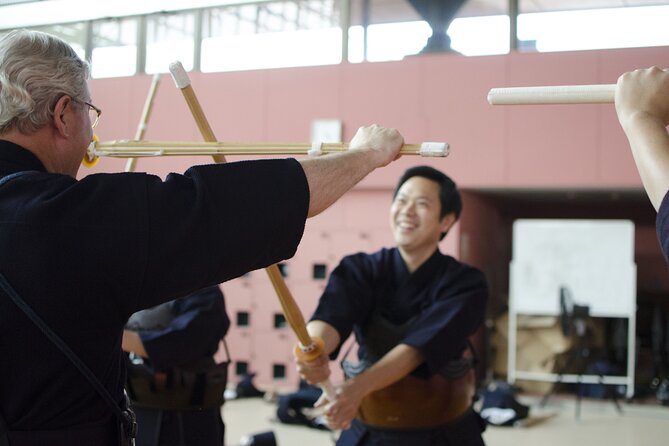
Kendo here is not a staged sword show. You put on a keikogi, hakama, and full bogu armor, learn the basic strikes, and then face an opponent in a supervised mock tournament. The English-speaking instructor explains the rules and etiquette in clear terms, while the lesson keeps the feel of a real dojo.
I like the mix of serious training and plain fun. You get useful instruction rather than simply posing with a bamboo sword, and the final sparring session gives the lesson a clear payoff. I also like that children from age nine can join, making this a strong family activity. The catch is that this is active exercise: the heavy fabric and armor get hot, and kneeling or repeated movement may be tough if you have bad knees.
Key points to know before you book
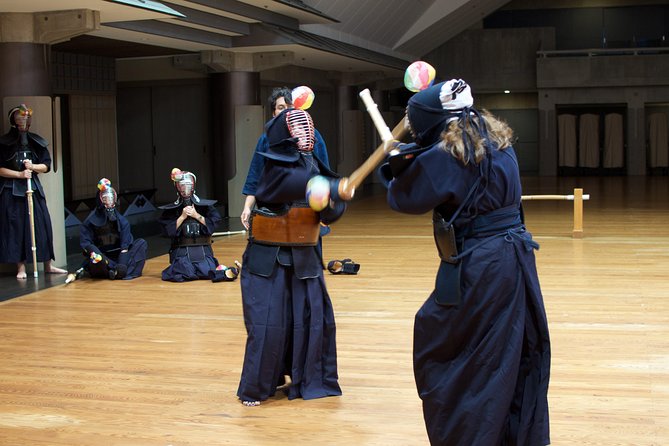
- Full Kendo clothing and armor are included: You learn how to put on the keikogi, hakama, and bogu rather than renting a costume for a photo.
- The final match puts the lesson to work: After practicing forms and hitting techniques, you take part in tournament-style combat.
- A real dojo setting adds weight: You may train alongside local students, giving you a look at how Kendo is practiced beyond a tourist demonstration.
- The instruction suits beginners: The English-speaking instructor demonstrates each movement and works at a pace suitable for first-timers.
- Plan for heat and effort: Wear athletic clothing underneath, hydrate before class, and tell the sensei about knee problems.
- The two-hour format fits a Tokyo day: You meet at the dojo in Higashinippori, with morning or afternoon scheduling available.
What this Tokyo Kendo lesson really offers
Many samurai-themed activities in Japan are built around watching a performance. This one asks you to work. You learn how to stand, move, shout, strike, and behave in a Kendo setting, then use those basics against another participant.
That distinction matters. Kendo is not simply swordplay with dramatic gestures. It is a disciplined martial art with its own clothing, bows, commands, target areas, and rules. Even in a short lesson, the formal elements give the activity more substance than a quick photo opportunity.
You work with a trained Kendo instructor who speaks English in an easy-to-understand way. The teaching includes a demonstration, practical guidance, and background on samurai culture and the way of the sword. The instructors are patient with beginners, and the lesson can be adjusted when a participant has a physical concern.
The group can reach up to 15 people, so the experience is not necessarily a private class. Still, the format includes one-on-one guidance, and the teaching team works directly with participants as they learn the movements.
More Martial Arts Experiences in Tokyo
- Tokyo: Samurai Sword & Archery Class from Samurai Descendant
★ 5.0 · 603 reviews - Tokyo:Samurai sword and archery class from a samurai descendant
★ 5.0 · 121 reviews - Tokyo: Samurai Kendo Practice Experience
★ 4.7 · 102 reviews
Arriving at the Higashinippori dojo
You make your own way to Seidokan Building, 4 Chome-7 Higashinippori, Arakawa City, Tokyo. The meeting point is near public transportation, but hotel pickup and drop-off are not included. Some booking information refers to pickup being offered, so check the exact instructions you receive and do not assume a vehicle will collect you from your hotel.
The listed start time is 10:00 am, while the activity also offers a choice of morning or afternoon session. Confirm your selected time carefully. Arriving early is wise, since the first part of the lesson involves getting organized and dressed.
The dojo is in a northern Tokyo neighborhood rather than in the main sightseeing core. That is part of the appeal. You are not being placed in a purpose-built tourist theater. You are going to a training space where Kendo can be treated as a living sport.
The activity ends back at the meeting point. Since food and drinks are not included, plan your meal separately. The area can also work well as one part of a larger outing, with nearby shrines and food stalls noted as possible stops after class.
Putting on the keikogi, hakama, and bogu
One of the most interesting parts of the session is learning how the equipment works. You do not just grab a bamboo sword and start swinging. You are shown the Kendo clothing, including the keikogi jacket and hakama, the pleated trousers that give the outfit its familiar shape.
Then comes the bogu, the protective armor. It covers the head, torso, hands, and other key areas, allowing you to practice strikes with more realism than you could in ordinary clothing. The gear is included in the price, so you do not need to bring or rent any special equipment.
Give yourself time to get comfortable. Kendo armor is substantial, and the fabric layers hold heat. One useful tip is to wear athletic clothes underneath the borrowed gear and arrive well hydrated. Bottled mineral water is provided, including a water break during the session, but you will be glad you drank water before class as well.
The clothing also teaches something about the discipline of Kendo. Getting dressed correctly, handling the equipment properly, and following dojo manners are part of the practice. These details help explain why the lesson feels more authentic than a costume fitting.
Learning etiquette before striking
The instructor introduces the customs behind Kendo before the more active drills begin. You learn that respect, posture, and controlled movement matter as much as force. The class includes samurai culture instruction, so you get context for why Kendo has such a formal structure.
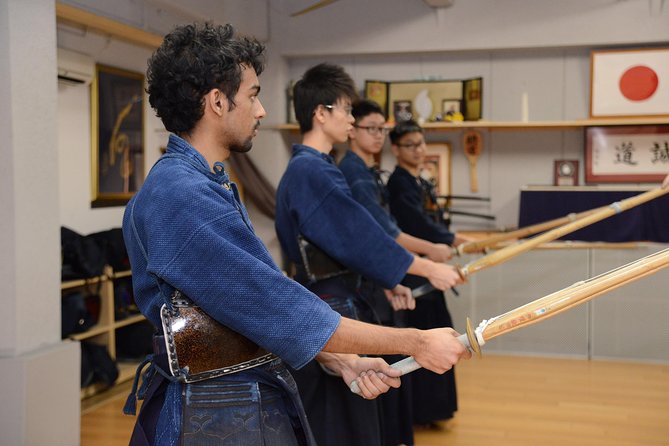
Expect a demonstration of the basic movements. The instructor shows how to hold and carry the bamboo sword, how to position your feet, and how to make a clean strike. The lesson is designed for people with no prior Kendo experience, so you do not need to know Japanese martial arts before arriving.
The instructor may praise a well-executed strike and ask you to try again when your form is off. That immediate correction is useful. You quickly see that simply hitting the target is not enough. Timing, distance, sound, posture, and control all play a role.
You may also hear the traditional calls used during practice. The shouting can feel unusual at first, but it is part of the sport and helps make the class energetic. This is a physical lesson, not a quiet museum talk.
More Samurai Experiences in Tokyo
- Tokyo: Samurai Restaurant Show Ticket with 2 Drinks
★ 4.5 · 1,307 reviews - Tokyo: Samurai Ninja Museum Guided tour and Experience
★ 4.6 · 1,010 reviews - Best Samurai Experience in Tokyo
★ 5.0 · 458 reviews - Ninja Experience (Family Friendly) at Samurai Ninja Museum TOKYO
★ 5.0 · 441 reviews
Practicing strikes and footwork
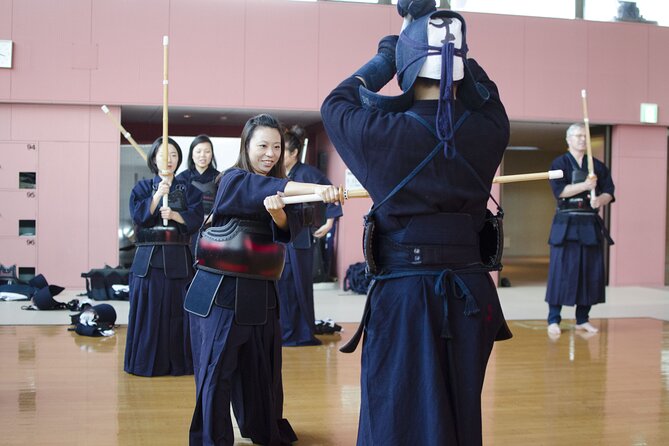
The practical training is the heart of the two hours. You work on basic hitting techniques and movement before facing an opponent. The instructor demonstrates, then gives you a chance to repeat the pattern.
A first-timer should expect coordination to be harder than it looks. The armor limits easy movement, the bamboo sword changes your balance, and the correct form requires attention to several things at once. That is exactly why the instructor’s patience matters.
You may hear terms such as kote and men during training. These refer to target areas and strike combinations used in Kendo. The class does not ask you to master the entire sport in one morning, but it gives you enough structure to understand what you are trying to do.
The instruction has a playful side, too. A clean hit can bring an approving call from the sensei, while a missed opportunity during sparring may bring a quick reminder that you should have attacked. That light teasing keeps the session from becoming stiff without turning the practice into a staged comedy act.
The tournament-style combat game
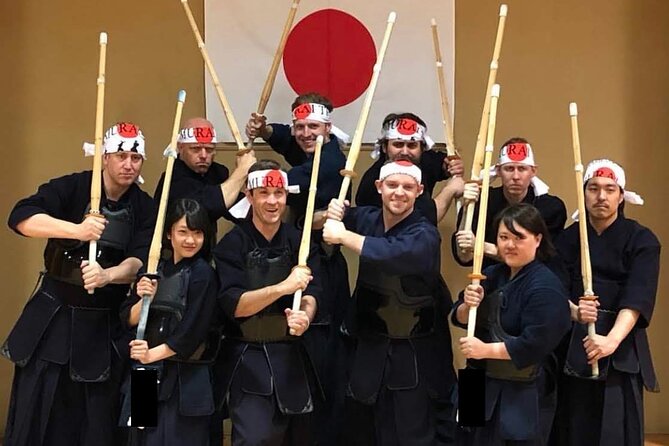
The final match is the part most people will remember. After practicing the fundamentals, you face other participants in a supervised, tournament-style combat game.
It is important to set the right expectation. This is not a full competitive Kendo tournament, and a two-hour introduction cannot make you an experienced fighter. It is a structured game that lets you apply the stance, movement, and strikes you have just learned.
The armor makes the activity feel more serious, but you still need to follow the instructor’s directions. Listen closely to the rules, respect your opponent, and keep your strikes controlled. The goal is to use the techniques properly, not simply swing as hard as possible.
This ending gives the class a satisfying shape. You start with unfamiliar clothing and basic etiquette, practice one movement at a time, and finish with a short test of your new skills. It also makes the activity engaging for families. Parents and children can learn together, then watch each other try the match.
A real dojo, not just a samurai photo stop
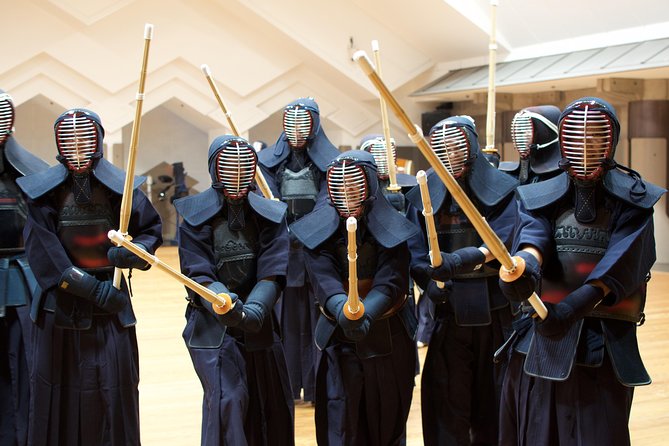
The experience can include local dojo students, which adds a useful point of comparison. You may see people who train regularly and notice how much more natural their footwork and timing look. That contrast is not discouraging. It shows you that Kendo is an ongoing discipline rather than a quick tourist trick.
One instructor associated with the class is referred to as Keshi, and the teaching team includes a sensei with decades of Kendo training. The instructors are described as approachable and clear, which is especially important when the class uses unfamiliar commands and forms.
The setting also gives you a chance to observe how a Japanese martial arts practice runs. The bowing, clothing, orderly drills, and careful handling of equipment all carry meaning. You leave with a better sense of why Kendo is called a path, not simply a method of hitting with a sword.
That said, do not expect a long historical lecture. The emphasis is practical instruction. If you want a museum-style account of samurai history, this is not the right choice. If you want to feel how a traditional martial art is practiced, it is a much better fit.
Is $118.92 a fair price?
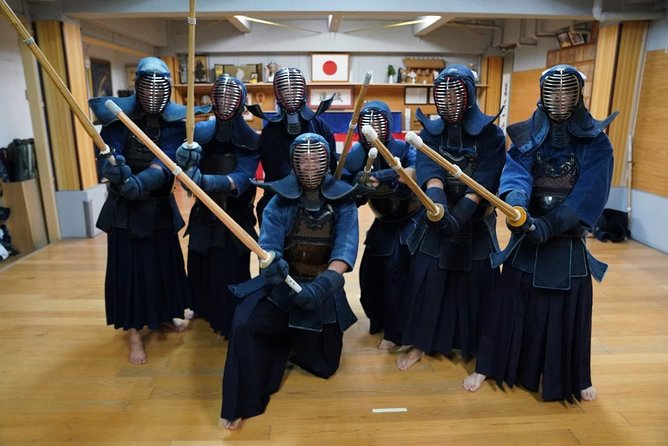
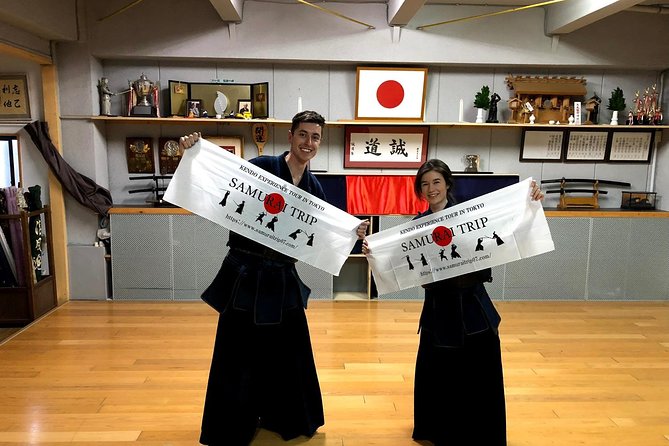
At $118.92 per person, this is not a cheap Tokyo activity. The value comes from what is bundled into the two hours: a professional instructor, Kendo clothing and armor, direct practice, a mock tournament, bottled water, and a Japanese hand towel.
You are also paying for access to a guided activity that would be difficult to arrange independently. Buying or borrowing proper Kendo armor, finding an English-speaking instructor, and entering a dojo on your own would not be simple for a short holiday visit.
The price makes the most sense if you want active participation and cultural context. It is less appealing if you only want a quick samurai photo or a low-cost sightseeing stop. You can likely find cheaper demonstrations, but they will not give you the same hands-on training.
The high satisfaction rate and 4.8 rating from 112 reviews support the idea that the class delivers what it promises. Still, ratings do not remove the physical demands. Consider the price alongside your interest in martial arts, your available time, and your comfort with heat and exercise.
Who should book this experience?
I would recommend it most strongly to:
- Families with children age nine or older who want an activity beyond temples and shopping
- Adults curious about Japanese martial arts and willing to take part rather than watch
- People who enjoy structured, physical experiences
- Visitors who want a genuine dojo setting instead of a theatrical samurai show
- Anyone looking for a memorable two-hour activity in northern Tokyo
You should think twice if you have a strong physical limitation, dislike heat, or cannot kneel or move comfortably. The class is described as requiring a strong level of physical fitness, and one useful accommodation is to tell the sensei about knee problems so painful kneeling movements can be skipped.
This is also not ideal if you need hotel transportation. You must make your own way to the meeting point, and the listed price does not cover transport between activities.
Practical tips for a smoother class
Wear athletic clothing beneath the rented Kendo gear. The equipment is heavy fabric and armor, so loose, comfortable clothes will serve you better than tight travel clothes or formal sightseeing wear.
Drink water before you arrive. Bottled water is supplied, and there is a break, but the combination of exercise and layered clothing can make you warm quickly.
Tell the instructor about knee trouble or another physical concern at the start. The teaching is patient, and certain movements can be adjusted or skipped when they cause pain.
Keep your schedule flexible after the lesson. The class ends at the dojo, and you may want time for food stalls or nearby shrines afterward. Since the activity lasts about two hours, it can fit neatly into a larger day in Arakawa.
Finally, remember that the minimum booking is two people. Solo visitors cannot book this as a one-person activity under the stated conditions.
Cancellation and booking details
You receive confirmation at booking, and free cancellation is available until 24 hours before the local start time. Cancellations made less than 24 hours before the session do not receive a refund, and late changes are not accepted.
The maximum group size is 15 people. That keeps the class small enough for instruction, though it does not guarantee a private lesson. The activity is available to participants age nine and above.
Should you book the Tokyo Kendo experience?
Book it if you want to do more than look at samurai culture from the outside. You will learn the etiquette, put on real Kendo equipment, practice basic strikes, and test yourself in a lively match. The setting, patient instruction, and chance to see local students train give the activity more substance than a simple themed photo session.
Skip it if you want a relaxed or mostly observational tour. The heat, armor, kneeling, and active drills are real considerations. For families, martial arts fans, and curious visitors with two hours to spare, this is one of the better ways to turn Japanese history into something you can physically understand.
FAQ
Where does the Kendo experience meet?
The meeting point is Seidokan Building, 4 Chome-7 Higashinippori, Arakawa City, Tokyo 116-0014, Japan. It is near public transportation.
How long does the Kendo class last?
The activity lasts approximately two hours and ends back at the meeting point.
What age is required to participate?
The minimum age is nine years old. A minimum of two people is required per booking.
Is Kendo equipment included?
Yes. Rental Kendo armor and equipment are included, along with a professional guide or instructor, bottled mineral water, and a Japanese hand towel.
Do I need previous Kendo experience?
No. All experience levels are welcome, and the English-speaking instructor demonstrates and explains the basic movements.
Can I cancel for a full refund?
Yes, if you cancel at least 24 hours before the experience start time. Cancellations or changes made less than 24 hours in advance are not accepted for a refund.
More 2-Hour Experiences in Tokyo
- Tokyo: Flagship 2-Hour Street Go-Kart Tour by Street Kart
★ 4.9 · 94 reviews - Tokyo: Shinjuku Izakaya and Golden Gai Bar Hopping Tour (2h)
★ 4.9 · 67 reviews - Tokyo: 2-Hour Vegan and Vegetarian Ramen Guided Walking Tour
★ 4.8 · 33 reviews - Tokyo: 2-Hour Night Bike Tour of the City’s Hidden Gems
★ 4.9 · 25 reviews
Just added around Tokyo
- Kawagoe Japanese Food Tour : Unagi Kaiseki and Sake near Tokyo★ 5.0 · 30 reviews
- Kawagoe 4hr Private Tour with Licensed Guide (Kawagoe Dep)★ 5.0 · 13 reviews
- Little EDO Sushi Making workshop in Kawagoe★ 5.0 · 18 reviews
- 【R34】Tokyo:Private Daikoku tour in Modified R34★ 4.9 · 92 reviews
- :Tokyo,Shibuya/ Pro Photography in Kimono / English-Friendly★ 5.0 · 26 reviews
- Tokyo:Celebrate Unique Japanese New Year Tradition Festivity★ 3.9 · 20 reviews
- Tokyo: Allstar Food Tour★ 4.7 · 29 reviews
- Tokyo: West-Side Cycling and Food Tour with Guide★ 5.0 · 37 reviews
Samurai Experiences, compared.
Browse the lists this tour appears in