
Reviewed · SAMURAI EXPERIENCES
Tokyo: Samurai Ninja Museum Guided tour and Experience
Tokyo’s Samurai Ninja Museum turns a history lesson into a hands-on hour. You’ll see armor, helmets, swords, and other equipment, then try throwing shuriken and pose in samurai gear with a real samurai helmet and metal sword.
I like the lively English guides, especially the way guides such as Kenny, Nami, Shin, and Megan mix facts with humor. I also like the compact format: the museum gives you useful context without taking half a day. The main consideration is group size. Reservations through one booking channel are capped at 15 people, but other bookings can join the same experience.
Key points
- A guided history lesson: Learn how samurai and ninja fit into Japanese history, with myths and popular film ideas explained along the way.
- Real-looking, hands-on costume time: Dress as a samurai, wear a helmet, and hold a metal sword for photographs.
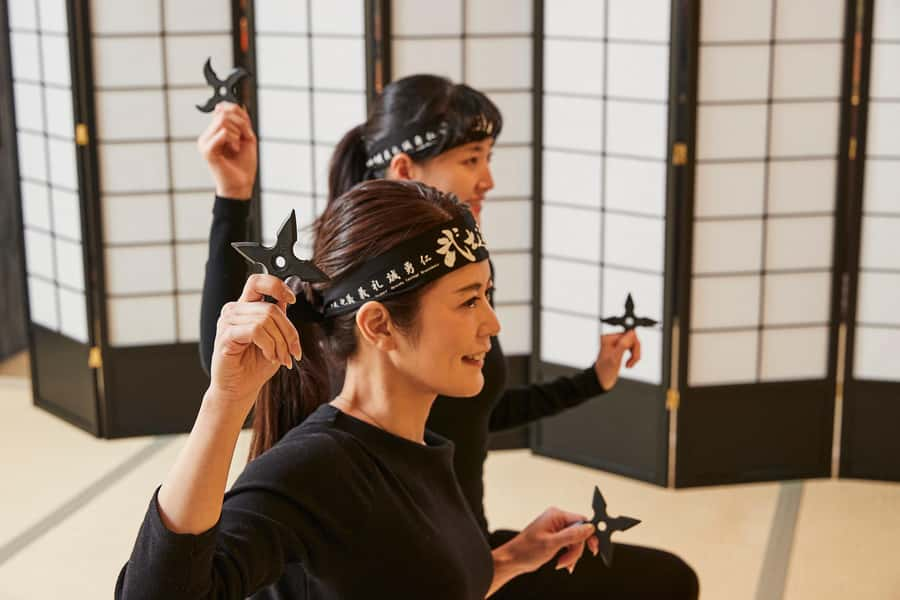
- Shuriken practice: Try throwing ninja stars at the end of the visit, a simple activity that keeps children and adults involved.
- About an hour long: The pace suits families, first-time visitors, and anyone fitting the museum between larger Tokyo sights.
- English-speaking guides: Guides including Kenny, Nami, Shin, Nao, and Megan are praised for clear explanations, humor, and an easygoing style.
- Good value at $27: The price includes museum entry, the guided tour, shuriken practice, and the samurai experience.
A One-Hour Introduction to Japan’s Warrior Past
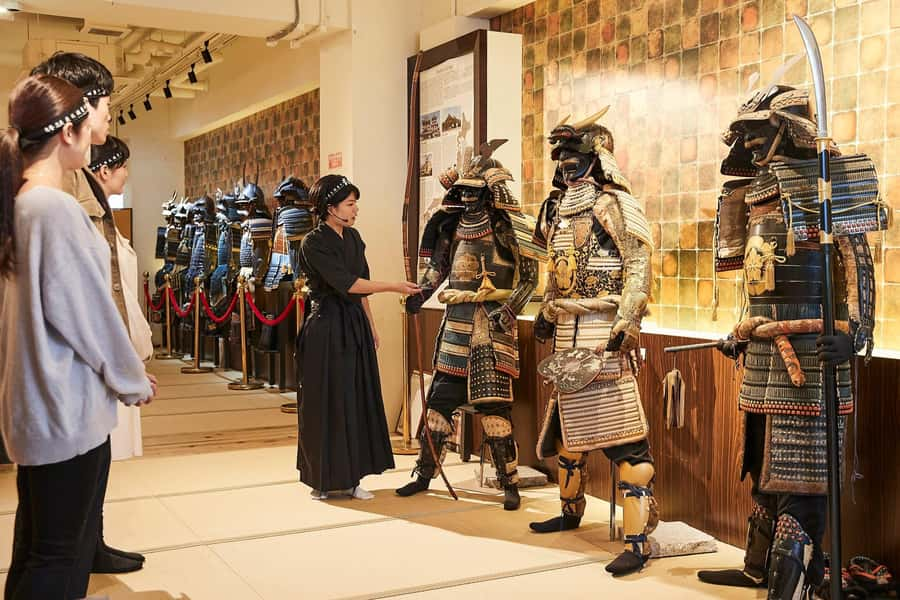
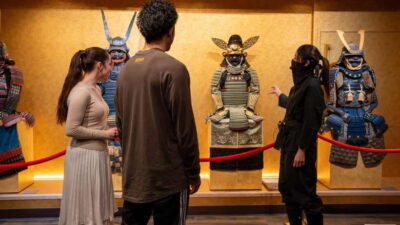
If samurai films, ninja stories, or Japanese history have a place on your Tokyo wish list, this is an easy way to get started. The visit is not built around silently reading display labels. Instead, your guide leads you through the museum and explains what you are seeing.
That matters because samurai armor can look impressive while remaining difficult to understand. A helmet, sword, or chest plate tells only part of the story. With a guide, you get the background that links the objects to the lives and roles of the people who used them.
The experience is also designed to keep moving. A typical visit takes about an hour, according to the timing described by visitors, so you can fit it between shopping, meals, or other sights in Tokyo. I like that length for families. You get a proper lesson, but the children are not expected to sit still for an entire afternoon.
The tone is friendly rather than formal. Guides use jokes, questions, and demonstrations to keep the group involved. Kenny is often singled out for his humor and energy, while Nami, Shin, Nao, and Megan are also noted for making the English explanations easy to follow.
More Museum Tours in Tokyo
- Tokyo: teamLab Planets TOKYO Digital Art Museum Entry Ticket
★ 4.6 · 9,779 reviews - Ninja Experience (Family Friendly) at Samurai Ninja Museum TOKYO
★ 5.0 · 441 reviews - Tokyo Studio Ghibli Museum and Ghibli Film Appreciation Tour
★ 4.5 · 421 reviews
What You Learn Before the Costumes Come Out
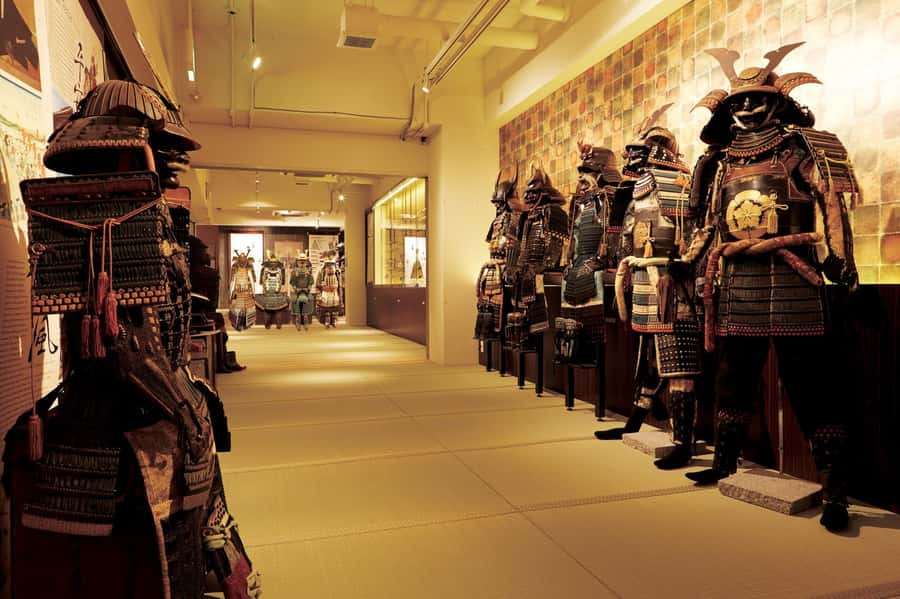
The first part focuses on the samurai and ninja as historical figures rather than movie characters. You’ll hear about the role of samurai in Japanese society and learn how ninja were used and understood in the past.
This distinction is useful. Popular culture often turns both groups into simple heroes and villains, complete with dramatic weapons and secret powers. The tour helps separate those familiar images from the historical record. One visitor particularly appreciated having myths corrected, which is a good sign if you want more than a photo opportunity.
You’ll also get a broader look at Japanese history as the guide explains important events and how the samurai era eventually ended. The material is presented in plain English, so you do not need a background in Japanese history to follow it.
The museum displays armor, helmets, swords, and other equipment. These are the objects that give the talk some weight. You are not just hearing about warriors in the abstract. You are standing near the clothing and weapons associated with them, while the guide explains why they mattered.
I would not treat this as a specialist museum study session. The visit is short and aimed at a general audience. If you already know a great deal about Japanese military history, you may want more dates, names, and technical detail. For most first-time visitors, though, the level is a useful balance between facts and entertainment.
Armor, Helmets, and the Samurai Dress-Up Session
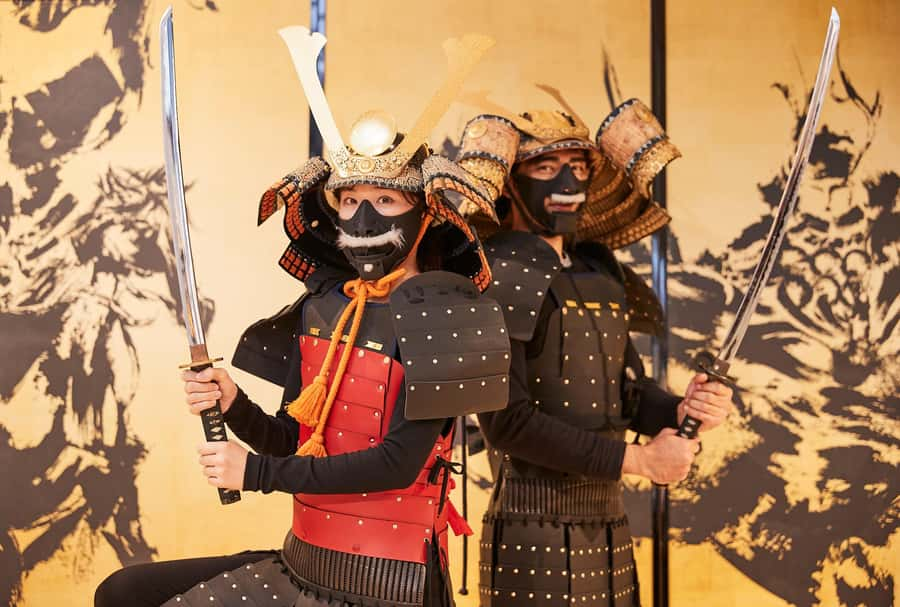
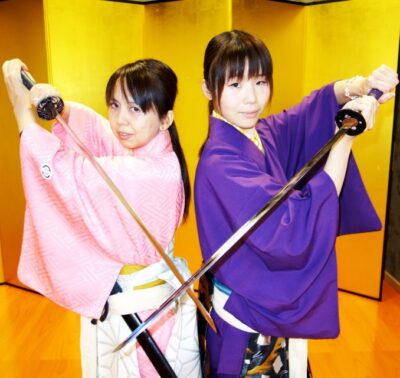
The samurai portion is the most memorable part for many families. You can dress up like a samurai, wear a real samurai helmet, and hold a metal samurai sword. This gives you a chance to take photographs while also seeing how heavy and substantial the equipment feels in your hands.
The costume session works well because it follows the historical explanation. You first learn what samurai were and then get a physical sense of the visual style associated with them. That small change from listening to taking part keeps the visit from becoming a standard museum walk-through.
Children tend to enjoy this part immediately, but adults are not left out. Several families describe the dress-up as one of the best parts of their Tokyo day, and older visitors can enjoy the photographs without needing to take the activity too seriously.
You should think of this as a guided photo and handling experience, not a full training session. The supplied information does not describe sword combat lessons or a long costume workshop. The value comes from seeing the equipment, wearing selected pieces, and holding the sword under the guide’s direction.
That makes it a good choice if you want a cultural activity that is active but still easy. You do not need special fitness or prior experience. The guide handles the explanation, and you take part for a few minutes.
Shuriken Throwing Gives the Visit Its Finish
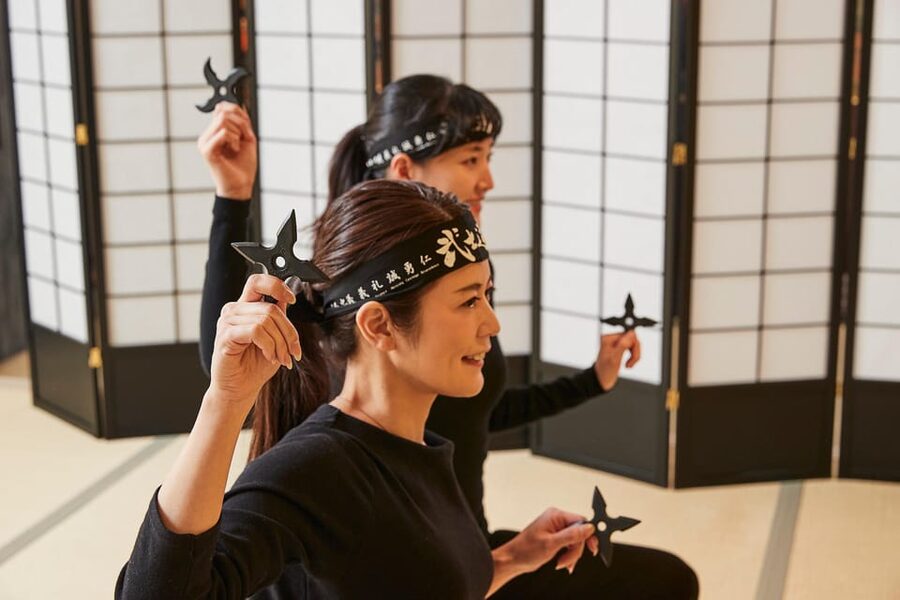
The ninja star throwing session adds a simple challenge at the end. You’ll practice throwing shuriken toward a target, with the guide showing you what to do.
This is not presented as serious martial arts instruction. It is a short, supervised activity that gives the tour a clear finish and lets you test your accuracy. Children often enjoy it most, but adults usually join in as well.
One detail worth noting is that the activity can take the form of a contest. A visitor described receiving the star after winning, although you should not assume every session uses exactly the same prize arrangement. The main point is the chance to handle and throw the stars rather than simply look at them behind glass.
I like the order of the experience. The museum talk gives you the context, the samurai session provides photographs, and the shuriken practice ends with something playful. The sequence helps the hour feel varied.
If you are visiting with teenagers, this is especially useful. Teenagers may not want a long lecture about armor, but they are more likely to pay attention when a hands-on activity is waiting. The same applies to younger children, provided they can follow the guide’s instructions during the throwing session.
More Ninja Experiences in Tokyo
- Tokyo Sword Experience – includes Museum Ticket/Ninja Experience
★ 5.0 · 314 reviews - Samurai Ninja Museum Asakusa: Samurai Sword Lesson & Tour
★ 4.8 · 306 reviews - Samurai Ninja Museum Asakusa: Kid-Friendly Ninja Training
★ 4.7 · 67 reviews - Tokyo: Ninja Experience Cafe Asakusa
★ 4.5 · 42 reviews
The Guides Make the Difference
The displays matter, but the guide is central to the experience. An English-speaking guide explains the exhibits, answers questions, and manages the activities. The strongest reports consistently point to enthusiasm, humor, and clear delivery.
Kenny is praised for combining strong historical explanations with comedy. Nami is described as sharing plenty of information while keeping the mood light. Shin is noted for detailed explanations, while Megan is praised for making the hour both fun and informative. Nao and Leon are also mentioned for their friendly English presentations.
You should not book this expecting a silent, self-guided museum visit. The format depends on the guide’s presentation. That is a benefit if you want help understanding the objects, but it also means the exact tone can vary from one guide to another.
The group may include people from several booking channels. A reservation through GetYourGuide can include up to 15 people, but the operator accepts bookings through other sites, so more participants may be present. The experience can still work well with a larger group, though your personal time in the costume or activity portion may feel shorter than it would in a very small party.
If you have a question about samurai history, ask it during the tour. The guide-led format is more useful when you treat it as a conversation rather than waiting for a fixed audio presentation.
Why the $27 Price Makes Sense
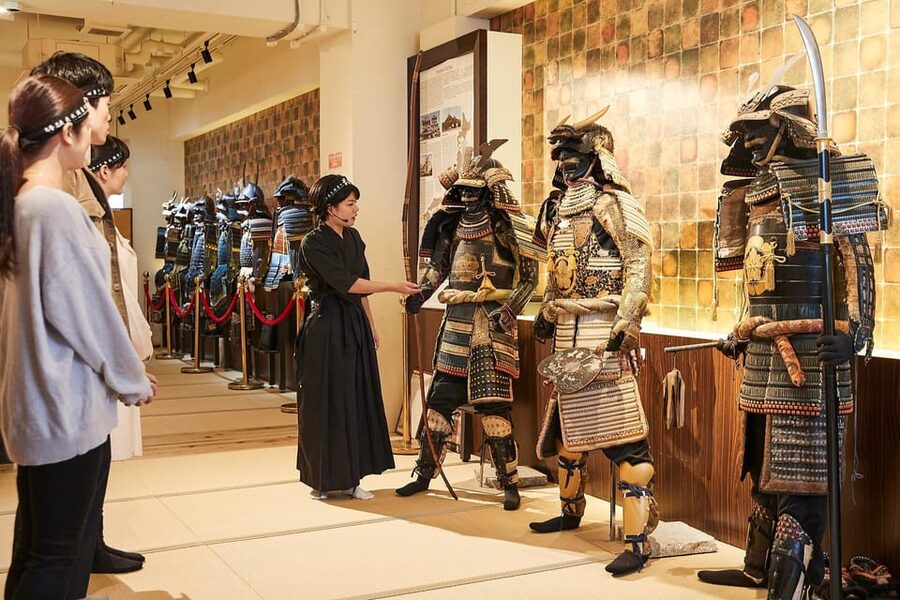
At $27 per person, this is priced as a short cultural activity rather than a major full-day attraction. Your payment includes museum entry, an English-speaking guided tour, shuriken throwing, and the samurai dress-up session.
I think the value is strongest for families and first-time visitors. You are paying for both interpretation and participation, not just access to a room of objects. The costume and shuriken activities also give you photographs and memories that a standard museum ticket would not provide.
The value is less clear if you want an advanced academic treatment of the samurai period. The visit is designed to be accessible, entertaining, and compact. You will gain a useful foundation, but it is not meant to replace a full museum study or a long historical lecture.
For a couple, the price buys a short activity with a clear structure. For a family, it can be particularly practical because adults and children have something to do together. Several families found that younger children, teenagers, and adults could all enjoy the same visit.
You can also keep your plans flexible by reserving now and paying later. Cancellation is allowed up to 24 hours in advance for a full refund. Those policies are helpful in Tokyo, where weather, jet lag, and changing plans can easily alter a day’s schedule.
Who Will Enjoy This Most?
I would put this near the top of the list for families with school-age children or teenagers. The history gives the adults something worthwhile, while dressing up and throwing shuriken give younger visitors a reason to stay engaged.
It also suits fans of samurai and ninja films. The guide can help you understand where familiar movie images match history and where they do not. That makes the films more interesting rather than simply confirming every dramatic scene.
First-time visitors to Japan may find it especially useful early in a Tokyo trip. The tour gives you basic cultural context without requiring a full day. You can then recognize samurai references in museums, shops, performances, and historical sites later in your journey.
History fans will enjoy the objects and the explanations, but should keep expectations sensible. The tour gives a broad introduction, not a detailed course on weapons, armor construction, or individual historical figures.
The activity is also a good choice if you have only one free hour. The location is described as being in a good shopping area with access by train or taxi, so you can combine it with other plans. The exact route and travel time depend on where you are staying, and the supplied information does not give a specific station or street address, so check the meeting details before setting out.
A Few Things to Keep in Mind
The experience is family-friendly, but the shuriken session involves throwing objects under instruction. Keep children close and make sure they listen to the guide. The activity is meant to be controlled and fun, not wild or competitive.
You should also allow for the possibility of a larger group. The booking cap of 15 applies to one booking source, not necessarily to the entire experience. A bigger group can make the presentation feel less personal, although the guides are used to involving children and adults together.
The tour is conducted in English. That is helpful for international visitors, but it also means you should choose another activity if you need a different language. The supplied information lists English as the available language.
Finally, wear something that makes it easy to take part in the costume session. No special clothing is required, but you will get more from the visit if you are happy to step forward for photographs and hands-on activities.
Should You Book the Samurai Ninja Museum?
Book it if you want a short, friendly introduction to samurai and ninja history with real participation built in. At $27, the combination of a guided museum visit, costume session, helmet and sword handling, and shuriken throwing offers solid value, especially for families.
I would skip it only if you are seeking a quiet museum or a highly technical history lecture. For everyone else, this is a well-paced Tokyo stop that turns a familiar subject into something you can see, hear, hold, and try.
FAQ
How much does the Samurai Ninja Museum experience cost?
The listed price is $27 per person. This includes museum entry, the English-speaking guided tour, shuriken throwing, and the samurai experience.
How long does the experience take?
The visit is described as about one hour long. The short format makes it easy to fit between other Tokyo activities.
Is the tour conducted in English?
Yes. The tour includes an English-speaking guide, and English is the listed language.
Can I dress up as a samurai?
Yes. The samurai experience includes dressing up, wearing a real samurai helmet, and holding a metal samurai sword.
Can I throw ninja stars?
Yes. The experience includes a ninja star, or shuriken, throwing activity.
How many people can be included in one reservation?
You can reserve a maximum of 15 people through GetYourGuide. Other booking sites are also accepted, so the full group may include more participants.
Can I cancel the booking?
Yes. You can cancel up to 24 hours in advance for a full refund. You can also reserve and pay later, which keeps your plans flexible.
More Samurai Experiences in Tokyo
- Tokyo: Samurai Restaurant Show Ticket with 2 Drinks
★ 4.5 · 1,307 reviews - Tokyo: Samurai Sword & Archery Class from Samurai Descendant
★ 5.0 · 603 reviews - Best Samurai Experience in Tokyo
★ 5.0 · 458 reviews - Tokyo: Samurai Entertainment Night Show in Kanda Shrine
★ 4.6 · 417 reviews
Just added around Tokyo
- Kawagoe Japanese Food Tour : Unagi Kaiseki and Sake near Tokyo★ 5.0 · 30 reviews
- Kawagoe 4hr Private Tour with Licensed Guide (Kawagoe Dep)★ 5.0 · 13 reviews
- Little EDO Sushi Making workshop in Kawagoe★ 5.0 · 18 reviews
- 【R34】Tokyo:Private Daikoku tour in Modified R34★ 4.9 · 92 reviews
- :Tokyo,Shibuya/ Pro Photography in Kimono / English-Friendly★ 5.0 · 26 reviews
- Tokyo:Celebrate Unique Japanese New Year Tradition Festivity★ 3.9 · 20 reviews
- Tokyo: Allstar Food Tour★ 4.7 · 29 reviews
- Tokyo: West-Side Cycling and Food Tour with Guide★ 5.0 · 37 reviews
Samurai Experiences, compared.
Browse the lists this tour appears in