
Reviewed · RAMEN & NOODLE TOURS
Tokyo: 2-Hour Vegan and Vegetarian Ramen Guided Walking Tour
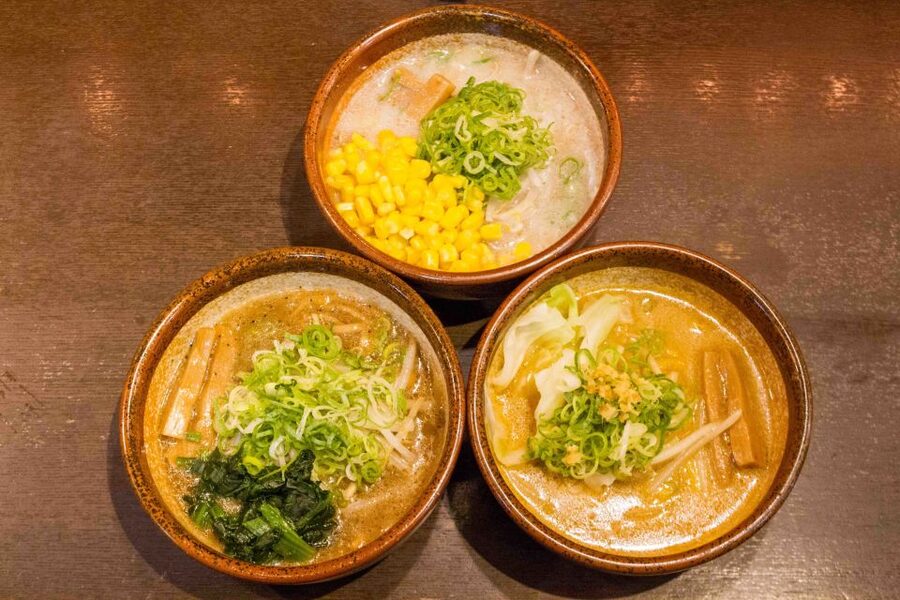
Four mini bowls at two ramen shops make this a smart introduction to Tokyo’s noodle culture. You’ll taste Hokkaido-style ramen in Shibuya, then take the train to Shinjuku for Tokyo-style tsukemen, while your English-speaking guide explains how regional tastes shaped the dish.
I especially like the small portions, which let you compare four flavors without being defeated by one giant bowl. I also like the flexible menu: vegan ramen is central, but non-vegan broth and gluten-free noodles are available. The main drawback is that $96 is a serious price for two hours, and you must pay your own train fare between Shibuya and Shinjuku.
Key points to know
- Four mini bowls, two ramen styles: Compare Hokkaido ramen with classic Tokyo tsukemen.
- Useful for plant-based diners: Every tasting bowl is vegan, with other broth and noodle options available.
- The train ride is part of the route: Bring a transportation card or cash for the trip from Shibuya to Shinjuku.
- More than a meal: Your guide explains ramen’s regional roots, ingredients, preparation, and place in Japanese food culture.
- A good first-day activity: The tour helps you get familiar with two major Tokyo neighborhoods and can point you toward a favorite ramen style for later.
- Small groups or private bookings: English-language tours are available in private or small-group formats.
Four bowls that turn ramen into a tasting lesson
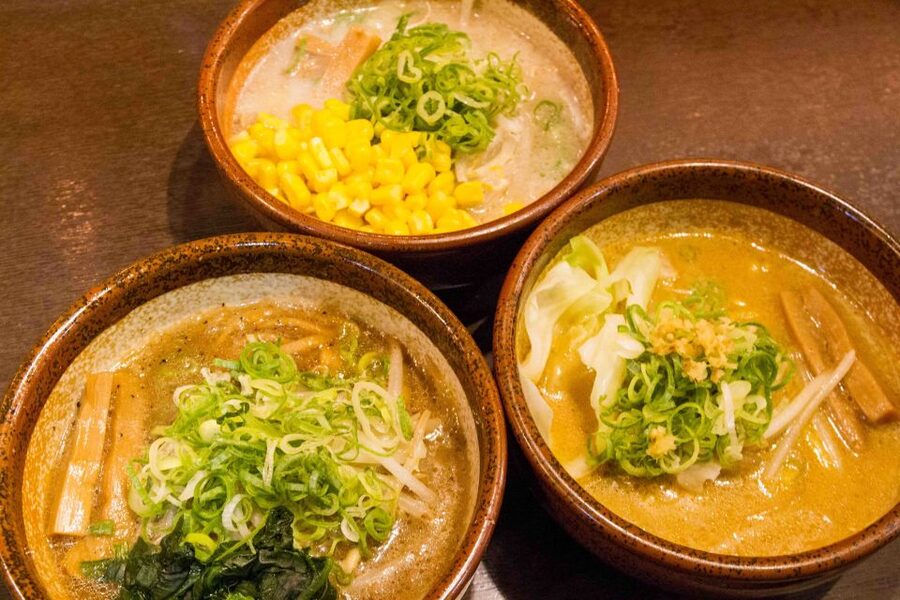
The clever idea here is portion control. A full bowl of ramen is filling, especially if you are eating several meals a day in Tokyo. Four mini bowls let you taste across a wider range without making lunch a contest of endurance.
The tour focuses on vegan ramen, so you are not simply eating a meat-free version as an afterthought. Each bowl is prepared as a vegan tasting, and you can ask about non-vegan broth options if that suits your diet. Gluten-free noodles are also available, which gives this outing unusual flexibility for a ramen tour.
You should still explain your dietary needs clearly when booking or meeting the guide. The activity is designed to accommodate different preferences, but the precise choices available at each shop can vary.
The format also makes comparison easier. Instead of trying one ramen and leaving with a vague sense that it was good, you can notice how broth, noodles, toppings, and serving style change from bowl to bowl. That is the real value of the tasting approach.
More Ramen Tours in Tokyo
- Eat and Drink Like a Local: Tokyo Ueno Food Tour-Taverns&Ramen
★ 5.0 · 957 reviews - Ramen & Gyoza Cooking Class in Tokyo with Local Supermarket Visit
★ 5.0 · 823 reviews - Tokyo: Ramen Tasting Tour with 6 Mini Bowls of Ramen
★ 4.9 · 432 reviews
Meeting beneath the Hachiko sign in Shibuya
The meeting point is in front of Shibu Hachi Box, across from the Hachiko statue. Look for the guide farther to the left, beneath the word Shibu, holding a Tokyo Ramen Tours sign.
This is a busy meeting area, so give yourself enough time to find the exact position. Hachiko is one of Shibuya’s best-known landmarks, but the crowds around the crossing and station can make a casual meeting point less casual than it sounds.
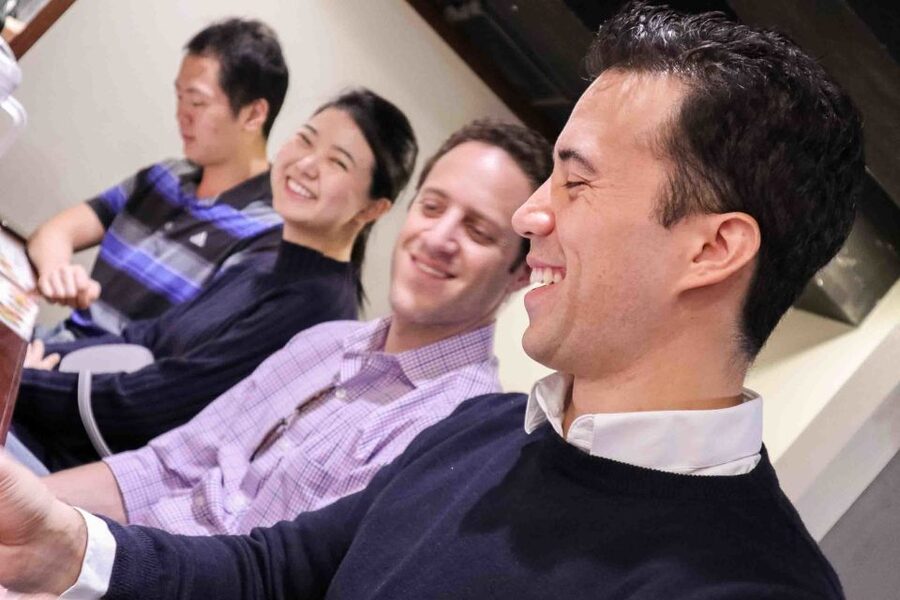
Once you meet the guide, the tour begins in Shibuya. Guides have included Brian, Makayla, Bunga, Frank, and Sahori, all named in past bookings. The experience is conducted in English, and the guide’s personality matters here because much of the tour’s value comes from explanation and conversation between bowls.
If you arrive early, resist the urge to wander too far from the statue. The meeting instructions are specific for a reason. Shibuya is easy to recognize but not always easy to navigate quickly.
The Hokkaido stop: northern ramen in central Tokyo
The first ramen shop specializes in authentic Hokkaido-style ramen. That gives the tour a useful geographical angle right away. Hokkaido has played a major role in ramen’s development, and the guide explains why the northern island matters in the wider ramen world.
You are not traveling to Hokkaido, of course. You are tasting its style in Shibuya, which makes this a practical way to cover more of Japan’s food culture during a Tokyo visit.
The precise bowls offered can change, but the structure is clear: you receive mini portions and learn what makes the style different. The guide may discuss regional roots, preparation, and the way ramen developed into distinct local forms. Previous guides have also explained Japanese food culture and the making of ramen, so this is not simply a sequence of restaurant stops.
This first stop can be especially useful if ramen is new to you. You get a framework for tasting rather than a list of unfamiliar Japanese terms. Pay attention to which broth and noodle combinations appeal to you, since the small bowls make it easy to compare without committing to a full serving.
Riding from Shibuya to Shinjuku for Tokyo tsukemen
The tour then moves by train from Shibuya to Shinjuku. Train fare is not included, so bring your transportation card or cash for a ticket.
The ride is short in the context of Tokyo sightseeing, but it gives the outing a sense of place. You are not being driven from one sealed restaurant experience to another. You are moving through two major city districts using the same transport system you will rely on for the rest of your trip.
The train transfer does add a practical wrinkle. If you dislike navigating stations, or if your group has mobility needs, keep the transfer in mind before booking. The activity is not suitable for wheelchair users, and the meeting, train, and restaurant changes are worth considering carefully.
The second stop focuses on classic Tokyo tsukemen, or dipping ramen. Here, noodles and dipping broth are served separately rather than together in one bowl. That changes the eating experience and gives you another clear point of comparison with the first stop.
You can control how much broth each bite receives, so the flavor and texture develop differently from standard ramen. The guide’s explanation helps you understand why this is not just ramen served in a separate dish. It is a different style with its own method of eating.
More Walking Tours in Tokyo
- Tokyo Tsukiji Fish Market Food and Culture Walking Tour
★ 5.0 · 3,184 reviews - Tokyo: Imperial Palace and Shogun Historical Walking Tour
★ 5.0 · 2,251 reviews - Tokyo: Shinjuku Local Bar and Izakaya Guided Walking Tour
★ 4.9 · 1,794 reviews - Tokyo: Tsukiji Fish Market Food and Walking tour
★ 5.0 · 1,724 reviews
Why the Shinjuku stop matters
Shinjuku is one of Tokyo’s best-known districts, and placing the second shop there gives you a useful neighborhood walk as part of the two-hour route. The tour is not a general Shinjuku sightseeing walk, but you do get to experience the movement between two central Tokyo areas while following a food theme.
The contrast between the two shops is the point. One introduces Hokkaido-style ramen. The other presents Tokyo tsukemen. You may prefer one immediately, or you may find that the broth you expected to like is not your favorite. That uncertainty is good. A tasting should help you discover your own preferences rather than tell you there is one correct bowl.
Several people who booked with guides including Frank and Bunga especially valued the explanations alongside the food. That is worth keeping in mind when comparing this tour with simply locating a ramen shop on your own. You are paying for access to four tastings, but also for context that is hard to get from a menu.
The shops may also be difficult for an independent diner to identify, particularly if you need vegan or vegetarian food. The tour removes much of that searching. You still need to pay attention to the route and train fare, but the food choices have already been organized.
What you actually receive for $96
At $96 per person, this is not a budget lunch. The price includes four mini bowls of ramen and one drink, along with the guided experience. Train fare from Shibuya to Shinjuku is extra.
I would judge the value in two ways. If you simply want the most food for the least money, you can likely find a cheaper meal elsewhere. If you want four carefully selected tastings, dietary flexibility, neighborhood movement, and an English explanation of ramen culture, the price is easier to justify.
The small bowls are important to that calculation. Four full bowls would be too much for most people, while one full bowl would offer only one chance to decide what you like. Here, you pay for range and guidance rather than quantity.
The price also makes more sense for visitors who would otherwise spend a long time hunting for plant-based ramen. Finding vegetarian food in Tokyo can take effort, especially when you want several different styles rather than one safe choice. This tour puts that work into a single two-hour plan.
I would not book it expecting a cheap local lunch. I would book it as a focused food experience, particularly if ramen is high on your list and your diet makes random restaurant choices harder.
The guide can make or break the two hours
This tour depends more on the guide than a simple restaurant reservation does. You will have questions about broth, noodles, regional styles, Japanese food customs, and what else to eat in Tokyo. A good guide turns the train ride and waiting time into part of the lesson.
The named guides have different personalities. Brian has been described as friendly and attentive. Makayla brought a playful, educational approach to the tour. Bunga was praised for making the ramen information fun, while Frank offered broader suggestions about Tokyo places to eat, see, and visit. Sahori led a particularly well-timed early experience for one booking.
You cannot choose a particular guide from the details provided, so treat those names as examples rather than a guarantee. The more important point is that the tour has been led by guides who engage with questions and explain the food beyond the bowl.
That makes this a good pick for a first or second day in Tokyo. You can ask for ideas for later meals, learn the vocabulary needed to order ramen, and identify the style you want to seek out again. One useful strategy is to schedule it early in your trip, then return later for a full bowl of the style you liked best.
Dietary choices and important limits
The strongest practical feature is that the standard tasting is vegan. You do not need to spend the tour wondering which bowl can be adapted after you arrive.
Non-vegan broth options are available for each ramen, and gluten-free noodles can also be requested. That means the group does not have to split up simply because one person eats vegan food or avoids gluten.
Still, flexibility is not the same as unlimited choice. Tell the operator about your needs before the tour and confirm the options available for your booking. If you are looking for a specifically halal experience, the available information does not confirm that this tour is halal. It notes that halal ramen options exist and that a halal-focused tour could be offered if demand grows, but you should not assume that standard arrangements meet halal requirements.
The activity is not suitable for wheelchair users. The combination of walking, train travel, and restaurant access makes that a significant booking consideration rather than a minor footnote.
Timing, group size, and the feel of the route
The tour lasts two hours, with starting times available when you check the schedule. Private and small-group formats are offered.
An early start can be a good choice. One Monday booking at 11 a.m. happened to have only the booking party present, which made the experience feel more personal. You cannot count on having the tour to yourself, but smaller groups generally give you more room to ask questions and discuss the dishes.
The route is active without being an all-day commitment. You meet in Shibuya, visit the first shop, take the train, visit the second shop in Shinjuku, and finish after four mini bowls and a drink. Wear comfortable shoes and keep your train card handy.
Because the tour centers on eating, it is best not to arrive after a large breakfast or lunch. The bowls are small, but four tastings still add up. At the same time, do not skip food for too long if you are prone to low energy. A little planning will help you enjoy the comparison.
Who will enjoy this ramen tour most
I would recommend this experience to:
- Vegans and vegetarians who want a planned way to sample several ramen styles.
- Ramen beginners who want the basics explained while they taste.
- Food-focused visitors who care about regional differences, not just a quick meal.
- Couples and small groups with different dietary needs.
- First-time Tokyo visitors who want an easy reason to see both Shibuya and Shinjuku.
- Repeat Japan visitors who have eaten standard ramen but want to compare Hokkaido and Tokyo approaches.
It is less suitable if you want a long, relaxed meal at one restaurant. It is also not the right choice if $96 feels too high for a two-hour food stop, or if you need step-free access.
Book it or find ramen on your own?
Book this tour if you want four small tastings, need vegan or vegetarian options, and enjoy learning how a dish fits into Japanese regional culture. The guide’s help is particularly valuable if you would struggle to locate several suitable ramen shops on your own.
Skip it if your priority is the lowest possible meal cost, a single full bowl, or a fully independent food hunt. You will also want another plan if wheelchair access is essential.
For most plant-based ramen fans, the best reason to book is the combination of choice and explanation. You can taste four bowls, compare Hokkaido ramen with Tokyo tsukemen, and leave with a better idea of what to order next. Just budget for the train fare, confirm your dietary needs, and remember that the $96 price pays for a guided tasting rather than a large lunch.
FAQ
How long does the vegan ramen tour last?
The tour lasts two hours.
Where does the tour meet?
Meet in front of Shibu Hachi Box, across from the Hachiko statue in Shibuya. The guide waits farther to the left under the word Shibu with a Tokyo Ramen Tours sign.
How many ramen bowls are included?
You receive four mini bowls of ramen, along with one drink.
Is the ramen vegan?
The four tasting bowls are vegan. Non-vegan broth options are available for each, and gluten-free noodles are also available.
Do I pay for the train between Shibuya and Shinjuku?
Yes. Train fare is not included, so bring a transportation card or cash for train tickets.
Is the tour available in English and suitable for wheelchair users?
The tour is conducted in English. It is not suitable for wheelchair users.
More 2-Hour Experiences in Tokyo
- Tokyo 2-Hour Genuine Samurai Experience: Kendo in Japan
★ 5.0 · 112 reviews - Tokyo: Flagship 2-Hour Street Go-Kart Tour by Street Kart
★ 4.9 · 94 reviews - Tokyo: Shinjuku Izakaya and Golden Gai Bar Hopping Tour (2h)
★ 4.9 · 67 reviews - Tokyo: 2-Hour Night Bike Tour of the City’s Hidden Gems
★ 4.9 · 25 reviews
More Vegan & Vegetarian Food in Tokyo
- Shibuya Tokyo: Sushi Making Class (Vegan/Vegetarian/Halal)
★ 4.7 · 29 reviews
Just added around Tokyo
- Kawagoe Japanese Food Tour : Unagi Kaiseki and Sake near Tokyo★ 5.0 · 30 reviews
- Kawagoe 4hr Private Tour with Licensed Guide (Kawagoe Dep)★ 5.0 · 13 reviews
- Little EDO Sushi Making workshop in Kawagoe★ 5.0 · 18 reviews
- 【R34】Tokyo:Private Daikoku tour in Modified R34★ 4.9 · 92 reviews
- :Tokyo,Shibuya/ Pro Photography in Kimono / English-Friendly★ 5.0 · 26 reviews
- Tokyo:Celebrate Unique Japanese New Year Tradition Festivity★ 3.9 · 20 reviews
- Tokyo: Allstar Food Tour★ 4.7 · 29 reviews
- Tokyo: West-Side Cycling and Food Tour with Guide★ 5.0 · 37 reviews
Ramen & Noodle Tours, compared.

Eat and Drink Like a Local: Tokyo Ueno Food Tour-Taverns&Ramen
Our verdict →

Five Must-See Highlights Walking Tour & Ramen Lunch
Our verdict →
Professional Ramen & Gyoza with Ramen Chef in a restaurant!
Our verdict →
Popular in SapporoExperience authentic hand-made soba at a real soba shop!
Our verdict →
Browse the lists this tour appears in