
Reviewed · GEISHA & MAIKO EXPERIENCES
Kanazawa: Samurai, Matcha, Gardens and Geisha Full-Day Tour
Kanazawa packs old Japan into one long, rewarding day. You’ll move from modest samurai homes to a castle garden, sip matcha in a traditional tea setting, then finish among the tall wooden houses of Higashi-chaya. The city feels less staged than Kyoto, and the walking route lets you see ordinary streets between the headline sights.
I especially like the strong mix of history and daily culture, from low-ranking samurai residences to a working-style tea house museum. I also like that the guides, including Mike, Akari, Gareth, Daniel, Lee, and Mohammed on different departures, add context that is easy to miss on your own. The main drawback is simple: this is a serious walking day, often around 12 kilometers and, for some people, more than 27,000 steps.
Key points to know before booking
- A full day on foot: The route links Kanazawa’s major historic districts without relying on a bus.
- Three different sides of old Japan: See samurai neighborhoods, feudal gardens, and geisha-era tea houses.
- Matcha in a traditional setting: Tea and artistic wagashi sweets are served by staff in kimono.
- Kenroku-en is a major highlight: The garden visit lasts about 90 minutes and includes its design story.
- Lunch is flexible: Your guide can suggest places, but you pay for lunch separately.
- Weather matters: Rain, snow, ice, and cold can affect the walking conditions, especially in winter.
Why this Kanazawa walking tour works
Kanazawa was once one of Japan’s wealthiest domains, ruled by the Maeda family. That wealth paid for gardens, castle buildings, tea districts, crafts, and refined arts. This tour gives you a useful way to understand that connection.
You are not simply ticking off separate sights. The route shows how samurai power supported castle construction, how garden design expressed status, and how tea districts served both entertainment and social life. Your guide fills in the links as you walk.
The day begins at Kanazawa Station, outside the Shinkansen ticket gates near the information center. Look for the four large sumo wrestlers by the East Entrance and the guide wearing a Snow Monkey Resorts tour tag. The station’s Tsuzumi-mon gate, a modern structure based on traditional forms, is your first reminder that Kanazawa mixes old and new without much fuss.
The English-speaking guides are an important part of the experience. Mike is repeatedly praised for clear explanations, patience, humor, and practical help. Akari is described as friendly and flexible, while Gareth, Daniel, Lee, and Mohammed are also noted for making the history easy to follow. Guide assignments can change, but the strongest part of this tour is the human explanation between stops.
More Geisha Experiences in Kanazawa:
- Full-Day Tour from Kanazawa: Samurai, Matcha, Gardens and Geisha
★ 5.0 · 68 reviews - Kanazawa Half-day Tour: Curated: Gardens, Craft & Geisha District
★ 4.5 · 12 reviews - Kyoto Geisha Walking Tour: Gion District & Hidden Gems
★ 4.7 · 3,273 reviews
Nagamachi, where samurai life gets practical
From the station, you walk for about 30 minutes through local streets. This opening stretch matters because Kanazawa does not reveal itself all at once. You pass residences and occasional wooden temples before reaching the Nagamachi Samurai District.
Nagamachi is known for its earthen walls, narrow lanes, and preserved samurai homes. The tour includes time inside residences linked to lower-ranking samurai. That detail is useful. Samurai life was not one grand parade of armor and elaborate estates. Many warriors lived in compact homes and worked within a strict social system.
Your guide explains the samurai class and the way family status shaped daily life. You also get free time to look around and shop for local crafts and wares. Do not expect a large shopping stop, but it is a chance to browse Kanazawa’s traditional workmanship rather than rushing straight to the next monument.
The district’s crooked main street is pleasant to walk, though the historic surfaces and extended time outdoors make comfortable shoes essential. If you prefer short, vehicle-based sightseeing, this tour will feel demanding. If you enjoy seeing how a city’s old quarters connect, the walk is one of the best features.
Oyama Shrine and the route into Kanazawa Castle
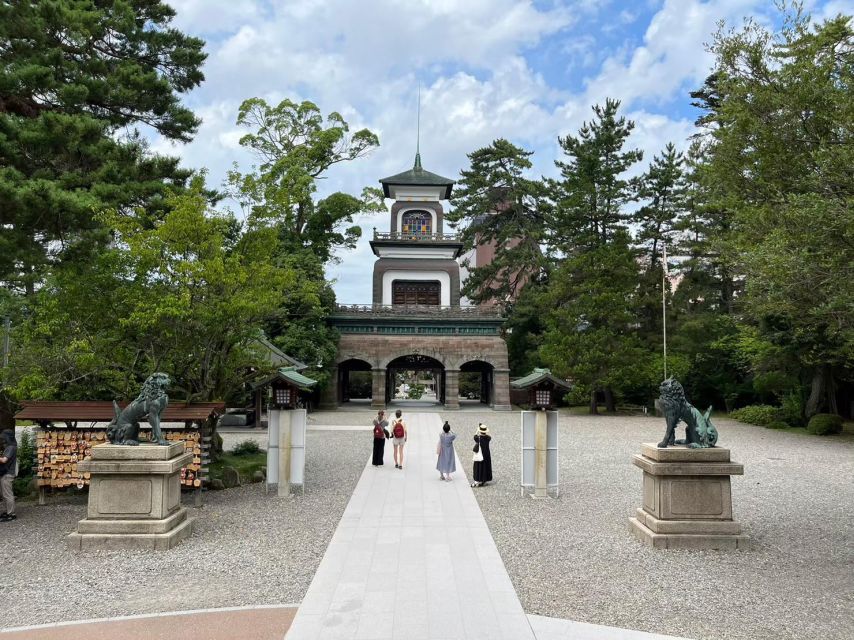
Oyama Shrine is a quick stop, but it adds an unexpected note to the day. Its gate combines Japanese design with Western-style stained glass, reflecting Japan’s changing outlook in the 19th century.
The shrine’s mixture can look unusual beside the older districts. That is precisely why it is worth seeing. Your guide can place the building in the period when Japan was adapting foreign forms while keeping older religious and architectural traditions.
Behind the shrine, you find a koi pond and a small garden. A path leads to a large wooden bridge, then through an impressive gate into the Kanazawa Castle grounds. This transition is nicely handled. Instead of simply arriving at the castle entrance, you approach it through a sequence of water, garden, bridge, and gate.
Kanazawa Castle is partly restored, so this is not a fully intact feudal complex. Still, the grounds and massive stone walls help explain the scale of the domain that controlled the city. Your guide’s background information is valuable here because the buildings alone cannot tell you how the castle fitted into Kanazawa’s political life.
Matcha at Gyokusen-an
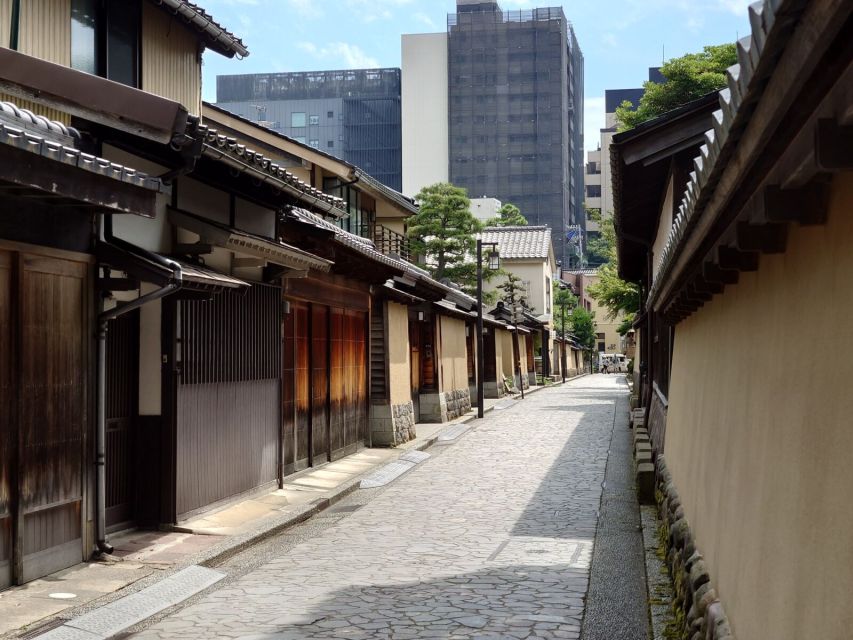
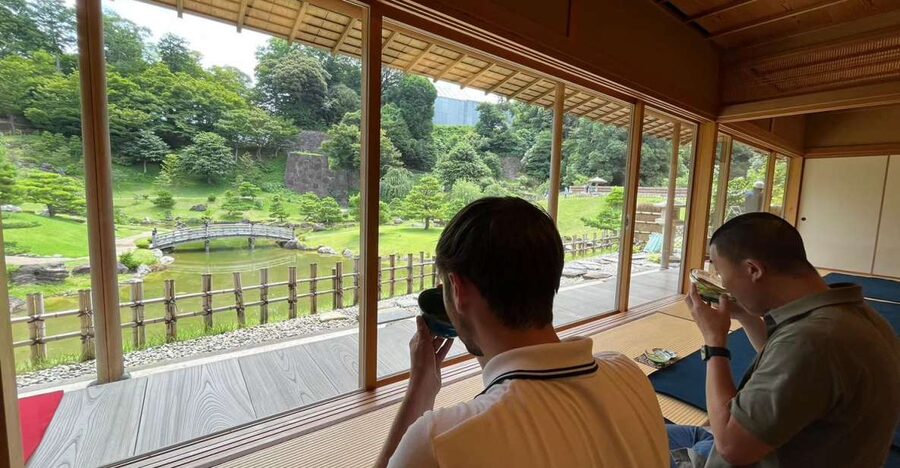
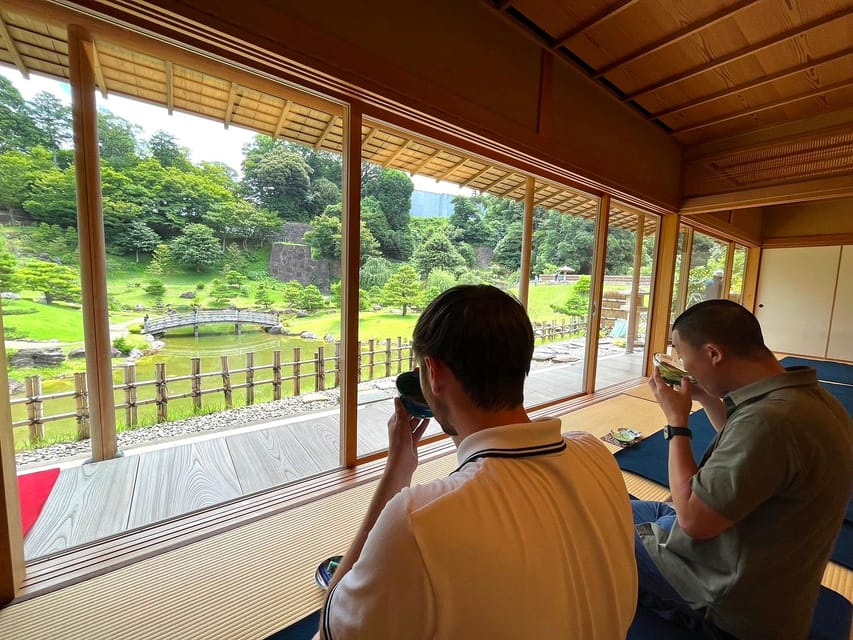
After the castle approach, the tour pauses at Gyokusen-an tea house for about 30 minutes. The tea house overlooks a carefully maintained garden at the foot of the castle’s large stone walls. The setting gives you a calm break after the morning’s walking.
You receive matcha and an artistic wagashi sweet, served by staff in kimono. The guide explains how to drink the tea properly, so you are not left guessing over the bowl. This is not presented as a long formal tea ceremony. It is a practical introduction in an elegant traditional room.
I consider this one of the tour’s best choices. The tea stop is short enough to fit into a busy sightseeing day, but it gives you a real pause and a chance to notice Japanese ideas of hospitality, season, presentation, and restraint.
Gyokusen-an can occasionally be unavailable because of a special event. If that happens, the matcha tasting moves to another location. That may change the atmosphere, but the tea experience remains part of the plan.
More Samurai Experiences in Kanazawa:
- Kanazawa: Samurai Residence Remains Nomura Family admission
★ 4.4 · 111 reviews - Kanazawa Private Tour: Highlights of an Old Samurai Town
★ 5.0 · 46 reviews - Kanazawa: Samurai Swordsmanship Lesson at a rented temple
★ 5.0 · 21 reviews - Tokyo: Samurai Restaurant Show Ticket with 2 Drinks
★ 4.5 · 1,307 reviews
Kenroku-en, a garden built for status and beauty
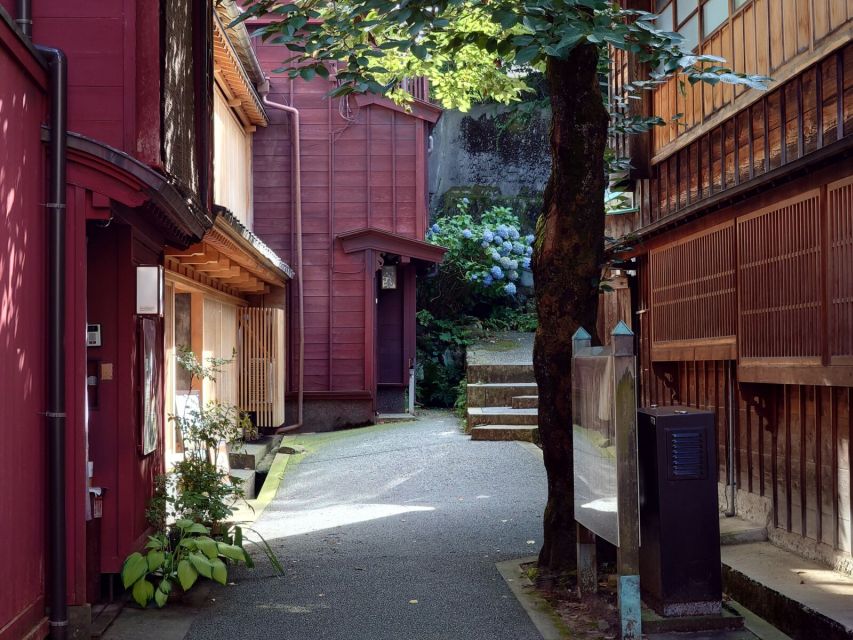
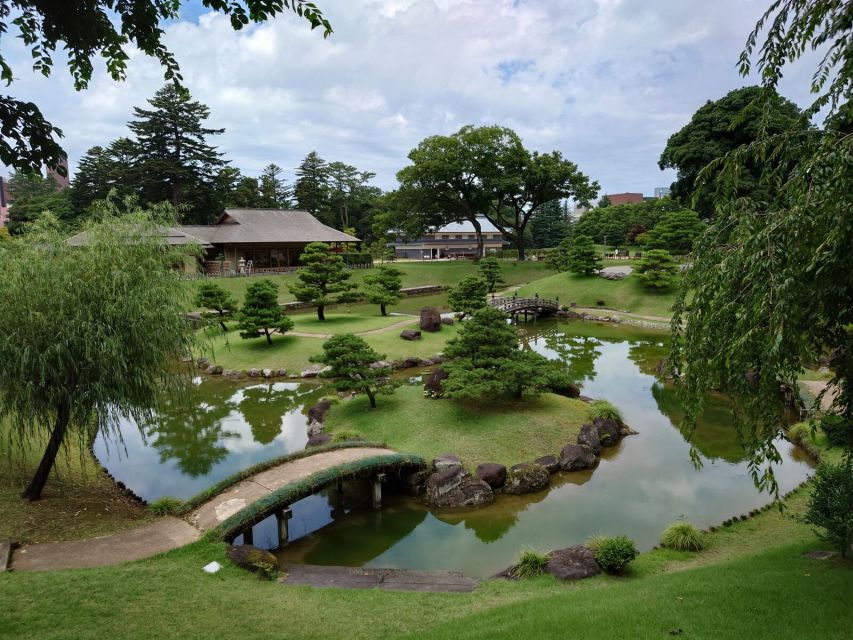
You continue through the castle grounds and enter Kenroku-en, one of Japan’s most celebrated gardens. The visit lasts around 90 minutes, giving you more than a quick photo stop.
Kenroku-en was developed over more than 200 years by the lords of Kanazawa Castle. The name refers to the combination of qualities considered essential in a great garden, including space, seclusion, artifice, antiquity, water, and broad views. Your guide explains how these ideas shaped the garden rather than leaving you to see it as a collection of attractive plants and ponds.
The garden changes with the weather. Rain can bring mist around the castle walls and soften the views, while winter may cover paths with snow or ice. That can create beautiful conditions, but it also makes footwear and clothing more important. In cold months, temperatures can fall below 10 degrees Celsius and may approach or drop below freezing in the morning and evening.
Kenroku-en is not a place to rush. You have enough time to notice bridges, water, carefully placed trees, and the relationship between open areas and enclosed paths. The garden is highly maintained, so visitors looking for untamed nature should adjust expectations. Its appeal comes from deliberate design and years of care.
Higashi-chaya and the Shima geisha house
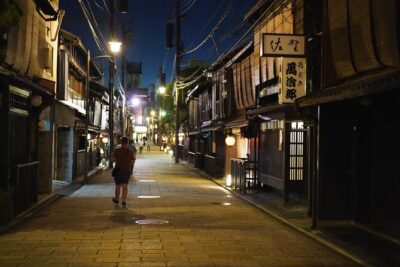
The next major district is Higashi-chaya, perhaps Kanazawa’s most recognizable old quarter. Its streets are lined with tall, two-story wooden tea houses. Some have red-painted interiors and details, a design feature particularly associated with Kanazawa.
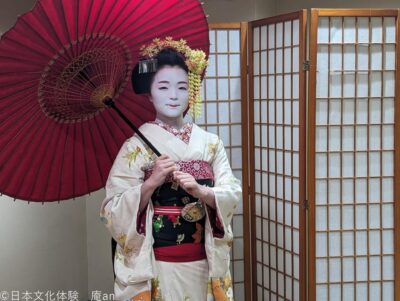
The word tea house can mislead first-time visitors. These were places for entertainment, music, conversation, and formal social gatherings, not simply cafés serving cups of tea. Your guide helps explain the role of geisha and the rules that shaped these districts.
You get free time to explore Higashi-chaya and shop. The district is attractive, but it can also feel busy at popular times. Keep track of the meeting point and time because the day continues to Shima, a preserved geisha house.
Shima gives you a closer look at the architecture and working culture of a traditional tea house. The building is a heritage site, and the rooms, fittings, and layout help explain how entertainment was organized. This stop usually lasts about an hour, making it more substantial than a quick exterior view.
I like the contrast between the open streets of Higashi-chaya and the interior spaces of Shima. One shows the district as a public face. The other lets you study the rooms where guests were received and performances took place. Wear socks, as requested in the preparation notes, since traditional interiors may require you to remove your shoes.
The return through Kazue-machi
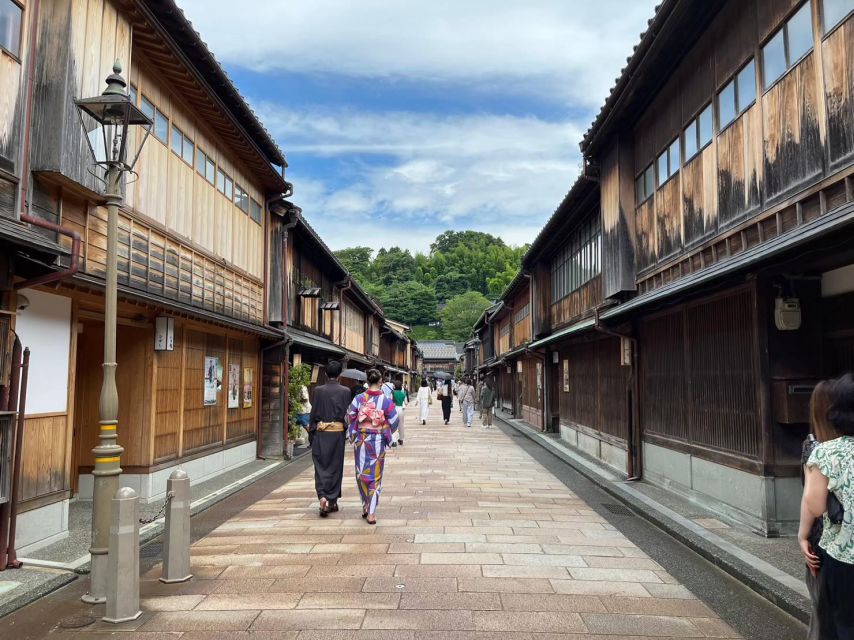
After Higashi-chaya and Shima, you begin the return to Kanazawa Station. The walk takes about 30 minutes and passes through the maze-like backstreets of Kazue-machi.
This final section is not just a route back. Kazue-machi offers another view of Kanazawa’s old urban fabric, with smaller lanes and traditional buildings away from the main sightseeing street. By this point, you will have a better eye for details such as wooden facades, narrow entrances, and the way districts follow the water and street pattern.
The tour ends back at the original meeting point near Kanazawa Station. That is useful if you have a train to catch, although you should leave a sensible buffer after the scheduled finish. Several guides have helped participants with train tickets and onward travel, but that kind of assistance should be treated as a helpful extra, not a guaranteed service.
How much walking should you expect?
Take the walking warning seriously. The route includes roughly 12 kilometers for some groups, and one particularly active day reached more than 27,000 steps. The tour is not a gentle hop between landmarks.
You should bring:
- Comfortable, non-slip shoes
- Warm layers in winter
- An umbrella or raincoat
- Weather-appropriate clothing
- Warm shoes for cold or snowy conditions
- Socks for traditional interiors
There are breaks along the way, including the matcha stop and lunch. Still, your legs will feel the day. Rain does not necessarily ruin the experience, and wet weather can make Kenroku-en atmospheric, but you need proper rain gear. Snow and ice on sidewalks create a more serious footing issue.
The guide can allow time at stops and adjust the pace within reason. Several departures have been praised for flexibility, including time for children, questions, shopping, and personal interests. The overall route remains fixed, so this is not a private custom tour.
Lunch, cost, and overall value
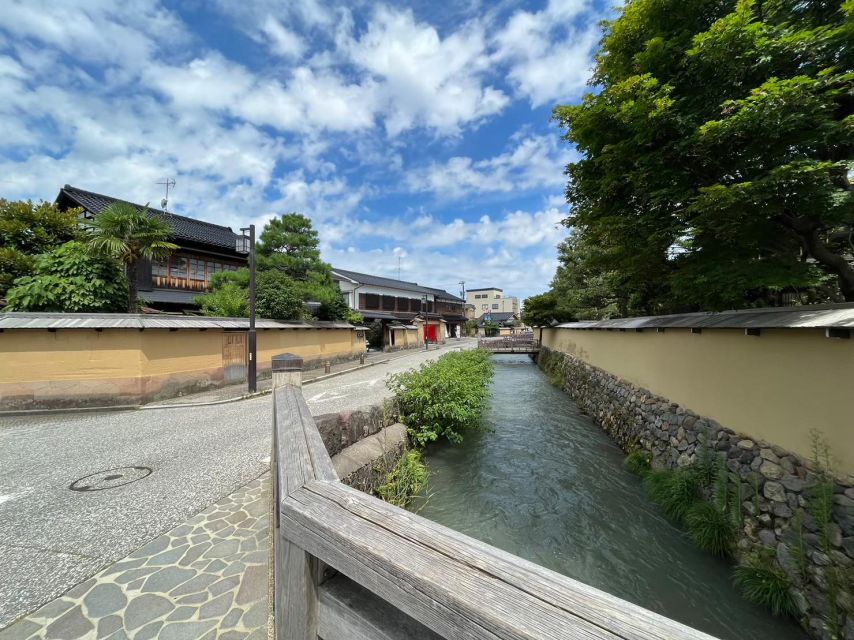
The price is $156 per person. Lunch is not included, but the guide can recommend somewhere nearby and you have time to eat. This arrangement keeps the choice open, though you should budget for lunch in addition to the tour price.
The value depends on how you travel. If you only want entry to Kenroku-en and the historic districts, you can spend less by planning the day yourself. The price here covers an English-speaking guide, Kenroku-en admission, Shima admission, and the matcha experience. More importantly, it gives you a historical thread through places that can otherwise feel disconnected.
The tea experience and Shima entry add real value because they are not just exterior sightseeing. The guide’s explanations are also useful at Nagamachi, the castle, and Kenroku-en, where signs alone provide only part of the story.
For a family, the long distance is the main concern. A guide such as Daniel can be patient with children and extra stops, but you should still decide if everyone can manage a full day outdoors. Older children and active adults are likely to get the most from it. Anyone with limited walking ability should ask before booking, since no alternative transport plan is specified.
Free cancellation is available up to 24 hours before the tour, and you can reserve now and pay later. Those policies are useful if your Japan schedule is still shifting.
Should you book the Kanazawa full-day tour?
Book it if you want a broad first look at Kanazawa and prefer explanations to guidebook reading. You will see the city’s main historic themes in one day: samurai households, castle power, garden design, matcha culture, and geisha districts.
It is especially suitable if Kanazawa is a short stop on a larger Japan trip. The route covers a lot, and guides such as Mike, Akari, Gareth, Lee, Daniel, and Mohammed have been praised for making the day friendly, informative, and adaptable.
Skip it if you dislike long walks, need a slow schedule, or want to spend several hours at one site. You will see many places, but the tradeoff is a full day of movement.
For most active visitors, I think the combination is worth the $156. Wear serious walking shoes, prepare for the weather, and arrive ready to spend the day outside. Kanazawa rewards that effort with a more complete picture of old Japan than a quick castle-and-garden visit can provide.
FAQ
Where does the tour start?
Meet outside the Shinkansen ticket gates at Kanazawa Station, in front of the information center. The four large sumo wrestlers near the East Entrance are the main landmark. Look for a guide wearing a Snow Monkey Resorts tour tag.
Where does the tour end?
The tour ends back at the same meeting point near Kanazawa Station.
How long does the tour last?
It is a full-day activity. The listed schedule begins at 9:00 AM, but you should check availability for the exact starting time when booking.
Is the tour conducted in English?
Yes. The tour includes a live English-speaking guide.
Is lunch included?
No. Lunch is not included, but you have time to eat and can ask your guide for recommendations.
Is matcha included?
Yes. The matcha experience is included, along with artistic wagashi sweets. It normally takes place at Gyokusen-an, though the location can change during special events.
Are entrance fees included?
Yes. Entry to Kenroku-en and the Shima geisha house is included.
How much walking is involved?
The tour involves several hours of outdoor walking. Some participants have covered about 12 kilometers and more than 27,000 steps, so comfortable and non-slip shoes are important. In winter, bring warm footwear and prepare for possible snow or ice.
More Garden Tours in Kanazawa
- Osaka: teamLab Botanical Garden Entry Ticket
★ 4.5 · 1,710 reviews - Kyoto Arashiyama Walking Tour: Bamboo, Monkeys, Gardens & Secrets
★ 5.0 · 1,216 reviews - Imperial Palace East Garden and Edo Castle Walking Tour in Tokyo
★ 5.0 · 510 reviews - Kyoto Zen Meditation & Garden Tour at a Zen Temple with Lunch
★ 5.0 · 441 reviews
More Tea Ceremony Experiences in Kanazawa
- Kanazawa: Kenrokuen Tea Ceremony Experience
★ 4.8 · 1,139 reviews - Kyoto: Tea Ceremony in a Traditional Tea House in Kiyomizu
★ 4.9 · 3,519 reviews - Kyoto: Tea Ceremony Ju-An at Jotokuji Temple
★ 4.9 · 3,207 reviews - Kyoto: 45-Minute Tea Ceremony Lesson Experience
★ 4.3 · 2,378 reviews
Just added around Kanazawa
- Kanazawa: Sushi & Japanese Cooking Class at a Historic School★ 5.0 · 66 reviews
- Taste of Kanazawa (Food tasting in Omicho Market & Higashi Chaya)★ 5.0 · 58 reviews
- Kanazawa private half day/Photoshoot by professional photographer★ 5.0 · 38 reviews
- Kanazawa private 1 day/Photoshoot by professional photographer★ 5.0 · 33 reviews
- Photoshoot session by professional photographer in Kanazawa★ 5.0 · 42 reviews
- Private Ring Craft Experience in Kanazawa★ 5.0 · 22 reviews
- Omicho Market & Kanazawa Ramen Tasting Tour★ 5.0 · 15 reviews
- True Kanazawa: Private Walking tour with a Local guide★ 5.0 · 66 reviews
Geisha & Maiko Experiences, compared.

Kyoto Geisha Walking Tour: Gion District & Hidden Gems
Our verdict →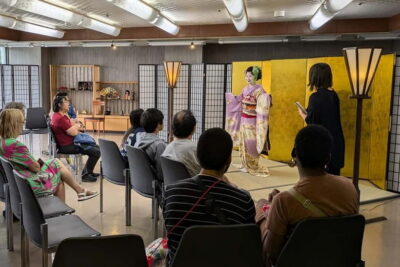

Dinner with Maiko in a Traditional Kyoto Style Restaurant Tour
Our verdict →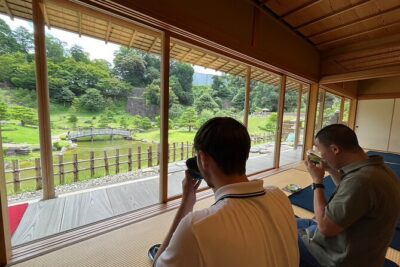
Full-Day Tour from Kanazawa: Samurai, Matcha, Gardens and Geisha
Our verdict →
Browse the lists this tour appears in