
Reviewed · SUSHI EXPERIENCES
Little EDO Sushi Making workshop in Kawagoe
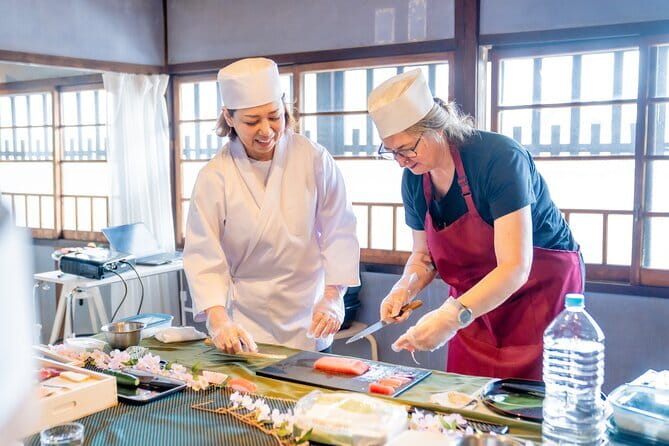
Kawagoe’s Little EDO Sushi Making workshop puts you in a former rice wholesale shop with 140-year-old beams and staircase cabinets, then hands you the tools to make your own lunch. An English-speaking Japanese sushi chef explains the work clearly, from preparing rice to shaping nigiri and rolling maki.
I like the small group size of six and the useful focus on sushi rice, the part many home cooks get wrong. I also like that the class connects food with place: you learn that nigiri was created in Japan about 300 years ago while sitting in a building tied to the local rice trade.
The main consideration is timing. The experience is described as about 1 hour 30 minutes, though the description also calls it a two-hour class, so allow extra time and confirm the exact session length when booking. Drinks are not included, and you must request menu changes before the day of the class.
Key points to know before booking
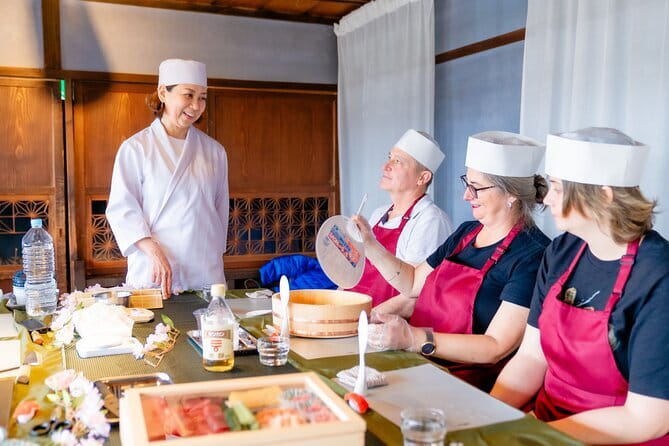
- Historic setting: MUSUBIYA occupies a former rice wholesale shop with old ceiling beams and unusual staircase cabinets.
- Two sushi styles: You make hand-formed nigiri and rolled maki sushi.
- Small, hands-on class: The maximum is six people, so the chef can watch your technique closely.
- English instruction: A Japanese female sushi chef with international experience teaches the class in English.
- Dietary planning matters: Vegan, vegetarian, gluten-free, halal, and many allergy requests can be arranged in advance.
- Easy Kawagoe pairing: The venue is about a three-minute walk from Kashiya Yokocho, the popular confectionery lane.
Making sushi inside old Kawagoe
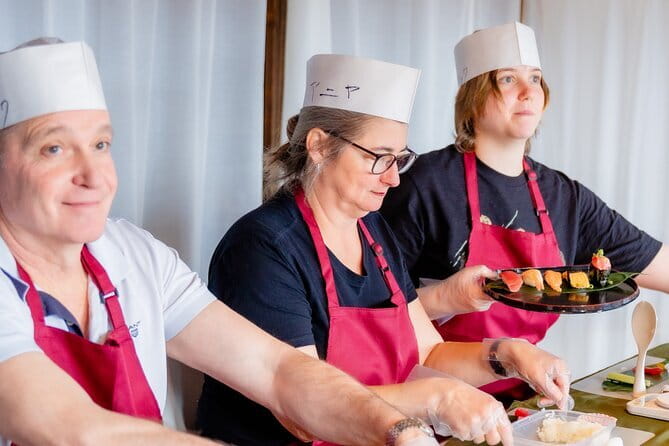
This class begins with the building, not the cutting board. MUSUBIYA is in Ishiharacho, only about three minutes from Kashiya Yokocho, yet its interior shifts your attention from Kawagoe’s candy shops to the city’s working past.
The building was once a rice wholesale shop. Its age shows in the large ceiling beams and staircase cabinets, the kind of built-in storage that gives an old Japanese house its character. You are not learning sushi in a generic cooking studio with a row of stainless-steel benches. The surroundings help explain why rice became such a central part of Japanese food culture.
That setting adds real value to a short class. You can look at the structure while learning about rice, sushi, and the history of the food in front of you. The class teaches that nigiri sushi was created in Japan roughly 300 years ago, giving the technique a useful cultural frame rather than treating it as a simple craft project.
You meet at 結家, also written as MUSUBIYA, at 1-6-7 Ishiharacho, Kawagoe City, Saitama. The activity ends at the same place, so you do not need to arrange a second pickup point.
More Sushi Experiences in Tokyo
- Sushi Making Tokyo Roll and Authentic Japanese Sushi Class
★ 5.0 · 3,971 reviews - Tokyo: Roll and Authentic Sushi Making Class in Asakusa
★ 4.9 · 1,957 reviews - Make Sushi and Create Unforgettable Memories in Tokyo
★ 5.0 · 1,413 reviews
What you learn about sushi rice
The most practical part of this workshop is the rice. Sushi may look simple, but the rice controls the texture, shape, and balance of every piece. The chef explains how to make sushi rice in a way you can try again at home.
That home value matters. A class that only teaches how to place fish on rice gives you a meal and a few photographs. A class that explains the rice gives you a technique you can use with fillings and toppings available outside Japan.
The available information does not specify every rice ingredient or cooking step, so you should not expect a full recipe in advance. You will, however, work through the process under the chef’s direction and learn how to prepare rice suitable for nigiri and maki.
The chef also teaches how to cut neta, the topping or filling used for sushi. Cutting is not just a matter of making pieces look neat. Size affects how a topping sits on the rice, how easy it is to eat, and how the flavors meet. For a short workshop, this is a useful detail to learn directly rather than only watch in a video.
Shaping nigiri with your own hands
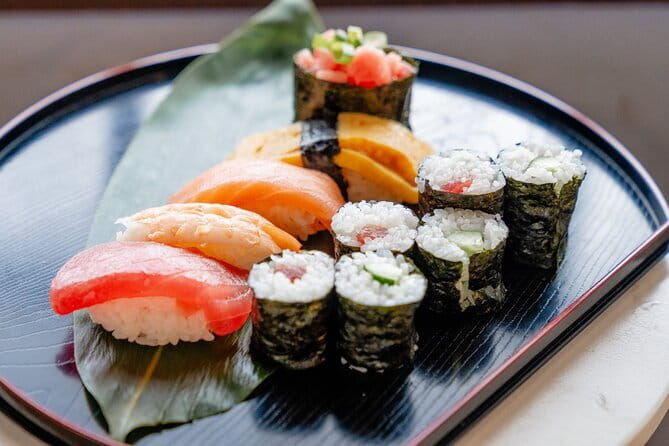
Nigiri is the classic hand-formed sushi: a small portion of seasoned rice topped with fish or another suitable ingredient. The chef demonstrates the hand movements, then you try to copy them.
This is the part where a little patience helps. A trained sushi chef makes the movements look effortless, but the goal here is not to produce restaurant-perfect pieces on your first attempt. You learn how the rice is held, shaped, and topped without crushing it into a hard block.
The feedback from the class gives special weight to learning nigiri, sushi rice, and the cutting of toppings. Those are the skills worth concentrating on. Watch the chef’s fingers closely, then ask for correction when your rice feels too loose or too tightly packed.
The class is taught in English, which lets you ask questions as the work happens. That is more useful than watching a silent demonstration, especially when small hand movements are difficult to see. Since the group is limited to six people, you should have a better chance of receiving individual help than in a large cooking session.
Rolling maki sushi without the fuss
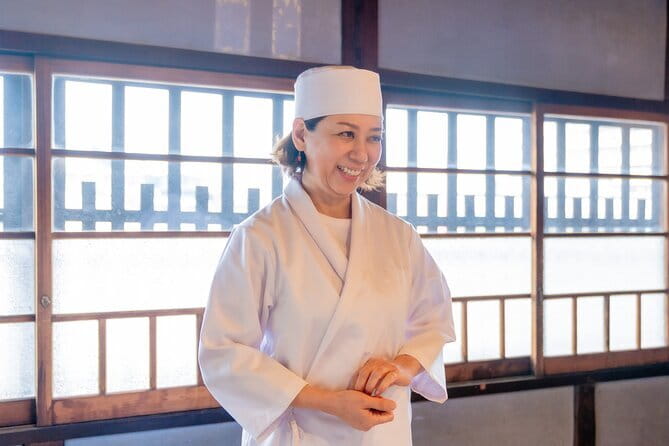
The second style is maki sushi, or rolled sushi. You work with fillings and rice, then form them into a roll that can be cut into pieces.
Maki is often the more approachable style for beginners because the rolling process gives you a clear sequence to follow. It also offers room for menu adjustments, though you must arrange those changes at booking. The class can accommodate vegan, vegetarian, gluten-free, and halal menus, along with allergies excluding meat, nuts, fruits, and dairy.
The provider says allergy requests can be handled except for those excluded categories, but do not wait until you arrive. Changes made on the day cannot be accepted. If you are booking for someone with dietary needs, send the request before the class and make sure the confirmation reflects it.
You should also know that the meal is included, but drinks are not. Plan to buy or carry a beverage separately if you want one with your sushi.
Same trip, a completely different kind of day:
- 1-Day Tokyo Bus Tour
★ 5.0 · 14,250 reviews - Tokyo: TOKYO SKYTREE® Admission ticket
★ 4.5 · 11,192 reviews - Tokyo: teamLab Planets TOKYO Digital Art Museum Entry Ticket
★ 4.6 · 9,779 reviews - Tokyo: Sumo Show Experience with Chicken Hot Pot and a Photo
★ 4.8 · 6,678 reviews
A class that fits into a Kawagoe day

At about 1 hour 30 minutes, this is a compact activity. The listed Monday sessions run from noon to 1:30 p.m. or from 3 to 4:30 p.m. The general description refers to a two-hour class, so allow some flexibility rather than planning a tightly timed train connection afterward.
The midday session can fit before an afternoon walk through Kawagoe. The later session works well after sightseeing in the old streets, though the exact choice depends on your wider schedule. Since the venue is close to Kashiya Yokocho, you can combine the workshop with the area’s traditional sweets and historic streets without arranging a long transfer.
No hotel pickup or drop-off is provided. You make your own way to MUSUBIYA, which is near public transportation. That keeps the price focused on the instruction, ingredients, and meal, but it also means you need to allow time to find the building.
The address is given as 1-6-7 Ishiharacho, Kawagoe City, Saitama, Japan. Look for MUSUBIYA, also shown as 結家. A mobile ticket is provided, and booking confirmation is sent at the time of booking.
What the $84.08 price really covers
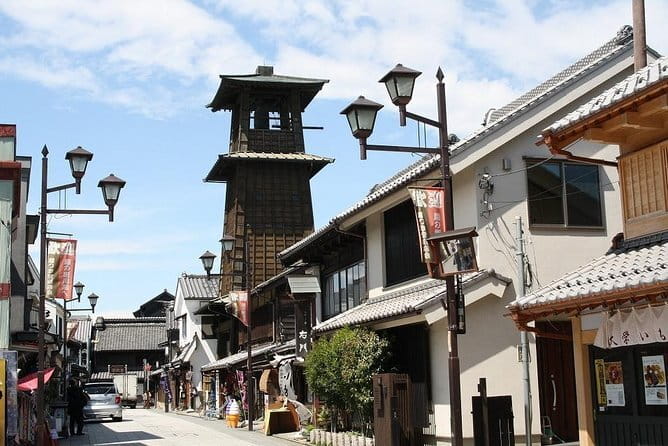
At $84.08 per person, this is not the cheapest way to eat sushi in Kawagoe. You can buy a prepared meal for far less. The price makes more sense if you value instruction, a small class, the historic venue, and the chance to repeat the rice and shaping techniques at home.
The fee includes the cooking ingredients and the meal you prepare. You are paying for a guided activity rather than simply ordering food, and the six-person maximum is important here. A small group makes it easier for the chef to see your hand position, correct your technique, and respond to dietary questions.
The historic building also gives the class something a restaurant meal does not. You are surrounded by features from a former rice business while learning how rice became the foundation of sushi. That connection is modest but worthwhile, particularly if you are interested in local buildings and everyday food traditions.
The value is weaker if you only want a quick lunch or already have strong sushi-making skills. In that case, the class could feel expensive for a 90-minute activity, especially since beverages and transportation are separate. For a first practical introduction, however, the price includes enough instruction and food to justify considering it as a Kawagoe cultural activity.
Dietary options and physical access
The menu can be adjusted for vegan, vegetarian, gluten-free, and halal diets. Allergy requests are also possible, except for meat, nuts, fruits, and dairy. The key rule is timing: ask when you book, because the kitchen cannot make changes on the day.
There are stairs to reach the venue. If you prefer to avoid stairs, contact the provider in advance because alternative arrangements may be possible. Do not assume those arrangements will be available without prior notice.
Service animals are allowed. The venue is near public transportation, but hotel transfers are not part of the experience.
These details make the class workable for many people, but not automatically for everyone. If you have mobility or food requirements, send the information early and wait for confirmation before relying on the arrangement.
Who will enjoy this most
I would choose this for a first visit to Kawagoe if you want more than a sightseeing loop. It gives you a local food activity, a historic interior, and a short lesson you can carry into your own kitchen.
It also suits couples, families, and small groups who like doing something together rather than sitting through a demonstration. The maximum of six keeps the activity personal, and the English-speaking chef makes it accessible if you do not speak Japanese.
The class is a good match for anyone curious about the difference between nigiri and maki. You practice both instead of focusing on only one finished dish, and you learn why rice preparation and cutting matter.
It may be less suitable if your schedule is packed, you dislike hands-on food preparation, or you need a completely step-free venue without advance planning. It is also not the right choice if you want a broad tour of Kawagoe, since the activity stays at MUSUBIYA and does not include transportation or a guided walk.
Practical booking advice
This experience is booked, on average, about 19 days ahead. That is a useful signal for planning, especially if you want the afternoon time slot or need a special menu.
The provider currently offers the activity on Mondays, with sessions from 12 to 1:30 p.m. and 3 to 4:30 p.m., for the stated operating period from May 9, 2025, through February 11, 2027. Check the available date and exact duration before you build the rest of your day.
Free cancellation is available if you cancel at least 24 hours before the start time. Cancellations or changes inside that window are not refunded or accepted. The cutoff uses local Japanese time.
The class can also be canceled if the minimum number of participants is not reached or if poor weather affects the activity. In those cases, you are offered another date or experience, or a full refund. This matters less for an indoor class than for an outdoor tour, but it is still worth knowing before you make fixed plans.
Should you book Little EDO Sushi Making?
Book it if you want a small, practical sushi lesson in a genuine old building, especially if you are staying in Kawagoe and already plan to visit Kashiya Yokocho. The best reasons are the English instruction, the close attention made possible by six-person groups, and the focus on rice, cutting, nigiri, and maki.
Skip it if your main goal is simply an inexpensive sushi meal, or if the 1.5-hour class does not fit your schedule. Before paying, send any dietary or accessibility requests, confirm the class duration, and remember to arrange your own drink and transportation.
For the right visitor, the fee buys more than lunch. You get a short lesson in a former rice shop, a clearer sense of how sushi is made, and a skill you can try again after returning home.
FAQ
Where does the sushi-making class take place?
The class takes place at MUSUBIYA, also written as 結家, at 1-6-7 Ishiharacho, Kawagoe City, Saitama, Japan.
How long does the experience last?
The tour summary gives an approximate duration of 1 hour 30 minutes. The description also refers to a two-hour class, so confirm the exact timing when booking and allow extra time in your schedule.
What types of sushi will I make?
You will make nigiri sushi, which is hand-formed sushi, and maki sushi, which is rolled sushi.
Is the class taught in English?
Yes. An English-speaking Japanese female sushi chef with international experience leads the workshop.
What is included in the price?
The price includes the cooking-class ingredients and the meal you make. Beverages and hotel pickup and drop-off are not included.
Can the class accommodate special diets?
The class can accommodate vegan, vegetarian, gluten-free, and halal menus. Some allergy requests are also possible, excluding meat, nuts, fruits, and dairy. You must request changes when booking because changes cannot be made on the day.
Are there stairs at the venue?
Yes. Stairs provide access to the venue. If you prefer to avoid stairs, contact the provider in advance to ask about alternative arrangements.
What is the cancellation policy?
You can receive a full refund by canceling at least 24 hours before the experience start time. Changes or cancellations made less than 24 hours before the start are not accepted or refunded.
Just added around Tokyo
- Kawagoe Japanese Food Tour : Unagi Kaiseki and Sake near Tokyo★ 5.0 · 30 reviews
- Kawagoe 4hr Private Tour with Licensed Guide (Kawagoe Dep)★ 5.0 · 13 reviews
- 【R34】Tokyo:Private Daikoku tour in Modified R34★ 4.9 · 92 reviews
- :Tokyo,Shibuya/ Pro Photography in Kimono / English-Friendly★ 5.0 · 26 reviews
- Tokyo:Celebrate Unique Japanese New Year Tradition Festivity★ 3.9 · 20 reviews
- Tokyo: Allstar Food Tour★ 4.7 · 29 reviews
- Tokyo: West-Side Cycling and Food Tour with Guide★ 5.0 · 37 reviews
- Tokyo:Calligraphy &Make your original folding fan in Asakusa★ 5.0 · 62 reviews
Sushi Experiences, compared.
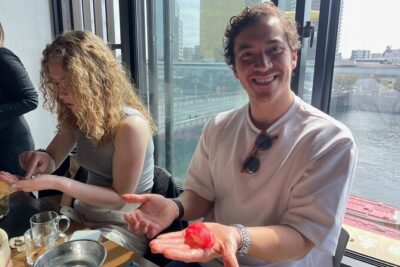
Sushi Making Tokyo Roll and Authentic Japanese Sushi Class
Our verdict →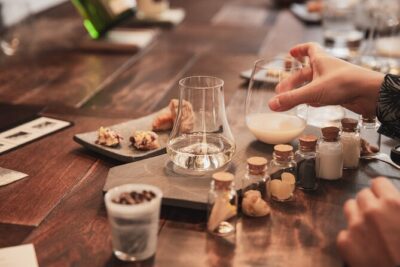
Sake Omakase in Tokyo: Guided Tasting by Certified Sommeliers
Our verdict →
Browse the lists this tour appears in