
Reviewed · SAMURAI EXPERIENCES
Kyoto Samurai Experience
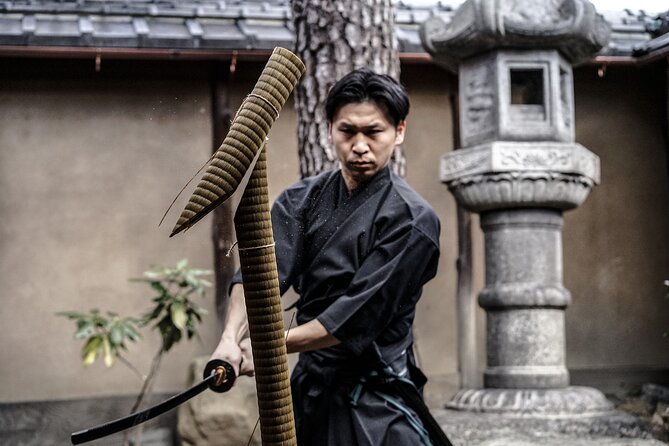
The sharpest part of this Kyoto experience is not the costume change. It is the chance to practice basic sword movements inside a traditional samurai house, then slow down with Zen meditation. The session connects the physical work of handling a sword with the discipline behind Bushido, the samurai way of life.
I like the hands-on format and the setting. You do not simply watch a staged demonstration, you learn how to stand, move, and make controlled strikes under the eye of a trained instructor. I also like the mix of swordsmanship, clothing, house history, meditation, and small cultural touches such as tea, sweets, music, and traditional drumming.
The main consideration is the price, $119.38 per person, and the location. The house is near public transportation, but it may take more time to reach than Kyoto’s central sightseeing stops. A small group helps, though the experience can feel less personal when the session is full.
Key points to know before booking
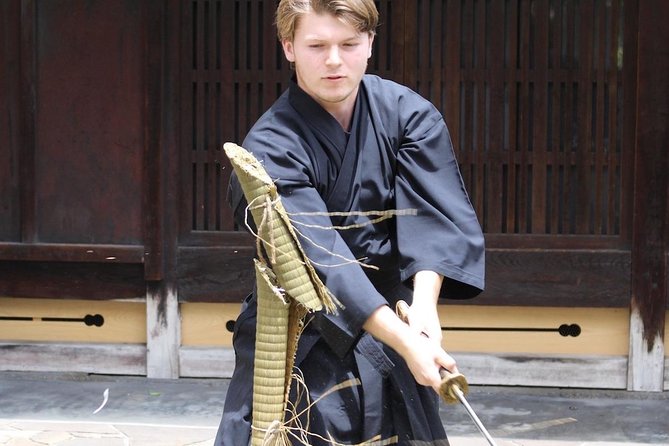
- Sword practice is the main event: You learn basic techniques and handle a martial arts sword under close instruction.
- The setting matters: The activity takes place in a traditional samurai house, not a modern classroom.
- You wear traditional clothing: Changing into a kimono adds ceremony and makes the photos more memorable.
- Zen meditation follows the physical work: The quiet finish gives the session a thoughtful balance.
- Morning and afternoon times are offered: You can fit the activity around temples, meals, and other Kyoto plans.
- Groups can reach 14 people: That is still manageable, but a full session may mean some waiting while others practice.
Entering a traditional samurai house in Kyoto
The experience begins at Kyoto Samurai Experience, at Waraku111 Inabachō in Nakagyo Ward. The activity ends at the same place, which keeps the plan simple. You will need to make your own way there, and the location is near public transportation, though it is not necessarily beside Kyoto’s biggest sightseeing areas.
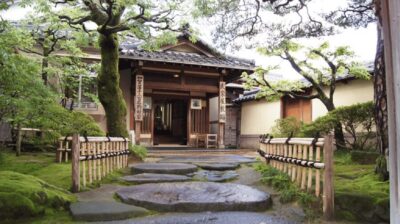
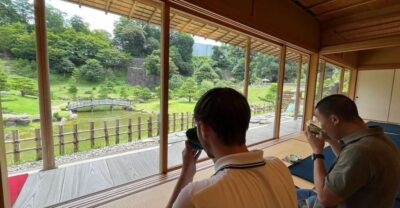
The building is part of the experience. A preserved samurai house gives the lesson a sense of place that a hotel meeting room could not provide. Before you pick up a sword, you learn about the house and the samurai world connected to it. That context matters. The activity is not only about striking a target for a photograph. It tries to show how clothing, manners, discipline, and martial practice fit together.
I recommend arriving with enough time to find the building without rushing. The meeting point is specific, but Kyoto’s smaller streets can take longer to navigate than a map suggests. Save the full address in your phone, and check your route before leaving your hotel or previous attraction.
More Samurai Experiences in Kyoto
- Kyoto: Kendo and Samurai Experience with Uniform and Gear
★ 4.9 · 815 reviews - Kyoto: Samurai Sword Class by Experts in Traditional Arts
★ 4.9 · 657 reviews - Skip the lines Basic Ticket at SAMURAI NINJA MUSEUM KYOTO
★ 4.5 · 632 reviews
Changing into a kimono before sword practice
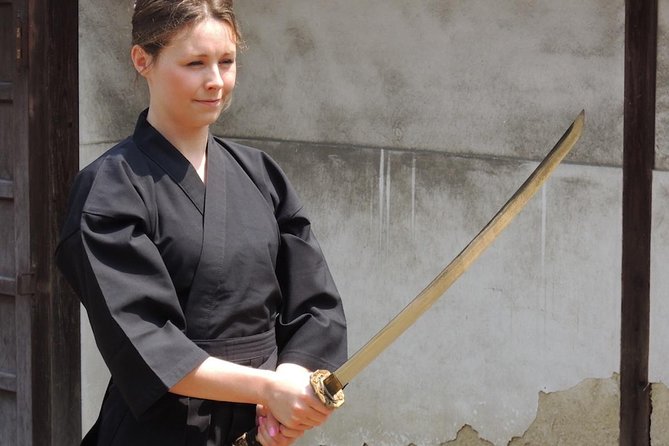
You begin by changing into traditional clothing. The kimono is not just a prop for a photo. It changes the mood of the session and gives you a small sense of how formal clothing affects movement and posture.
Wear comfortable clothes underneath and shoes suitable for an athletic activity. You will be moving, standing, and practicing sword techniques, so this is not the day for restrictive clothing or delicate footwear. The activity is open to families, but minors must be accompanied by an adult.
The clothing portion also works well for mixed-age groups. Adults can take the cultural details seriously, while children often enjoy the clear visual transformation. Families have found the activity particularly good for spending time together, since everyone learns the same basic techniques and watches each person take a turn.
Learning Bushido and the samurai way of life
The instructor explains Bushido, often translated as the Way of the Warrior. This section helps keep the activity from becoming a shallow sword show. You learn that samurai culture involved conduct and discipline as well as combat skills.
The exact balance between history and practice may depend on the group and instructor, but the session includes information about samurai dress, the house, sword craft, and Japanese history. The teaching is delivered in English, with English-speaking staff available to help communication.
You should expect an introduction rather than a university lecture. In roughly 1 hour and 45 minutes, there is only so much historical detail that can fit alongside clothing, sword exercises, meditation, and demonstrations. The value is in making the physical practice meaningful. When you learn why the movements are controlled and deliberate, the lesson feels less like a novelty activity.
Handling a sword under expert instruction
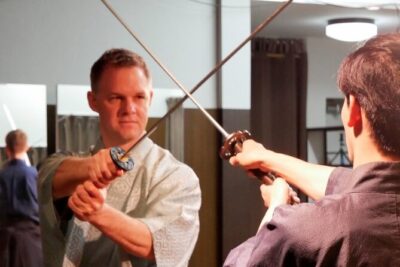
The central activity is basic swordsmanship. You are taught how to use a martial arts training sword, and the session includes handling a real martial arts sword under supervision. Follow the instructor’s directions closely and treat the sword as a serious training object, not a toy.
You may learn how to hold the sword, position your body, and carry out basic strikes. The experience also includes watching skilled sword work. The master swordsman and instructors are a major part of the appeal, especially if you have an interest in Japanese martial arts rather than only samurai films.
The lesson is hands-on, but it is not a full martial arts course. You will not leave with advanced sword skills after one session. What you can gain is a clear introduction to the discipline, body position, and focus involved in the practice.
Expect some waiting while other people in the group have their turn. The maximum group size is 14, so a full session may not feel private. The staff have been praised for giving clear instructions and helping participants stay involved while someone else practices.
Same trip, a completely different kind of day:
- PERFECT KYOTO 1-Day Bus Tour
★ 5.0 · 13,518 reviews - Kyoto: Fushimi Inari, Kinkakuji, Bamboo Grove 1 Day Bus Tour
★ 4.8 · 4,316 reviews - Kyoto: Tea Ceremony in a Traditional Tea House in Kiyomizu
★ 4.9 · 3,519 reviews - Kyoto Geisha Walking Tour: Gion District & Hidden Gems
★ 4.7 · 3,273 reviews
Watching the demonstrations and taking your turn
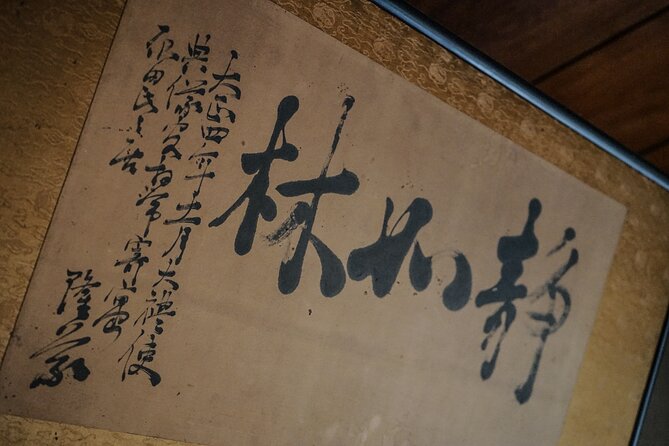
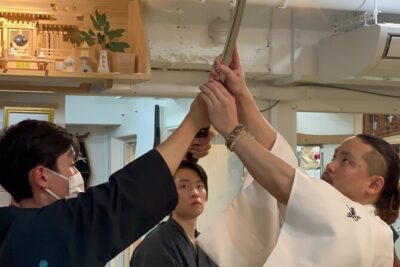
A good part of the excitement comes from seeing an experienced swordsman work at close range. The demonstrations show a level of control that is difficult to appreciate from a film or museum display. They also give you a model to copy when your own turn begins.
Some sessions may include extra cultural moments, such as a traditional Japanese string instrument or old drum. Tea and a sweet have also been part of the overall program. These details are not guaranteed in the basic description, so treat them as possible additions rather than promised features.
Photos are another useful part of the visit. Staff have taken photos during the session and shared them quickly, giving you a record of the kimono, the house, and the sword practice. Ask about photography at the start if you want to know when pictures will be taken.
The activity is not designed for you to charge through a series of stunts. The best version of it moves at a measured pace, allowing the instructor to explain each technique before you try it. If you want an action-heavy attraction with constant movement, this may feel too calm. If you want a guided introduction with time to listen, it should suit you better.
Ending with Zen meditation
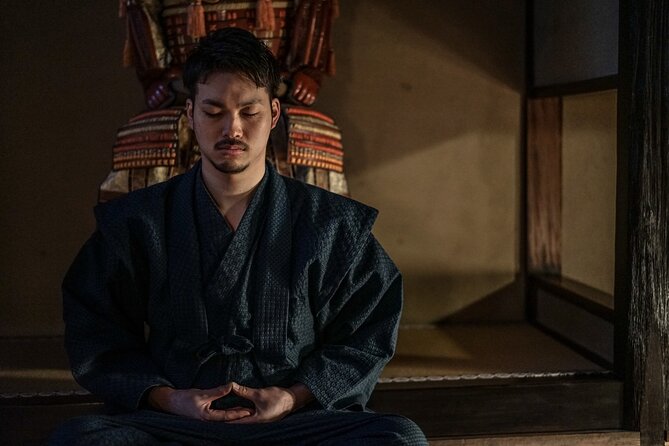
After the physical exercises, the group takes part in Zen meditation. This is one of the smartest parts of the schedule. Sword practice asks for attention and control, while meditation gives you a chance to settle down and consider the experience.
Meditation also helps separate this activity from a simple dress-up session. You have handled a sword, learned a little about samurai values, and then shifted into silence and stillness. The contrast makes the cultural lesson feel more complete.
The meditation is also useful if you are visiting Kyoto at a frantic pace. Temple visits, train connections, restaurant reservations, and crowded streets can fill a day quickly. A short guided period of quiet can be a welcome change, even if you have never tried Zen meditation before.
Some people will enjoy this part more than others. If you are mainly booking for sword action, the quiet ending may feel like a pause after the exciting portion. I see it as part of the reason the activity has broader appeal than a standard martial arts demonstration.
How the small group affects the experience
The maximum is 14 people. That is small enough for the instructor to give direction, but it is not the same as a private class. The experience will likely feel more personal in a partly filled group than in a full one.
A group also changes the rhythm. You will watch other participants learn, wait for your turn, and see how different ages and ability levels approach the exercises. For families and friends, this can be fun. You can encourage one another and take group photos in the house.
If you want uninterrupted practice or a custom lesson, ask about private options directly before booking. The supplied details describe a small-group session, not a private one. Keep your expectations in line with that format.
The staff’s manner is an important part of the experience. They have been described as friendly, patient, and attentive, with clear explanations and help for English-speaking participants. Practical care has also been provided during difficult weather, including water, hot tea, hand warmers, wet cloths, and electrolyte candies. Those touches matter because the activity may include time outside or in a space that feels cold or hot depending on the season.
The $119.38 price and what you receive
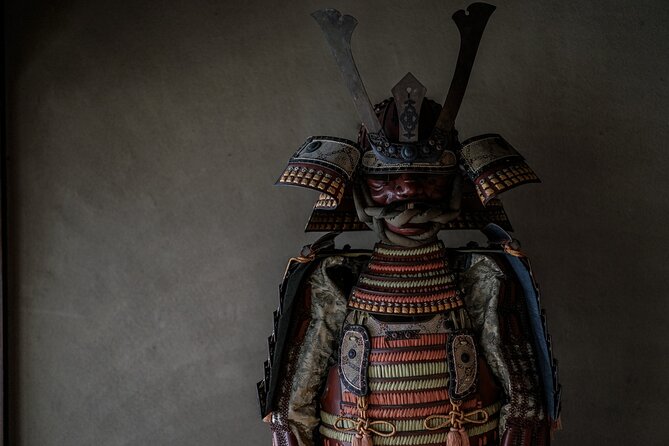
At $119.38 per person, this is not a cheap filler between temple visits. You are paying for an organized cultural lesson, use of traditional clothing, instruction, access to a historic house, sword practice, meditation, and the work of the staff who manage the session.
The value depends on what you want from Kyoto. If you only want a quick photo in a kimono, you can likely find less expensive options. If you want to understand a little about samurai conduct, handle a sword with instruction, and take part in a structured cultural activity, the price is easier to justify.
I would compare it with the cost of several separate activities. You receive clothing, history, a demonstration, practical training, meditation, and sometimes tea, music, or photos in one visit. It also fills less than two hours, leaving most of your day available for temples, markets, or meals.
The price is harder to justify if you dislike group activities, have limited interest in samurai culture, or expect a long training course. It is also worth noting that one poor experience described the activity as expensive and less impressive than expected, especially when the group was large. That is a fair warning: the atmosphere and level of personal attention may depend on the day’s group size and session flow.
Choosing morning or afternoon
You can choose a morning or afternoon departure. This flexibility is useful in Kyoto, where many visitors plan several stops in one day.
A morning session can work well before lunch and an afternoon sightseeing block. An afternoon session may fit better after a temple visit or morning walk. The activity ends back at the meeting point, so you can continue from there without arranging a second pickup.
Do not pack your schedule too tightly around the session. You need time to reach the house, find the exact entrance, and travel onward afterward. Kyoto transportation is usually practical, but a route that looks short on a map may involve walking through unfamiliar streets.
The mobile ticket is convenient. Keep it accessible on your phone, and make sure your phone has enough battery for the ticket, directions, and any photos taken during the day.
Who will enjoy this Kyoto experience most
I would recommend this for couples, families with older children, friends, and solo visitors who want more than sightseeing from behind a barrier. It suits people who enjoy cultural activities with a physical element but do not need an advanced athletic challenge.
It is especially good for:
- First-time visitors who want a structured introduction to samurai culture
- Families looking for an activity adults and children can share
- Martial arts fans curious about sword technique and discipline
- Visitors who value historic buildings and traditional clothing
- Photographers who want memorable portraits in a distinctive setting
- People who like to balance activity with a quiet meditation session
You should think twice if you have mobility concerns or cannot comfortably take part in an athletic activity. The operator asks participants to have a moderate fitness level and recommends comfortable clothing and proper footwear. For specific accessibility questions, contact the provider before booking.
The activity also works best when you approach it with respect. It is not a movie stunt, costume party, or chance to swing a sword freely. The sword is part of a formal practice, and the instructor’s directions should guide every movement.
Booking, cancellation, and practical details
Confirmation is provided when you book. Free cancellation is available if you cancel at least 24 hours before the scheduled start time. A cancellation made less than 24 hours before the start is not refunded, and changes within that period are not accepted.
Rescheduling may be possible if space remains, but it is not allowed within 24 hours of the session. Cutoff times use local Kyoto time, so check the clock carefully if you are making changes from another time zone.
The activity is available in the morning or afternoon and lasts about 1 hour and 45 minutes. It begins and ends at Waraku111 Inabachō, Nakagyo Ward, Kyoto, 604-8803, Japan. Since the location may feel out of the way for some visitors, build in a little extra travel time.
Should you book the Kyoto Samurai Experience?
Book it if you want a well-organized introduction to samurai culture that combines sword practice with history, clothing, and Zen meditation. The traditional house, expert instruction, friendly staff, and chance to handle a sword give the experience substance beyond a standard photo stop.
I would not book it solely because you expect a dramatic performance or private training. The group may include up to 14 people, and the $119.38 price is high for a short activity. But for families, couples, and curious visitors who want a memorable cultural session in Kyoto, the mix is strong.
Plan your route carefully, wear practical clothes, and arrive ready to listen as well as participate. If that sounds like your kind of afternoon, this is a worthwhile addition to a Kyoto itinerary.
FAQ
Where does the Kyoto Samurai Experience take place?
It takes place at Kyoto Samurai Experience, Waraku111 Inabachō, Nakagyo Ward, Kyoto, 604-8803, Japan. The activity ends back at the same meeting point.
How long does the experience last?
The session lasts approximately 1 hour and 45 minutes.
How much does it cost?
The listed price is $119.38 per person.
Is a mobile ticket available?
Yes. The experience includes a mobile ticket.
Can I choose a morning or afternoon session?
Yes. Morning and afternoon departure times are available.
What do I learn during the session?
You learn about samurai culture, Bushido, samurai dress, Zen meditation, and basic swordsmanship. The session also includes information about the historic house and Japanese history.
Do I get to wear a kimono?
Yes. You change into traditional clothing before taking part in the sword practice.
How many people can join the activity?
The group can include a maximum of 14 travelers.
What should I wear?
Wear comfortable clothes and appropriate footwear for an athletic activity. Minors must be accompanied by an adult.
Can I cancel for a full refund?
Yes, if you cancel at least 24 hours before the scheduled start time. Cancellations made less than 24 hours in advance are not refunded, and changes during that period are not accepted.
Just added around Kyoto
- Sekka Cotton Furoshiki Class★ 5.0 · 19 reviews
- Kyoto Sword Experience – includes Museum Ticket/Ninja Experience★ 4.5 · 149 reviews
- Scenic Green Tea Fields of Hidden Kyoto & Local Tea Exp (Private)★ 5.0 · 32 reviews
- Secret Eastern Kyoto Biking Adventure★ 5.0 · 44 reviews
- Samurai School in Kyoto: Samurai for a Day★ 5.0 · 202 reviews
- Private Sake Tasting in Central Kyoto with Sake Sommelier★ 5.0 · 32 reviews
- SHIRAKAWA Japanese Culture Experiences with private English staff★ 5.0 · 16 reviews
- A Privately Guided Photoshoot in Beautiful Kyoto by a Pro★ 5.0 · 18 reviews
Samurai Experiences, compared.

Kendo and Samurai Experience with Uniform and Gear
Our verdict →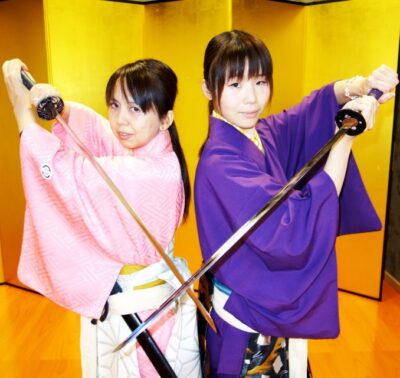
Browse the lists this tour appears in