
Reviewed · SAMURAI EXPERIENCES
Kyoto: Samurai Ninja Museum guided tour
Kyoto’s Samurai Ninja Museum turns a history lesson into a hands-on hour. You see armor and weapons, then put on a samurai costume, wear a real helmet, hold a replica sword, and try throwing a ninja star. Guides such as Miu, Sayo, Akiko, and Ko are often praised for clear English and lively explanations.
I like the balance between information and action, especially the shuriken throwing at the end. I also like that children and teenagers have something to do, rather than being asked to stare at display cases for an hour. The main consideration is value: at $28, the price is fair if you want the activities, but less attractive if you only want a quick museum visit.
Key points to know before you book
- A one-hour history lesson with props: See samurai armor, weapons, and displays while your guide explains their place in Japanese history.
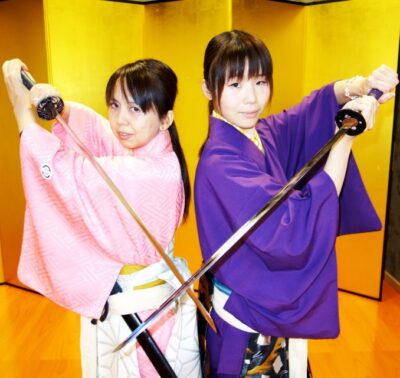
- You get into costume: Wear a samurai outfit, a real helmet, and hold a replica sword for photographs.
- The shuriken session is the big finale: The ninja star activity adds a simple competition and keeps younger visitors involved.
- English-speaking guides shape the experience: Guides including Miu, Sayo, Akiko, Ko, Aya, and Jukia have been praised for clear explanations and friendly delivery.
- The format suits families: The combination of short explanations, questions, dress-up, and target practice works well for children and teenagers.
- Check the group size before paying: The activity is described as a small group limited to 10, while another notice gives a maximum of 30 participants.
What this Kyoto samurai tour actually offers
This is not a quiet museum visit where you wander alone with a map. It is a guided presentation built around objects, costumes, questions, and short activities. You move through the subject with an English-speaking guide, then get a chance to handle replicas and dress up.
The focus is samurai and ninja culture in Kyoto and Japan. The introduction connects these warriors with the period from the early Heian era through the end of the Tokugawa shogunate. That broad time span gives the guide plenty to explain, from the role of samurai to the popular image of ninja.
You should keep your expectations sensible. This is a one-hour attraction aimed at making the subject accessible, not an advanced academic course. The value comes from the combination of explanation and participation. You see the equipment, hear the story, and then take part in an activity that helps the subject stick.
The guides are an important part of the format. Miu is praised for explaining history and craftsmanship clearly. Sayo is described as friendly and engaging, while Akiko is noted for detailed explanations and good photographs. Ko has been singled out for easy-to-understand English, and Jukia for both historical detail and enthusiasm.
Guide assignments can change, so you cannot book a particular person based on these names. You can, however, expect the tour to depend heavily on the person leading it. A good guide keeps the history moving, asks questions, and makes room for participation.
More Museum Tours in Kyoto
- Kyoto: Tea Museum Tickets and Matcha Grinding Experience
★ 4.9 · 739 reviews - Skip the lines Basic Ticket at SAMURAI NINJA MUSEUM KYOTO
★ 4.5 · 632 reviews - Kyoto : Geiko Maiko Dance of Kyoto & Visits of Gion Museum
★ 4.6 · 415 reviews
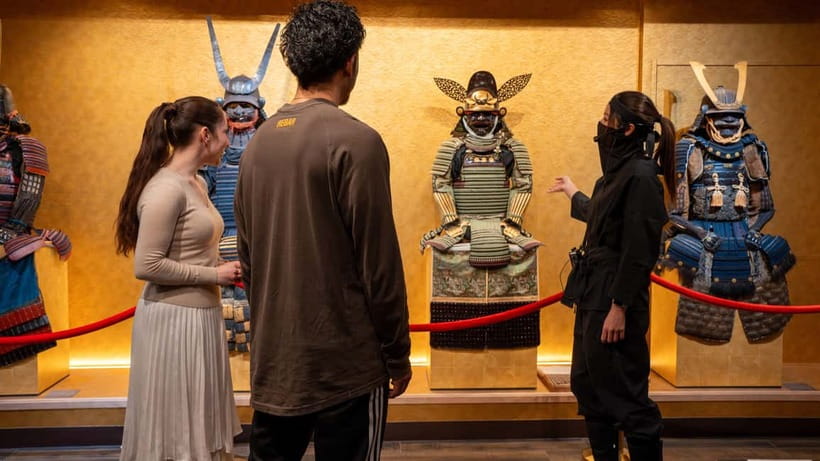
The museum displays: armor, weapons, and craftsmanship
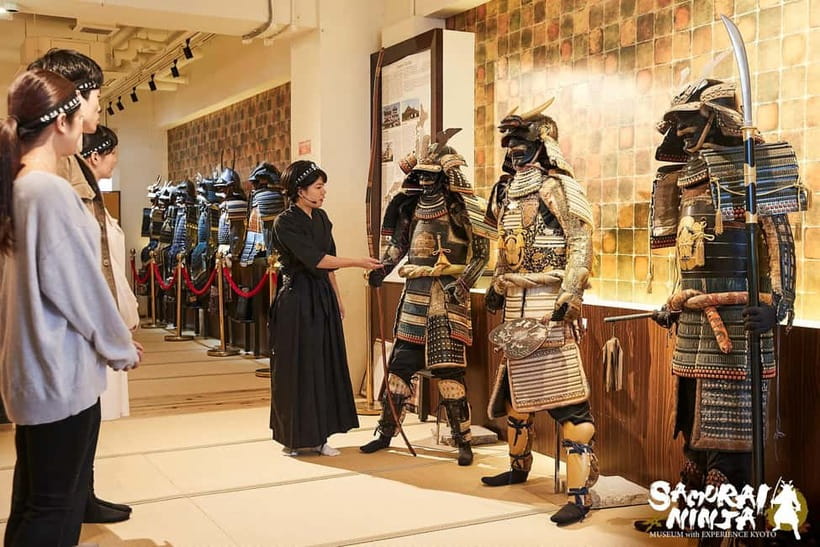
The first part gives you a look at samurai equipment, armor, and weapons. The displays help put a physical shape to the subject. Instead of hearing only about warriors and battles, you see the protective gear and tools connected with that world.
The craftsmanship is one of the more worthwhile elements. A suit of armor is not just a costume for a photograph. Its construction, decoration, and purpose give the guide a way to discuss status, protection, and the practical side of warrior life.
The activity description also refers to a katana lesson. This is useful for anyone who wants more than a photo opportunity, though the supplied information does not spell out the exact length or format of that lesson. You should treat it as a guided introduction rather than a full martial arts class.
The displays are especially helpful if you are visiting Kyoto with children. A young visitor may not remember every date or name, but the sight of a helmet, armor, or weapon gives the story something concrete. The guide can then connect the object to samurai life and Japanese culture.
This section may feel brief if your main interest is museum-quality historical research. The tour is designed to move quickly toward the interactive parts. If you want long labels, extended reading, or a large collection viewed at your own pace, this may not satisfy you.
Dressing as a samurai and wearing the helmet
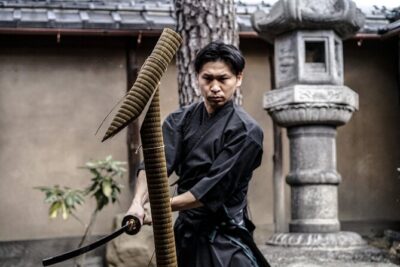
The dress-up portion is where the visit becomes personal. You put on a samurai costume, wear a real samurai helmet, and hold a replica sword. This creates the best photo opportunity of the hour and gives families a clear reason to bring a phone or camera.
The distinction between the real helmet and replica sword matters. You are handling a genuine piece of samurai equipment in one case and a safe reproduction in another. The attraction presents this as a supervised activity, not as permission to handle historical weapons freely.
I like this part because it helps explain how much visual power samurai equipment has. The helmet and armor are not plain work clothes. They communicate identity and status, and the guide can make that point while you are wearing them.
It is also a practical break from listening. A one-hour tour is short, but even a short talk can lose a child’s attention. Dressing up changes the pace and gives everyone a reason to stay involved.
Do not expect a private photo session with unlimited time. The exact rotation is not stated, and the activity is shared with the group. If photographs matter to you, be ready when your turn comes and follow the guide’s instructions.
The shuriken throwing finale
The ninja star throwing session is the most repeated highlight of the activity. You try shuriken, also called ninja stars, under guidance. The session often becomes a friendly competition, which explains why it works so well with teenagers and families.
This is not just a novelty added at the door. It gives the tour a clear finish and lets you test a skill connected with the ninja theme. Even if your aim is poor, the attempt is part of the fun. The activity creates a shared moment among people who may have arrived as strangers.
The tour also includes use of a ninja fukiya according to the description. The provided details do not explain how much time is devoted to it, so you should not assume it receives the same attention as the shuriken throwing. Still, its inclusion adds another hands-on element beyond the costume.
Safety instructions and supervision are part of the guided format. You should listen carefully and wait for your turn. Since the activity can include up to 30 people according to one notice, the pace may depend on the group size. The separate description of a group limited to 10 suggests that many departures may be smaller, but this is worth checking for your chosen time.
More Ninja Experiences in Kyoto
- Ninja 1-hour Hands-on Lesson by Japanese master in Kyoto -Entry
★ 5.0 · 489 reviews - Kyoto: Ninja Weapon Forging Experience
★ 4.8 · 478 reviews - Ninja 2-hour Hands-on Lesson by Japanese master in Kyoto -Medium
★ 5.0 · 218 reviews - Kyoto Sword Experience – includes Museum Ticket/Ninja Experience
★ 4.5 · 149 reviews
Why families and first-time visitors like the format
This tour is an easy introduction to samurai and ninja culture because it does not assume much prior knowledge. You can arrive without having read about Japanese history and still follow the guide’s explanation.
One visitor specifically suggested reading about ninjas in advance. That is good advice, not because preparation is required, but because a little background lets you ask sharper questions. If you know the basic difference between the popular image of a ninja and the historical subject, the display and commentary will mean more.
Families get several natural attention changes:
- A short explanation
- Armor and weapon displays
- Questions from the guide
- Samurai dress-up
- A replica sword and helmet
- Shuriken throwing
That rhythm is the reason this works better for many children than a standard museum gallery. The activity does not ask them to sit still for a long lecture.
Adults without children can enjoy it too. The guide explanations and equipment are not limited to a child’s level, and the costume session can be a welcome bit of silliness during a sightseeing day. You should choose it if you like learning through participation. You should skip it if you prefer a quiet, self-guided museum.
How good is the English guidance?
The tour is conducted in English, and the guide is live rather than recorded. Clear communication matters here because the value depends on understanding the explanations and following instructions during the activities.
The guide names associated with especially strong sessions include Miu, Sayo, Akiko, Ko, Aya, Jukia, Taka, Taku, Aoi, Saku, and Mami. The most common praise is directed at clear English, historical detail, friendliness, and the ability to involve the whole group.
That does not mean every guide will use the same script or have the same personality. One of the useful features of the format is the chance to ask questions. If you want more detail about samurai history, weapon craftsmanship, or ninja culture, speak up during the guided portion.
The guide may also be dressed in a ninja style, adding to the visual appeal. This is a small touch, but it helps set the tone. The attraction is presenting history in an accessible way, not pretending you have entered a battlefield.
Price, timing, and practical value
The listed price is $28 per person for one hour. Entry to the museum, the professional English-speaking guide, the samurai costume, and ninja star throwing are included. The activity description also includes the katana lesson and ninja fukiya session.
At that price, I see good value for families and fans of Japanese warrior culture. A child who takes part in several activities is getting more than a basic admission ticket. The price also covers the convenience of a guide who organizes the hour and explains what you are seeing.
The value is less clear if you are paying only for access to the displays. One four-star assessment objected to paying an upcharge for what felt like a regular museum ticket and guide. That is the key financial warning: the interactive elements need to matter to you.
The tour lasts one hour, so it is easy to fit around other Kyoto plans. You do not need to give up half a day, and the short length makes it a useful choice during a busy sightseeing schedule. Transportation to and from the attraction is not included, so you must make your own way there.
Free cancellation is available up to 24 hours before the activity for a full refund. You can also reserve now and pay later, which helps if your Kyoto schedule is still shifting. Starting times depend on availability.
The activity is listed as wheelchair accessible. Group information needs a little care: the main description calls it a small group limited to 10 participants, while the important information gives a maximum of 30. I would confirm the expected size before booking if a compact group is important to you.
Who should book this experience
I would choose this tour for a family with children or teenagers, first-time visitors to Japan, and anyone who wants a fun introduction to samurai and ninja culture. The dress-up and target practice give younger visitors something memorable to do, while the guide supplies enough context for adults.
It is also a good rainy-day option because the main activities take place inside the museum. The one-hour length keeps it from becoming tiring, and you can pair it with other central Kyoto plans.
I would hesitate if your main goal is a large collection, long historical analysis, or an unhurried museum visit. The tour is built around a presentation and group activities. You will get more from it if you enjoy taking part and asking questions.
Fans of samurai films should also keep their expectations grounded. The attraction offers replicas and costumes, but its purpose is to explain history and culture, not recreate a film set or provide a serious sword training course.
Final verdict: a lively hour with one value question
I recommend the Kyoto Samurai Ninja Museum tour if you want an active, family-friendly introduction rather than a formal museum visit. The strongest parts are the English guidance, the chance to wear a real helmet and samurai costume, and the shuriken activity that gives the hour a memorable finish.
At $28, book it when the hands-on elements are part of what you want. If you only want to see displays, the price may feel high for a one-hour visit. Check the group size and departure time, then choose this tour for an easy, engaging way to add samurai and ninja culture to your Kyoto plans.
FAQ
How long does the Kyoto Samurai Ninja Museum tour last?
The guided tour lasts one hour.
What is included in the price?
The price includes museum entry, a professional English-speaking guide, a samurai costume, and ninja star throwing. The description also includes a katana lesson and use of a ninja fukiya.
Is the tour conducted in English?
Yes. The tour has a live English-speaking guide.
Can I dress as a samurai?
Yes. You can wear a samurai costume, wear a real samurai helmet, and hold a replica sword.
Do I get to throw ninja stars?
Yes. Ninja star throwing, also called shuriken throwing, is included.
Is transportation included?
No. Transportation to and from the attraction is not included.
Is the museum wheelchair accessible?
Yes. The activity is listed as wheelchair accessible.
Can I cancel for a refund?
Yes. You can cancel up to 24 hours in advance for a full refund. You can also reserve now and pay later.
More Samurai Experiences in Kyoto
- Kyoto Samurai Experience
★ 5.0 · 1,294 reviews - Kyoto: Kendo and Samurai Experience with Uniform and Gear
★ 4.9 · 815 reviews - Kyoto: Samurai Sword Class by Experts in Traditional Arts
★ 4.9 · 657 reviews - Kyoto: Samurai Kenbu Traditional Sword Dancing Show
★ 4.5 · 426 reviews
Just added around Kyoto
- Sekka Cotton Furoshiki Class★ 5.0 · 19 reviews
- Kyoto Sword Experience – includes Museum Ticket/Ninja Experience★ 4.5 · 149 reviews
- Scenic Green Tea Fields of Hidden Kyoto & Local Tea Exp (Private)★ 5.0 · 32 reviews
- Secret Eastern Kyoto Biking Adventure★ 5.0 · 44 reviews
- Private Sake Tasting in Central Kyoto with Sake Sommelier★ 5.0 · 32 reviews
- Samurai School in Kyoto: Samurai for a Day★ 5.0 · 202 reviews
- SHIRAKAWA Japanese Culture Experiences with private English staff★ 5.0 · 16 reviews
- A Privately Guided Photoshoot in Beautiful Kyoto by a Pro★ 5.0 · 18 reviews
Samurai Experiences, compared.
Browse the lists this tour appears in