
Reviewed · SAKE TASTING
Kawagoe Japanese Food Tour : Unagi Kaiseki and Sake near Tokyo
The unusual star here is not sushi or ramen, but unagi, a prized Japanese eel prepared in front of you by a chef with more than 40 years at the grill. You watch the process, handle the live eel, learn how the dishes differ, and eat the results in a traditional setting.
I like two things right away: the meal gives you both plain grilled eel and unajū over rice, and the fresh wasabi session turns dinner into a hands-on lesson. The guide-led quizzes and lively explanations, sometimes translated by Mr. Kusuda, also make the food easier to understand.
The main drawback is the price. At $181.19 per person, this is a special-occasion meal, not a casual food stop. Alcohol, transport, and tips cost extra, and the 5 pm start leaves little room for a long evening elsewhere.
Key points to know before booking
- A 40-year eel chef prepares the food in front of you, making this part cooking demonstration and part dinner.
- You handle live eel and grate fresh wasabi, two details that make the experience more active than a standard restaurant meal.
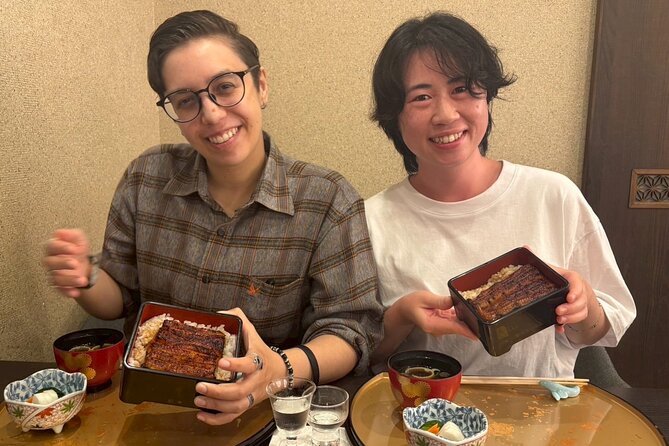
- The course includes shirayaki and unajū, so you taste eel without sauce and then in its familiar rice bowl form.
- The group has no more than eight people, which suits anyone who wants clear explanations and a close view of the preparation.
- Three sake pairings are optional, not included in the advertised price.
- The 5 pm meeting time works well with Kawagoe sightseeing, but transport from Tokyo and any earlier activities are your responsibility.
Why unagi makes this more than dinner
Eel is treated as a premium food in Japan. You can find sushi, noodles, tempura, and grilled chicken in many settings, but carefully prepared eel is more often linked with celebrations and special meals. That gives this experience a clear purpose: it explains why unagi matters instead of simply placing a bowl in front of you.
The setting is Kawagoe, an old-fashioned town about 30 minutes by train from central Tokyo. Its streets and buildings recall Japan’s samurai-era past, and the town usually feels calmer than Tokyo, Kyoto, Osaka, or Mt. Fuji. The food is local in spirit, too. You are not being sent to a generic restaurant near a major station for a quick tasting.
I like this pairing of place and cuisine. Kawagoe gives you a reason to leave central Tokyo, while the eel meal gives your visit a focus. You can spend the afternoon seeing the town, then arrive for the 5 pm start with enough appetite for a substantial course.
The tradeoff is that this is not a flexible drop-in meal. You need to be at Eccola Resona Koedoterrace in Saiwaichō at the stated time. If you are making a same-day trip from Tokyo, allow room for the train, finding the meeting point, and any delay.
More Drinking Tours in Tokyo
- Tokyo Bar Hopping Tour in Shinjuku (All-You-Can-Drink + Dinner)
★ 5.0 · 3,587 reviews - Best of Shinjuku: Izakaya Food Tour (4 Stops, 14+ Tastings)
★ 5.0 · 1,863 reviews - Tokyo: Shinjuku Local Bar and Izakaya Guided Walking Tour
★ 4.9 · 1,794 reviews
Meeting the chef at Eccola Resona Koedoterrace
The activity begins at Eccola Resona Koedoterrace, 41 Saiwaichō, Kawagoe, Saitama 350-0063. The group is limited to eight people, a useful size for a demonstration where you want to see the chef’s hands and ask questions.
The evening begins with an introduction to eel and its place in Japanese food. An English-speaking guide explains the meal and uses quizzes to keep the group involved. Mr. Kusuda has been praised for lively translation and candid humor, so the explanations are not meant to feel like a formal lecture.
That guide support matters. Japanese food terms can be confusing when you first meet them, and the difference between preparations is easy to miss if the menu is not explained. Here, you are given context before each dish, which helps you notice the texture, seasoning, and cooking method.
The chef’s experience is the central attraction. With more than 40 years preparing eel, he demonstrates a traditional process that most diners only see at the end, once the fish is already on the plate. You get a closer look at the work behind the meal and hear about ways to enjoy eel that you may not encounter at an ordinary izakaya.
Holding the eel and watching the preparation
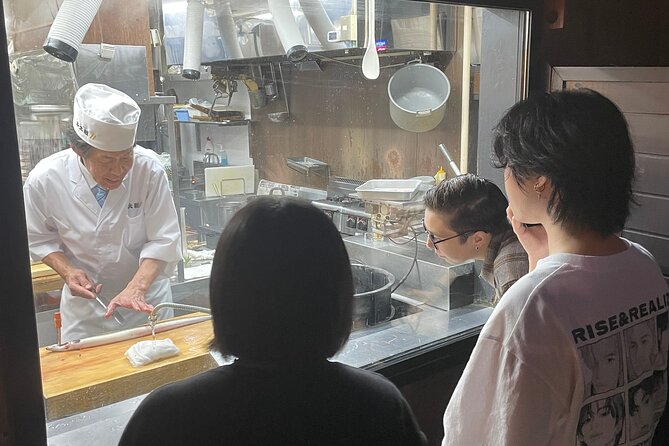
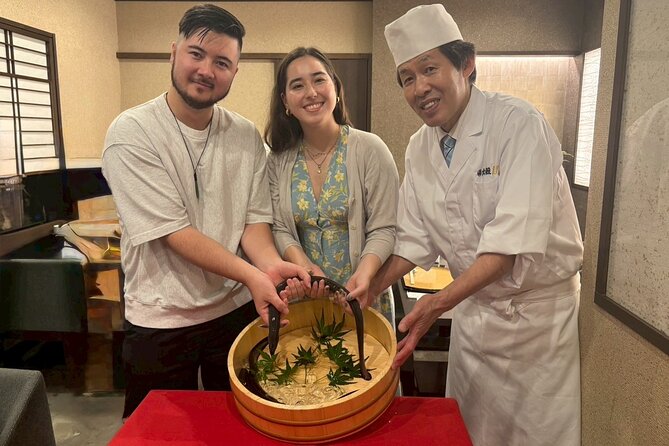
This is one of the more unusual parts of the evening. You may hold the live eel before it is prepared, then watch the chef turn it into the dishes served during the course. That hands-on moment will fascinate some people and make others uneasy, so it is worth considering your comfort with seeing food in its live form.
The demonstration gives the meal a clear farm-to-table feel without pretending that eel preparation is simple. You see that unagi is a skilled craft, not just a sauce poured over rice. The chef also explains facts about eel and the traditions surrounding it, with the guide helping in English.
I like that the activity does not stop at watching. The quizzes, questions, and close view of the preparation make you pay attention to the food. You are not simply waiting for the next course in a quiet restaurant.
The small group helps here. With a maximum of eight participants, you have a better chance of seeing the preparation and following the explanations than you would in a large food excursion. Solo visitors are welcome, so you do not need to find a companion to make the booking worthwhile.
Grating fresh wasabi for your own meal
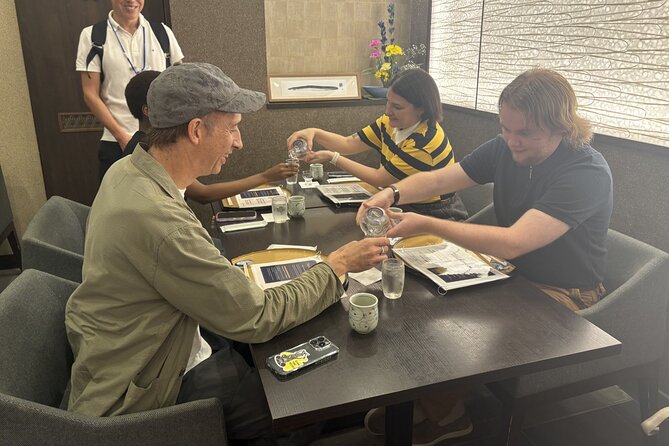
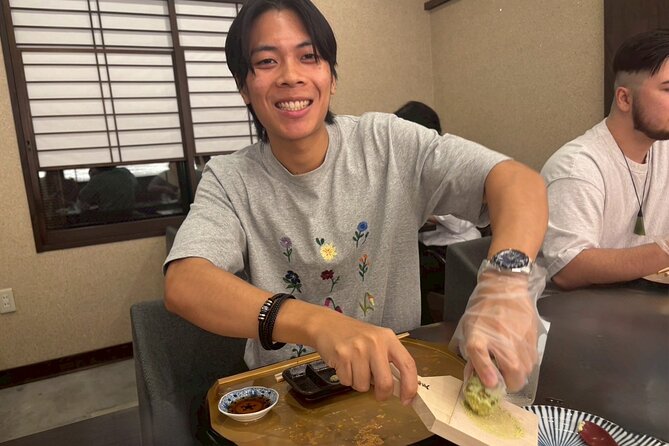
Fresh wasabi is another hands-on part of the experience. You grate it yourself and learn that the heat changes according to your technique. This is a small task, but it gives you a direct connection to the food and shows why freshly prepared wasabi tastes different from a ready-made condiment.
The wasabi is paired with the eel dishes and other items in the kaiseki-style course. The activity lets you experiment with the amount and preparation rather than simply receiving a fixed spoonful. If you like food demonstrations with something to do, this is one of the strongest parts of the program.
The experience also helps you compare flavors. Plain grilled eel has a different character from unajū, and adding fresh wasabi changes the balance again. The guide and chef explain ways to enjoy the eel, so you can treat the meal as a tasting rather than rushing toward the rice bowl.
Do not expect a full cooking class. You are not preparing the eel yourself, and the chef remains responsible for the technical work. The value is in watching a skilled specialist, taking part in the wasabi preparation, and tasting several forms of the finished dish.
More Food Tours in Tokyo
- Tokyo: Shinjuku Food Tour (13 Dishes at 4 Local Eateries)
★ 5.0 · 6,603 reviews - Tokyo Tsukiji Fish Market Food and Culture Walking Tour
★ 5.0 · 3,184 reviews - Tokyo: Shinjuku Food Tour (15 Dishes and 4 Eateries)
★ 4.9 · 2,033 reviews - Tokyo Night Foodie Tour in Shinjuku – Seasonal Sushi, Wagyu Beef
★ 5.0 · 1,161 reviews
Shirayaki, unajū, and the kaiseki-style course
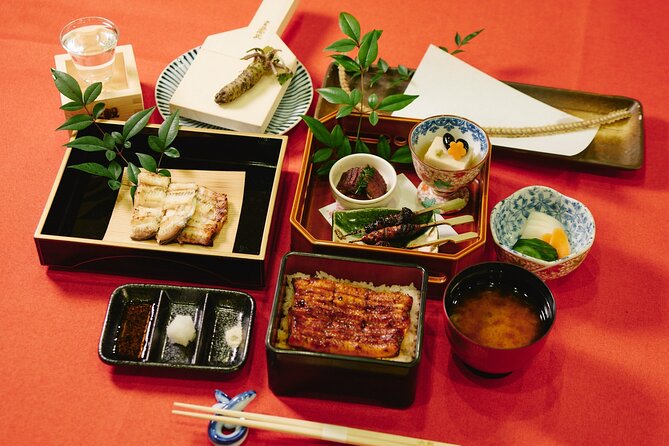
The included meal features an appetizer, shirayaki, and unajū. Shirayaki is eel grilled without the usual sweet sauce, allowing you to focus on the eel itself. Unajū is grilled eel served over rice, the familiar presentation many people associate with unagi.
Having both is important. A single sauced bowl can leave you with only one impression of eel. The plain grilled version gives you a point of comparison, while the rice dish shows how eel is commonly enjoyed as a complete meal.
The kaiseki-style elements add smaller dishes around the main eel servings. The exact appetizer selection is not specified, so you should think of this as a structured Japanese course rather than a fixed list of many named plates. The format allows the meal to unfold in stages and gives the guide chances to explain each part.
Portion expectations deserve a practical note. The meal is presented as a course, but the experience is built around premium eel, not an all-you-can-eat spread. If you want a long, informal night of many small plates, an izakaya may suit you better. If you want a focused meal that teaches you how eel is prepared and served, this format makes sense.
Adding Saitama sake to the evening
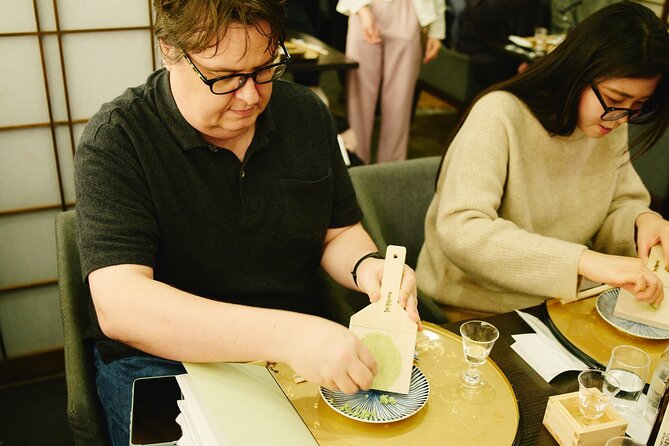
Alcohol is not included in the standard price. You can add a sake pairing with three varieties selected for the experience, and the sake choices include selections from Saitama. This is a sensible extra for anyone who wants to understand how sake works with grilled eel and wasabi.
The pairing is optional, so you can keep the base price lower if you do not drink. That flexibility is useful for solo visitors, people avoiding alcohol, and anyone who would rather spend the evening on the food itself.
At $181.19, the included meal already puts this in the premium category. Add sake, transport, and a tip, and the final cost rises. I would book it for the demonstration and the cultural setting, not just for the amount of food.
For comparison, a regular restaurant meal may be cheaper, but it will probably not include a chef’s live preparation, an explanation of eel traditions, a wasabi activity, a guide, and a small group. You are paying for access and instruction as well as dinner. The price makes the most sense if those parts matter to you.
Building a full day around the 5 pm start
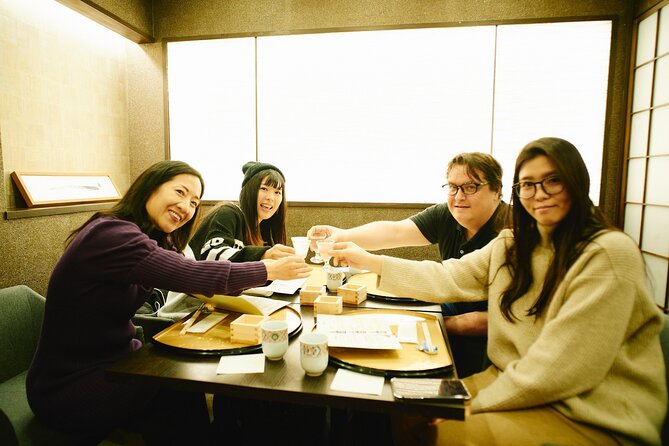
The activity lasts about two hours and 30 minutes and ends back at the meeting point. Since it starts at 5 pm, you can use the earlier part of the day for Kawagoe sightseeing or combine it with another nearby outing.
The suggested plan includes visiting Chichibu or Moominvalley Park in the morning, then spending the evening in Kawagoe, possibly dressed in a kimono. Treat that as planning inspiration rather than a service included with the eel activity. The tour price does not cover public transport, and no kimono rental is listed as part of the booking.
A simpler plan is often better. Arrive in Kawagoe early, walk through the historic town, and keep enough time to reach Eccola Resona Koedoterrace before 5 pm. After dinner, you finish at the same meeting point, which makes the evening easier to manage.
I would not schedule a distant attraction too tightly before this activity. The tour has a fixed start, and missing the opening explanation would weaken the experience. Kawagoe itself gives you enough reason to arrive early.
Who will get the most from this experience
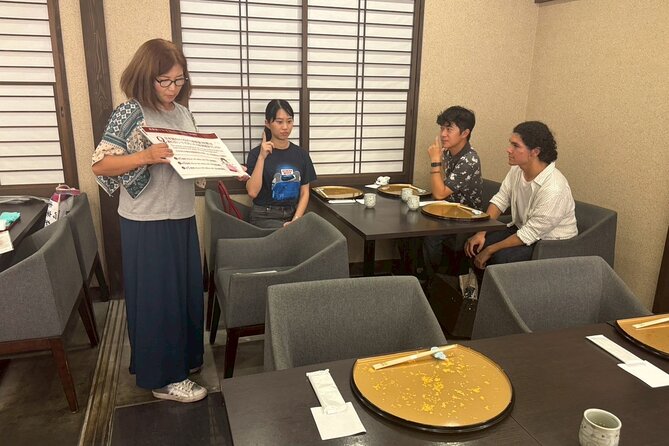
This is a strong choice for you if food is one of the main reasons you travel. You will get more from it if you enjoy learning how a dish is made, comparing preparations, and asking questions in a small group.
It also suits visitors who have already seen the standard Tokyo food circuit. If you have eaten sushi, ramen, tempura, and soba, eel gives you a less familiar subject. The chef’s demonstration adds a cultural layer that a normal restaurant visit would not provide.
Solo visitors are specifically welcome, and the eight-person limit should make it easier to follow the guide. The format also works for couples and small groups who want a special evening away from central Tokyo.
This may not be right for you if you dislike eel, feel uncomfortable seeing live food prepared, or want an inexpensive meal. The activity is focused on unagi from start to finish, and the premium price is hard to justify if you are only curious about taking a few bites.
Most participants can take part, and the meeting point is near public transportation. Still, you should confirm your route before the day and remember that the transport fare is separate.
Booking, cancellation, and practical value
Confirmation is provided when you book, and the activity is often reserved well ahead, with an average booking lead time of about 57 days. That suggests you should plan ahead if the 5 pm date is important to your itinerary.
You can cancel for a full refund up to 24 hours before the start time. Cancellations or changes made less than 24 hours ahead are not accepted for a refund, and the cut-off follows local time.
Tips are not included. Alcohol is also separate, including the optional three-sake pairing. Add those costs before deciding if the experience fits your budget.
The strongest reason to book is the combination of access, instruction, and food. You see a veteran chef prepare a premium ingredient, take part in the wasabi grinding, taste both shirayaki and unajū, and do it all in a small group in historic Kawagoe.
Should you book the Kawagoe unagi experience?
I would book this if you want one memorable food evening near Tokyo and are willing to pay for more than dinner. The live preparation, 40 years of eel expertise, fresh wasabi, guide explanations, and optional Saitama sake create a focused experience you are unlikely to reproduce at a standard restaurant.
I would skip it if your priority is low cost, a broad food crawl, or a free evening with no fixed schedule. For everyone else, especially food-focused visitors and solo participants, this is a thoughtful way to see another side of Japanese cooking while spending time in Kawagoe.
FAQ
Where does the unagi experience begin?
It begins at Eccola Resona Koedoterrace, Japan, 350-0063 Saitama, Kawagoe, Saiwaichō, 41.
What time does the activity start?
The start time is 5 pm.
How long does the experience last?
It lasts approximately two hours and 30 minutes.
Where does the activity end?
The activity ends back at the meeting point.
How many people can join?
The maximum group size is eight people.
Is sake included in the price?
No. Alcoholic drinks are not included, but you can add a sake pairing with three varieties for an additional fee.
What food is included?
The course includes an appetizer, shirayaki, and unajū, which is grilled eel served over rice. Grating wasabi is also included.
Can I cancel for a full refund?
Yes. You can cancel at least 24 hours before the start time for a full refund. Cancellations or changes made less than 24 hours before the start time are not refunded or accepted.
More Food & Drink in Tokyo
- Tokyo: Tsukiji Fish Market Food and Walking tour
★ 5.0 · 1,724 reviews - Eat and Drink Like a Local: Tokyo Ueno Food Tour-Taverns&Ramen
★ 5.0 · 957 reviews - Tokyo: Shibuya Food Tour (13 dishes and 4 Eateries)
★ 5.0 · 770 reviews - Tokyo: Tsukiji Fish Market Food and Culture Walking Tour
★ 4.7 · 757 reviews
More Sake Tastings in Tokyo
- Ramen and Sushi Cooking Class with Sake Pairing Set in Tokyo
★ 5.0 · 291 reviews - Sake Tasting Masterclass in Shinjuku (8+ Varieties with a Pro)
★ 5.0 · 271 reviews - Sake Omakase in Tokyo: Guided Tasting by Certified Sommeliers
★ 5.0 · 239 reviews - Tasting All Types of Sake with Sommelier
★ 5.0 · 151 reviews
Just added around Tokyo
- Kawagoe 4hr Private Tour with Licensed Guide (Kawagoe Dep)★ 5.0 · 13 reviews
- Little EDO Sushi Making workshop in Kawagoe★ 5.0 · 18 reviews
- 【R34】Tokyo:Private Daikoku tour in Modified R34★ 4.9 · 92 reviews
- :Tokyo,Shibuya/ Pro Photography in Kimono / English-Friendly★ 5.0 · 26 reviews
- Tokyo:Celebrate Unique Japanese New Year Tradition Festivity★ 3.9 · 20 reviews
- Tokyo: Allstar Food Tour★ 4.7 · 29 reviews
- Tokyo: West-Side Cycling and Food Tour with Guide★ 5.0 · 37 reviews
- Tokyo:Calligraphy &Make your original folding fan in Asakusa★ 5.0 · 62 reviews
Sake Tasting, compared.
Kyoto Night Foodie Tour in Gion (9+ dishes + 6 Sake tastings)
Our verdict →
1-Day Snow Monkeys, Zenko-ji Temple & Sake in Nagano
Our verdict →
Insider Sake Brewery Tour with Sake and Food Pairing
Our verdict →
Sake Tasting Masterclass in Shinjuku (8+ Varieties with a Pro)
Our verdict →
Browse the lists this tour appears in