
Reviewed · SAMURAI EXPERIENCES
Tokyo: Samurai Kendo Practice Experience
The first surprise here is how quickly this moves from cultural demonstration to active practice. You do not simply watch a sword show. At a small dojo near JR Uguisudani Station, you learn basic strikes, put on kendo armor, and take part in controlled practice with a bamboo sword. Some sessions also include a chance to handle a real katana, while the main exercise uses training equipment.
I like the small group of up to six, which gives the instructor room to correct your stance and footwork. I also like the balance of discipline and play: you learn etiquette and formal techniques, then get to test them in light sparring and simple games. The main consideration is communication. Instruction is in English and Japanese, and some explanations may come quickly. The dojo can also be hard to spot because it operates from a house.
Key points to know before you book
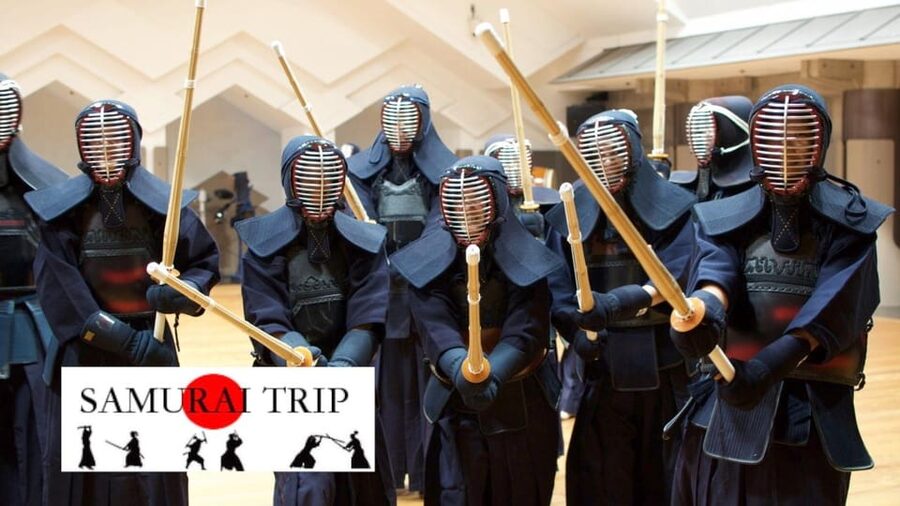
- You wear full kendo armor: Expect a genuine uniform, head protection, gloves, body armor, and training sword equipment, subject to available sizes.
- You practice real techniques: The session covers basic strikes such as men, kote, and do, along with footwork and some counter techniques.
- You get active fast: Even beginners practice as if preparing for a real match, with light sparring and playful combat exercises.
- Nagamatsu-sensei may lead the class: One experienced instructor identified in the experience is Nagamatsu-sensei, supported at times by other kendo teachers.
- The group stays small: Six participants is the stated limit, useful when you need help with armor, movement, or technique.
- Bring practical clothing: Loose exercise clothes, contact lenses instead of glasses, water, and a change of clothes will make the session easier.
What the two-hour kendo session is really like
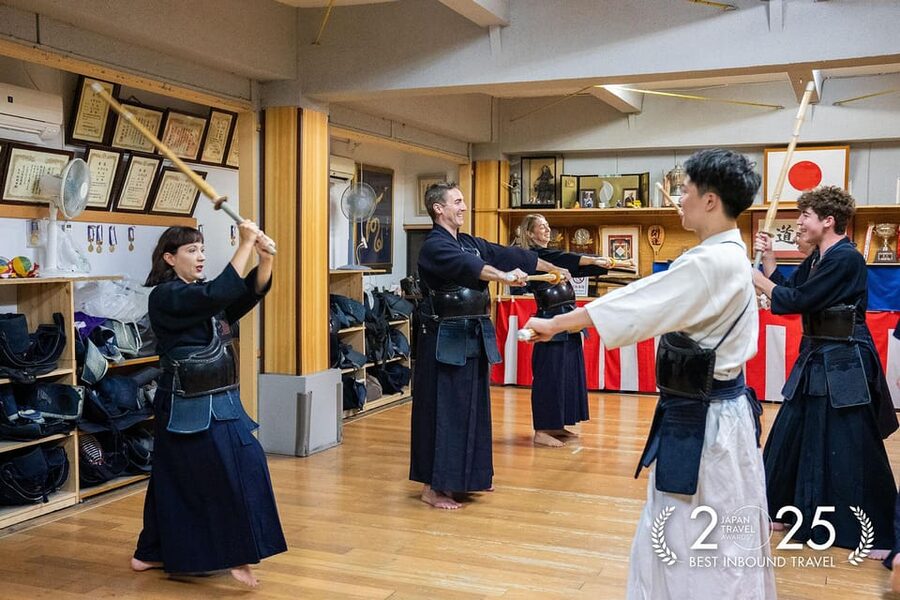
This is best understood as an introductory training class, not a stage performance. You arrive at a dojo in Higashinippori, a 10 to 12 minute walk from the North Exit of JR Uguisudani Station. The address is 4-7-2 Higashinippori, Arakawa-ku, Tokyo, with the dojo name written as 誠道館.
Give yourself time to find it. The location is run from a house, and the entrance is not as obvious as a major tourist attraction. I would not arrive at the last minute, especially if you are unfamiliar with Tokyo’s smaller residential streets.
Once inside, expect a quiet setting with a strong emphasis on manners. Kendo is not just about swinging a sword. Bowing, stance, attention, and control matter. The instructors use the setting to show you that the mental side of training is part of the activity, not decoration around it.
The exact order can vary, and the two-hour duration is an estimate. Still, the session generally builds from explanation and preparation into movement, strikes, and controlled practice. Allow extra time in your schedule so you are not rushing to the next reservation.
More Martial Arts Experiences in Tokyo
- Tokyo: Samurai Sword & Archery Class from Samurai Descendant
★ 5.0 · 603 reviews - Tokyo:Samurai sword and archery class from a samurai descendant
★ 5.0 · 121 reviews - Tokyo 2-Hour Genuine Samurai Experience: Kendo in Japan
★ 5.0 · 112 reviews
Learning the basic strikes before putting on armor
The opening lesson gives you a working idea of how kendo functions. You learn how to hold and move with the bamboo training sword, how to position your body, and how to step correctly. Footwork is more important than a casual visitor might expect.
The basic targets include men, the strike toward the head, kote, the wrist area, and do, the side of the body. You may also learn counter techniques and the rules behind a legal kendo strike. This gives the session more substance than simply copying a few dramatic sword swings.
The instructors are experienced in teaching beginners, but the pace can be brisk. If you have done martial arts before, particularly anything involving footwork, you may pick up the movements more quickly. If this is your first martial art, listen closely and copy the body position before worrying about speed.
English is available, but not every explanation will be delivered in polished conversational English. You might need to watch carefully and ask for a demonstration. That is manageable in a physical class, though one instructor’s blunt manner or fast speech could feel demanding if you are unsure what he means.
I would treat strict correction as part of the dojo atmosphere, while still speaking up if you do not understand a safety instruction. The best class experience comes from paying attention rather than trying to act like a movie samurai.
Wearing the uniform and full kendo equipment
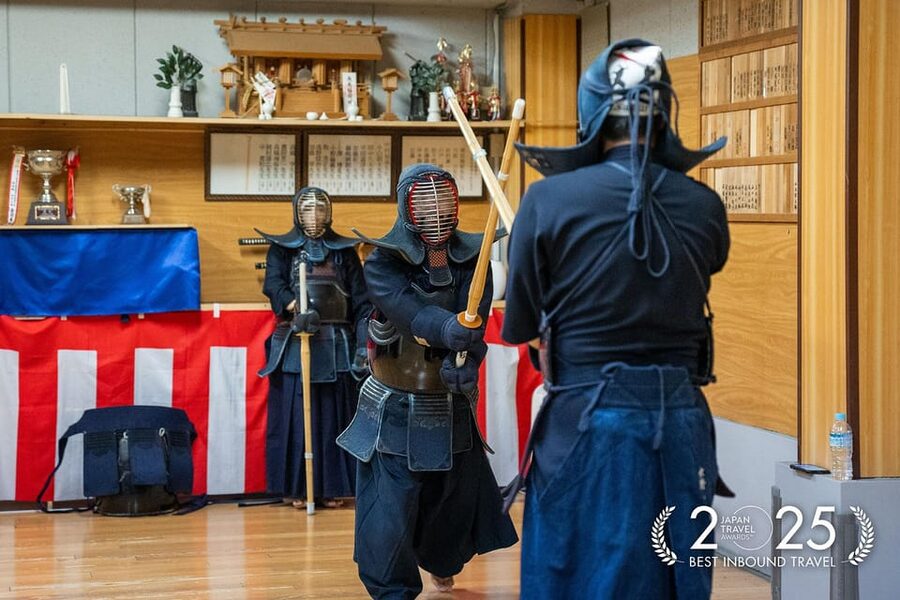
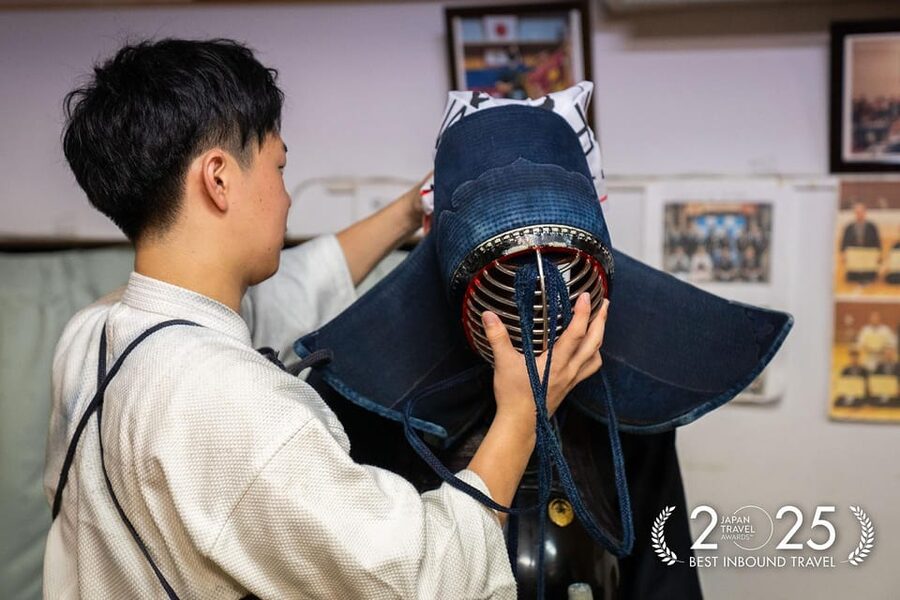
The costume is not a costume in the theatrical sense. You wear traditional kendo clothing and rental armor, then practice with the equipment used for training. The change in feel is immediate. The head protector limits your view, the armor adds weight, and the gloves affect how you grip the sword.
Equipment sizes are not guaranteed for every body type. The instructions specifically ask you to wear loose exercise clothing in case a suitable kendo uniform is not available. One participant found the activity less suitable for a plus-size body, so I would contact the provider before booking if standard clothing and armor sizes could be a concern.
Glasses are another important issue. The head armor can be difficult to wear with spectacles, and the glasses themselves could be damaged. Contact lenses are recommended. If you cannot use contact lenses, ask about the practical limits before the session rather than discovering the problem after arriving.
Expect to sweat. Kendo armor, movement, and repeated strikes make this a proper workout. Bring water, even though mineral water is included, and pack fresh clothes for afterward. A small Japanese hand towel is also provided as a gift.
From practice strikes to light sparring
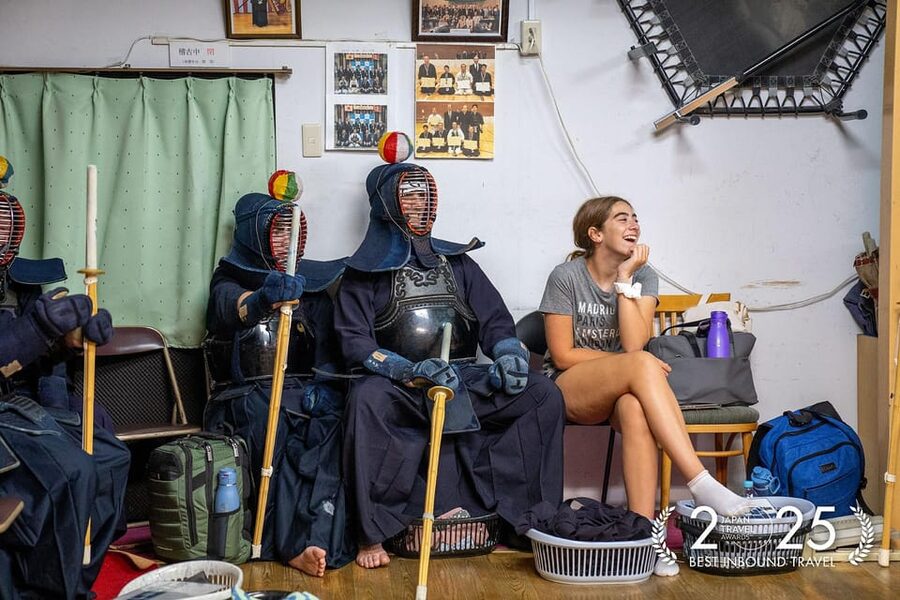
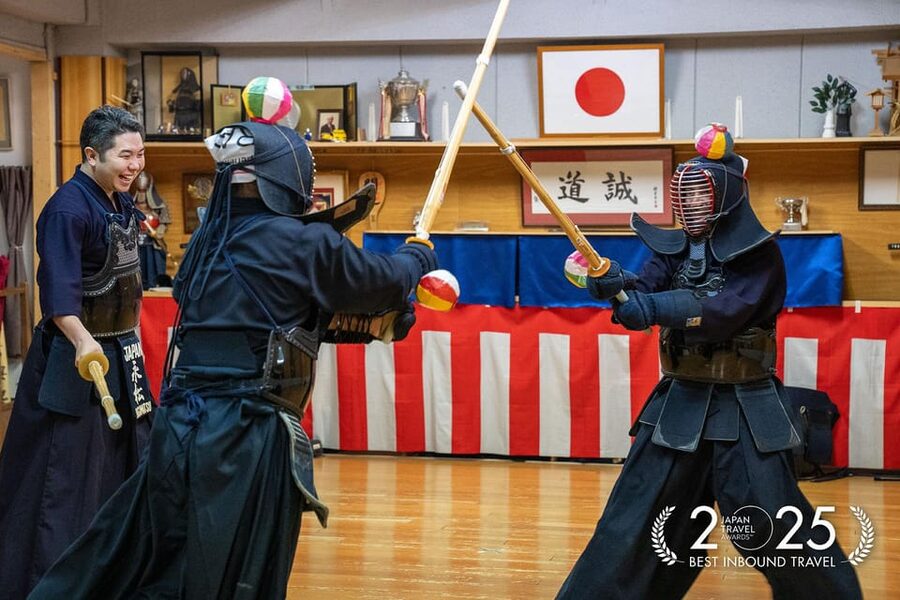
The most exciting part comes after the basics. You are not left to perform a slow demonstration for photographs. You practice the movements with a partner and may take part in light sparring, simple games, or controlled exercises against the instructor.
The word combat needs a little context. This is supervised beginner practice, not an unrestricted sword fight. The equipment is designed for training, and the instructor controls the pace. Some playful activities use balloons or similar targets, adding humor after the more formal instruction.
You may practice against other participants, and some sessions include a short exchange with the instructor. That moment shows the difference between knowing the motion and controlling it under pressure. An expert can move quickly and accurately, and even simple techniques become harder when someone is moving back.
One point deserves attention: strikes to the helmet can feel forceful. The session is intended to be safe and guided, but a family member may find the contact rougher than expected. If you are bringing children or sensitive participants, explain that kendo practice involves controlled contact and ask the instructor to clarify the limits at the beginning.
The class can also include a chance to handle a real katana. That is an interesting contrast with the bamboo sword, but the main training remains focused on kendo equipment and technique. Do not book this expecting a full lesson in historical sword fighting or repeated use of a live blade.
More Samurai Experiences in Tokyo
- Tokyo: Samurai Restaurant Show Ticket with 2 Drinks
★ 4.5 · 1,307 reviews - Tokyo: Samurai Ninja Museum Guided tour and Experience
★ 4.6 · 1,010 reviews - Best Samurai Experience in Tokyo
★ 5.0 · 458 reviews - Ninja Experience (Family Friendly) at Samurai Ninja Museum TOKYO
★ 5.0 · 441 reviews
What makes this more than a sword photo opportunity
Tokyo has plenty of activities built around samurai imagery. This one gives you a clearer look at the effort behind the image. The armor is cumbersome, the movements demand precision, and the instructor’s own speed makes movie swordplay look highly edited.
I especially value the etiquette. You learn that the sword is not treated as a toy, even when the class becomes playful. Bowing, control, and respect for a training partner shape the session. For me, that is the cultural value of the activity: you experience behavior and discipline, not just clothing and props.
The class also gives you a chance to watch experienced kendo practitioners training at the dojo. Depending on what is happening there, you might see local students practicing together after or around your session. That can be as useful as the formal talk because it shows what regular training looks like beyond the beginner hour.
The instructors can explain the history and rules of kendo, and their own awards and experience may be visible around the dojo. One instructor is described as having more than 60 years of kendo experience, while the teaching background also includes Keio University kendo training. Those details help place the class in a serious martial arts setting, even though the visitor program is designed to be friendly and accessible.
Is $116 good value for two hours?
At $116 per person, this is not a cheap drop-in activity. The price makes more sense if you want instruction, equipment, and direct participation rather than a short cultural demonstration.
You are paying for a professional instructor, rental kendo armor and equipment, mineral water, a Japanese hand towel, and a small group capped at six. The limited size matters. With armor to adjust and footwork to correct, a large class would make the session much less useful.
The value is strongest for visitors who have always wanted to try kendo but do not want to commit to a long course. In two hours, you get an introduction to etiquette, basic strikes, rules, movement, and light sparring. You also leave with a better sense of how demanding the activity is.
The value is weaker if you mainly want polished photos or a passive cultural talk. The session is physical, and the instructional quality depends partly on how well you follow English and Japanese explanations. It is also a short introduction, so you should not expect advanced swordsmanship.
You receive a free towel and water, but those are small extras rather than reasons to book. The real value is the instruction and the chance to train inside a working dojo with a very small group.
Who should book this Tokyo experience?
I would recommend it to adults, families with older children, and curious first-timers who want an active cultural experience. You do not need previous kendo experience. In fact, the class is built around teaching beginners the basic moves and rules.
It suits people who enjoy learning by doing. If you prefer to watch a demonstration from a comfortable seat, choose a different samurai-themed activity. You will be standing, moving, sweating, wearing protective equipment, and taking corrections.
It is also a good choice for martial arts fans. Prior experience is not required, but it may help you understand footwork and adapt to the pace. You can compare kendo with other disciplines without needing to take a full beginner course elsewhere.
Families should think about age, body size, and comfort with contact. The supplied information does not state a minimum age, so ask before booking for young children. The helmet strikes are controlled, but they are still part of the practice. Anyone uncomfortable with contact should say so clearly before the sparring begins.
Timing, meeting point, and useful preparation
The activity lasts about two hours, but the provider notes that the program can run shorter or longer depending on the situation. I would keep at least some buffer around it, particularly if you have a timed restaurant booking, train connection, or evening show.
The dojo is about 10 to 12 minutes from JR Uguisudani Station’s North Exit. Use the full address and the Japanese name, 誠道館, when checking directions. Since the location operates from a house and can be confusing to find, arrive early enough to get your bearings.
Wear loose exercise clothing. If the supplied clothing does not fit, you may be asked to practice in your own clothes. Bring contact lenses if you need vision correction, and avoid relying on glasses during the armor portion.
Pack water and a clean shirt. Mineral water is included, but an extra drink is sensible after sustained exercise. The free Japanese hand towel is useful, though it is not a substitute for a change of clothes.
Cancellation is flexible up to 24 hours before the activity for a full refund, and you can reserve now and pay later. That helps if your Tokyo schedule is still changing, but the practical details of meeting the group still matter. Confirm the starting time when booking because several times may be available.
Should you book the Samurai Kendo Practice Experience?
Book it if you want to learn basic kendo in a real dojo, wear the armor, and take part in supervised practice rather than pose with a prop sword. The small group, patient instruction, and mix of formal training with playful sparring make it a memorable two hours.
Think twice if you need very clear English at every step, have difficulty with standard equipment sizes, cannot use contact lenses, or dislike physical contact. The instructor may be strict, explanations may come quickly, and the helmet strikes can feel more forceful than a photo session suggests.
For the right person, the $116 price buys a rare kind of Tokyo experience: not a performance of samurai culture, but a short, demanding lesson in how disciplined sword training actually feels.
FAQ
Where does the kendo experience take place?
It takes place at 誠道館, located at 4-7-2 Higashinippori, Arakawa-ku, Tokyo. The dojo is about 10 to 12 minutes from the North Exit of JR Uguisudani Station.
How long does the activity last?
The scheduled duration is two hours. The provider notes that the total time may be shorter or longer depending on the circumstances, so leave some extra room in your schedule.
How much does the experience cost?
The listed price is $116 per person.
Is the experience available in English?
Yes. Instruction is provided in English and Japanese. Some explanations may be delivered quickly, so watching demonstrations and asking for clarification can help.
How many people are in each group?
The experience is described as a small-group activity limited to six participants.
Is kendo armor included?
Yes. Rental kendo armor and equipment are included, subject to available sizes.
What should I wear?
Loose-fitting exercise clothing is recommended. If the provider cannot supply a suitable kendo uniform, you may need to practice in your own clothing.
Can I wear glasses during the armor practice?
Glasses are not advised because the head protector can be difficult to wear with spectacles and may damage them. Contact lenses are recommended.
Are food and hotel pickup included?
No. Food and hotel pickup are not included.
Can I cancel or pay later?
You can cancel up to 24 hours in advance for a full refund. The reservation option also allows you to book now and pay later.
Just added around Tokyo
- Kawagoe Japanese Food Tour : Unagi Kaiseki and Sake near Tokyo★ 5.0 · 30 reviews
- Kawagoe 4hr Private Tour with Licensed Guide (Kawagoe Dep)★ 5.0 · 13 reviews
- Little EDO Sushi Making workshop in Kawagoe★ 5.0 · 18 reviews
- 【R34】Tokyo:Private Daikoku tour in Modified R34★ 4.9 · 92 reviews
- :Tokyo,Shibuya/ Pro Photography in Kimono / English-Friendly★ 5.0 · 26 reviews
- Tokyo:Celebrate Unique Japanese New Year Tradition Festivity★ 3.9 · 20 reviews
- Tokyo: Allstar Food Tour★ 4.7 · 29 reviews
- Tokyo: West-Side Cycling and Food Tour with Guide★ 5.0 · 37 reviews
Samurai Experiences, compared.

Browse the lists this tour appears in