
Reviewed · SAMURAI EXPERIENCES
Tokyo: Samurai Entertainment Night Show in Kanda Shrine
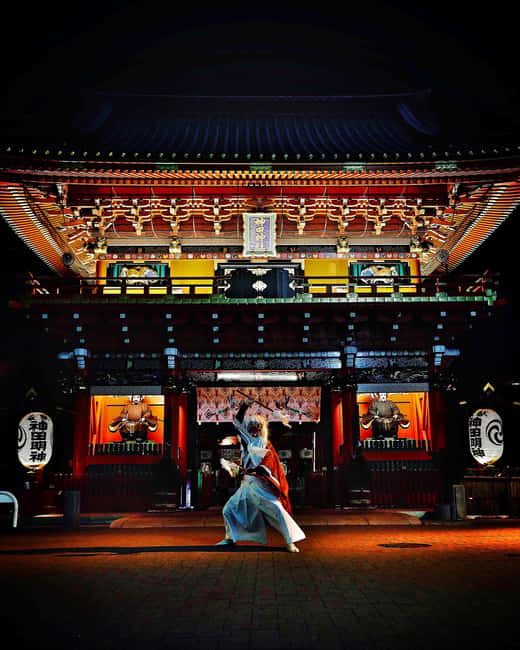
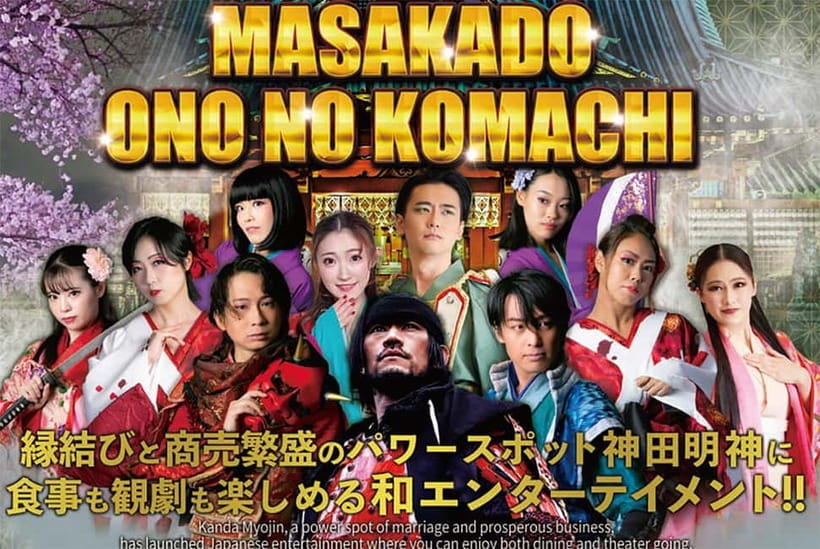
Kanda Myojin’s samurai theater turns a Tokyo shrine visit into a full evening out. Inside the shrine complex, you’ll watch the story of Taira no Masakado unfold through swordplay, dance, music, costumes, lights, and strong physical acting. I like the intimate room and the chance to meet the performers afterward, when photos are welcome and the cast chats with the audience.
I also like the practical format: arrive at 7 PM, order food and drinks before the performance, then settle in for the 8:15 PM show. The main caution is that this is theatrical entertainment rather than a formal lesson in samurai history. The story can feel unclear, and the amount of actual sword fighting may be less than you expect.
Key points
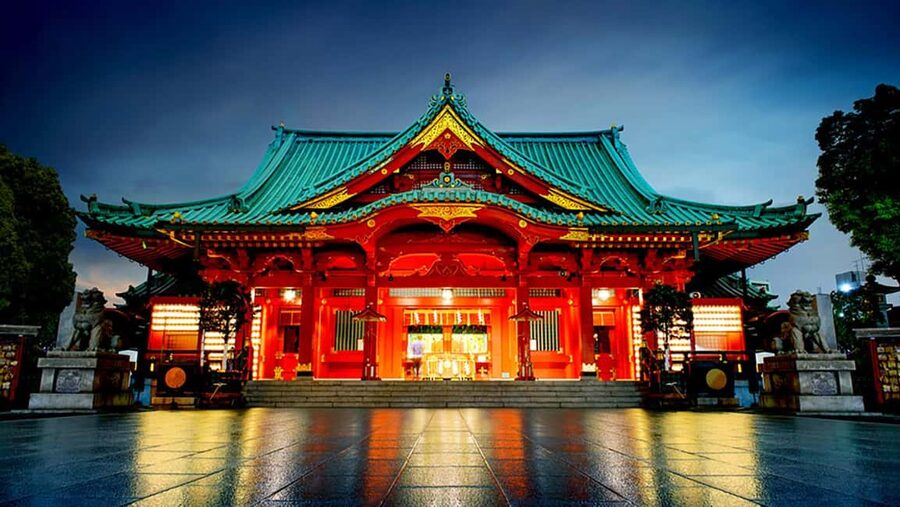
- Kanda Myojin setting: Begin the evening at one of Tokyo’s best-known shrines, beautifully lit after dark.
- Masakado’s story: The performance draws on the legend of Taira no Masakado, a rebel figure later linked with spirit folklore.
- Dinner theater format: Food is ordered separately, with an individual chicken hot pot available alongside other menu choices.
- Strong production: Expect energetic acting, costumes, choreography, music, sound effects, and modern lighting.
- Cast photos after the show: From 9:15 to 10 PM, you can photograph the performers and pose with them.
- Important restrictions: No cameras, photos, audio recording, or video during the performance, and late entry is not allowed after 8:15 PM.
A shrine evening with a theatrical twist
Kanda Myojin is more than a backdrop here. You enter through a famous Tokyo shrine complex, then head to The Show restaurant in the Kanda-Myojin Bunka-Koryu-kan building, downstairs on B1. The contrast is part of the appeal: polished city streets outside, shrine grounds and traditional imagery nearby, then a compact theater room below ground.
If you walk to the venue, allow extra time to find the correct entrance. The location can be confusing, particularly after dark. One of the nicest visual moments comes before the performance, as the route shifts from ordinary Tokyo streets toward the illuminated shrine grounds.
The shrine is known for blessings related to business and love, but this event focuses on its connection with Taira no Masakado. The show does not present a dry historical lecture. Instead, it uses Masakado as the center of a dramatic story involving Japanese legends, characters, movement, and fantasy.
That makes the evening easy to enjoy even if you know little about Japanese history. You do not need to arrive with background knowledge, although the story will make more sense if you read the short introduction or scene guide before the lights go down.
More Samurai Experiences in Tokyo
- Tokyo: Samurai Restaurant Show Ticket with 2 Drinks
★ 4.5 · 1,307 reviews - Tokyo: Samurai Ninja Museum Guided tour and Experience
★ 4.6 · 1,010 reviews - Tokyo: Samurai Sword & Archery Class from Samurai Descendant
★ 5.0 · 603 reviews
The 7 PM arrival sets the pace
Doors open at 7 PM, with eating and drinking scheduled before the show. This hour matters. You can order your meal, choose drinks, look over the story outline, and get settled without rushing.
The show begins at 8:15 PM, and entry is not possible after 8:15. The meeting instructions also ask you to arrive by 8 PM, so I would treat 7:45 PM as a sensible target. Tokyo transit is reliable, but shrine entrances and underground venues can still take time to locate.
Food and drinks must be ordered before showtime. Once the performance begins, you will want your attention on the stage anyway. A few people have found themselves wishing they had ordered one last drink earlier, only to discover that the action was too absorbing to leave their seat.
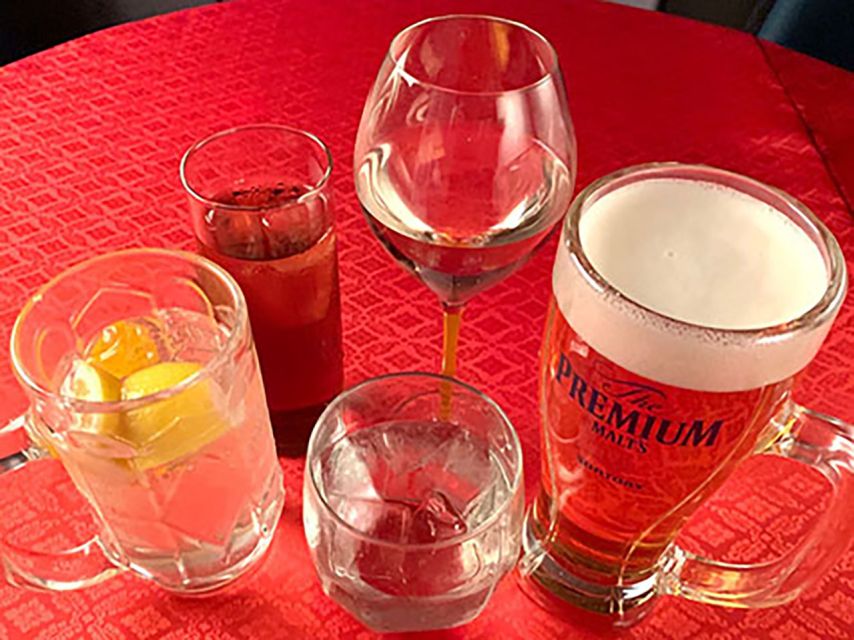
The basic ticket includes the samurai show and either one drink or unlimited drinks, depending on the option you select. Food is not included in the standard activity price. An a la carte menu is available, so check the exact booking option and budget for dinner if you want to eat.
What to order before the 8:15 PM performance
The individual chicken hot pot is one of the more distinctive food choices. You receive a small personal pot with seasonal vegetables and broth, then add the chicken yourself. Once the meat changes color, you dip it in sauce and eat it.
This is a good fit if you want a simple Japanese meal that also gives you something to do during the hour before the theater starts. The meal can continue with udon noodles, according to the dining description shared by the venue, so it is more filling than a small snack.
The menu may also include familiar choices such as fried chicken, fries, gyoza, soup, dessert, and udon. This range helps if you are traveling with children or with someone who is cautious about unfamiliar food. Vegetarian choices have also been available, including vegetarian udon, though you should confirm the current menu when booking.
Food quality is generally described as good, with some people finding it basic rather than elaborate. That is a fair way to view it. The meal supports the evening, but the performance is the main reason to book. If you want a serious restaurant dinner, eat elsewhere. If you want a convenient dinner theater meal with a Japanese hot pot option, it does the job well.
The unlimited drink option can add value, especially if you plan to use the full hour before the show. If you choose a single drink, the lower price may suit you better. Alcohol is available with the drink package, based on the dining details provided.
The Masakado story on a compact stage
At 8:15 PM, the theater shifts from dinner service to performance. The story centers on Taira no Masakado, a legendary rebel who has sometimes been compared in popular descriptions to a Japanese Robin Hood. The tale also connects with the idea of Masakado returning as a spirit after death.
You will not get a long spoken explanation of every historical detail. The performance leans heavily on movement, visual scenes, music, expressions, and action. A printed guide helps explain what happens in each part, and reading it during dinner is a smart move.
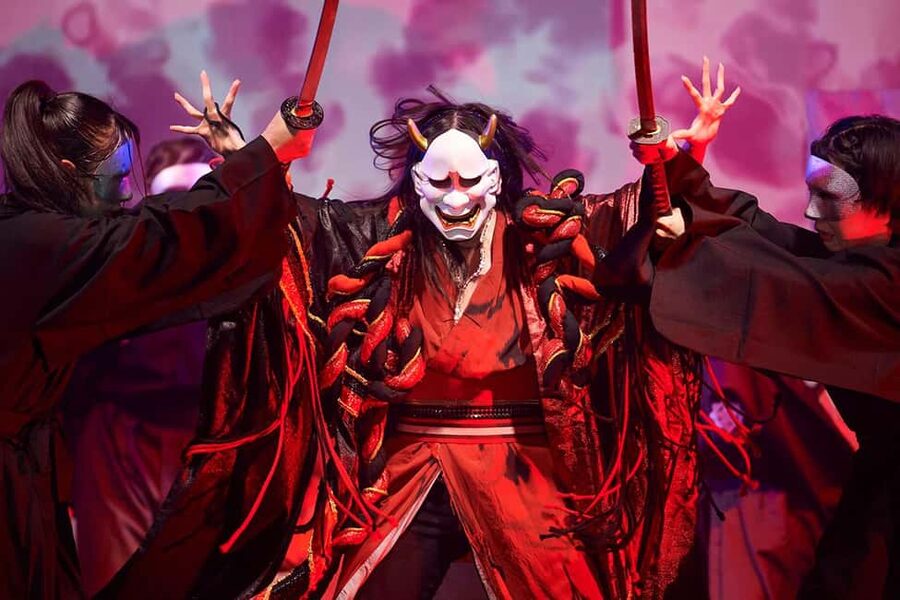
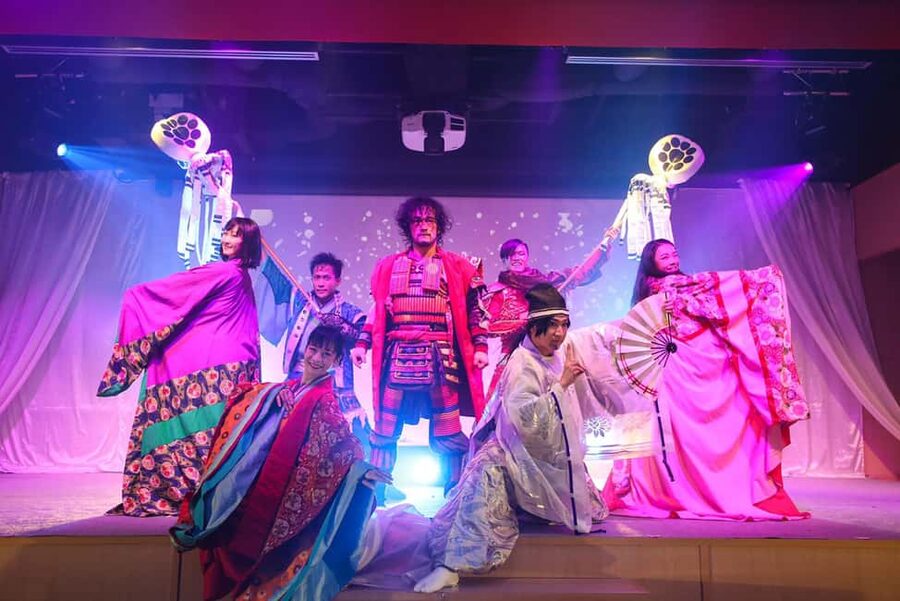
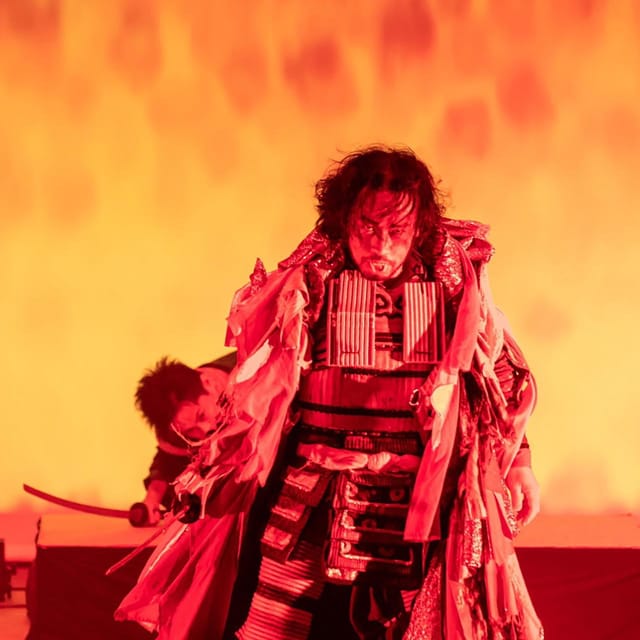
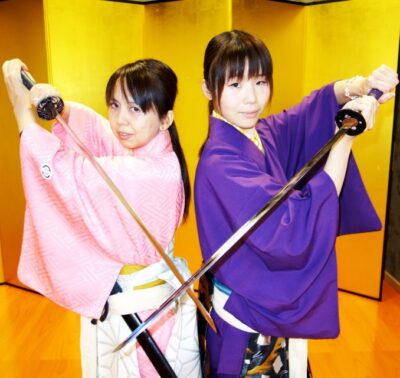
The cast brings the story to life through dance-like combat, dramatic poses, fast movement, costumes, and sound. The production also uses modern light effects and music, so it is not a museum-style reconstruction. Think of it as Japanese folklore presented through live stage entertainment.
That blend is why the show appeals beyond samurai enthusiasts. You might come expecting sword fighting and find a broader production built from theater, dance, mythology, and visual spectacle. The emotional force comes as much from the actors’ faces and body language as from the weapons.
The cast has been praised for maintaining energy from beginning to end. The small venue helps. You are close enough to notice expressions and choreography, and the room gives the action a personal feel that a large theater could not match.
More Temple & Shrine Tours in Tokyo
- Tokyo: Meiji Shrine, Asakusa, Skytree Bus Tour and Cruise
★ 4.7 · 1,986 reviews - Tokyo: Asakusa Walking Tour with Sensoji Temple Visit
★ 4.8 · 1,583 reviews - Tokyo Panoramic 1 Day: Meiji Shrine, Asakusa, Odaiba and SKYTREE®
★ 4.5 · 1,222 reviews - Tokyo: Zen Meditation at a Private Temple with a Monk
★ 5.0 · 510 reviews
Swordplay, dance, and modern stage effects
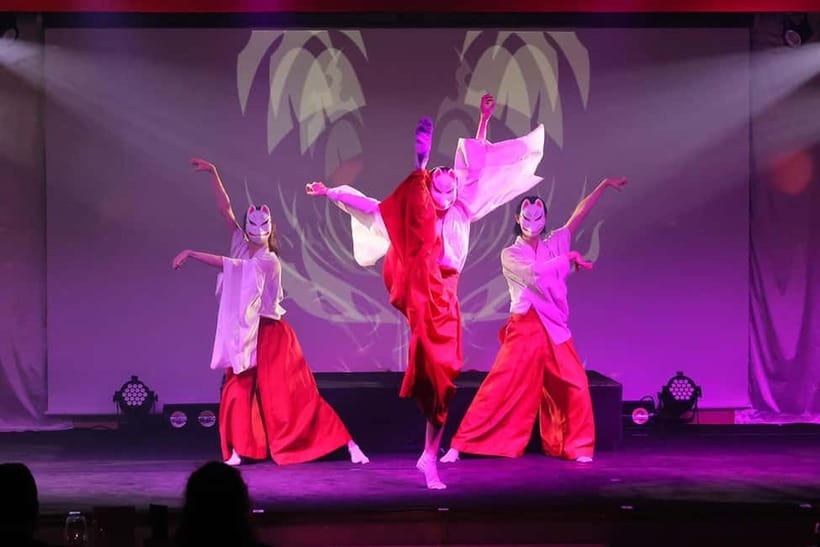
The word samurai can create a very specific picture: long sword duels, historical armor, and detailed combat scenes. This show offers some of that, but it is not nonstop sword fighting.
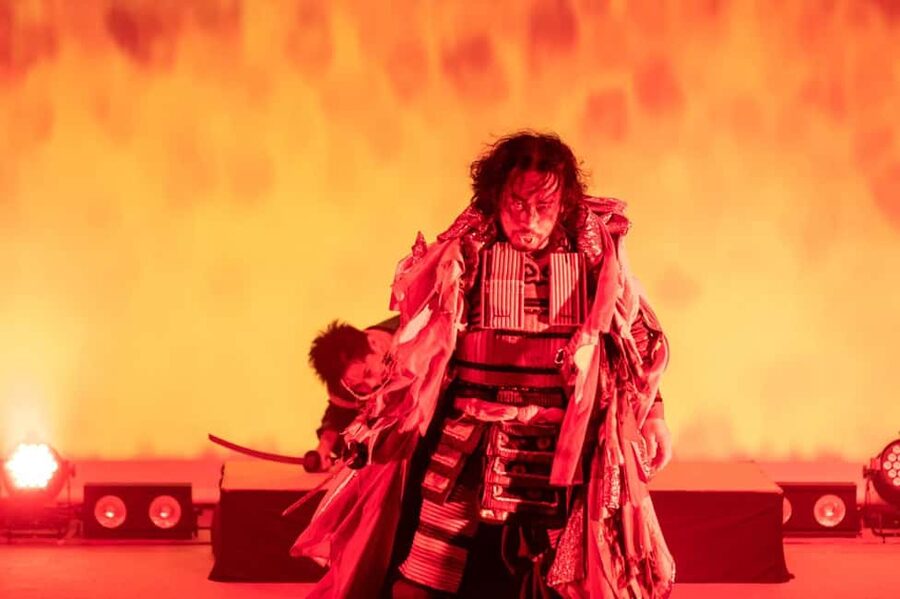
The performance is better understood as a visual dance theater piece with samurai themes. The cast uses sword movements, but also stylized walking, ensemble choreography, dramatic pauses, comedy, and character scenes. Some audience members have wanted more sword technique or clearer character development. That is useful to know before you book.
The music and sound effects carry much of the pace. Lights help shift the mood, while costumes quickly establish the characters. The result can feel close to live-action anime in its energy and visual style, particularly when several performers share the stage.
The production also includes several stories and characters beyond Masakado. Some material draws on Japanese folklore, including figures such as a spider woman, a butterfly, and a black fox. If you are hoping for a single, tightly explained historical narrative, the changing scenes may feel confusing. If you enjoy spectacle and symbolic storytelling, the variety keeps the show moving.
I would not book this as a substitute for a history tour. I would book it as an accessible introduction to Japanese legends presented with professional stagecraft.
Seat assignment and the view from the room
You cannot request a particular seat. The restaurant assigns seating, and the front section includes rows one through four. This matters if you are particular about sightlines or want to guarantee a front-row experience.
The advantage of a smaller room is that even seats outside the front section should feel relatively close to the performers. Still, the exact view is out of your hands. If seating is important to you, accept that uncertainty before booking rather than expecting a customized arrangement.
Tables support the dinner theater format, and the setting makes it easy to share the evening with a partner, family, or a small group. Solo visitors can also enjoy it. The cast and staff interact with the audience before and after the performance, which helps the room feel friendly rather than formal.
The performance itself lasts about an hour, from 8:15 to 9:15 PM. Because it is energetic and tightly staged, the time passes quickly. The full visit lasts two to three hours, depending on your arrival and how long you stay for photographs.
The 9:15 PM cast meeting is part of the experience
After the performance, the actors come out for photographs and conversation. The photo period runs from 9:15 to 10 PM, when the venue closes.
This is not a quick photo from a distance. You can take pictures of the performers and pose with them. The cast has also been known to mingle with the audience and speak with people in English, though the exact interaction will depend on the evening and the number of people waiting.
Bring your phone or camera for this part, but keep it put away during the show. The rules prohibit photos, video, and audio recording during the performance. Recording during the show is not a minor technical violation: it can distract the performers and the people around you.
The end-of-show photo period gives you a chance to capture the costumes and makeup in better detail. It also changes the mood. The actors who appeared intense or mysterious on stage become approachable, and the conversation helps connect the performance with the people who created it.
Some people offer tips to individual performers after the show. Tipping is not required by the stated activity details, and tipping is not a normal part of everyday service in Japan. If you choose to give money, carry small bills and understand that it is optional, not an expected admission charge.
What the $41 price really buys you
At $41 per person, the experience is reasonably priced for an evening that combines a shrine visit, live theater, a drink, and a cast photo opportunity. The value is strongest if you choose the drink package and want an easy night with entertainment already built into the plan.
Food is extra, so the final cost depends on what you order. The ticket is not a full dinner package unless your selected option specifically includes a meal. Check the booking details carefully, especially if you are comparing the single-drink and unlimited-drink versions.
The price also reflects access to a performance that is difficult to reproduce on your own. You could visit Kanda Myojin for free, eat nearby, and watch a separate theater show, but this activity joins those elements in one place and adds direct contact with the cast.
For families, the value depends on age and attention span. Children around 10 and 12 have enjoyed the fast action and visual storytelling, but younger children may find the folklore and limited spoken explanation harder to follow. Older children who like anime, costumes, dance, or fantasy should have plenty to watch.
Who should book this evening
I would recommend it most strongly to you if you want something beyond temples, shopping, and city views. It gives you a night of Japanese culture without requiring a formal lecture or advanced language skills.
It is especially suitable for:
- First-time visitors who want a planned evening in central Tokyo
- People interested in samurai stories, Japanese folklore, and live theater
- Families with older children
- Couples looking for dinner and entertainment in one booking
- Solo visitors who would enjoy a friendly cast interaction
- Anyone who values photos with performers after a show
It may not suit you if you want an accurate historical reenactment, a long sword-fighting demonstration, or complete control over your seat. The story can also be difficult to follow if you skip the printed explanation and expect dialogue to carry the plot.
The event is wheelchair accessible. One evening became more difficult for a wheelchair user because of the journey back to the hotel, but the activity itself is listed as accessible. If you use a wheelchair, confirm the current access arrangements directly when booking.
Free cancellation is available up to 24 hours before the activity, and you can reserve now and pay later. Those policies are useful if your Tokyo schedule is still changing.
My verdict on the Kanda Myojin samurai show
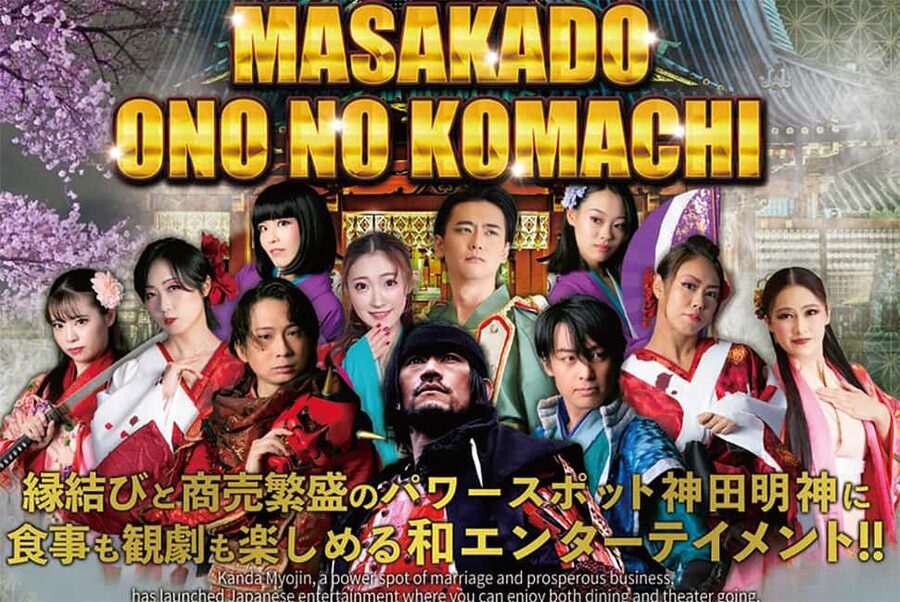
Book it if you want an entertaining cultural night, not a classroom lesson. The strongest parts are the intimate room, committed performers, stylish costumes, music, lighting, and the chance to meet the cast after the final scene.
Arrive early enough to find the B1 venue, order food and drinks before 8:15 PM, and read the story guide while you eat. Choose the unlimited-drink option only if you expect to make use of it, and do not count on requesting a particular seat.
The show’s occasional story confusion and limited sword combat are real drawbacks. They are easier to accept when you view the event as theatrical folklore rather than a strict samurai reenactment. For $41 before food, it is a good-value Tokyo night for anyone who enjoys live performance and wants a personal connection with the cast.
FAQ
Where does the samurai show take place?
The meeting point is The Show restaurant in the Kanda-Myojin Bunka-Koryu-kan building, on B1. It is located within the Kanda Myojin Shrine complex.
How much does the experience cost?
The listed price is $41 per person. Food is not included unless your selected option says otherwise, and drink inclusion depends on whether you choose the one-drink or unlimited-drinks option.
How long does the evening last?
The full activity takes about two to three hours. Doors open at 7 PM, the performance runs from 8:15 to 9:15 PM, photo time runs until 10 PM, and the venue closes at 10 PM.
What time should I arrive?
You should arrive at the restaurant by 8 PM. Entry is not possible after 8:15 PM, when the show begins. Arriving at 7 PM gives you time to order food and drinks.
Is food included?
Food is not included in the listed inclusions. An a la carte menu is available, including a chicken hot pot course with seasonal vegetables and broth. Food and drinks must be ordered before the show starts.
What is the performance about?
The performance brings the legend of Taira no Masakado to the stage. It combines Japanese folklore, storytelling, swordplay, dance, costumes, music, sound effects, and lighting.
Can I take photos during the show?
No. Cameras, photos, video recording, and audio recording are not allowed during the performance. You can take photos during the designated period after the show.
Can I take a photo with the performers?
Yes. From 9:15 to 10 PM, the performers are available for photographs, and you can pose with them.
Can I choose my seat?
No. Seat assignments are decided by the restaurant. The front section includes rows one through four.
Is the activity wheelchair accessible?
Yes, the activity is listed as wheelchair accessible. You may wish to confirm the current access arrangements when booking if you need specific assistance.
More Shows & Performances in Tokyo
- Tokyo: Sumo Show Experience with Chicken Hot Pot and a Photo
★ 4.8 · 6,678 reviews - Tokyo: Sumo Show and Dining Experience
★ 4.8 · 2,742 reviews - the SUMO show
★ 5.0 · 1,960 reviews - Tokyo Shinjuku Sumo Show & Experience with Photo
★ 5.0 · 1,750 reviews
Just added around Tokyo
- Kawagoe Japanese Food Tour : Unagi Kaiseki and Sake near Tokyo★ 5.0 · 30 reviews
- Kawagoe 4hr Private Tour with Licensed Guide (Kawagoe Dep)★ 5.0 · 13 reviews
- Little EDO Sushi Making workshop in Kawagoe★ 5.0 · 18 reviews
- 【R34】Tokyo:Private Daikoku tour in Modified R34★ 4.9 · 92 reviews
- :Tokyo,Shibuya/ Pro Photography in Kimono / English-Friendly★ 5.0 · 26 reviews
- Tokyo:Celebrate Unique Japanese New Year Tradition Festivity★ 3.9 · 20 reviews
- Tokyo: Allstar Food Tour★ 4.7 · 29 reviews
- Tokyo: West-Side Cycling and Food Tour with Guide★ 5.0 · 37 reviews
Samurai Experiences, compared.
Browse the lists this tour appears in