
Reviewed · SUMO EXPERIENCES
the SUMO show
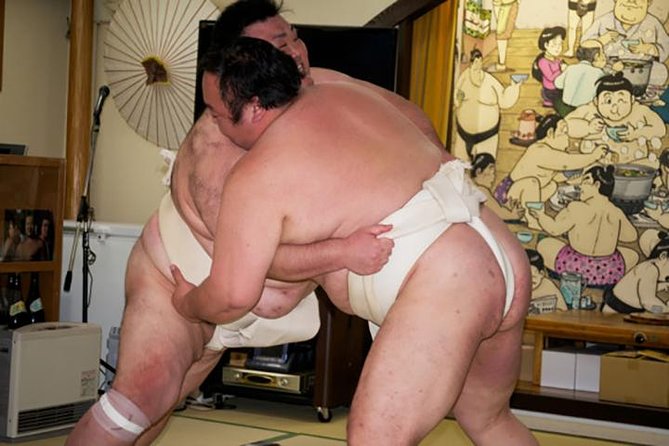
Sumo is far more than two enormous men pushing each other out of a ring. This 90-minute Tokyo show lets you see the sport up close, learn its rules and rituals, watch retired wrestlers demonstrate techniques, and possibly test your own strength in the ring.
I like the friendly crowd participation, which makes this a good choice for families and first-time visitors. I also like that the meal is prepared by retired wrestlers, giving the tonkatsu and chanko soup a useful cultural connection rather than treating lunch as an afterthought.
The main consideration is the price, $89.54 per person, and the fact that seating can vary. Some tables are farther from the dohyo, and groups may share tables. This is a lively cultural show with a meal, not a full professional sumo tournament.
Key points to know before booking
- Retired wrestlers lead the action: You learn basic moves, exercises, rules, and daily training customs from people who have lived the sport.
- You can challenge a wrestler: Participation is optional, but stepping into the ring is the most memorable part for many people.
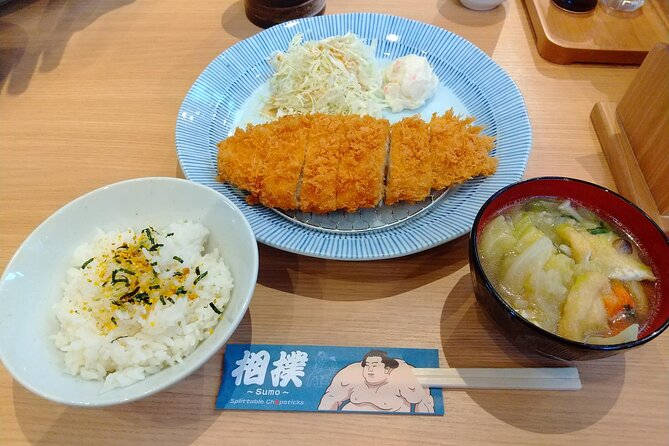
- Lunch is part of the show: Tonkatsu and chanko soup are included, while drinks cost extra.
- The venue is in Sumida: Meet at Yokozuna Tonkatsu, 3-chōme-1-11 Tatekawa, near public transportation.
- The format suits families: Children, adults, and people who prefer to watch can all take part at their own level.
- Plan dietary requests early: Vegetarian needs and allergies must be entered at booking at least five days before the event.
What the Tokyo Sumo Show Actually Offers
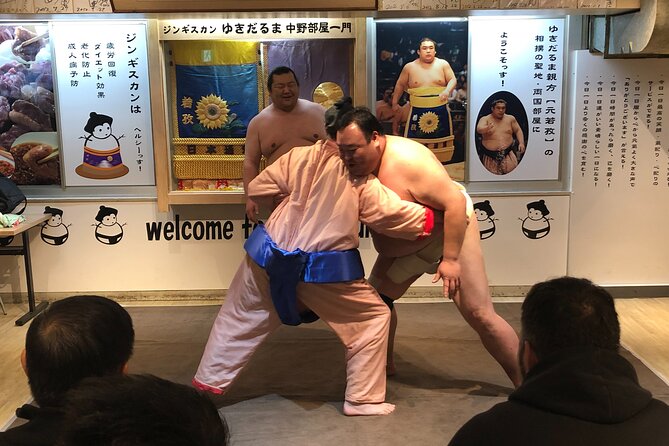
This is a compact cultural performance built around interaction. You are not sitting silently while an announcer explains sumo from a distance. The retired wrestlers come close to the audience, show the sport’s movements, answer questions, pose for photos, and invite volunteers into the action.
The show begins at 1:00 pm and lasts about an hour and a half. You make your own way to the venue, meet the host and the other people in your group, and settle in for an introduction to sumo.
The experience can accommodate up to 60 people. That is not a tiny private lesson, so the atmosphere may feel more like a small theater show than a personal coaching session. Still, the format is designed to keep the wrestlers interacting with the room rather than performing only on a distant stage.
I would book this for a first visit to Tokyo if you want a taste of sumo without planning your trip around tournament dates. You get a clear introduction to the sport, a meal, photographs, and the option to participate physically.
More Sumo Experiences in Tokyo:
- Tokyo: Sumo Show Experience with Chicken Hot Pot and a Photo
★ 4.8 · 6,678 reviews - Tokyo: Sumo Show and Dining Experience
★ 4.8 · 2,742 reviews - Tokyo Shinjuku Sumo Show & Experience with Photo
★ 5.0 · 1,750 reviews
Entering the Sumo World at Yokozuna Tonkatsu
The meeting point is Yokozuna Tonkatsu and Sumo lunch in Sumida City. The venue is near public transportation, and the activity ends at the same place, which keeps the logistics simple.
The location matters because it places the meal and show together. You do not need to cross Tokyo between a performance and lunch. Since the tour starts at 1:00 pm, it works well as a midday stop before exploring more of Sumida.
After booking, the host sends the location details. Check those instructions carefully, especially if you are relying on a phone map. One unhappy customer found the booking system and reminders unclear, so I would not leave the meeting details until the last minute.
Arrive with enough time to find the building and settle in. Seating is assigned according to the order reservations are received, and arriving early does not guarantee a better seat. That is worth knowing if you are booking close to the date or traveling with a larger party.
A Clear Introduction to Sumo Rules and Rituals
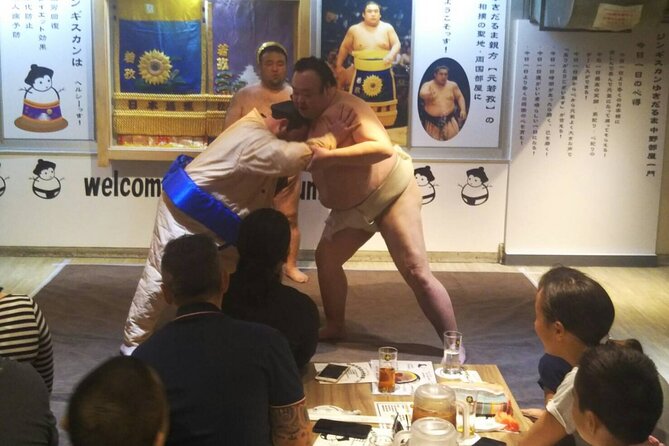
The opening presentation explains the basic structure of sumo, its rules, and the training rituals associated with the sport. This is aimed at people who know little about sumo, so you do not need to arrive with a working knowledge of ring tactics or Japanese terminology.
The retired wrestlers demonstrate several moves and exercises. That visual approach works better than a long lecture because you can see how a technique functions in the ring. The presentation also gives you a sense of the discipline behind the sport, not only the spectacle of large athletes colliding.
The show is educational, but keep your expectations in check. It gives you a lively introduction rather than a detailed study of sumo’s centuries of development, rankings, or tournament system. If you already follow the sport closely, the basic explanation may feel familiar.
For first-time visitors, though, the level is useful. You learn enough to understand what you are watching, then the demonstration turns those rules into something physical and funny.
One practical note: video or music may play during part of the presentation, and the room can make the host difficult to hear. Sit where you can see the dohyo clearly, and ask questions when something is unclear. The presentation moves at a friendly pace, but it is easy to miss a point if you are watching the action from a distant table.
Watching Retired Wrestlers Demonstrate Their Skills
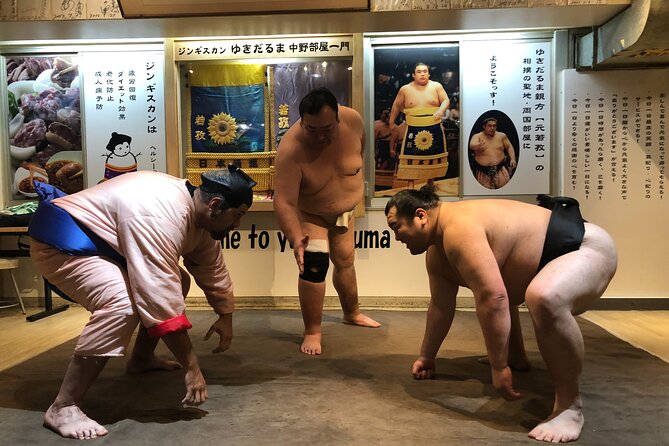
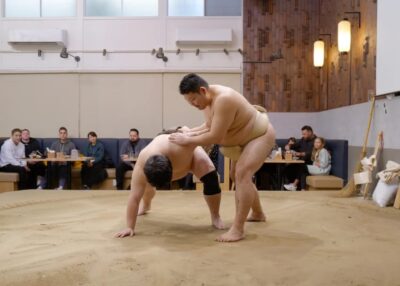
The demonstrations are the heart of the show. The wrestlers explain and perform sumo techniques, show training exercises, and face one another in friendly sparring.
This is not a professional tournament, and that is part of the appeal. The tone is light, social, and accessible. The performers use humor to explain a sport that can seem formal or intimidating from the outside.
I especially like the way this format connects the sport to real people. You are not only seeing a staged costume or a generic cultural display. You are meeting retired wrestlers who can show how the sport works and share what it takes to perform at that level.
The audience also becomes part of the program. The wrestlers visit the tables, take photos, and encourage people to participate. Several parts of the show are built around this contact, so you will get more from it if you ask questions and respond when the host invites you into the action.
If you prefer a quiet, observation-only activity, you can watch without volunteering. If you enjoy a bit of harmless embarrassment and laughter, the ring awaits.
More Shows & Performances in Tokyo:
- Tokyo: Samurai Restaurant Show Ticket with 2 Drinks
★ 4.5 · 1,307 reviews - Tokyo: Sumo Show and Experience in Shinjuku
★ 4.8 · 1,001 reviews - Tokyo:Luxury Sumo Show Experience & Japanese cuisine & Drink
★ 4.7 · 577 reviews - Tokyo Bay Yakatabune Dinner/Day Cruise with Japan Show and Drinks
★ 4.5 · 473 reviews
Trying a Friendly Bout Against a Sumo Wrestler
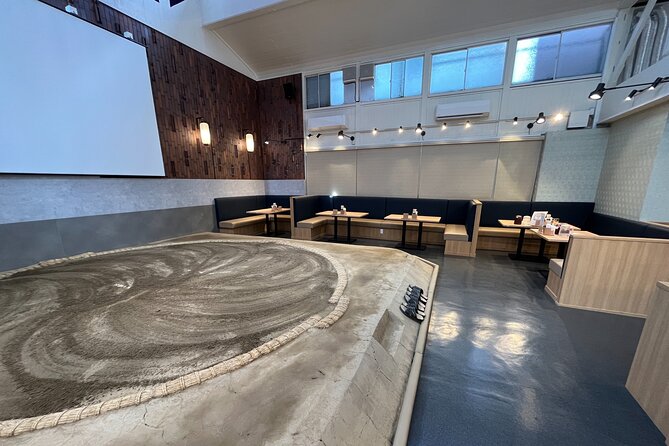
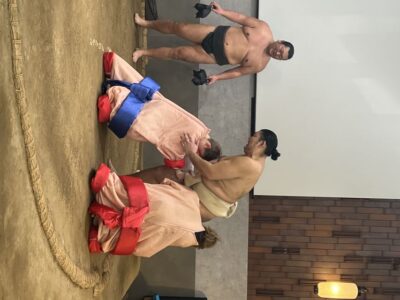
The chance to challenge a retired wrestler is the feature that separates this from a standard cultural lecture. You can step into the ring and test yourself against one of the performers.
Use your head, not your pride. You are not going to overpower a trained sumo wrestler, and the point is playful participation, not victory. The wrestlers may show you that technique and timing matter more than simply pushing as hard as possible.
Participation is optional. That makes the activity work for mixed groups, including families with children, couples, and people who would rather take photos. Children aged 9 and 11 have enjoyed the format, and one family found it especially successful for a child with special needs.
Follow the staff instructions and use good judgment. Anyone causing trouble can be asked to leave without a refund. The ring segment is meant to be fun, but it still requires consideration for the wrestlers and everyone around you.
The costume photo opportunity adds another playful touch. You can take photos in a traditional sumo outfit and pose with the wrestlers. For families, this may become the souvenir that outlasts the meal.
Tonkatsu and Chanko Soup at the Table
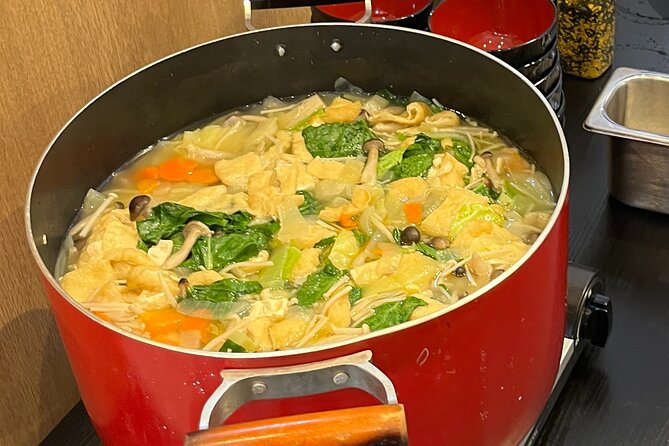
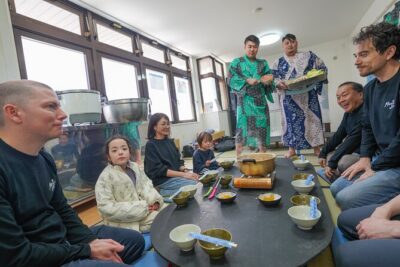
Lunch includes tonkatsu and chanko soup. Tonkatsu is breaded pork cutlet, while chanko is the hearty soup closely associated with sumo wrestlers.
The food has received strong praise, and that matters because the meal is part of the $89.54 price. The tonkatsu is described as tasty, and the chanko soup has been a particular favorite. One person enjoyed the soup enough to wish for a much larger bowl instead of the cutlet.
Portions may not satisfy every appetite. One dinner-time visitor still felt hungry, while another found the meal more generous than expected. If you normally eat large meals, treat the food as a good cultural lunch rather than an enormous wrestler-sized feast.
Drinks are not included, so add that cost to your budget. Dietary restrictions and allergies must be entered in the reservation notes. Vegetarian arrangements are available upon request, but requests made fewer than five days before the event may not be answered.
The meal also creates a natural pause in the program. You can eat, talk with your group, and continue learning about the sport without rushing off to another location.
Seating, Group Size, and What the Room Feels Like
The maximum group size is 60 people. That gives the show enough energy for applause and participation, but it also means the experience may not feel intimate for everyone.
Some seating is farther from the dohyo than others. If you are short, have limited mobility, or want a clear view of every demonstration, check your sightline when you arrive. You may need to stand at times to see better, especially if someone in front of you blocks the ring.
You may also be asked to share a table with another group. Large parties may not fit around one table. That is a practical compromise that lets more people attend, but it can matter if you expected a private family table.
The room has been described as well organized, with staff keeping the show moving and making time for each table. The host helps maintain the energy, and the wrestlers are friendly and willing to pose for photos.
This is a good setting for social people. If you want a quiet meal with a private conversation, choose a different lunch venue. Here, the room is part of the show.
Is $89.54 a Fair Price?
At $89.54 per person, this is not a cheap lunch. You are paying for several parts at once: a hosted cultural presentation, live demonstrations, access to retired wrestlers, crowd participation, a sumo costume photo opportunity, and tonkatsu with chanko soup.
The value depends on what you would otherwise do. If you only want to eat tonkatsu, the price is high. If you want a professional sumo tournament seat, this is not a substitute. But if you want a convenient introduction that combines food, entertainment, and direct contact with former wrestlers, the package makes more sense.
Families may find the cost easier to justify because everyone gets an active role. The children can watch, ask questions, volunteer, and take photos. Adults get cultural context without committing to a long museum visit or a full day centered on sport.
The strong 4.9 rating from 1,960 reviews and 98 percent recommendation rate suggest the format works for most people. Still, one very negative account focused on the price and confusing reminders. Take that as a warning to read the instructions closely and decide in advance if the all-in cost fits your budget.
Group discounts may be available, so check the current booking terms if you are traveling with several people.
Who Will Enjoy This Most?
I would recommend this show to:
- Families looking for an activity that works for children and adults
- First-time visitors curious about Japanese sports and customs
- People who enjoy audience participation and light comedy
- Visitors who want a meal included with their cultural activity
- Anyone who would like a photo with a retired sumo wrestler
- Visitors staying in or exploring the Sumida area
It is less suitable for someone seeking an in-depth scholarly history of sumo. It is also not the right choice if you dislike being invited to participate or need guaranteed front-row seating.
You do not have to wrestle. You can enjoy the rules, demonstrations, meal, and photos from your seat. That flexibility is one of the show’s strengths.
Practical Details Before You Reserve
The activity begins at 1:00 pm and lasts about 90 minutes. You make your own way to Yokozuna Tonkatsu, then return to the same meeting point at the end.
Confirmation arrives within 48 hours, subject to availability. A mobile ticket is available, and the venue is near public transportation.
Free cancellation is allowed up to 24 hours before the start time for a full refund. Cancellations or changes made less than 24 hours before the start time are not accepted. Date changes are also not allowed within three days of the activity, and flight delays or illness within that period are treated as cancellations.
Plan dietary requests at least five days ahead. Do not assume that a last-minute message can be accommodated.
The show accepts most participants, but you should follow the staff’s instructions during the ring activities. The wrestlers are there to entertain you, not to provide an unrestricted contact sport.
Should You Book the Tokyo Sumo Show?
Book it if you want an entertaining first look at sumo with a meal and a chance to participate. The strongest parts are the friendly retired wrestlers, the clear demonstrations, the tasty chanko soup, and the option to wrestle or simply watch.
Think twice if $89.54 feels high for a 90-minute activity, if you need a guaranteed close seat, or if you want a serious tournament experience. For most families and first-time visitors, though, this is an easy way to turn sumo from something you see on television into something you can understand, photograph, and briefly try for yourself.
FAQ
Where does the sumo show take place?
The activity starts and ends at Yokozuna Tonkatsu and Sumo lunch, 3-chōme-1-11 Tatekawa, Sumida City, Tokyo 130-0023, Japan.
What time does the activity start?
The show starts at 1:00 pm and lasts approximately 1 hour and 30 minutes.
What food is included?
Tonkatsu and chanko soup are included. Drinks are not included.
Can I participate in a sumo bout?
Yes. You may challenge a retired sumo wrestler in a friendly bout, but participation is optional.
Are dietary restrictions accommodated?
Vegetarian and dietary accommodations are available upon request. Add allergies or restrictions to the reservation at least five days before the event.
How many people can join the show?
The activity has a maximum capacity of 60 people. You may be asked to share a table, and larger groups may not sit together at one table.
Can I cancel for a refund?
You can cancel at least 24 hours before the start time for a full refund. Cancellations and changes made less than 24 hours before the activity are not accepted.
Just added around Tokyo
- Kawagoe Japanese Food Tour : Unagi Kaiseki and Sake near Tokyo★ 5.0 · 30 reviews
- Kawagoe 4hr Private Tour with Licensed Guide (Kawagoe Dep)★ 5.0 · 13 reviews
- Little EDO Sushi Making workshop in Kawagoe★ 5.0 · 18 reviews
- 【R34】Tokyo:Private Daikoku tour in Modified R34★ 4.9 · 92 reviews
- :Tokyo,Shibuya/ Pro Photography in Kimono / English-Friendly★ 5.0 · 26 reviews
- Tokyo:Celebrate Unique Japanese New Year Tradition Festivity★ 3.9 · 20 reviews
- Tokyo: Allstar Food Tour★ 4.7 · 29 reviews
- Tokyo: West-Side Cycling and Food Tour with Guide★ 5.0 · 37 reviews
Sumo Experiences, compared.
Sumo Show Experience with Chicken Hot Pot and a Photo
Our verdict →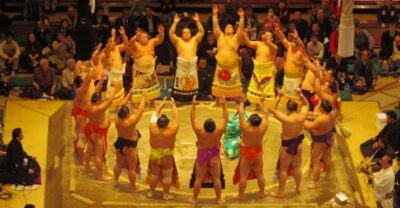
Authentic Sumo Experience in Tokyo: Enter the Sanctuary
Our verdict →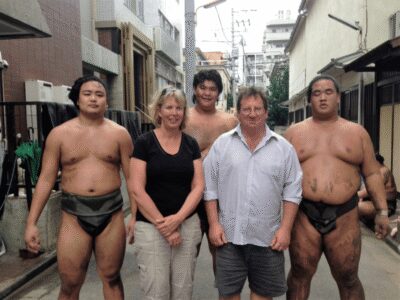
Browse the lists this tour appears in