
Reviewed · SAMURAI EXPERIENCES
Samurai Experience – Learn Bushido through Kendo, in Tokyo
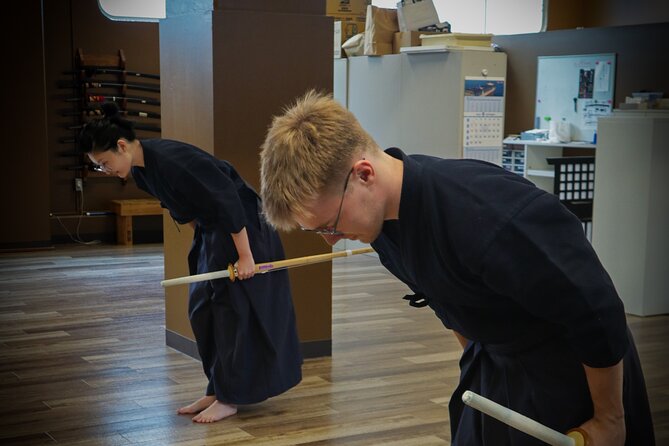
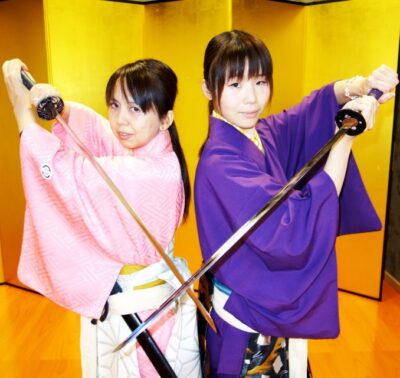
Kendo starts with a bow, not a sword. In this two-hour session near Tokyo Station, Daichi and Makoto show you how etiquette, spirit, footwork, and sword work fit together. Only after that foundation do you put on protective gear and face an instructor in a short match.
I like the small-group format, limited to eight people, and the clear step-by-step teaching. I also like that this is more than a costume photo stop: you learn why kendo matters, practice its core movements, and watch a serious demonstration at the end.
The main consideration is physical effort. The armor and active drills can make the dojo feel warm, and the session is closer to a workout than a passive cultural talk. You do not need athletic ability, but you should arrive ready to move, sweat, and concentrate.
Key points to know before booking
- The lesson begins with Bushido and etiquette: You learn why bows, respect, and focused intent matter before touching the shinai.
- Daichi and Makoto teach in English and Japanese: Instructions are broken into manageable steps for complete beginners.
- You practice the full sequence: Footwork, sword handling, striking, protective equipment, and a short match all fit into two hours.
- The group is limited to eight people: A small class leaves room for corrections and careful pacing.
- The final instructor demonstration is a highlight: You see the speed, control, and seriousness of trained kendo up close.
- Everything practical is supplied: Kendo clothing, bamboo sword, drinks, souvenirs, and photos or video are included.
Kendo near Tokyo Station, with substance behind the sword
Tokyo offers plenty of samurai-themed activities, but this one takes a different route. You are not simply handed armor and pointed toward a camera. The aim is to show how Bushido survives through practice, with the body learning what a lecture alone cannot explain.
Kendo developed from samurai sword traditions and was shaped into a modern discipline without losing its emphasis on respect, self-control, and purpose. You will not become a samurai in two hours, of course. You will get a useful first look at how kendo connects the mind, body, and sword.
The dojo is within about 15 minutes of Tokyo Station, which makes this easy to fit into a day of sightseeing. That location matters. You can reach the activity without giving up half a day to transport, and you can pair it with central Tokyo plans before or after the class.
The session costs $103 per person. That is not a bargain-basement activity, but the price covers two hours of instruction, clothing, equipment, drinks, souvenirs, and photos or video sent afterward. For me, the value depends on what you want from a cultural activity. If you only want a quick sword photo, this is more than you need. If you want guided practice with instructors and a live kendo demonstration, the price is easier to justify.
More Martial Arts Experiences in Tokyo
- Tokyo: Samurai Sword & Archery Class from Samurai Descendant
★ 5.0 · 603 reviews - Tokyo:Samurai sword and archery class from a samurai descendant
★ 5.0 · 121 reviews - Tokyo 2-Hour Genuine Samurai Experience: Kendo in Japan
★ 5.0 · 112 reviews
First comes the bow, not the blade
The opening section sets the tone. Before training, you calm yourself, learn the basic etiquette, and bow properly. This is not treated as a decorative Japanese gesture. It is presented as a way to show respect to your training partner, your instructors, and the place where you practice.
That beginning may feel slower than you expect if you have come for action. It is also one of the most useful parts. Without it, the sword movements would be empty choreography. The bow explains why kendo places such weight on conduct before competition.
You also learn about ki, or spirit. In practical terms, this means presence and intent. The lesson is not about shouting in anger or pretending to be fierce. It is about staying alert, controlled, and committed to the movement in front of you.
This is where the activity earns its cultural value. You are not only copying a pose. You are being shown the attitude that gives the pose meaning.
Footwork teaches you to stay grounded
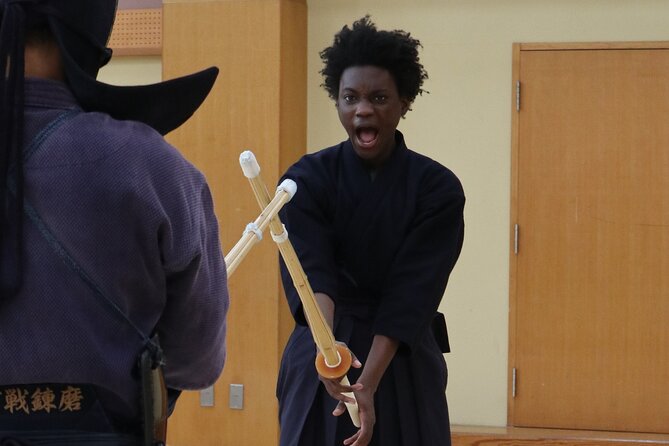
Next comes tai, the body. You practice the basic footwork that keeps you balanced and ready. It sounds simple, but beginners quickly discover that moving correctly while keeping posture and control takes attention.
Expect the instructors to add one element at a time. You may start with the steps alone, then combine them with a strike, then work against a protected instructor. The measured pace helps you keep track of your hands, feet, posture, and direction without feeling thrown into a complicated routine.
Several people have found the footwork surprisingly challenging, and that is worth knowing before you arrive. You do not need martial arts experience, but you will need to listen closely and repeat movements. The activity rewards concentration more than natural athletic talent.
The small class size helps here. With no more than eight participants, Daichi and Makoto can watch the group and correct basic errors. Some sessions may be much smaller, and a class with only a few people gives you more direct time with the instructors.
Learning to hold and swing the shinai
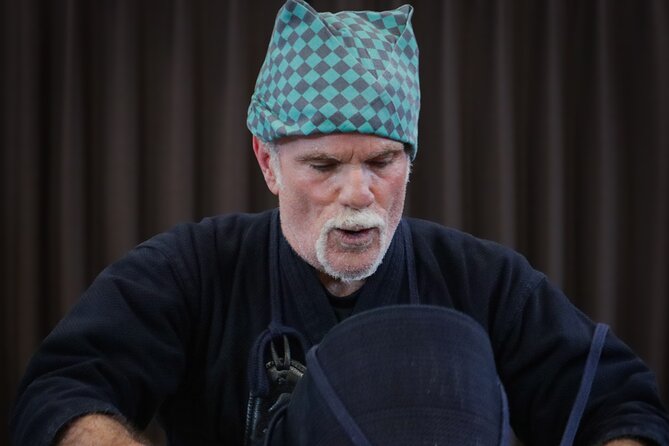
Only after the body is prepared do you handle the sword. The training weapon is a bamboo sword called a shinai. You learn how to hold it, draw it, fold it, and swing it with control.
This stage is satisfying because the earlier lessons begin to connect. The sword is not being used as a prop. Its movement depends on your feet, posture, timing, and intent. That connection is called ki-ken-tai-itchi, the unity of spirit, sword, and body.
You practice basic attack points and the movement needed to reach them. The instruction includes the rules and vocabulary of kendo, so you are not left guessing what a movement means or when to perform it.
Do not expect a long technical course. Two hours can introduce the structure of kendo, but it cannot build mastery. The strength of this format is that it gives you a complete first taste: etiquette, history, body movement, sword work, protective equipment, and a match.
More Samurai Experiences in Tokyo
- Tokyo: Samurai Restaurant Show Ticket with 2 Drinks
★ 4.5 · 1,307 reviews - Tokyo: Samurai Ninja Museum Guided tour and Experience
★ 4.6 · 1,010 reviews - Best Samurai Experience in Tokyo
★ 5.0 · 458 reviews - Ninja Experience (Family Friendly) at Samurai Ninja Museum TOKYO
★ 5.0 · 441 reviews
Protective gear changes the mood
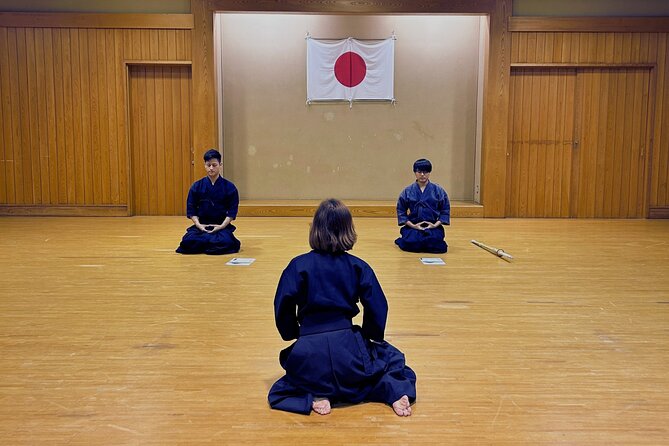
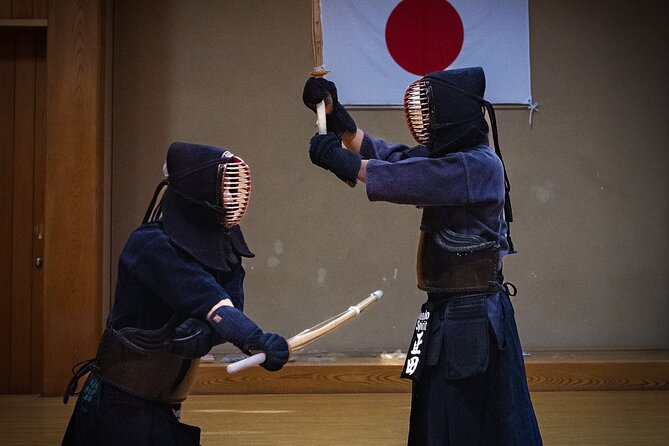
At some point, you put on the kendo protective equipment. This is one of the most memorable parts for many beginners. The uniform and armor make the activity feel less like a classroom exercise and more like a formal martial arts practice.
The gear also adds heat and weight. One participant specifically found the temperature uncomfortable, while another advised dressing as if going for a run. That is sensible advice. Wear clothing that allows movement, and expect a workout rather than a quiet museum visit.
Cold water and rest periods are provided, which helps. Still, if you dislike heat or strenuous activity, this should factor into your decision. Pregnant women, babies under one year, and people over 95 are listed as unsuitable for the experience.
You do not need to bring equipment. Kendo clothing and the bamboo sword are provided, so your packing list is simple. Drinks are included as well.
The match puts the lesson to work
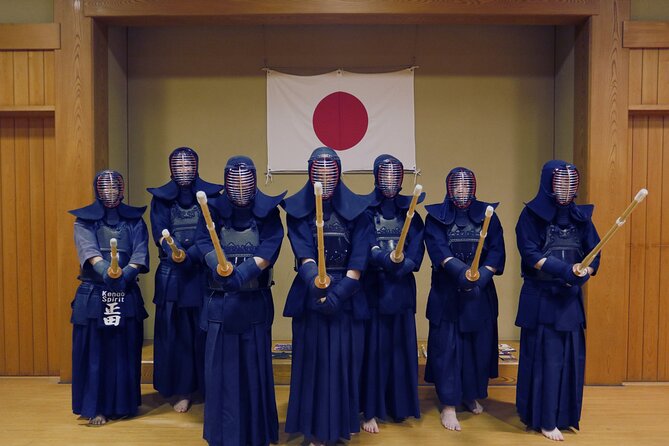
The final practical section gives you a chance to use what you have learned in a short kendo match. Those who feel ready can face a veteran instructor. The match is structured for beginners, but standing opposite a trained practitioner can still be intense.
This is where the lesson about ki becomes easy to understand. A sword pointed toward you, even a bamboo one, demands focus. You must remember your stance, movement, timing, and etiquette while your nerves are working against you.
The instructors keep the match approachable. The point is not to test you as if you were an experienced kendoka. It is to let you feel the pressure of an opponent and understand how the techniques operate when another person is moving in front of you.
If you are shy about sparring, you can still get plenty from the class. You will have practiced the movements and watched the instructors demonstrate them. If you are eager for the match, it is likely to be the most exciting part of the session.
Watch Daichi and Makoto demonstrate real control
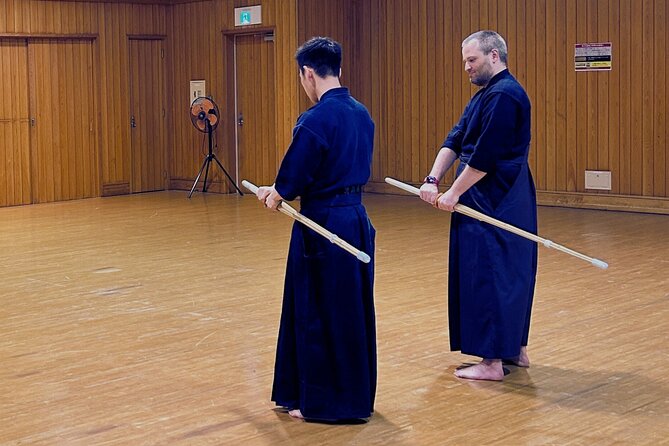
The class ends with a demonstration match between instructors. This is not the same as your beginner sparring. Daichi and Makoto show what the movements look like when performed by people with serious training.
The difference is striking. Earlier, you may have been thinking about where to put your feet or how to grip the shinai. In the demonstration, the actions become faster and more direct, but they remain controlled. You get a better sense of why timing, distance, and intent matter.
This closing match gives the experience a strong finish without turning the whole activity into a staged show. You participate first, then see the level of skill you are beginning to understand.
A final bow closes the session. That return to etiquette is important. Kendo begins and ends with respect, not with the winner taking a victory lap.
What the small group and English instruction mean for you
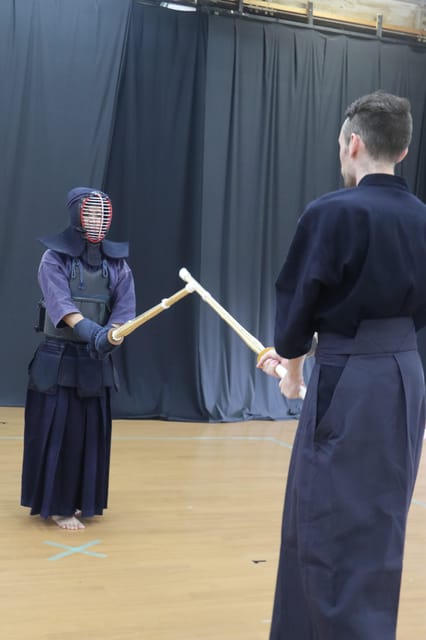
The experience is conducted in English and Japanese. The instructors explain the history, rules, terms, and movements in English, and you can ask questions during the session.
English ability matters here because the activity contains many small details. You need to understand where to stand, how to move, when to bow, and how to handle the shinai safely. Clear instruction makes the difference between a meaningful introduction and a confusing sword lesson.
The pace is designed for beginners. Most participants have no previous kendo or martial arts background, and the class is kept small so the instructors can guide people carefully.
Families and mixed-age groups can join if the participants meet the stated limits and are comfortable with physical activity. One parent and teenage child completed the class together, which shows how the format can work for different experience levels. Still, each person should be ready for movement and protective gear.
Photos, souvenirs, and the practical extras
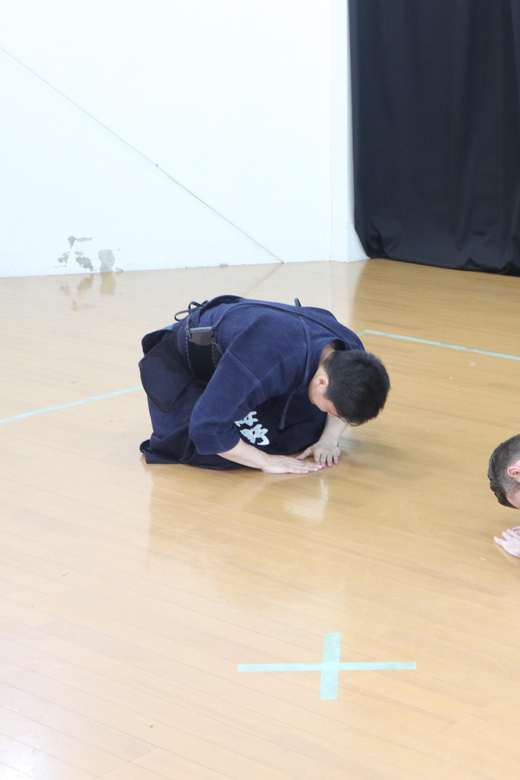
Photos and video are taken during the activity, with the data sent to you by email afterward. That is useful because you will be busy concentrating during the class and may not have a free hand for your phone.
Souvenirs and drinks are included. These are small additions, but they make the $103 price feel more complete. You are not paying extra for basic equipment rental or refreshments once the session begins.
If you want a private session, you can request the Exclusive Private Session add-on before payment. Private sessions are available only on dates that still show eight open places, so this option depends on the booking calendar.
Large groups can also be arranged with advance contact. For a standard booking, expect a small group of up to eight people.
Free cancellation is available until 24 hours before the session for a full refund. You can also reserve now and pay later, which is useful if your Tokyo schedule is still shifting.
Who should book this kendo experience?
I would choose this activity if you want active cultural learning rather than a quick photo opportunity. It suits people curious about martial arts, Japanese etiquette, samurai traditions, and the discipline behind kendo.
It is also a good choice if you have never tried a martial art. The class does not require previous experience, and the instructors build the lesson from the beginning.
You should think twice if you want a relaxed indoor activity with little physical effort. The armor can feel warm, the footwork takes concentration, and the sparring adds pressure. You do not need to be fit, but you should be willing to move and follow instructions.
The activity is also a good match for repeat visitors to Tokyo who have already seen temples, gardens, and major sights. It gives you a chance to meet a Japanese tradition through practice instead of observation.
Should you book Kendo Spirit?
Book it if you want to understand why kendo is more than swinging a sword. The combination of etiquette, footwork, ki-ken-tai-itchi, beginner sparring, and the instructors’ final match gives you a clear two-hour introduction.
The strongest reasons to go are the small group, the patient step-by-step teaching from Daichi and Makoto, and the chance to take part rather than simply watch. The main caution is heat and exertion. Dress for movement, arrive with an open mind, and expect concentration as much as entertainment.
At $103, this is best viewed as a hands-on cultural lesson with equipment and media included. If that sounds more appealing than a staged samurai photo, Kendo Spirit is a worthwhile Tokyo choice.
FAQ
How long does the kendo experience last?
The session lasts two hours.
Where is the dojo located?
The dojo is within approximately 15 minutes of Tokyo Station.
Do I need previous kendo experience?
No. The class is designed for beginners, and most participants have no prior martial arts experience.
Is the experience offered in English?
Yes. The instructors teach in English and Japanese, and you can ask questions during the session.
What is included in the price?
The experience includes the two-hour kendo session, kendo attire, a bamboo sword called a shinai, drinks, and souvenirs.
Do I need to bring anything?
No. All equipment is provided.
Can I book a private session?
Yes. Add Exclusive Private Session before payment, with one add-on per group. Private sessions are available only on dates that still show eight available spots.
Can I cancel for a full refund?
Yes. You can cancel up to 24 hours in advance for a full refund.
Just added around Tokyo
- Kawagoe Japanese Food Tour : Unagi Kaiseki and Sake near Tokyo★ 5.0 · 30 reviews
- Kawagoe 4hr Private Tour with Licensed Guide (Kawagoe Dep)★ 5.0 · 13 reviews
- Little EDO Sushi Making workshop in Kawagoe★ 5.0 · 18 reviews
- 【R34】Tokyo:Private Daikoku tour in Modified R34★ 4.9 · 92 reviews
- :Tokyo,Shibuya/ Pro Photography in Kimono / English-Friendly★ 5.0 · 26 reviews
- Tokyo:Celebrate Unique Japanese New Year Tradition Festivity★ 3.9 · 20 reviews
- Tokyo: Allstar Food Tour★ 4.7 · 29 reviews
- Tokyo: West-Side Cycling and Food Tour with Guide★ 5.0 · 37 reviews
Samurai Experiences, compared.
Browse the lists this tour appears in