
Reviewed · GEISHA & MAIKO EXPERIENCES
Kyoto Gion: 2-Hour Geisha Culture & History Walking Tour
Gion is most rewarding when someone explains what you are seeing. This two-hour walk takes you past geisha streets, old wooden houses, shrines, temples, and quiet lanes where the district feels far removed from modern Kyoto. If timing is on your side, you might even spot a geisha or maiko heading to work.
I like the local storytelling, especially the explanation of geisha training, dance, kimono, and hairstyles. I also like the route’s variety: Hanamikoji, Yasaka Shrine, Hokan-ji, Pontocho, and the Kamogawa River all appear in one compact outing.
The main drawback is the pace and heat. Two hours is manageable, but there are no scheduled drink stops, and the route includes several areas best enjoyed on foot. Some evening businesses may also be closed if you go too late.
Key points to know before booking
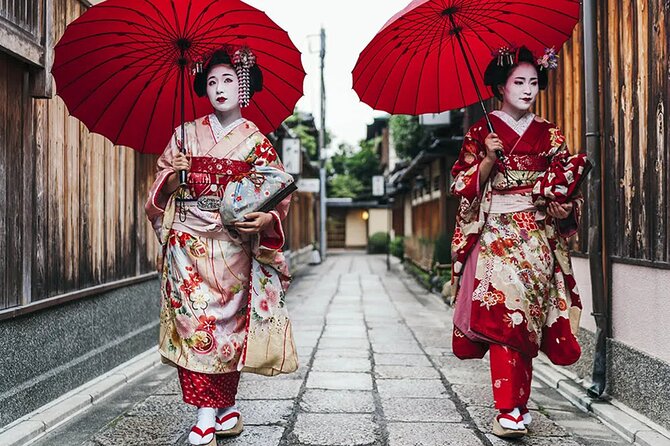
- Geisha culture without a staged performance: Learn how maiko and geisha train, work, dress, and move through Gion.
- A broad Kyoto sampler: The walk covers Hanamikoji, Sannenzaka and Ninenzaka, Yasaka Shrine, Hokan-ji Temple, Pontocho, Gion Shirakawa, and Yasui-Konpiragu.
- Best chance for a geisha sighting: Tours around 5 to 6 p.m. may give you a better opportunity to see one heading to an evening appointment.
- Small-group format: The group is capped at 15 people, enough for conversation without the feel of a large coach tour.
- Good value at $23.88: For two hours of guiding across several major cultural areas, the price is modest, especially early in your Kyoto stay.
- Comfort matters: Wear good walking shoes, carry water, and remember that the tour requires moderate physical fitness.
Why a guide changes the way you see Gion
Gion can look simple at first glance: a narrow street, a wooden house, a shrine gate, a few well-dressed people moving quickly through the crowd. The details are easy to miss. A guide gives those details a place in the larger story.
At Hanamikoji Street, you learn that geisha culture is not just about costumes and photographs. The guide explains the demanding training of geisha and maiko, the dances they perform, and the work behind their hairstyles and kimono. This helps you see the people of Gion as skilled artists and professionals, not as moving photo opportunities.
That distinction matters. A possible geisha sighting is exciting, but the real value of the walk is learning how to behave respectfully around people who are working. The guide can also point out the difference between a maiko and a geisha, a subject that is easy to misunderstand if you only explore on your own.
The guides named in the feedback include Soyo, Uta, Dan, Kenta, Ukyo, Alex, Oliver, and Naoya. The strongest pattern is clear: the guides are praised for friendly storytelling, strong English, patience, and practical restaurant advice. Uta is repeatedly described as lively and engaging, while Naoya is noted for explaining traditions and taking time with photographs.
More Historical Tours in Kyoto
- Kyoto: Nijo-jo Castle and Ninomaru Palace Guided Tour
★ 4.7 · 1,020 reviews - Kyoto: Imperial Palace & Nijo Castle Guided Walking Tour
★ 4.7 · 453 reviews - Kyoto Gion Historical Walking Tour
★ 5.0 · 188 reviews
Hanamikoji Street and the working world of geisha
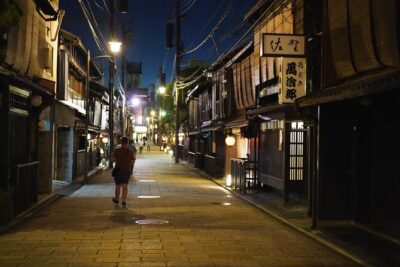
Hanamikoji Street is the natural opening act. It is often described as the heart of Gion, and it gives you an immediate sense of the district’s polished old-Kyoto style.
The guide shares stories about the geisha world and points out details you could easily walk past. You hear about training, performances, clothing, makeup, and the discipline expected of a maiko before she becomes a geisha. The stop lasts about 15 minutes, so do not expect a long lecture. The format is brisk and suited to a first look.
This is also the place where you may see a geisha or maiko. Do not book the tour expecting a guaranteed sighting. The possibility depends on timing and chance. Several people had especially good luck near the end of their walk, and tours around 5 to 6 p.m. may offer a better opportunity as evening appointments begin.
Keep your camera ready, but use common sense. A geisha is not part of the attraction. If one passes by, watch from a respectful distance and do not block the narrow street.
Sannenzaka, Ninenzaka, and Kyoto’s photo-ready lanes
The route then reaches Sannenzaka and Ninenzaka, two of Kyoto’s most recognizable old streets. Their sloping lanes, traditional buildings, and busy storefronts make them natural photo stops.
You also get the answer to the local rumor that falling on the steps means you will die within two years. The guide explains the truth behind the story, turning a spooky bit of folklore into a useful cultural note.
This part can be crowded, especially during the day. That is not a flaw in the tour, but it does affect the experience. You may need to pause often, wait for space, and share the view with many other people. The guide’s explanations help keep the stop worthwhile when the lane itself feels busy.
The route includes free admission at this stop, as it does throughout the walk. You are paying for the guide’s interpretation and route planning, not entry tickets.
Yasaka Shrine and the rhythm of Shinto worship
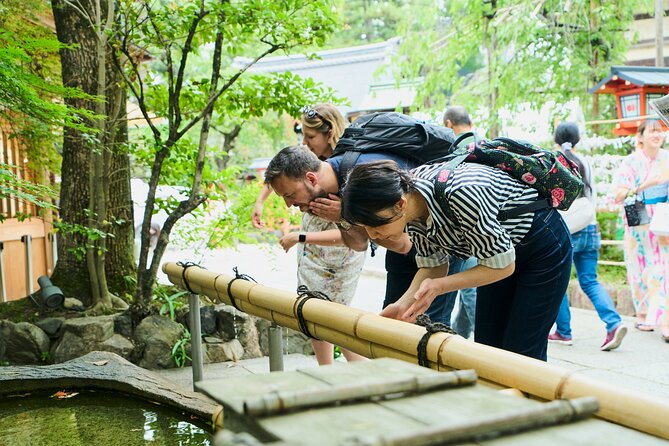
Yasaka Shrine brings a different mood. The shrine is around 1,000 years old and gives the walk a clear look at Shinto practice in the middle of Kyoto.
The stop lasts about 20 minutes. That is enough time for the guide to explain the site and show you how worship works. You can learn what you are looking at rather than simply taking a picture of a gate and moving on.
This is one of the tour’s useful contrasts. Gion is often sold as a geisha district, but its identity is also shaped by shrines, religious customs, neighborhood festivals, food streets, and long-established buildings. Yasaka Shrine broadens the picture.
You should be ready to walk, stand, and listen in an active public setting. The tour does not promise a long quiet visit or private access. It offers a well-chosen introduction.
More Walking Tours in Kyoto
- Kyoto Geisha Walking Tour: Gion District & Hidden Gems
★ 4.7 · 3,273 reviews - Kyoto: Gion Magical Night Walking Tour with Geisha Trivia
★ 4.9 · 2,393 reviews - Kyoto: Gion Geisha District Walking Tour – Stories of Geisha
★ 4.7 · 2,187 reviews - Night Walk in Gion: Kyoto’s Geisha District
★ 4.5 · 2,003 reviews
Hokan-ji Temple and the famous Yasaka Pagoda view
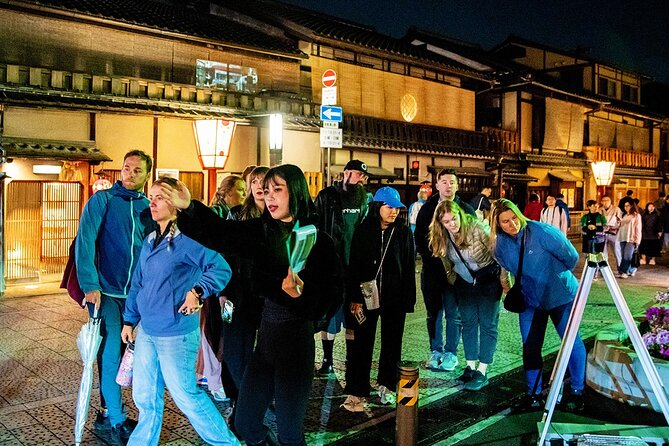
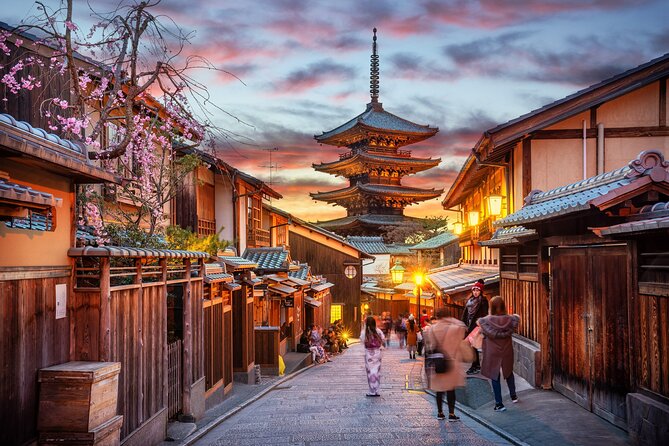
Hokan-ji Temple is included as the most photogenic point on the route. Its pagoda and surrounding streets create one of Kyoto’s familiar scenes, particularly around the Yasaka Pagoda area.
You get about 20 minutes here. That gives you time for photographs and a short explanation of the temple’s place in the neighborhood. The appeal is visual, but the guide adds context so the stop does not become just another photo break.
As with Sannenzaka and Ninenzaka, this area can feel crowded. The best photographs may require patience. Your guide can help you understand which views matter, but cannot control pedestrians, weather, or the light.
If you want perfect conditions for photography, this tour may feel too quick. If you want to see the area and understand why it is important, the stop works well within a two-hour route.
Pontocho and a pause by the Kamogawa River
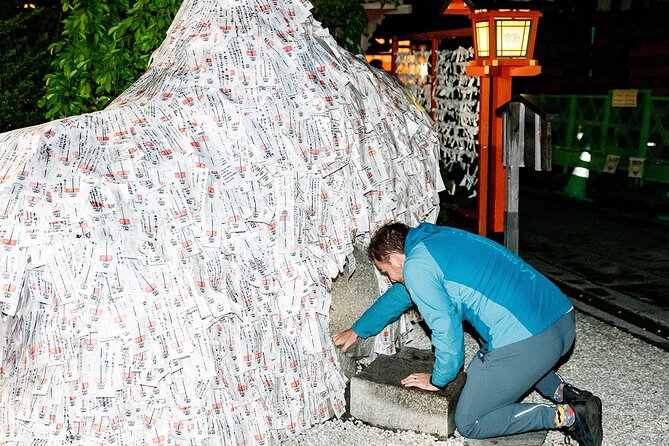
Pontocho is introduced as a historic gourmet street. It is a narrow, atmospheric lane associated with restaurants and evening dining. The guide can point out places to eat and suggest restaurants or rooftop bars, which is useful if you are still planning your Kyoto evenings.
The walk also includes a local place to relax beside the Kamogawa River. The exact stop is not given, so treat it as a brief neighborhood pause rather than a guaranteed long rest. This part offers a change of pace after the temple and shrine visits.
I particularly like this section for first-time visitors because it connects sightseeing with daily life. You see where people eat, meet, and spend time, not only the formal monuments. It also gives you a chance to ask the guide for recommendations that fit your own plans.
The practical catch is that the tour does not include a scheduled drink stop. In hot weather, carry water. One person found the heat difficult without a break, and that is a fair warning for summer afternoons.
Gion Shirakawa and Edo-period townhouses
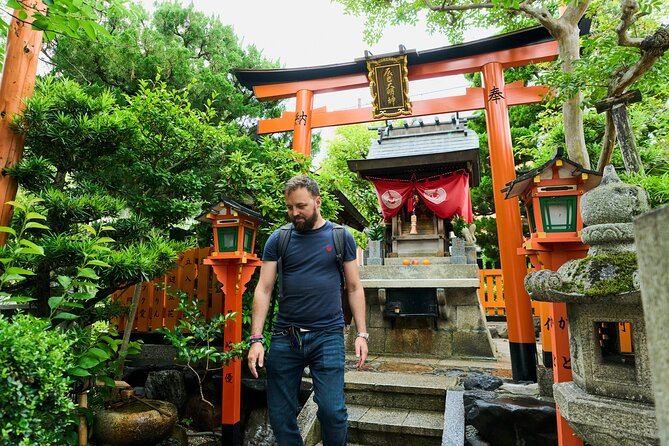
Gion Shirakawa provides one of the quietest and most attractive parts of the route. Here you see wooden townhouses from the Edo period and learn how these buildings fit into old Kyoto.
The architecture is the point. Look for the narrow fronts, timber details, and close relationship between the street and the homes. A guide can explain why the buildings look the way they do and help you notice the difference between a preserved old neighborhood and a modern street designed to imitate one.
The stop lasts about 20 minutes. It is long enough for photographs and explanation, but not long enough for an extended architectural study. That is appropriate for a general culture walk. You get a clear introduction without spending the whole afternoon on one lane.
This is also an area where respectful behavior matters. Keep voices low near homes, stay out of private entrances, and remember that the district is not an open-air museum. People live and work here.
Yasui-Konpiragu and the final look at Shinto practice
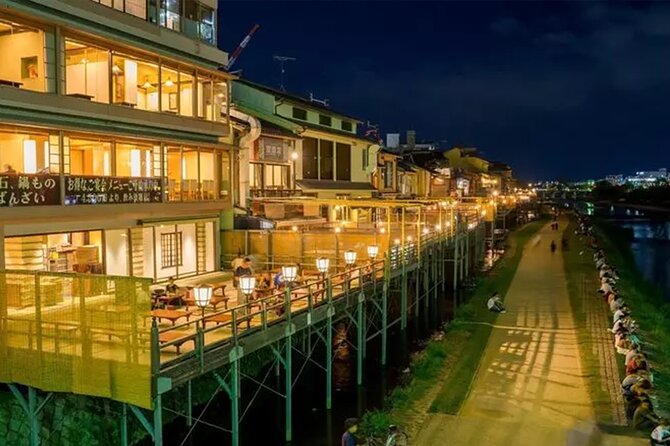
The last listed stop is Yasui-Konpiragu, where you learn about Shinto worship. The visit lasts about 15 minutes and gives the route a final religious and cultural note.
By this point, the tour has shown you several sides of Kyoto: the professional world of geisha, historic streets, shrine customs, temple scenery, old homes, dining lanes, and the riverside. Yasui-Konpiragu helps bring those strands together.
The tour ends back at the original meeting point near McDonald’s at Shijo-ohashi Bridge. That return is useful if you are meeting friends, heading to dinner, or using public transport afterward.
The price, group size, and walking effort
At $23.88 per person, this is a strong value if you want orientation and cultural context rather than a long specialist lecture. You visit several well-known areas in two hours, and the cost is low compared with many private or half-day Kyoto tours.
The group can include up to 15 people. That is not an intimate private walk, but it is small enough for the guide to keep the group together and answer questions. The experience depends heavily on the individual guide, and the named guides receive especially strong praise for their English, patience, warmth, and storytelling.
The route requires moderate physical fitness. You should expect steady walking, time on your feet, and uneven or sloping streets. Sannenzaka and Ninenzaka are not difficult for most people, but they are not flat. Wear shoes that you can comfortably use for two hours.
The meeting point is McDonald’s at 105-1 Hashibacho, near Shijo-ohashi Bridge. The tour is near public transportation, and the activity ends where it begins. A mobile ticket makes the arrival simple, but check the meeting location carefully before setting out.
When to take the walk
The time of day can shape the experience. A late afternoon start around 5 to 6 p.m. may improve your chance of seeing a geisha or maiko, and sunset can make Gion Shirakawa and the old streets especially attractive.
Do not go too late simply to chase atmosphere. One useful warning is that some places may be closed by later evening. If you want open shops and a better chance to ask about restaurants, an earlier start is safer.
Daytime offers clearer views and easier photography, but likely more crowds. Evening can feel more atmospheric, but visibility and business hours may be less predictable. I would choose the time that matches your priority: photographs and open shops in the day, or a possible geisha sighting and softer light later on.
The experience requires good weather. If poor weather cancels it, you are offered another date or a full refund. You can cancel for a full refund up to 24 hours before the start time. Inside that window, cancellation or changes are not refunded.
Who should book this Gion walk?
I would choose this tour early in a Kyoto visit. It helps you understand Gion before you return alone, and the restaurant suggestions can improve the rest of your stay.
It suits you if you want a short introduction to geisha culture, traditional buildings, shrine customs, and Kyoto’s old streets. It also works well if you prefer a friendly guide and a broad route over a single-site tour.
Families with older children may enjoy the variety, though the walking and historical explanations require attention. Photographers will like Hokan-ji, Sannenzaka, Ninenzaka, and Gion Shirakawa, but should not expect empty streets or unlimited time.
You may want something else if you need step-free access, a private pace, a guaranteed geisha encounter, or a long break for food and drinks. Those are not promises this tour makes.
Should you book the Kyoto Gion walking tour?
Book it if you want a low-cost, well-rounded introduction to Kyoto’s traditional districts. The strongest reasons are the range of stops, the focus on real geisha culture rather than costume spectacle, and the guides’ practical local advice.
Go around 5 to 6 p.m. if seeing a geisha is important, bring water, and wear proper shoes. Keep your expectations realistic: the streets may be crowded, the weather may be hot, and sightings are never guaranteed.
For $23.88, this is an easy recommendation for first-time Kyoto visitors who want two useful hours on foot and a better understanding of what they are seeing.
FAQ
How long is the Kyoto Gion walking tour?
The tour lasts approximately two hours.
What is the price of the tour?
The listed price is $23.88 per person.
Where does the tour meet?
The meeting point is McDonald’s at 105-1 Hashimotocho, Shimogyo Ward, Kyoto, near Shijo-ohashi Bridge.
Where does the tour end?
The activity ends back at the original meeting point.
How many people can join the tour?
The group has a maximum of 15 people.
Will I definitely see a geisha?
No. The tour offers a chance to spot a real geisha or maiko, but a sighting is not guaranteed. A start time around 5 to 6 p.m. may improve your chances.
Does the tour include admission fees?
The listed stops have free admission. The tour price covers the walking experience and guide, not paid attractions outside the listed route.
What happens if the weather is poor?
The experience requires good weather. If it is canceled because of poor weather, you can choose another date or receive a full refund.
More 2-Hour Experiences in Kyoto
- Ninja 2-hour Hands-on Lesson by Japanese master in Kyoto -Medium
★ 5.0 · 218 reviews - Kyoto: 2-Hour Maiko Makeover and Photo Studio Shoot
★ 4.7 · 122 reviews - Kyoto 2 Hours Genuine Kendo / Samurai Experience In Japan
★ 5.0 · 57 reviews - 2 Hour Night Walking Tour Throughout Gion with snack
★ 4.0 · 13 reviews
More Geisha Experiences in Kyoto
- Best of Kyoto: Gion, Geisha, Pagodas & Cobblestones
★ 4.9 · 2,058 reviews - Kyoto Gion Geisha District Walking Tour – The Stories of Geisha
★ 5.0 · 1,441 reviews - Kyoto Gion Night Walk & Geisha District Guided Tour
★ 5.0 · 786 reviews - Kyoto Gion Cultural Walk & Geisha Show with Dining Options
★ 5.0 · 518 reviews
Just added around Kyoto
- Sekka Cotton Furoshiki Class★ 5.0 · 19 reviews
- Kyoto Sword Experience – includes Museum Ticket/Ninja Experience★ 4.5 · 149 reviews
- Scenic Green Tea Fields of Hidden Kyoto & Local Tea Exp (Private)★ 5.0 · 32 reviews
- Secret Eastern Kyoto Biking Adventure★ 5.0 · 44 reviews
- Private Sake Tasting in Central Kyoto with Sake Sommelier★ 5.0 · 32 reviews
- Samurai School in Kyoto: Samurai for a Day★ 5.0 · 202 reviews
- SHIRAKAWA Japanese Culture Experiences with private English staff★ 5.0 · 16 reviews
- A Privately Guided Photoshoot in Beautiful Kyoto by a Pro★ 5.0 · 18 reviews
Geisha & Maiko Experiences, compared.
Kyoto Geisha Walking Tour: Gion District & Hidden Gems
Our verdict →
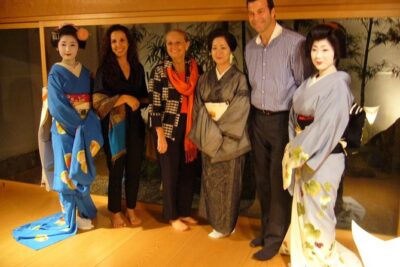
Dinner with Maiko in a Traditional Kyoto Style Restaurant Tour
Our verdict →
Browse the lists this tour appears in