
Reviewed · GEISHA & MAIKO EXPERIENCES
Best of Kyoto: Gion, Geisha, Pagodas & Cobblestones
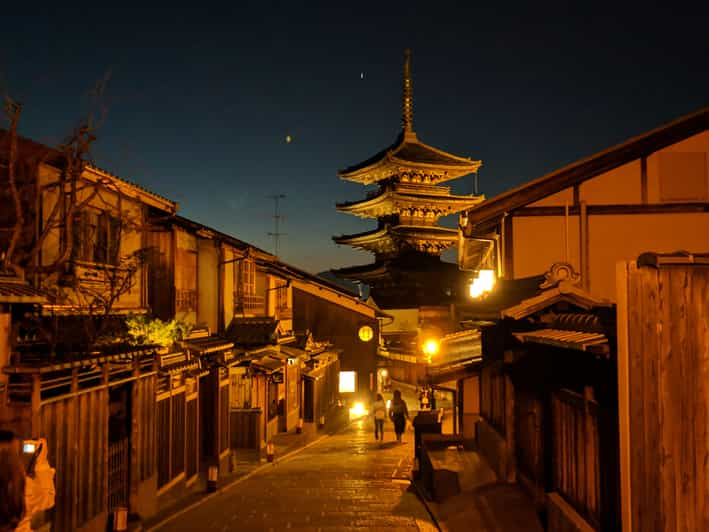
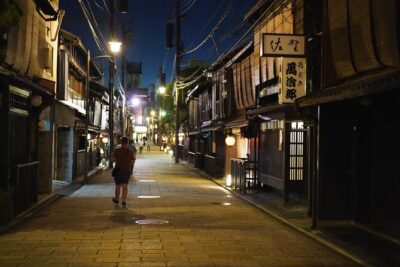
Kyoto’s Gion district takes on a different character after dark. Lanterns glow on wooden buildings, the lanes grow quieter, and a guide can help you understand the difference between a geiko and a maiko without turning the evening into a hunt for photographs. This two-hour walk links Yasaka Shrine, Ninenzaka, and Hōkan-ji Temple before finishing in Gion.
I like the timing, which gives you cooler, calmer streets and a more atmospheric look at old Kyoto. I also like the guides’ practical style, with people such as Karim, Kevin, Janelle, and Ben praised for clear explanations, humor, and restaurant suggestions. The main drawback is that evening lanes can be dim, and seeing a geiko or maiko is never guaranteed.
Key points to know before booking
- Night changes the mood: Gion and Higashiyama are quieter and more atmospheric after the main daytime crowds have gone.
- A useful first-day tour: The route gives you an early sense of Kyoto’s shrines, temples, old streets, and geiko culture.
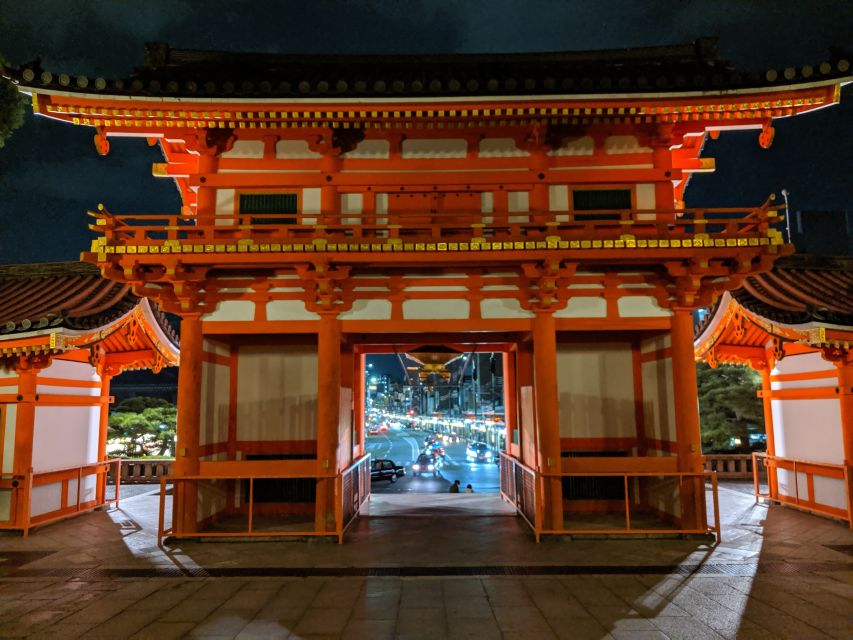
- Several major stops in two hours: You visit Yasaka Shrine, Ninenzaka, Hōkan-ji Temple, Yasui Kompira-Gu Shrine, and Gion.
- Geisha culture is handled with care: The focus is on training, customs, and daily life, not simply spotting women in costume.
- Guides add personality: Karim, Kevin, Janelle, Ben, Salomé, Hina, and others are praised for stories, good pacing, and answering questions.
- Food advice comes at the end: Food and drinks are not included, but your guide can suggest somewhere to eat or have a drink afterward.
Why Gion works best after dark
Gion is often pictured as a daytime scene of tourists, cameras, and narrow lanes. That picture is not wrong, but it misses part of the district’s appeal. Later in the evening, the wooden façades, paper lanterns, and stone lanes become easier to appreciate without as much foot traffic around you.
The walk also helps you read the area properly. Gion is not a theme park built for sightseeing. It is a working district with restaurants, tea houses, shrines, homes, and businesses. A guide can explain where visitors should walk quietly, why you should not photograph people without permission, and how to enjoy the setting without treating it like a stage.
That cultural guidance is one of the strongest reasons to book this tour. You are not simply ticking off photogenic streets. You are learning how the neighborhood functions and how to behave respectfully within it.
The night setting does have a tradeoff. Some parts of the route can be dark, so comfortable shoes and a small light on your phone are sensible. The lower light is part of the atmosphere, but it is not ideal if your main goal is bright architectural photography.
More Geisha Experiences in Kyoto:
- Kyoto Geisha Walking Tour: Gion District & Hidden Gems
★ 4.7 · 3,273 reviews - Kyoto: Gion Magical Night Walking Tour with Geisha Trivia
★ 4.9 · 2,393 reviews - Kyoto: Gion Geisha District Walking Tour – Stories of Geisha
★ 4.7 · 2,187 reviews
Starting near Yasaka Shrine
The tour begins at one of two possible meeting points, including the Tsuruha Drug Yasaka Shrine Store and a FamilyMart in Kyoto Gion. Your exact meeting point depends on the option you book, so check the booking details carefully before setting out.
This is not a tour where you want to arrive casually at the last minute. The instructions say that late arrivals and people who cannot find their guide are not refunded. Your guide’s phone number is shared with you, and WhatsApp is recommended if you have trouble locating the meeting point. Call at least ten minutes before the start if needed.
Once the group is together, the route moves toward Yasaka Shrine. The opening section sets up the religious and cultural background for the rest of the evening. You get about 20 minutes here, enough for a guided look rather than a full temple-and-shrine study.
Yasaka Shrine is a useful first stop because it places Gion’s entertainment culture beside Kyoto’s long religious traditions. Your guide can help explain customs and details that are easy to miss when you wander alone. You will also begin to see how old Kyoto’s major sights are woven into ordinary city streets.
Ninenzaka and the old lanes

From Yasaka Shrine, the walk continues toward Ninenzaka, another 20-minute guided section. This is where the route begins to feel like a stroll through Kyoto’s older street pattern, with sloping lanes, traditional-looking buildings, and plenty of attractive viewpoints.
Ninenzaka is one of the prettiest parts of Higashiyama, but it is also a place where crowds can become tiring during the day. The later timing helps. You can pause to take in the street and ask questions without constantly stopping for passing groups.
The guide’s role matters here. A good walk does not need a lecture at every corner. The best guides on this experience, including Kevin, Karim, and Janelle, are praised for mixing facts with anecdotes and conversation. That style makes the history easier to remember and gives you room to ask about Japanese customs, religion, food, or everyday life.
You should still expect a walking tour, not a seated cultural talk. The route includes slopes and cobblestone surfaces, and the pace can vary with the size of the group. Wear shoes you can comfortably use for two hours.
Hōkan-ji Temple and the Yasaka Pagoda
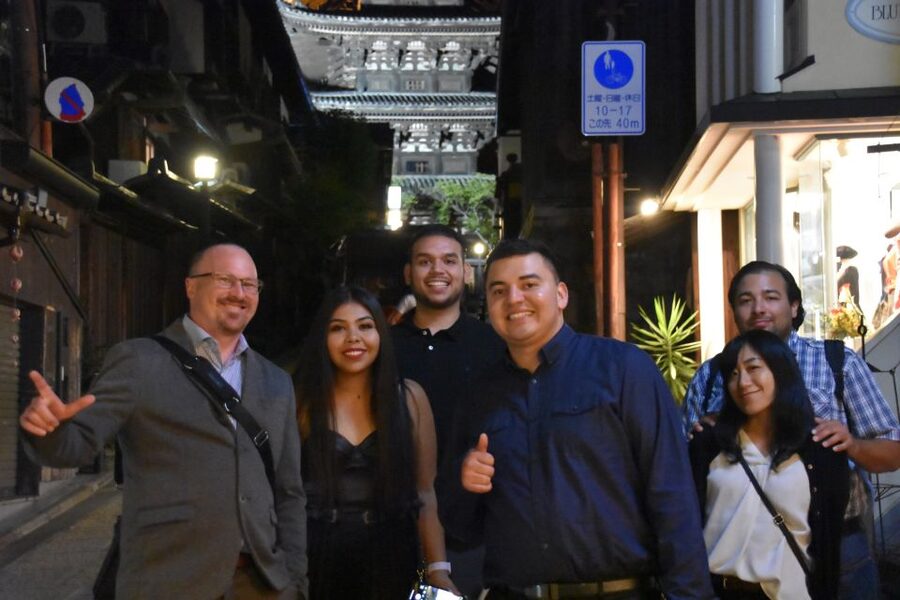
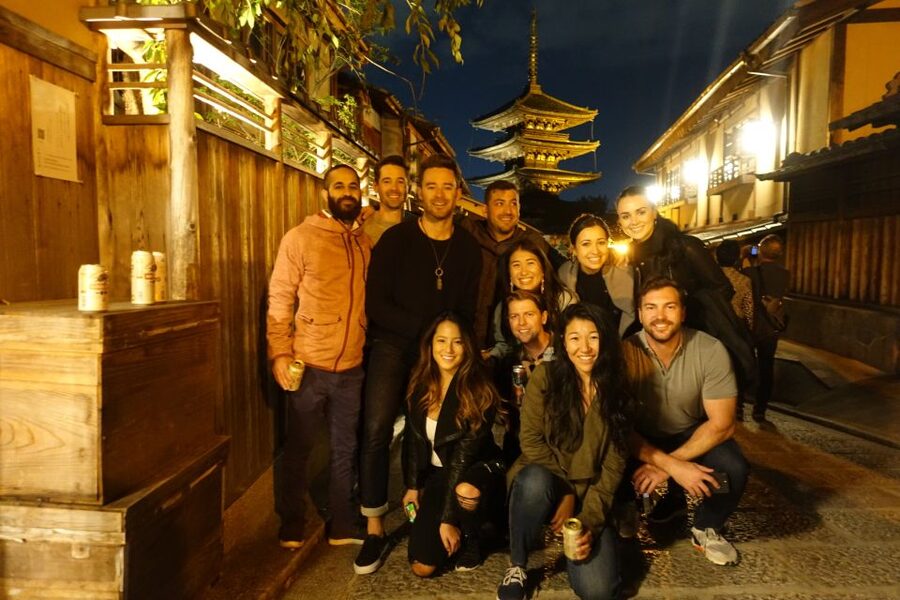
Hōkan-ji Temple, known for its striking Yasaka Pagoda, gets about 20 minutes as a photo stop. The pagoda is one of the most recognizable sights in Higashiyama, particularly when it rises above the old lanes and catches the evening light.
The scheduled stop is mainly for photographs, so do not expect a long temple visit or an interior tour. That is a reasonable choice in a two-hour walk. The pagoda gives you a clear visual anchor, while the guide can explain what you are seeing and point out good places to frame the street.
Night photography here may be atmospheric rather than technically perfect. The low light can make people and buildings look softer, but it can also leave images grainy. I would bring a phone with a steady night mode and avoid blocking the lane while taking pictures.
This stop also shows the value of having a guide who knows the neighborhood. You can enjoy the view, learn the setting, and move on without spending too much of the evening waiting for the perfect photograph.
A few more Kyoto half-days worth comparing
- PERFECT KYOTO 1-Day Bus Tour
★ 5.0 · 13,518 reviews - Kyoto: Fushimi Inari, Kinkakuji, Bamboo Grove 1 Day Bus Tour
★ 4.8 · 4,316 reviews - Kyoto: Tea Ceremony in a Traditional Tea House in Kiyomizu
★ 4.9 · 3,519 reviews - Kyoto: Tea Ceremony Ju-An at Jotokuji Temple
★ 4.9 · 3,207 reviews
The quiet pause at Yasui Kompira-Gu
The next stop is Yasui Kompira-Gu Shrine, with about 15 minutes for a visit. Compared with the famous streets and pagoda, this stop offers a change of pace.
A short shrine visit can be easy to rush when you are exploring Kyoto independently. Here, you have someone who can explain the customs and the place’s role within the route. The experience is not built around collecting famous sights as quickly as possible. It gives you several smaller pauses where the city’s religious side can come through.
That balance is useful. Gion is known internationally for geiko and maiko, but the evening is not only about entertainment. The shrines and temples make clear that this district also belongs to Kyoto’s spiritual and residential life.
Finishing in Gion with geiko and maiko context
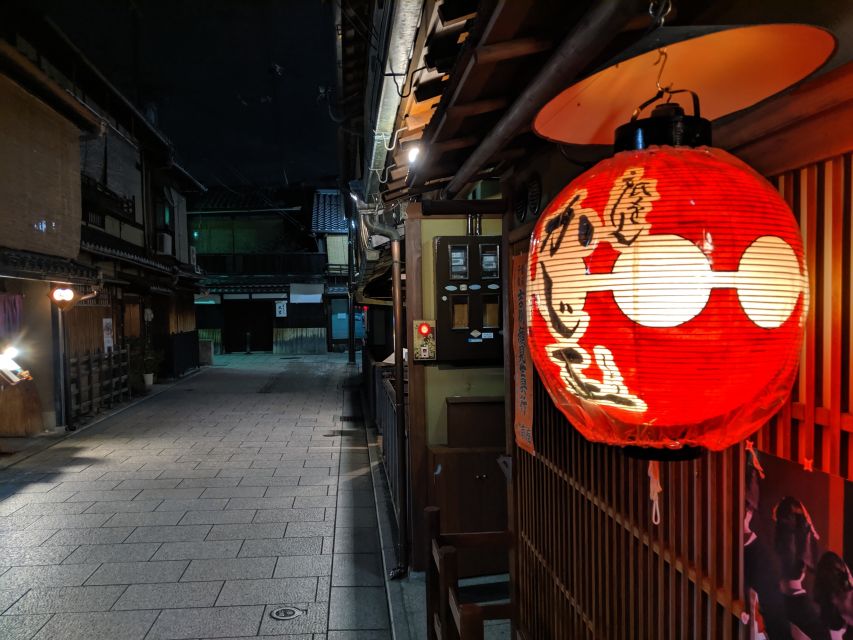
The longest part of the walk is the 45-minute guided tour through Gion. This is where the evening’s themes come together: architecture, entertainment, local customs, and the world of geiko and maiko.
Your guide explains that geiko and maiko are not simply people wearing attractive costumes for tourists. They are performers and artists who undergo years of training in traditional arts. The discussion includes their work, education, customs, and place within Kyoto’s cultural life.
This is one of the tour’s most important features. The subject can easily be reduced to a quick photograph, but the guides are praised for treating geiko culture with respect and care. Several guides also help visitors understand proper behavior, including the need not to intrude or photograph people without permission.
You might catch sight of a geiko or maiko toward the end of the walk. Some evenings have included several sightings, but there is no promise of this, and it should not be your only reason for booking. The district is still worthwhile if no one in costume appears.
If you do see one, keep your distance and follow your guide’s advice. The point is to observe respectfully, not to chase someone down a lane. A considerate approach makes the experience better for you and for the people who live and work in Gion.
What makes the guides useful
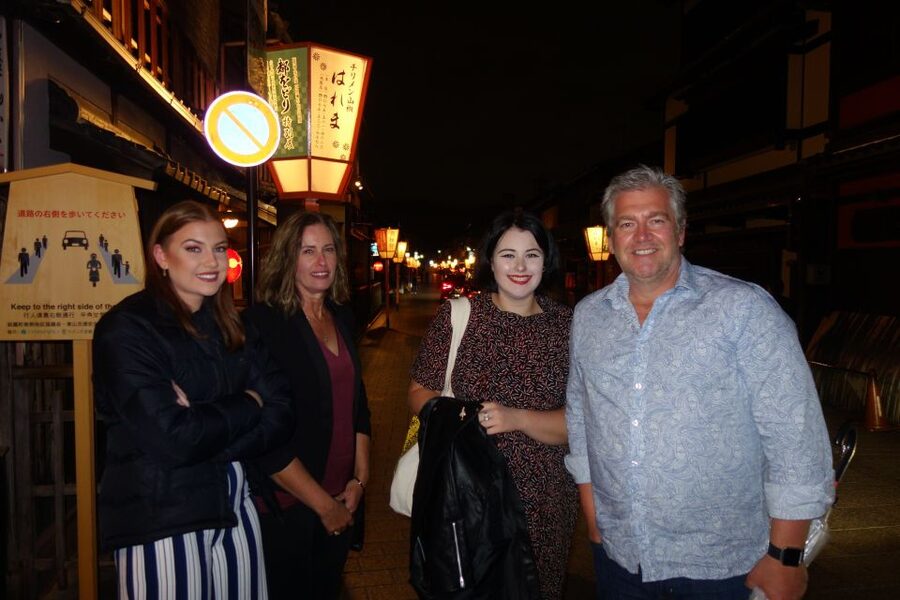
The guide can make or break a walking tour, and this experience has a strong record in that department. Karim is repeatedly praised for being friendly, funny, and clear, with a relaxed manner that leaves room for questions. Kevin is often noted for careful pacing, broad knowledge of Japanese life, and detailed explanations of geiko and maiko training.
Janelle and Janelle’s similarly named guide listings are praised for warmth, humor, and engaging stories. Ben is noted for using visual material on a tablet to explain Kyoto’s past, which can help when a place or custom is hard to picture from words alone. Salomé, Hina, Diana, Amir, Masu, and other guides are also described as personable and easy to talk with.
Guide assignments can change, so you should not book expecting a specific person unless your booking confirms it. What you can reasonably look for is a small-group or private option, offered in English or French. The format suits people who want to ask questions instead of simply following a flag through the streets.
Several guides also offer food and drink recommendations at the end. That is a practical bonus, especially if this is your first evening in Kyoto and you have not yet worked out where to eat.
Price, timing, and overall value
At $24 per person, this is a modestly priced way to get a structured introduction to two of Kyoto’s most visited districts. You are paying for a two-hour guided walk, not admission to a major attraction, a meal, or transportation.
The value comes from context and route planning. You could walk through Gion and Higashiyama on your own, but you might miss the meaning behind the shrines, misread the geiko world, or spend your evening navigating instead of looking around. For a first night in Kyoto, those explanations can save time later in the trip.
The price is especially sensible if you treat the tour as an orientation. Afterward, you will have a clearer idea of which streets you want to revisit, where to eat, and how to move through Gion respectfully.
Private and small-group options are available, though the price and exact format may depend on the option selected. A small group is likely the better choice if you want a more personal pace without paying for a fully private outing.
The activity offers free cancellation up to 24 hours before departure and a reserve-now, pay-later option. Those terms are helpful when your Kyoto schedule is still shifting, but they do not remove the need to arrive on time.
Who should book this Kyoto night walk
I would recommend this tour most strongly for first-time visitors who want a clear introduction to Kyoto on their first day or evening. It also suits anyone who wants cultural explanation without committing to a full-day guided program.
You will get the most from it if you enjoy walking, asking questions, and looking beyond famous photographs. The experience is a good match for couples, friends, solo visitors, and families with older children who can manage two hours on foot.
It may be less suitable if you need step-free sightseeing, dislike evening walks, or want extensive time inside temples and shrines. The route is mainly outdoors, and some streets are dark. It also will not satisfy you if your only goal is a guaranteed geisha sighting.
Bring comfortable shoes and dress for the weather. Cold evenings can feel sharp, as several winter tours have shown, while summer nights may be warm. A compact umbrella is sensible if rain is possible, though the supplied details do not specify a rain policy.
Should you book Best of Kyoto: Gion, Geisha, Pagodas & Cobblestones?
Yes, if you want a friendly, affordable first look at Kyoto’s old eastern districts. The route covers several major sights without feeling like a rushed checklist, and the night timing gives Gion a quieter, more atmospheric mood.
Book it for the guide’s explanations, the respectful treatment of geiko and maiko culture, and the useful restaurant advice at the end. Do not book it solely for photographs or a guaranteed sighting of women in costume.
For $24, two hours is a fair exchange for local context, a well-planned route, and a better understanding of how Gion fits into Kyoto. If you arrive early, wear good shoes, and keep your expectations realistic, this is a smart way to begin a Kyoto stay.
FAQ
How long does the Gion and Higashiyama tour last?
The tour lasts two hours.
How much does the tour cost?
The listed price is $24 per person.
Which places are included on the walking route?
The route includes Yasaka Shrine, Ninenzaka, Hōkan-ji Temple, Yasui Kompira-Gu Shrine, and Gion.
Is the tour held at night?
The experience is designed as an evening walk, when Gion and Higashiyama are quieter and more atmospheric.
Will I definitely see a geisha or maiko?
No. You may catch a glimpse of geiko or maiko toward the end of the tour, but sightings are not guaranteed.
What languages are available?
Live guiding is available in English and French.
Is this a private tour?
Private and small-group options are available, depending on the option you book.
Are food and drinks included?
No. Food and drinks are not included, though the guide can provide suggestions for places to eat or have a drink afterward.
Where does the tour meet?
There are two possible starting location options, including the Tsuruha Drug Yasaka Shrine Store and a FamilyMart in Kyoto Gion. The exact meeting point may vary by booking option.
Can I cancel for a refund?
You can cancel up to 24 hours in advance for a full refund. Reserve-now, pay-later booking is also available.
Just added around Kyoto
- Sekka Cotton Furoshiki Class★ 5.0 · 19 reviews
- Secret Eastern Kyoto Biking Adventure★ 5.0 · 44 reviews
- Kyoto Sword Experience – includes Museum Ticket/Ninja Experience★ 4.5 · 149 reviews
- Scenic Green Tea Fields of Hidden Kyoto & Local Tea Exp (Private)★ 5.0 · 32 reviews
- Private Sake Tasting in Central Kyoto with Sake Sommelier★ 5.0 · 32 reviews
- Samurai School in Kyoto: Samurai for a Day★ 5.0 · 202 reviews
- SHIRAKAWA Japanese Culture Experiences with private English staff★ 5.0 · 16 reviews
- A Privately Guided Photoshoot in Beautiful Kyoto by a Pro★ 5.0 · 18 reviews
Geisha & Maiko Experiences, compared.

Kyoto Geisha Walking Tour: Gion District & Hidden Gems
Our verdict →
Dinner with Maiko in a Traditional Kyoto Style Restaurant Tour
Our verdict →
Browse the lists this tour appears in