
Reviewed · CASTLE TOURS
Kyoto: Nijo-jo Castle and Ninomaru Palace Guided Tour
Nijo Castle is more than a handsome old fortress. It is a carefully staged display of shogun power, where painted tigers, creaking floors, guarded rooms, and grand gates all had a job to do. This one-hour tour helps you read those details instead of simply walking past them. I especially like the clear historical explanations and the chance to enter areas normally closed to the public.
I also like the compact format. You see the castle’s main sights, then have time to wander the gardens on your own. The catch is that the $16 tour price does not include the castle admission fee, which must be paid in cash on site. In summer, the palace can also feel hot, since there is no air-conditioning inside.
Key points to know before you go
- The palace tells a political story: Ninomaru Palace was the shogun’s Kyoto residence and office, not merely a military stronghold.
- A guide adds meaning: You learn why rooms, paintings, carvings, floorboards, and layouts mattered.
- Restricted access may be included: The tour can enter two areas unavailable to ordinary visitors.
- The route covers the essential sights: You visit Higashi Ote-mon Gate, Karamon Gate, Ninomaru Palace, and Ninomaru Garden.
- The tour is short and focused: The guided portion lasts 60 minutes, leaving you free to explore afterward.
- Plan for extra cost and cash: The $16 guide fee is separate from castle admission.
Why Nijo Castle feels different from a typical castle visit
Nijo Castle was built in 1603 as the Kyoto residence of Tokugawa Ieyasu, the first shogun of the Edo period. The Tokugawa family ruled Japan from this period until the shogunate ended in 1867.
That date matters. The castle was not simply a defensive outpost. It was a political stage in the imperial capital, where the shogun could display authority near the emperor’s court. The palace rooms, gates, gardens, and art all helped communicate rank and power.
After the Tokugawa Shogunate fell, the site became an imperial palace. It was later given to Kyoto City and opened as a historic site. In 1994, Nijo Castle was named a UNESCO World Heritage site.
I find this background useful before entering Ninomaru Palace. Without it, you may see ornate rooms and beautiful gardens. With it, you can start asking better questions: Who was allowed in each room? Why was one painting placed here and another there? How did the building make a visitor feel watched, welcomed, or kept at a distance?
The guided tour is built around those questions.
More Castle Tours in Kyoto
- Kyoto: Nijo Castle, Kiyomizu & Fushimi Inari Guided Tour
★ 4.7 · 700 reviews - Kyoto: Imperial Palace & Nijo Castle Guided Walking Tour
★ 4.7 · 453 reviews - Kyoto: Nijo Castle World Heritage Guided Tour with Admission
★ 5.0 · 128 reviews
Entering through Higashi Ote-mon Gate
Your meeting point is the Nijo Castle Tour Ticket Booth. Enter through the East Main Gate, called Higashi Ote-mon, then go to the reception area beside the General Reception on the left after entering.
Arrive early. The group cannot wait for anyone who is missing when the tour begins, and the castle entrance process adds one practical step because you must pay the separate admission fee on site. Your booking confirmation gives the precise meeting details and coordinates.
Higashi Ote-mon is a useful first stop because it shows how the castle controlled movement. The outer defenses, gates, and approach were designed to manage who came in and how they arrived. A guide can point out details that are easy to miss when you are focused on finding the meeting area.
The tour then moves toward Karamon Gate, the decorated entrance to the Ninomaru section. This is where the mood shifts from fortified compound to formal residence.
Karamon Gate and the art of making an entrance
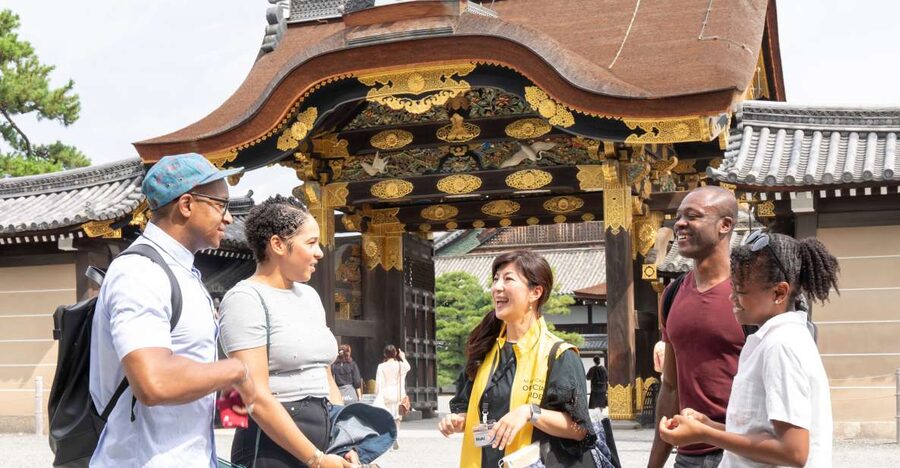
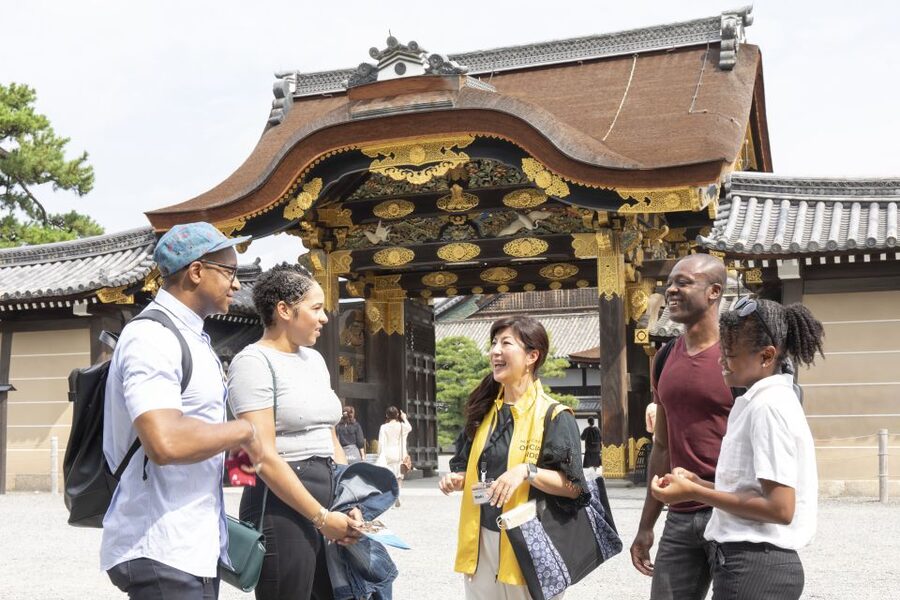
Karamon Gate is one of the castle’s most striking features. Its decoration signals that you are approaching an important space, not an ordinary building.
The guide’s role here is especially useful. The gate is attractive enough to draw your attention, but the meaning behind its carvings and decorative elements is what gives it weight. Several guides, including Miki, Ai, Kaoru, and Don, have been praised for explaining symbolism and connecting the architecture to the political order of the time.
You may hear details about animals, flowers, dragons, and other designs. One interesting point from the tour experience is the way some carvings and artworks can remind modern viewers of familiar Japanese pop-culture images, while their original meaning is tied to status, protection, authority, or good fortune.
This is a good example of why I would not rush straight into the palace. Take a moment at Karamon Gate. Its job was partly practical, but it was also an announcement: the person beyond this point mattered.
Ninomaru Palace, the heart of the tour
Ninomaru Palace is the main reason to book the guided experience. It served as the shogun’s residence and office during visits to Kyoto, and it remains intact.
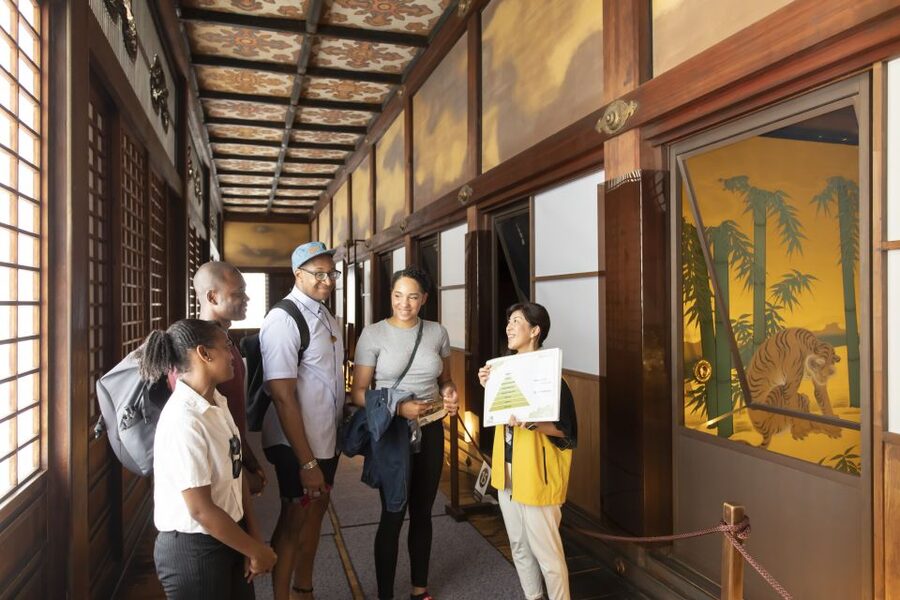
Inside, you move through a sequence of rooms rather than a single grand hall. Each space had a particular purpose, and the arrangement reflected the strict order of the shogun’s world. Your guide explains which rooms were used for formal meetings, private activity, waiting, and official business.
The palace’s paintings are a major part of the visit. Gold surfaces, large animals, plants, and bold scenes helped create a sense of authority. The guide can explain why certain subjects appeared in particular rooms and how the art helped define the room’s status.
You may also learn about daily palace life, including meal preparation and the risks that came with serving a powerful ruler. One memorable topic covered on tours is the fear of poisoning and the care taken around the shogun’s food. These small details turn the building from a museum display into a working political household.
The famous nightingale floors are another part of the castle’s character. Their soft chirping sound helped alert occupants to movement. The point was not comfort. It was security, especially in a residence where danger could come from inside as easily as outside.
Photography is not allowed inside the palace, and you cannot bring water into the palace rooms. That can be frustrating if you are hoping to photograph every painted panel, but it also keeps the experience quieter and protects the interiors.
More Historical Tours in Kyoto
- Kyoto Gion: 2-Hour Geisha Culture & History Walking Tour
★ 5.0 · 1,186 reviews - Kyoto Gion Historical Walking Tour
★ 5.0 · 188 reviews - Historical Kyoto E-Bike Tour
★ 5.0 · 181 reviews - Kyoto: Private 2.5 Hour Historical Walking Tour
★ 4.9 · 121 reviews
The extra-access areas
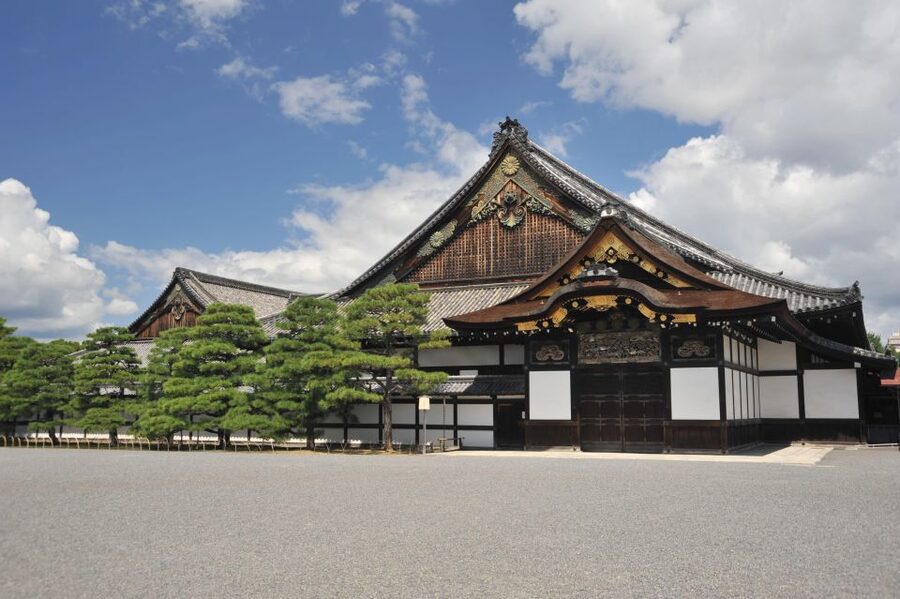
The tour includes exclusive access to part of the castle normally unavailable to the public. Exact access can vary, but the experience has included two additional rooms connected with the shogun’s private quarters.
This is a real advantage over a self-guided visit. You are not only hearing information in rooms open to everyone. You may also step into spaces that most castle visitors cannot enter.
I would keep expectations sensible. The restricted access is an important bonus, but it should not be treated as a guaranteed private wing or a long separate visit. The main value remains the guide’s explanation of the palace and grounds. Still, the extra rooms can make the hour feel more special and give you a closer sense of how the shogun’s private and official worlds were separated.
Reading the palace through a guide’s stories
The strongest part of this tour is not speed or spectacle. It is interpretation.
Guides such as Ai, Ayu, Miki, Kaoru, Don, Kiku, and Kingo have led tours in clear English, with different styles. Some are lively and funny. Others take a calmer approach and explain the material in measured sections. The most useful guides connect the building to wider Japanese history, including the relationship between shogun and emperor, samurai customs, political rivalries, and the fall of the Tokugawa government.
The tour is conducted only in English. Paid participants receive earphones, which helps when the palace is crowded or when the group is spread out. Children do not receive earphones unless you purchase an adult ticket for them, so families should think about whether a younger child can follow without audio equipment.
A good guide also helps with simple practical matters. In hot weather, several guides have adjusted their pace, checked on the group, and answered questions without rushing. That matters because Kyoto summers can be intense, and the palace has no air-conditioning.
Ninomaru Garden after the palace
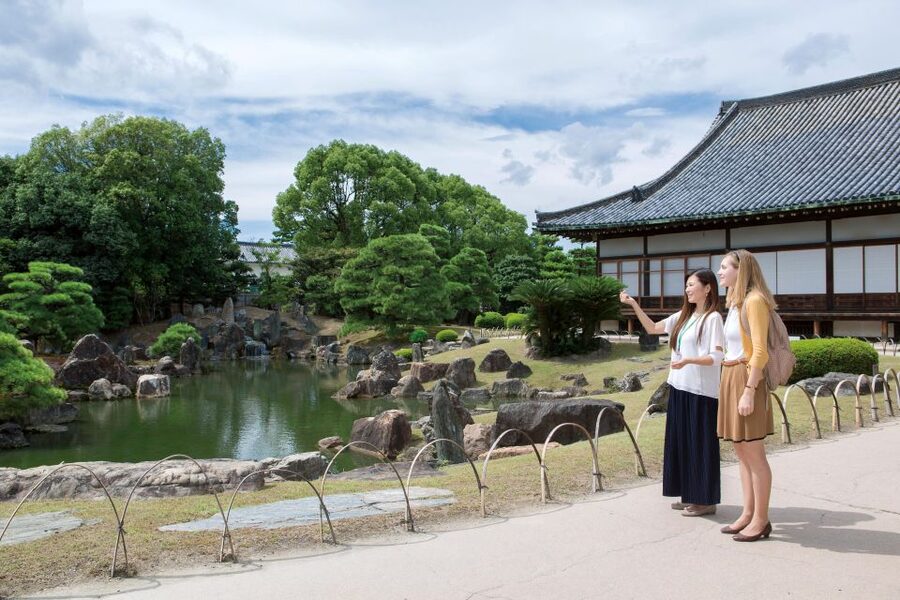
The tour includes Ninomaru Garden, a calm change after the formal palace rooms. The garden surrounds the architectural experience with ponds, arranged stones, trees, and carefully framed views.
The guided portion lasts one hour, so you should not expect a long garden walk with every corner explained. That is actually useful. Once the guide finishes, you can set your own pace and look again at the parts that caught your attention.
I like this balance. A guide gives you the framework, then the garden gives you breathing room. You can linger, take photographs where permitted, and consider how different the castle feels outside the palace. The heavy political symbolism of the rooms gives way to a more measured setting, though the garden is still carefully designed rather than natural wilderness.
Bring water for the outdoor portions, especially in July and August. You cannot take it into the palace, but you will want it before or after that section.
Price, admission, and overall value
The guided tour costs $16 per person. That is a modest price for an English explanation of Nijo Castle, especially if the guide includes restricted areas and takes questions.
The important catch is the separate castle admission fee. It is not included in the $16, and it must be paid in cash on site. One tour price reference noted an admission cost of 1,300 yen, but check the current amount when booking because entrance fees can change.
So your real cost is the guide fee plus admission. Even so, I think the tour offers good value if you care about history, architecture, or understanding what you are seeing. Nijo Castle is open to independent exploration, but the symbols and room functions are not always obvious. You could walk through the palace and notice the gold panels without understanding why the artwork was placed there or how the rooms reflected rank.
The value is lower if you prefer to move alone and read at your own pace. The guided route is fixed for the hour, and you will need to stay with the group. Afterward, you can explore independently.
Each paying adult may bring one child aged 0 to 12 free of charge. The child must stay with an adult. A second child, or any additional child, needs an adult ticket.
Timing, weather, and the small practical details
The experience lasts 60 minutes, with starting times based on availability. That makes it easy to fit into a Kyoto sightseeing day, but do not place it too close to another timed booking. You need to enter through the East Main Gate, pay admission, find the reception area, and be ready when the tour starts.
The palace is largely an indoor visit, but the route also includes gates and the garden. Wear shoes you can remove and put back on easily, since Japanese palace visits require footwear to be removed in certain areas.
Summer deserves special care. The palace has no air-conditioning, and there is no water inside. Several tours have taken place in temperatures above 95 degrees Fahrenheit, with guides making an effort to keep people comfortable. I would schedule the visit earlier or later in the day when possible, carry a cold drink for before and after the palace, and dress for heat.
Nijo Castle closes to the public on Tuesdays in July, August, December, and January. Ninomaru Palace also closes from December 26 through January 3. Check the date before paying for other Kyoto plans around this visit.
Free cancellation is available up to 24 hours before the start time. If you arrive after the tour begins, you cannot join, so punctuality is more important than usual.
Who will get the most from this tour
I would choose this tour if you want to understand how power worked in feudal Japan, not simply photograph an old castle. It suits first-time visitors who want a clear introduction to the Tokugawa period, as well as repeat visitors who missed the meaning behind the palace rooms on an earlier visit.
It is also a good choice for solo visitors. The guide may take photographs for you, and the group format gives you company without requiring a full-day commitment.
Families can make it work, especially because one child aged 0 to 12 can join free with each paid participant. Young children may find one hour of historical explanation demanding, particularly without an earphone, so consider their attention span before booking.
You should think twice if heat bothers you, if you dislike group schedules, or if you want to spend the entire visit taking photographs. The palace does not allow photography or water inside, and the tour moves at a set pace.
Should you book the Nijo Castle guided tour?
I would book it for the first visit to Nijo Castle. The castle is impressive on its own, but the guide explains the palace’s room order, artwork, shogun customs, political meaning, and security features in a way that makes the building easier to read.
The strongest reasons to go are the excellent English guidance, the focused one-hour route, and the possibility of seeing restricted rooms. The main drawbacks are the extra admission fee, the cash requirement, the no-photography rule inside, and the heat during summer.
If you want a short, useful introduction before exploring Ninomaru Garden on your own, this is a smart add-on. If you already know the Tokugawa period well and prefer complete independence, enter on your own and save the guide fee. For most visitors, though, the extra context is worth the price.
FAQ
How long does the Nijo Castle guided tour last?
The guided tour lasts 60 minutes.
What language is the tour conducted in?
The tour is conducted only in English.
Is Nijo Castle admission included in the tour price?
No. The $16 tour price does not include admission to Nijo Castle. The admission fee must be paid in cash on site.
Where do I meet the guide?
Enter through the East Main Gate and go to the reception area next to the General Reception, on the left after entering. The meeting point is the Nijo Castle Tour Ticket Booth area, with exact details provided in your booking confirmation.
Which parts of Nijo Castle are included?
The route includes Higashi Ote-mon Gate, Karamon Gate, Ninomaru Palace, and Ninomaru Garden.
Can I visit areas that are closed to the public?
The tour includes exclusive access to a part of the castle normally unavailable to the public. Access may include two additional areas connected with the shogun’s private quarters.
Can children join the tour?
Each paid participant may bring one child aged 0 to 12 free of charge. The child must be accompanied by an adult. Each additional child must purchase an adult ticket.
Can I cancel the booking?
You can cancel up to 24 hours in advance for a full refund. You cannot join if you are not present when the tour begins.
Just added around Kyoto
- Sekka Cotton Furoshiki Class★ 5.0 · 19 reviews
- Kyoto Sword Experience – includes Museum Ticket/Ninja Experience★ 4.5 · 149 reviews
- Scenic Green Tea Fields of Hidden Kyoto & Local Tea Exp (Private)★ 5.0 · 32 reviews
- Secret Eastern Kyoto Biking Adventure★ 5.0 · 44 reviews
- Private Sake Tasting in Central Kyoto with Sake Sommelier★ 5.0 · 32 reviews
- Samurai School in Kyoto: Samurai for a Day★ 5.0 · 202 reviews
- A Privately Guided Photoshoot in Beautiful Kyoto by a Pro★ 5.0 · 18 reviews
- Samurai Performance and Casual Experience: Kyoto Ticket★ 4.5 · 115 reviews
Castle Tours, compared.
Tokyo Castle & Imperial PalaceーShogun Walking Tour
Our verdict →
Japanesel Archery Experience HIROSHIMA CASTLE SHARAKU
Our verdict →
Browse the lists this tour appears in