
Reviewed · HISTORICAL TOURS
Kyoto Gion Historical Walking Tour
Kyoto’s eastern hills are best understood on foot, and this tour gives you a useful route through them. You move from the refined lanes of Gion to temple gates, stone slopes, and the broad views at Kiyomizu-dera. I especially like the way it links geisha culture with samurai and imperial history, rather than treating the district as a collection of pretty photo stops.
I also like the small group limit of 12 and the range of guides, including Jay, Ben, Ayumi, Michel, and Tommy. Several are praised for clear English, humor, local tips, and a willingness to answer questions. The main drawback is physical: three hours means steady walking, with hills, stairs, and cobbled paths. Bring water, eat first, and do not wear your slippery fashion shoes.
Key points to know before you book
- A useful east Kyoto route: You walk from Gion through Higashiyama and finish at Kiyomizu-dera, rather than doubling back to the start.
- History beyond temple facts: Guides cover religion, theater, geisha culture, samurai, emperors, and the Meiji Restoration.
- Small-group format: The tour accepts a maximum of 12 people, though one booking may occasionally become a private experience in a quiet period.
- A real walking workout: Expect hills, stairs, stone lanes, and roughly half a day on your feet.
- Strong guide feedback: Jay, Ben, Ayumi, and Tommy receive repeated praise for clear English, humor, and detailed explanations.
- Good value at $40: The price pays for a three-hour guided route, but Kiyomizu-dera admission, food, and gratuity are extra.
Why this route makes sense for a first Kyoto afternoon
This is not a tour built around one grand monument. Its strength is the sequence. You begin in Gion, where Kyoto’s traditional entertainment district gives you a glimpse of refined streets and old urban customs, then walk uphill through eastern Kyoto toward some of the city’s best-known temples.
That order matters. Gion can feel confusing if you only wander without context. A guide can explain why some lanes are narrow and carefully preserved, how the area relates to geisha culture, and how Kyoto’s religious sites fit into the city’s long political story.
The route also helps you get your bearings. You finish at Kiyomizu-dera, one of Kyoto’s major sights, with the eastern hills behind you and plenty of information to shape the rest of your stay. Several guides also offer suggestions for gardens, temples, shops, and places worth returning to later.
The tour costs $40 per person. At that price, I see it as a strong orientation walk if you want more than a quick photo stop. You are paying for a guide who connects the sites and handles the route, not for meals, transport, or a private car. Admission is not included, and Kiyomizu-dera may require its own ticket, so keep a little extra money handy.
More Historical Tours in Kyoto
- Kyoto Gion: 2-Hour Geisha Culture & History Walking Tour
★ 5.0 · 1,186 reviews - Kyoto: Nijo-jo Castle and Ninomaru Palace Guided Tour
★ 4.7 · 1,020 reviews - Kyoto: Imperial Palace & Nijo Castle Guided Walking Tour
★ 4.7 · 453 reviews
Gion Shibashi and Tatsumi Bridge
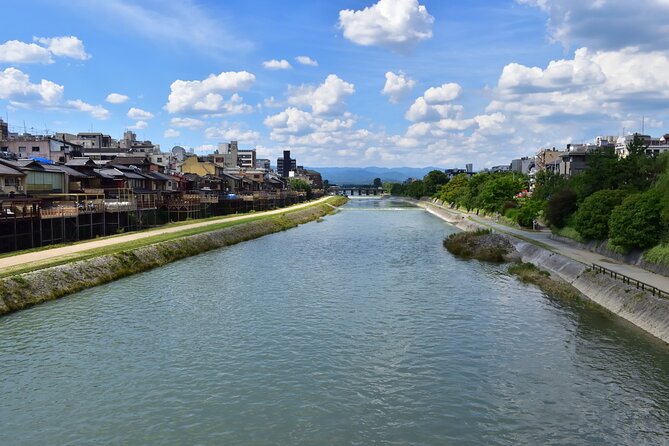
The walk begins near Ben’s Cookies at Shijo, then heads toward Tatsumi Bridge and the Gion Shibashi area. The bridge is a short stop, about 15 minutes, but it sets the tone for the tour.
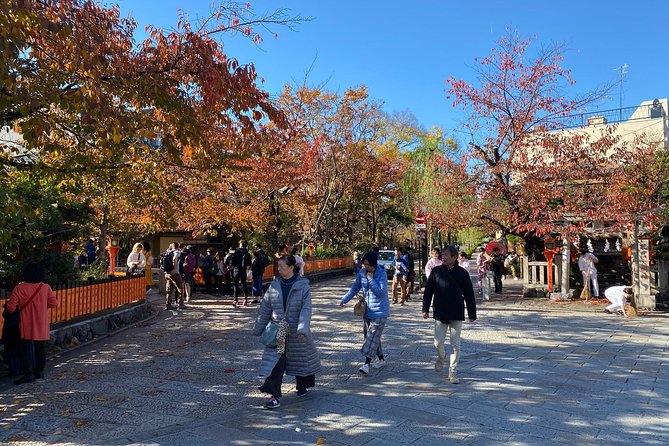
This is one of Kyoto’s most attractive traditional areas, with narrow lanes, carefully maintained buildings, and the atmosphere of an old entertainment quarter. Your guide can provide the social and cultural background that is easy to miss when you are concentrating on finding the right street.
Do not expect a long lecture at the bridge. The value here is the opening context. You start by learning how Gion functions as part of Kyoto’s cultural identity, then carry that understanding into the temples and older paths ahead.
Gion is also one of the busiest parts of the route. You should be ready to share the streets with many other people, especially around popular photo points. A guide cannot remove the crowds, but can help you focus on the details that make the district worth seeing.
Chion-in’s enormous Sanmon gate
The next stop is Chion-in’s Sanmon, a huge wooden temple gate. The visit lasts about 10 minutes, and the gate itself is enough to make a strong impression.
This is a good place for your guide to explain the scale and purpose of Buddhist temple architecture. The gate is not merely an entrance for a photo. It signals the importance of the temple compound and creates a dramatic transition from city streets to a religious site.
The tour includes the gate without a separate admission charge. You should still pay attention to the walking surface and any stairs nearby. The route becomes more demanding as it moves through the eastern hills, and this is one reason comfortable shoes matter.
Chion-in Temple and Kyoto’s religious story
The tour then spends about 20 minutes at Chion-in itself. Chion-in is a major Buddhist temple founded in the 13th century, and its large grounds give the guide room to explain Kyoto’s religious traditions and the role of temples in the city.
This stop is more rewarding when you understand the relationship between architecture, ritual, and history. Rather than simply naming buildings, the guide can place Chion-in within the broader story of Kyoto and Japan. Guides with a background in history, such as Jay, have been praised for explaining how monks, samurai, emperors, and political change affected one another.
The stop is not an exhaustive temple visit. Twenty minutes gives you an introduction, not time to explore every building or courtyard. That is a fair trade on a route with eight main stops, but you may want to return independently if Chion-in becomes a favorite.
More Walking Tours in Kyoto
- Kyoto Geisha Walking Tour: Gion District & Hidden Gems
★ 4.7 · 3,273 reviews - Kyoto: Gion Magical Night Walking Tour with Geisha Trivia
★ 4.9 · 2,393 reviews - Kyoto: Gion Geisha District Walking Tour – Stories of Geisha
★ 4.7 · 2,187 reviews - Night Walk in Gion: Kyoto’s Geisha District
★ 4.5 · 2,003 reviews
Maruyama Park and a change of pace
After the temple, the route enters Maruyama Park for about 10 minutes. This is a welcome pause from gates, stairs, and stone lanes.
The park offers a more open setting and a chance to see how Kyoto blends older religious sites with everyday city life. Your guide may use the park to explain local customs, seasonal appeal, and the way the eastern temple district connects with public green space.
Ten minutes is brief, so think of this as a walking stop rather than a park visit. You will not have time to linger for long. Still, the change of pace helps keep the three-hour walk from feeling like one continuous procession of temple explanations.
Nene-no-Michi and the old Higashiyama lanes

Nene-no-Michi, or the Path of Nene, is one of the most atmospheric sections of the route. It is a stone-paved lane named for Nene, the wife of Toyotomi Hideyoshi, a major figure in Japanese history.
Here, the route feels narrower and more intimate. Traditional buildings, walls, and small lanes create the setting many people picture when they think of old Kyoto. The guide’s historical storytelling is especially useful because the path connects a physical place with a real political and personal story.
This is also a spot where you should slow down and watch your footing. Stone paving can be uneven, and the route is shared with other pedestrians. Keep your camera ready, but do not let the perfect photograph distract you from the group.
Yasaka Pagoda and the famous eastern hills
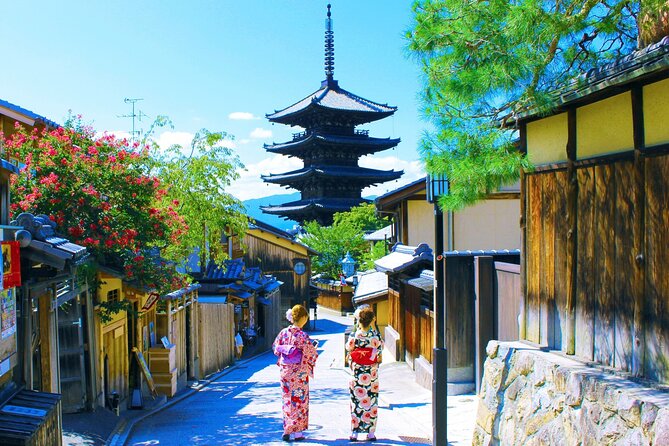
Hōkan-ji Temple, commonly called Yasaka Pagoda, is one of the most recognizable sights in Higashiyama. The five-story pagoda rises above the surrounding lanes and gives this section of the walk its most instantly recognizable view.
The scheduled stop is about 10 minutes. That is enough to take photographs and hear the essential story, but not enough for a lengthy visit inside the temple grounds. The listing identifies admission at this stop as free, while the general tour information says admission fees are not included, so you should follow the guide’s instructions on the day.
Yasaka Pagoda is also a reminder that this district is not a museum set. It is a living neighborhood with shops, paths, temples, and homes packed into a small area. The guide helps you read the setting instead of seeing only the pagoda’s silhouette.
Ninen-zaka and Sannen-zaka
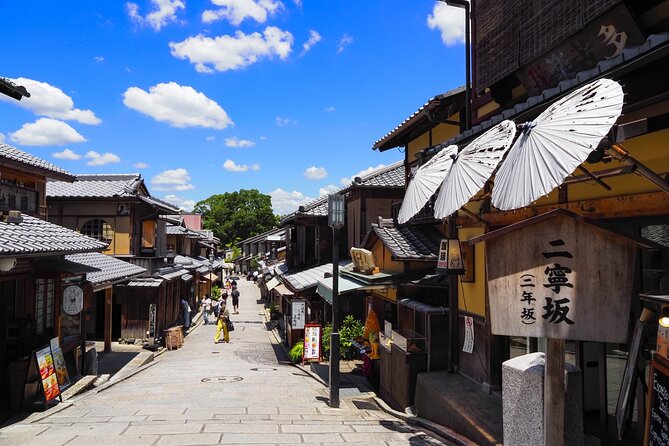
The walk continues along Ninen-zaka and Sannen-zaka, two historic stone slopes lined with traditional buildings, tea houses, and souvenir shops. Ninen-zaka means Two-Year Slope, while Sannen-zaka means Three-Year Slope.
The stops are short, about five minutes at Ninen-zaka and 10 minutes at Sannen-zaka. In practice, you will experience them as part of the walk rather than as formal attractions where everyone gathers for a long talk.
These lanes are among the most photogenic parts of Kyoto, but they can also be crowded and difficult for anyone with mobility concerns. The cobbles, inclines, and stairs are not a minor detail. One account specifically noted that the amount of stair climbing should be made clear, and I agree. You need a moderate level of fitness for the full route.
If you want to shop, make a note of places you like and return later. Stopping for browsing during a group walk can make you fall behind, and the tour has a fixed destination.
Ending at Kiyomizu-dera
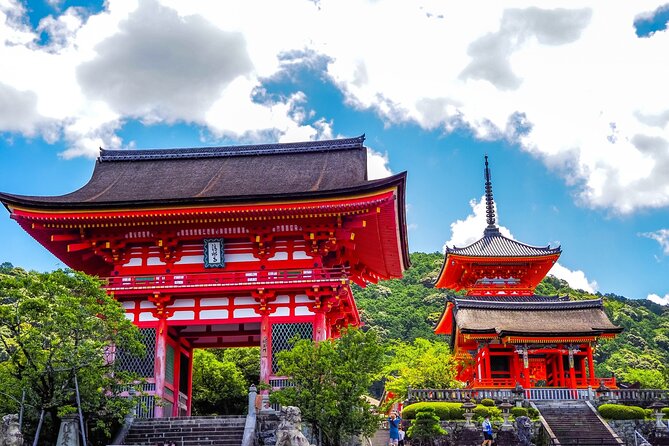
The final stop is Kiyomizu-dera, a UNESCO World Heritage Site dating to the eighth century. The temple sits on a hillside above Kyoto and is known for its broad city views.
The tour ends in front of the Kiyomizu-dera entrance, not back at the original meeting point. That is practical. You finish near one of Kyoto’s essential sights, and you can continue exploring the temple area on your own if you have time and the appropriate admission ticket.
The scheduled stop is about 10 minutes, which is enough for orientation and views but not a full Kiyomizu-dera visit. Admission is not included. If you want to explore the temple properly, plan extra time after the walk and confirm the current entry arrangements when you arrive.
The end point also affects your day’s planning. Do not book a tight reservation immediately after the tour. One guide allowed extra time when the group wanted to continue, and the tour can run beyond the stated three hours. That is not guaranteed, but a 30-minute cushion is sensible.
What the guides add to the walk
The strongest part of this experience is the guide. Jay appears often in the feedback and is praised for a history background, clear English, humor, local folklore, and patient answers. Ben is described as passionate about Kyoto and good at suggesting gardens, temples, and shops for later visits.
Ayumi is noted for energy, strong English, and explanations of geisha and samurai culture. Tommy is praised for answering questions and keeping the mood light. Michel is described as friendly and accommodating, with useful advice for the following day.
You cannot select one of these guides from the information provided, so treat the names as examples of the guiding style available rather than a promise. The common thread is an emphasis on explanation, questions, and broader Japanese history. If you want a guide who simply points out buildings, this may feel information-heavy. If you like knowing why a place matters, that is exactly the point.
Walking, food, weather, and group size
Wear proper walking shoes. You will cover a lot of ground, climb hills and stairs, and cross cobbled slopes. The route is suitable for people with moderate physical fitness, but it is not a gentle stroll.
Eat before you arrive. There are not many planned food stops, and the tour includes lunch neither in the price nor in the schedule. Bring water and a small snack if you need one. Bathroom breaks may be possible, but do not count on regular café time.
The maximum group size is 12. That is small enough for questions and easier movement through narrow lanes, while still being a shared tour rather than a private guide service. In a quiet period, you might end up with a private walk, but that is luck, not a standard feature.
Service animals are allowed, and the meeting point is near public transportation. The mobile ticket makes arrival simple, but confirm the exact meeting instructions before setting out. The tour requires good weather. If poor weather cancels it, you are offered another date or a full refund.
Free cancellation is available up to 24 hours before the start time. Changes or cancellations inside that window are not refunded, so keep the policy in mind when planning a tightly packed Kyoto schedule.
Who should book this Kyoto walking tour?
I would book this tour early in a Kyoto visit if I wanted a clear introduction to Gion and Higashiyama. It works particularly well for adults who enjoy history, religion, architecture, and stories about how Kyoto developed.
It is also a good choice if you want to see the eastern highlights without working out the route yourself. The walk connects several places that can feel scattered on a map, then leaves you at Kiyomizu-dera for further exploring.
Families can join, but three hours of information and steady walking may test younger children. One family managed it with an eight-year-old, though the child eventually tired of the temples and shrines. Bring snacks, set expectations, and consider whether your children enjoy guided history before booking.
You may want a different option if you need a slow pace, frequent café stops, wheelchair-friendly streets, or a short sightseeing loop. The hills and stairs are real, and the tour does not include a meal or temple admission.
Should you book it?
Book it if you want a history-led introduction to Gion and eastern Kyoto, especially with an English-speaking guide who can explain more than the names of the buildings. The $40 price is fair for three hours, a small group, and a route that ends at Kiyomizu-dera.
Skip it if you prefer wandering alone, shopping at length, or spending a full hour inside each temple. For most first-time visitors who can handle the hills, this is a practical way to make sense of Kyoto’s most beautiful eastern streets before exploring them at your own pace.
FAQ
How long does the Kyoto Gion Historical Walking Tour last?
The tour lasts approximately three hours. You should allow extra time after the scheduled finish because the walk may run longer.
Where does the tour start?
It starts at Ben’s Cookies Kyoto, 89 Shinchō, Shimogyo Ward, Kyoto, 600-8001, Japan.
Where does the tour end?
It ends in front of the entrance to Kiyomizu-dera at 1-chōme-294 Kiyomizu, Higashiyama Ward, Kyoto, 605-0862, Japan.
What sights are included on the route?
The route includes Tatsumi Bridge, Chion-in’s Sanmon gate, Chion-in Temple, Maruyama Park, Nene-no-Michi, Hōkan-ji Temple and Yasaka Pagoda, Ninen-zaka, Sannen-zaka, and Kiyomizu-dera.
Is admission to Kiyomizu-dera included?
No. Admission fees are not included in the tour price, and Kiyomizu-dera admission is specifically listed as not included.
What happens if the tour is canceled because of bad weather?
You will be offered a different date or a full refund if poor weather causes the tour to be canceled.
Just added around Kyoto
- Sekka Cotton Furoshiki Class★ 5.0 · 19 reviews
- Kyoto Sword Experience – includes Museum Ticket/Ninja Experience★ 4.5 · 149 reviews
- Scenic Green Tea Fields of Hidden Kyoto & Local Tea Exp (Private)★ 5.0 · 32 reviews
- Secret Eastern Kyoto Biking Adventure★ 5.0 · 44 reviews
- Private Sake Tasting in Central Kyoto with Sake Sommelier★ 5.0 · 32 reviews
- Samurai School in Kyoto: Samurai for a Day★ 5.0 · 202 reviews
- Samurai Performance and Casual Experience: Kyoto Ticket★ 4.5 · 115 reviews
- SHIRAKAWA Japanese Culture Experiences with private English staff★ 5.0 · 16 reviews
Historical Tours, compared.
Imperial Palace and Shogun Historical Walking Tour
Our verdict →
World Heritage Kyoto & Nara Uji Authentic Matcha Experience
Our verdict →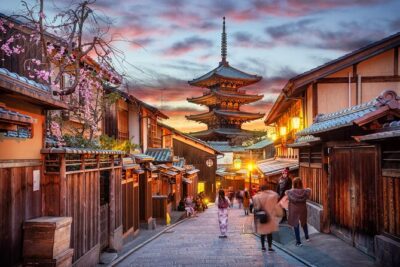
Kyoto Gion: 2-Hour Geisha Culture & History Walking Tour
Our verdict →
Hiroshima Historical Walking Tour – Why A-Bomb was Dropped
Our verdict →
Yanaka Walking Tour: Historic and Traditional District of Tokyo
Our verdict →
Shinjuku Historical Walking Tour & Secret Backstreets
Our verdict →
Mt. Fuji Heritage Tour: Traditional Villages, Lakes & Shrine
Our verdict →Browse the lists this tour appears in