
Reviewed · GEISHA & MAIKO EXPERIENCES
Private Dinner with a Geisha
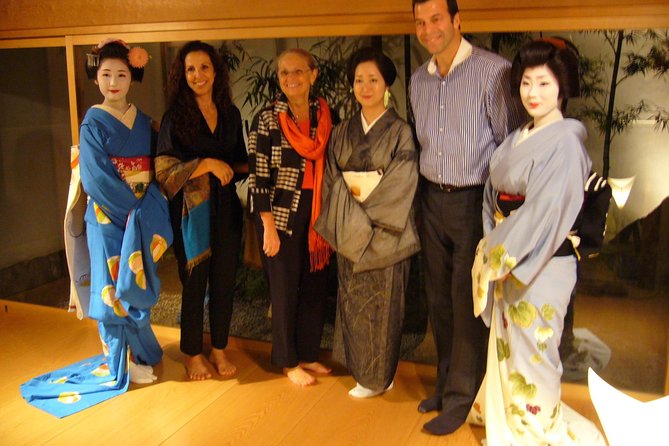
Meeting a real maiko or geiko over dinner is the heart of this Kyoto evening. You can ask about training, clothing, daily life, and traditions, then watch a dance, hear music, and join a simple game. This is far more personal than a stage show or a quick photo stop.
I like the guided walk through Gion, which gives the encounter some cultural context, and I like the English-speaking guides, especially Mia and Mie, who are praised for clear translation and warm introductions. The main caution is the food: the fixed kaiseki menu is very traditional, and some diners have found it difficult, especially with seafood or other dietary limits.
Key points to know
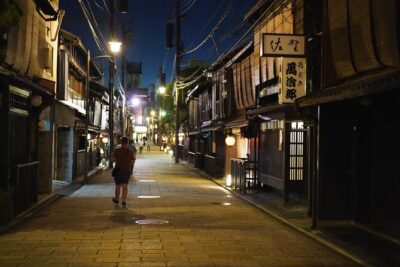
- Gion comes first: You walk from Minamiza Kabuki Theatre through Kyoto’s historic geiko district before dinner.
- The cultural meeting is personal: You can speak with a maiko, geiko, or both through your guide’s translation.
- Entertainment is traditional: Expect dance, singing, shamisen music, and occasional games.
- The meal varies: Options include casual dining, half or full kaiseki, and a private tea house experience.
- The price is a serious splurge: At $381.49 per person, the value rests mainly in the private access and cultural setting.
- Dietary planning matters: You must report restrictions when booking, but the fixed menu may not accommodate every request.
Meeting a maiko in Kyoto’s Gion district
Kyoto uses the term geiko for a fully trained geisha, while maiko refers to an apprentice. That distinction matters here because the person joining your dinner may be one, the other, or both, depending on the option and evening.
This is not simply a performance where you sit quietly and watch from a distance. The maiko or geiko may answer questions, explain her clothing and training, perform traditional dances, play music, and join in a game. Your guide translates the conversation, so you can ask about subjects that are hard to approach during a normal cultural show.
The personal setting is the main reason to consider the cost. You are not just seeing a costume and a dance. You are getting a short window into a demanding artistic tradition that has long been conducted in private tea houses rather than public theaters.
Still, keep your expectations sensible. The length of the performance can vary. In one account, there was limited room for the maiko to dance, and the formal performance was brief. The evening works best if you value conversation and access as much as stage time.
More Dinner Experiences in Kyoto
- Kyoto Gion Cultural Walk & Geisha Show with Dining Options
★ 5.0 · 518 reviews - Kyoto Gion Cultural Walk & Geisha Show with Dining Options
★ 5.0 · 483 reviews - Dinner with Maiko in a Traditional Kyoto Style Restaurant Tour
★ 5.0 · 175 reviews
Starting at Minamiza Kabuki Theatre at 5 p.m.
The meeting point is in front of the main gate of Minamiza Kabuki Theatre, facing Shijo Street, at 198 Nakanocho in Higashiyama Ward. The stated start time is 5 p.m., and the experience ends at the restaurant or tea house, back near the starting area.
Minamiza is a useful landmark in central Kyoto, and the location is near public transportation. Arrive early enough to find the theater entrance without rushing. This is not the kind of activity you want to begin while checking maps and searching for the right gate.
Your guide greets you there and explains how the evening will run. Guides such as Mia and Mie have been praised for strong English, humor, and a friendly way of handling questions. That matters because the guide is not just leading a walk. She is also the bridge between you and the maiko or geiko.
The published duration is about three and a half hours, though the detailed itinerary describes roughly three hours for the walk and party. The casual option can be shorter. Check the exact option you choose, since the dinner format affects both timing and what is served.
Walking Gion before dinner
The walk through Gion is a useful first chapter. Instead of arriving cold at a tea house, you get an introduction to the district’s traditional wooden buildings, geiko culture, and the difference between popular myths and present-day practice.
The walk is not a long sightseeing tour. It is designed to prepare you for dinner. Your guide explains how maiko and geiko train, how their roles differ, and how the private tea-house system works. That background gives you better questions to ask later.
I especially like this part for first-time visitors. Gion can look quiet and mysterious, but it is easy to misunderstand what you are seeing. A guide can help you treat the district as a working cultural neighborhood rather than a stage set.
Group size can affect the walk. A large group may make it harder to hear the guide on busy streets, and one account describes that problem. If your main goal is a quiet conversation and close access, ask exactly how your chosen option is organized. The activity is described as private, but some formats may involve a larger party or shared arrangements.
Choosing between casual dining, kaiseki, and the private tea house
The booking choices are important because they change the balance between food, drinks, privacy, and time.
The casual dinner is the simpler choice and may suit families or people who want a shorter cultural introduction. One family with teenagers and a young child chose this format and found it manageable. It still includes contact with a maiko and a traditional performance, but you should not assume it provides the same meal or privacy as the higher-priced options.
The half-kaiseki meal offers multiple traditional courses without the scale of a full meal. Kaiseki often features carefully presented seafood, vegetables, tempura, and other seasonal dishes. Several accounts describe the food as excellent, while others found the fixed menu hard to enjoy.
The full kaiseki meal is the most food-focused option. It can be elaborate and filling, so arrive ready for several courses rather than a single plate. You may need your guide to explain unfamiliar ingredients, since a detailed menu in English is not guaranteed.
The private tea house option is the biggest splurge. Drinks are included with this option, including sake and beer, while drinks are otherwise available for purchase. The private setting can make the evening feel more intimate and gives your group more room for questions and conversation.
At $381.49 per person, I would choose the private tea house only if the access itself is your priority. You are paying for arrangements that are difficult to make independently, not just for dinner. If you mainly want to sample Japanese food, Kyoto offers less expensive ways to do that.
More Geisha Experiences in Kyoto:
- Kyoto Geisha Walking Tour: Gion District & Hidden Gems
★ 4.7 · 3,273 reviews - Kyoto: Gion Magical Night Walking Tour with Geisha Trivia
★ 4.9 · 2,393 reviews - Kyoto: Gion Geisha District Walking Tour – Stories of Geisha
★ 4.7 · 2,187 reviews - Best of Kyoto: Gion, Geisha, Pagodas & Cobblestones
★ 4.9 · 2,058 reviews
What dinner with the maiko or geiko feels like
After the walk, you enter a Japanese restaurant or tea house and sit for the meal. The setting may include a traditional room, with the maiko or geiko joining your group during dinner.
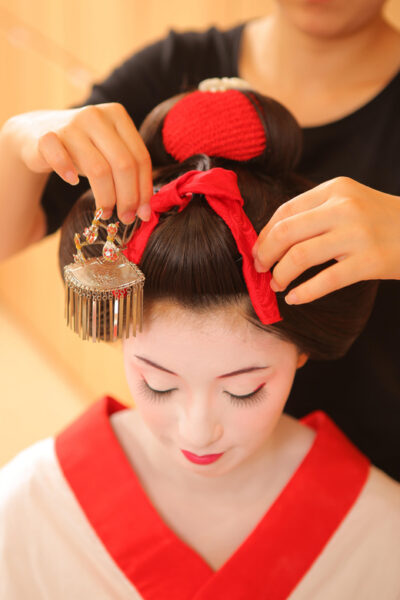
The conversation is usually the most rewarding part. You can ask about her training, clothing, performance work, and daily life. One maiko discussed her hopes of becoming a geiko, while another explained details of dressing and sleeping with traditional hair styling. Those small personal questions can make the tradition feel less distant.
Your guide translates, so the quality of that relationship matters. Mia is repeatedly praised for making families feel comfortable, keeping conversation moving, and explaining the cultural background clearly. Mie is also singled out for her English and her ability to prepare visitors before the meeting.
Do not expect every performer to speak English. One family met a maiko who did not speak English, but still found the close encounter meaningful because the guide handled the communication. Translation is part of the experience, not an optional extra.
The meal can be leisurely. One account found the dinner two hours too long, while others enjoyed the extended time. A kaiseki meal is served course by course, so this is not a quick dinner followed by a show. If you have young children or a short evening schedule, the casual option may fit better.
Dance, shamisen music, and traditional games
The entertainment usually includes Japanese dance, singing, and musical instruments such as the shamisen. The performer may also invite you into a simple drinking or party game. These games are part of the social style of a private tea-house evening, not a formal theater production.
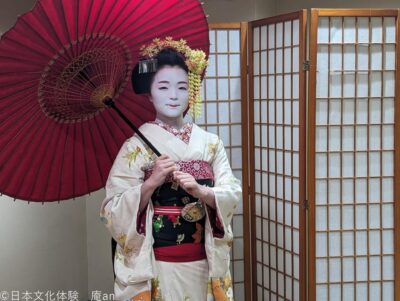
The dances are often the most visually striking moment. The kimono, hair ornaments, controlled movements, and music create a very different experience from a modern stage performance. You may see one or two dances, depending on the evening and the performer’s schedule.
The room can affect what you see. In one setting, there was not much space for the maiko to move, so the dance was short. That does not make the encounter worthless, but it is a good reason not to judge the entire experience by the length of the performance.
Photography is mentioned in connection with some evenings, and families have taken pictures during the conversation and games. Ask your guide before photographing, and follow the house rules. The point is respectful contact, not treating the performer like a prop.
Drinks are included only with the private tea house option. Other options allow drinks for purchase. The minimum drinking age in Japan is 20, so younger participants should not expect to join sake or beer activities.
The food is traditional, not broadly customizable
Kaiseki is a major part of the evening, but it is also the largest practical risk. Expect a fixed, traditional menu based mainly on fish, seafood, vegetables, and other Japanese ingredients. Tempura and several small courses may appear, but the exact dishes can change.
I would not book this dinner for someone who is a picky eater. You may encounter raw fish, shellfish, unfamiliar textures, and dishes that are difficult to replace once the meal begins. One diner became ill after eating raw fish, while another found the food barely edible.
Dietary needs must be supplied when booking. The operator says to advise the team of restrictions, but at least one party reported that seafood restrictions were not accommodated. For a serious allergy, strict vegetarian diet, or vegan diet, get written confirmation before paying. Do not assume that a fixed menu can be changed on the night.
Service may also be slow at times, especially when the room is busy. Water and other requests may require a reminder. That is not the focus of the experience, but it can be frustrating at this price.
The best approach is to see the dinner as part of the cultural setting, not as a guaranteed favorite meal. If you are curious and adventurous with food, the courses can add a strong sense of place. If you are booking mainly for the cuisine, choose a restaurant where you have more control over the menu.
Is $381.49 per person a fair price?
This is expensive. For a three to three-and-a-half-hour evening, $381.49 per person is far beyond the cost of an ordinary Kyoto dinner or a standard walking tour.
The price becomes easier to understand when you separate the meal from the access. A guide, translation, Gion orientation, private arrangements, performer fees, and traditional entertainment are bundled together. Independent visitors cannot simply walk into a tea house and arrange a conversation with a maiko or geiko.
I would call it good value for a special-occasion splurge, especially for a small family or group with a serious interest in Japanese culture. It is less convincing for a casual tourist who mainly wants to see a dance. Public performances and cultural shows cost less, though they will not provide the same conversation.
Group discounts are available, which can help if you are booking for several people. Confirm how the discount applies and whether your selected arrangement is truly private. The private activity wording and reports of larger shared groups do not always point to the same format, so ask before committing.
The strict cancellation policy also matters. The experience is non-refundable and cannot be changed for any reason. I would wait until your Kyoto schedule is firm before booking.
Who should book this Kyoto evening?
I would recommend it to you if you:
- Have a strong interest in geiko and maiko culture
- Want conversation and translation, not only a stage performance
- Enjoy traditional Japanese food and are comfortable with a fixed menu
- Are willing to pay for a rare private arrangement
- Are traveling with older children or teenagers who can take part respectfully
- Want a special evening rather than a budget activity
I would hesitate if you:
- Need a reliable vegetarian, vegan, or allergy-safe meal without written confirmation
- Dislike seafood or raw fish
- Expect a long dance performance with plenty of open space
- Want a quick dinner
- Need a flexible booking or refundable ticket
- Are paying mainly for food
Respect is not a minor detail here. The operator reserves the right to refuse service to people who do not behave properly toward these traditions, and a cancellation caused by that conduct is not refundable. Dress and act as you would when entering any serious cultural setting: polite, attentive, and careful with photographs and questions.
Should you book Private Dinner with a Geisha?
Book it if meeting a maiko or geiko face to face is high on your Kyoto wish list. The strongest parts are the personal conversation, the skilled guides, and the chance to see music and dance in a private setting. Guides such as Mia and Mie can make a major difference by translating well and giving you the right background before dinner.
I would choose the private tea house option for a milestone evening, and I would choose the casual or half-kaiseki option if I wanted a shorter, less costly introduction. Before paying, confirm the exact meal, drinks, group arrangement, and handling of dietary restrictions.
This is not the best-value dinner in Kyoto, but it may be one of your most memorable cultural appointments. Go for the maiko or geiko encounter first, and regard the meal as part of the setting rather than the sole reason to book.
FAQ
Where does the experience begin?
It begins at 5 p.m. in front of the main gate of Minamiza Kabuki Theatre, facing Shijo Street, at 198 Nakanocho in Kyoto’s Higashiyama Ward.
How long does the activity last?
The experience lasts about three and a half hours, though the detailed itinerary describes about three hours for the walk and party. The casual option may be shorter, so check the timing for your selected package.
What is included?
A professional English-speaking guide, dinner, geiko or maiko accompaniment, and a geisha dance performance are included. Drinks are included only with the private tea house option. Other drinks can be purchased.
Can children join?
Yes. Children must be accompanied by an adult. The activity is described as suitable for most participants.
Can I request a special diet?
You should provide dietary requirements when booking. However, the menu is fixed and traditional, and accommodation is not guaranteed, so confirm serious restrictions before purchase.
Is the experience refundable?
No. The activity is non-refundable and cannot be changed for any reason after booking.
Just added around Kyoto
- Sekka Cotton Furoshiki Class★ 5.0 · 19 reviews
- Secret Eastern Kyoto Biking Adventure★ 5.0 · 44 reviews
- Kyoto Sword Experience – includes Museum Ticket/Ninja Experience★ 4.5 · 149 reviews
- Scenic Green Tea Fields of Hidden Kyoto & Local Tea Exp (Private)★ 5.0 · 32 reviews
- Private Sake Tasting in Central Kyoto with Sake Sommelier★ 5.0 · 32 reviews
- Samurai School in Kyoto: Samurai for a Day★ 5.0 · 202 reviews
- SHIRAKAWA Japanese Culture Experiences with private English staff★ 5.0 · 16 reviews
- A Privately Guided Photoshoot in Beautiful Kyoto by a Pro★ 5.0 · 18 reviews
Geisha & Maiko Experiences, compared.

Kyoto Geisha Walking Tour: Gion District & Hidden Gems
Our verdict →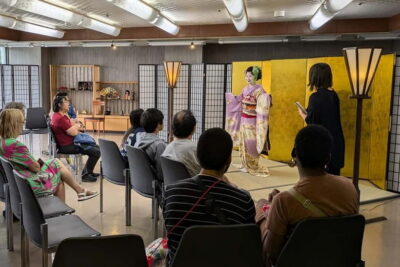
Dinner with Maiko in a Traditional Kyoto Style Restaurant Tour
Our verdict →
Browse the lists this tour appears in