
Reviewed · NINJA EXPERIENCES
Kyoto Sword Experience – includes Museum Ticket/Ninja Experience
The main appeal here is simple: you get to dress in samurai hakama, handle a safe replica sword, and try basic movements in a traditional dojo setting. It is a hands-on way to add some action to a Kyoto sightseeing day, rather than spending another hour behind glass cases.
I like two things in particular. The museum ticket and guided history tour are included, and the ninja star activity gives families and first-time visitors another playful way to take part. The flexible daily start times also help you fit this into a packed Kyoto schedule.
The catch is that this is an introductory activity, not serious martial-arts training. Group size and organization have varied, and older descriptions and experiences referred to real sword cutting, while the current activity is built around a blunt replica sword under Japanese law. Go for a fun cultural activity, not a private dojo lesson.
Key points to know before booking
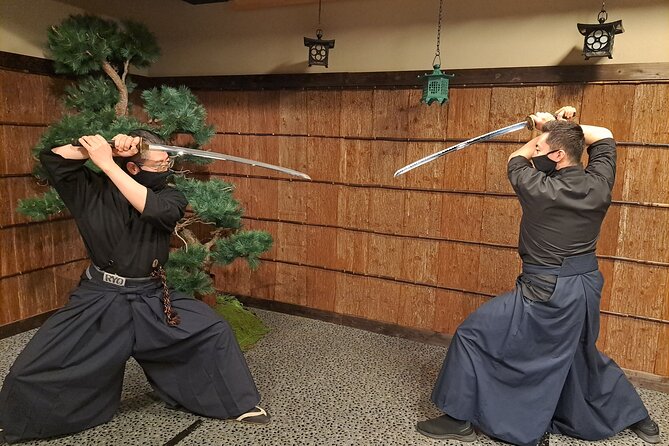
- Hakama dressing comes first: You put on traditional samurai clothing before learning basic sword positions and movements.
- The sword is a safe replica: Current rules prohibit facilitating or selling activities involving a real sword, so do not book this expecting sharp-blade handling.
- Museum admission is included: You also receive a guided visit covering samurai and ninja culture, with historical objects and displays.
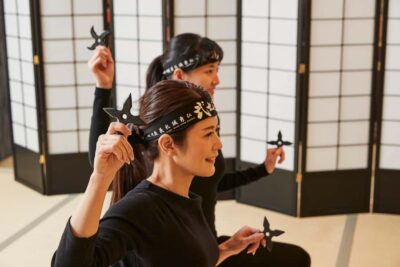
- Ninja stars add variety: The throwing activity is a short, playful extra, though the exact order can vary.
- Allow about two hours: The full visit can include dressing, instruction, sword practice, photos, the museum, and ninja stars.
- Check the group details carefully: The information gives different maximum group figures, so ask at booking if a small class matters to you.
What the Kyoto samurai experience really is
This is a short cultural workshop held through the Samurai Ninja Museum near Kyoto’s Nishiki Market area. You meet at SAMURAI NINJA MUSEUM Kyoto, at 109 Horinouechō in Nakagyo Ward, and finish back at the same meeting point.
The activity combines several pieces rather than offering one long sword lesson. You dress up, learn a few sword movements, take part in a controlled exercise, pose for photographs, tour the museum, and try throwing ninja stars. That mix is important. If you want a polished photo and a family-friendly activity with some historical context, the variety works well.
If you want detailed instruction in iaido, this will feel light. The basic lesson focuses on stance, holding the sword, and simple swinging or movement. One account described the sword class as good for photographs and very basic, which is a fair way to set your expectations.
The tone is part museum visit, part live demonstration, and part costume activity. That does not make it fake or worthless. It simply means you should see it as an introduction to samurai culture, not a formal study of Japanese swordsmanship.
More Museum Tours in Kyoto
- Kyoto: Tea Museum Tickets and Matcha Grinding Experience
★ 4.9 · 739 reviews - Skip the lines Basic Ticket at SAMURAI NINJA MUSEUM KYOTO
★ 4.5 · 632 reviews - Kyoto : Geiko Maiko Dance of Kyoto & Visits of Gion Museum
★ 4.6 · 415 reviews
Putting on hakama and taking the first stance
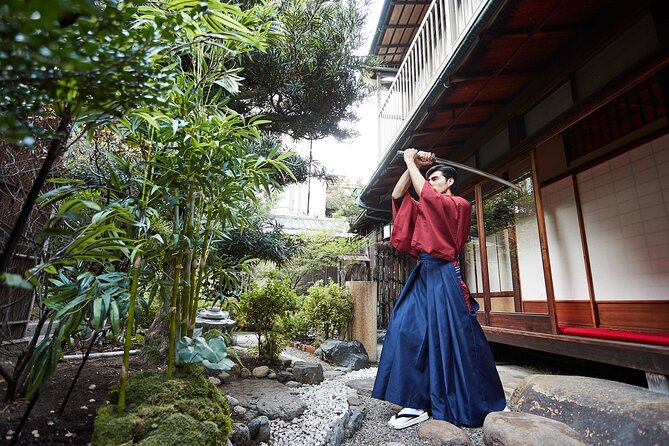
The session begins with traditional samurai hakama. This is one of the most appealing parts for families and groups of friends because the clothing changes the feel of the activity immediately. You are not simply watching an instructor explain a sword. You are dressed for the role and taking part.
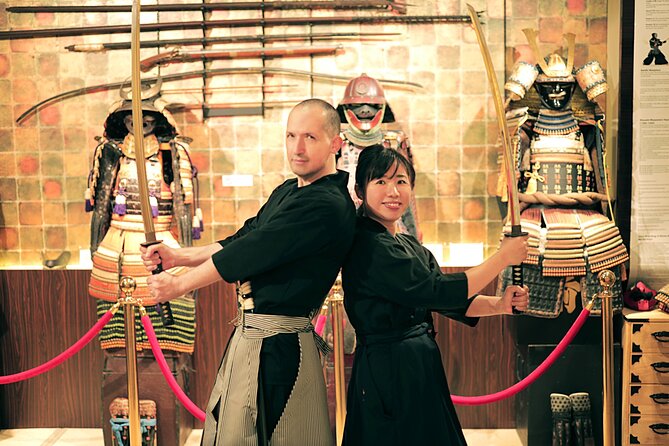
The costume also gives you useful photo opportunities. Helmets, armor, and other samurai clothing may be available for photographs, depending on the session setup. The costume area can become crowded when several groups arrive at once, so do not expect a quiet private photo shoot.
Once dressed, the instructor introduces basic iaido techniques with a replica sword. You learn how to hold it, how to position your body, and how to make simple controlled movements. The instructors have generally been praised for being lively and encouraging, with specific praise for Riku, Riu, Ken, Nobu, and other staff members who kept the lesson moving.
The exact teaching style can differ. Some sessions have felt focused and fun, while others have been rushed. Arrive on time, follow the staff’s instructions, and do not assume that arriving early means you will receive a private lesson before the scheduled group begins. One poorly coordinated visit appears to have started a smaller group early, which created confusion about how much of the program had been missed.
The sword practice: safe, controlled, and basic
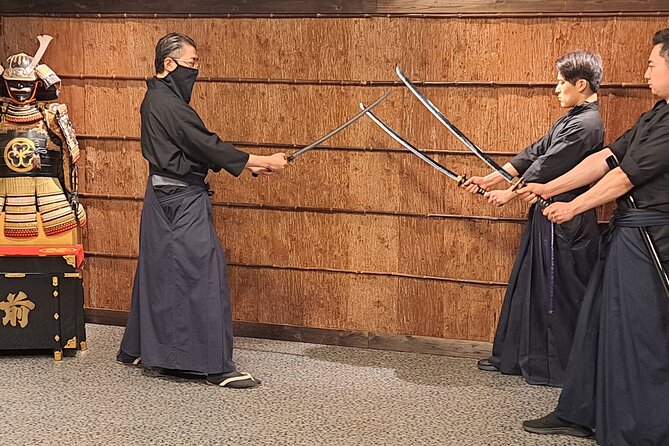
The current description is clear on the most important safety point: you use a blunt replica sword, not a sharp katana. Japanese law now bans facilitating or selling activities involving the use of a real sword, so older wording or photographs showing real-blade cutting should not guide your expectations.
You may still hear about tatami mat cutting in older accounts of this experience. Treat that as outdated information unless the provider confirms otherwise for your specific booking. The current program emphasizes a safe replica sword, basic iaido instruction, and a controlled sword-fighting exercise.
That distinction matters for both safety and value. A real cutting activity would be a different product, with more technical instruction and a much narrower audience. Here, the point is to learn the outline of samurai movement without sharp-blade handling.
The lesson is usually short. You will not spend the full two hours continuously practicing sword work. Dressing, instruction, waiting for turns, photographs, museum time, and the ninja activity make up the rest of the visit.
This format works well if you want a first taste of the subject. It works less well if you are paying mainly for extended sword practice. The most favorable experiences praised the instructor’s humor, clear directions, and ability to make the class feel active. Less successful sessions suffered when too many people were placed in a small room.
Museum displays and the move between locations
The museum portion adds context that the sword lesson alone would lack. You receive admission and a guided history tour, with displays and artifacts related to samurai and ninja culture. One account especially praised the chance to interact with historical objects rather than only looking at them from a distance.
The museum is not a large national institution. You might find a compact set of displays, models, costumes, and artifacts rather than room after room of major collections. That can be a plus if you want a short, accessible introduction, but it may disappoint you if you expect a major museum devoted to Japanese history.
Pay attention to directions. The sword activity and museum area have at times been handled in separate spaces, with one location only a short walk from another. One account described moving from the training area to a museum building about three minutes away, then heading upstairs for the ninja star activity.
This arrangement can feel slightly disjointed. I would keep your booking confirmation open and ask staff where the next part begins rather than assuming the first room contains the entire program. The activity ends back at the meeting point, but the individual portions may not all happen in the same room.
The guide’s pace matters here. A clear guide can make a small display collection interesting by explaining how samurai and ninja ideas shaped Japanese culture. A rushed guide can make the museum feel like a quick stop between costume changes. If you have trouble hearing or following the explanation, politely ask the guide to repeat key points.
More Ninja Experiences in Kyoto
- Ninja 1-hour Hands-on Lesson by Japanese master in Kyoto -Entry
★ 5.0 · 489 reviews - Kyoto: Ninja Weapon Forging Experience
★ 4.8 · 478 reviews - Ninja 2-hour Hands-on Lesson by Japanese master in Kyoto -Medium
★ 5.0 · 218 reviews - Kyoto: Samurai Ninja Museum guided tour
★ 4.8 · 145 reviews
Ninja stars and the final photographs
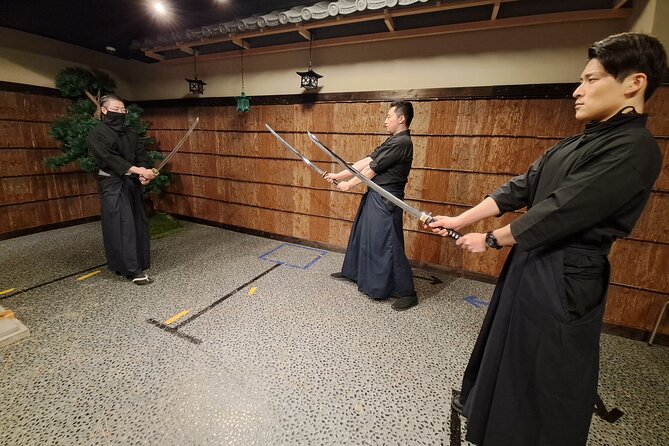
The ninja star throwing activity is a welcome change after the sword lesson and museum tour. It gives you a different skill to try, and it is especially useful for children old enough to participate safely. The activity is controlled and introductory, not a serious ninja weapons course.
Do not build your entire booking around this part. A past session did not include it, and busy periods have caused portions of the program to become hard to find. The provider has said that scheduling and group-size problems were addressed, but I would still confirm the day’s sequence when you arrive.
Photographs usually form a large part of the fun. You can pose in samurai clothing and, where available, helmets or armor. This is likely to be one of the strongest reasons to choose this experience over a standard museum ticket.
The tradeoff is space and time. When many people are dressing up, the room can feel hectic, and staff may have to help several people at once. If you want the best photos, have your phone ready and take advantage of the moments when the area is less crowded.
How much time you really need
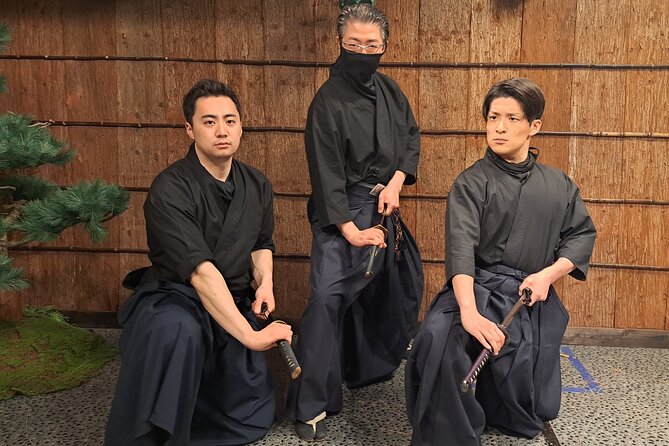
The advertised duration is about two hours. A typical full program can include roughly 10 minutes for dressing, 20 to 30 minutes of training, about 15 minutes for the sword activity, around 30 minutes for the historical tour, approximately 15 minutes for ninja stars, and another 15 minutes for photographs.
That schedule is not a promise that every part will take exactly that long. Your pace can change with group size, staff timing, and the number of people waiting for turns. A small session may move quickly, while a larger class can spend a lot of time watching other people practice.
Plan this as a substantial half-day block once you include finding the meeting point and walking between parts of the program. It can fit nicely before or after Nishiki Market, since the meeting point is near that popular food and shopping area. Transportation to the attraction is not included, so you make your own way there.
The activity is near public transportation, and most people can participate. Children must be accompanied by an adult, and children under seven are not allowed inside the samurai dojo. Keep that age rule in mind when planning a family outing.
Is $83.91 a fair price?
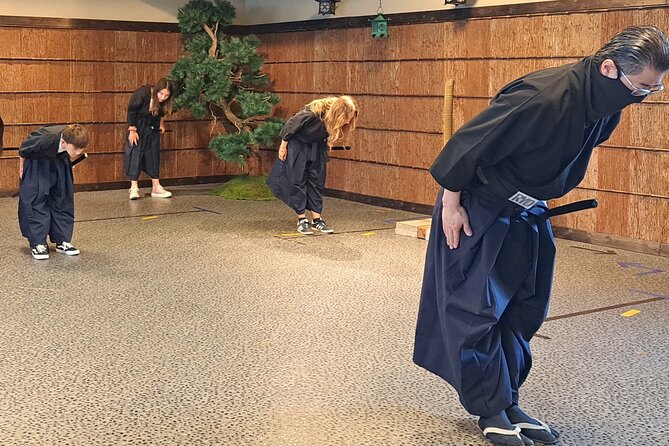
At $83.91 per person, this is not a cheap costume photograph. The value comes from combining several paid-style activities into one booking: the samurai lesson, clothing, museum admission, guided tour, ninja stars, and photographs.
I think the price is reasonable for someone who wants a convenient, compact cultural activity with a strong visual element. You avoid arranging separate museum admission and a separate costume session, and the multiple daily start times make it easier to fit around Kyoto’s temples and markets.
The value drops if you only care about sword practice. The actual instruction is basic and may be brief, especially in a large group. You are also paying for time spent dressing, waiting, taking photographs, and moving between rooms.
The experience has received a 4.6 rating from 149 ratings, with 90 percent recommending it. That suggests the usual experience is enjoyable, but the uneven accounts point to one practical issue: group management can make or break the visit.
The published information also contains conflicting group limits, including figures of four, 22, and smaller groups in other descriptions. Since group size affects waiting time and personal attention, ask for the expected number at your chosen start time if that detail matters to you.
Who will enjoy this most
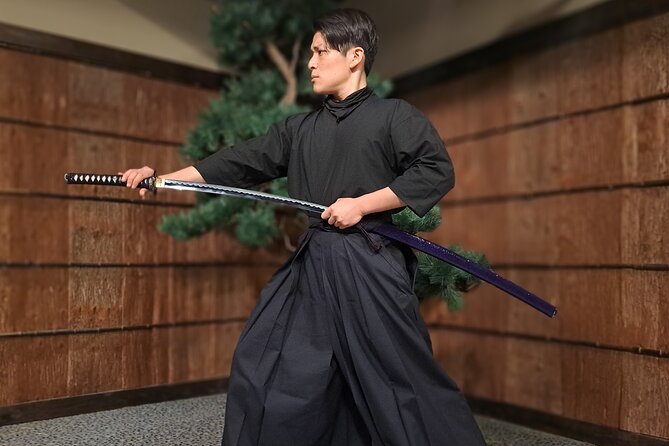
I would recommend it to first-time visitors who want an easy introduction to samurai and ninja culture without committing to a full martial-arts course. Couples, families with children seven and older, and friend groups looking for memorable photos are likely to get the most from it.
It also suits anyone who wants a rainy-day Kyoto activity near Nishiki Market. The indoor format gives you a break from temple hopping, and the mixture of movement, history, and costumes keeps it from feeling like a standard museum visit.
You may want to skip it if you are an experienced martial artist seeking serious instruction. You should also think twice if you dislike group activities, costume fitting, or waiting your turn.
For families, check the age rule carefully. Young children under seven cannot enter the dojo, although older accounts describe a toddler watching from the side while an adult participated. Do not count on that arrangement without confirming it directly.
Practical advice for a smoother visit
Arrive at the stated meeting point with time to spare, but do not expect an early arrival to start the full activity early. The provider has acknowledged past scheduling problems during very busy periods, especially around the peak cherry-blossom season.
Wear comfortable clothing under the costume. You will be changing clothes, moving between rooms, and possibly walking a few minutes between locations. Keep valuables simple because the activity is active and the rooms may be busy.
Ask where the museum tour and ninja activity take place before you leave the first room. The program can involve more than one nearby location, and a quick question may prevent you from missing a section.
Bring a phone or camera, but keep safety first during sword practice. Follow the instructor’s movements and never improvise with the replica sword. The lesson is designed to be safe when you use the equipment as directed.
Free cancellation is available if you cancel at least 24 hours before the start time. Changes or cancellations inside that window are not accepted for a refund.
Should you book the Kyoto Sword Experience?
Book it if you want a lively, photo-friendly introduction to samurai culture, with a museum tour and ninja stars included. The strongest parts are the costume session, the engaging instructors, and the chance to take part rather than simply observe.
Do not book it expecting a long iaido class or real katana cutting. The current program uses a blunt replica sword, and the experience can feel rushed when groups are large.
My advice is to confirm the expected group size and the exact activities included before paying, especially during busy Kyoto seasons. If the class is small and you value cultural context plus photographs, $83.91 can be fair. If sword training is your only goal, seek a specialist dojo lesson instead.
FAQ
Where does the experience start?
It starts at SAMURAI NINJA MUSEUM Kyoto, 109 Horinouechō, Nakagyo Ward, Kyoto, Japan. The activity ends back at the meeting point.
How long does the experience last?
The stated duration is approximately two hours. The time can include dressing, sword instruction, the sword activity, photographs, a museum tour, and ninja star throwing.
Do I use a real katana?
No. The current activity uses a blunt, safe replica sword. The experience does not involve a real sword or sharp blade.
Are children allowed?
Children under seven are not allowed to enter the samurai dojo. Children who can participate must be accompanied by an adult.
Is the museum ticket included?
Yes. Admission to the Samurai and Ninja Museum and a guided samurai history tour are included.
Is transportation included?
No. You are responsible for getting to and from the attraction. The meeting point is near public transportation.
Can I cancel for a full refund?
Yes, if you cancel at least 24 hours before the experience start time. Cancellations or changes made less than 24 hours before the start time are not accepted for a refund.
Just added around Kyoto
- Sekka Cotton Furoshiki Class★ 5.0 · 19 reviews
- Scenic Green Tea Fields of Hidden Kyoto & Local Tea Exp (Private)★ 5.0 · 32 reviews
- Secret Eastern Kyoto Biking Adventure★ 5.0 · 44 reviews
- Private Sake Tasting in Central Kyoto with Sake Sommelier★ 5.0 · 32 reviews
- Samurai School in Kyoto: Samurai for a Day★ 5.0 · 202 reviews
- SHIRAKAWA Japanese Culture Experiences with private English staff★ 5.0 · 16 reviews
- A Privately Guided Photoshoot in Beautiful Kyoto by a Pro★ 5.0 · 18 reviews
- Samurai Performance and Casual Experience: Kyoto Ticket★ 4.5 · 115 reviews
Ninja Experiences, compared.
Ninja 1-hour Hands-on Lesson by Japanese master in Kyoto -Entry
Our verdict →

Try Mindful Calligraphy Near Kanazawa’s Ninja Temple
Our verdict →
Browse the lists this tour appears in