
Reviewed · CASTLE TOURS
Kyoto Imperial Palace & Nijo Castle Guided Walking Tour – 3 Hours
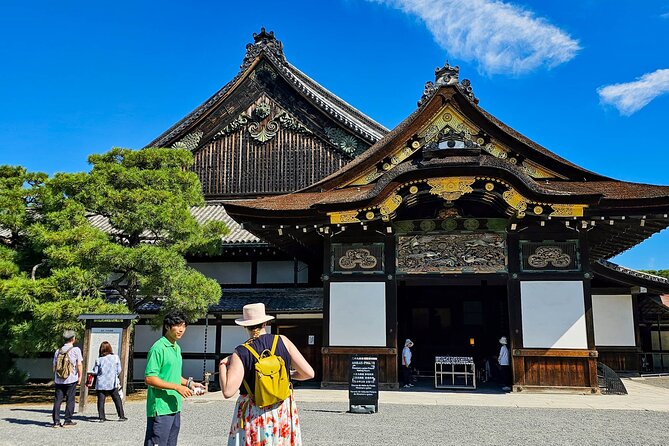
Kyoto’s imperial past and shogun-era power come together in one compact tour. You begin at Nijo Castle, where painted interiors, castle gardens, and the famous nightingale floors reveal how the Tokugawa rulers lived and controlled access. You finish at Kyoto Imperial Palace, the former home of Japan’s imperial family.
I like the small maximum of nine people, which gives you a better chance to ask questions than on a large coach tour. I also like that admission fees are included and that guides such as Jasmine, Taku, Atsushi, and Raphael have been praised for clear English, useful cultural context, and a friendly pace.
The main catch is the transfer between the sites. Nijo Castle and the Imperial Palace are not next door, and the tour does not include hotel pickup, meals, or transportation. If the group walks or has trouble arranging taxis, that connection can consume a good part of the three-hour schedule.
Key points to know before booking
- Two major Kyoto landmarks in three hours: Spend about 90 minutes at Nijo Castle and 90 minutes at Kyoto Imperial Palace.
- Small group format: The maximum is nine people, making conversation and questions easier.
- Strong guide element: Guides including Jasmine, Taku, Atsushi, Cecilia, and Raphael have received praise for clear explanations and an easygoing manner.
- Transport is your responsibility: The tour starts at Nijojo-mae Station and ends at Imadegawa Station, with no hotel transfer included.
- Good value at $55: Entry fees and an English-speaking guide are included, which can be worthwhile if you want historical context rather than a self-guided stroll.
- Weather matters: Much of the experience is outdoors, and guides have sometimes added water and air-conditioning breaks on hot days.
Why these two sites work well together
Kyoto once served as Japan’s imperial capital for more than a thousand years. This tour pairs two places that represent different centers of power: Nijo Castle connects you with the shoguns, while Kyoto Imperial Palace introduces the imperial court and the symbolic role of the emperor.
That contrast gives the afternoon a useful shape. At Nijo Castle, you are looking at military government, courtly display, guarded entrances, and political authority. At the Imperial Palace, the focus shifts toward ceremony, gardens, architecture, and the long role of the imperial household.
I find this pairing more useful than visiting either site alone without context. A castle can look like a series of decorated rooms if you do not know who used them and why. A palace can seem quiet and formal unless you understand how its ceremonial spaces fit into Japan’s political past.
The tour lasts about three hours, split into roughly 90 minutes at each site. That is enough time for an overview and selected details, but not enough for a slow, independent examination of every room, garden path, or exhibit. If you want to photograph every corner, you may feel pressed.
More Castle Tours in Kyoto
- Kyoto: Nijo-jo Castle and Ninomaru Palace Guided Tour
★ 4.7 · 1,020 reviews - Kyoto: Nijo Castle, Kiyomizu & Fushimi Inari Guided Tour
★ 4.7 · 700 reviews - Kyoto: Imperial Palace & Nijo Castle Guided Walking Tour
★ 4.7 · 453 reviews
Starting at Nijojo-mae Station
The meeting point is Nijojo-mae Station, beside Nijo Castle in Nakagyo Ward. Starting here makes sense because the castle is the first major stop, and public transportation is nearby.
Arrive ready to walk. The experience is not a bus tour, and hotel pickup is not provided. You will need to reach the station on your own and handle your return journey after the tour ends at Imadegawa Station.
A small group of nine or fewer is a practical advantage at the meeting point and inside the grounds. You can usually stay closer to the guide, and a question from one person can help everyone understand the site. The guide may also be able to take group photographs, something several guests have appreciated.
The exact guide varies. Jasmine has been especially praised for clear English, cultural explanations, and a friendly style with families. Taku has extensive experience at both locations, while Atsushi has been singled out for historical stories. Cecilia, Raphael, Vincent, Kata, Alex, and other guides have also led this experience, so you should treat guide names as examples rather than a guarantee.
Nijo Castle and the shogun’s world
Nijo Castle receives the first 90 minutes of the tour. This is the strongest part of the experience for many people because the buildings offer more than a distant view of Japanese history. You move through spaces designed for authority, ceremony, and control.
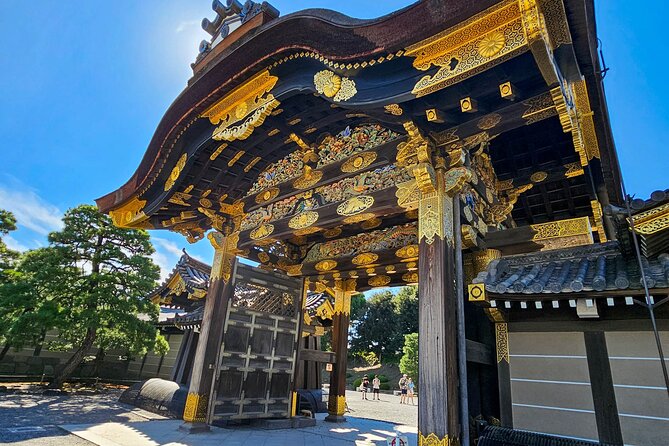
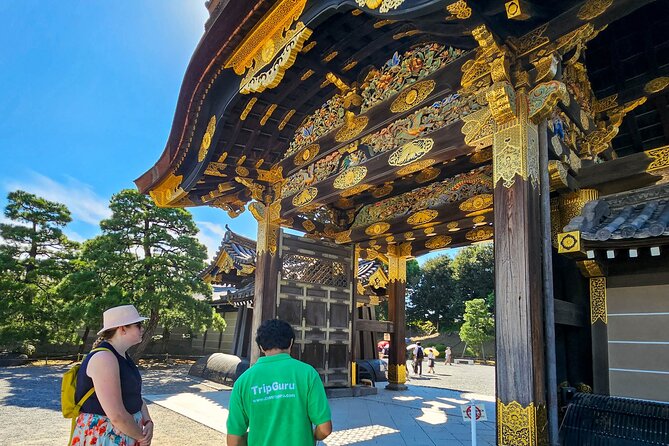
Your guide explains the castle’s architecture, its connection to the shogun era, and the meaning behind details that are easy to miss. The interiors include elaborate decoration, and the gardens add a calmer setting after the formal rooms.
One memorable feature is the nightingale flooring. The boards make a chirping sound underfoot, helping guards detect movement inside the castle. You do not need a long lecture to appreciate the point: this is architecture serving security.
The castle also helps you picture how the shogun’s government worked. The design was not only about beauty. Room size, decoration, placement, and movement through the building all expressed rank. Jasmine has been praised for explaining cultural symbolism and showing how the rooms reflected shogun-era customs.
The gardens provide welcome breathing room. They give you time to take photographs and let the guide connect design choices with the building’s purpose. Several guides have been praised for allowing enough time for pictures while keeping the group moving.
That balance matters. A tour that stops for every detail can drag, especially in warm weather. A tour that rushes through the castle leaves you with little more than a few photographs. The better guides appear to aim for the middle: clear explanations, time for questions, and a steady pace.
Nijo Castle is also the site where your guide’s speaking style matters most. You are looking at art, architecture, and ritual at once. Jasmine, for example, has been praised for answering questions beyond a fixed script and for speaking clearly enough for a hard-of-hearing family member. That kind of flexibility can turn a standard walk into a more useful lesson.
Still, keep your expectations sensible. The tour gives you an introduction, not a scholarly examination of every painting or political event. If you already know a great deal about the Tokugawa period, you may want more specialized detail.
The transfer to Kyoto Imperial Palace
The two sites are not adjacent. This is the practical issue to plan around before you pay.
The tour price does not include transportation between Nijo Castle and the Imperial Palace. You may need to walk or use public transportation, and some groups have used taxis. One account describes a walk taking about 30 minutes, which is a significant portion of a three-hour tour.
That does not automatically make the experience poor, but it changes the value calculation. A three-hour tour with efficient movement gives you about 90 minutes at each site. A delayed transfer, a wrong gate, or a slow taxi arrangement can reduce the time available for the palace.
Communication is also important. One reported problem involved a group being split between taxis and arriving at the wrong gate, leaving some people waiting and unable to contact the guide. That appears to have been an operational failure rather than a normal feature of the tour, but it is a reason to clarify the transfer plan at the start.
Ask the guide directly how the group will move between the sites. Keep your phone available, and do not assume transportation is covered just because the two locations are part of one booking. Some guides have helped people find onward transportation at the end, but that should be viewed as helpful service, not a guaranteed inclusion.
If you are visiting during a busy period, allow extra time for taxis and station transfers. You will have a smoother experience if you regard the connection as part of the tour’s logistics rather than a hidden free transfer.
More Historical Tours in Kyoto
- Kyoto Gion: 2-Hour Geisha Culture & History Walking Tour
★ 5.0 · 1,186 reviews - Kyoto Gion Historical Walking Tour
★ 5.0 · 188 reviews - Historical Kyoto E-Bike Tour
★ 5.0 · 181 reviews - Kyoto: Nijo Castle World Heritage Guided Tour with Admission
★ 5.0 · 128 reviews
Kyoto Imperial Palace and the imperial household
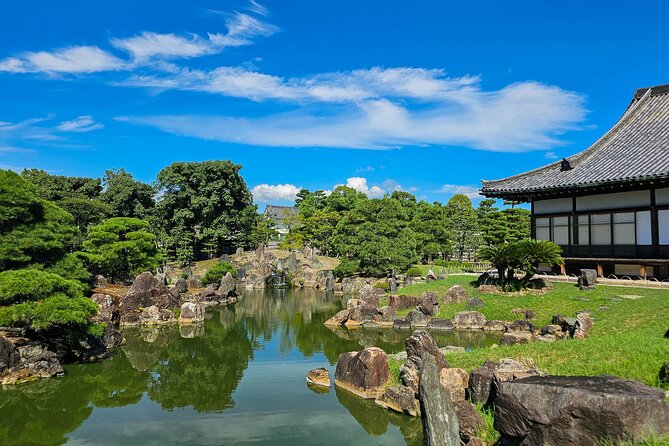
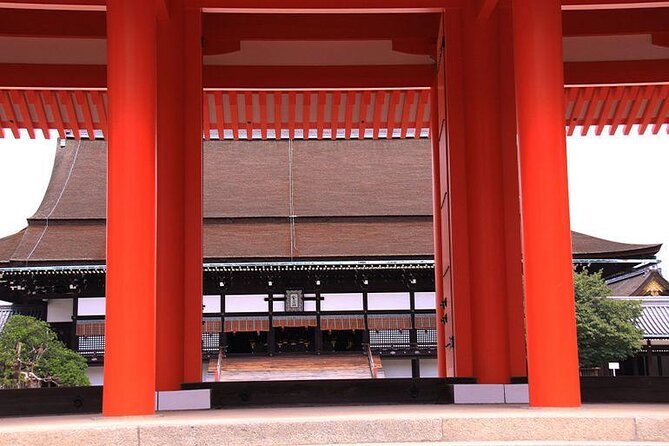
The second 90-minute stop is Kyoto Imperial Palace, once the residence of Japan’s imperial family. The setting is broad and formal, with impressive buildings, gardens, and open spaces that feel different from Nijo Castle.
Here, your guide helps explain the palace’s role and the customs connected with the imperial household. The tour is less about military defense and more about ceremony, rank, architecture, and the long connection between Kyoto and the imperial institution.
The palace grounds reward an informed walk. A guide can point out why a building looks the way it does, how the spaces were used, and what changed when political power shifted away from Kyoto. Without that context, you may admire the gates and gardens but miss the larger story.
This is also where the tour’s pace can feel tight. Ninety minutes is a reasonable introduction, but the grounds are extensive enough that you will not examine everything. You may have time for the principal structures, selected garden areas, photographs, and questions, but not a leisurely wander through every corner.
The best use of this stop is to listen for comparisons with Nijo Castle. The contrast between shogun authority and imperial ceremony gives the palace more meaning. You are not simply seeing two old buildings. You are seeing two different forms of power that shaped Japan.
Several guides have been praised for adding small links to present-day Japanese culture. That is useful because it prevents the experience from becoming a list of dates. A guide who can explain how historical customs connect with modern life gives you a better way to remember what you saw.
The tour ends at Imadegawa Station in Kamigyo Ward. This is convenient if you plan to continue by train or subway, but it is not the same place where you started. Plan your next stop before the walking tour begins.
Guide quality makes the biggest difference
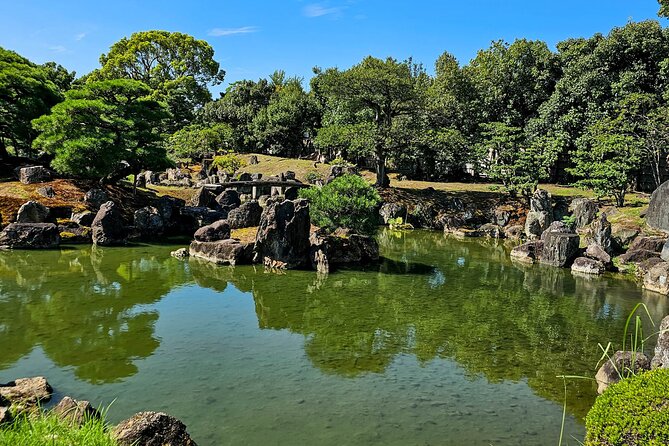
The strongest praise for this experience centers on the guides. Jasmine is repeatedly described as friendly, well prepared, clear in English, and good at answering questions. She has also been praised for helping with photographs, adjusting the pace in hot weather, and making sure people understood how to continue by public transportation.
Taku is described as a local certified guide with extensive experience at both Nijo Castle and the Imperial Palace. Atsushi has been appreciated for adding special historical stories, while Raphael has been praised for patience with many questions.
These details tell you what to hope for from the guide: explanations that go beyond labels, a pace that keeps the group together, and enough flexibility to respond to your interests. The tour does not promise a particular guide, so you should not book solely because of one person’s name.
There have also been less positive experiences. One guide was criticized for seeming focused on finishing on time and not adding much cultural context. Another group lost substantial time because of a transportation mix-up and received an unsatisfying response afterward.
That balance is important. The tour depends heavily on the person leading it and on how the transfer is handled. The overall rating is 4.7 from 106 ratings, with 92 percent recommending it, which points to a strong general record. It does not guarantee that every departure will feel equally personal or well coordinated.
Is $55 a fair price?
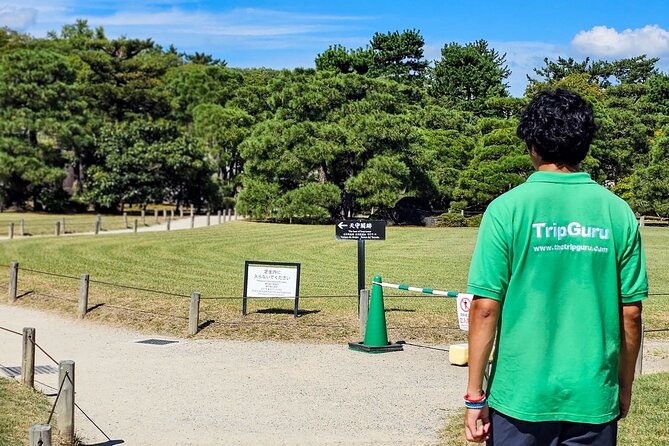
At $55 per person, this tour sits in a reasonable range for a three-hour guided visit to two major Kyoto sites. Your fee includes an English-speaking guide, entrance fees, and the walking tour itself.
The value is strongest if you want interpretation. You can visit both locations independently, but you would need to research the sites, buy admission, plan the route, and explain the historical connections to yourself. For many people, the guide is the main purchase, not the walking.
The value drops if you are comfortable reading on your own and prefer a slow pace. You also need to account for your own transportation between the castle and palace, plus any personal expenses. The advertised price is not an all-inclusive half-day outing.
A group of up to nine is a good middle ground. Private tours cost more, while large groups can make questions and photographs awkward. Here, you get a guide without paying the full private-tour rate.
Free cancellation is available if you cancel at least 24 hours before the start time. Changes or cancellations inside that window are not accepted for a refund, so check your plans before the deadline.
Who should book this walking tour?
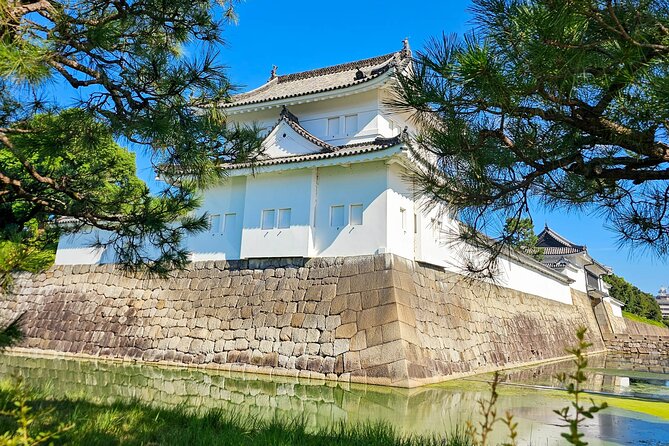
I would recommend it to first-time Kyoto visitors who want a clear introduction to the city’s imperial and shogun-era past. It also suits families, provided everyone can manage three hours of walking and outdoor time. Guides have worked well with children and have taken family photographs along the route.
It is a good fit if you enjoy asking questions. The small group gives you more room to ask about architecture, customs, Japanese culture, or the details that catch your eye.
I would be more cautious if you have limited mobility, a tight schedule, or little tolerance for transfer problems. The tour is near public transportation, but no hotel pickup or vehicle transfer is included. Hot weather can also make the outdoor portions tiring, although guides may provide water and air-conditioning breaks.
If you have only one afternoon in Kyoto, the tour gives you a useful historical frame. If you already plan to visit Nijo Castle and the Imperial Palace independently, compare the cost of admission and transportation with the $55 fee. The guide is worth paying for only if you want the stories and explanations.
Should you book it?
Book this tour if you want two major Kyoto sites explained by an English-speaking guide in a small group, and if you can accept arranging the connection between them. The strongest guides turn decorative rooms, gardens, and palace buildings into a readable story about power, ceremony, and Japanese culture.
Skip it if you want a slow, self-directed visit or if your schedule cannot absorb a possible 30-minute transfer. Before setting out, confirm how the group will travel from Nijo Castle to the Imperial Palace. With that detail settled, $55 is a fair price for a focused introduction to two of Kyoto’s most important historical places.
FAQ
How long does the tour last?
The tour lasts approximately three hours. The planned visits allocate about 90 minutes to Nijo Castle and 90 minutes to Kyoto Imperial Palace.
Where does the tour start?
The tour starts at Nijojo-mae Station near Nijo Castle in Nakagyo Ward, Kyoto.
Where does the tour end?
The tour ends at Imadegawa Station in Kamigyo Ward, Kyoto.
Is transportation between the two sites included?
No. Hotel pickup and drop-off are not included, and transportation between Nijo Castle and Kyoto Imperial Palace is your responsibility.
Are entrance fees included?
Yes. Admission tickets for Nijo Castle and Kyoto Imperial Palace are included.
How large is the group?
The tour has a maximum of nine participants.
What is the cancellation policy?
You can cancel for a full refund if you cancel at least 24 hours before the experience start time. Cancellations or changes made less than 24 hours before the start time are not accepted for a refund.
More 3-Hour Experiences in Kyoto
- 3-Hour Kyoto Insider Sake Brewery Tour with Tastings & Pairings
★ 5.0 · 917 reviews - Kyoto: 3-Hour Fushimi Inari Shrine Hidden Hiking Tour
★ 4.9 · 270 reviews - 3 Hours Kyoto Insider Sake Experience | Tasting Konteki
★ 5.0 · 24 reviews - Kyoto: Personalize, private tour (3h, 5h, 8h) [W/Car Option]
★ 4.9 · 24 reviews
More Walking Tours in Kyoto
- Kyoto Geisha Walking Tour: Gion District & Hidden Gems
★ 4.7 · 3,273 reviews - Kyoto: Gion Magical Night Walking Tour with Geisha Trivia
★ 4.9 · 2,393 reviews - Kyoto: Gion Geisha District Walking Tour – Stories of Geisha
★ 4.7 · 2,187 reviews - Night Walk in Gion: Kyoto’s Geisha District
★ 4.5 · 2,003 reviews
Just added around Kyoto
- Sekka Cotton Furoshiki Class★ 5.0 · 19 reviews
- Kyoto Sword Experience – includes Museum Ticket/Ninja Experience★ 4.5 · 149 reviews
- Scenic Green Tea Fields of Hidden Kyoto & Local Tea Exp (Private)★ 5.0 · 32 reviews
- Secret Eastern Kyoto Biking Adventure★ 5.0 · 44 reviews
- Private Sake Tasting in Central Kyoto with Sake Sommelier★ 5.0 · 32 reviews
- Samurai School in Kyoto: Samurai for a Day★ 5.0 · 202 reviews
- Samurai Performance and Casual Experience: Kyoto Ticket★ 4.5 · 115 reviews
- SHIRAKAWA Japanese Culture Experiences with private English staff★ 5.0 · 16 reviews
Castle Tours, compared.
Tokyo Castle & Imperial PalaceーShogun Walking Tour
Our verdict →
Japanesel Archery Experience HIROSHIMA CASTLE SHARAKU
Our verdict →
Browse the lists this tour appears in