
Reviewed · CASTLE TOURS
Kyoto: Nijo Castle World Heritage Guided Tour with Admission
Nijo Castle is one of Kyoto’s best places to see how Japan’s military rulers lived and worked. This 90-minute guided walk takes you through the castle grounds, gardens, and palace areas while explaining the contest between shogun and emperor.
I like the included admission, which removes one small chore, and the small group of up to 10 people, which gives you a better chance to ask questions. Guides such as Alex, Nao, Naoya, Noe, and Benjamin have been praised for clear English, humor, and personal attention.
The main consideration is pace. Ninety minutes gives you a useful introduction, not an all-day examination of every corner. You also remove your shoes inside the palace, so bring thick socks in winter.
Key points at a glance
- Tokugawa Ieyasu’s castle: See the Kyoto stronghold built by the founder of the Tokugawa shogunate.
- Admission included: Your entry fee is part of the booking, making arrival simpler.
- Small groups: The maximum group size is 10 people, a good fit for questions and conversation.
- Guides with distinct personalities: Alex, Nao, Naoya, Noe, and Benjamin are among the guides praised for history, humor, and clear English.
- Palace and gardens together: You get both the formal interior spaces and the quieter garden paths.
- Easy meeting point: The tour begins at Nijojo-mae Station and ends back at the same meeting point.
Why Nijo Castle matters in Kyoto
Nijo Castle is not just another old building with attractive gardens. It was built by Tokugawa Ieyasu, the shogun who set up the political order that shaped Japan for roughly 260 years. Visiting here gives you a direct look at the power of the samurai government.
Kyoto was the imperial capital, while the shogun held military and political control. That contrast gives Nijo Castle its special interest. The site lets you consider the relationship between the emperor’s court and the military government, rather than viewing Japanese history as a simple line from one ruler to the next.
I find this setting more rewarding when a guide points out the connections. Without context, you see gates, rooms, painted decoration, and gardens. With context, you begin to understand why a shogun needed a castle in Kyoto and what the building said about authority.
The tour focuses on the main highlights, so it works well if you want a clear introduction before exploring more of Kyoto on your own. If you already have a detailed interest in Tokugawa politics or Japanese architecture, you may want extra time after the tour.
More Castle Tours in Kyoto
- Kyoto: Nijo-jo Castle and Ninomaru Palace Guided Tour
★ 4.7 · 1,020 reviews - Kyoto: Nijo Castle, Kiyomizu & Fushimi Inari Guided Tour
★ 4.7 · 700 reviews - Kyoto: Imperial Palace & Nijo Castle Guided Walking Tour
★ 4.7 · 453 reviews
Starting at Nijojo-mae Station
The meeting point is Nijojo-mae Station, beside Nijo Castle in Nakagyo Ward. This is a practical start because you do not need to navigate deep into a residential area or search for a hotel lobby. The activity begins and ends at the same meeting point.
Your confirmation arrives when you book, and the mobile ticket makes the booking easy to keep on your phone. Admission is included, so you are not arranging a separate castle ticket on arrival.
The small-group limit matters here. A maximum of 10 people is large enough to provide a social feel, but small enough for a guide to respond to questions. That is especially useful at a site where a quick explanation can change what you notice.
I would arrive with enough time to locate the station exit and meeting point without rushing. The information provided confirms the location and nearby public transportation, but it does not give a detailed arrival procedure or a specific landmark beyond the station and castle name. Keep the confirmation handy.
Entering the castle built by Tokugawa Ieyasu
The first major thread is the rise of the Tokugawa shogunate. Tokugawa Ieyasu built Nijo Castle as a base in Kyoto, linking the military government to the imperial capital.
This is where a good guide adds real value. Alex has been praised for handling many questions, explaining history with humor, and sharing anecdotes in an easygoing way. Benjamin has also been praised for combining information about the castle with a friendly, personal approach.
Guide assignments can vary, so you should not book expecting one particular person. Still, the names associated with this experience include Alex, Nao, Naoya, Noe, and Benjamin. Nao and Naoya, in particular, have been praised for making the tour easy to follow and for answering questions in clear English.
The history is not presented as a dry list of dates. You can expect the guide to connect the castle with the samurai era, the Tokugawa family, and the tension between military and imperial power. Ask questions as you go. The group size gives you a reasonable chance to shape part of the discussion around your own interests.
Palace interiors and the practical shoe rule
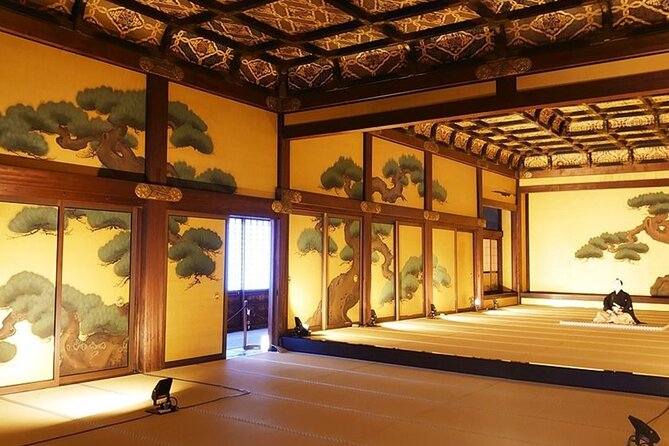
The palace interior is one of the most important parts of the visit. It gives you a sense of the formal spaces used by the ruling class, rather than showing only the castle’s outer defenses and stone walls.
You must remove your shoes before entering the palace interior. That is a normal rule at many Japanese cultural sites, but it is worth planning for. In winter, thick socks will make the visit more comfortable. You should also expect to walk indoors in socks for part of the visit.
The available information does not specify how long the interior portion lasts or which rooms are included on every departure. Conditions inside the castle can affect the exact route. Still, the tour is designed to cover the castle’s main features, and the palace is central to understanding the site.
I like that this visit combines explanation with physical experience. You are not only looking at a building from outside. You are moving through spaces where the relationship between rank, ceremony, and political power becomes easier to imagine.
More Historical Tours in Kyoto
- Kyoto Gion: 2-Hour Geisha Culture & History Walking Tour
★ 5.0 · 1,186 reviews - Kyoto Gion Historical Walking Tour
★ 5.0 · 188 reviews - Historical Kyoto E-Bike Tour
★ 5.0 · 181 reviews - Kyoto: Private 2.5 Hour Historical Walking Tour
★ 4.9 · 121 reviews
Gates, gardens, and the best places for photographs
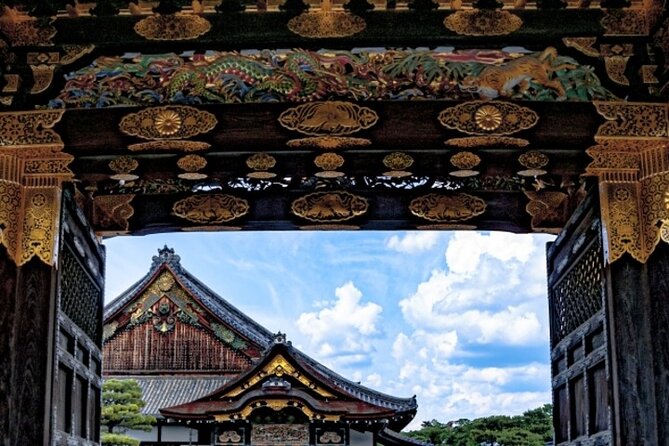
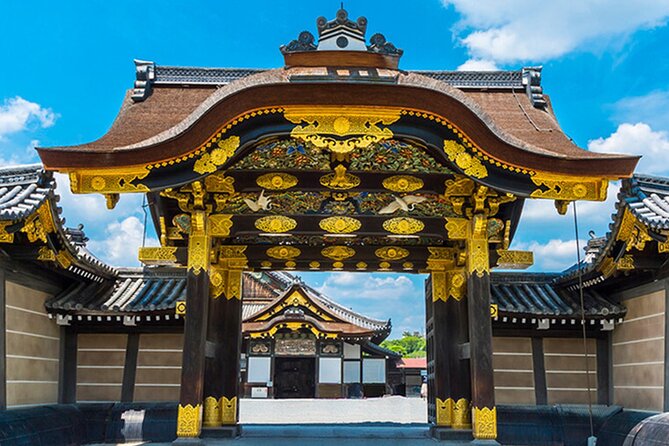
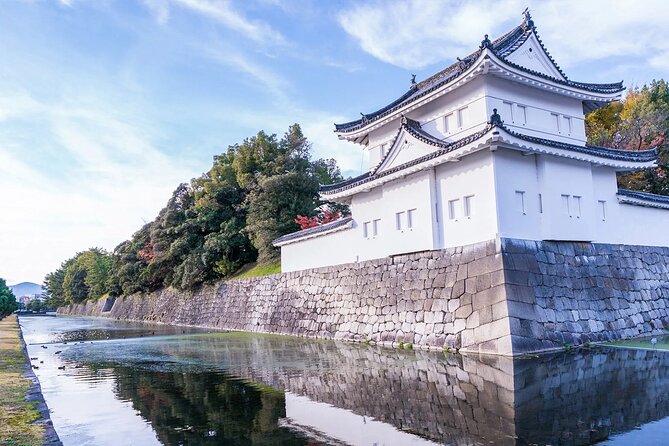
Nijo Castle’s appeal is not limited to the palace. The grounds include impressive gates, watch structures, and Japanese gardens, giving the visit a useful change of mood.
The exterior areas also provide some of the most photogenic parts of the tour. You might find that the gates and garden paths make better photographs than the formal palace rooms, especially if interior photography is restricted in particular areas. The guide can help point out places worth pausing for.
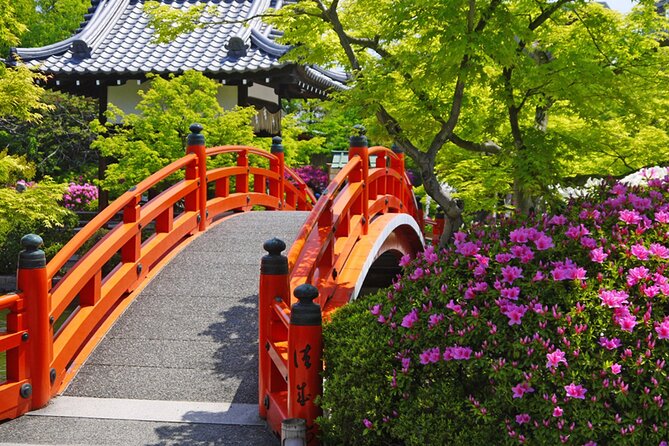
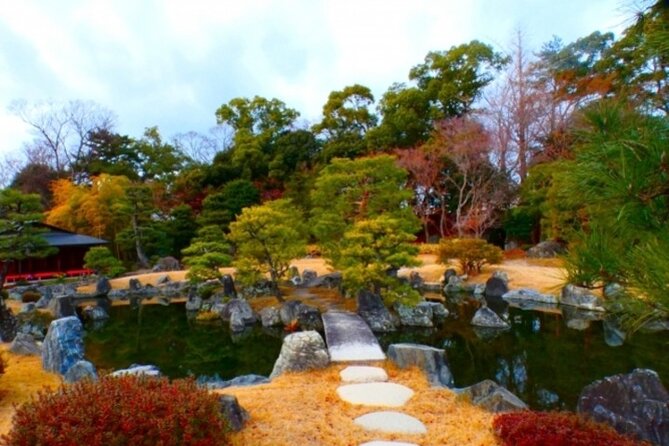
The gardens offer a quieter counterpoint to the story of shoguns and rivalry. After hearing about military power and political control, you can look at carefully arranged natural features and see how the setting was meant to shape a visitor’s experience.
Do not rush the outdoor sections. The tour lasts about an hour and 30 minutes, so the guide needs to balance walking, explanation, and stops. If you want long pauses for photography, you may need to return after the guided portion.
What the 90-minute format does well
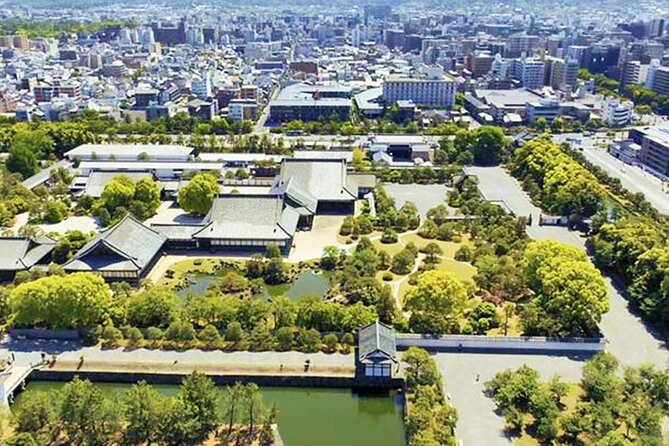
Ninety minutes is a sensible length for a first visit. It is long enough to cover the castle’s main history, palace areas, and gardens without turning the experience into a full-day commitment.
I would choose this format if you are fitting Nijo Castle between other Kyoto sights. The short duration also helps families and anyone who wants useful context without spending hours listening to a formal lecture.
The tradeoff is depth. You will not have unlimited time to examine every gate, garden feature, or historical detail. The guide must keep the group moving, and the experience is built around highlights rather than exhaustive study.
That is not a flaw, but it should shape your expectations. Think of this as a guided introduction with strong historical framing. If you have several hours available, you can continue looking around after the tour if site rules and opening conditions allow. The supplied details do not promise extra free time, so treat it as a possibility rather than a guarantee.
What the guide adds to the visit
The strongest reason to choose this tour is the guide. Nijo Castle is easy enough to enter on your own, but the meaning of what you see is harder to grasp without explanation.
Naoya has been praised for clear English, friendly answers, and explaining details that are easy to miss when reading signs alone. Nao has been praised for humor and for sharing facts that give the grounds more meaning. Noe has also been described as offering plenty of information about the castle and garden.
The personal side of the experience matters. A guide who answers questions can adjust the emphasis to your group. You might ask more about the Tokugawa family, the samurai government, the palace, or the gardens. That interaction is a clear advantage over simply walking through with a map.
The feedback about the guides is consistently strong, with particular praise for history, friendliness, humor, and English. Still, no guide can guarantee that every guest wants the same level of detail. If you prefer to wander silently at your own speed, an independent visit may suit you better.
Is $39.24 a fair price?
The price is $39.24 per person. Whether that is good value depends on how much you want from the visit.
The admission fee is included, which makes the comparison easier. You are paying for entry plus a guided explanation, a planned meeting arrangement, and a small-group format. For someone who would otherwise enter alone and read only the signs, the guide can make the extra cost worthwhile.
I see the best value for first-time visitors to Nijo Castle, history fans, and anyone with limited time in Kyoto. A well-paced explanation helps you understand why this castle matters, not just what it looks like.
The price may feel less attractive if you already know Tokugawa history, read Japanese or English site material comfortably, or prefer a slow independent visit. You may also want to compare the cost with the value of spending your limited Kyoto time elsewhere.
Because the group maximum is 10 people, this is not the cheapest possible way to enter the castle. The benefit is the added interpretation and the chance to ask questions in a smaller setting. For many people, that is the main reason to pay more than the admission fee alone.
Who should book this Nijo Castle tour?
I would recommend it to you if you want the main story in a short, organized visit. It is especially suitable if you are visiting Kyoto for the first time and want help connecting the castle to Japan’s samurai government.
It also suits you if you enjoy asking questions. The group size is small enough to support conversation, and the guides are praised for responding to questions rather than simply reciting prepared information.
Families and mixed-interest groups may also find the 90-minute length useful. The tour gives structure to the visit without requiring a full morning or afternoon.
You may prefer to go independently if you want to spend a long time photographing the gardens, move at your own speed, or focus on architectural details without a guide. The tour covers highlights, so specialists may find the pace too brisk.
The activity is near public transportation, and most people can participate. The information provided does not list detailed accessibility arrangements, so you should ask the provider directly if you have specific mobility needs.
Booking, cancellation, and simple preparation
You receive confirmation at the time of booking, and the ticket is mobile. Free cancellation is available if you cancel at least 24 hours before the experience begins. Cancellations or changes made less than 24 hours in advance are not refunded or accepted, and the cut-off follows local Kyoto time.
Bring your phone with the confirmation ready to show. Wear comfortable footwear for the grounds, and choose warm socks if you are visiting in winter because shoes must come off inside the palace.
The tour ends back at the meeting point, which makes it easy to continue to another Kyoto activity afterward. Since the exact guide can vary, keep an open mind about the style of the person leading your group. Alex, Nao, Naoya, Noe, and Benjamin each appear in the guide roster associated with the experience, with strong praise for their history knowledge, humor, and clear communication.
Should you book it?
Book this tour if you want Nijo Castle’s story explained rather than simply observed. The included admission, 90-minute schedule, and maximum group size of 10 make it a practical choice for a first visit, especially when you want the Tokugawa and samurai context without committing half a day.
Skip it if you already know the history well or want complete freedom to linger. For most first-time visitors, though, the guide is the real value. Nijo Castle becomes much more than gates, rooms, and gardens when someone explains the power struggle behind them.
FAQ
How long does the Nijo Castle tour last?
The tour lasts approximately 1 hour and 30 minutes.
Is Nijo Castle admission included?
Yes. The admission fee to Nijo Castle is included in the tour price.
Where does the tour start?
The tour starts at Nijojo-mae Station, at Nijo Castle in Nakagyo Ward, Kyoto.
Where does the tour end?
The activity ends back at the meeting point.
How many people can join the tour?
The tour has a maximum group size of 10 people.
Do I need to remove my shoes?
Yes. Shoes must be removed to enter the palace interior. Thick socks are recommended in winter.
Can I cancel for a full refund?
Yes, if you cancel at least 24 hours before the experience start time. Cancellations or changes made less than 24 hours in advance are not accepted for a refund.
Just added around Kyoto
- Sekka Cotton Furoshiki Class★ 5.0 · 19 reviews
- Secret Eastern Kyoto Biking Adventure★ 5.0 · 44 reviews
- Kyoto Sword Experience – includes Museum Ticket/Ninja Experience★ 4.5 · 149 reviews
- Scenic Green Tea Fields of Hidden Kyoto & Local Tea Exp (Private)★ 5.0 · 32 reviews
- Private Sake Tasting in Central Kyoto with Sake Sommelier★ 5.0 · 32 reviews
- Samurai School in Kyoto: Samurai for a Day★ 5.0 · 202 reviews
- SHIRAKAWA Japanese Culture Experiences with private English staff★ 5.0 · 16 reviews
- A Privately Guided Photoshoot in Beautiful Kyoto by a Pro★ 5.0 · 18 reviews
Castle Tours, compared.
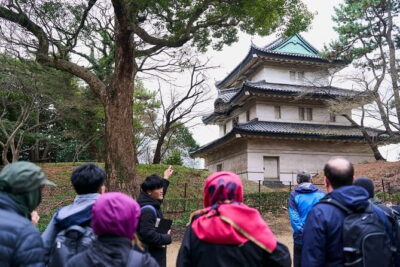
Tokyo Castle & Imperial PalaceーShogun Walking Tour
Our verdict →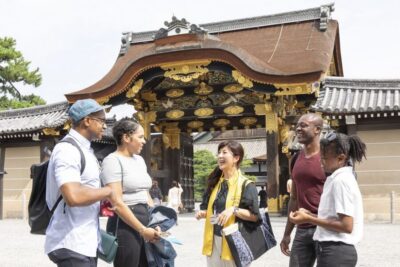
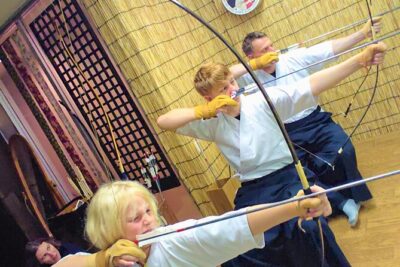
Japanesel Archery Experience HIROSHIMA CASTLE SHARAKU
Our verdict →
Browse the lists this tour appears in