
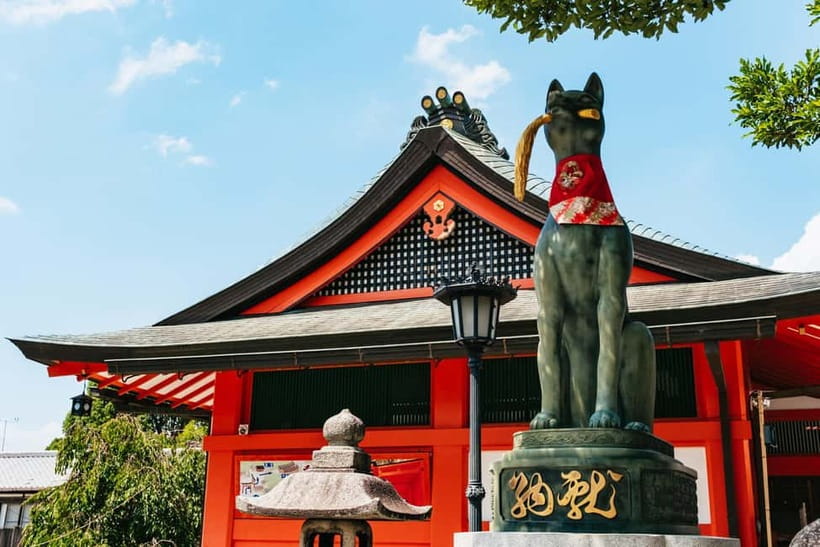
Reviewed · TEMPLES & SHRINES
Kyoto: 3-Hour Fushimi Inari Shrine Hidden Hiking Tour
Fushimi Inari is famous for its thousands of vermilion torii gates, but the best part of this tour comes before you reach the crowded main route. You begin near Tofukuji Station, walk through quiet streets, then climb forest paths toward the shrine from the back side of Mount Inari.
I like two things in particular: the small groups of up to nine people, which make the narrow trails easier and let you ask questions, and the chance to see bamboo groves and small altars that most people miss. Guides such as Hina, Naru, Shiori, Yuto, and Yukari also take photos and explain how to enter the torii gates and make offerings.
The catch is simple: this is a real hike, not a gentle stroll. The route covers about 7 kilometers, with stairs, uneven ground, and steep sections. Rain can make the trail muddy or slippery, and one visitor recorded the equivalent of 50 flights climbed. Bring proper clothes and a reasonable level of fitness.
Key points to know before booking
- Start from the quieter Tofukuji side: You approach Fushimi Inari through residential streets and forest trails rather than joining the main crowd at the front entrance.
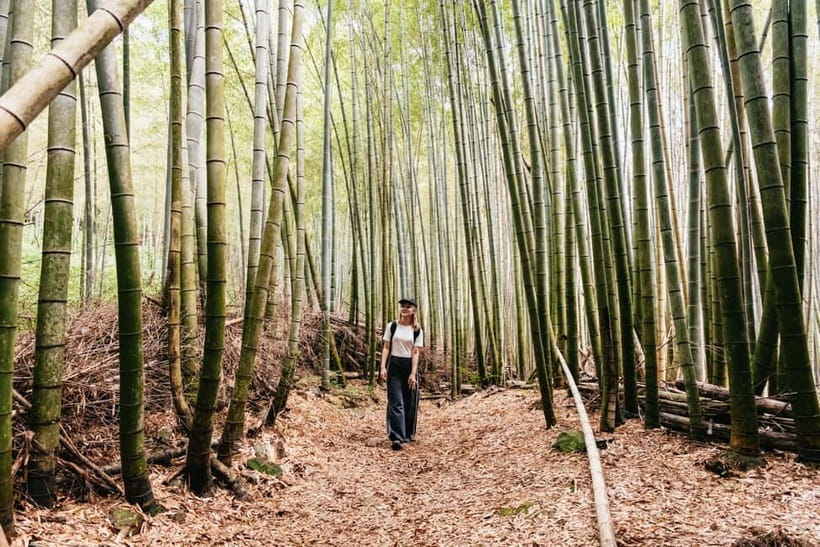
- Walk through two bamboo areas: One comes on the way up, and another appears on the forested descent toward the shrine.
- Expect around 7 kilometers: The route includes unpaved paths, stairs, slopes, and regular pauses.
- Reach the famous torii gates from the back: You get peaceful mountain walking first, then the classic Fushimi Inari scenes later.
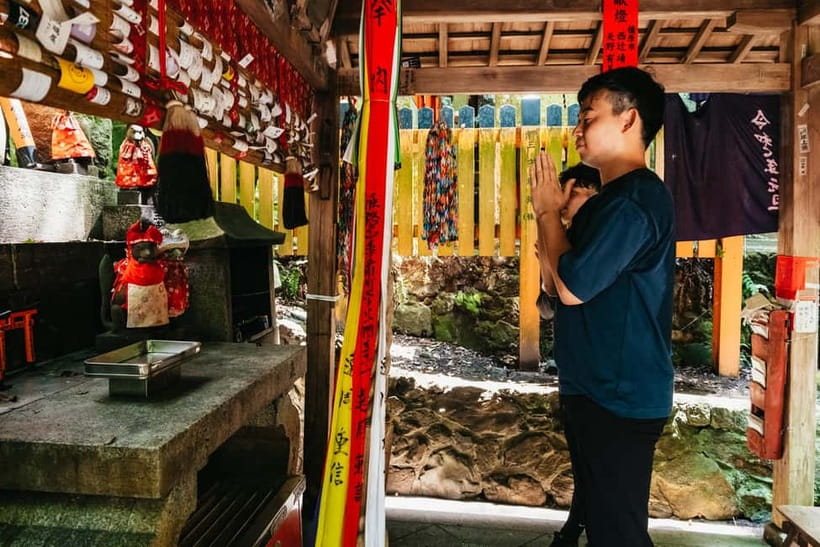
- Learn shrine customs along the way: Guides explain offerings, wishes, amulets, and respectful behavior at Shinto sites.
- Plan for shade, bugs, and changing ground: Much of the hike is under trees, but mosquitoes are possible and wet weather can make footing tricky.
Why this Fushimi Inari route is different
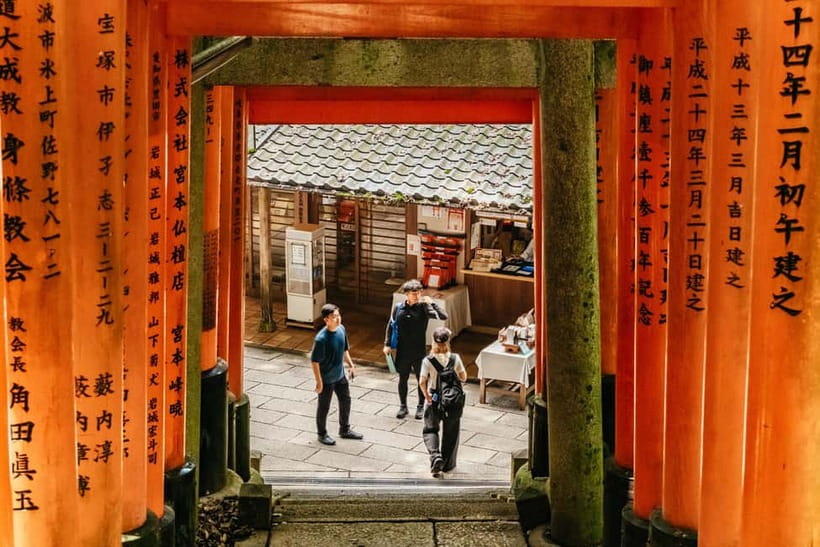
Most people arrive at Fushimi Inari Shrine by train, take a few photos at the main gate, and join the stream of people heading beneath the first torii gates. That route gives you the iconic view quickly, but it can feel crowded, especially around the lower shrine.
This tour takes the longer way around. You meet outside FamilyMart Nakai Tofukuji, next to Exit 2 at Tofukuji Station, then walk into a quiet neighborhood. Small local shrines appear before the mountain trail begins, giving you a slower introduction to the area.
I like this order because it creates a clear contrast. You start with quiet streets and forest, climb through secluded paths, and only later meet the famous lines of red gates. By then, you have already seen a side of Fushimi Inari that independent visitors often miss.
The tour is in English, and the guides bring different strengths. Hina has been praised for explaining customs and answering questions, while Naru is noted for taking patient photos. Shiori, Yuto, Yukari, Hira, Nina, Nick, and others have guided the route as well. The quality of the experience depends partly on your guide, but the format gives you plenty of time to ask about Shinto practices, Japanese culture, and the meaning of the shrine details around you.
More Temple & Shrine Tours in Kyoto
- Kyoto: Fushimi Inari, Kinkakuji, Bamboo Grove 1 Day Bus Tour
★ 4.8 · 4,316 reviews - Kyoto: Tea Ceremony in a Traditional Tea House in Kiyomizu
★ 4.9 · 3,519 reviews - Kyoto: Tea Ceremony Ju-An at Jotokuji Temple
★ 4.9 · 3,207 reviews
From Tofukuji Station to the first bamboo grove
The meeting point is easy to identify: FamilyMart Nakai Tofukuji, outside Exit 2 of Tofukuji Station. If you arrive by JR, both local and rapid trains can serve Tofukuji. On the Keihan line, use a sub-express, semi-express, or local train. Do not take an express train for this stop.
The first walk takes you away from the station and into a quieter neighborhood. This is not a grand sightseeing stretch, and that is part of its appeal. You see the everyday setting around the mountain before the torii gates take over.
The route includes a visit to Tofukuji Temple, listed at about 10 minutes. The temple adds useful context before Fushimi Inari. You are not simply rushing from one famous site to another. Instead, you begin with the religious setting of southeastern Kyoto, then move toward the Inari mountain.
Soon the pavement gives way to a forest path. This is where the tour begins to feel like a hike rather than a standard shrine visit. The trail reaches a bamboo grove, and you can stop for photographs without the same crowd pressure found at the most famous bamboo attractions in Kyoto.
I would not book this tour only for a bamboo-forest photograph. The grove is one part of a larger walk, and the appeal comes from the silence, trees, uneven trail, and sense of moving through the mountain. Still, if you wanted to visit Arashiyama mainly for bamboo, this route may give you a useful alternative.
Climbing Mount Inari through quiet forest
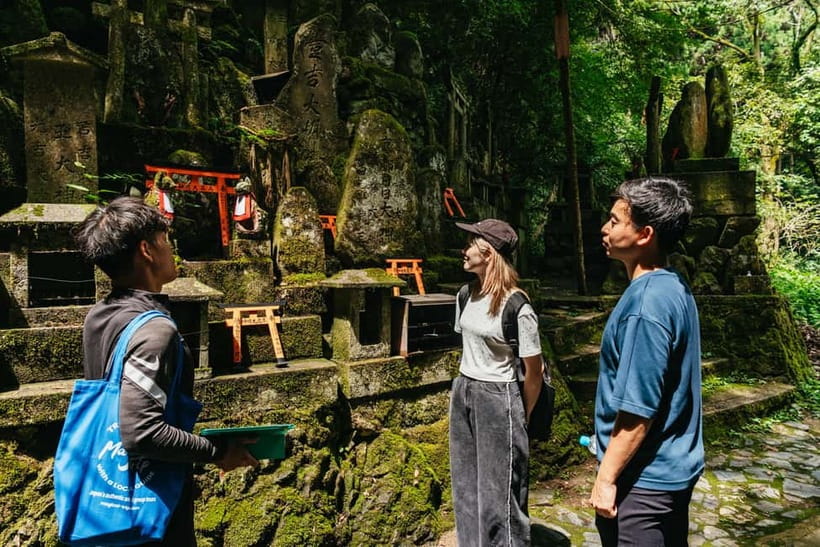
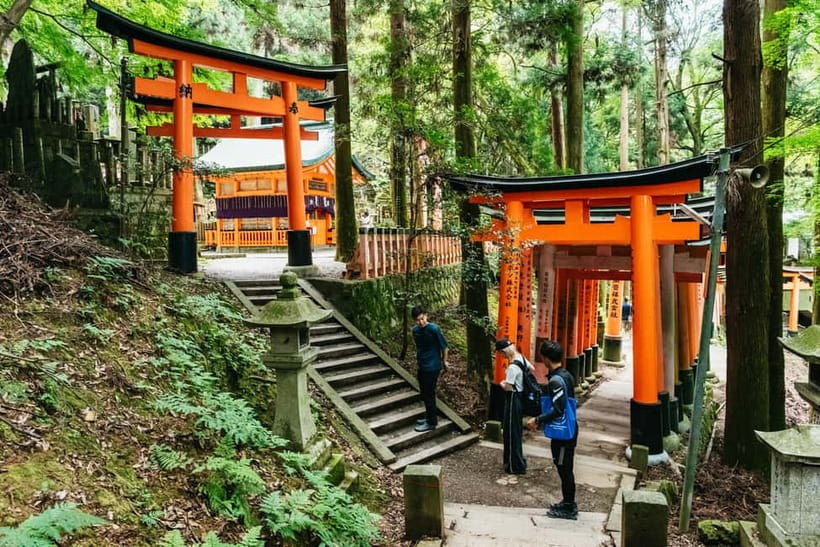
The first major section lasts about 40 minutes according to the listed schedule, though the overall pace can vary with the group. You continue through evergreens and forest paths, passing smaller shrines and old altars tucked away from the main route.
These minor religious sites are easy to overlook when you walk alone. A guide can explain how to approach them, when to bow, and how to make an offering without treating the shrine like a stage set. That practical instruction adds real value, especially if you are unfamiliar with Shinto customs.
The path is not always smooth. You may climb over rocky ground, use stairs, and handle slopes that become slippery after rain. Several people describe the route as moderate but challenging, while others stress that it is more demanding than a normal walk.
I would wear shoes with a firm sole and avoid carrying anything bulky. Large bags and luggage are not allowed, and a small daypack is much easier to manage than a heavy suitcase or oversized shoulder bag.
The trees provide shade for roughly half of the tour, so you are not in direct sun the entire time. That helps in warm weather, but shade also means damp ground can stay slick after rain. Long sleeves and long pants protect you from mosquitoes and other bugs as well as from scratches along the trail.
Reaching the mountain summit and its altars
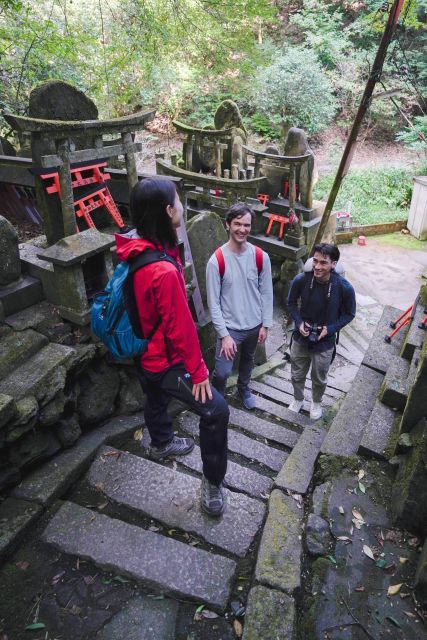
The route eventually reaches the upper part of Mount Inari. The mountain is covered with small shrine altars, stone markers, torii gates, and signs of ongoing religious practice. This section gives you a fuller sense of Fushimi Inari than a quick visit to the lower entrance.
The scheduled viewpoint section lasts about one hour. That does not mean you stand at one lookout for 60 minutes. It reflects the time spent climbing, pausing, learning about the shrine, taking photos, and moving through the upper mountain area.
One striking detail is the sheer number of gates. One group counted about 1,500 torii gates along the route. You will not have every section to yourself, but the approach from the rear keeps the early part of the walk calm. Once you join the main torii route, the number of people increases.
This gradual change is worth understanding before you book. The tour does not eliminate crowds from Fushimi Inari. Instead, it delays them. You get the quietest trails first, then the classic gates, then the busier lower shrine as you descend.
That makes the tour a good fit if you want both sides of Fushimi Inari: forest walking and the famous red tunnel. It is less suitable if you want complete solitude from start to finish.
Same trip, a completely different kind of day:
- PERFECT KYOTO 1-Day Bus Tour
★ 5.0 · 13,518 reviews - Kyoto Geisha Walking Tour: Gion District & Hidden Gems
★ 4.7 · 3,273 reviews - Kyoto: Gion Magical Night Walking Tour with Geisha Trivia
★ 4.9 · 2,393 reviews - Kyoto: 45-Minute Tea Ceremony Lesson Experience
★ 4.3 · 2,378 reviews
Descending toward the most famous torii gates
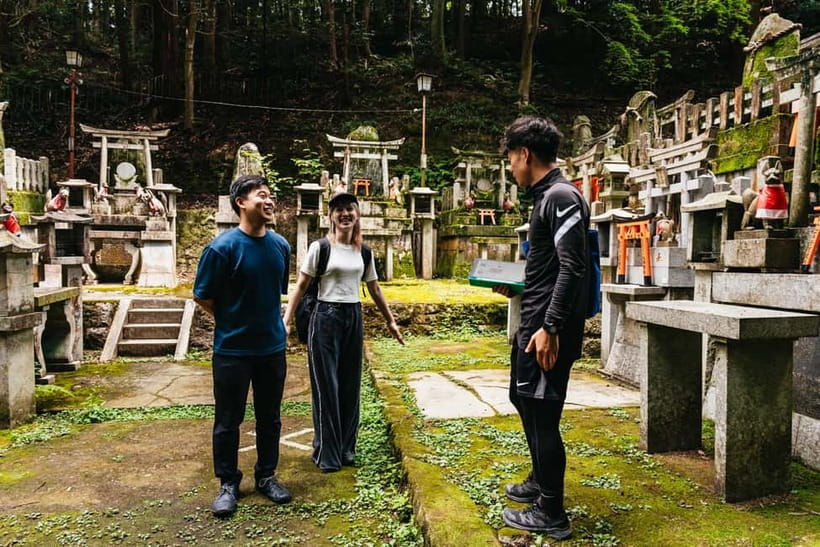
After reaching the upper mountain, you return by a forested trail and visit more small shrines along the way. The descent leads to another bamboo grove before connecting with the better-known sections of Fushimi Inari.
The second viewpoint section is listed at about 45 minutes. This is where you can take the photographs most people associate with the shrine. Your guide can help find good angles and take photos for you, which is useful when you are traveling alone or want a picture with your whole group.
The descent is not automatically easier than the climb. Downhill stairs can put pressure on your knees, and wet stones require care. On a rainy day, expect mud and slower progress. The guides make regular stops, and you can ask for extra pauses if needed, but you should still be comfortable walking for several hours.
The crowd level also changes as you approach the front of the shrine. The upper paths may be nearly empty, while the lower approach can become very busy. I appreciate that the tour is honest about this pattern. You are escaping the worst of the crowd for much of the walk, not avoiding every person in Kyoto.
Ending at Fushimi Inari Shrine
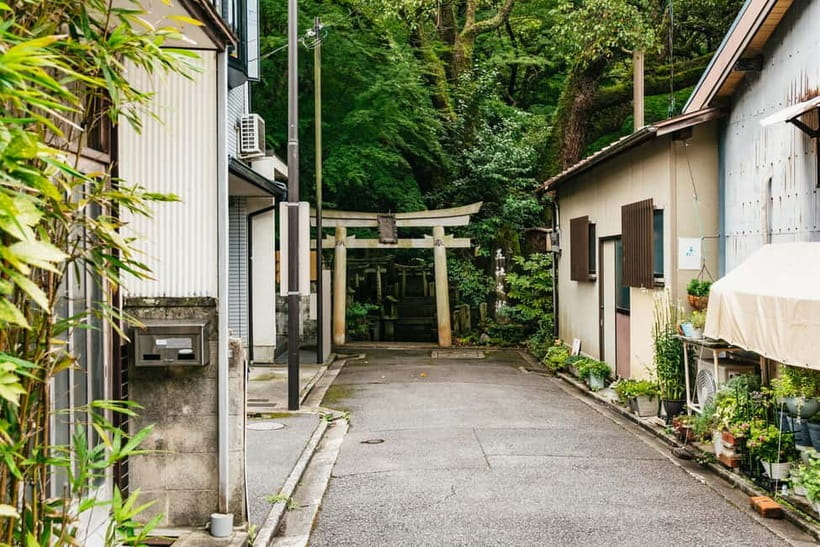
The route description places the final stretch at the main shrine at the base of the mountain. This is the ideal point for local street food and a final look at the most recognizable shrine buildings.
The schedule also lists FamilyMart Nakai Tofukuji as the arrival point, so I would confirm the exact ending location when you book. That small detail matters if you have a train reservation, lunch booking, or another timed activity immediately afterward.
Either way, allow extra time after the three-hour activity. You may want to eat near the shrine, take more photos, or browse the surrounding area before continuing into Kyoto. The tour itself does not include food or drinks, so bring water and budget separately for anything you buy.
What the $72 price is buying you
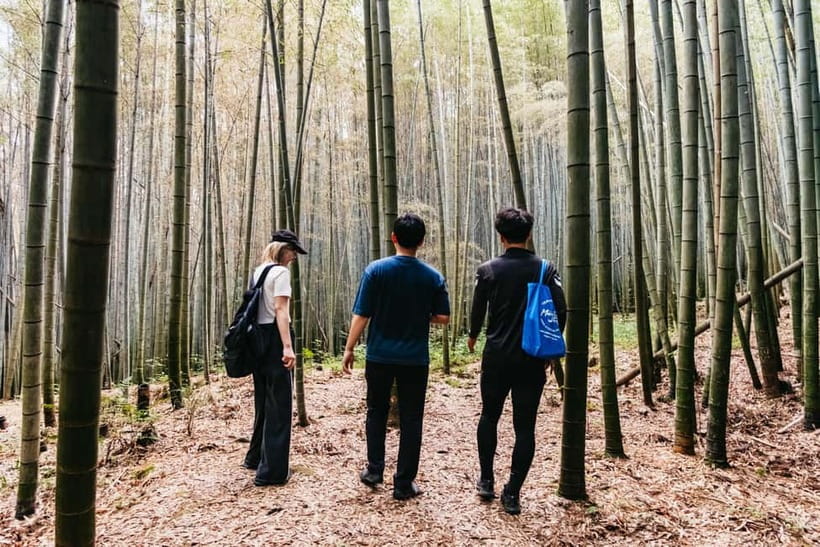
At $72 per person, this is not the cheapest way to see Fushimi Inari. You can enter the shrine without paying an admission charge and walk the main route on your own.
The value comes from access and structure. A local English-speaking guide leads you onto forest trails, keeps the group moving, explains shrine etiquette, points out lesser-known altars, and takes photos. You also avoid spending time trying to locate the quieter route yourself.
For a small group of three or four, the price feels easier to justify because the guide can respond to individual questions and adjust the pace. A group of nine will still be small compared with the crowds at Fushimi Inari, but the experience may feel less personal.
I would consider the tour good value if you care about quiet mountain walking and cultural explanation. If your goal is only to photograph the first torii gates, save the money and visit independently.
The booking terms add flexibility. You can cancel up to 24 hours before the start for a full refund, and you can reserve now and pay later. Rescheduling is also available up to 24 hours beforehand, subject to space.
Who should book this hike
I would choose this experience if you meet several of these conditions:
- You want a quieter approach to Fushimi Inari.
- You enjoy forests, stairs, and uneven paths.
- You want help understanding shrine customs.
- You are comfortable walking about 7 kilometers.
- You would like someone to take photos during the hike.
- You prefer a small group to a large bus tour.
Families can join with children, but anyone under eight needs permission from a parent or guardian before booking. The route is not recommended for people with limited mobility, and it is not a good choice if you are out of regular walking condition.
You also need to dress for the mountain, not just for Kyoto sightseeing. Wear long pants, a long-sleeved shirt, and sturdy walking shoes. Mosquitoes and other bugs are possible. Large bags and luggage are not allowed.
In extreme weather, the tour may be canceled. You can also cancel because of rain if you are not prepared, but the full-refund deadline remains 24 hours before the start.
My verdict on the 3-hour Fushimi Inari hike
I like this tour because it fixes the main problem with visiting Fushimi Inari: the lower shrine can feel crowded before you have had a chance to understand the place. By approaching from Tofukuji and walking through the mountain first, you get a calmer start and a better sense of the religious setting.
The strongest part is the combination of secluded trails, bamboo groves, and shrine teaching. The main drawback is the physical effort. Do not mistake this for a simple walk with a few scenic stops. It is a moderate mountain hike with stairs and rough sections.
Book it if you want Fushimi Inari to be an active, quieter, more personal experience, especially if you value a guide who can explain Shinto customs and help with photographs. Skip it if you have limited mobility, dislike hills, or only want a quick visit to the famous torii gates.
FAQ
How long is the Fushimi Inari hiking tour?
The activity lasts three hours and covers approximately 7 kilometers in total.
Where does the tour meet?
You meet outside FamilyMart Nakai Tofukuji, next to Exit 2 of Tofukuji Station.
Which trains can I take to Tofukuji Station?
On the JR line, both rapid and local trains can be used. On the Keihan line, use sub-express, semi-express, or local trains. Do not use an express train.
Is the tour conducted in English?
Yes. The tour includes a live English-speaking guide.
How difficult is the hike?
It is a moderate hike rather than an easy walk. Expect stairs, unpaved and rocky paths, slopes, and some effort over the full distance. Regular stops are included, and you can request extra pauses.
What should I wear?
Wear long pants and a long-sleeved shirt. These help protect you from mosquitoes and other bugs. Sturdy walking shoes are also practical for uneven or slippery ground.
Can I bring luggage?
No. Luggage and large bags are not allowed.
What happens if it rains?
The tour may be canceled during extreme weather. Rain can make the trail muddy and slippery, so you should be prepared for wet conditions. For a full refund, cancel at least 24 hours before the starting time.
More 3-Hour Experiences in Kyoto
- 3-Hour Kyoto Insider Sake Brewery Tour with Tastings & Pairings
★ 5.0 · 917 reviews - Kyoto Imperial Palace & Nijo Castle Guided Walking Tour – 3 Hours
★ 4.5 · 106 reviews - 3 Hours Kyoto Insider Sake Experience | Tasting Konteki
★ 5.0 · 24 reviews - Kyoto: Personalize, private tour (3h, 5h, 8h) [W/Car Option]
★ 4.9 · 24 reviews
More Hiking Tours in Kyoto
- Fushimi Inari Hidden Hiking Tour (Private Option Available)
★ 5.0 · 1,750 reviews - Kyoto Hiking Tour: The Nature and Legends of Kurama and Kibune
★ 5.0 · 75 reviews - Kyoto: Hike and Hot Springs in Kurama
★ 5.0 · 49 reviews - Kyoto: Fushimi Inari Hidden Hike (Private)
★ 5.0 · 31 reviews
Just added around Kyoto
- Sekka Cotton Furoshiki Class★ 5.0 · 19 reviews
- Kyoto Sword Experience – includes Museum Ticket/Ninja Experience★ 4.5 · 149 reviews
- Scenic Green Tea Fields of Hidden Kyoto & Local Tea Exp (Private)★ 5.0 · 32 reviews
- Secret Eastern Kyoto Biking Adventure★ 5.0 · 44 reviews
- Private Sake Tasting in Central Kyoto with Sake Sommelier★ 5.0 · 32 reviews
- Samurai School in Kyoto: Samurai for a Day★ 5.0 · 202 reviews
- SHIRAKAWA Japanese Culture Experiences with private English staff★ 5.0 · 16 reviews
- A Privately Guided Photoshoot in Beautiful Kyoto by a Pro★ 5.0 · 18 reviews
Temples & Shrines, compared.

Tea Ceremony in a Traditional Tea House in Kiyomizu
Our verdict →

Meiji Shrine, Asakusa, Skytree Bus Tour and Cruise
Our verdict →
Fushimi Inari Hidden Hiking Tour (Private Option Available)
Our verdict →
Osaka/Kyoto:Kinkakuji,Arashiyama,FushimiInariShrine,NaraPark
Our verdict →
Nikko: Kegon Falls, Lake Chuzenji & Toshogu Temple
Our verdict →
Kamakura & Enoshima Day Trip including Temple Tickets
Our verdict →Browse the lists this tour appears in