
Reviewed · CASTLE TOURS
Tokyo Castle & Imperial PalaceーShogun Walking Tour
Edo Castle was once Japan’s largest castle, and this tour helps you see the fortress beneath modern Tokyo. You’ll walk past massive stone walls, old gates, moats, palace grounds, and the carefully arranged Ninomaru Garden while learning how the shogun ruled from here. I like the small group of up to 10 and the way guides connect samurai politics with Japan’s imperial family today.
I also like the calm pace, which gives you time for photos and questions instead of rushing from one stop to the next. The main drawback is that this is almost entirely outdoors, and English is the only language offered, so weather and language ability matter.
Key points to know before you go
- The castle is mostly gone, but its defenses remain: Moats, gates, stone walls, and yagura explain the scale of Edo Castle.
- You get history from samurai rule to modern Japan: The tour links the 260-year Edo period with the long imperial tradition.
- Ninomaru Garden is a quiet highlight: Seasonal plants, unusual trees, koi, and traditional design add a gentler side to the visit.
- Small groups make questions easy: Groups are limited to 10, and guides such as Anju, Fuma, Tomo, and Yuka are often praised for clear explanations.
- The $23 price pays for interpretation: Entry to the garden itself may not be the main expense, but a good guide shows you what you would otherwise walk past.
- Plan for outdoor walking: Wear weather-ready clothes, allow for slopes, and leave knives and alcohol behind for the security check.
Why Edo Castle explains Tokyo better than a palace room
Tokyo can feel modern at every turn, but the Imperial Palace grounds preserve the bones of an older capital. Beneath the present-day palace is the site of Edo Castle, the headquarters of the Tokugawa shoguns and one of the great centers of power in Japanese history.
You won’t tour the emperor’s private residence on this walk. Instead, you’ll see the public grounds and East Gardens, along with the surviving gates, walls, moats, and foundations that show how the old castle worked.
That distinction matters. If you arrive expecting grand palace interiors, you may find the experience more open and archaeological than ceremonial. If you want to understand how a fortified castle controlled a city and supported a long period of samurai rule, the setting makes the story easier to follow.
The guide fills in what the eye cannot see. A low wall may look simple until you learn how layers of defense slowed an attacker. A gate may seem like a photo stop until you understand who could pass through it, how movement was controlled, and why the route into the castle was not straightforward.
This is the real value of the tour. You are not just looking at attractive grounds. You are learning to read them.
More Castle Tours in Tokyo
- Tokyo Castle & Imperial PalaceーShogun Walking Tour
★ 5.0 · 724 reviews - Imperial Palace East Garden and Edo Castle Walking Tour in Tokyo
★ 5.0 · 510 reviews - Tokyo Castle, Imperial Palace, Shogun & Garden Walking Tour
★ 5.0 · 211 reviews
Meeting at Wadakura Fountain Park
The walk begins in front of Starbucks Coffee Kōkyo Gaien Wadakura Fountain Park Store at 3-1 Kōkyo Gaien, Chiyoda City. Look for a guide holding a Local Guide Stars sign.
This is a useful meeting point because it is beside the Imperial Palace outer grounds, but give yourself enough time to find the correct Starbucks. The Japanese address is provided as スターバックス コーヒー 皇居外苑 和田倉噴水公園店, which can help if you need to show the location to someone or compare it with your map.
The group size is capped at 10. That is small enough for a guide to hear questions and keep the walk together without the feel of a large coach tour. The pace is described as relaxed, and several guides have been praised for keeping conversation flowing without hurrying people through the gardens.
English is the tour language. Japanese support is not available, so you should be comfortable following spoken English for historical explanations and practical directions.
Sakurada Tatsumi Yagura: your first look at castle power
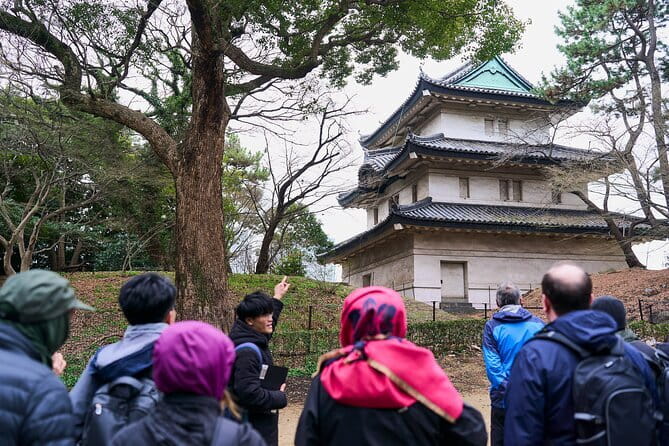
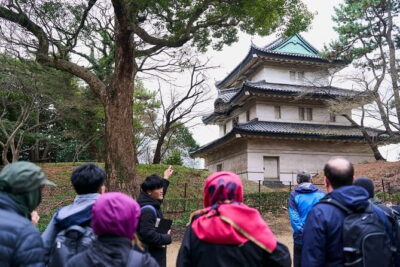
The first stop is Sakurada Tatsumi Yagura, a traditional watchtower structure and a good introduction to the castle’s defensive design. You’ll have time for photos while the guide explains how this kind of building fitted into the wider system of walls, moats, and controlled entrances.
The stop is brief, listed at about five minutes, so do not expect a long lecture here. Its purpose is to give you a visual starting point. The castle was not a single building surrounded by a wall. It was a huge defensive complex with different sections and layers of protection.
This is one of the places where a guide helps. Without context, a surviving tower can look like an isolated old structure. With an explanation of its role, you begin to see the palace grounds as part of a working fortress.
Ote-Mon Gate and the logic of layered defenses
Ote-Mon Gate receives about 15 minutes, making it one of the more substantial early stops. Gates were practical parts of castle life, not just grand entrances. They controlled access, slowed attackers, and helped separate the castle’s various zones.
The guide’s explanation of layered defenses is one of the strongest parts of this experience. You’ll hear how Edo Castle was protected and why it was considered extremely difficult to attack. The point is not simply that the walls were large. It is that the whole layout worked together.
You can take photos here, but keep your attention on the details around the gate. Stonework, angles, water, and the relationship between one entrance and the next all matter. The guide may point out features you would otherwise pass without a second thought.
For anyone who has become curious about samurai Japan through television or film, this stop helps replace dramatic images with the practical realities of power. The shogun’s authority depended on administration, controlled movement, and a carefully protected base.
More Walking Tours in Tokyo
- Tokyo Tsukiji Fish Market Food and Culture Walking Tour
★ 5.0 · 3,184 reviews - Tokyo: Imperial Palace and Shogun Historical Walking Tour
★ 5.0 · 2,251 reviews - Tokyo: Shinjuku Local Bar and Izakaya Guided Walking Tour
★ 4.9 · 1,794 reviews - Tokyo: Tsukiji Fish Market Food and Walking tour
★ 5.0 · 1,724 reviews
The Imperial Palace grounds and the modern emperor
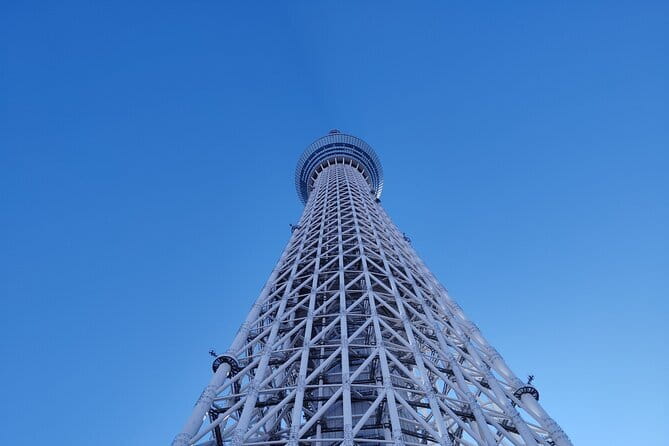
The walk then moves into the Tokyo Imperial Palace area, with around 20 minutes devoted to the palace grounds. This is the point where the tour shifts from the military world of the shoguns to Japan’s continuing imperial institution.
Japan’s imperial system is described as a tradition lasting 2,600 years. The guide explains how that tradition has survived through major changes in government, including the period when the shoguns held practical political power.
This is a useful distinction to understand. The emperor and the shogun were not simply two interchangeable rulers. Their roles changed across different periods, and the relationship between imperial symbolism and military government shaped Japanese history for centuries.
The tour does not promise access to private palace interiors. Much of what you see is open space, formal routes, walls, and views across the grounds. That can feel understated beside the grand claims of imperial history, but the guide’s storytelling gives those spaces meaning.
Several guides, including Anju, Yuka, Fuma, Tomo, and Keiko, have been singled out for clear explanations and friendly conversation. Names and staffing can vary, of course, but the pattern is useful: this tour depends heavily on the individual guide’s ability to explain a large and sometimes visually subtle site.
Ninomaru Garden: the gentler side of the palace grounds
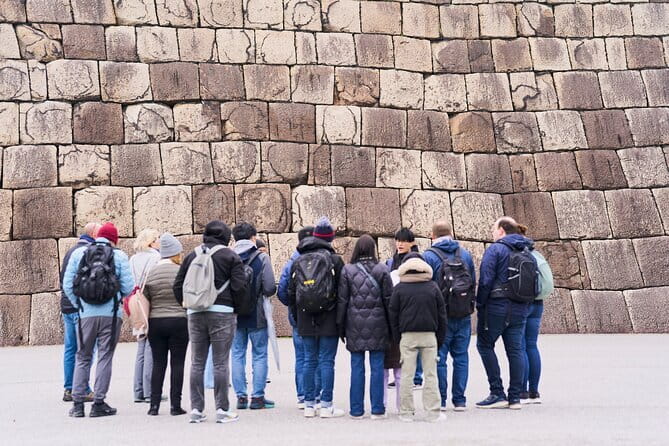
Ninomaru Garden receives roughly 15 minutes and changes the mood of the walk. After gates, walls, and defensive strategy, you reach a more carefully arranged garden with seasonal plants, distinctive trees from across Japan, and special koi.
This is a short stop, but it may be one of the most memorable for photographers. The garden offers a calmer view of the site and shows that castle life was not only about warfare and administration. Gardens provided beauty, order, and space for reflection within a place built to protect power.
The guide can also help you understand why particular trees, ponds, or arrangements matter. Without explanation, the garden is still attractive. With context, you can look at it as part of Japanese design and palace culture rather than simply as a pleasant green space.
Bring a camera, but do not let the photo stops turn the tour into a silent procession. This is a good place to ask questions about daily life, the imperial family, Japanese gardens, or the difference between the shogun’s world and the palace today.
Edo Castle ruins and the vanished palace

The Edo Castle ruins are the most important stop for understanding what has disappeared. About 10 minutes are set aside here, including time for sightseeing and photographs.
You’ll see remnants rather than a complete castle. That can disappoint anyone hoping for intact towers and halls, but the ruins are valuable precisely because they force you to imagine the original scale. The guide explains how large Edo Castle once was and uses the remaining structures to outline its former layout.
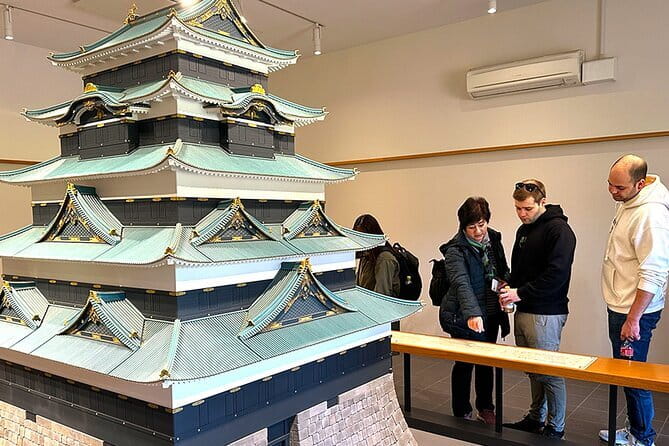
A miniature structure of the former palace is also included. This gives you a visual aid when the foundations and open spaces feel too fragmentary to interpret on your own.
The castle’s destruction and later changes mean that imagination is part of the visit. A strong guide does not pretend the missing buildings are still there. Instead, the explanation helps you connect surviving stone, open foundations, and historical plans with the enormous complex that once controlled Edo.
This is also where the 260-year samurai peace becomes more than a date. The Tokugawa shogunate maintained a long period of internal stability, and Edo Castle was the center from which that system was managed. The tour uses the site to show how political control, social order, and military protection worked together.
Imperial Palace East Gardens and the final walk
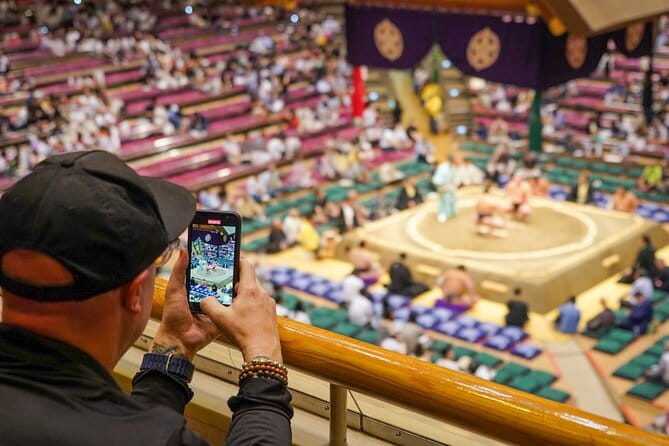
The East Gardens receive about 20 minutes, the longest single stop on the route. This is a chance to slow down, take photos, and look at the mixture of old stonework, trees, garden planting, and open views.
The gardens are one reason this works well as a first or second-day Tokyo activity. They offer a quiet contrast to the city streets without requiring a long trip outside central Tokyo. You get history, nature, and a sense of scale in one compact visit.
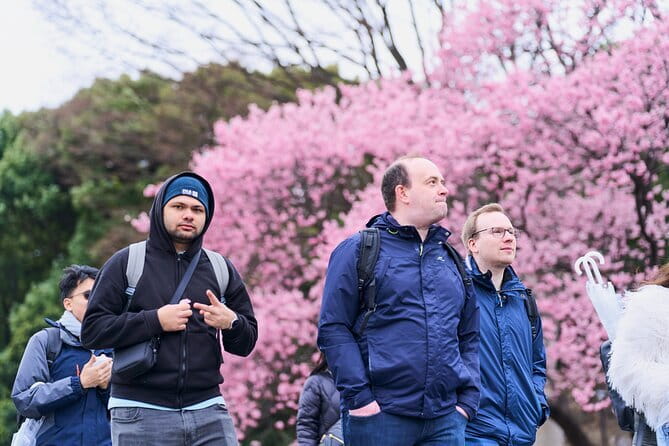
You may encounter koi and a wide range of trees from different parts of Japan. Seasonal changes affect what you see, so the garden will not look identical throughout the year. Weather also shapes the experience. On a clear day, the open grounds are pleasant and photogenic. In rain or strong sun, the same openness can become tiring.
The walk returns to the starting point at Wadakura Fountain Park. Since the full experience lasts about two hours, it fits neatly before lunch, an afternoon museum visit, or another central Tokyo stop.
What the $23 price really buys you
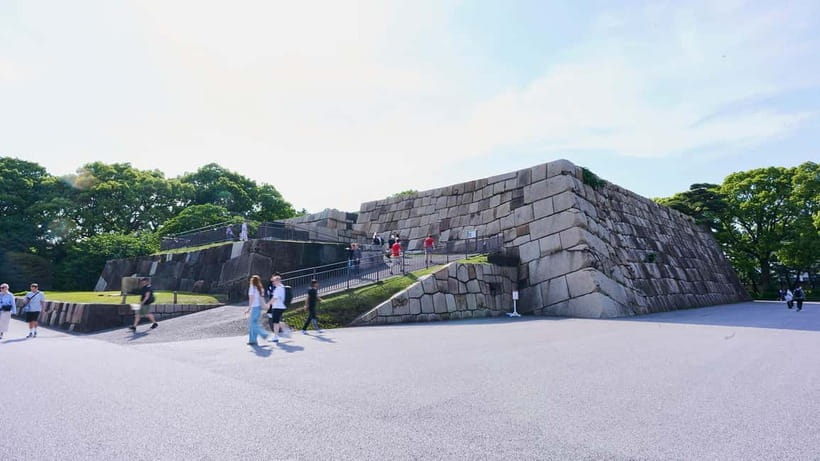
At $23 per person, this is a modestly priced guided experience for a major central Tokyo site. The Imperial Palace grounds and East Gardens are the setting, but the real product is the explanation.
You can walk through parts of the grounds without paying for a guide, so budget-minded visitors should recognize that the admission value alone may not justify the fee. One participant specifically felt the price was a little high because entering the gardens may not cost much.
I see the value differently, but with a condition: book it if you want history explained as you walk. The guide points out defensive details, explains how the palace changed over time, identifies features in the garden, and connects the Edo period with the imperial family today. That can turn a quiet garden visit into a clear lesson about Japan.
The price also covers the convenience of a fixed route and a small English-speaking group. You are not spending half your visit trying to work out what a gate or foundation once did.
Guides have been praised for more than facts. Anju is often described as patient and lively. Fuma is noted for warmth, fun facts, and useful suggestions for the rest of a Tokyo visit. Tomo is praised for a good pace and interaction, while Yuka is noted for clear explanations and taking photos. These personal touches matter in a place where the scenery alone does not explain itself.
Practical advice for a comfortable two hours
Most of the walk is outside, so check the weather and dress for it. Comfortable shoes are sensible because you’ll move between gates, gardens, walls, and open grounds.
There is a security check when entering the Imperial Palace area. Do not bring knives or alcohol. Photography is encouraged, so a camera or phone with enough battery is worth carrying.
Wheelchairs are available for use within the Imperial Palace grounds. Some slopes and sections still require walking or going down on foot, so anyone with mobility concerns should consider those limits before booking.
The tour is suitable for history fans, first-time Tokyo visitors, garden lovers, and people who want a quieter activity in central Tokyo. It is less suitable if you want palace interiors, a long samurai demonstration, or a tour in Japanese.
The cancellation terms are forgiving: you can cancel up to 24 hours ahead for a full refund. You can also reserve now and pay later, which helps if your Tokyo schedule is still shifting.
Should you book the Tokyo Castle and Imperial Palace Shogun Walking Tour?
Book it if you want the Imperial Palace to make sense. The surviving castle pieces are impressive, but their meaning is easy to miss without someone explaining the defenses, the shogun’s authority, and the shift from Edo Castle to today’s Imperial Palace.
The tour is especially good for you if you enjoy asking questions, taking photos, and walking at a steady pace. The small group and friendly English-speaking guides add real value, particularly at the ruins and gates.
Skip it if you mainly want an indoor palace tour, dislike outdoor walking, or need Japanese-language support. At $23, the price is fair for guided interpretation, but less compelling if you only want to stroll through the gardens on your own.
For most visitors interested in Tokyo’s past, this is a sensible two-hour introduction. It gives you the castle’s bones, the garden’s calm, and a clearer idea of how samurai government and imperial tradition shaped the city you see today.
FAQ
How long is the Tokyo Castle and Imperial Palace Shogun Walking Tour?
The tour lasts two hours and returns to the starting point at Starbucks Coffee Kōkyo Gaien Wadakura Fountain Park Store.
What is the price?
The price is $23 per person.
Where does the tour meet?
Meet in front of Starbucks Coffee Kōkyo Gaien Wadakura Fountain Park Store at 3-1 Kōkyo Gaien, Chiyoda City, Tokyo. The guide holds a Local Guide Stars sign.
Is the tour conducted in English?
Yes. The live guide conducts the tour in English only, and Japanese language support is not available.
How large is the group?
The tour is limited to 10 participants.
What places are visited?
The route includes Sakurada Tatsumi Yagura, Ote-Mon Gate, Tokyo Imperial Palace, Ninomaru Garden, Edo Castle ruins, and the Imperial Palace East Gardens.
What should I bring or avoid bringing?
Dress for the weather because much of the tour is outdoors, and bring a camera if you want photos. Do not bring knives or alcohol because there is a security check at the Imperial Palace.
Just added around Tokyo
- Kawagoe Japanese Food Tour : Unagi Kaiseki and Sake near Tokyo★ 5.0 · 30 reviews
- Kawagoe 4hr Private Tour with Licensed Guide (Kawagoe Dep)★ 5.0 · 13 reviews
- Little EDO Sushi Making workshop in Kawagoe★ 5.0 · 18 reviews
- 【R34】Tokyo:Private Daikoku tour in Modified R34★ 4.9 · 92 reviews
- :Tokyo,Shibuya/ Pro Photography in Kimono / English-Friendly★ 5.0 · 26 reviews
- Tokyo:Celebrate Unique Japanese New Year Tradition Festivity★ 3.9 · 20 reviews
- Tokyo: Allstar Food Tour★ 4.7 · 29 reviews
- Tokyo: West-Side Cycling and Food Tour with Guide★ 5.0 · 37 reviews
Castle Tours, compared.
Japanesel Archery Experience HIROSHIMA CASTLE SHARAKU
Our verdict →
Browse the lists this tour appears in