
Reviewed · SAMURAI EXPERIENCES
Tokyo Samurai Experience: Kyudo (Archery) and Swordsmanship
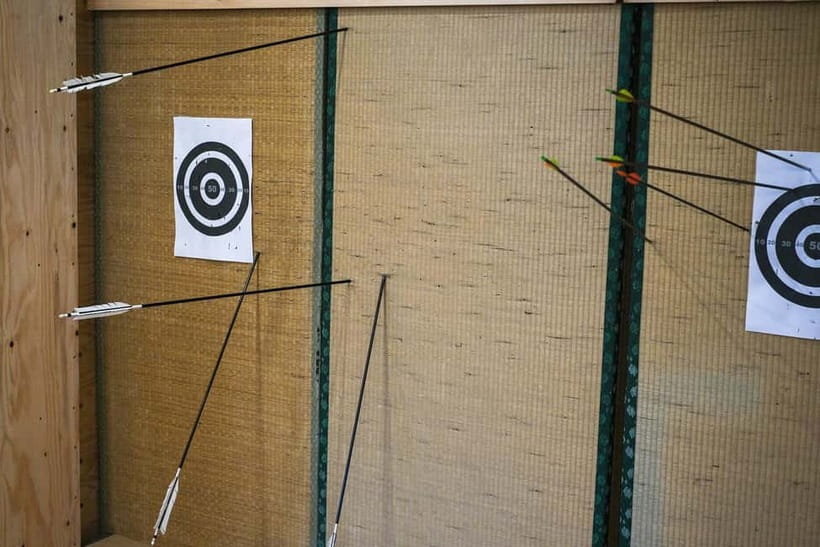
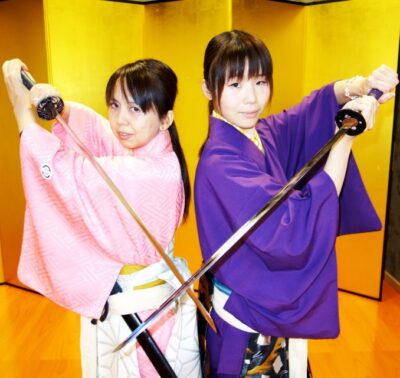
The most striking part of this Asakusa activity is the quick change from ordinary sightseer to hakama-clad samurai. You put on traditional clothing, learn how to hold a katana, and try Japanese archery in a one-hour session that feels more active than a museum visit.
I like the mix of kyudo and sword work. You get two very different ideas of samurai training: the calm, deliberate movements of the bow and the sharp posture of the single-edged sword. I also like the friendly, playful approach, including a rank game, Japanese snacks, and plenty of chances for photos.
The main drawback is the short running time. One hour is enough for an introduction and some practice, but not enough to develop real archery or sword skill. The activity is best seen as a fun cultural lesson and photo experience, not a full martial arts class.
Key Points at a Glance
- Dress in a hakama outfit: A range of heights and sizes is available, so you can take part without bringing special clothing.
- Try kyudo, not just ordinary archery: The traditional Japanese bow uses different movements and posture from Western archery.
- Learn katana basics: Staff show you how to hold the sword and form a strong samurai pose.
- Play for samurai rank: A short game introduces samurai history and gives the session a friendly competitive edge.
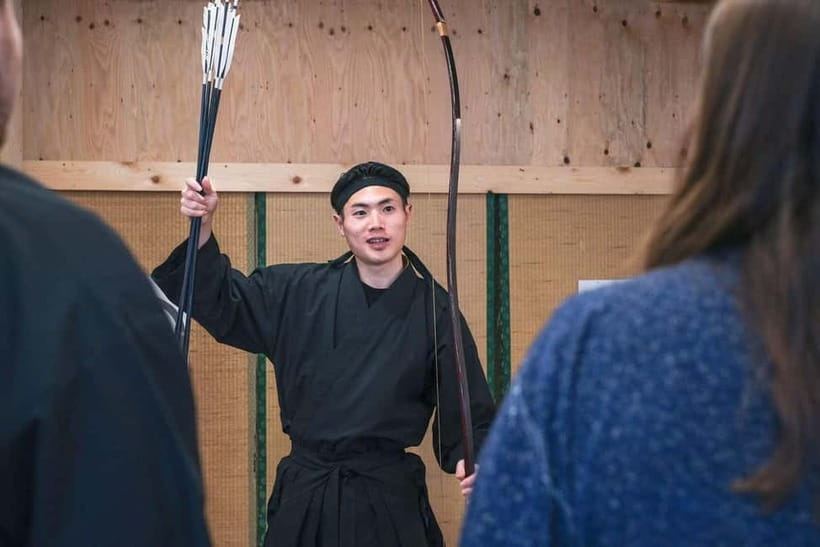
- Meet English-speaking instructors: Mori and Joe are among the named instructors praised for patient, clear teaching.
- Budget about $96 for one hour: The price includes clothing, bow and katana use, snacks, and bilingual instruction.
Changing Into a Samurai in Asakusa
The activity takes place at BUB Activity Center in Asakusa, one of Tokyo’s best areas for historic atmosphere, temples, traditional shops, and easy sightseeing. The address is Tokyo, Taito-ku, Asakusa, 2 Chome 6-11, Heiwa Building. Take the elevator to the fifth floor, rather than looking for a street-level storefront.
You should arrive about 10 minutes early. That small buffer matters in a compact one-hour activity. You will need time to find the building, reach the fifth floor, and get ready without cutting into your instruction.
Wear comfortable clothes and shoes. You do not need prior experience, special equipment, or a costume of your own. Traditional clothing is supplied, with different sizes for different heights. The change of clothes is more than a photo prop because it sets the tone for the whole session. You are not simply watching a demonstration. You are being given a role to play.
The staff then give a short introduction to samurai history and traditions. Expect a light, accessible explanation rather than a long academic lecture. That is a good fit for families and first-time visitors who want context before trying the activities.
The location is listed as wheelchair accessible. If you have any trouble finding the entrance or reaching the activity space, contact the provider. Alcohol and drugs are not allowed, which is sensible for an activity involving bows and swords.
More Martial Arts Experiences in Tokyo
- Tokyo: Samurai Sword & Archery Class from Samurai Descendant
★ 5.0 · 603 reviews - Tokyo:Samurai sword and archery class from a samurai descendant
★ 5.0 · 121 reviews - Tokyo 2-Hour Genuine Samurai Experience: Kendo in Japan
★ 5.0 · 112 reviews
The Samurai Rank Game Comes First
The rank game is a clever way to make the historical introduction active. Instead of only hearing about samurai hierarchy, you take part in a small challenge to determine your rank. It gives the group an easy way to loosen up before the more focused practice begins.
Do not take the result too seriously. Losing does not prevent you from taking part in the main training. The game is there to add humor and competition, not to test your fitness or prior knowledge.
I like this opening because it helps families and mixed-age groups get involved at once. Children can enjoy the contest, while adults get a simple introduction to the social idea of rank. The activity is described as family-friendly, and the light competition helps explain why it suits children and young adults especially well.
The game also gives the instructors a chance to see how comfortable the group is with English and with following instructions. Explanations are adapted to your level of English, so you should not feel pressure if English is not your first language.
Kyudo: A Different Kind of Japanese Archery
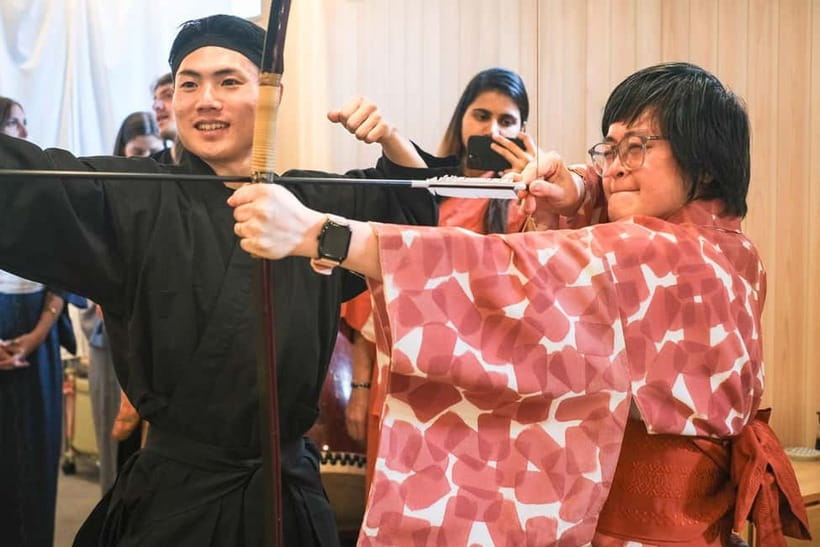
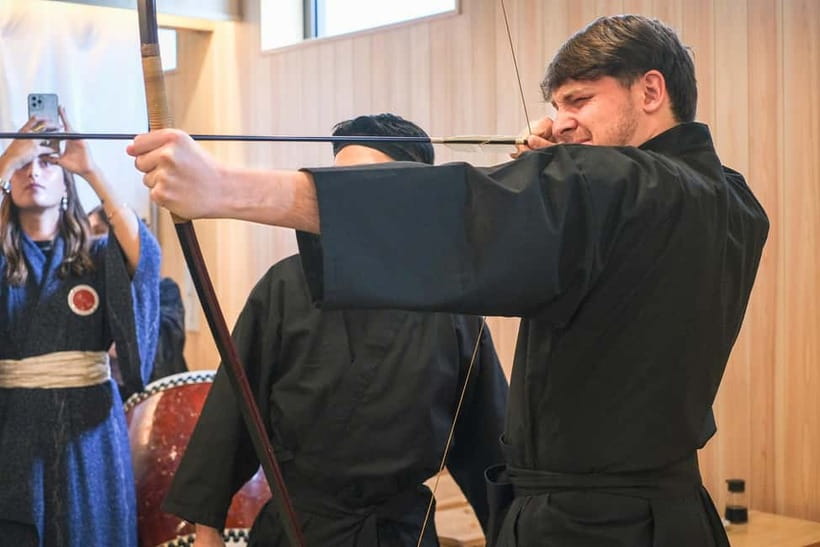
The kyudo portion is likely to be the most surprising part for anyone familiar with Western archery. You use a traditional Japanese bow, but the posture, handling, and rhythm are different. The emphasis is not simply on pulling a string and hitting a target. The way you stand, hold the bow, and prepare the shot matters.
The staff explain the basic movements and then let you try. You may compete with friends for the position of general, or shogun, which gives the practice a clear goal. This competition adds fun, but it is worth keeping the right expectation: in one hour, you are learning an introduction to kyudo, not completing formal martial arts training.
Kyudo rewards patience. The movements can feel unfamiliar, especially if you have tried casual archery elsewhere. Listen closely to the instructor and copy the posture rather than rushing to release the arrow. The best part is often the attempt to make your whole body work together.
The English instruction is an important practical advantage. Mori is specifically praised for being patient and kind, while Joe is noted for giving friendly, clear instruction. Staff names and schedules can change, but the activity is set up for English-speaking participants.
You should also understand that this is an introductory cultural activity, not a private lesson designed to correct every detail of your technique. If you already practice kyudo, you may find the session too basic. If you are new to the discipline, the simple format should make it approachable.
Katana Posture and the Strong Samurai Pose
After the bow work, the activity turns to the single-edged sword, the katana. The focus is on basic handling, posture, and the way to hold the sword. You are taught how to form a strong samurai pose, with staff guiding your position.
This section is well suited to people who want dramatic photographs. The katana creates a clear visual contrast with the calm movements of kyudo, and the traditional clothing completes the picture. Staff help take photos, so you do not have to rely only on a quick self-timer shot.
The sword portion should not be confused with combat training. The supplied information focuses on holding the katana and mastering the pose, not on sparring, cutting, or a long sequence of fighting techniques. That makes it appropriate for a broad age range, but it also limits how much technical sword work you should expect.
For me, the value lies in learning why stance matters. A samurai pose is not only about looking fierce. Your feet, shoulders, hands, and sword position all affect the image and the feeling of control. The instructor’s corrections help you look less like someone holding a prop and more like someone who understands the basic form.
The activity promises lots of pictures, and the photo element is one of its strongest practical benefits. You leave with a visual record of the experience instead of relying on memory alone.
More Samurai Experiences in Tokyo
- Tokyo: Samurai Restaurant Show Ticket with 2 Drinks
★ 4.5 · 1,307 reviews - Tokyo: Samurai Ninja Museum Guided tour and Experience
★ 4.6 · 1,010 reviews - Best Samurai Experience in Tokyo
★ 5.0 · 458 reviews - Ninja Experience (Family Friendly) at Samurai Ninja Museum TOKYO
★ 5.0 · 441 reviews
Snacks and a Simple Cultural Lesson
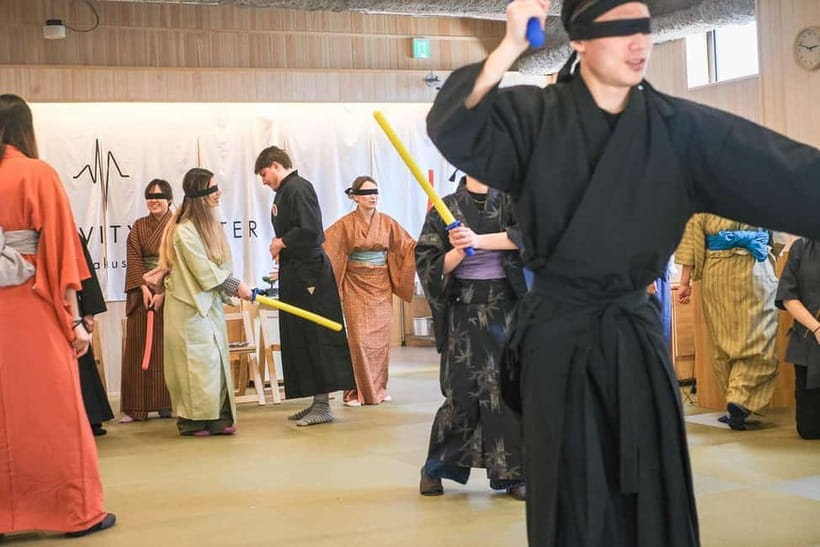
Japanese snacks are included, adding a small but welcome break to the session. This is not presented as a full meal, so plan to eat beforehand if you need lunch or dinner. The snacks work best as part of the hospitality and cultural setting.
The session also gives you a compact lesson in samurai philosophy. Because the total duration is only one hour, the discussion will necessarily be brief. Still, the combination of clothing, rank, bow, sword, and snacks gives you several ways to connect with the subject.
That combination is more effective than a costume photograph by itself. You learn a little about the role, try two traditional practices, and take part in a game. Each part is short, but together they create a clear story.
I would not book this in place of a longer history lecture or a serious martial arts workshop. I would book it if you want a hands-on cultural activity that fits neatly into a day of sightseeing in Asakusa.
What the $96 Price Includes
At $96 per person, this is not the cheapest one-hour activity in Tokyo. Its value depends on what you want from the experience.
The fee includes the traditional outfit, use of a Japanese bow and katana, English instruction, Japanese snacks, and help with photos. You are paying for a ready-made experience with equipment and clothing supplied. You do not need to rent anything separately or know where to find a suitable instructor.
The price makes more sense for a first visit to Japan, a family outing, or a small group looking for a shared memory. It is less compelling for someone who wants a long period of practice. One hour passes quickly once you include changing clothes, the introduction, the rank game, kyudo, sword instruction, and photos.
The high rating of 5 from 14 recorded ratings fits the activity’s strongest features: friendly staff, clear instruction, and a lot of fun in a short period. Specific praise centers on staff such as Mori and Joe, with repeated approval for patience, friendliness, and useful explanations.
You should also weigh the cost against convenience. The provider supplies the costume and gear, offers English support, and keeps the session short enough to fit between other Asakusa plans. If you are already visiting nearby, the compact schedule may make the price easier to accept.
Who Will Enjoy This Most
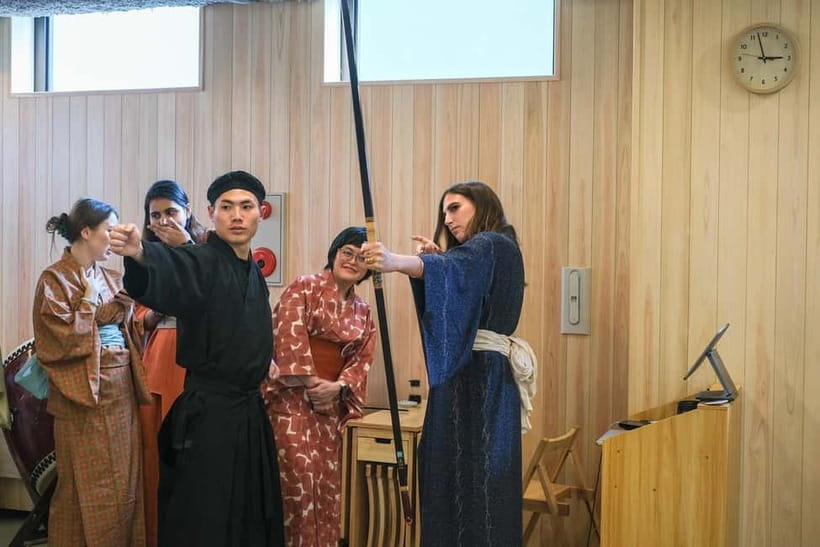
This experience is a good match for families, couples, friends, and solo visitors who want a photo-friendly activity with some physical participation. It is especially useful for people who like learning by doing. You hear a little history, then put on the clothing and try the movements yourself.
Children and young adults should find the rank game and competitive kyudo element appealing. The activity is family-friendly, and no prior experience is needed. Adults can enjoy the cultural setting without needing to be athletic.
It also suits visitors who are curious about the difference between Japanese kyudo and Western archery. The contrast in form and technique gives the bow lesson a real point beyond simply shooting at a target.
You may want to choose something else if you are looking for authentic, advanced martial arts instruction. The class is designed for beginners and general visitors. Its purpose is to introduce the look, feel, and basic movements of samurai traditions in a welcoming setting.
The activity can work for mixed groups because the challenge is not based on fitness alone. One person may enjoy the rank game, another the photos, and another the quiet focus of the bow. That variety is useful when not everyone in your party has the same interests.
Practical Tips for a Smooth Visit
Book a starting time that leaves room around the session. The activity lasts one hour, but you should arrive 10 minutes early. Since the meeting point is inside a building, allow time to find Heiwa Building and take the elevator to the fifth floor.
Wear clothes that are comfortable beneath the hakama outfit. Comfortable shoes are also requested. You will not need to bring a bow, sword, or costume.
Keep your schedule flexible if possible. The activity offers free cancellation up to 24 hours before the start time, and you can reserve now and pay later. Those terms are useful when your Tokyo plans may change, but check the conditions at booking.
The activity is wheelchair accessible. For any questions about access or locating the room, contact BUB Activity Center before the start time.
Do not bring alcohol or drugs. The equipment requires attention, and the provider does not allow them.
Finally, bring a cooperative attitude. The session depends on listening to instructions, taking turns, and letting the group have fun with the rank game and photos. You do not need to be competitive, but you should be ready to follow directions.
Should You Book the Asakusa Samurai Experience?
Book it if you want a short, friendly introduction to samurai culture with traditional clothing, kyudo, katana poses, snacks, and photos. The English support, family-friendly format, and patient teaching make it a practical choice for first-time visitors.
At $96, the experience offers reasonable value when you count the costume, equipment, staff help, and photo opportunities. Just keep your expectations in check. This is a one-hour introduction, not a serious course in archery or swordsmanship.
I would choose it for a family day in Asakusa, a rainy-day activity, or a group that wants something more active than sightseeing. I would skip it only if you need advanced instruction or a long, historically focused program.
FAQ
Where does the samurai experience take place?
It takes place at BUB Activity Center in Tokyo’s Taito-ku, Asakusa, at 2 Chome 6-11, Heiwa Building. Take the elevator to the fifth floor.
How long does the activity last?
The experience lasts one hour. You should arrive 10 minutes before the scheduled start time.
Do I need previous archery or sword experience?
No. Prior experience is not necessary. The activity is designed for beginners, and bilingual staff explain the techniques in English.
What is included in the price?
The price includes use of a traditional Japanese bow and katana, traditional clothing, Japanese snacks, and bilingual staff assistance.
Is the activity suitable for children?
Yes. It is described as family-friendly, and the activity is recommended for children and young adults. It includes a samurai rank game and beginner-level instruction.
Can I cancel or pay later?
You can cancel up to 24 hours in advance for a full refund. You can also reserve your place and pay later, keeping your plans flexible.
Just added around Tokyo
- Kawagoe Japanese Food Tour : Unagi Kaiseki and Sake near Tokyo★ 5.0 · 30 reviews
- Kawagoe 4hr Private Tour with Licensed Guide (Kawagoe Dep)★ 5.0 · 13 reviews
- Little EDO Sushi Making workshop in Kawagoe★ 5.0 · 18 reviews
- 【R34】Tokyo:Private Daikoku tour in Modified R34★ 4.9 · 92 reviews
- :Tokyo,Shibuya/ Pro Photography in Kimono / English-Friendly★ 5.0 · 26 reviews
- Tokyo:Celebrate Unique Japanese New Year Tradition Festivity★ 3.9 · 20 reviews
- Tokyo: Allstar Food Tour★ 4.7 · 29 reviews
- Tokyo: West-Side Cycling and Food Tour with Guide★ 5.0 · 37 reviews
Samurai Experiences, compared.
Browse the lists this tour appears in