
Reviewed · CASTLE TOURS
Tokyo: Edo Castle & East Garden of the Imperial Palace Tour
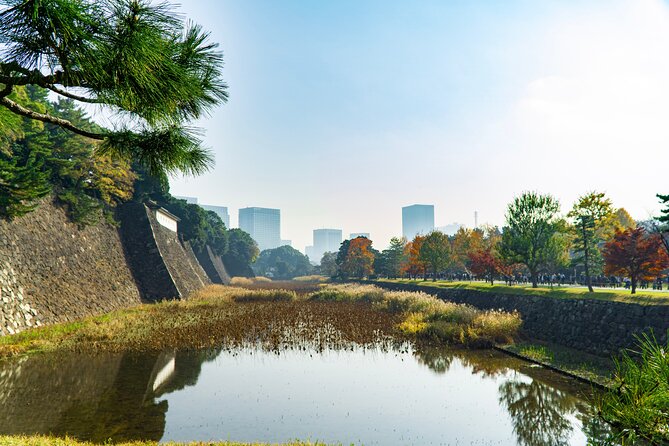
Edo Castle once formed the heart of shogun-ruled Japan. Today, its East Gardens offer a quiet walk through broad lawns, stone walls, old castle foundations, ponds, trees, and carefully shaped garden spaces in the middle of Tokyo. I like the way this tour connects what you see on the ground with the people who once ruled from here. I also like the gentle pace, which suits older visitors and anyone who wants time for photographs.
The guide is the real value. Hitoshi, Naoko, Masahito, Shigeru, and other English-speaking guides have been praised for clear explanations, visual aids, patience, and help with photographs or onward directions. The catch is simple: the garden itself is free, so you are paying $42 for interpretation and company, not admission. You also cannot enter the Inner Palace, and the East Garden closes Mondays and Fridays.
Key points to know before you book
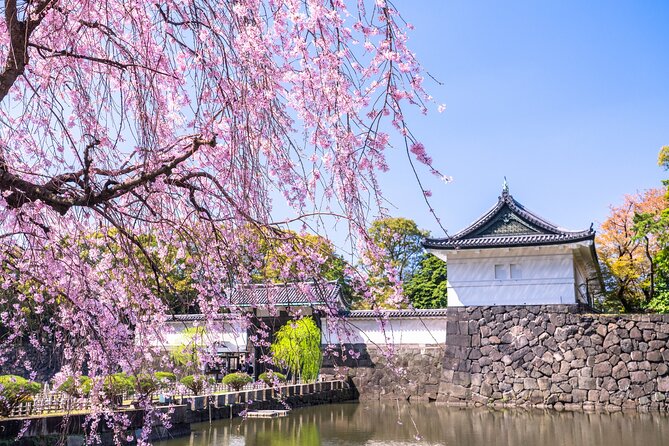
- Edo Castle survives mainly through walls, foundations, gates, and stories, rather than intact palace buildings.
- The two-hour walk is leisurely, with time for photographs, questions, and short rests.
- English-speaking guides add context about shoguns, daimyo, emperors, architecture, plants, and Japanese customs.
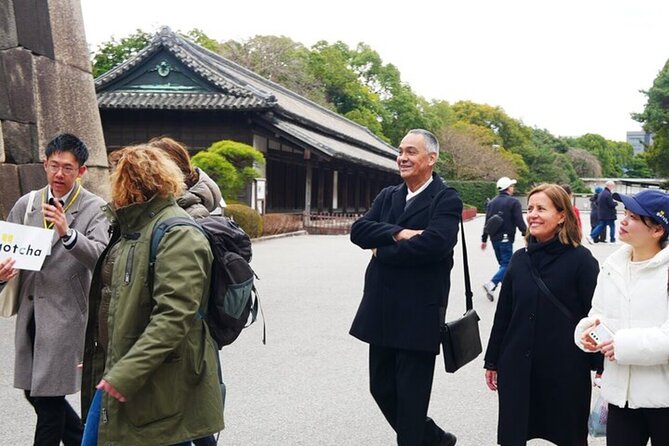
- The meeting point is Wadakura Fountain Park, where your guide holds a Gotcha sign.
- The East Garden closes Mondays and Fridays, so check your date before booking.
- Expect a bag inspection, and store newly purchased Japanese knives or similar items before the tour.
Why Edo Castle’s East Garden is worth your morning
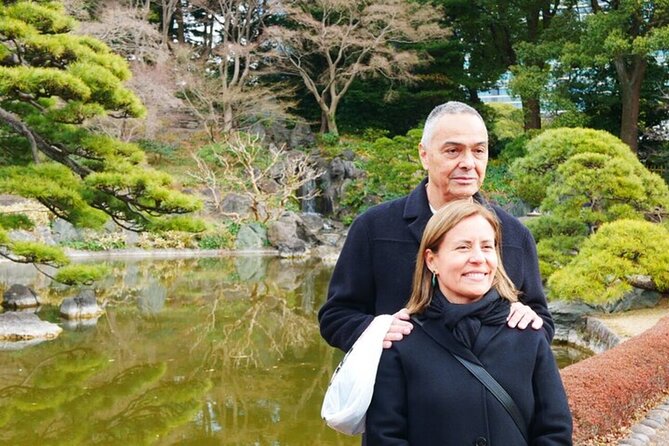
Tokyo can feel like a city built for speed. The East Garden offers the opposite. Inside the former grounds of Edo Castle, you walk among trees, stonework, open spaces, ponds, and traces of a castle complex that once controlled Japan.
The setting is more than a pleasant park. Edo Castle was the seat of the shogun, the military ruler who governed Japan for centuries. The Imperial Palace now occupies the central grounds, while the East Garden occupies former castle areas that the public can visit. That gives you a rare chance to connect modern Tokyo with the political center of old Japan.
I especially like this kind of visit early in a Tokyo stay. A guide can give you a basic framework for shoguns, daimyo, the imperial family, and the transition from Edo to modern Japan. Afterward, other sights around the country make more sense.
Do not arrive expecting a grand palace interior. The tour does not go inside the Imperial Palace, and much of the original castle complex no longer exists. Its pleasure comes from reading the remaining walls, foundations, gates, garden spaces, and views with someone who can explain what once stood there.
More Castle Tours in Tokyo
- Tokyo Castle & Imperial PalaceーShogun Walking Tour
★ 4.7 · 1,068 reviews - Tokyo Castle & Imperial PalaceーShogun Walking Tour
★ 5.0 · 724 reviews - Imperial Palace East Garden and Edo Castle Walking Tour in Tokyo
★ 5.0 · 510 reviews
Meeting at Wadakura Fountain Park
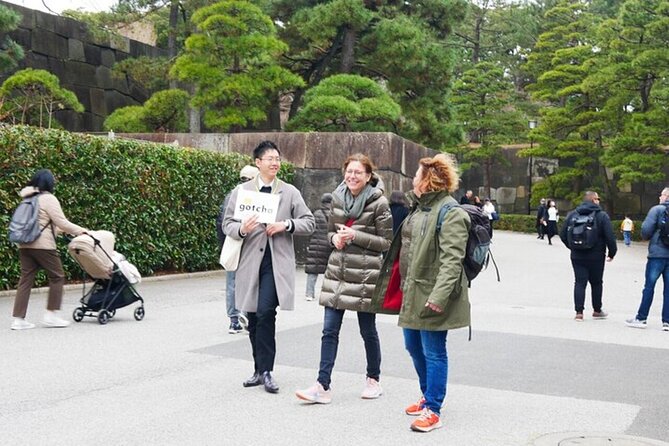
The tour begins in front of the fountain at Wadakura Fountain Park. Your guide holds a sign marked Gotcha, which makes the meeting point easier to identify in a large central Tokyo area.
This is a useful starting place because the fountain park provides a clear landmark before you enter the palace grounds. Still, give yourself enough time to find it. Tokyo’s central districts are easy to reach by train, but large stations and broad streets can make a short distance feel longer than expected.
The meeting information is specific, so follow it closely rather than heading directly toward a palace gate. If you are carrying shopping from Tsukiji, Asakusa, or elsewhere, pay attention to the baggage rule. Visitors are subject to inspection before entering the grounds. Japanese knives and other objects that could be used as weapons should be left in a coin locker or similar storage location before you meet the guide.
This is not a tour for carrying every purchase from an earlier shopping stop. Plan the order of your day with that restriction in mind.
What you see inside the East Gardens
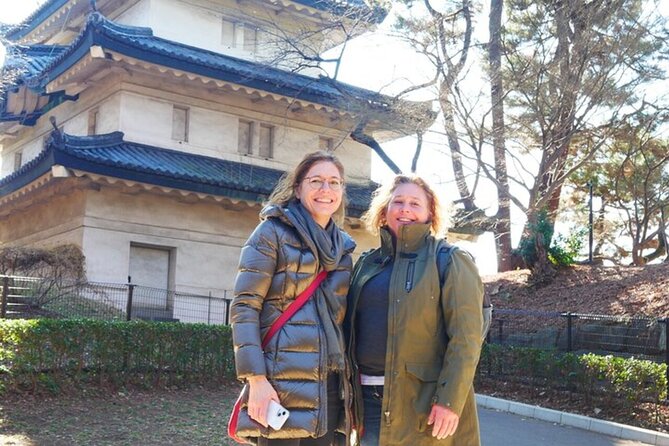
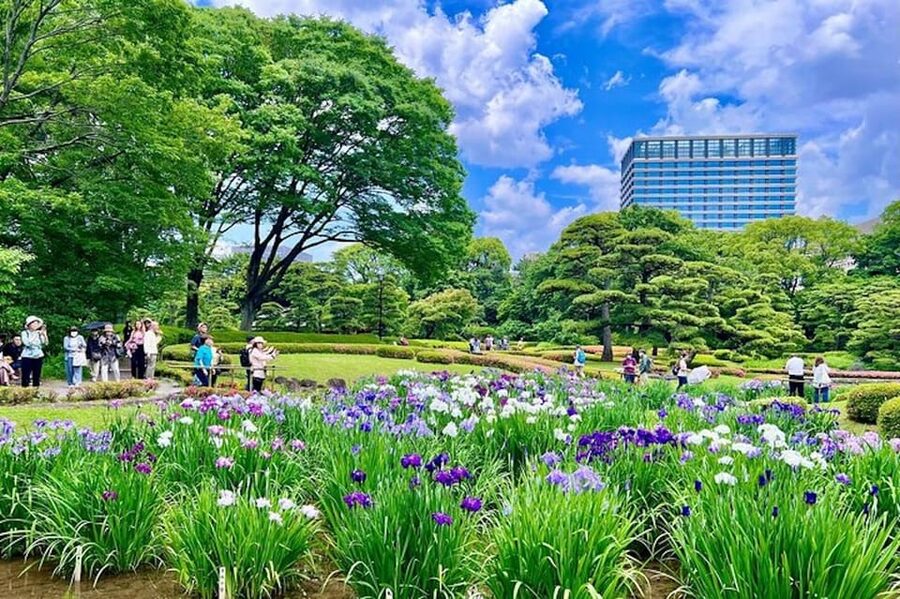
The East Gardens were built on the former main grounds of Edo Castle. The walk brings together several kinds of sightseeing, and that mix is what makes the experience work.
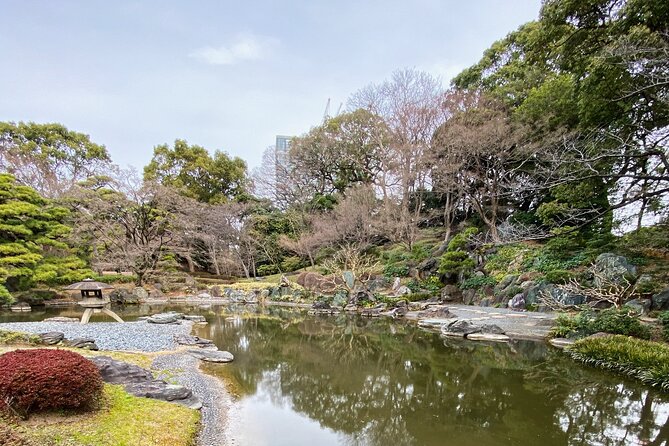
You see surviving castle features, including stone walls and the remains of old buildings. You also see formal garden spaces, trees, ponds, and carefully arranged views. The gardens are not simply decoration. Their design reflects how Japanese rulers used space, entrances, walls, water, and plants to shape movement and signal status.
An unguided visit gives you a peaceful walk and free entry, but it may leave you wondering what stood on a particular foundation or why one wall is built in a certain way. A guide supplies that missing layer. The best guides use pictures and visual explanations to show earlier versions of buildings and help you picture the castle as it was.
You may also hear about the shoguns, daimyo, ninjas, imperial family, Japanese architecture, and customs. The subject matter goes beyond a list of dates. Guides such as Hitoshi, Masahito, Shigeru, Naoko, Mikio, and Ayako have been praised for making the material approachable and for answering questions in clear English.
The tour also points out garden details that are easy to overlook. Trees and plants can carry meaning in Japanese garden design, and the guide can explain why certain areas were arranged as they were. You may also see the koi fish highlighted as one of the garden’s special attractions. It is a small detail, but it gives the walk a pleasant sense of discovery.
Stories make the castle ruins easier to read
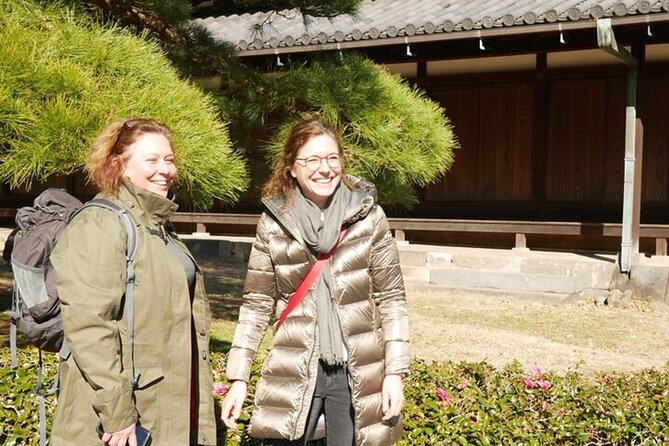
A stone foundation is not automatically interesting. It becomes interesting when you understand who used the building, how the castle worked, and what changed over time.
That is where this tour earns its fee. Guides explain the site in a way that helps you read the evidence in front of you. You may stand beside an old wall and learn how it fitted into the wider castle, then move into a garden area and hear how the grounds functioned under the shoguns and later the imperial family.
Several guides use printed pictures or other visual material. This is particularly useful because so little of the original castle remains above ground. Instead of trying to imagine a vanished building from a patch of grass, you can compare the present site with an earlier view.
The strongest part of the guiding style appears to be the balance between background and local detail. You get a broad introduction to Japanese history, followed by stories about the garden, the ruling families, castle life, and the meaning of specific places. For a child or first-time visitor, this can turn a potentially dry history lesson into something easier to follow.
The guide’s personality matters, too. Hitoshi has been praised for friendly, clear English and care with guests who needed extra help. Naoko has been praised for her teaching style, visual explanations, and patience with a group of eight older adults. Shigeru has been praised for taking photographs, answering questions, and even folding origami cranes for visitors. These personal touches are not guaranteed, but they show the kind of service associated with this experience.
More Garden Tours in Tokyo
- Tokyo: Imperial Palace East Gardens Walking Tour
★ 4.8 · 353 reviews - Tokyo Castle, Imperial Palace, Shogun & Garden Walking Tour
★ 5.0 · 211 reviews - Tokyo: Tsukiji Market and Hama-rikyu Gardens Guided Tour
★ 4.8 · 73 reviews - Tokyo: Pvt. Tour – Edo Castle & Imperial Palace East Gardens
★ 4.8 · 63 reviews
A genuinely easy pace for a walking tour
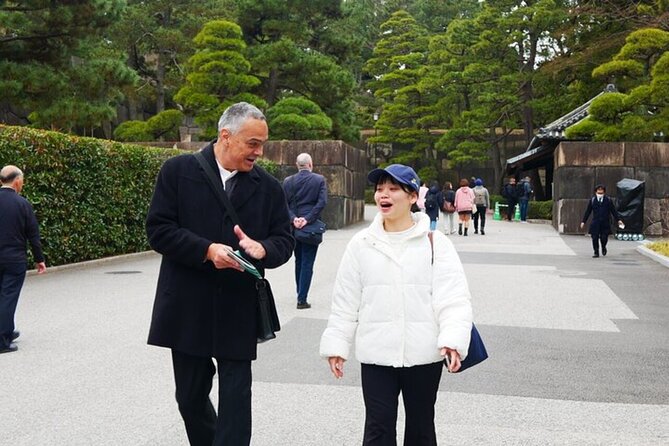
The tour lasts two hours and returns to Wadakura Fountain Park. It is a walking tour, but the pace is described as slow and comfortable rather than hurried.
That matters in the East Gardens. You are not simply crossing from one attraction to the next. You need time to stop, look at stonework, listen to an explanation, and take photographs. A rushed visit would miss much of the point.
The pace also makes the tour a good fit for older visitors. Guides have adjusted for seniors, made frequent stops, and helped a wheelchair user with comfort and access during the visit. You should still raise mobility needs when booking, since the information does not promise a fully step-free route or specific accessibility equipment.
Families may also find the two-hour length manageable. One guide helped make the history meaningful for a nine-year-old child, while pictures and stories can give younger visitors something concrete to focus on. The gardens provide visual variety, even if your child is not usually interested in historic sites.
Rain does not cancel the value of the setting, but it can change the mood. The gardens remain worth seeing, though you will want suitable clothing and shoes. There is no promise of indoor shelter or a shortened route, so check the forecast before choosing your day.
What the $42 price really buys you
At $42 per person, this is not a cheap way to enter a park. Admission to the East Garden itself is free, so the fee pays for the English-speaking guide, the two-hour route, interpretation, questions, and practical help.
I would judge the price by your interest in context. If you enjoy history and want to understand what you are seeing, a guide can make a free garden feel like a proper introduction to Tokyo’s past. If you are happy to stroll, read signs, and look around on your own, you can visit the garden without paying for a tour.
The comparison with a full-day trip is fair. One person noted that $42 can also go toward a longer outing to Nikko or Mount Fuji. Those trips cover much more ground, but they also take far more time and involve more transport. This tour is a compact choice for a morning or afternoon in central Tokyo.
It is especially useful when you have limited time. In two hours, you receive an organized introduction without giving up a full day. It can also serve as a gentle first activity after arriving in Tokyo, since the walking is steady and the subject gives you a useful base for the rest of your Japan trip.
The guides are the main reason to choose a tour
The garden is fixed. The guide changes, and the guide shapes the experience.
The strongest praise has focused on English ability, preparation, warmth, and the willingness to adapt. Hitoshi has helped visitors continue to a subway station after the tour. Masahito has offered extra help and shown enthusiasm for Japanese culture. Mikio has adjusted the walk for guests who wanted a slower pace and more stops. Masahito and Shigeru have been described as easy to talk with, well prepared, and able to answer questions clearly.
Those details matter because a site like this can be difficult to interpret alone. A guide who listens can spend more time on architecture if that interests you, or explain more about shoguns and the imperial family if history is your priority.
You should not book expecting a private tour unless your reservation specifically says so. The available information includes groups of different sizes, including six and eight people, but no standard group size is provided. The guide’s personal attention may vary with the number of people in your departure.
Practical details that can affect your visit
Check the calendar first. The East Garden is closed on Mondays and Fridays, and the tour cannot operate there on those days.
Plan to meet in front of the fountain at Wadakura Fountain Park, not inside the Imperial Palace. Look for the guide holding the Gotcha sign. Since the walk returns to the same park, you can arrange your next activity from central Tokyo afterward.
Allow time for the entry inspection. Keep your bag easy to check, and do not bring Japanese knives or similar purchases from an earlier shopping stop. Store them before the meeting.
Wear comfortable shoes and prepare for an outdoor walk. The route includes gardens, walls, and castle remains, and the experience is not a seated museum visit. The tour is offered in English with a live guide.
Free cancellation is available up to 24 hours before the start time, and you can reserve now and pay later. Those options help if your Tokyo plans are still shifting, but the closed days and entry rules still apply.
Who should book this East Garden tour?
I would choose it for a first visit to Tokyo if you want history explained in plain English. It suits people who enjoy gardens but want more than pretty scenery, and it works well for families, older visitors, and anyone who prefers a calm two-hour outing to a full-day excursion.
It is also a strong choice for visitors who like asking questions. The best part is not simply seeing the remains of Edo Castle. It is being able to stop beside them and ask what they were used for, how the shogunate worked, or why the garden looks the way it does.
I would skip it if your main goal is to enter the Imperial Palace or see intact palace rooms. You will not go inside the Inner Palace, and the East Garden is free to enter without a guide. In that case, an independent visit may suit you better.
For most history-minded visitors, however, the $42 cost is reasonable if you value explanation and a well-paced route. Book it on a Tuesday, Wednesday, Thursday, Saturday, or Sunday, meet at the correct fountain, and treat the garden as a living history lesson rather than a palace interior visit.
FAQ
How long does the Tokyo East Garden tour last?
The walking tour lasts two hours and returns to Wadakura Fountain Park.
Where do I meet the guide?
Meet in front of the fountain at Wadakura Fountain Park. The guide holds a sign marked Gotcha.
Does the tour enter the Imperial Palace?
No. The tour visits the East Gardens on the former grounds of Edo Castle. It does not enter the Inner Palace or the main Imperial Palace buildings.
Which days is the East Garden closed?
The East Garden is closed on Mondays and Fridays.
What language is the tour offered in?
The tour is conducted in English by a live guide.
Is the garden admission included?
The guided walking tour is included, but the information states that the park itself is free to enter. The $42 price pays for the guided experience rather than an admission ticket.
Can I bring Japanese knives into the garden?
Visitors are subject to a baggage inspection. If you have purchased Japanese knives or other objects that could be used as weapons, leave them in a coin locker or similar storage location before the meeting.
More Historical Tours in Tokyo
- Tokyo: Imperial Palace and Shogun Historical Walking Tour
★ 5.0 · 2,251 reviews - Tokyo: Imperial Palace Japanese History Walking Tour
★ 4.9 · 987 reviews - Tokyo: Imperial Palace and Shogun Walking Tour
★ 4.9 · 935 reviews - Tokyo: Shinjuku Historical Walking Tour & Secret Backstreets
★ 5.0 · 530 reviews
Just added around Tokyo
- Kawagoe Japanese Food Tour : Unagi Kaiseki and Sake near Tokyo★ 5.0 · 30 reviews
- Kawagoe 4hr Private Tour with Licensed Guide (Kawagoe Dep)★ 5.0 · 13 reviews
- Little EDO Sushi Making workshop in Kawagoe★ 5.0 · 18 reviews
- 【R34】Tokyo:Private Daikoku tour in Modified R34★ 4.9 · 92 reviews
- :Tokyo,Shibuya/ Pro Photography in Kimono / English-Friendly★ 5.0 · 26 reviews
- Tokyo:Celebrate Unique Japanese New Year Tradition Festivity★ 3.9 · 20 reviews
- Tokyo: Allstar Food Tour★ 4.7 · 29 reviews
- Tokyo:Calligraphy &Make your original folding fan in Asakusa★ 5.0 · 62 reviews
Castle Tours, compared.
Tokyo Castle & Imperial PalaceーShogun Walking Tour
Our verdict →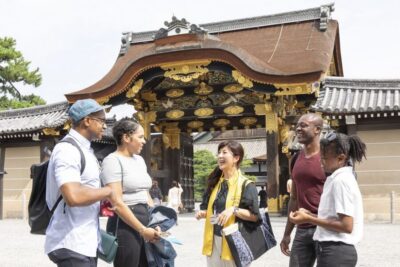
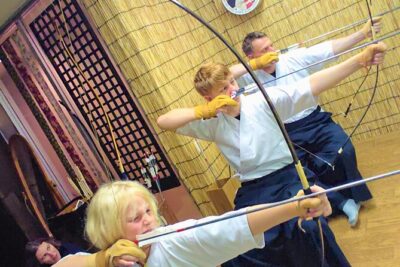
Japanesel Archery Experience HIROSHIMA CASTLE SHARAKU
Our verdict →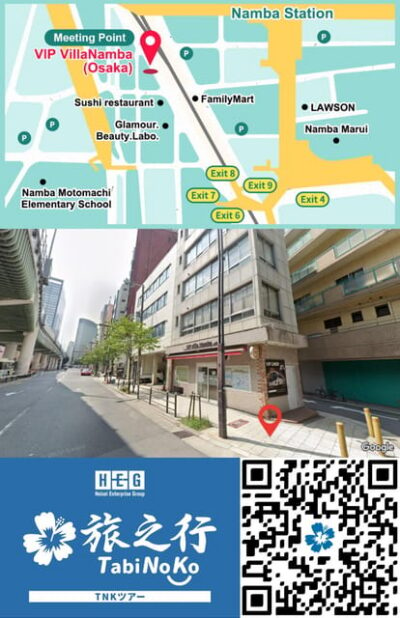
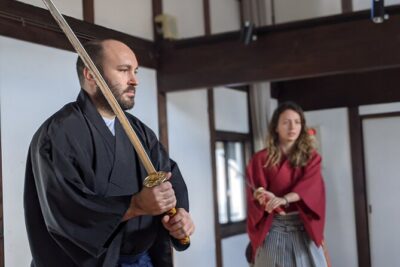
Browse the lists this tour appears in