
Reviewed · CASTLE TOURS
Tokyo Castle & Imperial PalaceーShogun Walking Tour
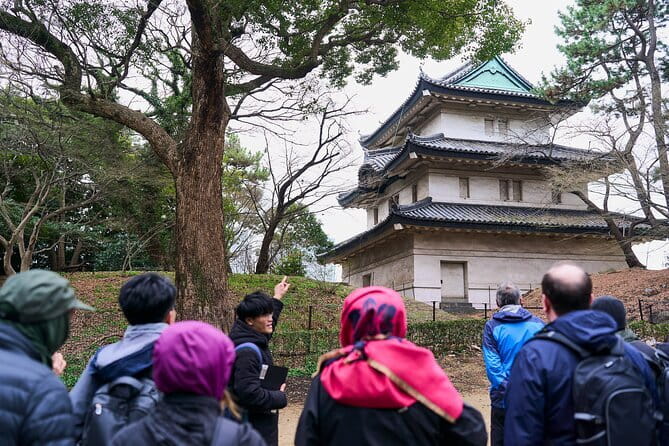
Edo Castle was not just a palace. It was a fortified city built to protect the shogun, and this tour shows you how that defense worked. You’ll pass massive gates, stone walls, samurai guardhouses, and old watchtowers before reaching gardens where the castle once ruled Tokyo. The most interesting detail is how much of the security plan is still visible in the ground beneath your feet.
I like the small-group format, capped at 10 people for the advertised tour, and I like the way the walk connects samurai life with the long imperial story of Japan. Guides including K, Keiko, Ai, and Shin have been praised for clear explanations, humor, and useful visual aids. The main drawback is simple: you spend two hours outside, walking up slopes and stairs, often in full sun.
Key points to know before you book
- Edo Castle’s defenses are the star: Massive gates, layered entrances, guardhouses, and stone walls make the former fortress easy to understand.
- The walk covers nine stops: You’ll see the surviving Sakurada Tatsumi Yagura, several guard posts, Fujimi-yagura, the castle ruin, and Ninomaru Garden.
- The guide adds the value: The grounds are free, but the stories about samurai rank, castle planning, and imperial history give the visit its purpose.
- The tour is in English only: Japanese-language support is not available.
- Plan for outdoor walking: Wear comfortable shoes, bring water, and protect yourself from heat or rain.
- The palace residence is not open: You visit the historic grounds and East Gardens, not the Emperor’s private home.
Why Edo Castle makes a good first history walk in Tokyo
Tokyo can feel modern at street level, but the Imperial Palace grounds preserve the outline of the city’s earlier power center. Edo Castle was Japan’s largest fortress, and the Tokugawa shoguns governed the country from here for centuries. The present Imperial Palace occupies the same broad area, linking the shogunal past with Japan’s imperial system.
I like that this tour does not treat the palace as one grand building you simply photograph. Much of Edo Castle was lost, and the remaining pieces can be easy to miss without context. A turret may look like an old stone-and-timber structure until you learn how it watched the approaches. A guardhouse may seem small until you understand how many layers of control stood between an arriving visitor and the shogun.
The tour lasts about two hours. That is enough time to cover the main historic points without turning the day into a long march. It also makes a useful early activity in Tokyo, especially if you want a basic grasp of samurai, shogun, and emperor before visiting other historic sites.
The advertised small-group limit is up to 10 people, though the general activity information also gives a maximum of 60 participants. Ask at booking if group size matters to you. The intimate format is most useful when the guide is answering questions or showing old plans and photographs.
More Castle Tours in Tokyo
- Tokyo Castle & Imperial PalaceーShogun Walking Tour
★ 4.7 · 1,068 reviews - Imperial Palace East Garden and Edo Castle Walking Tour in Tokyo
★ 5.0 · 510 reviews - Tokyo Castle, Imperial Palace, Shogun & Garden Walking Tour
★ 5.0 · 211 reviews
Meeting at Wadakura Fountain Park
The walk begins at Starbucks Coffee in Wadakura Fountain Park, at 3-1 Kōkyogaien in Chiyoda City. This is a practical meeting point near public transportation and in the open space around the palace.
Arrive with enough time to find the correct Starbucks and gather before the start. The tour ends back at the meeting point, so you do not need to plan a separate pickup or wonder where you will finish. The final portion includes the ginkgo-lined avenue toward Tokyo Station, giving you an easy sense of the palace district’s location in central Tokyo.
Bring a mobile ticket, since the experience uses mobile admission. You should also expect a security check to enter the Imperial Palace grounds. Knives and alcohol are not allowed. The check is a small detail, but it is worth handling before you arrive so the group can get moving.
Sakurada Tatsumi Yagura and the castle’s outer defenses
The first stop is Sakurada Tatsumi Yagura, a surviving turret from the Edo period. A yagura functioned as a watchtower and defensive post. This one helps you picture the military system that guarded the castle, rather than imagining the palace as an unprotected royal residence.
The guide explains the security measures that continue to protect the Imperial Palace today. That connection between old fortress planning and the present site gives the opening stop some weight. You are not just looking at an old tower. You are learning why the castle was hard to approach and why controlled entrances still matter.
This is also a good point to ask questions. Guides such as Keiko have used laminated images and old castle layouts to make lost structures easier to picture. Those visual aids are useful because the modern grounds do not show every wall, tower, and building that once filled Edo Castle.
Otemon Gate and the logic of controlled entry
At Kokyo Otemon Gate, you see two massive gates and stone walls from the original castle. The important feature is the arrangement. Castle gates were designed to slow movement, control visitors, and give guards several chances to inspect anyone approaching the inner grounds.
This is where the tour shifts from general history to practical design. You can see how an entrance became a defensive puzzle. The shogun’s safety depended not only on thick walls, but also on narrow approaches, guarded points, and carefully managed access.
The gates are among the easiest parts of the tour to appreciate visually. Their scale gives you a sense of Edo Castle’s importance. Take time to look at the stonework and the way the structures frame the route ahead. Your guide’s explanation turns the view into a lesson in military planning.
More Walking Tours in Tokyo
- Tokyo Tsukiji Fish Market Food and Culture Walking Tour
★ 5.0 · 3,184 reviews - Tokyo: Imperial Palace and Shogun Historical Walking Tour
★ 5.0 · 2,251 reviews - Tokyo: Shinjuku Local Bar and Izakaya Guided Walking Tour
★ 4.9 · 1,794 reviews - Tokyo: Tsukiji Fish Market Food and Walking tour
★ 5.0 · 1,724 reviews
Three guardhouses and the samurai chain of command
The Constable Guardhouse, Hyakunin Bansho Guardhouse, and Obansho Guardhouse form the tour’s clearest look at castle security. Each stop takes about 10 minutes, so the pace stays steady while the guide explains who worked there and why each position mattered.
The Constable Guardhouse was used by lower-ranking samurai. That detail gives the castle story a human scale. Not every samurai was a famous warrior or senior official. Many performed routine duties, watched entrances, and helped maintain the system that protected the shogun.
Hyakunin Bansho was a larger post where many samurai were stationed. The name points to the scale of the guard force, and the stop helps you understand that security was a daily operation involving large numbers of people.
Obansho stood near the inner gate and was associated with higher-ranking samurai. Here, the tour explains the difference between ordinary guards and officers with greater responsibility. I find this sequence particularly useful because it shows the hierarchy of the castle through physical space. As you move inward, the rank and importance of the guards change.
Without a guide, you could walk past these buildings and see only old timber and stone. With a clear explanation, they become evidence of how the shogun’s government worked. The best guides keep this part lively with stories rather than reciting names and dates.
Fujimi-yagura, a watchtower with a wider view
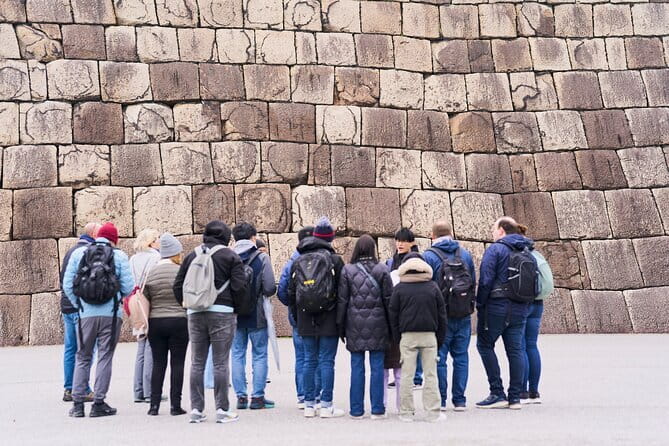
Fujimi-yagura is another historic watchtower, this time overlooking the surrounding area. Its role was both practical and symbolic. It provided a lookout point and formed part of the castle’s defensive network.
The stop is brief, but the guide uses it to explain what made the tower special in the past. You may find the view less dramatic than a high observation deck, since the tour is about the historic grounds rather than Tokyo’s skyline. The value is in understanding how the tower fit into the castle’s larger plan.
This is another place where old images or diagrams help. The current gardens are peaceful, but the former castle was a working center of power. The contrast is one of the pleasures of the walk.
The castle model and the missing main tower

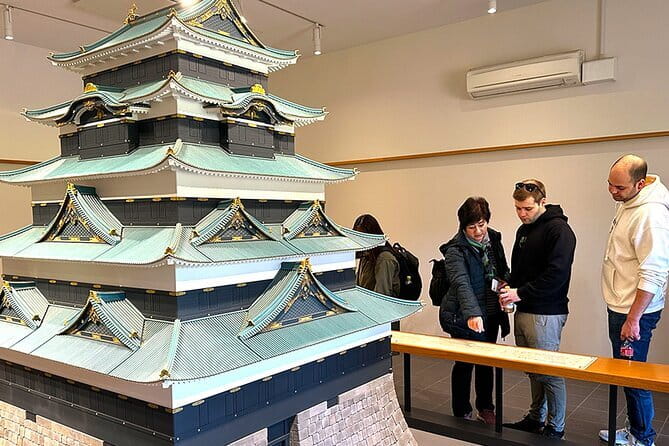
At Kokyo Sannomaru Shozokan, you can see a scale model of the former Edo Castle and browse a souvenir shop with palace-related goods. The model is especially useful after you have walked through the gates and guardhouses. It gives you a wider picture of how the separate pieces fit together.
The East Gardens then bring you to the former site of Edo Castle’s main tower. The tower is gone, and the guide explains why it no longer stands and what remains today. This is one of the tour’s most important stops because it addresses the gap between the castle you imagine and the site you actually see.
You should not expect an intact castle keep. The experience is about reading the remains, not entering a preserved palace interior. If you prefer complete buildings and furnished rooms, this portion may feel sparse. If you enjoy old foundations, ruins, and the clues left behind by vanished structures, it is rewarding.
Ninomaru Garden offers a quieter change of pace
After the gates, guardhouses, and military stories, Ninomaru Garden changes the mood. The garden includes seasonal plants and a pond with koi. It shows the calmer side of the former castle grounds and gives you a chance to pause during the walk.
The garden is not an unrelated decorative stop. It helps explain that the castle was also a place of residence, ceremony, and controlled beauty. The same ruling world that depended on walls and guards also valued carefully shaped water, plants, and views.
The pace may feel slower here, which is welcome if the day is hot. One practical note: the grounds include slopes and stairs, and much of the route is exposed. Wear shoes with good support, carry water, and bring a hat or umbrella for sun protection. A guide has even handed out sweets and cooling menthol towels on a very hot day, but you should still prepare for the weather yourself.
What the guides add to a free historic site
The Imperial Palace East Gardens and many of the outdoor sights do not require an admission ticket. That means the fee is paying mainly for interpretation, organization, and company during the walk.
At $23.88 per person, I think the value is strongest if Japanese history is new to you. The guide links the castle defenses to the shogun, samurai ranks, the Edo period, and Japan’s 2,600-year imperial system. That is a lot of context to absorb while walking, but the two-hour limit keeps it manageable.
Guide quality matters. K has been praised for clear English, humor, and detailed answers about the palace, royal family, and city. Keiko has used laminated pictures of former layouts, guard towers, and members of the imperial family. Ai, Shin, Tomo, Anju, Nana, Yuuko, Yuki, Mako, Yuta, Mayuko, and Franky have also been described as friendly, engaging, or well prepared.
That does not mean every guide will suit every person. One participant left early after finding the English difficult to follow and feeling that a guide was unnecessary. If you already know the Edo period and prefer to wander quietly, you may get more from a self-guided visit. If you want a clear story and the freedom to ask questions, the fee is reasonable.
The tour is conducted in English only. Japanese-language support is not available, so you should be comfortable listening to history and directions in English.
Who will enjoy this two-hour walk
I would choose this tour for a first visit to Tokyo, families with older children, and anyone who wants a short introduction to samurai and shogun history. It also suits you if you like seeing real sites while hearing why they matter, rather than reading plaques one by one.
The route is a good fit for people with limited time. Two hours gives you a useful look at the palace grounds without consuming half a day. The gardens and open paths also offer plenty of photo chances, especially around the gates, old walls, trees, and pond.
It is less suitable if you want to enter the Emperor’s residence, tour lavish palace rooms, or see a complete Edo Castle keep. The Emperor’s residence is not open to the public, and the tour focuses on exterior grounds, ruins, defenses, and gardens.
The route requires walking up steep slopes and stairs. The tour states that most people can participate, but anyone concerned about mobility should consider the terrain before booking. Summer heat and rain can also affect comfort.
Cancellation and booking details
You receive confirmation at booking, and the mobile ticket is convenient for meeting the guide. Free cancellation is available if you cancel at least 24 hours before the local start time. Cancellations or changes made inside that 24-hour window are not refunded or accepted.
The meeting point is near public transportation, and the activity returns to that same point. Remember the security rules: do not bring knives or alcohol.
Should you book the Tokyo Castle and Imperial Palace Shogun Walking Tour?
Book it if you want the Imperial Palace grounds to make sense. The fee is modest, the route is compact, and the guide gives meaning to guardhouses and ruins that could otherwise blur together.
I especially recommend it early in a Tokyo visit. You will leave with a basic map of the Edo period, a clearer idea of how samurai ranks worked, and a better understanding of why the palace occupies such a central place in Tokyo.
Skip it if you prefer unstructured wandering, already know the history, or want to see the Emperor’s residence from inside. For most first-time visitors who can handle two hours of outdoor walking, this is a practical and worthwhile introduction to old Tokyo.
FAQ
How long is the Tokyo Castle and Imperial Palace Shogun Walking Tour?
The tour lasts approximately two hours.
Where does the tour begin?
It begins at Starbucks Coffee in Kokyo Gaien Wadakura Fountain Park, 3-1 Kōkyogaien, Chiyoda City, Tokyo 100-0002, Japan.
Where does the tour end?
The activity ends back at the meeting point. The walk concludes near the ginkgo-lined avenue leading toward Tokyo Station before returning to the meeting area.
Is the tour conducted in English?
Yes. The tour is conducted in English only, and Japanese-language support is not available.
What places are visited?
The route includes Sakurada Tatsumi Yagura, Kokyo Otemon Gate, Constable Guardhouse, Hyakunin Bansho Guardhouse, Obansho Guardhouse, Fujimi-yagura, Kokyo Sannomaru Shozokan, the Edo Castle ruin in the East Gardens, and Ninomaru Garden.
Can I enter the Emperor’s residence?
No. The Emperor’s residence is not open to the public. The tour visits the historic grounds, gardens, gates, guardhouses, and castle remains.
Are there any security restrictions?
Yes. You must pass a security check to enter the Imperial Palace grounds. Knives and alcohol are not permitted.
Is the tour suitable for everyone?
Most people can participate, but the route includes steep slopes and stairs. You should also be prepared for outdoor walking and possible exposure to sun or rain.
Just added around Tokyo
- Kawagoe Japanese Food Tour : Unagi Kaiseki and Sake near Tokyo★ 5.0 · 30 reviews
- Kawagoe 4hr Private Tour with Licensed Guide (Kawagoe Dep)★ 5.0 · 13 reviews
- Little EDO Sushi Making workshop in Kawagoe★ 5.0 · 18 reviews
- 【R34】Tokyo:Private Daikoku tour in Modified R34★ 4.9 · 92 reviews
- :Tokyo,Shibuya/ Pro Photography in Kimono / English-Friendly★ 5.0 · 26 reviews
- Tokyo:Celebrate Unique Japanese New Year Tradition Festivity★ 3.9 · 20 reviews
- Tokyo: Allstar Food Tour★ 4.7 · 29 reviews
- Tokyo: West-Side Cycling and Food Tour with Guide★ 5.0 · 37 reviews
Castle Tours, compared.
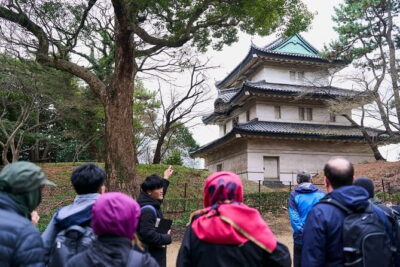
Tokyo Castle & Imperial PalaceーShogun Walking Tour
Our verdict →
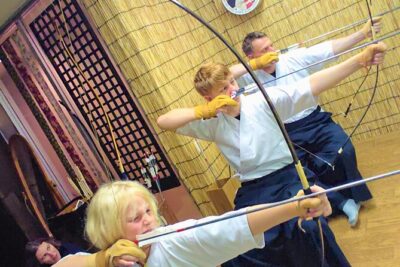
Japanesel Archery Experience HIROSHIMA CASTLE SHARAKU
Our verdict →
Browse the lists this tour appears in