
Reviewed · SAMURAI EXPERIENCES
Samurai Ninja Museum Asakusa: Samurai Sword Lesson & Tour
The most memorable part of this Asakusa experience is the hands-on sword session. You put on a hakama, armor, and helmet, then learn a simple katana routine instead of merely watching a staged demonstration. Sensei Ryo, who runs his own dojo, is praised for patient instruction, while instructors including Koki and Kenny bring humor and clear English to the lesson.
I like the mix of learning and play. You get a short but lively look at samurai and ninja history, then move on to photo sessions and supervised sword practice, with ninja weapons such as shuriken added to the fun. The main consideration is time: two hours passes quickly, and some sessions can feel rushed when the group includes many young children.
Key Points to Know Before You Book
- A real hands-on katana lesson: Learn basic handling and a short choreographed routine with an English-speaking instructor.
- Traditional costume included: Wear hakama, samurai armor, and a helmet for the lesson and photographs.
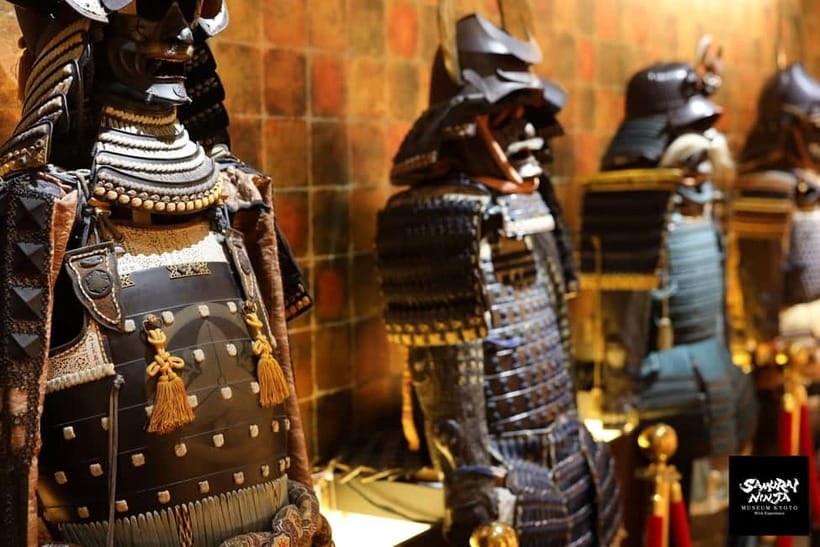
- A small museum with a clear story: See samurai and ninja displays while learning about Japan’s warrior past.
- Family-friendly sword play: Paired practice may use foam swords, keeping the activity suitable for children and beginners.
- Ninja activities add variety: Try throwing shuriken or other ninja weapons after the sword lesson.
- Small-group format matters: Groups can reach 16 people, while private and smaller options are also available.
What the Two-Hour Samurai Experience Is Really Like
This is not a quiet museum visit. It is a compact cultural activity built around participation. You dress up, handle a sword, learn a routine, look at historical displays, and pose for photographs, all in one short session.
That combination explains the strong appeal. You do not need prior martial arts experience, athletic ability, or detailed knowledge of Japanese history. The instructors teach the basic movements step by step, and the tone is designed to keep adults and children involved.
At the same time, you should set your expectations correctly. This is a beginner workshop in a museum setting, not an advanced sword-fighting course or a long formal lecture. You get an entertaining introduction to samurai culture, with enough historical detail to give the activities meaning.
More Museum Tours in Tokyo
- Tokyo: teamLab Planets TOKYO Digital Art Museum Entry Ticket
★ 4.6 · 9,779 reviews - Tokyo: Samurai Ninja Museum Guided tour and Experience
★ 4.6 · 1,010 reviews - Ninja Experience (Family Friendly) at Samurai Ninja Museum TOKYO
★ 5.0 · 441 reviews
Dressing as a Samurai in Hakama and Armor
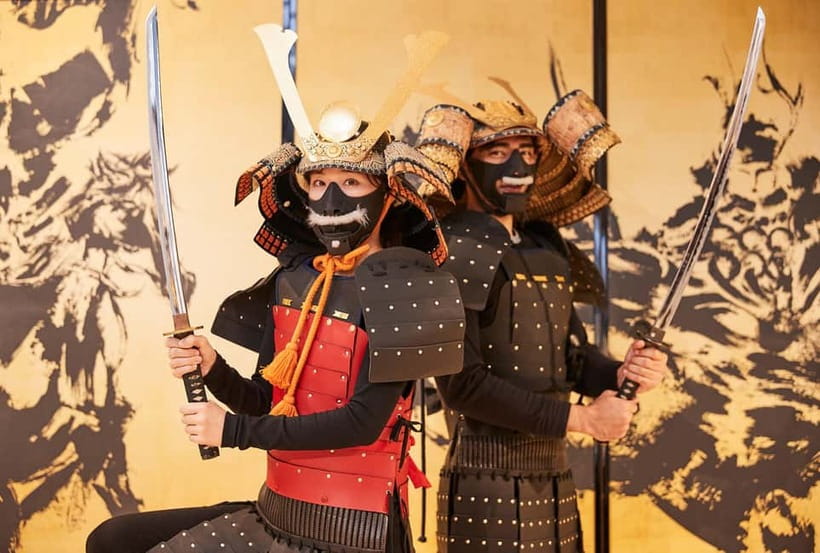
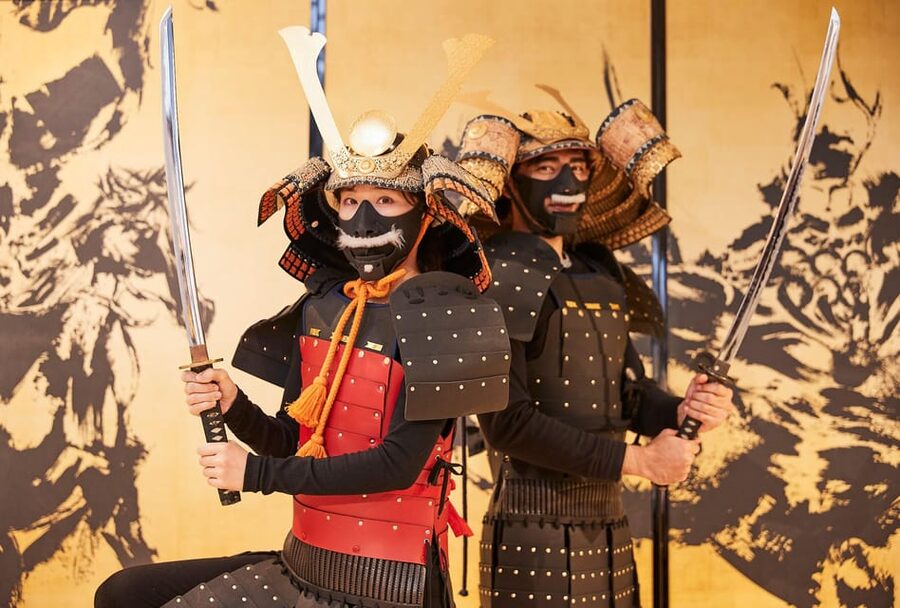
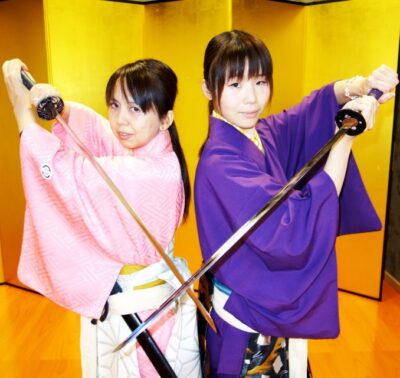
The session begins with the visual transformation. You put on a hakama, the traditional divided garment associated with formal Japanese dress and martial arts, then add samurai armor and a helmet for photographs and parts of the activity.
For many families, this is the first big hit. Children can step into a role, adults can join the fun, and the clothing gives the photos more character than a standard tourist snapshot. You can pose against several samurai-themed backgrounds, so the pictures feel tied to the experience rather than simply taken in a costume room.
The costume also helps set the mood for the lesson. Once you are dressed, holding a katana feels less like a random photo prop and more like part of a short historical performance. I would wear comfortable clothes underneath and avoid anything that makes changing awkward, since the activity moves quickly.
The museum space is not large. One visitor specifically found it somewhat cramped, and that is worth keeping in mind if you prefer plenty of room or dislike close group activities. The compact setting does help keep the guide nearby and makes the session feel active, but it can become crowded when several children are present.
Learning a Katana Routine With Sensei Ryo
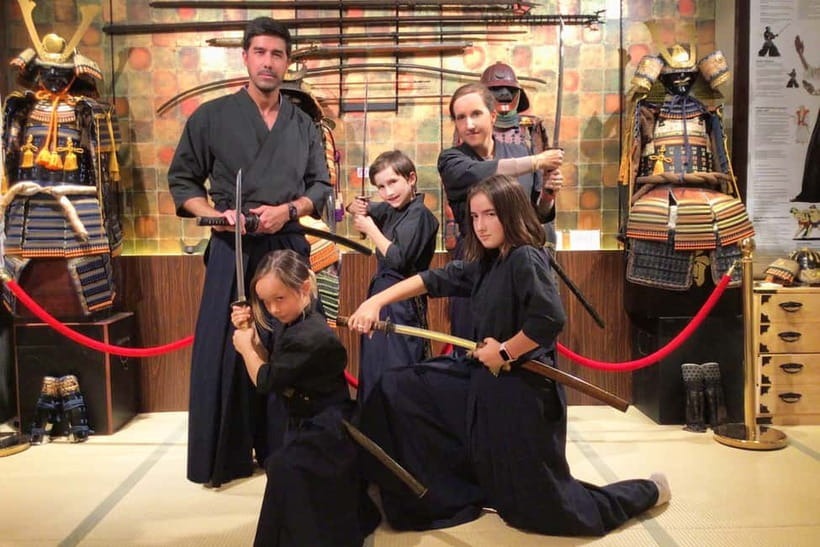
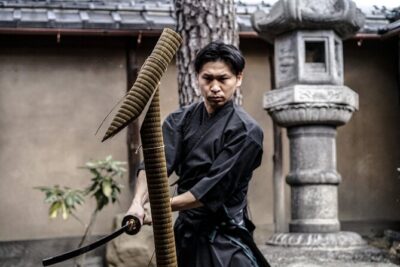
The sword lesson is the heart of the experience. You learn how to hold and move a katana, then work through a short sequence of choreographed motions. The aim is control, posture, and timing, not force.
Sensei Ryo receives especially strong praise for his calm teaching style. He is described as professional, polite, patient, and able to make beginners feel at ease. Other instructors, including Koki and Kenny, have also led well-received sessions in English.
That matters because the activity depends on clear instruction. A sword lesson can become uncomfortable fast if the teacher rushes people or assumes prior skill. Here, the basic movements are broken down for complete beginners, and the lesson can work for adults, teenagers, and children.
You may finish with a short sword routine or sword-dance-style sequence. Several people found it surprisingly satisfying to perform the full drill after only a few attempts. It gives the lesson a clear payoff: you are not just holding a prop, you are putting together a small performance.
Some sessions also include paired sword play. The family-friendly practice uses foam swords according to the detailed descriptions, so it is more about timing and laughter than realistic combat. It can be a highlight for families and couples, though the amount of practice depends on the group and the pace of the instructor.
One important caution: the lesson is not always a full hour of uninterrupted sword training. The two-hour visit also includes dressing, photographs, the museum tour, and ninja activities. If your main goal is advanced katana practice, you may find the sword portion brief.
The Museum Tour and Its Samurai Story
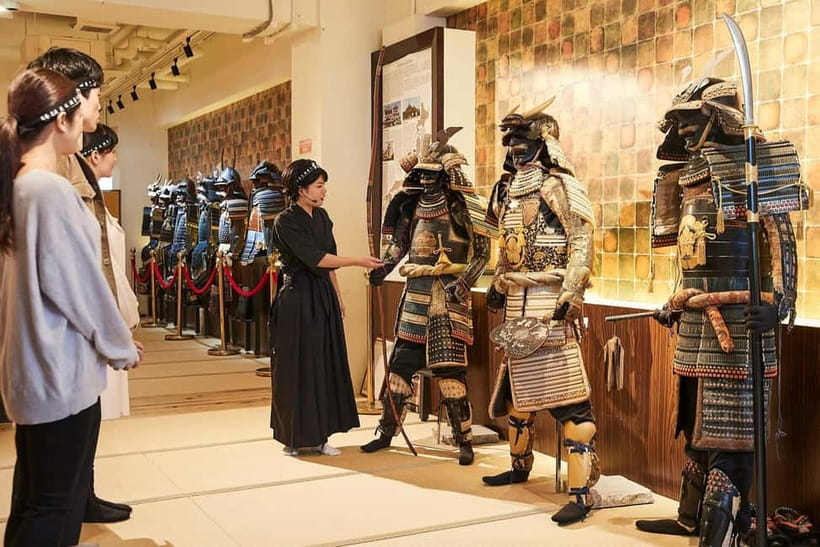
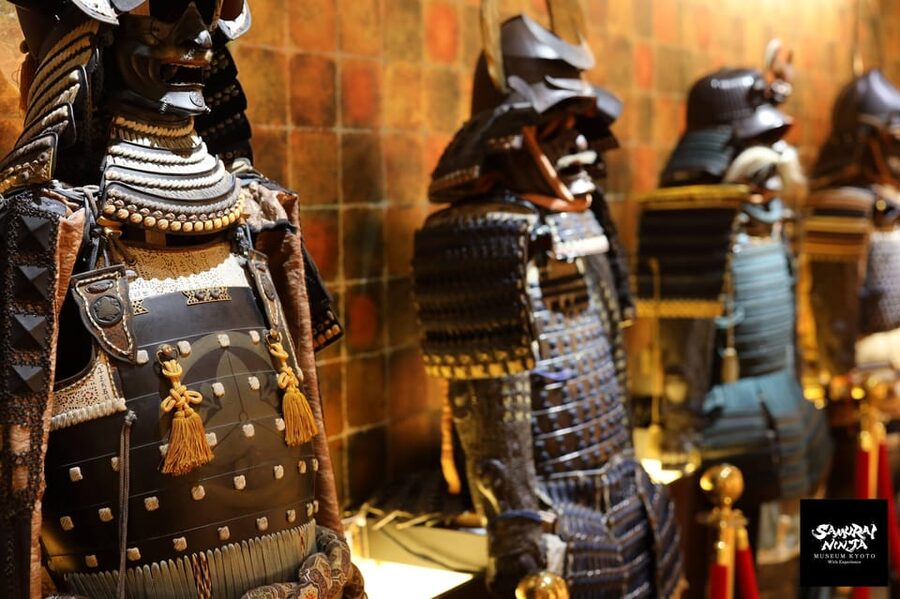
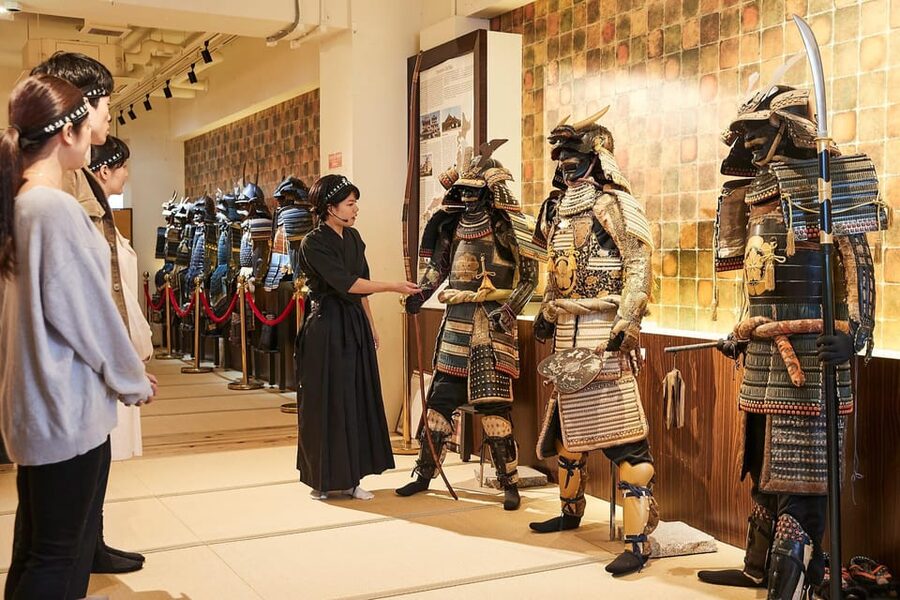
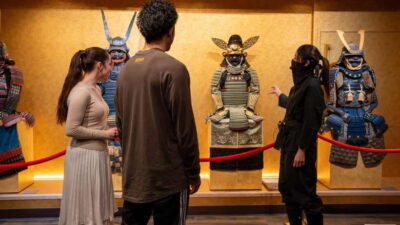
The museum section gives the activity its cultural backbone. You see samurai and ninja displays and receive an English-language explanation of Japan’s warrior traditions, from their origins through the end of the samurai era and into modern times.
The collection is described as small, with samurai antiques and themed displays rather than a major national museum. That makes the visit easy to handle in a busy Tokyo schedule, but it also means you should not expect hours of object-by-object study.
The best part is the guide’s storytelling. The explanations are lively and aimed at a general audience, with enough structure for adults and enough movement and interaction to hold children’s attention. Guides such as Ren, Momo, and Nao have been singled out for energetic presentations, especially when explaining ninja culture.
I like that the museum is not treated as a separate, dusty stop. The historical talk connects directly to what you are wearing and practicing. After hearing about samurai customs, armor, and weapons, you have a better sense of why the costume and sword routine are included.
The tradeoff is speed. One person felt the museum portion was rushed, while others found the two-hour schedule well packed. If you want a slow museum visit with long reading time, this will feel light. If you want a clear introduction before trying the activities, the pace works well.
More Ninja Experiences in Tokyo
- Tokyo Sword Experience – includes Museum Ticket/Ninja Experience
★ 5.0 · 314 reviews - Samurai Ninja Museum Asakusa: Kid-Friendly Ninja Training
★ 4.7 · 67 reviews - Tokyo: Ninja Experience Cafe Asakusa
★ 4.5 · 42 reviews
Ninja Weapons and the Final Burst of Fun
The ninja portion adds a welcome change of pace. You can try ninja weapons, including shuriken throwing, usually at a designated target. The activity is simple enough for first-timers and gives children something physical to focus on after the history presentation.
A friendly competition may be included, with some sessions ending in a game. That small competitive element helps the group stay engaged, particularly when the children are growing restless.
Do not book this expecting a full ninja training course. The information describes a trial or activity rather than a long technical lesson. It is best understood as a playful extra that rounds out the samurai session.
For families with children around school age, this variety is useful. A child who might lose interest during the museum talk gets a costume change, sword practice, photographs, and a target activity. The experience still has an educational thread, but it does not ask anyone to sit still for two hours.
Photos That Feel Like Part of the Experience
The themed photographs are more than an afterthought. You have several backgrounds and can pose in samurai armor, a helmet, and hakama. These pictures are likely to become the clearest record of the activity, especially if you are visiting Tokyo with children.
I would treat the photo time as part of the scheduled experience rather than something to squeeze in at the end. The costume, displays, and backgrounds give you a chance to make individual portraits and group shots.
The small venue can limit how many people pose at once. If you are in a larger group, you may need to share the space and take turns. Still, the photos add real value to the $63 price because the experience is not only about watching a demonstration. You are taking part and leaving with a visual memory of it.
Is $63 a Fair Price?
At $63 per person, this is not the cheapest short activity in Tokyo. It becomes easier to justify when you consider what is included: the English-language lesson, hakama, armor, helmet, museum tour, photo opportunities, and ninja weapons trial.
You are paying for several connected activities rather than a single museum admission. A family can spend two hours learning, dressing up, and taking photos without needing to arrange separate bookings. That convenience matters in Asakusa, where a tightly planned sightseeing day can quickly become tiring.
The value is strongest for families, first-time visitors, and anyone who wants an activity with a clear cultural theme. The cost is harder to justify if you mainly want to view authentic antiques in depth or practice sword technique for a long period.
Private and small-group options are available, which may be worth considering if you want more personal attention. The standard group can include up to 16 people. A smaller group may give you more room and a smoother lesson, though the exact meeting point and format depend on the option you book.
Who Will Enjoy This Most
I would recommend this experience to families with children over six, couples who enjoy playful cultural activities, and adults who want a break from temples and city walks. It also works well for teenagers, especially those already interested in samurai, ninja, martial arts, or Japanese history.
The age range can be broad. Children as young as seven have been able to enjoy the ninja and sword activities, while adults can take part without feeling out of place. Instructors are used to complete beginners and can keep the tone light.
It is less suitable for anyone seeking a serious martial arts qualification, a long museum visit, or a quiet historical tour. The lesson is introductory, the displays are limited in scale, and the schedule has many moving parts.
Children under six cannot enter the samurai venue. That rule makes this a better fit for families with older children, rather than families traveling with toddlers.
Practical Details for Planning Your Visit
The activity lasts two hours, with starting times depending on availability. The meeting point may vary by booking option, so check your confirmation carefully rather than assuming every session begins at the same place.
English is the listed tour language. The instructors and guides featured in the experience use English for the lesson and museum explanation, which is important when learning movements that depend on timing and safety.
The venue is wheelchair accessible. Private and small-group options are available, and the maximum group size is 16 people. If space and pace are concerns, a smaller option may be the better choice.
You can cancel up to 24 hours in advance for a full refund, and reserve now while paying later. Those terms are useful when you are building a Tokyo schedule around weather, jet lag, or changing family plans.
Allow a little flexibility around the two-hour block. The activity itself is listed at two hours, but changing, gathering the group, and moving between parts can make a tight connection afterward unwise.
Final Verdict: Book It for Participation, Not Serious Sword Study
I would book the Samurai Ninja Museum Asakusa experience if you want an active, family-friendly look at Japanese warrior culture. The strongest features are the patient English-speaking instructors, the costume and photographs, the short katana routine, and the lively museum explanation.
The main limits are just as clear. The museum is small, the sword practice is introductory, and the full schedule can feel rushed. A large group with many young children may also reduce practice time.
For $63, you get a well-packed two hours with a good mix of history, costume, movement, and humor. Choose a smaller or private option if personal attention matters. Choose the standard session if you want an easy Tokyo activity that lets you dress up, learn a little, and have fun together.
FAQ
How long does the Samurai Ninja Museum Asakusa experience last?
The activity lasts two hours.
How much does the experience cost?
The listed price is $63 per person.
Is the tour conducted in English?
Yes. English is the listed tour language, and the live guides and instructors provide the experience in English.
What is included in the booking?
The experience includes a samurai sword lesson, use of hakama, a samurai helmet, samurai armor, themed photo opportunities, and a ninja weapons trial.
Do I get to wear samurai armor?
Yes. Samurai armor and a samurai helmet are provided for use during the experience.
Do I get to practice with a katana?
Yes. You learn basic katana handling and practice a short sword routine under instruction.
Are children allowed to join?
Children can join, but children under six cannot enter the samurai venue. The activity has been used by families with children aged seven and older.
Is the activity wheelchair accessible?
Yes, the activity is listed as wheelchair accessible.
How many people can join a group?
The maximum group size is 16 people. Private and small-group options are also available.
Can I cancel the booking?
Yes. You can cancel up to 24 hours in advance for a full refund. Reserve now and pay later is also available.
More Samurai Experiences in Tokyo
- Tokyo: Samurai Restaurant Show Ticket with 2 Drinks
★ 4.5 · 1,307 reviews - Tokyo: Samurai Sword & Archery Class from Samurai Descendant
★ 5.0 · 603 reviews - Best Samurai Experience in Tokyo
★ 5.0 · 458 reviews - Tokyo: Samurai Entertainment Night Show in Kanda Shrine
★ 4.6 · 417 reviews
Just added around Tokyo
- Kawagoe Japanese Food Tour : Unagi Kaiseki and Sake near Tokyo★ 5.0 · 30 reviews
- Kawagoe 4hr Private Tour with Licensed Guide (Kawagoe Dep)★ 5.0 · 13 reviews
- Little EDO Sushi Making workshop in Kawagoe★ 5.0 · 18 reviews
- 【R34】Tokyo:Private Daikoku tour in Modified R34★ 4.9 · 92 reviews
- :Tokyo,Shibuya/ Pro Photography in Kimono / English-Friendly★ 5.0 · 26 reviews
- Tokyo:Celebrate Unique Japanese New Year Tradition Festivity★ 3.9 · 20 reviews
- Tokyo: Allstar Food Tour★ 4.7 · 29 reviews
- Tokyo: West-Side Cycling and Food Tour with Guide★ 5.0 · 37 reviews
Samurai Experiences, compared.
Browse the lists this tour appears in