
Reviewed · WALKING TOURS
Kyoto Gion Early Morning Walking Tour
Kyoto’s famous lanes are at their best before the day crowds arrive. This three-hour walk begins around Gion Shirakawa, follows the old geisha district, then climbs toward Kiyomizu-dera and the stone lanes of Sannenzaka and Ninenzaka. You get the city’s most photogenic sights while the streets are still relatively calm.
I like the early start, which gives you a better shot at quiet canal views and clear photos. I also like the small group of up to 12, since guides such as Caleb, Hiro, and Vincent can answer questions instead of simply leading a flag through the streets. The main drawback is timing: even an early tour may reach Kiyomizu-dera after crowds have begun to gather, and one stop felt busy enough that an earlier departure would have helped.
Key points to know before booking
- Gion before the crowds: Begin at the Statue of Izumo-no-Okuni and see Gion Shirakawa and Hanamikoji Street in the cooler, quieter part of the day.
- Six major stops: The route includes Gion Shirakawa, Hanamikoji Street, Kiyomizu-dera, Sannenzaka and Ninenzaka, Yasaka Pagoda, and Yasaka Shrine.
- A guide-led history walk: Caleb, Hiro, and Vincent are praised for clear English, humor, historical detail, and a willingness to answer questions.
- Kiyomizu-dera costs extra: The temple admission fee is ¥500 per person, not included in the tour price.
- A proper walking workout: The route lasts about three hours and includes uphill streets around Kiyomizu-dera, so comfortable shoes matter.
- Useful but limited logistics: There is no hotel pickup, the tour starts and ends at the same Gion meeting point, and a mobile ticket is provided.
Why the early morning matters in Gion
The strongest idea here is simple: see Kyoto’s best-known old streets before the day gets loud and crowded. Gion, Kiyomizu-dera, and the lanes below the temple are popular for good reason, but their charm can get buried under tour groups, shopping stops, and people trying to take the same photo.
Morning light also suits this route. Gion Shirakawa’s willow-lined canal and traditional wooden houses have a quiet, almost stage-set quality early in the day. Hanamikoji Street feels more like a historic neighborhood than a shopping corridor when fewer people are moving through it.
You should still keep your expectations realistic. The tour is not guaranteed to be crowd-free. The timing may put you at Kiyomizu-dera when other visitors have already arrived, especially on a particularly popular day. The early start improves your chances, but it cannot control Kyoto’s visitor numbers.
At $49.42 per person, the price is reasonable if you want context as well as directions. You are paying for about three hours with an English-speaking guide, not for entry to every site or transportation between stops. Add ¥500 for Kiyomizu-dera, and remember that hotel pickup is not included.
More Walking Tours in Kyoto
- Kyoto Geisha Walking Tour: Gion District & Hidden Gems
★ 4.7 · 3,273 reviews - Kyoto: Gion Magical Night Walking Tour with Geisha Trivia
★ 4.9 · 2,393 reviews - Kyoto: Gion Geisha District Walking Tour – Stories of Geisha
★ 4.7 · 2,187 reviews
Starting at Gion Shirakawa
The meeting point is the Statue of Izumo-no-Okuni in Kawabatacho, in Kyoto’s Higashiyama Ward. From there, the walk opens with Gion Shirakawa, one of the most attractive corners of the district.
This first stop lasts about 15 minutes. You will see the Shirakawa River, weeping willows, and traditional machiya houses, the narrow wooden townhouses associated with old Kyoto. It is a short introduction, but a useful one. The guide can help you read the streetscape before the route moves into the better-known parts of Gion.
This is also a good point to ask questions about local customs and the role of the district today. The supplied information does not promise access to private buildings or meetings with geisha, so book this as a cultural walking tour, not a geisha performance.
Hanamikoji Street and Kyoto’s geisha district
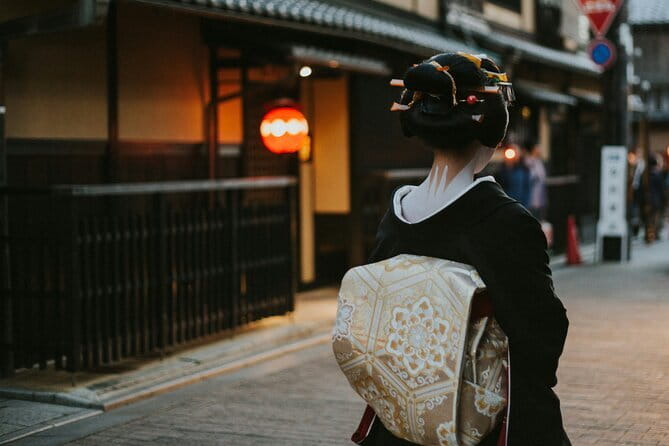
The next stop is Hanamikoji Street, with about 20 minutes to walk and listen. The street is lined with wooden machiya houses and traditional teahouses, known locally as ochaya.
Hanamikoji is famous, but it rewards a respectful pace. You are moving through a living neighborhood, not an open-air theater. A guide can explain the difference between the architecture, the entertainment district, and the public image many visitors bring with them.
The guide quality matters especially here. Hiro is described as bringing strong historical context, humor, and clear English, while Caleb is praised for his interest in history and friendly manner. Vincent is noted for taking time with questions, including questions beyond the basic route. Your guide is not guaranteed, but these names indicate the kind of presentation the operator aims to provide.
Kiyomizu-dera is the tour’s main event
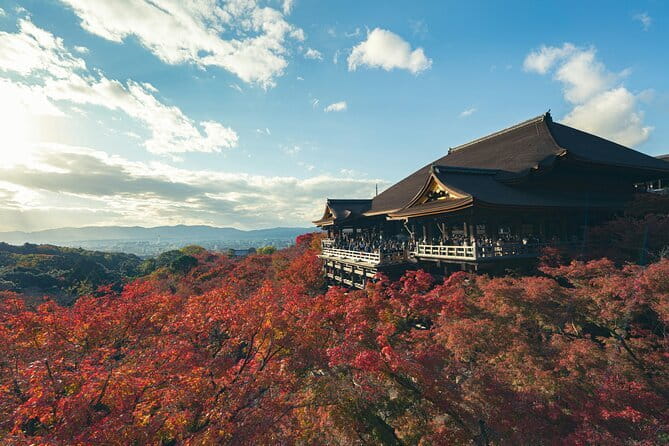
You get roughly an hour at Kiyomizu-dera, the longest stop on the route. That makes sense. This temple is the major sight of the morning, with its famous wooden stage, city views, and setting among seasonal trees.
Admission is not included. The extra cost is ¥500 per person, a small but important detail when comparing the tour with other Kyoto walks. Have the fee ready so the group can keep moving.
The temple stop is where the early start is put to the test. Arriving ahead of the main crowds can make the wooden stage and surrounding views much easier to appreciate. Still, you may find the complex busy by the time the group arrives. One review of the experience specifically noted that Kiyomizu-dera was swarming with people and wished the walk had started an hour earlier.
That is the clearest caution in the whole tour. If crowd avoidance is your number-one goal, ask about the exact departure time before booking, since the supplied details only identify it as an early morning experience. If your priority is learning how the sights fit together, the guide can still add value even when the temple itself is busy.
The hour also gives you more than a quick photo stop. You can take in the structure, the views, and the religious setting without being rushed through in a few minutes. Exact access within the temple is not specified, so expect the standard sightseeing route rather than a special private entry.
Same trip, a completely different kind of day:
- PERFECT KYOTO 1-Day Bus Tour
★ 5.0 · 13,518 reviews - Kyoto: Fushimi Inari, Kinkakuji, Bamboo Grove 1 Day Bus Tour
★ 4.8 · 4,316 reviews - Kyoto: Tea Ceremony in a Traditional Tea House in Kiyomizu
★ 4.9 · 3,519 reviews - Kyoto: Tea Ceremony Ju-An at Jotokuji Temple
★ 4.9 · 3,207 reviews
Sannenzaka and Ninenzaka: Kyoto’s postcard streets
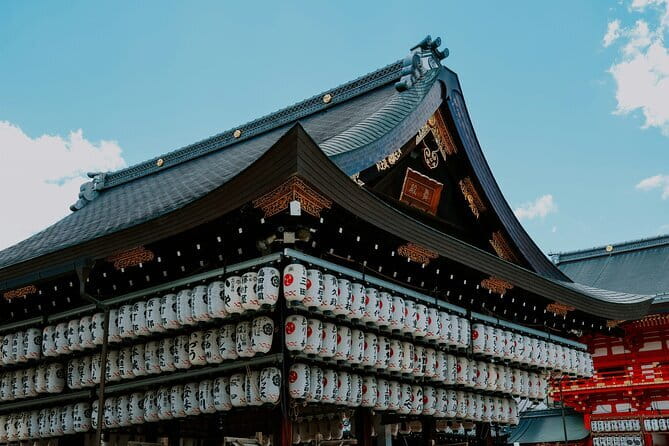
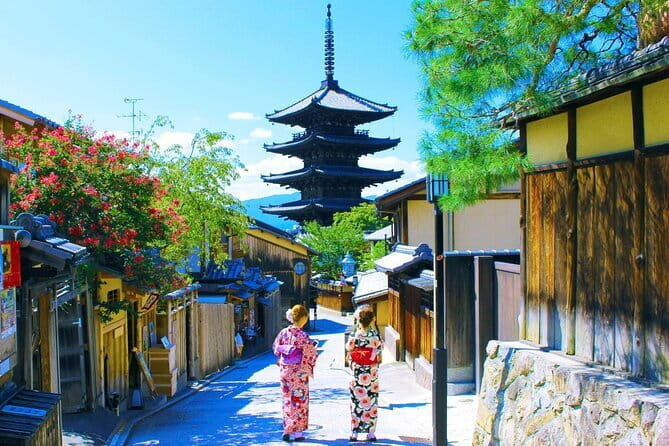
After Kiyomizu-dera, the route continues through Sannenzaka and Ninenzaka for about 30 minutes. These stone-paved lanes are lined with wooden townhouses, small shops, and traditional details that make this one of Kyoto’s most recognizable walks.
This section gives the tour a different feel. Gion introduces the entertainment district and canal-side architecture, while Sannenzaka and Ninenzaka show you the approach to one of Kyoto’s major temples. The streets connect the cultural story rather than presenting isolated sights.
There is also a practical issue here: these lanes are not flat, smooth promenades. The walk around Kiyomizu-dera includes slopes and stone paving, and the full route is long enough to put a fair number of steps into your morning. Wear shoes you can comfortably walk in for three hours.
The shops may not all be open early, which can be a benefit or a limitation depending on your plan. You get a calmer look at the street itself, but you should not book this tour mainly as a shopping outing.
A short stop at Yasaka Pagoda

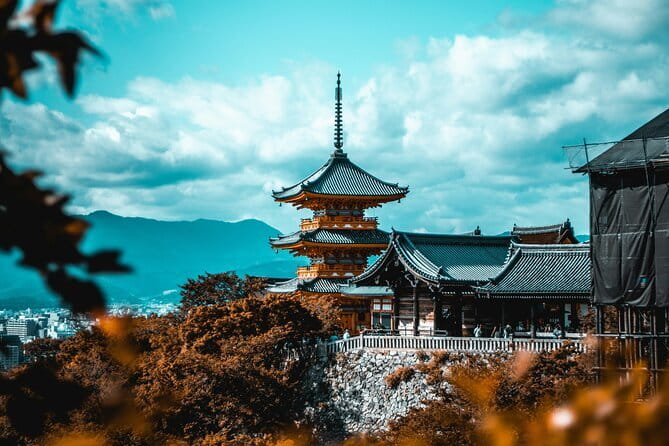
Yasaka-no-To, or Yasaka Pagoda, receives about 10 minutes. The pagoda rises above the surrounding historic streets and is one of the easiest Kyoto landmarks to recognize in photographs.
This is a brief stop, so think of it as a photo and orientation point rather than a full temple visit. The quiet of the morning can help you frame the pagoda against the old streets without the heavier foot traffic that develops later.
Because the stop is short, listen closely when the guide explains what you are seeing. There is not much spare time for wandering. The value comes from the location and the guide’s context, not from an extended visit inside the pagoda.
Yasaka Shrine closes the loop
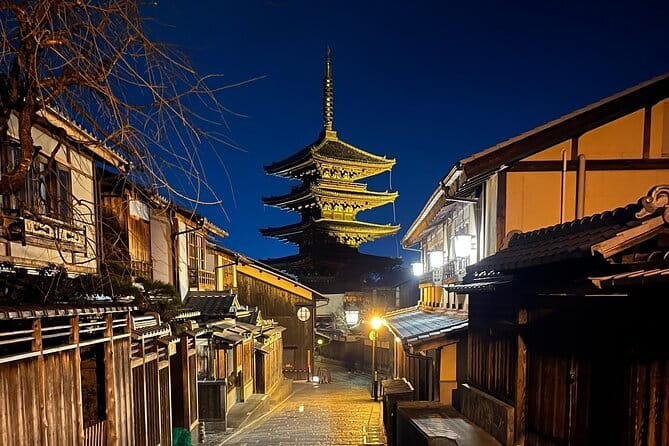
The final major stop is Yasaka Shrine, with about 30 minutes. This is one of Kyoto’s important Shinto shrines, known for its vermilion gate and lantern-lined dance stage.
The shrine offers a useful contrast with Kiyomizu-dera. The tour is not only about famous streets and photo spots. You also get a chance to see a working religious site and learn about traditions connected with Kyoto’s spiritual life.
The morning setting helps here, too. Yasaka Shrine can feel more manageable early in the day, and the half-hour gives you time to look around without making the visit feel rushed. Afterward, the activity ends back at the original meeting point, the Statue of Izumo-no-Okuni.
The guides make the difference
A walking route like this is easy enough to follow on a map. The reason to pay for it is the explanation. Guides named Caleb, Hiro, and Vincent receive especially strong praise for their English, historical detail, warmth, and willingness to take questions.
Hiro is described as connecting Japanese history to a wider global context. That can make familiar sites more meaningful, especially if you want more than a list of dates and architectural terms. Caleb is associated with an engaging history focus and a friendly style, while Vincent is noted for taking time with questions and sharing his affection for Kyoto.
The group limit of 12 is helpful. It is small enough for the guide to hear questions and keep the pace personal, but not so small that the experience becomes a private tour. The description does not promise a private group, although one booking may occasionally be smaller than the maximum.
The guide’s style can affect your experience more than the exact order of the stops. If you enjoy asking about current Kyoto life, religion, architecture, and historical events, this tour gives you room to do that. If you prefer to wander silently and set your own pace, an independent visit may suit you better.
What the $49.42 price really covers
The $49.42 fee covers an English-speaking guide and approximately three hours of walking. It does not cover the ¥500 Kiyomizu-dera admission fee, hotel pickup, or any food and drink.
That is a fair price for the route if you are staying near the start point and want a useful introduction to eastern Kyoto. You are also saving the time and effort of planning a route that links six major places without getting lost.
The value is weaker if you already know Gion well or plan to visit every stop independently with a good guidebook. You will still have to reach the meeting point yourself, and the walk returns there rather than taking you to your next attraction.
One useful extra detail comes from the experience itself: an early stop for coffee may be possible depending on the guide and timing. A coffee stop was part of one particularly well-liked morning, but it is not listed as an included feature, so do not count on it.
Who should book this morning walk?
I would choose this tour for a first visit to Kyoto, especially if you want a quick orientation to Gion and the Higashiyama sights. It suits you if you enjoy history, prefer having directions handled, and want to ask questions as you go.
It is also a good fit for photographers who value quieter streets and softer morning light. The best opportunities come at Gion Shirakawa, Hanamikoji Street, Yasaka Pagoda, and the lanes around Sannenzaka and Ninenzaka.
Families and most reasonably fit adults can participate, according to the supplied details, but the distance and slopes still matter. Anyone who has trouble with extended walking should consider that the route lasts about three hours and includes the climb toward Kiyomizu-dera.
I would be less enthusiastic if you want a late start, extensive shopping time, private access, or guaranteed empty streets. The route is carefully chosen, but these are Kyoto’s most famous areas, and crowds can appear sooner than expected.
Should you book the Kyoto Gion Early Morning Walking Tour?
Book it if you want an efficient, guided introduction to Gion, Kiyomizu-dera, and the old streets around them. The strongest reasons are the early timing, the manageable group size, and the guides’ apparent ability to explain Kyoto rather than simply point at it.
Before paying, confirm the exact start time if avoiding crowds is essential. Be ready for three hours on foot, bring the extra ¥500 for Kiyomizu-dera, and meet at the Izumo-no-Okuni statue since there is no hotel pickup.
At $49.42, this is a sensible choice for a first morning in Kyoto. It will not replace a full day of independent exploring, but it can give you a clear map of eastern Kyoto and enough context to make the rest of your visit more rewarding.
FAQ
How long does the Kyoto Gion Early Morning Walking Tour last?
The tour lasts approximately three hours.
What places are included on the walking route?
The route includes Gion Shirakawa, Hanamikoji Street, Kiyomizu-dera Temple, Sannenzaka and Ninenzaka, Yasaka Pagoda, and Yasaka Shrine.
Is Kiyomizu-dera admission included?
No. Kiyomizu-dera admission costs ¥500 per person and is not included in the tour price.
Is hotel pickup provided?
No. Hotel pickup is not included. You meet at the Statue of Izumo-no-Okuni in Kawabatacho, Higashiyama Ward, Kyoto.
Where does the tour end?
The activity ends back at the original meeting point.
How many people can join the tour?
The group has a maximum of 12 people.
Is the tour conducted in English?
Yes. An English-speaking guide is included.
Can I cancel for a full refund?
Yes. You can cancel at least 24 hours before the experience start time for a full refund. Changes or cancellations made less than 24 hours before the start time are not accepted for a refund.
More Morning Tours in Kyoto
- Kyoto Early Morning Tour with English-Speaking Guide
★ 5.0 · 1,427 reviews - Kyoto: Early Morning Tour with English-Speaking Guide
★ 4.9 · 1,128 reviews - Kyoto Morning Tour from Kyoto or Osaka
★ 4.0 · 281 reviews - Kyoto: Morning Japanese Bento Cooking Class
★ 5.0 · 149 reviews
Just added around Kyoto
- Sekka Cotton Furoshiki Class★ 5.0 · 19 reviews
- Kyoto Sword Experience – includes Museum Ticket/Ninja Experience★ 4.5 · 149 reviews
- Scenic Green Tea Fields of Hidden Kyoto & Local Tea Exp (Private)★ 5.0 · 32 reviews
- Secret Eastern Kyoto Biking Adventure★ 5.0 · 44 reviews
- Private Sake Tasting in Central Kyoto with Sake Sommelier★ 5.0 · 32 reviews
- Samurai School in Kyoto: Samurai for a Day★ 5.0 · 202 reviews
- SHIRAKAWA Japanese Culture Experiences with private English staff★ 5.0 · 16 reviews
- A Privately Guided Photoshoot in Beautiful Kyoto by a Pro★ 5.0 · 18 reviews
Walking Tours, compared.
Kyoto Geisha Walking Tour: Gion District & Hidden Gems
Our verdict →
Imperial Palace and Shogun Historical Walking Tour
Our verdict →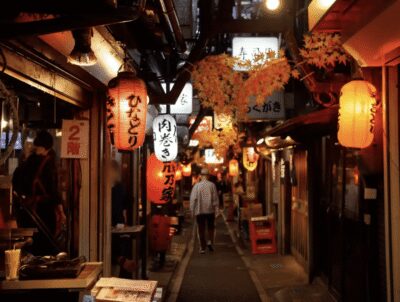
Shinjuku Local Bar and Izakaya Guided Walking Tour
Our verdict →

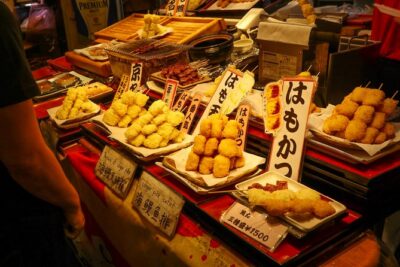
Nishiki Market Brunch Walking Tour (7 Tastings + Brunch)
Our verdict →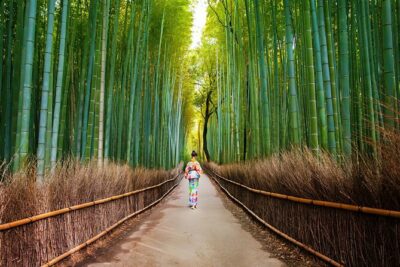
Kyoto Arashiyama Walking Tour: Bamboo, Monkeys, Gardens & Secrets
Our verdict →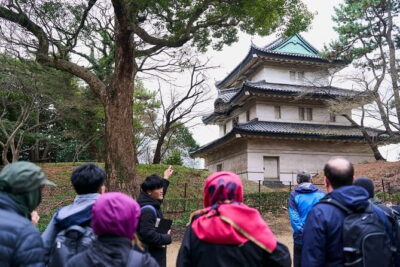
Tokyo Castle & Imperial PalaceーShogun Walking Tour
Our verdict →Browse the lists this tour appears in