Reviewed · MORNING
Kyoto Morning Tour from Kyoto or Osaka
Kyoto’s biggest challenge is not finding beautiful places. It’s fitting them together without wasting half the day on buses and transfers. This tour tackles three major sights in one morning: Nijo Castle, the shogun’s former home, and Kinkakuji, the famous Golden Pavilion.
I like the efficient route and the included admission fees. I also like having a guide explain the difference between shogun and emperor, rather than simply pointing at buildings. The main drawback is the brisk pace, plus the risk that the Imperial Palace or Nijo Castle will be replaced by another site on a closure day.
Key points to know before booking
- Three major Kyoto sights in 4 hours 40 minutes: Nijo Castle, Kinkakuji Temple, and Kyoto Imperial Palace.
- Nijo Castle includes the ornate Ninomaru Palace: Look for elaborate carvings, gold decoration, and the famous nightingale floors.
- Kinkakuji is a quick but memorable stop: You see the gold-covered pavilion and its pond-side garden, but the route includes uneven steps.
- The Imperial Palace is not guaranteed: On closure days, the tour substitutes Kitano Tenmangu Shrine or, on certain dates, Nishi Hongan-ji Temple.
- The bus saves time and energy: Transport and admission are included, but the tour ends at Kyoto Avanti near Kyoto Station.
- A group of up to 40 can affect the guiding: Some visitors found it hard to hear in crowded areas, especially without personal audio receivers.
Three essential Kyoto sights before lunch
This is a sightseeing sampler, not a slow day among temple gardens. You move from one major site to the next by air-conditioned vehicle, with a total tour time of about 4 hours and 40 minutes.
That format makes good sense if you are staying in Osaka, visiting Kyoto for only a day, or trying to get your bearings at the start of a longer stay. It is also useful if you want the history explained as you go. Guides such as KC, Casey, Jun, Jessie, and Mr. Harada have been praised for being lively, organized, and generous with historical detail, though the exact guide depends on the departure date.
You should expect a full morning. The stops are not padded with long free periods, and the schedule can shift because of traffic, crowds, or delays at the sights. The reward is a tidy look at Kyoto’s military past, religious art, and imperial tradition before you have to think about lunch.
More Morning Tours in Kyoto:
- Kyoto Early Morning Tour with English-Speaking Guide
★ 5.0 · 1,427 reviews - Kyoto: Early Morning Tour with English-Speaking Guide
★ 4.9 · 1,128 reviews - Kyoto: Morning Japanese Bento Cooking Class
★ 5.0 · 149 reviews
Nijo Castle and the shogun’s world
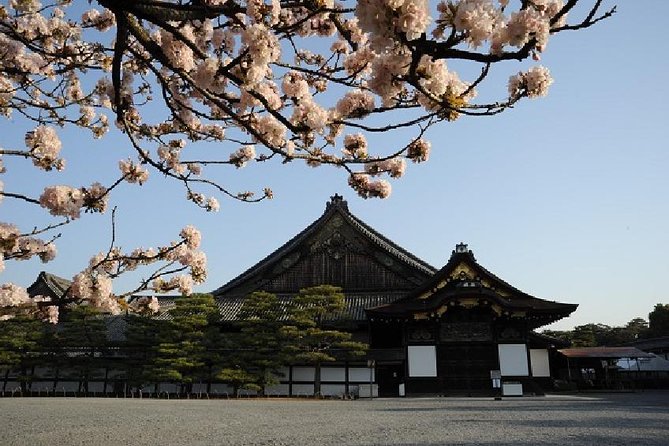
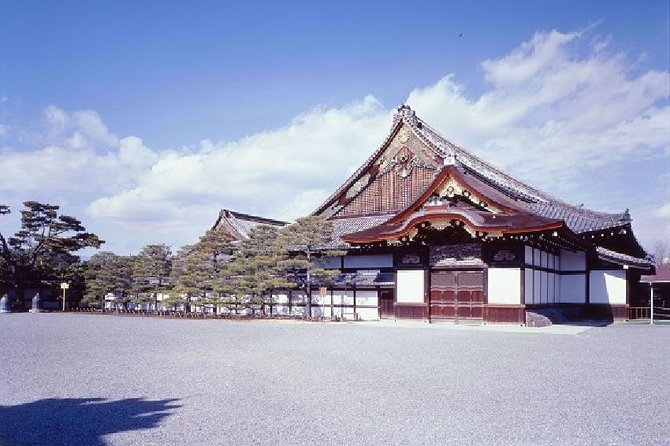
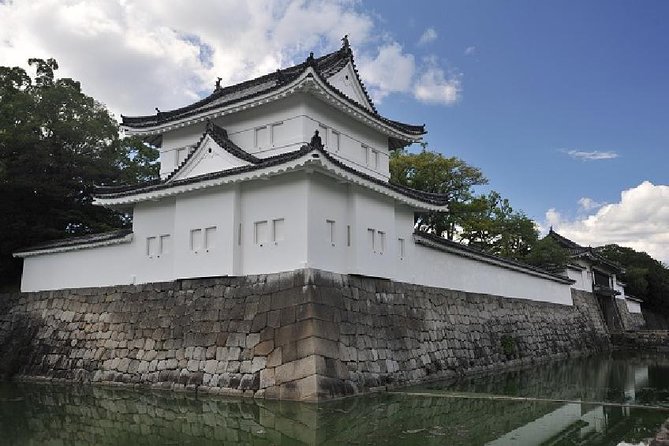
The tour usually begins at Nijo Castle, built in 1603 on the orders of Tokugawa Ieyasu, the first shogun of the Tokugawa shogunate. This is not a castle visit built around a tall stone tower. Its interest is in the low wooden palace buildings, painted interiors, gardens, and the political message of the place.
You spend about 50 minutes here, with admission included. The main prize is Ninomaru Palace, a chain of connected Cypress wood buildings decorated with intricate carvings and gold-covered rooms. The former living quarters, kitchen, guardhouse, and gardens help you picture how power worked in Japan when the shogun controlled the country.
Listen for the explanation of the nightingale floors, which squeak underfoot as a security measure. The sound is one of those small details that makes the site easier to remember than a list of dates.
This stop is fairly manageable for walking because much of the route is level. You will still remove your shoes when entering certain interiors, as is standard at Japanese historic buildings, though the supplied tour details do not specify every footwear rule for the day. The visit is guided and timed, so you will not have the freedom to linger in every room or garden.
Nijo Castle gives the morning a strong historical start. It also helps you understand the relationship between the military ruler and the emperor, a theme that continues at the Imperial Palace later in the tour.
Kinkakuji’s Golden Pavilion and crowded garden path
Kinkakuji Temple is the visual star of the morning. Its wooden architecture is covered in thin layers of pure gold and reflected in a pond, with the surrounding garden providing the quieter setting that the building itself needs.
You have roughly 45 minutes here. That is enough to see the pavilion, follow the designated route, and take photographs, but it is not enough for a slow garden visit. The path is one way, and you should expect crowds, particularly around the best viewing points.
This is also the least forgiving stop physically. The route includes uneven rocky steps and a climb, so comfortable shoes matter. One visitor described the Golden Pavilion route as more demanding than Nijo Castle and the Imperial Palace. If you have limited mobility, ask the operator about current conditions before booking, because the supplied information says most people can participate but does not promise a fully accessible route.
The pavilion itself is not open for you to enter. The appeal is the view from across the pond and the contrast between the bright gold structure, dark roof, water, and garden. The stop works best when you accept that you are seeing an iconic image rather than exploring every corner of the temple grounds.
You may find this part noisy. Several tour groups can gather at the same viewpoint, and guides speaking nearby can make it hard to follow a talk. Stay close to your guide and position yourself where you can see both the building and the guide’s face.
Kyoto Imperial Palace and the limits of the schedule
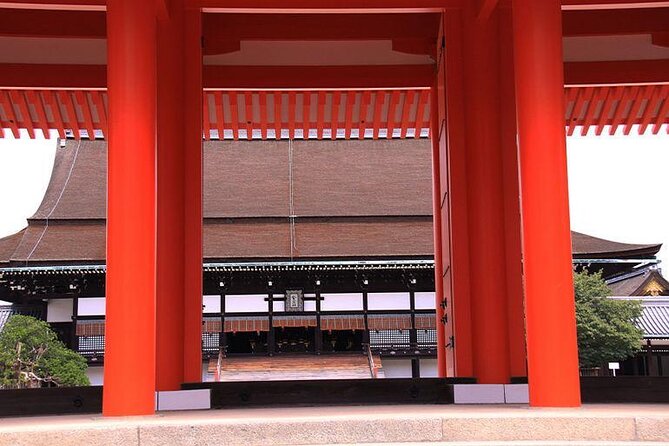
The last main stop is Kyoto Imperial Palace, used as the emperor’s residence until the capital moved to Tokyo in 1868. You spend about 40 minutes here, with no separate admission charge listed.
The palace offers a sharp contrast to Kinkakuji. Instead of gold and reflection, you get restrained design, broad grounds, formal gates, and a sense of ceremony. The former imperial enthronement area helps connect the buildings to Japan’s court tradition.
The time is short, so this is more of an introduction than a complete palace visit. If the Imperial Palace is the reason you are booking, read the closure rules carefully. It is closed on Mondays, or the following day when Monday is a holiday, and it can also close during Imperial Household Agency events.
When the palace is closed, the tour visits Kitano Tenmangu Shrine instead. If the closure falls on the 25th, the replacement is Nishi Hongan-ji Temple. No refund is provided when an alternative site is used, so do not book this excursion if seeing the Imperial Palace itself is non-negotiable.
This substitution policy has caused real disappointment for people who planned the morning around the palace. Check the official operating calendar and your final confirmation before you commit. Availability shown when you book does not necessarily mean every individual attraction will be open on the date you choose.
A few more Kyoto half-days worth comparing
- PERFECT KYOTO 1-Day Bus Tour
★ 5.0 · 13,518 reviews - Kyoto: Fushimi Inari, Kinkakuji, Bamboo Grove 1 Day Bus Tour
★ 4.8 · 4,316 reviews - Kyoto: Tea Ceremony in a Traditional Tea House in Kiyomizu
★ 4.9 · 3,519 reviews - Kyoto Geisha Walking Tour: Gion District & Hidden Gems
★ 4.7 · 3,273 reviews
What the bus adds to the morning
The air-conditioned vehicle is the practical backbone of the tour. Kyoto’s sights are spread across the city, and arranging Nijo Castle, Kinkakuji, and the Imperial Palace independently requires several transport decisions. The bus lets you sit down between stops and avoid working out each connection.
That convenience matters even more in warm weather or after several days of walking. One advantage of this tour is that you can see a lot without spending the entire morning navigating local buses and railway stations.
The tradeoff is fixed timing. You cannot decide to stay longer at Kinkakuji because the light is perfect, or leave Nijo Castle early because you have already seen enough. Road conditions and congestion can change the order and arrival times.
Seats may not be assigned. The group can reach 40 people, so boarding early and staying aware of the meeting instructions is sensible. The group size is manageable on the bus, but it can feel large inside a crowded temple or palace ground.
The tour begins and ends at Kyoto Avanti, across from the Hachijo Exit of Kyoto Station. The precise meeting address is 31 Higashikujō Nishisannōchō, in Kyoto Avanti. Read the confirmation carefully and use the ticket details for the current meeting instructions, since some people have had trouble finding the correct entrance from the general address alone.
Starting from Osaka requires extra planning
Although the tour can be booked in connection with Osaka, the sightseeing portion begins at Kyoto Avanti. The information provided says an English-speaking assistant accompanies participants on the outbound trip from Hotel Granvia Osaka to the Sunrise Tours Desk in the basement of Kyoto Avanti.
That help applies to the outbound transfer, not the whole Kyoto tour. At the end, you are dropped at Kyoto Avanti, and the return transportation from Kyoto to Osaka is not included. You must arrange and pay for your own trip back.
This makes the tour easier for an Osaka-based visitor than a completely independent Kyoto day, but it is not a door-to-door excursion. Leave enough time to reach the Osaka departure point if you are using that option, and do not assume that a tour bus will take you back to Osaka after the final stop.
For a Kyoto-based visitor, the start and finish at Kyoto Station are straightforward. You can continue exploring after the tour, use the railway network, or return to your accommodation from the station area.
Price and what you receive for $87.19
At $87.19 per person, the price is reasonable if you value saved time and a guide. It covers transportation between the attractions, admission to Nijo Castle and Kinkakuji, and the services of a licensed English guide interpreter. You also avoid paying separate local fares between three distant parts of Kyoto.
The value is weaker if you prefer long, quiet visits or already know Kyoto’s transport system. You are paying for structure and explanation, not for an unhurried day. The tour does not include food, drinks, hotel pickup, or the return journey to Osaka.
There is no lunch included. After the Imperial Palace, the bus may stop at the lunch venue used by the full-day tour before dropping people at Kyoto Station. Treat this as a transfer detail, not a meal stop included in your booking.
The tour is often reserved well ahead, with an average booking time of about 31 days. That is useful to know if your Kyoto dates are fixed, especially during popular travel periods.
Hearing the guide and keeping up
The guide is a major part of the value. The strongest experiences come when the guide turns the buildings into a connected story: shogun at Nijo Castle, religious art at Kinkakuji, and emperor at the Imperial Palace.
Named guides including KC and Casey have been praised for humor, energy, and clear explanations. Jun was noted for useful facts about Kyoto and Japan, while Jessie was described as especially good with a family traveling with young children. Mr. Harada was praised for answering questions and helping with photographs. These names give you an idea of the style you might encounter, but no particular guide is guaranteed.
The weak point is sound. Personal wireless receivers were not always used, and some people had trouble hearing in crowded areas or when another group’s guide was speaking nearby. English ability and delivery can also vary by guide.
Your best tactic is simple: stay near the guide during outdoor explanations, avoid falling behind for photographs, and ask politely if you miss an important point. The schedule does not leave much room for repeated explanations.
Walking, children, and the pace
Most people can take part, but this is not a seated sightseeing experience. You walk through palace buildings, gardens, temple paths, and historic grounds. The Golden Pavilion route has uneven rocky steps, while Nijo Castle and the Imperial Palace are generally easier underfoot.
Children up to age five may join free, but they do not receive a bus seat unless booked at the child rate. Anyone under 18 needs written parental permission. Anyone under 15, or not yet enrolled in middle school, must travel with a parent or guardian.
The pace worked well for one family with a three-year-old and a seven-year-old, but that does not mean every young child will enjoy it. The morning includes several transitions, limited time at each site, and group movement. A child who needs frequent breaks may find the schedule demanding.
You should also wear shoes suitable for steps and uneven paths. There is no meal break built into the sightseeing portion, so eat before departure and carry water, since food and drinks are not included.
Who should book this Kyoto morning tour?
I would choose this tour if you have limited time, want the main historical sights explained, or dislike sorting out Kyoto transport. It is especially useful for a first visit, a day trip from Osaka, or a morning before an afternoon of independent exploring.
It also suits you if you enjoy a guide with personality. The best guide matches bring humor, historical context, and practical help, including photographs and answers to questions.
I would skip it if you already plan to spend a full day at each attraction, want quiet garden time, or need guaranteed access to the Imperial Palace. I would also think twice if crowded group visits and uneven temple paths are difficult for you.
Before booking, check three things: the Imperial Palace closure calendar, Nijo Castle closure dates, and the exact meeting instructions. Nijo Castle closes on Tuesdays in January, July, August, and December, as well as from December 26 through January 3, with holiday adjustments. When it is closed, the replacement is Ryoan-ji Temple, and the price is not reduced.
Should you book it?
Book this tour for efficient coverage and useful historical context, not for a leisurely temple morning. Three famous sites, admission fees, air-conditioned transport, and a guide make the price fair for a short Kyoto visit.
The most important warning is the substitution policy. If the Imperial Palace is essential, confirm that it will be open on your date. If it is not, choose another plan. If you can accept a replacement site and a brisk pace, this is a practical way to see Kyoto’s shogun, temple, and imperial worlds before lunch.
FAQ
How long does the Kyoto morning tour last?
The tour lasts approximately 4 hours and 40 minutes.
Which attractions are included?
The main itinerary includes Nijo Castle, Kinkakuji Temple, also called the Golden Pavilion, and Kyoto Imperial Palace.
How much time is spent at each stop?
The planned visits are about 50 minutes at Nijo Castle, 45 minutes at Kinkakuji Temple, and 40 minutes at Kyoto Imperial Palace.
Is transportation included?
Yes. Transportation between the attractions is included in an air-conditioned vehicle.
Are entrance fees included?
Admission fees for the included attractions are covered. Food and drinks are not included.
Where does the tour begin and end?
It begins at Kyoto Avanti across from Kyoto Station’s Hachijo Exit and ends in front of Kyoto Avanti.
What happens if Kyoto Imperial Palace is closed?
The tour visits Kitano Tenmangu Shrine instead. If the closure falls on the 25th, the replacement is Nishi Hongan-ji Temple. No refund is provided for the alternative visit.
What happens if Nijo Castle is closed?
The tour visits Ryoan-ji Temple instead. Nijo Castle closes on certain Tuesdays in January, July, August, and December, and from December 26 through January 3, with some holiday adjustments.
Is transportation back to Osaka included?
No. The tour ends at Kyoto Avanti, and the return transportation from Kyoto to Osaka is not included.
Just added around Kyoto
- Sekka Cotton Furoshiki Class★ 5.0 · 19 reviews
- Kyoto Sword Experience – includes Museum Ticket/Ninja Experience★ 4.5 · 149 reviews
- Scenic Green Tea Fields of Hidden Kyoto & Local Tea Exp (Private)★ 5.0 · 32 reviews
- Secret Eastern Kyoto Biking Adventure★ 5.0 · 44 reviews
- Samurai School in Kyoto: Samurai for a Day★ 5.0 · 202 reviews
- Private Sake Tasting in Central Kyoto with Sake Sommelier★ 5.0 · 32 reviews
- SHIRAKAWA Japanese Culture Experiences with private English staff★ 5.0 · 16 reviews
- A Privately Guided Photoshoot in Beautiful Kyoto by a Pro★ 5.0 · 18 reviews
Morning, compared.
Kyoto Early Morning Tour with English-Speaking Guide
Our verdict →
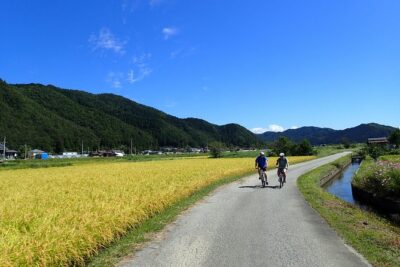
Private-group Morning Cycling Tour in Hida-Furukawa
Our verdict →