Reviewed · MORNING
Kyoto Early Morning Tour with English-Speaking Guide
Kyoto is at its best before the day gets busy. This early start takes you to Fushimi Inari, Arashiyama Bamboo Grove, and Kinkaku-ji while the paths are calmer and your photographs have fewer strangers in them. You finish with much of the day left for your own plans.
I like two things here: the group stays small, with no more than eight people, and the guide teaches you how to use Kyoto’s trains and buses instead of keeping you in a private vehicle. Guides such as Haruki, Aya, Genki, Arisa, and Ramu are praised for clear English, good local advice, and patience with families.
The trade-off is simple: you cover a lot of ground in five to six hours, and public transportation and walking are part of the deal. The pace is generally relaxed, but this is not a sit-down sightseeing outing. Kinkaku-ji also costs an extra ¥500, and transport fares add about ¥1,240.
Key points to know before booking
- Fushimi Inari comes first: The famous red torii gates are far more peaceful early in the morning than later in the day.
- Three major sights in one morning: You see Fushimi Inari, Arashiyama, and Kinkaku-ji without spending your whole day organizing routes.
- A small group of up to eight: This gives you a better chance to ask questions and keep the pace comfortable.
- Local trains and buses are part of the lesson: Your guide helps you understand Kyoto’s public transit for the rest of your visit.
- The total cost is more than the advertised price: Add about ¥1,240 for transport, ¥500 for Kinkaku-ji, and anything you buy for food or drinks.
- You keep the afternoon free: The early schedule works well if this is your first Kyoto orientation or your only open morning.
Why the early start matters at Fushimi Inari
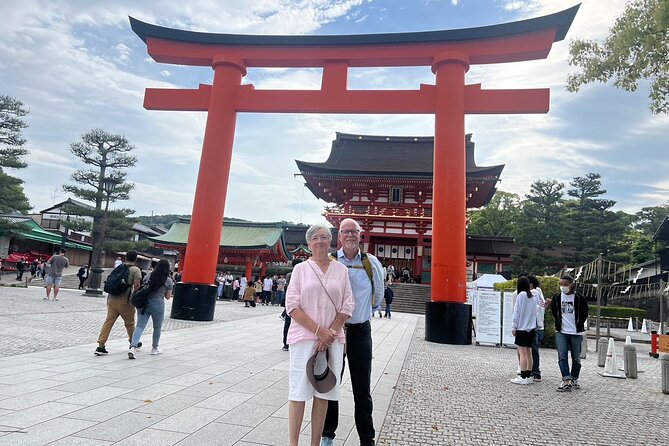
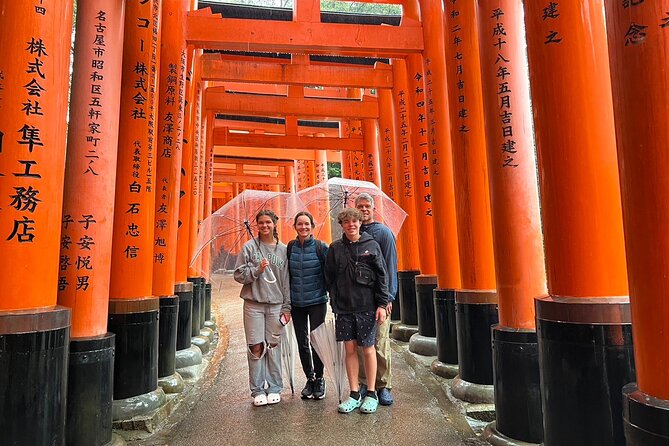
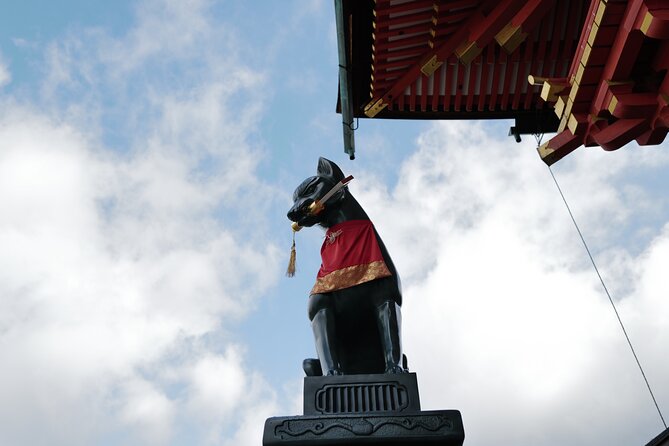
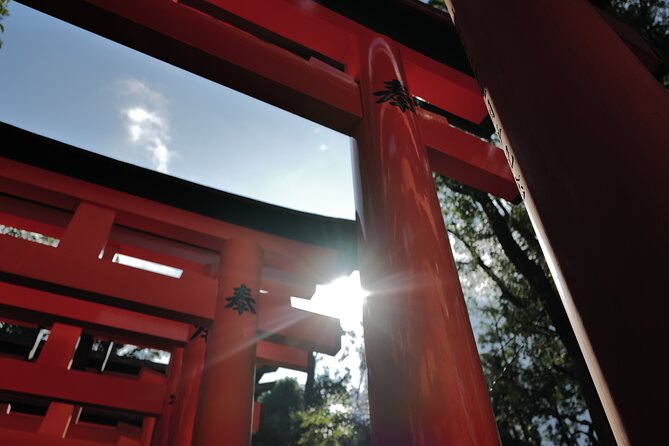
Fushimi Inari Taisha is the tour’s strongest opening. Its hillside paths pass through thousands of vermilion torii gates, creating the image most people carry in their heads when they picture Kyoto. The gates are not one short photo stop. They form a long walking route up Mount Inari, with smaller shrines, stone fox figures, and changing views as you climb.
The early timing makes a real difference here. Fushimi Inari is easy to reach and one of Kyoto’s most popular sights, so the main gate-lined paths can become crowded later in the morning. Starting early gives you a better chance to enjoy the repeating gates without a solid wall of people in every photograph.
You spend about an hour here, which is enough to see the most famous section and get a feel for the shrine. It is not enough to explore every hillside path at a leisurely pace. If you want a long climb to the summit, this schedule may feel short, but the guide can help you use the available time well.
This is also where a guide adds real value. The shrine is visually powerful, but it can be easy to walk through without understanding its purpose. Guides such as Genki, Aya, and Haruki are praised for explaining local customs and the background of the sites in clear English. You get more than a series of red gates and quick photographs.
One especially useful feature is practical help with directions. If you return to Fushimi Inari later for a stamp or another look, you will already understand how to reach it and how to move through the area. One early visitor found the shrine dramatically more crowded later in the morning, which is a good reason to protect this first stop from a late start.
More Morning Tours in Kyoto:
- Kyoto: Early Morning Tour with English-Speaking Guide
★ 4.9 · 1,128 reviews - Kyoto Morning Tour from Kyoto or Osaka
★ 4.0 · 281 reviews - Kyoto: Morning Japanese Bento Cooking Class
★ 5.0 · 149 reviews
Arashiyama Bamboo Grove and time for photographs
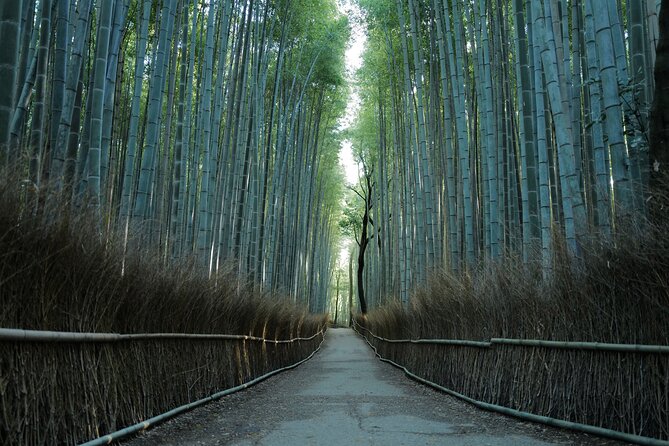
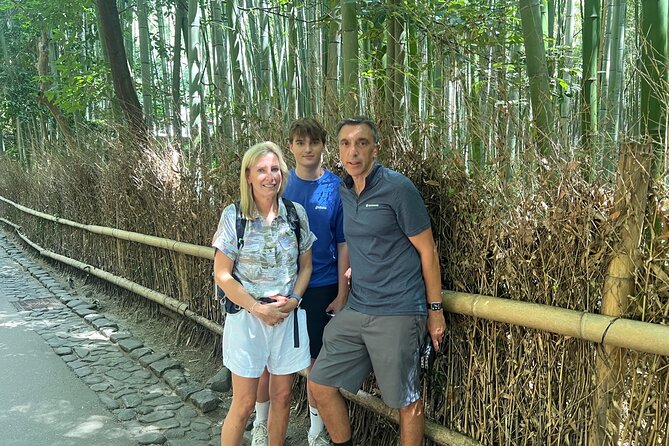
The second stop is Arashiyama, best known for its tall bamboo grove. The narrow paths pass between high green stalks that sway above you, creating a cooler, quieter feeling than the busy streets nearby. The grove is short enough to visit in a limited schedule, yet memorable enough to justify the trip across western Kyoto.
You have about an hour in this area. That gives you time to walk through the bamboo, take photographs, and hear about the district from your guide. Some tour formats also leave you a little free time near the grove, which is useful if you want to look around at your own speed or find a snack.
Set your expectations correctly. Arashiyama is not an isolated forest experience. It is a famous sight with a defined public path, and the area can become crowded. The early departure helps, but the grove remains a popular place. Your best photographs will come from moving with patience rather than stopping in the middle of the path for too long.
This stop also shows the practical strength of a small-group tour. A guide can point out good photo positions, keep an eye on the clock, and make sure you do not lose the route between the grove and the next transport connection. Hina is specifically praised for knowing good places for photographs, while Aya is praised for helping visitors see more of the area without making the morning feel rushed.
Arashiyama has more to offer than bamboo, but this tour is designed as an overview. You will not have time to explore every temple, garden, and riverside path in the district. If you want a full day in Arashiyama, book a separate visit. If you want a first look before spending the afternoon elsewhere, this stop works well.
Kinkaku-ji, Kyoto’s Golden Pavilion
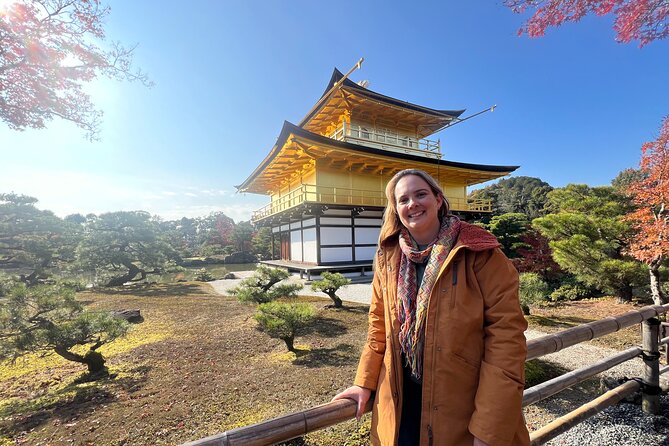
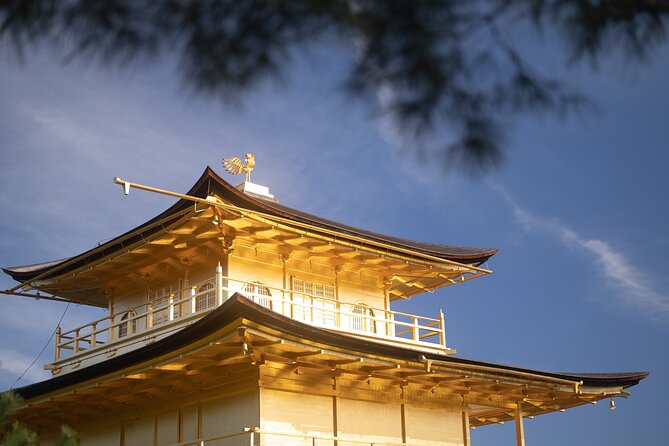
Kinkaku-ji, also called the Golden Pavilion, is the final major sight. The bright gold temple reflected in the surrounding pond is one of Kyoto’s most recognizable views. Its appearance changes with the light, and the setting gives you a strong closing image after the movement of Fushimi Inari and the vertical bamboo grove.
The visit lasts about an hour. That is enough to follow the main route, stop at the best viewing points, and learn why the pavilion matters. The grounds are arranged for sightseeing rather than wandering without direction, so a guide helps you understand what you are seeing instead of treating the temple as a single photograph.
Kinkaku-ji admission is not included. Plan on ¥500 per person, paid separately. This is a small extra cost, but it matters when you are comparing the tour price with a self-guided morning. Food and drinks are also your responsibility.
The pavilion is often the most visually dramatic stop, but it can also feel the most structured. You do not get unlimited time to sit and contemplate the grounds. The one-hour visit fits the wider plan, yet visitors who love temple gardens may wish for longer here.
The guides are particularly useful at this last stop because the tour has already introduced you to several types of Kyoto religious sites. Arisa, Akari, Genki, and others are praised for making the history and customs easy to follow. That context helps you see the differences between a Shinto shrine such as Fushimi Inari and a Buddhist temple such as Kinkaku-ji.
A five to six hour lesson in getting around Kyoto
This tour uses public transportation, with the guide leading you through the city by train and bus. That is not just a way to get between sights. It gives you a working introduction to Kyoto’s layout, which can save time on the rest of your trip.
The transport fare is not included and is listed at about ¥1,240. The exact amount can depend on the route and transport used, so treat that figure as a useful estimate. You will also need to pay for your own food and drinks.
For some visitors, taking local transit is the best part of the morning. You see how residents move around the city and learn enough from the guide to handle later journeys with less stress. Guides including Karin, Suzuka, and Soichiro are praised for helping people feel comfortable on trains and buses, while also offering ideas for independent sightseeing.
The downside is that transit adds walking, waiting, and transfers. You are not simply stepping from one attraction to the next. The tour information calls for a moderate level of fitness, and you should take that seriously. Wear comfortable shoes and be ready for a full morning on your feet.
Travel time is included in the five to six hour duration. That makes the schedule efficient, but it also means the itinerary cannot expand much if you linger at one site. The benefit is that the route is planned for you. You do not have to spend your first Kyoto morning studying maps, checking train lines, and guessing how long each connection will take.
A few more Kyoto half-days worth comparing
- PERFECT KYOTO 1-Day Bus Tour
★ 5.0 · 13,518 reviews - Kyoto: Fushimi Inari, Kinkakuji, Bamboo Grove 1 Day Bus Tour
★ 4.8 · 4,316 reviews - Kyoto: Tea Ceremony in a Traditional Tea House in Kiyomizu
★ 4.9 · 3,519 reviews - Kyoto Geisha Walking Tour: Gion District & Hidden Gems
★ 4.7 · 3,273 reviews
The guide can make or break the morning
The itinerary is strong on its own, but the English-speaking guide is the main reason to choose this experience instead of visiting the three sights independently. The best guides do three jobs at once: explain the sites, manage the route, and adjust to the people in the group.
The guiding team includes people such as Haruki, Aya, Akari, Arisa, Genki, Ramu, Karin, Hina, Hiro, and Suzuka. Individual guide assignments can vary, so you should not book on the assumption that one particular person will lead your tour. Still, the repeated strengths are clear: good English, patience, cultural explanations, and help with photographs and directions.
Families may find the small group especially helpful. Haruki is praised for being patient and fun with a 10-year-old, while Kanami is praised for keeping both adults and children involved. That does not turn the outing into a children’s program, but it suggests the guiding style can work across different ages.
Solo visitors also have a reason to consider it. One booking continued even with only one person, creating a private-style experience rather than a cancellation. A small group can make it easier to ask questions, but the value depends on how much you want conversation and guidance. If you enjoy setting your own pace and reading on your own, the group structure may feel less necessary.
The tour also earns points for practical local advice. Hiro is praised for suggestions during the rest of a Kyoto stay, and other guides help people plan independent sightseeing for the following day. Those tips can be as useful as the formal explanations, especially if Kyoto is only one stop on a larger Japan trip.
What the ¥68.98 price gets you
At $68.98 per person, this is not the cheapest way to see these sights. You can reach all three independently if you are comfortable with Kyoto’s transit, early alarms, maps, and entrance payment. The tour price also does not cover about ¥1,240 in public transport, the ¥500 Kinkaku-ji ticket, or food and drinks.
The value comes from structure. You receive a five to six hour route, an English-speaking guide, transport guidance, historical and cultural context, and a group capped at eight. For a first morning in Kyoto, that can remove a lot of planning work.
I would see the price as fair for visitors who want an efficient introduction rather than three isolated visits. You are paying for someone to connect the sights and keep the morning moving. You are also learning the transit system, which has value after the tour ends.
The value is weaker if you already know Kyoto well or have plenty of time. Independent visitors can spend longer in Arashiyama, climb farther at Fushimi Inari, or linger around Kinkaku-ji without watching the clock. The tour is built for breadth, not total freedom.
Group discounts may be available, which could improve the price for families or friends booking together. Check the current booking terms before assuming a discount applies to your dates.
Who should book this Kyoto morning tour
I would recommend this experience if you meet one or more of these descriptions:
- You are visiting Kyoto for the first time and want an efficient orientation.
- You want to see the city’s famous sights before the biggest crowds arrive.
- You prefer a small group to a large coach tour.
- You want help using trains and buses.
- You value cultural explanations and local suggestions.
- You have only one free morning and want to keep the afternoon open.
- You are traveling with children and prefer a guide who can keep the pace organized.
I would think twice if your priority is slow temple visits, long hikes, or a full day in one district. The three stops are spread across Kyoto, and transport takes part of the morning. You will see important highlights, but you will not explore every corner of them.
The physical side also deserves attention. Expect walking at shrines, temples, and transit stations, with time spent standing and moving between stops. A moderate fitness level is required, and comfortable footwear is a sensible choice.
The tour requires good weather. If poor weather forces a cancellation, you are offered another date or a full refund. You can cancel for a full refund up to 24 hours before the start time, but cancellations or changes inside that window are not refunded or accepted.
My verdict: a smart first morning in Kyoto
I would book this tour for a first or short visit to Kyoto, especially if the idea of sorting out three major sights by public transit feels tiring. The early timing is the real strength. Fushimi Inari is much more enjoyable before the crowds build, and the remaining schedule still leaves you with most of the day.
The small group and strong guiding roster add useful personal attention. You get explanations, photo help, transport practice, and suggestions for the rest of your stay. Just budget for the extra transport and temple fees, and accept that the morning is a brisk overview rather than a deep visit to each place.
If you want a calm, organized introduction to Kyoto’s biggest sights, this is a good choice. If you want complete control of your time, skip the guide and explore independently.
FAQ
How long does the Kyoto Early Morning Tour last?
The tour lasts approximately five to six hours, including travel time between the sights.
Which attractions are included?
The route visits Fushimi Inari Taisha Shrine, Arashiyama Bamboo Grove, and Kinkaku-ji, also known as the Golden Pavilion.
Is an English-speaking guide included?
Yes. An English-speaking guide is included.
How large is the group?
The tour has a maximum of eight travelers.
Are public transportation fares included?
No. Public transportation costs are not included. The estimated fare is about ¥1,240.
Is the Kinkaku-ji entrance fee included?
No. The Kinkaku-ji admission fee is ¥500 per person and is paid separately.
Are food and drinks included?
No. Food and drinks are not included.
Can I cancel for a full refund?
Yes, if you cancel at least 24 hours before the experience start time. Cancellations made less than 24 hours before the start time are not refunded. If poor weather causes the tour to be canceled, you are offered another date or a full refund.
Just added around Kyoto
- Sekka Cotton Furoshiki Class★ 5.0 · 19 reviews
- Kyoto Sword Experience – includes Museum Ticket/Ninja Experience★ 4.5 · 149 reviews
- Scenic Green Tea Fields of Hidden Kyoto & Local Tea Exp (Private)★ 5.0 · 32 reviews
- Secret Eastern Kyoto Biking Adventure★ 5.0 · 44 reviews
- Private Sake Tasting in Central Kyoto with Sake Sommelier★ 5.0 · 32 reviews
- Samurai School in Kyoto: Samurai for a Day★ 5.0 · 202 reviews
- SHIRAKAWA Japanese Culture Experiences with private English staff★ 5.0 · 16 reviews
- A Privately Guided Photoshoot in Beautiful Kyoto by a Pro★ 5.0 · 18 reviews
Morning, compared.