
Reviewed · GEISHA & MAIKO EXPERIENCES
Kyoto Gion Cultural Walk & Geisha Show with Dining Options
Kyoto’s geisha world is usually glimpsed from a respectful distance: a flash of silk turning down a lane, wooden facades, and a hurried figure heading to an appointment. This tour brings you closer in a careful way, with a walk through Gion followed by a meeting with a maiko, a geiko in training. I like that the experience explains the people and customs behind the makeup, kimono, music, and dance rather than treating them as scenery.
I also like the two-part design. The walk gives you context before the performance, and the meal or tea gives you time to ask questions. Guides such as Kenta, Ken, and Akari are praised for clear English, patience, and a strong effort to correct Hollywood myths about geiko and maiko. The main drawback is that the food portions, especially at lunch or dinner, may feel light if you expect a large meal, and the walking portion is not suited to people with mobility impairments.
Key points to know
- A small group of up to eight: You get a better chance to ask questions and hear the guide in Gion’s quieter lanes.
- Two districts may be included: The route can cover Gion and Miyagawa-cho, with temples, shrines, schools, and traditional entertainment streets.
- A real maiko meeting: Expect a 50-minute session with questions, photographs where allowed, and one or two traditional dances.
- Three time choices: Select lunch at 10:30 a.m., tea at 2:30 p.m., or dinner at 6:30 p.m.
- The cultural explanation matters: Guides spend time separating the work of geiko and maiko from common stereotypes.
- Good value for a specialist experience: At $108 per person, the cost includes the walk, meeting, performance, and selected food or drink.
Why this Gion experience is different
Many people come to Kyoto hoping to see a geisha, then leave with little more than a glimpse on a crowded street. This experience takes a more useful path. You first learn how the traditional entertainment districts work, then meet a maiko in a setting where questions and conversation are part of the program.
The terms matter. In Kyoto, a geisha is generally called a geiko, while a maiko is an apprentice geiko. The tour uses these distinctions as part of its teaching, helping you understand that this is a demanding artistic profession built around dance, music, conversation, presentation, and years of training.
The meeting is not simply a photo opportunity. You watch a performance, ask about the maiko’s routine and life, and get a chance to see the details of her formal appearance up close. The experience has included two dances and a song, along with a traditional game in some sessions. The exact performance can vary, but the central idea remains the same: observe first, then talk respectfully.
That order is important. You are not dropped into a show with no context. By the time you sit down with the maiko, you have already heard about the history, rituals, schools, districts, and modern role of geiko culture.
More Dinner Experiences in Kyoto
- Kyoto Gion Cultural Walk & Geisha Show with Dining Options
★ 5.0 · 483 reviews - Dinner with Maiko in a Traditional Kyoto Style Restaurant Tour
★ 5.0 · 175 reviews - Kyoto: Geisha Dinner & Gion Cultural Walk
★ 5.0 · 73 reviews
Starting beside the Izumo-no-Okuni statue
The meeting point is in front of the statue of Izumo no Okuni near Exit 4 of Keihan Gion-Shijo Station. This is a practical place to begin because Gion is close by, but allow enough time to find the correct station exit and gather before the walking portion starts.
Your guide may be Kenta, Ken, or Akari. The guide assignment can change, but the repeated strengths are clear: careful English, a friendly manner, and a willingness to answer questions rather than rush through a memorized speech. Kenta is particularly praised for explaining Kyoto’s culture in a patient, approachable way. Akari is noted for her enthusiasm and for helping people understand the customs that protect the dignity of geiko and maiko.
The group is limited to eight people. That number matters in Gion. Narrow streets and quiet lanes are not well suited to a large pack, and a small group makes it easier to stay together without blocking doorways or disturbing local life. It also gives you a fair chance to ask a question during the walk and later speak with the maiko.
Walking through Gion for 90 minutes
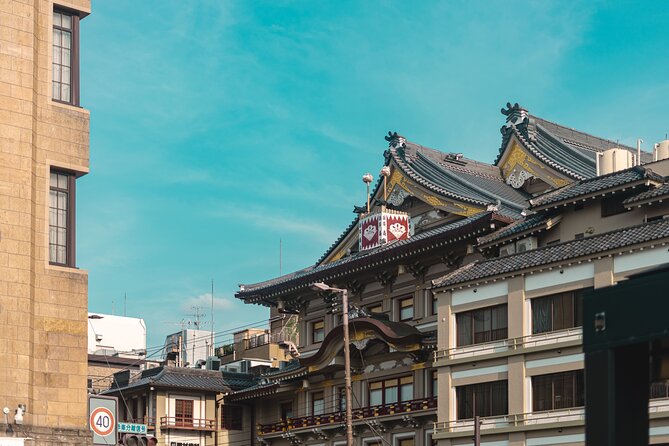
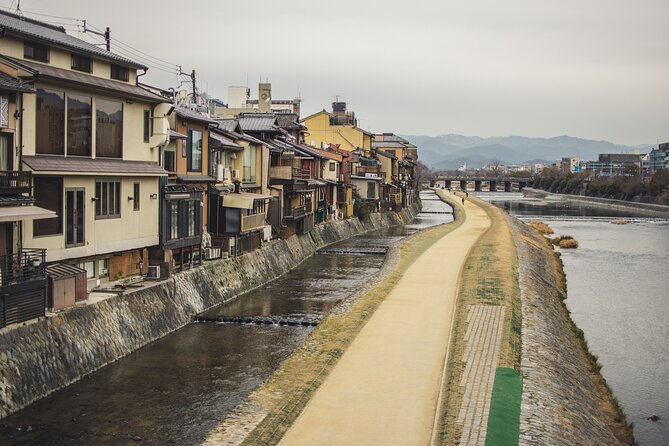
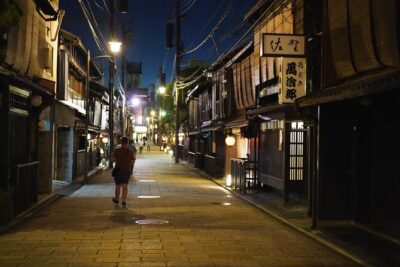
The first half lasts about 90 minutes, although the wider activity description allows roughly 1.5 to 2 hours for the walk. You move through Gion, Kyoto’s best-known geiko district, and may also see parts of Miyagawa-cho, another traditional entertainment area.
This is not just a stroll past pretty wooden buildings. The guide explains how the districts function, where training takes place, and how the work of a maiko differs from that of a geiko. You may pass temples, a shrine, traditional streets, and a school connected with the education of geiko and maiko. These details help turn a charming neighborhood into a working cultural area.
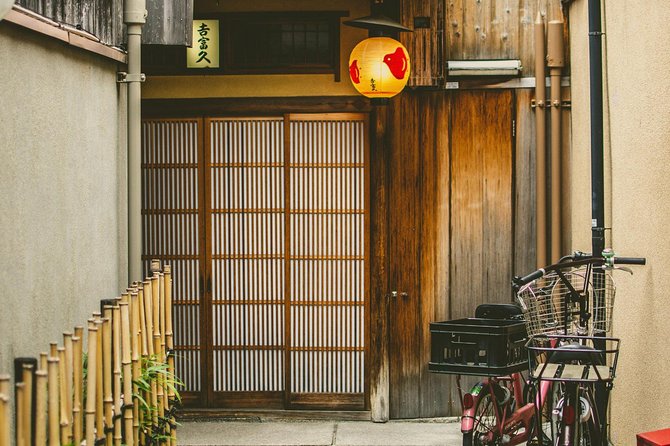
I especially like the way the walk deals with present-day reality. Gion is not a stage set built for visitors. People live and work there, and the guide helps you avoid careless behavior, unwanted photographs, and the habit of treating a passing maiko as a public attraction.
That advice is useful even if you do not see a geiko or maiko outdoors. In fact, the tour does not depend on a chance sighting. The scheduled meeting later in the experience is the reliable way to learn and see a performance, while the street walk gives you the setting and background.
The pace is described as moderate. That should suit most people who are comfortable walking for around an hour and a half, but the activity is specifically not suitable for people with mobility impairments. Large bags and luggage are not allowed, so leave suitcases at your accommodation or use an appropriate storage option before arriving.
Daylight and evening each have their appeal. The afternoon choice lets you see Gion’s architecture and lanes clearly. The dinner option gives the streets a more atmospheric feel after dark, but you will see less of the district’s details. One direct tip is to choose a daylight departure if the streets and buildings are a major reason for booking.
Meeting a maiko in Miyagawasuji
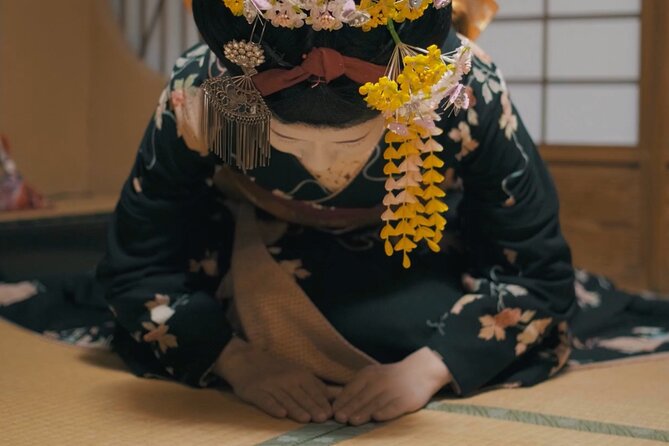
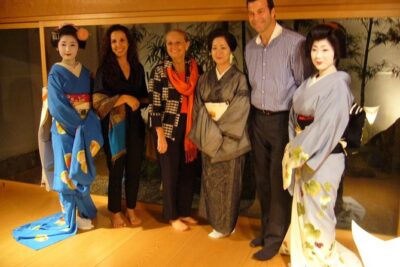
The second half takes place in the Miyagawasuji area, with the traditional dance meeting lasting about 50 minutes. The setting is designed for conversation as well as performance, so this is the portion where the tour becomes personal without becoming intrusive.
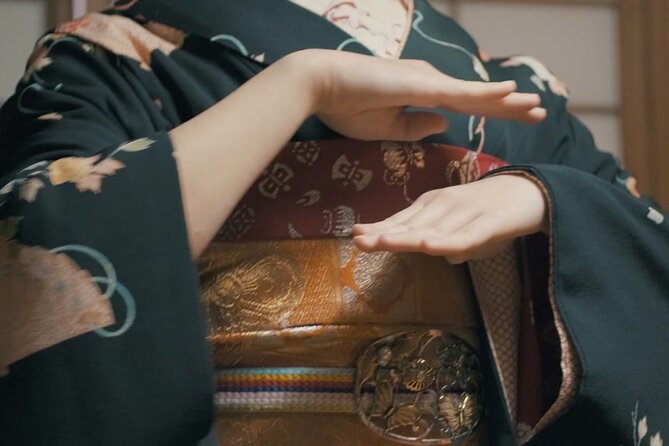
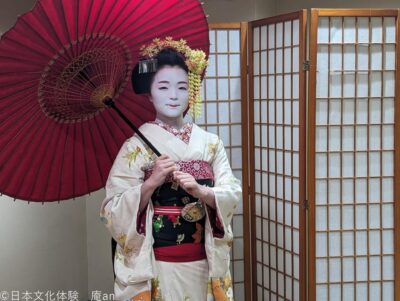
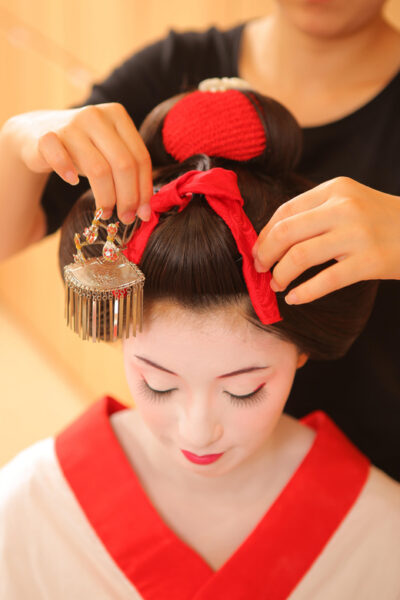
The maiko performs one or two dances or songs. Her kimono, hairstyle, makeup, and controlled movements are part of the art, but the important point is the training behind them. You are seeing someone still working toward becoming a geiko, not a fictional character or a costume model.
After the performance, you can ask questions. The subjects raised in past sessions have included the maiko’s daily routine, training, reasons for entering the profession, and the difference between maiko and geiko. The quality of this section depends partly on the questions your small group brings, so take a moment before the tour to think of one or two things you genuinely want to understand.
Photography may be permitted during the meeting, but follow the guide’s instructions. At least one guest was specifically asked not to share photographs online and chose to respect that request. That is a useful reminder: permission to take a picture does not automatically mean permission to post it publicly.
The meeting is at its best when you treat it as an exchange. Look closely, listen, and let the maiko finish before adding another question. The guides help keep the conversation polite and organized, which is one of the strongest reasons to choose this structured experience instead of trying to approach someone in the street.
More Walking Tours in Kyoto
- Kyoto Geisha Walking Tour: Gion District & Hidden Gems
★ 4.7 · 3,273 reviews - Kyoto: Gion Magical Night Walking Tour with Geisha Trivia
★ 4.9 · 2,393 reviews - Kyoto: Gion Geisha District Walking Tour – Stories of Geisha
★ 4.7 · 2,187 reviews - Night Walk in Gion: Kyoto’s Geisha District
★ 4.5 · 2,003 reviews
Choosing lunch, tea, or dinner
You select one of three formats when booking. The cultural program is similar, but the food, timing, and atmosphere change.
Lunch at 10:30 a.m. includes a Japanese lunch plate. This is a practical choice if you have an early start planned or want the meeting during daylight. Lunch also leaves your evening free for another Kyoto neighborhood, temple visit, or dinner reservation.
Tea at 2:30 p.m. includes a cup of tea. This option is lighter and may suit you if food is not the main reason for booking. A tea break gives the conversation a relaxed feel, but do not choose it expecting a full meal.
Dinner at 6:30 p.m. includes shared plates with eight different foods. The meal has been described as kaiseki-style in one account, with beautifully arranged, well-prepared dishes and a good selection of drinks. The plates are small, as is normal with this sort of meal, so I would not arrive expecting a large Western-style dinner. You may find it elegant and varied rather than filling.
Food quality is one of the more praised parts of the experience, but expectations matter. The lunch is considered good, and the dinner offers a range of tastes and attractive presentation. If you have a large appetite, plan a snack before or after, particularly if you choose tea or expect dinner portions to be substantial.
The meal is not simply added catering. It gives the group time to sit, watch, ask questions, and absorb what the guide has explained. That makes the dinner option the fullest version of the experience, while lunch and tea are sensible choices for fitting the activity around a packed Kyoto schedule.
What you are paying $108 for
At $108 per person, this is not a cheap neighborhood walk, but it is priced differently from a standard sightseeing tour. You are paying for a specialist English-speaking guide, a small group, a 90-minute-or-longer walk, a scheduled maiko meeting, a traditional performance, and lunch, tea, or dinner.
The value is strongest if you would otherwise struggle to find a respectful way to learn about geiko culture. A public street sighting costs nothing, but it gives you almost no reliable information and can easily lead to poor manners. Here, the guide provides interpretation, the maiko meeting is arranged in advance, and the group size keeps the conversation manageable.
The dinner choice offers the most included food, while the tea option is likely the best fit if the cultural program matters more than the meal. Families with older children may also find the experience useful because the question-and-answer session gives young people a direct way to learn about a profession that is often misunderstood.
The price is less appealing if you mainly want a long meal, a broad Kyoto sightseeing tour, or a chance to wander freely. This is a focused cultural activity. You should book it for the Gion context, the explanation, and the meeting with the maiko, not as a general introduction to all of Kyoto.
Practical details that affect your choice
The activity lasts three and a half hours, or 210 minutes, including the walk and meeting. Check the departure time carefully because the three choices are spaced across the day, and the lunch, tea, and dinner options are tied to particular starts.
Wear comfortable shoes. Gion’s traditional streets and the walking time call for footwear you can manage without fuss. Large bags and luggage are not allowed, and the activity is not suitable for people with mobility impairments.
The tour is conducted in English with a live guide. The small group size makes it easier to hear explanations and ask questions, but it does not guarantee a private tour. If you need a completely private arrangement, this particular format is not described that way.
You can cancel up to 24 hours before the activity for a full refund, and reserve now while paying later. Those terms are useful if your Kyoto schedule is still shifting, especially during a busy Japan itinerary.
Who should book this experience?
I would choose this tour if you want more than a quick photograph of Gion. It suits first-time visitors who are curious about geiko culture, couples looking for a special evening, and families with children old enough to listen and ask thoughtful questions.
It is also a good fit if you worry about getting the cultural details wrong. The guides explain what you are seeing and help protect the dignity of the women involved. Their role is not just to translate words. They frame the encounter so you can take part with better manners and a clearer understanding.
You may want to skip it if you dislike organized groups, cannot walk for around 90 minutes, or need a heavy meal. The performance is formal and graceful rather than fast-moving, and the conversation depends on your interest. If you want action, shopping, or a broad temple tour, spend your $108 elsewhere.
Should you book it?
Yes, if you want a focused look at Kyoto’s geiko and maiko culture with real explanation and a scheduled meeting. The strongest parts are the small group, the careful Gion walk, the chance to ask direct questions, and the performance by a maiko who is still in training.
Choose lunch for daylight and a lighter schedule, tea for the least food-focused version, or dinner for the fullest evening. I would pick the daylight option if this is your first time in Gion, and dinner if the meal and after-dark atmosphere matter most. Book this for understanding and respectful contact, not simply for a picture.
FAQ
Where does the tour meet?
Meet in front of the statue of Izumo no Okuni near Exit 4 of Keihan Gion-Shijo Station.
How long does the activity last?
The total duration is 3 hours and 30 minutes, or 210 minutes.
Is the tour conducted in English?
Yes. The activity includes a live English-speaking guide.
How large is the group?
The tour is limited to eight participants.
What food or drink options are available?
You can choose a Japanese lunch plate at the 10:30 a.m. departure, a cup of tea at the 2:30 p.m. departure, or shared dinner plates with eight different foods at the 6:30 p.m. departure.
Will I meet a maiko?
Yes. The activity includes a roughly 50-minute meeting with a maiko, including questions and answers and a traditional performance with one or two songs.
Can I bring luggage?
No. Luggage and large bags are not allowed. The activity is also not suitable for people with mobility impairments.
More Shows & Performances in Kyoto
- 1 Hour Geisha Show in Kyoto
★ 5.0 · 452 reviews - Kyoto: Samurai Kenbu Traditional Sword Dancing Show
★ 4.5 · 426 reviews - Kyoto: Meet-and-Greet, Maiko Show and Experience
★ 4.8 · 286 reviews - Kyoto: Non-Verbal Theatre Show Tickets at GEAR
★ 4.9 · 198 reviews
More Geisha Experiences in Kyoto
- Best of Kyoto: Gion, Geisha, Pagodas & Cobblestones
★ 4.9 · 2,058 reviews - Kyoto Gion Geisha District Walking Tour – The Stories of Geisha
★ 5.0 · 1,441 reviews - Kyoto Gion: 2-Hour Geisha Culture & History Walking Tour
★ 5.0 · 1,186 reviews - Kyoto Gion Night Walk & Geisha District Guided Tour
★ 5.0 · 786 reviews
Just added around Kyoto
- Sekka Cotton Furoshiki Class★ 5.0 · 19 reviews
- Kyoto Sword Experience – includes Museum Ticket/Ninja Experience★ 4.5 · 149 reviews
- Scenic Green Tea Fields of Hidden Kyoto & Local Tea Exp (Private)★ 5.0 · 32 reviews
- Secret Eastern Kyoto Biking Adventure★ 5.0 · 44 reviews
- Private Sake Tasting in Central Kyoto with Sake Sommelier★ 5.0 · 32 reviews
- Samurai School in Kyoto: Samurai for a Day★ 5.0 · 202 reviews
- SHIRAKAWA Japanese Culture Experiences with private English staff★ 5.0 · 16 reviews
- A Privately Guided Photoshoot in Beautiful Kyoto by a Pro★ 5.0 · 18 reviews
Geisha & Maiko Experiences, compared.

Kyoto Geisha Walking Tour: Gion District & Hidden Gems
Our verdict →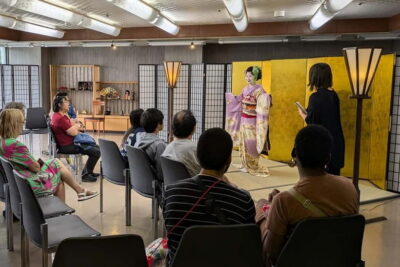
Dinner with Maiko in a Traditional Kyoto Style Restaurant Tour
Our verdict →
Browse the lists this tour appears in