
Reviewed · SAMURAI EXPERIENCES
Kyoto: Samurai Kenbu Traditional Sword Dancing Show
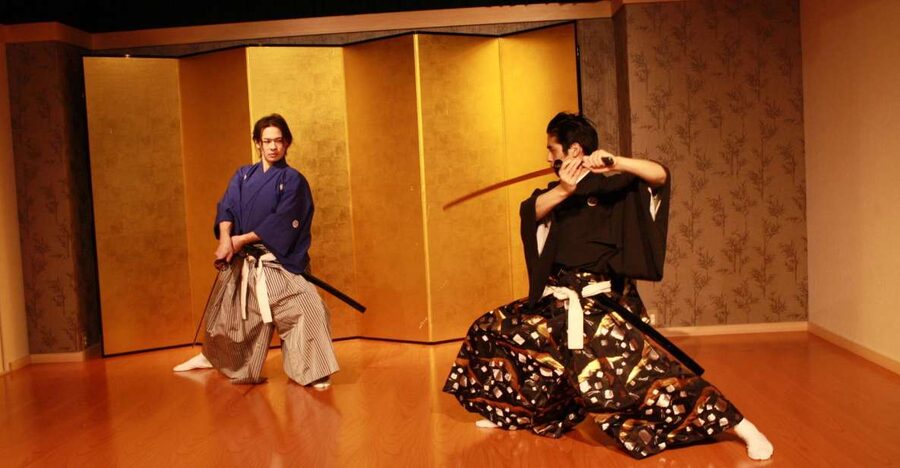
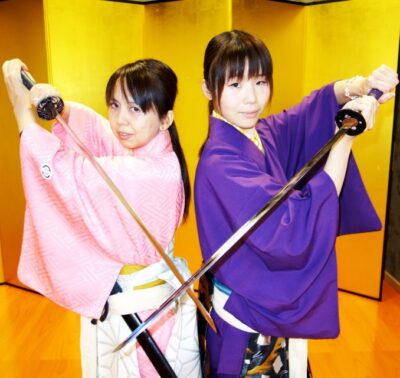
Samurai Kenbu turns swordsmanship into controlled stage art, with performers drawing, swinging, and sheathing their swords to poems once recited before battle. You get more than a show: the English narration explains samurai customs, the meaning of the movements, and the responsibility tied to carrying a sword. I especially like the short hands-on lesson at the end and the chance to photograph the performers afterward. The main consideration is that this is graceful storytelling, not a full-speed sword-fighting spectacle.
- 700 years of tradition: See Kenbu, a ceremonial sword dance linked to Japan’s feudal period.
- English-narrated tales: Short stories explain samurai life and the meaning behind each performance.
- Real sword handling: Draw and hold a sword, then practise basic movements under instruction.
- Fan technique included: If time allows, you may learn how the folding fan fits into samurai performance.
- Central Kyoto setting: The theater is a short walk from Sanjo Keihan and Sanjo stations.
- One-hour format: Long enough to feel substantial, yet easy to fit into a busy Kyoto day.
What Kenbu Really Is
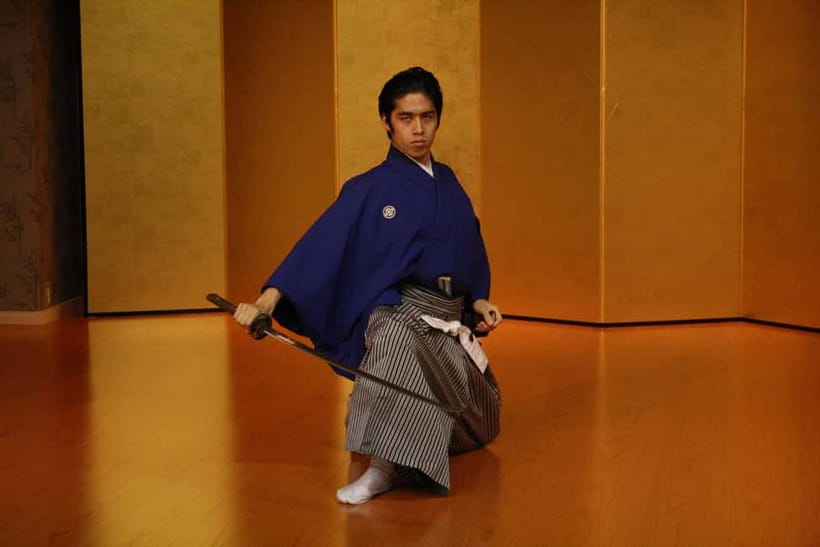
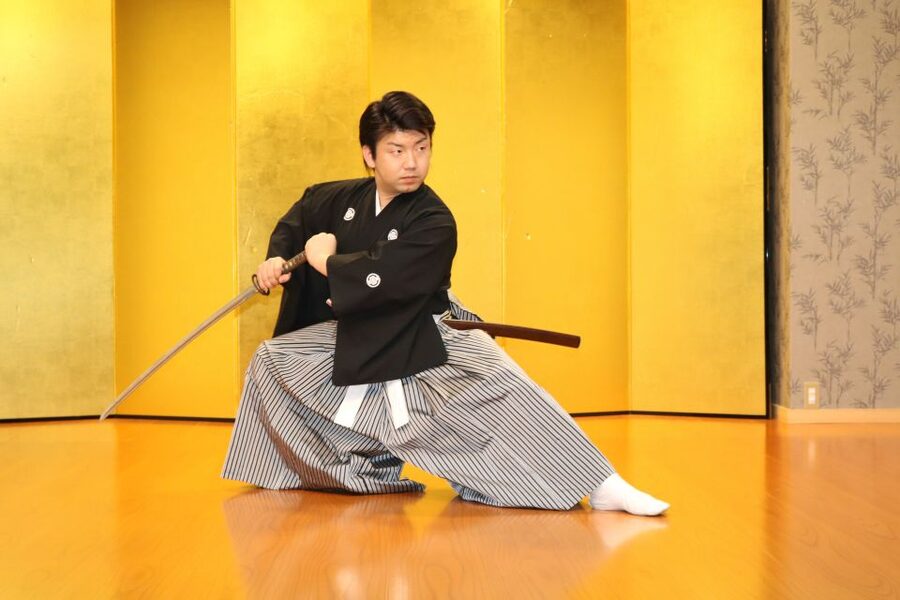
Kenbu is not simply a choreographed sword fight. It is a form of traditional sword dancing in which the performer uses measured movements, posture, facial expression, and timing to bring a poem or historical tale to life.
The sword is central, but the performance is not built around constant clashing. You will see the blade drawn with care, held in formal positions, and moved through clean arcs that suggest battle, courage, grief, or resolve. The result is often quiet and precise before it becomes dramatic.
That distinction matters when you decide if this experience suits you. If you want nonstop action, you may find the pace restrained. If you enjoy Japanese culture, stage craft, and the small details of ceremonial movement, the hour offers much more than a themed photo opportunity.
The show looks back more than 700 years, covering samurai culture from the 12th through the 19th centuries. The performance also explains how Kenbu has continued as a cultural practice rather than remaining only a relic of the feudal period.
Arriving at the Samurai Kembu Theater
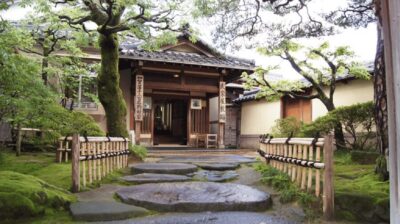
You meet at the Samurai Kembu Theater in Kyoto. It is about four minutes on foot from Sanjo Keihan Station on the Kyoto City Subway and about five minutes from Sanjo Station on the Keihan Main Line.
Give yourself time to find the entrance, especially if you are new to Kyoto’s compact but sometimes confusing streets. One earlier attendee found the theater a little hard to locate, so arriving 10 to 15 minutes early is sensible even though the stated arrival window is 5 to 15 minutes before the start.
At the entrance, you remove your shoes. This is a small detail, but it sets the tone immediately. You are leaving ordinary street life behind and entering a performance space shaped by Japanese custom.
Bring only what you need. There is no room for large luggage or travel bags, and people without appointments cannot wait inside because there is no waiting room. Do not arrive under the influence of alcohol, and keep your booking confirmation available since the staff checks the reservation name at reception.
The theater is wheelchair accessible. The experience is available in English and Japanese, with English narration and instruction for international visitors.
More Samurai Experiences in Kyoto
- Kyoto Samurai Experience
★ 5.0 · 1,294 reviews - Kyoto: Kendo and Samurai Experience with Uniform and Gear
★ 4.9 · 815 reviews - Kyoto: Samurai Sword Class by Experts in Traditional Arts
★ 4.9 · 657 reviews
The Opening Lesson on Samurai Culture
The hour begins with an introduction to Kenbu, its history, and its techniques. This opening talk gives you the context needed to understand the movements that follow.
You hear about the samurai sword as more than a weapon. Carrying one involved responsibility, discipline, and a code of conduct. The presentation connects the sword to samurai values and to the wider development of Japanese culture.
The English narration is useful because the dances can otherwise seem abstract. Before each piece, you receive a short explanation of the tale or historical setting. You can then watch for the way a performer’s stance, sword angle, or turn reflects the story.
The language is generally clear, but some visitors have found parts of the narration difficult to follow. If you miss a phrase, focus on the visual storytelling. The performance communicates a great deal through movement, and the short introductions help you regain the thread before the next piece begins.
Watching the Traditional and New-Style Performances
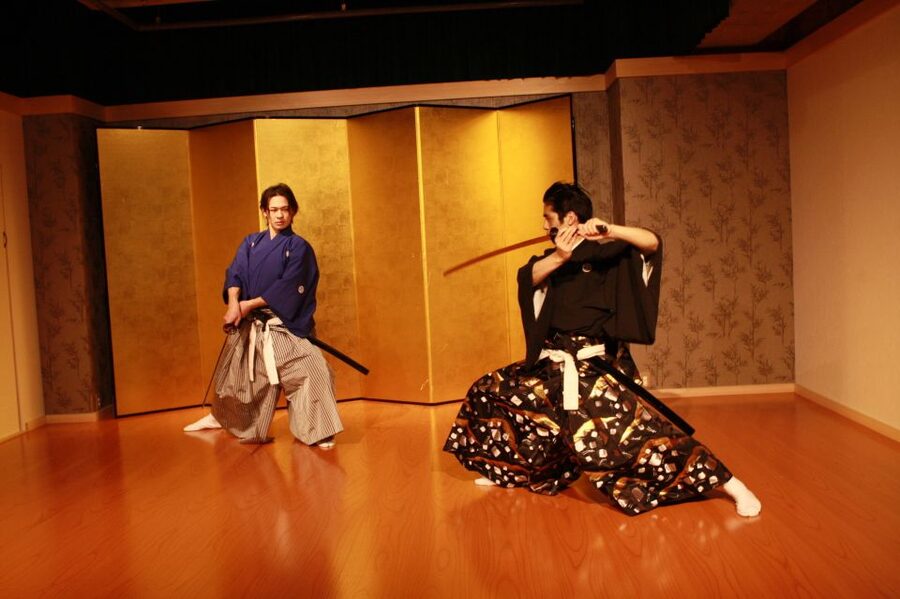
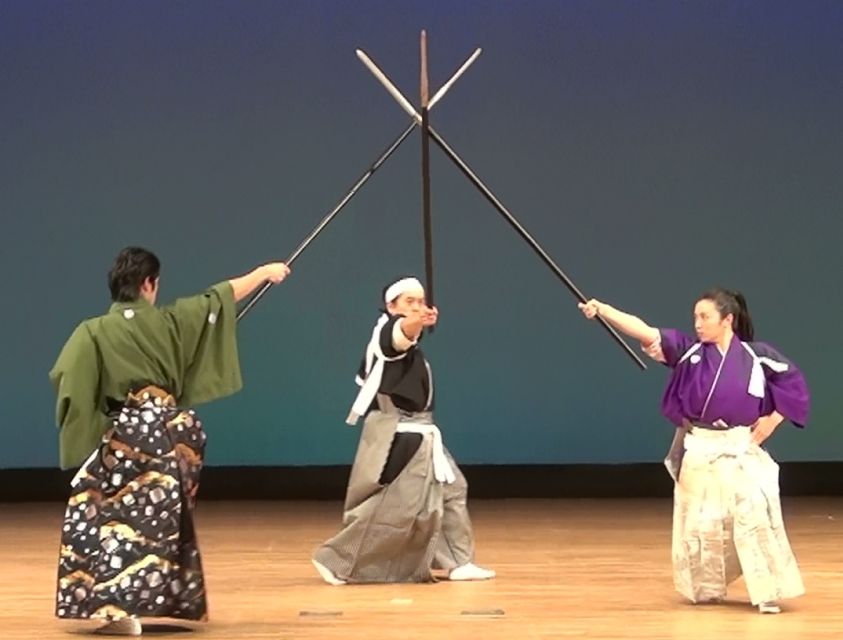
The main show presents a series of Kenbu demonstrations. You see both traditional-style and new-style performances, giving you a useful sense of how the art can honor old forms while still working on a modern stage.
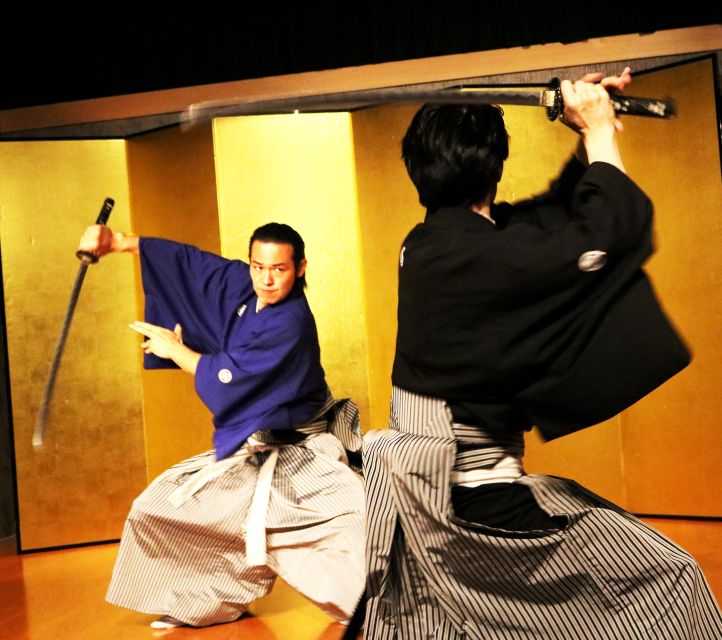
Performers swing their swords in complex patterns while following poems associated with samurai before battle. The movements can suggest a warrior preparing himself, remembering a loved one, facing an opponent, or accepting a difficult fate.
The strongest part of the show is its control. A master performer can make a simple turn look deliberate and powerful. The sword is not waved about casually. Each draw, pause, step, and return to the scabbard has a formal quality.
Several pieces work like short stories. This makes the program easier to follow than one long abstract dance, especially for families and younger visitors. The range of moods also keeps the hour moving. One scene may be solemn, while another includes a touch of humor or a playful moment within the dramatic tale.
Do not expect a large theatrical production with elaborate sets or extended combat scenes. One person looking for a bigger stage and more fight demonstrations felt that the show did not match those expectations. The appeal lies in finesse, emotion, and storytelling, not movie-style action.
That is also why the program can work well for adults who want cultural context. You are not simply watching people in costumes swing swords. You are being shown how a traditional art uses poetry, ritual, and physical discipline to express an older way of life.
The Folding Fan and the Samurai’s Other Tool
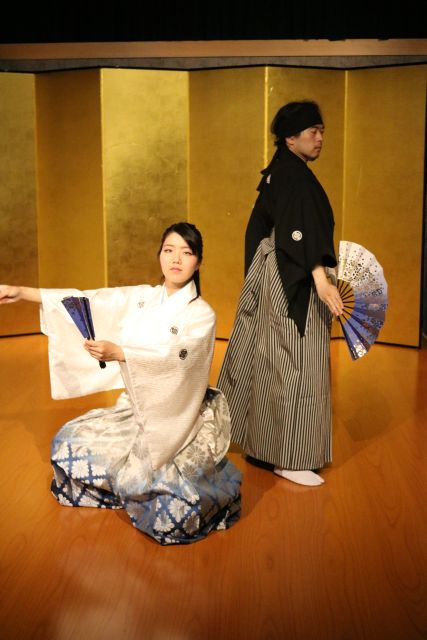
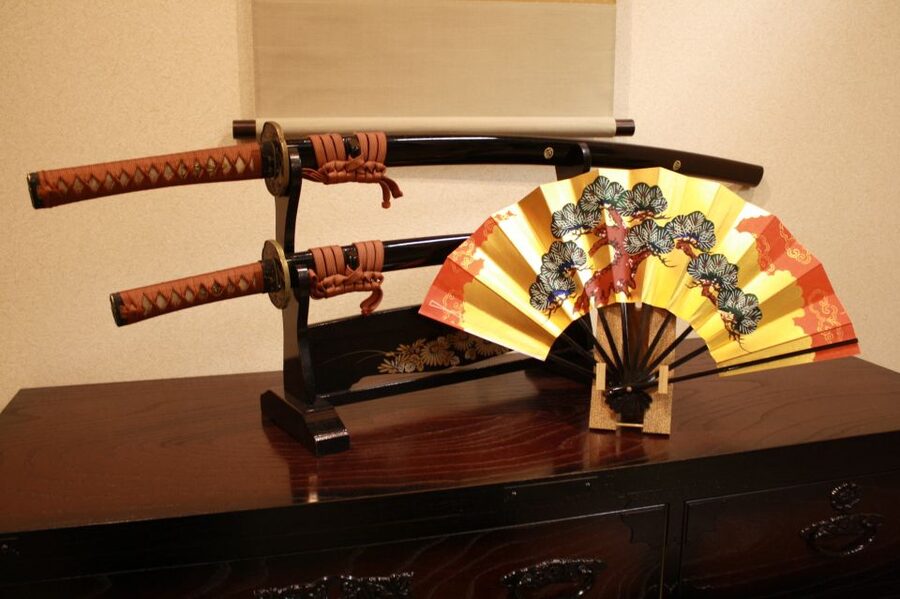
The sword receives most of the attention, but the folding fan adds another layer to the performance. You see fan techniques used in the dances, and if time allows, you may learn a little about handling one during the interactive portion.
The fan can signal rank, attitude, or movement within a story. In the hands of a trained performer, it becomes part of the choreography rather than a simple accessory.
This section is especially helpful if you want to understand Kenbu as a complete performance art. The sword provides strength and danger, while the fan introduces lighter, more expressive gestures.
The fan lesson is not guaranteed, since it depends on the available time after the sword practice. Treat it as a bonus rather than a central part of the booking.
Same trip, a completely different kind of day:
- PERFECT KYOTO 1-Day Bus Tour
★ 5.0 · 13,518 reviews - Kyoto: Fushimi Inari, Kinkakuji, Bamboo Grove 1 Day Bus Tour
★ 4.8 · 4,316 reviews - Kyoto: Tea Ceremony in a Traditional Tea House in Kiyomizu
★ 4.9 · 3,519 reviews - Kyoto Geisha Walking Tour: Gion District & Hidden Gems
★ 4.7 · 3,273 reviews
The Short Sword Lesson After the Show
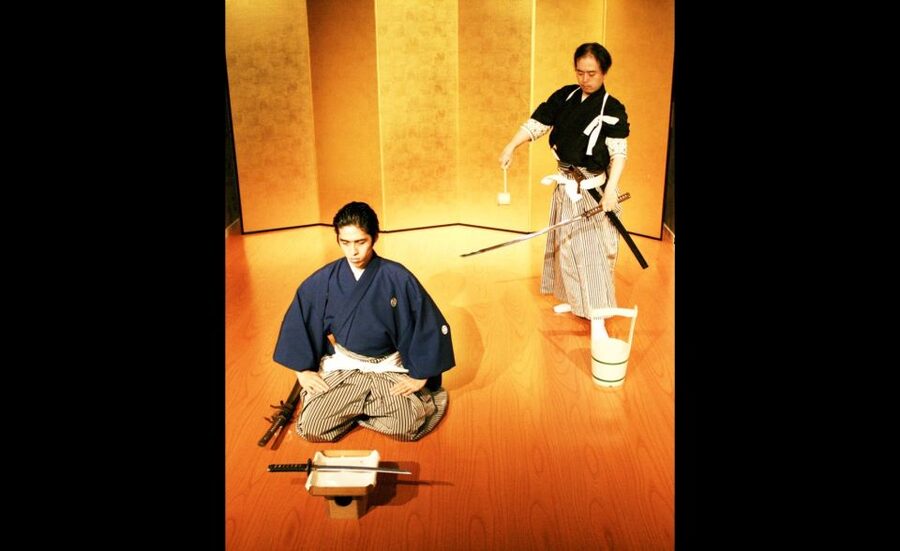
After the formal performance, the atmosphere becomes more relaxed. The instructors return for a short interactive session, and you get the chance to handle a sword under direction.
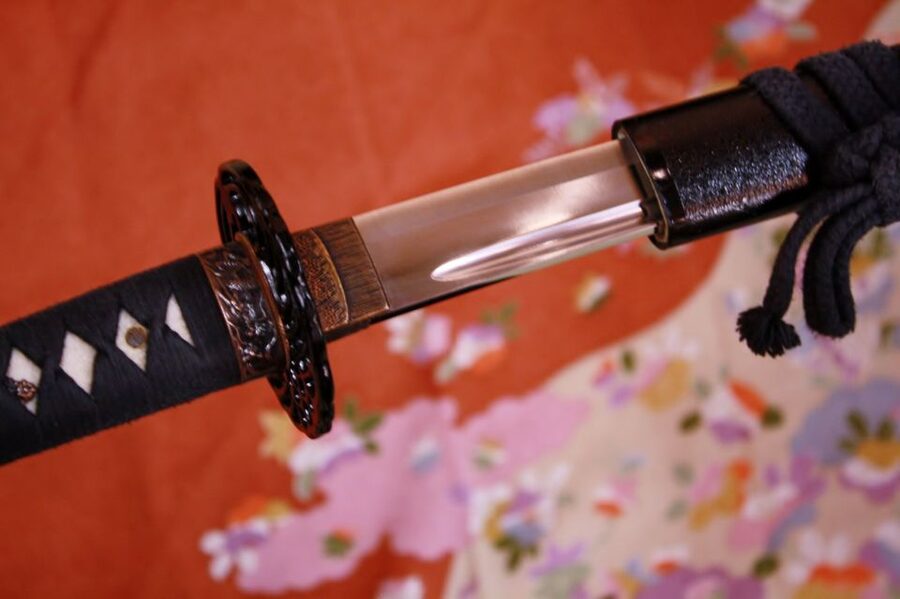
You begin by picking up the sword, slowly drawing it from the scabbard, and taking hold of it. At the instructor’s command, you practise a gentle swing before adding more force. The movements are basic, but holding the sword gives you a quick lesson in how much control and balance the performers need.
This is not a martial arts course. It is a supervised introduction that lets you feel the weight and responsibility discussed earlier. Even a simple movement seems less effortless after you try it yourself.
The instructors use humor to put people at ease, which helps if you feel awkward handling a sword in front of a group. The lesson can be especially fun for families, and children have enjoyed the wider experience, although the activity still requires careful listening and controlled movement.
One point to keep in mind is organization. Some people have found the lesson slightly less structured than the main show. That does not remove the fun, but you should think of it as a brief cultural activity rather than a formal training session.
You may also practise a shout or a basic stance. If there is enough time, the instructor can add fan techniques. The exact amount of practice depends on the schedule and the size of the session.
Photos After the Performance
Photography and video are not allowed during the show. This rule protects the mood of the performance and keeps phones from distracting you or the performers.
After the show, you are given time to take photographs. You can pose with the performers and capture images while holding the sword. Staff members may also take photos for you, which is useful if you are traveling alone or want a picture of your whole group.
This arrangement works well. During the dance, you can watch without reaching for your phone. At the end, you get a clear chance to record the memory.
If photography is a major reason for booking, remember that the photo session comes after the performance and is brief. It is an extra part of the experience, not the main event.
Is One Hour Enough for $32?
At $32 per person, the experience offers a reasonable mix of performance, cultural explanation, and participation. You are paying for entry to the theater, the Kenbu show, and the short sword lesson. Food, drinks, and hotel transportation are not included.
The value is strongest if you would otherwise spend an hour looking for a samurai-themed attraction with little context. Here, the narration explains what you are seeing, and the hands-on section gives you a physical connection to the art.
The one-hour length also works well in Kyoto. You can fit it between visits to temples, shopping streets, or dinner without giving up half a day. Several people have felt that the program passed quickly, while one person thought it ran 5 to 10 minutes longer than ideal. That difference comes down to your interest in the subject.
For a family, the price buys a shared activity with a clear beginning, middle, and end. For a history enthusiast, it offers a compact introduction to samurai culture. For someone seeking a large-scale spectacle, the value is weaker because the stage presentation is intimate and the action is stylized.
Who Will Enjoy This Kyoto Experience
I would choose this for you if you want a cultural activity that explains itself in English and gives you something to do, not just something to watch.
It suits:
- Families looking for a manageable one-hour program
- First-time visitors curious about samurai culture
- People who enjoy Japanese theater, dance, and traditional arts
- History fans who want context alongside a performance
- Couples or friends who would enjoy a memorable photo session
- Visitors who prefer a central Kyoto activity near public transportation
You may want to skip it if your main goal is realistic sword combat, a large theater, or a long martial arts class. The performance uses weapons, but its focus is ceremony and storytelling.
Young children can enjoy the costumes, drama, humor, and short practice session. Still, very small children may not follow the historical explanations, and anyone taking part in the lesson must follow the instructor carefully.
Practical Advice Before You Book
Book a starting time that allows you to arrive early. The theater is close to two stations, but a few extra minutes will help you locate the entrance, remove your shoes, and settle in.
Wear something comfortable enough for standing and controlled arm movements. The supplied information does not require special clothing, but loose, practical clothes will make the lesson easier than restrictive travel wear.
Do not bring a large suitcase. There is no space for it, and there is no waiting room for people without appointments.
Keep your camera away during the show. You will have a better experience by watching closely, then taking photographs afterward when the performers return.
The experience has free cancellation up to 24 hours before the start time, and you can reserve now and pay later. If your plans change, you must cancel the reservation yourself through GetYourGuide.
Should You Book the Samurai Kenbu Show?
Book it if you want an elegant introduction to samurai culture with English narration, traditional tales, and a short chance to handle a sword. The performers’ skill, the clear structure of the program, and the friendly photo session make the experience easy to recommend at $32.
Go in expecting Kenbu, not a stunt show. The movements are graceful and deliberate, the stage is not designed for grand combat scenes, and the interactive lesson is brief. With those expectations, this is a smart one-hour addition to a Kyoto itinerary, especially for families, culture seekers, and anyone who wants to understand the samurai image beyond films and souvenirs.
FAQ
Where does the Samurai Kenbu show take place?
It takes place at the Samurai Kembu Theater in Kyoto, on Honshu, Japan.
How long does the experience last?
The activity lasts one hour.
How do I reach the theater?
The theater is about four minutes on foot from Subway Sanjo Keihan Station and about five minutes from Sanjo Station on the Keihan Main Line.
Is the show available in English?
Yes. The experience is offered in English and Japanese, and the performance includes English narration.
Can I hold a samurai sword?
Yes. The short sword lesson lets you pick up a sword, draw it from the scabbard, and practise basic movements under instruction.
Can I take photos during the performance?
No. Photos and videos are not allowed during the show, but you can take photos after the performance when the performers return.
More Shows & Performances in Kyoto
- Kyoto Gion Cultural Walk & Geisha Show with Dining Options
★ 5.0 · 518 reviews - Kyoto Gion Cultural Walk & Geisha Show with Dining Options
★ 5.0 · 483 reviews - 1 Hour Geisha Show in Kyoto
★ 5.0 · 452 reviews - Kyoto: Meet-and-Greet, Maiko Show and Experience
★ 4.8 · 286 reviews
Just added around Kyoto
- Sekka Cotton Furoshiki Class★ 5.0 · 19 reviews
- Kyoto Sword Experience – includes Museum Ticket/Ninja Experience★ 4.5 · 149 reviews
- Scenic Green Tea Fields of Hidden Kyoto & Local Tea Exp (Private)★ 5.0 · 32 reviews
- Secret Eastern Kyoto Biking Adventure★ 5.0 · 44 reviews
- Samurai School in Kyoto: Samurai for a Day★ 5.0 · 202 reviews
- Private Sake Tasting in Central Kyoto with Sake Sommelier★ 5.0 · 32 reviews
- SHIRAKAWA Japanese Culture Experiences with private English staff★ 5.0 · 16 reviews
- A Privately Guided Photoshoot in Beautiful Kyoto by a Pro★ 5.0 · 18 reviews
Samurai Experiences, compared.

Browse the lists this tour appears in