Reviewed · SAMURAI EXPERIENCES
Kyoto : Family-Friendly Sword Lesson at Samurai Ninja Museum
Kyoto’s samurai lesson gives you more than a costume photo. You dress in hakama, armor, and a helmet, watch a sword demonstration, then learn simple katana movements of your own. The visit also includes the Samurai Ninja Museum, themed photos, and a chance to try ninja weapons.
I like the mix of hands-on practice and history, and I like that children and adults can take part together. The instructors, including Ken, Raito, Nobu, and Jukia, are praised for making the class lively and easy to follow. The main drawback is that the activity is more of a beginner performance lesson than serious sword training.
Key points to know
- You learn two simple katana kata: A kata is a set sequence of sword movements, giving the lesson more structure than simply swinging a prop sword.
- The costume is part of the activity: Hakama, armor, and a samurai helmet are provided for the lesson and photographs.
- The museum visit adds context: You hear about samurai and ninja history instead of leaving with photos alone.
- Ninja weapons are included: You can try shuriken, the small throwing weapons often linked with ninja culture, in a target activity.
- The format suits families: Most people can participate, but children under 3 are not allowed inside the venue.
- The group may be small, but confirm the size: The experience is promoted as limited to 10 participants, while the information also gives a maximum of 22 travelers.
Putting on hakama before the sword lesson
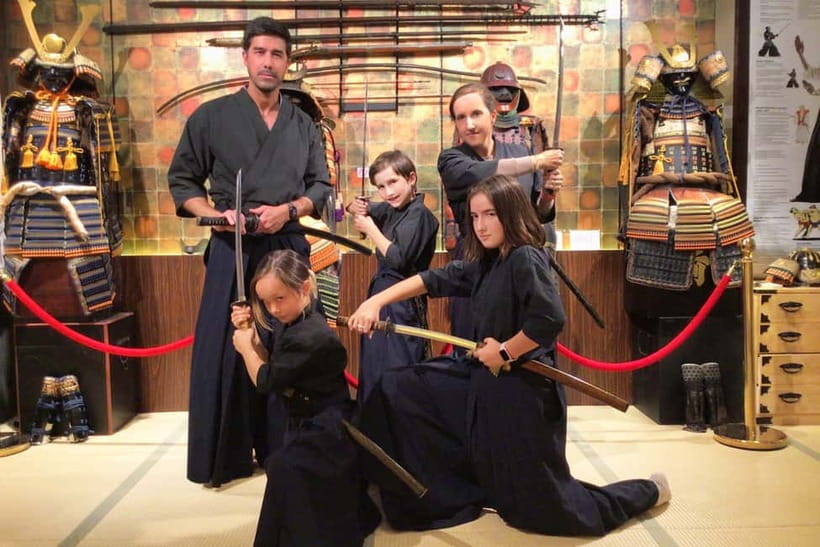
The activity begins with the part most children will remember: changing into samurai clothing. You use a hakama, samurai armor, and a helmet, then pose in the museum’s themed settings before or during the lesson.
This costume change is not just decoration. The clothing helps set the mood and gives the instructor a clear way to introduce samurai customs and equipment. You are still taking part in a modern activity, but the outfit makes the movements feel more meaningful than they would in ordinary clothes.
The costume can also be the practical highlight for families. Younger children may not care much about a lecture on Japanese history, but they usually understand the fun of dressing up and holding a sword. Adults get something from it, too, especially in group photographs.
Do not expect a perfectly tailored suit or a private photo session. The costumes are shared activity equipment, and the main aim is participation. Still, the included hakama, armor, and helmet add real value to the $66 price because you are not paying only for a museum entry or a quick picture.
More Family Tours in Kyoto
- Kyoto:Family-Friendly Kimono & Yukata Experience at WARGO
★ 5.0 · 147 reviews - Ninja Experience (Family Friendly) at Samurai Ninja Museum KYOTO
★ 4.5 · 132 reviews - Samurai Sword Experience (Family Friendly)at SAMURAI MUSEUM KYOTO
★ 4.5 · 63 reviews
Learning the katana movements from an English-speaking instructor
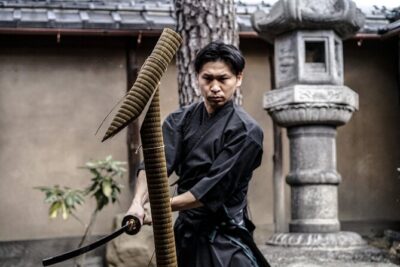
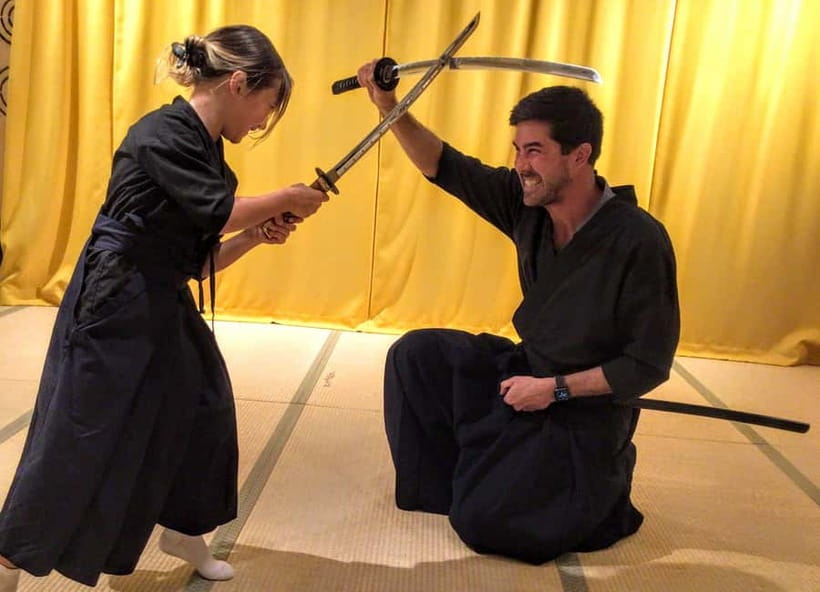
Before you try the sword, the instructor demonstrates how to swing it properly. You then copy the basic movements under guidance. The activity is designed for beginners, so you do not need prior sword experience or martial arts training.
One especially useful detail from the class format is the teaching of two kata, or set sequences of movements. This gives you something to practice and remember. Instead of waving a sword at random, you learn a short routine with a beginning, middle, and end.
The English-speaking instructors named in participant feedback include Ken, Raito, Nobu, and Jukia. Ken is specifically noted for teaching two kata and helping the group feel like real samurai. Raito is also singled out as an experienced teacher, while Nobu and Jukia receive praise for making the session enjoyable.
You should keep your expectations in the right place. This is not a full course in Japanese swordsmanship, and the two-hour visit cannot cover advanced technique. The value comes from a safe introduction, clear demonstrations, and the chance to perform a short sequence in costume.
The sword lesson also gives adults a role beyond taking photographs. You can focus on stance, timing, and following instructions, while children enjoy the theatrical side. Since the group is taught together, the experience works best when everyone is willing to take part rather than watch from the side.
Visiting the Samurai Ninja Museum
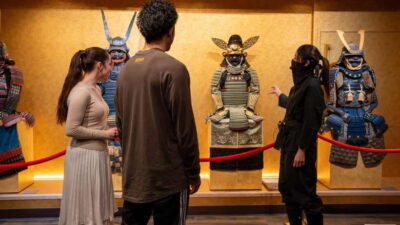
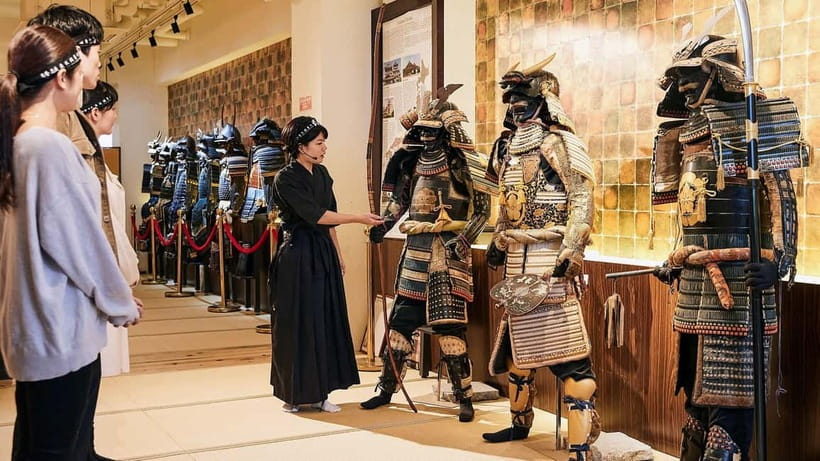
The museum portion adds a useful layer to the activity. You learn about samurai and ninja culture in a setting built around the same themes as the lesson. This makes the visit feel more like a short cultural program than a costume rental.
The museum tour is guided, and the language listed for the experience is English. That matters if you want more than visual displays. The guide can connect the clothing, swords, and ninja weapons to the broader story of Japan’s warrior traditions.
The museum is not described as a large historical institution with a full day of exhibits. Think of it as a compact attraction paired with a hands-on lesson. That is a good fit for families or for anyone who wants a manageable activity between Kyoto’s temples and larger sightseeing stops.
I would also treat the museum as a way to add meaning to the photographs. A samurai pose is more fun after you have learned why the sword and armor matter. The guided section helps keep the visit from feeling like a simple photo studio with a Japanese theme.
The exact order of the lesson and museum visit can vary. The experience details confirm both parts, and the class format described by participants includes the guided museum visit after the sword lesson. Allow the full two hours rather than planning another appointment immediately afterward.
Trying ninja shuriken at a target
The ninja section gives the activity a change of pace. After the sword movements and museum visit, you can try ninja weapons, including shuriken at a target.
This is likely to be a hit with families because it turns the second half of the experience into a simple skill challenge. The activity is not only about posing with a katana. You get another way to take part, with a clear target and a different connection to ninja culture.
The provided information does not promise advanced throwing instruction or a particular success rate. Approach it as a supervised trial rather than a serious weapons class. The fun comes from trying something unfamiliar and seeing how well you can follow the guidance.
It also helps break up the lesson. A full two hours focused only on sword movements could feel repetitive for younger participants. The combination of costume, kata, museum displays, photos, and shuriken gives the visit several short sections instead.
More Museum Tours in Kyoto
- Kyoto: Tea Museum Tickets and Matcha Grinding Experience
★ 4.9 · 739 reviews - Skip the lines Basic Ticket at SAMURAI NINJA MUSEUM KYOTO
★ 4.5 · 632 reviews - Kyoto : Geiko Maiko Dance of Kyoto & Visits of Gion Museum
★ 4.6 · 415 reviews - Kyoto Sword Experience – includes Museum Ticket/Ninja Experience
★ 4.5 · 149 reviews
Taking samurai and ninja photographs
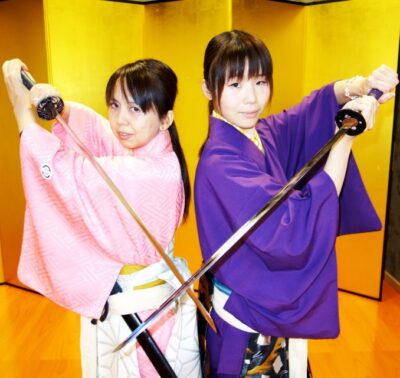
The photo opportunities are built into the experience. You pose with swords in front of studio settings or samurai-themed backgrounds, and you can also take photographs while dressed as a samurai or ninja.
This is one of the clearest reasons to book the activity instead of visiting a museum alone. You leave with a visual record of the day, and the costume makes the images more memorable than ordinary sightseeing snapshots.
The photos are self-directed themed opportunities, not described as a professional portrait package. You should not assume that a photographer, printed photographs, or edited images are included. Bring a phone or camera if you want to record the poses.
For families, the photographs can be the easiest way to involve relatives who do not want to perform the whole lesson. Everyone can join the group image, and children can switch between samurai and ninja themes. Adults may find that the staged poses are more fun once they stop worrying about looking serious.
The backgrounds are also useful if Kyoto weather is poor. Much of the activity takes place indoors, and the themed studio setting gives you a clear photo backdrop without needing to search for a suitable location around the city.
How the two-hour format affects the experience
Two hours is a sensible length for this activity. It leaves enough time for changing clothes, instruction, the museum, weapon trials, and photographs without taking an entire day from Kyoto sightseeing.
The short format also keeps the lesson approachable. You can fit it into a day that includes temples, food stops, or shopping. Check the available starting times before booking, since the experience offers set start times rather than an open arrival window.
Group size matters here. The activity is described as a small group limited to 10 participants, but the information also lists a maximum of 22. I would confirm the expected group size at booking if close teacher attention is important to you.
A smaller class should make it easier to see the sword demonstration and receive corrections. A larger group may mean more waiting during costume changes, photographs, or the shuriken activity. The instructors praised by name suggest a friendly teaching style, but the personal attention you receive will still depend on the group that day.
The activity is near public transportation, and transportation to and from the venue is not included. You need to make your own way there and back. The venue is listed as wheelchair accessible and stroller accessible, though the physical details of the sword practice area are not specified.
Is $66 a fair price?
At $66 per person, this is not the cheapest way to take a photograph in Kyoto. It is more fairly judged as a bundled two-hour activity that includes instruction, costume use, museum admission, guided interpretation, themed photos, and a ninja weapons trial.
I think the price is reasonable for families who want a planned indoor activity with several parts. Paying separately for a costume rental, a museum visit, and a guided lesson could easily produce a similar total, while this format removes some of the planning work.
The value is weaker if you want a serious martial arts class. You receive an introduction to sword movements and two kata, not an extended technical course. It is also less appealing if you dislike dressing up or prefer quiet historical museums without staged activities.
The included costume equipment helps the price. Hakama, armor, and a helmet are provided, so you do not need to arrange special clothing. The museum and ninja trial also mean that the experience does not end after the first few sword swings.
Free cancellation up to 24 hours before the activity gives you some room to adjust plans, and the reserve now, pay later option can help if your Kyoto schedule is still changing. Those terms are useful, but check the conditions shown for your booking before relying on them.
Who will enjoy this Kyoto activity most
This is a strong choice for families with children aged 3 and over who want a participatory activity. It gives children several ways to stay interested, from dressing up to sword sequences, museum displays, shuriken, and photographs.
It also suits adults who want a light cultural experience rather than a formal history lecture. You learn about samurai and ninja traditions, but the main point is to take part. The mood is playful, and the instructors are expected to guide the group in English.
The activity can work well for mixed-age groups. A child may focus on the helmet and photos, while an adult enjoys learning the kata or hearing the historical explanation. Couples and groups of friends can also join, especially if they are comfortable with theatrical poses.
I would skip it if you need a highly advanced sword lesson, a private instructor, or a fully detailed museum collection. I would also avoid booking it for a child under 3, since children that age cannot enter the venue.
Practical booking advice
Wear something comfortable underneath the costume. The provided information does not give a detailed dress code, but sword movements and changing clothes are easier when your base layer allows free movement.
Plan to arrive with enough time for the scheduled start. The activity has a fixed duration and includes several stages, so arriving late could cut into your own lesson even if the group continues.
Keep your phone ready for photographs, but remember that a professional photographer and printed photos are not listed as inclusions. If you want pictures of everyone together, ask another participant or member of your group to help.
The activity is wheelchair accessible and stroller accessible according to the provided details. If you need specific information about changing areas, floor surfaces, or the exact practice space, contact the provider before booking, since those details are not supplied.
The provider is GLOBA Inc. The experience is offered in English, and the named instructors associated with the activity include Ken, Raito, Nobu, and Jukia. Instructor assignments can change, so do not book solely to meet one particular teacher.
Should you book the samurai lesson?
Book this experience if you want a family-friendly Kyoto activity that combines costumes, a beginner sword lesson, a museum visit, ninja weapons, and photographs in one two-hour session. The teaching, especially the two kata, gives the activity more shape than a simple dress-up stop.
At $66, the best value goes to families and groups who will use every part of the program. If you only want a quick photo, it is expensive. If you want a playful cultural activity with enough structure to keep both children and adults involved, it is a sensible choice.
FAQ
How long does the samurai experience last?
The experience lasts two hours.
What is included in the price?
The price includes the samurai sword lesson, hakama, a samurai helmet, samurai armor, themed photo opportunities, and a ninja weapons trial.
Is transportation included?
No. Transportation to and from the activity is not included.
Is the experience offered in English?
Yes. The listed language is English, and the instructor leads the activity in English.
Can children participate?
Yes. Most participants can take part, but children under 3 cannot enter the samurai venue.
Is the venue accessible for wheelchairs and strollers?
The activity is listed as wheelchair accessible and stroller accessible.
How many people are in the group?
The activity is described as a small group limited to 10 participants. The provided information also gives a maximum of 22 participants, so confirm the expected group size when booking.
Do I need previous sword experience?
No previous experience is stated as a requirement. The instructor demonstrates the sword movements before you try them.
Are museum admission and a guided visit included?
Yes. The activity includes a visit to the Samurai Ninja Museum, and the experience information describes the museum portion as guided.
Can I cancel for a full refund?
You can cancel up to 24 hours in advance for a full refund. A reserve now, pay later option is also available.
More Samurai Experiences in Kyoto
- Kyoto Samurai Experience
★ 5.0 · 1,294 reviews - Kyoto: Kendo and Samurai Experience with Uniform and Gear
★ 4.9 · 815 reviews - Kyoto: Samurai Sword Class by Experts in Traditional Arts
★ 4.9 · 657 reviews - Kyoto: Samurai Kenbu Traditional Sword Dancing Show
★ 4.5 · 426 reviews
More Ninja Experiences in Kyoto
- Ninja 1-hour Hands-on Lesson by Japanese master in Kyoto -Entry
★ 5.0 · 489 reviews - Kyoto: Ninja Weapon Forging Experience
★ 4.8 · 478 reviews - Ninja 2-hour Hands-on Lesson by Japanese master in Kyoto -Medium
★ 5.0 · 218 reviews - Kyoto: Samurai Ninja Museum guided tour
★ 4.8 · 145 reviews
Just added around Kyoto
- Sekka Cotton Furoshiki Class★ 5.0 · 19 reviews
- Kyoto Sword Experience – includes Museum Ticket/Ninja Experience★ 4.5 · 149 reviews
- Scenic Green Tea Fields of Hidden Kyoto & Local Tea Exp (Private)★ 5.0 · 32 reviews
- Secret Eastern Kyoto Biking Adventure★ 5.0 · 44 reviews
- Private Sake Tasting in Central Kyoto with Sake Sommelier★ 5.0 · 32 reviews
- Samurai School in Kyoto: Samurai for a Day★ 5.0 · 202 reviews
- SHIRAKAWA Japanese Culture Experiences with private English staff★ 5.0 · 16 reviews
- A Privately Guided Photoshoot in Beautiful Kyoto by a Pro★ 5.0 · 18 reviews
Samurai Experiences, compared.