
Reviewed · NINJA EXPERIENCES
Ninja 1-hour Hands-on Lesson by Japanese master in Kyoto -Entry
The most unusual part of this Kyoto activity is how quickly it moves from dressing in ninja clothes to practicing real techniques. In one hour, you learn ninja breathing, walking, meditation, sword handling, throwing skills, and blowgun use inside a small dojo.
I like the small maximum group of six, which gives you more time with the instructor, and I like the mix of physical practice and history. The secret rooms, trap-house features, and target work give the class plenty of variety. The trade-off is that one hour offers a lively introduction, not a detailed course in ninja history or martial arts.
Key points to know before you book
- Small Kyoto dojo setting: Classes are limited to six people, so you are not lost in a large crowd.
- Several hands-on skills: You practice with a ninja sword, kunai, shuriken, and a blowgun.
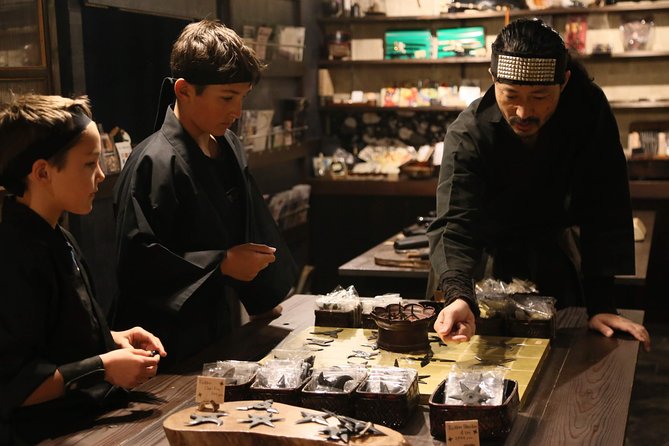
- Ninja clothes included: You change into rental clothing for the lesson, which makes photos and practice more fun.
- English-speaking instruction: Instructors such as Sho and Jack explain the techniques and background in English.
- Good for families: Children, teenagers, couples, and adults can take part, with many activities packed into the hour.
- A playful history lesson: You learn breathing, walking, meditation, and stealth ideas, but the class remains an introduction rather than serious martial arts training.
Inside the Kyoto ninja dojo
The experience takes place at NINJA DOJO and STORE KYOTO, at 528 Hakurakutenchō, second floor, in Kyoto’s Shimogyo Ward. It is near public transportation and ends where it begins, so you do not need to arrange a separate ride back to your hotel.
The small setting matters. With no more than six people in a class, the instructor can watch your technique and keep the group moving. That is especially useful during sword practice and target work, when you want a clear explanation before trying the movement yourself.
You start by changing into rented ninja clothing. This is not just a costume photo stop. The clothing helps set the mood, and the class becomes easier to remember once you are dressed for the part. It also makes the experience feel different from a standard museum visit or a quick stage performance.
The dojo includes ninja objects and training areas, along with a trick-house setup. The room gives you a sense of how hidden spaces and surprise features fit into the popular image of ninja life. Keep your expectations sensible, though. You are visiting a training attraction with hands-on instruction, not entering a preserved historic ninja residence.
More Ninja Experiences in Kyoto
- Skip the lines Basic Ticket at SAMURAI NINJA MUSEUM KYOTO
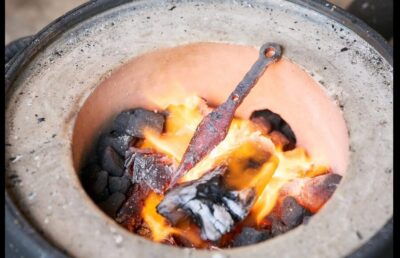
★ 4.5 · 632 reviews - Kyoto: Ninja Weapon Forging Experience
★ 4.8 · 478 reviews - Ninja 2-hour Hands-on Lesson by Japanese master in Kyoto -Medium
★ 5.0 · 218 reviews
Breathing, meditation, and the ninja walk
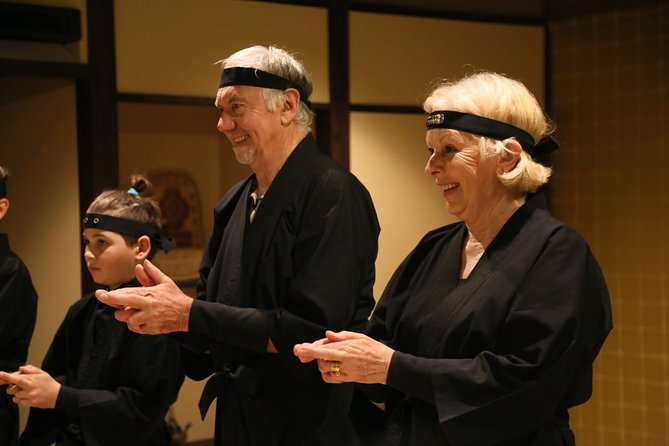
The lesson begins with basic body control. You learn ninja breathing and the meditation practice called Kuji-In. These exercises slow the pace for a moment and show that ninja training was not only about weapons.
The breathing work is also a useful way to understand the logic behind stealth. Controlled breathing can help you stay calm and focused, while careful movement reduces noise. You will not become silent in a single session, but the exercises give you a physical sense of what the instructor is explaining.
Then comes ninja walking. The class introduces ways to move with care and balance, including how to place your feet and control your body. This tends to be one of the most amusing parts for families, since everyone gets to try the movement rather than simply watch a demonstration.
The class is accessible to beginners. You do not need prior martial arts training, and the format is built around trying each skill under instruction. Most people can take part, and service animals are allowed.
The trick house and hidden features
A short introduction to the dojo’s gimmicks and traps adds a theatrical touch. You may see secret rooms or trap doors, and the instructor demonstrates how the trick-house features work.
This part is valuable because it connects the physical layout of the dojo with the idea of concealment and surprise. It also breaks up the training. After breathing, walking, and meditation, the hidden features give the hour a change of pace.
I would treat this section as entertainment with a historical theme, not as proof that the room preserves an original ninja hideout. The experience presents ninja methods in a clear, family-friendly way, but the class stays at an introductory level. If you want a long lesson on feudal Japanese espionage, this hour will feel too brief.
Sword training with clear instruction
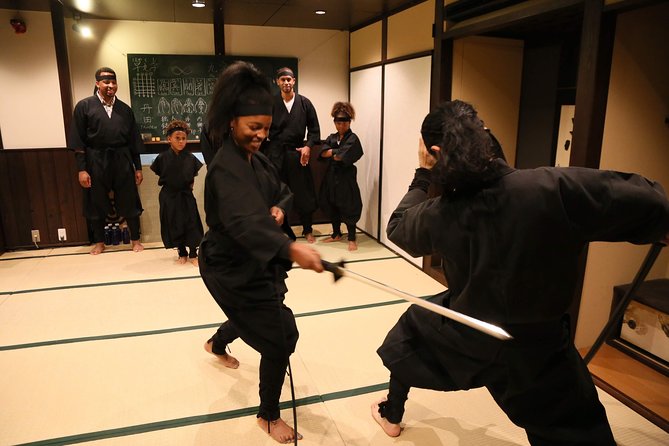
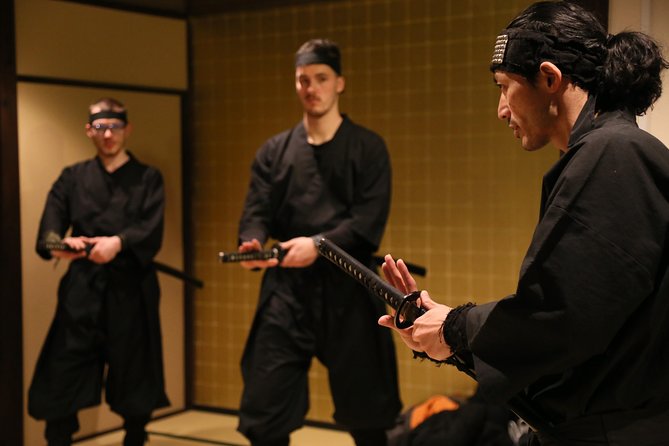
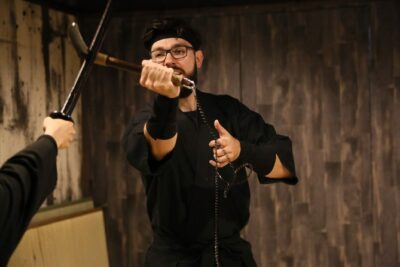
The sword portion begins with a demonstration. The instructor shows how to hold and use the ninja sword, then guides you through basic movements.
This is one of the strongest parts of the session because it feels active without requiring advanced fitness. You are not simply posing with a sword for a photograph. You are shown a movement, given a chance to practice it, and then move on to the next activity.
Safety and control are important here. Listen closely and copy the instructor’s pace rather than rushing through the movements. The class is designed for beginners, but a sword still demands attention.
The sword lesson also helps explain why the small group is useful. With six people or fewer, the instructor can keep an eye on the room and help correct basic handling. You get more direct contact than you would in a large demonstration class.
Same trip, a completely different kind of day:
- PERFECT KYOTO 1-Day Bus Tour
★ 5.0 · 13,518 reviews - Kyoto: Fushimi Inari, Kinkakuji, Bamboo Grove 1 Day Bus Tour
★ 4.8 · 4,316 reviews - Kyoto: Tea Ceremony in a Traditional Tea House in Kiyomizu
★ 4.9 · 3,519 reviews - Kyoto Geisha Walking Tour: Gion District & Hidden Gems
★ 4.7 · 3,273 reviews
Kunai, shuriken, and target practice
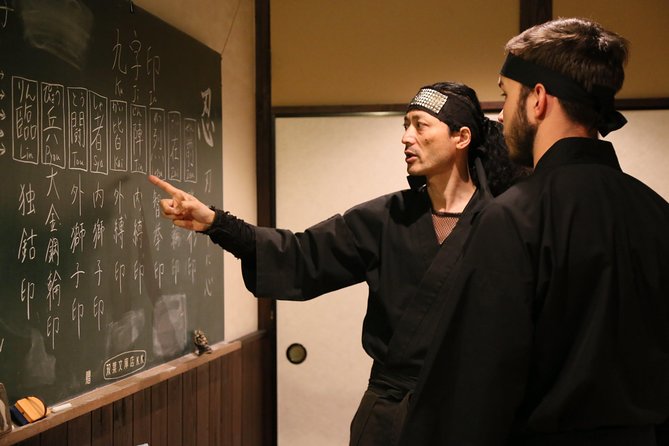
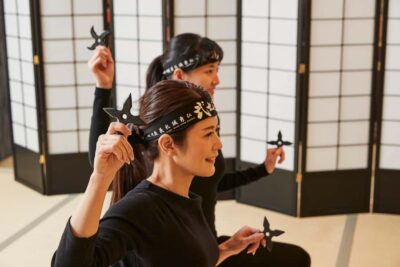
Next, you try several traditional ninja weapons, including kunai daggers and shuriken, often called ninja stars. The instructor explains how the objects were used and demonstrates the basic throwing method before you take your turn.
Target practice gives the class its clearest hands-on payoff. You get immediate feedback because the result is easy to see. A throw either reaches the target or misses, and the instructor can adjust your stance, arm position, or release.
The lesson may also include other simple throwing exercises, such as a chopstick toss. That sounds easy until you try it. Small changes in angle and release make a real difference, which gives adults and children something to work on together.
The shuriken and kunai practice is supervised, and the emphasis is on learning the method rather than speed or force. If you are visiting with children, stay close to the instructions and remind them to wait their turn. The format is family-friendly, but the equipment still needs to be handled responsibly.
Blowgun practice and the final change of pace
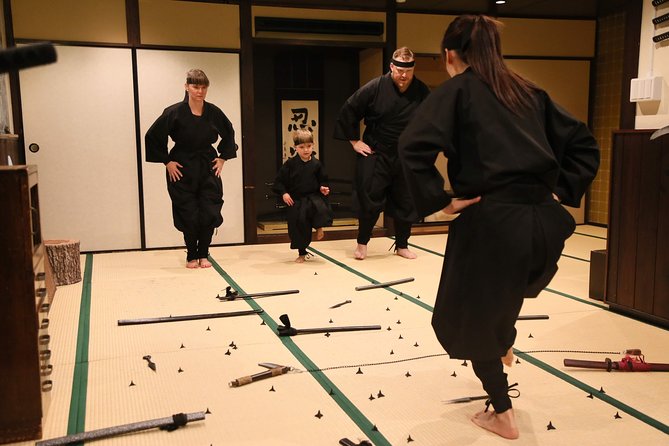
The ninja blowgun, or blow dart, session is another popular part of the class. You learn how to use the blowgun and aim at a wooden target. It is a simple skill, but breathing and concentration suddenly matter in a very practical way.
This activity ties back to the opening exercises. The breathing lesson is no longer just a calm introduction. You now have to control your breath while aiming, which makes the connection easy to understand.
The blowgun also adds variety. In a single hour, you move from quiet meditation to body movement, sword technique, throwing practice, and controlled breathing. That variety explains why the lesson tends to feel fast. You are rarely standing still for long.
A few people may find the weapon activities more playful than serious. That is fair. You are getting an introduction to techniques in a safe indoor setting, not professional combat training. The value comes from the range of activities and the chance to try them yourself.
The instructors and the tone of the lesson
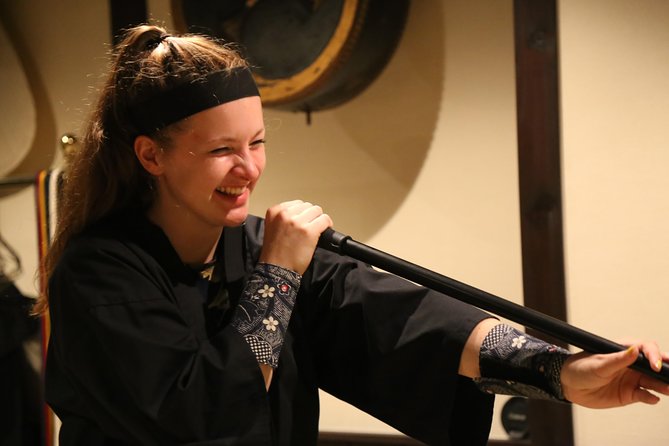
Instruction is provided in English by a Japanese sensei trained in ninja arts. Names associated with the class include Sho and Jack. Sho is described as especially good at explaining ninja history and keeping the mood light, while Jack is known for making the lesson engaging and accessible.
The personality of the instructor matters here. This is a compact activity, so a warm and energetic teacher helps the hour feel full rather than rushed. The best version of the class combines clear demonstrations with short explanations, allowing you to learn by doing.
The lesson is not presented as a formal academic lecture. You get background on ninja life, methods, and tools, but the focus stays on participation. If you enjoy history in small, practical portions, the balance works well. If you want dates, detailed political context, or a long discussion of samurai and ninja distinctions, you will need another Kyoto experience as well.
The teaching style also suits mixed-age groups. Adults can enjoy the history and technique, while children get the immediate reward of wearing the outfit and trying the weapons. Teenagers often fit the format especially well because there is enough action to hold their attention without turning the class into a pure photo opportunity.
Is $80.58 good value for one hour?
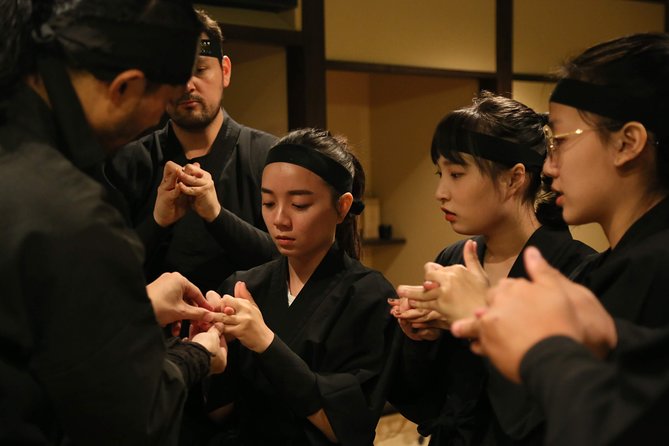
At $80.58 per person, this is not a cheap way to fill sixty minutes. The price makes more sense if you value several things at once: a small class, English instruction, clothing rental, a central Kyoto location, multiple training activities, and access to the dojo’s trick-house features.
You are not paying for one demonstration. The session includes meditation, breathing, walking, a hidden-feature introduction, sword work, kunai practice, shuriken throwing, and blowgun training. That is a lot of variety for one hour, although each part is necessarily short.
For a family, the value improves if several people in your group want to take part. Everyone gets the same activities, and the clothing and target practice create shared memories. It is also a useful indoor break from Kyoto’s temples and outdoor sightseeing, especially since the space is air-conditioned.
For two adults who want serious martial arts instruction, I would be more cautious. The class is entertaining and hands-on, but it does not provide deep training or a long study of ninja history. You are buying a focused cultural activity with physical practice, not a full-day workshop.
The popularity of the one-hour class also means you should book ahead if your schedule is tight. It has been booked more than ten times in a recent week, and the six-person limit keeps capacity low.
Who will enjoy this most?
I would recommend this experience to families with school-age children and teenagers, especially if your group enjoys trying unusual activities together. A seven-year-old has taken part successfully, and older children can handle the instructions and target work with close attention.
It also works well for couples and adult friends. You do not need to be a ninja fan or a martial arts expert. The lesson has enough humor and variety to make it a relaxed date activity or an easy way to add something different to a Kyoto itinerary.
Fans of anime may enjoy the theme and the chance to try familiar-looking tools, but prior knowledge is not required. One person noted that watching Naruto might give you a slight advantage with the subject matter, yet the class teaches the basics from the start.
I would skip it if your main goal is an in-depth, historically rigorous course. The one-hour format covers many activities, so none receives extended study. The experience can also feel gimmicky to adults who prefer museums, formal lectures, or traditional arts practiced at a slower pace.
Practical details before you go
Your booking confirmation arrives at the time of booking, and the experience uses a mobile ticket. The meeting point is NINJA DOJO and STORE KYOTO, 528 Hakurakutenchō, second floor, Kyoto, 600-8422.
The activity ends at the same meeting point. Hotel pickup and drop-off are not included, and food and drinks are not provided, so plan the class as one stop within your own Kyoto day.
You can cancel for a full refund up to 24 hours before the start time. Changes or cancellations made less than 24 hours before the activity are not accepted for a refund. The provider may also cancel if the minimum number is not met or if poor weather affects the experience, in which case you are offered another date or a full refund.
Although the class is indoors, the stated policy refers to good weather. Check your confirmation for the exact operating details before setting out.
Should you book this Kyoto ninja lesson?
Book it if you want a short, active experience that combines Japanese themes, simple history, costume, and supervised weapon practice. The small group, English instruction, and wide mix of activities give the hour real structure.
I especially like it for families who need a break from shrine and temple visits. It gives children something to do with their hands, while adults still get breathing practice, movement lessons, and useful background on ninja methods.
I would not choose it as your main source of Japanese martial arts history. For that, the one-hour class is too brisk and playful. But if you accept it as an entertaining introduction, the price buys a memorable hour with plenty of participation, rather than a passive show.
FAQ
How long does the ninja lesson last?
The lesson lasts approximately one hour.
Where does the experience begin and end?
It begins at NINJA DOJO and STORE KYOTO, 528 Hakurakutenchō, second floor, in Kyoto’s Shimogyo Ward. It ends back at the same meeting point.
What activities are included?
The class includes Kuji-In ninja meditation, ninja breathing, ninja walking, an introduction to trick-house features, sword demonstrations and training, kunai practice, shuriken practice, and ninja blowgun training.
Are ninja clothes provided?
Yes. Ninja clothing rental during the training is included.
Is the lesson taught in English?
Yes. A Japanese sensei trained in ninja arts teaches the lesson in English. Instructors associated with the experience include Sho and Jack.
How many people can join the class?
The activity has a maximum of six participants. Most people can take part, and service animals are allowed.
What is the cancellation policy?
You can cancel up to 24 hours before the experience for a full refund. Cancellations or changes made less than 24 hours before the start time are not accepted for a refund.
More 1-Hour Experiences in Kyoto
- 1 Hour Geisha Show in Kyoto
★ 5.0 · 452 reviews - One Hour Geisha Show in Kyoto
★ 5.0 · 64 reviews - One Hour Geisha Show in Gion Kyoto
★ 5.0 · 59 reviews - Kyoto: Hands-on Takoyaki and Okonomiyaki Cooking (1 Hour)
★ 4.7 · 25 reviews
Just added around Kyoto
- Sekka Cotton Furoshiki Class★ 5.0 · 19 reviews
- Kyoto Sword Experience – includes Museum Ticket/Ninja Experience★ 4.5 · 149 reviews
- Scenic Green Tea Fields of Hidden Kyoto & Local Tea Exp (Private)★ 5.0 · 32 reviews
- Secret Eastern Kyoto Biking Adventure★ 5.0 · 44 reviews
- Samurai School in Kyoto: Samurai for a Day★ 5.0 · 202 reviews
- Private Sake Tasting in Central Kyoto with Sake Sommelier★ 5.0 · 32 reviews
- SHIRAKAWA Japanese Culture Experiences with private English staff★ 5.0 · 16 reviews
- A Privately Guided Photoshoot in Beautiful Kyoto by a Pro★ 5.0 · 18 reviews
Ninja Experiences, compared.
Ninja 2-hour Hands-on Lesson by Japanese master in Kyoto -Medium
Our verdict →
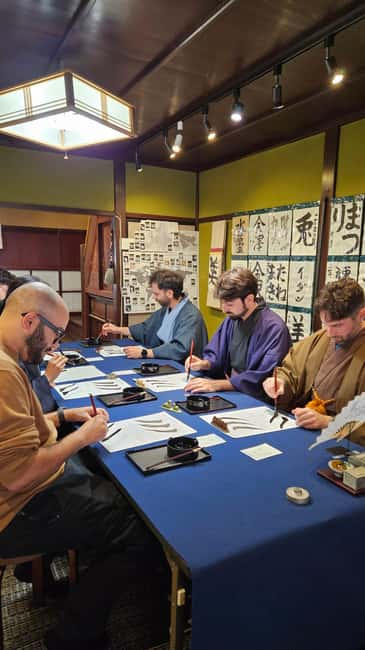
Try Mindful Calligraphy Near Kanazawa’s Ninja Temple
Our verdict →
Browse the lists this tour appears in