
Reviewed · NINJA EXPERIENCES
Kyoto: Ninja Weapon Forging Experience
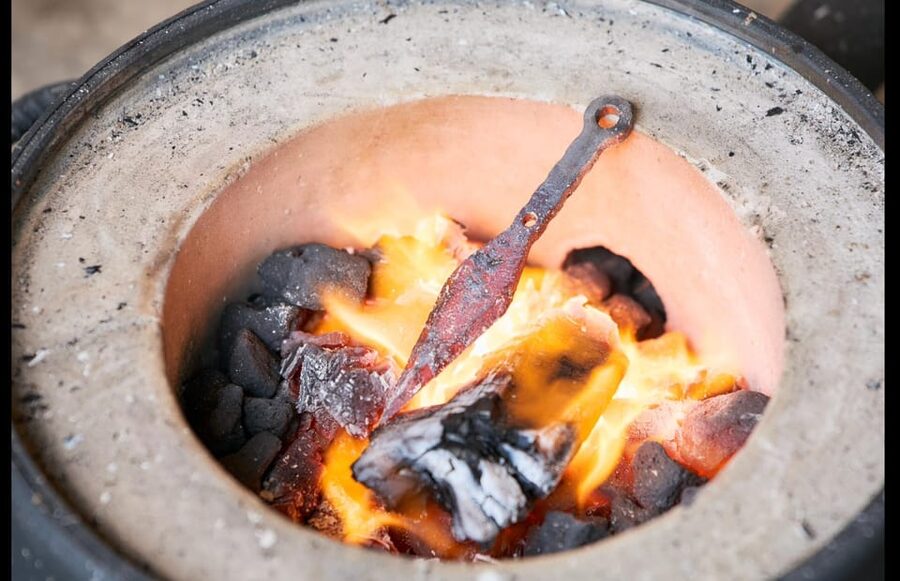
The hottest part of this Kyoto workshop is watching ordinary steel glow inside an 800°C furnace, then striking it with a hammer as sparks fly. You shape, sand, blacken, polish, and personalize a real steel shuriken or kunai instead of buying a mass-produced souvenir.
I like the hands-on work and the final kanji engraving, which gives your piece a personal mark. I also like the cheerful English-speaking team, especially Taka, whose energy helps keep the class moving. The main caution is practical: the finished weapon must travel in checked luggage, and a kunai costs an extra ¥3,000.
Key things to know before you book
- You forge a real steel shuriken: The class includes heating, hammering, sanding, and polishing under close instruction.
- Choose your design first: Three shuriken styles are included, while a kunai requires the ¥3,000 option at booking.
- Taka leads a lively team: Mits, Ako, Yok, and other instructors help with guidance, filming, and engraving.
- Your kanji is part of the keepsake: Staff engrave a character you choose onto the finished weapon.
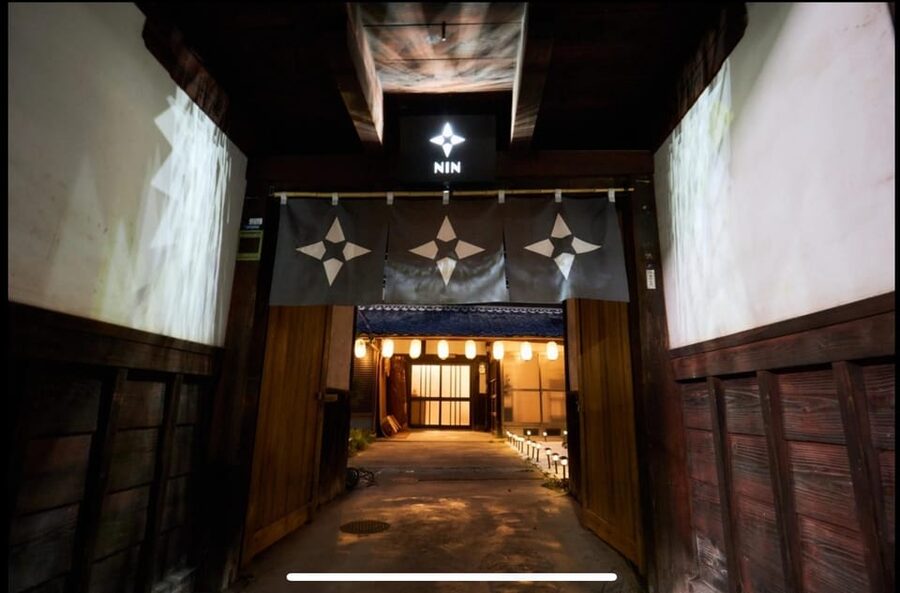
- The meeting point is near Hieizanguchi Station: It is listed as a one-minute walk, though the route from central Kyoto can take time.
- Plan for checked luggage: You cannot bring the finished item onto a flight in your carry-on bag.
A Kyoto souvenir that begins in the forge
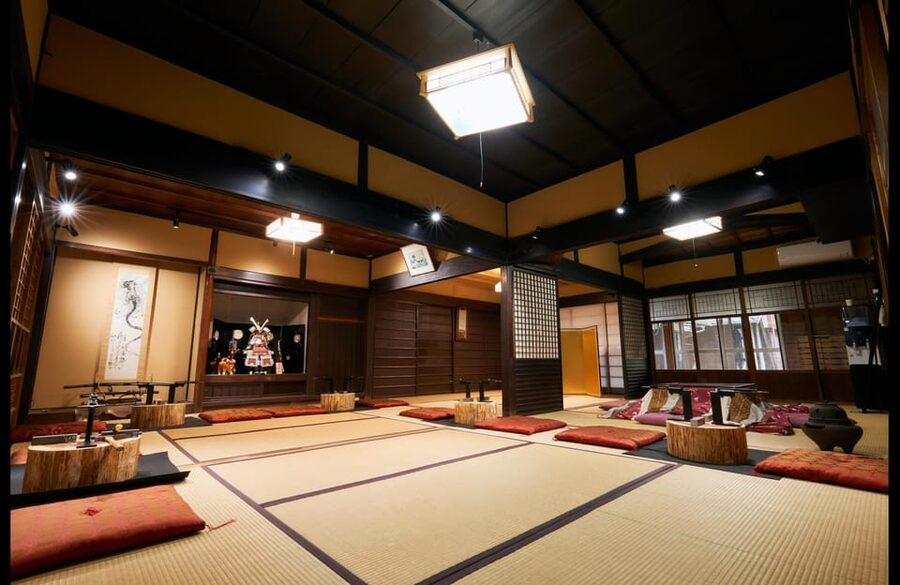
Kyoto has no shortage of refined crafts, but this workshop gives you something rare: a souvenir that passes through your own hands at nearly every stage. You are not simply watching a smith work. You take part in heating, striking, sharpening, sanding, finishing, and choosing a kanji mark.
The finished object is small, sturdy, and easy to display. More important, it carries the memory of the work. You remember the heat of the furnace, the ring of the hammer, and the moment the rough metal begins to look like a blade.
The experience costs about $148 per person. That is not a casual add-on for a busy sightseeing day. It is a serious activity price, but the fee includes the instructor, samue uniform, tools, the weapon you make, and the full class. For someone who values craft, culture, and a hands-on souvenir, the price has solid value.
If you only want a quick photo in a ninja costume, this is more than you need. If you want to understand how a piece of metal becomes a finished object, the two and a half hours are well used.
More Ninja Experiences in Kyoto
- Skip the lines Basic Ticket at SAMURAI NINJA MUSEUM KYOTO
★ 4.5 · 632 reviews - Ninja 1-hour Hands-on Lesson by Japanese master in Kyoto -Entry
★ 5.0 · 489 reviews - Ninja 2-hour Hands-on Lesson by Japanese master in Kyoto -Medium
★ 5.0 · 218 reviews
Getting to the studio near Hieizanguchi Station
The meeting point is about a one-minute walk from Hieizanguchi Station. Look for the red postbox in front of the station, then go up the hill as directed.
That sounds simple, but the studio is outside the center of Kyoto. One account describes the trip from central Kyoto as roughly 40 minutes by bus, and another recommends taking a taxi because public transport does not bring you close enough without a hill walk. Give yourself extra time, especially if you have a fixed start time.
The setting helps the activity feel separate from ordinary sightseeing. You leave the crowded central districts and reach a quieter residential area. It is not the best choice if you want an activity directly beside Nishiki Market or Gion, but the distance gives the class a workshop feel rather than a staged attraction in the middle of downtown.
The studio is close to the station meeting point, yet you should still follow the exact directions supplied with your booking. A short uphill walk may be part of the final approach.
Samue, headbands, and choosing your weapon
The session begins with a change into samue, the loose work clothes associated with Japanese craftspeople. You also wrap a tenugui around your head. It is a small touch, but it changes your frame of mind. You are no longer arriving as a sightseer. You are preparing to work.
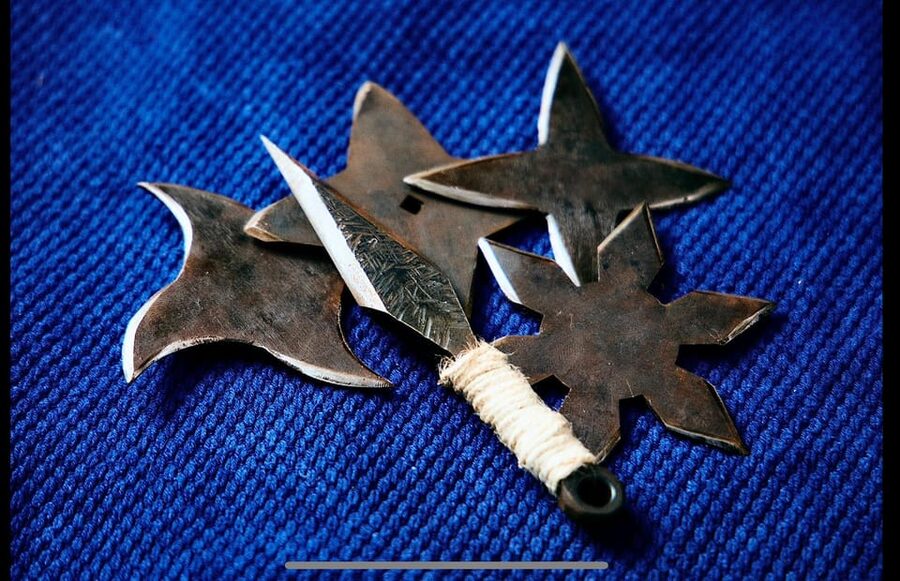
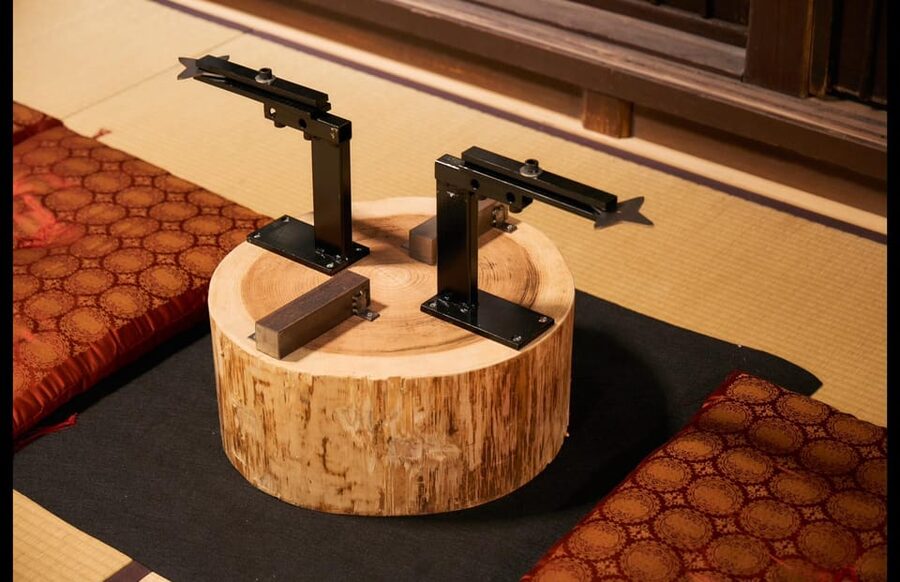
Next comes the important choice. The included options are three different shuriken styles. Each has a different shape and character, so take a moment before selecting. If you want a kunai, choose that option when booking. The extra fee is ¥3,000, covering additional material and processing costs.
This choice matters because the weapon determines the form you will refine through the rest of the session. The shuriken is the simpler standard choice, while the kunai appeals to anyone who prefers a knife-like form.
Keep in mind that this is a craft class, not a weapons demonstration. The goal is to make and finish an object. You will not be invited to throw or test it at the studio. One participant specifically wished there had been a chance to try the finished tool, so adjust your expectations accordingly.
Heating and hammering the steel
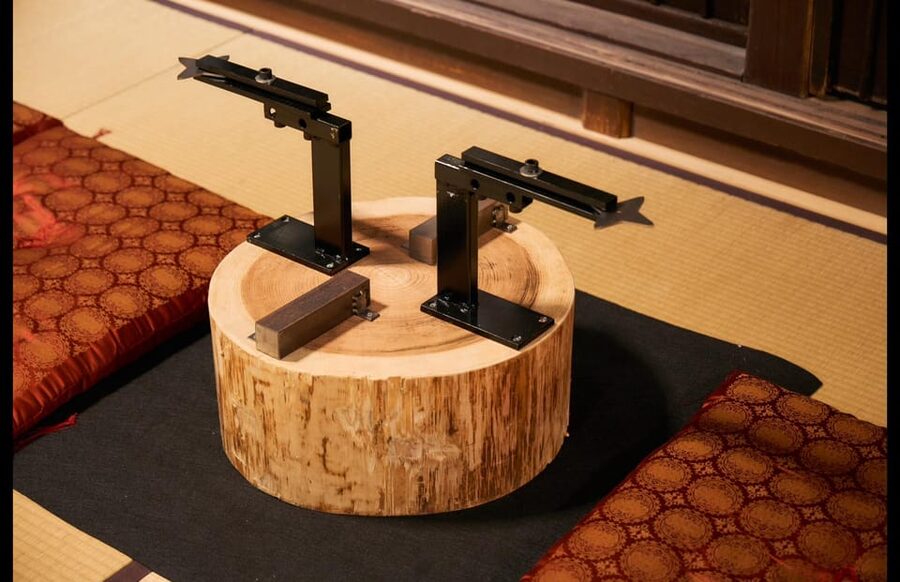
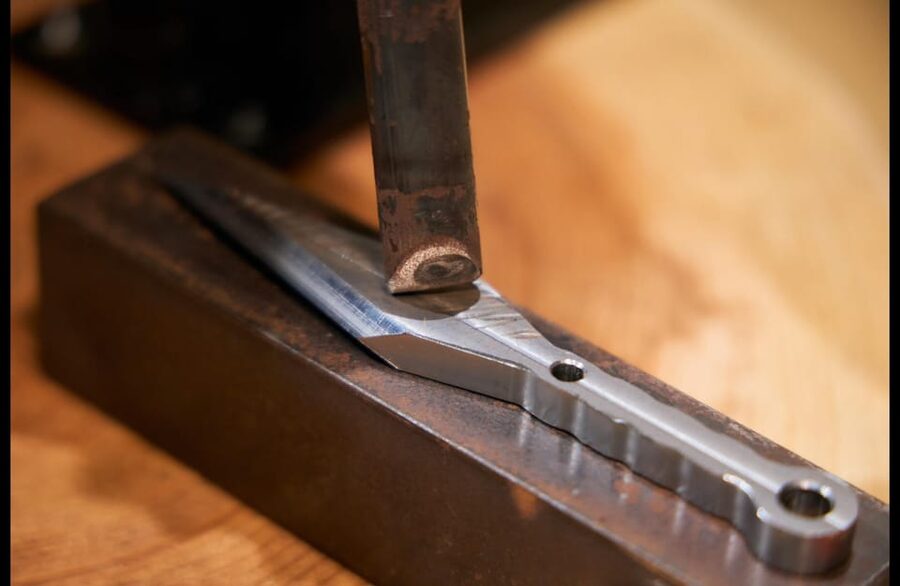
The forge is the most dramatic part of the class. The steel is heated in a furnace reaching about 800°C, and you watch it change color before working it with a hammer.
Your instructor explains each step before you try it. Taka is often singled out for his energy and clear teaching, while Daiki, also referred to as Dike in one account, has helped explain the forging process in detail. The wider team steps in as needed, so you are not left to guess what to do with hot metal.
The work is carefully guided, but it still feels physical. You make real strikes and help alter the shape. The balance is good for first-time smiths: you get meaningful participation without being expected to control a full professional forging process on your own.
Do not expect hours of independent hammering. The class has several stages, and the forging portion is shared with the other parts of the finish. Some people would prefer more time at the anvil. Still, the short session gives you a genuine sense of the work without turning the afternoon into a demanding trade apprenticeship.
Bring your phone or camera if you want photographs and videos. The glowing steel, sparks, and hammering make the best images of the day, and the staff can help capture the action.
Same trip, a completely different kind of day:
- PERFECT KYOTO 1-Day Bus Tour
★ 5.0 · 13,518 reviews - Kyoto: Fushimi Inari, Kinkakuji, Bamboo Grove 1 Day Bus Tour
★ 4.8 · 4,316 reviews - Kyoto: Tea Ceremony in a Traditional Tea House in Kiyomizu
★ 4.9 · 3,519 reviews - Kyoto Geisha Walking Tour: Gion District & Hidden Gems
★ 4.7 · 3,273 reviews
Sanding turns rough metal into a finished form
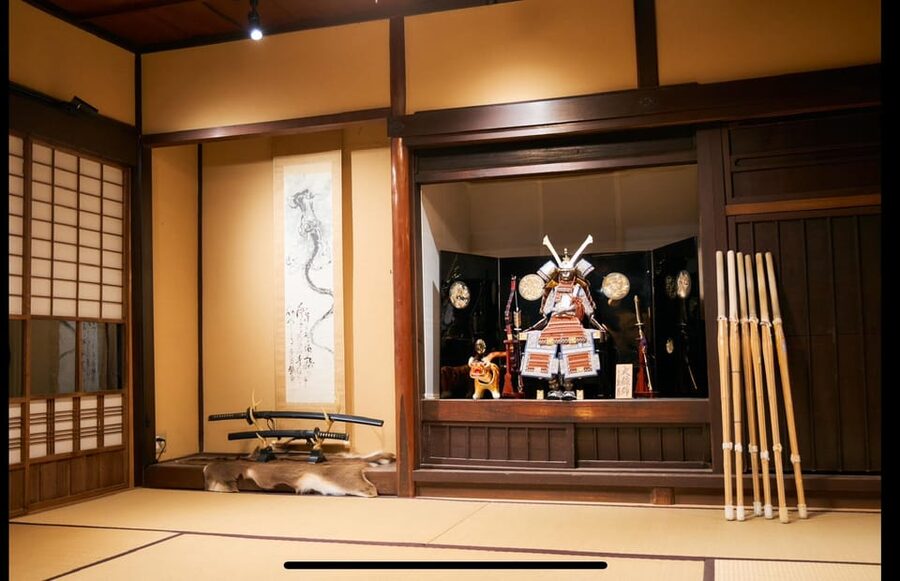
After forging, you use a professional belt sander to refine the shape. This is where the object begins to look less like a rough blank and more like a finished shuriken or kunai.
The machine work requires attention. You guide the piece carefully while the abrasive belt removes rough edges and cleans the lines. The instructors stay close and show you how to proceed. For many people, this is the most satisfying stage because the change is easy to see.
The class is not a passive demonstration. You take part in enough of the work to understand how much effort goes into a clean finish. At the same time, the staff help protect the pace and quality of the result. That balance is important. You leave with an object you made, but you are not expected to produce a professional blade without assistance.
Families have found the process workable for children and teenagers, including children around eight years old. The team gives step-by-step guidance, but parents should still judge the activity for their own children. Hot metal, sanding equipment, and sharp edges require attention.
Kanji engraving makes the souvenir personal
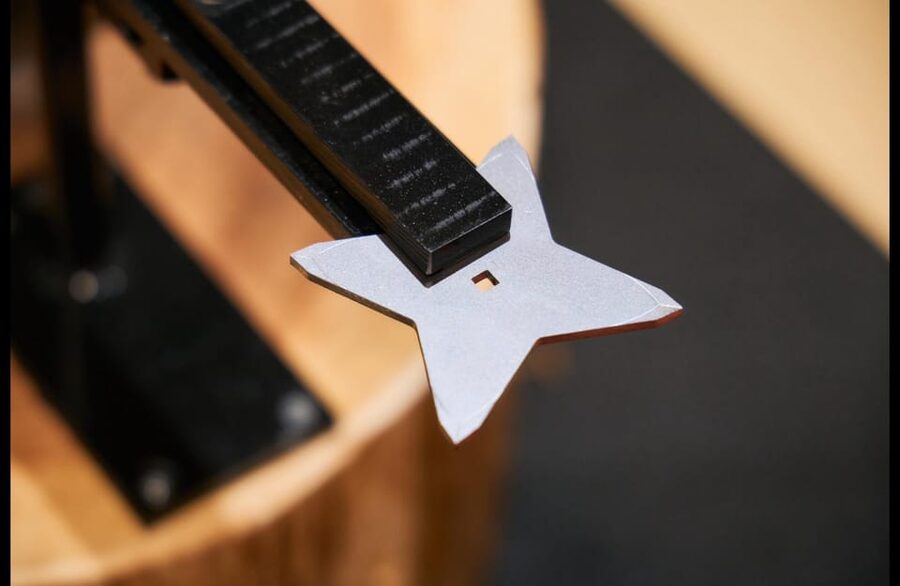
Once the basic form is complete, you choose a kanji character for engraving. The staff engrave it onto your piece with care, turning a standard workshop object into something tied to your visit.
You may want to choose a character before arriving, but the activity lets you decide during the session. Ask about the meaning if you are unsure. A kanji symbol should be more than decoration, especially when it becomes the most personal part of the souvenir.
Yok is praised for the engraving work, and other staff members help explain the choices. The engraving also gives you a natural pause after the more physical stages. You can think about what you want the object to represent: strength, courage, patience, or another idea that matters to you.
The personal mark is one reason this makes a better souvenir than a shop-bought replica. The final weapon is not perfectly identical to anyone else’s, even when two people choose the same basic style.
Ninja stories, blackening, and the final polish
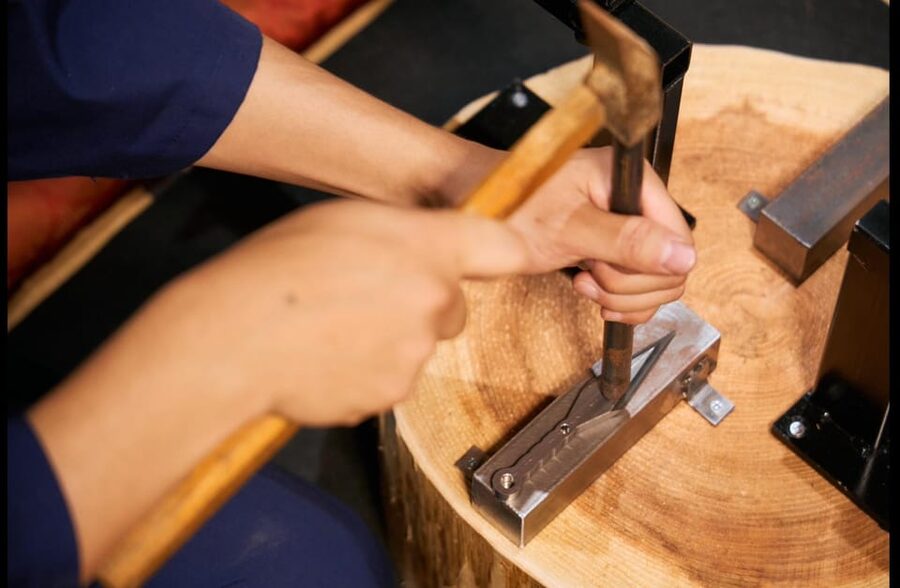
The class also includes a short session on ninja history, symbolism, and techniques. This cultural context adds purpose to the craft. You learn why these objects have a place in popular images of ninja, while also seeing how much of the real work comes down to heat, shape, balance, and finish.
The steel is then treated with a special solution that darkens the surface and helps protect it from rust. The black finish gives the piece a subdued look and suits the ninja theme without needing theatrical decoration.
Finally, you polish the weapon. This last stage brings out a cleaner surface and completes the transformation from raw steel to a display piece. Depending on the item and finish, you may also choose a cord or other small finishing detail.
The weapon is placed in a beautiful box for taking home. That packaging matters when you are carrying a handmade object through the rest of your trip. It also makes the piece easier to present as a gift or keep safely on a shelf.
What the $148 price really includes
At $148, this is one of the pricier Kyoto activities for its length. The scheduled duration is 150 minutes, though some sessions may run closer to three hours depending on pace and group flow. Set aside more than the bare two and a half hours if your day is tightly planned.
The fee includes:
- An English-speaking instructor
- The weapon-making class
- Samue and headwear
- Use of the tools
- The finished shuriken or selected weapon
- A box for taking it home
- Photo and video opportunities during the work
The kunai option costs an additional ¥3,000. Replica swords are also sold separately at the studio, so do not confuse a purchased sword with the item included in the class.
I think the price works best for visitors who would otherwise spend money on several ordinary souvenirs. You get an activity, a lesson, photographs, and an object you helped make. It is less good value if you dislike workshops, have no interest in craft, or need a quick activity between temple visits.
Free cancellation up to 24 hours before the start time and reserve-now, pay-later booking make it easier to fit into a changing Kyoto schedule.
Who should book this workshop
This is a strong pick for families, couples, solo visitors, and anyone who wants a break from temple and shrine sightseeing. Solo participants have found it easy to meet others during the class, and the friendly team keeps the mood social without taking away from the work.
It suits fans of Japanese history, martial arts, anime, and traditional craft, but you do not need prior blacksmithing experience. The instructors demonstrate every stage and provide help when you need it.
Children can enjoy it, and the workshop has worked well for families with children from about eight to teenagers. Still, remember that the class involves heat, metal, sanding equipment, and potentially sharp edges. Parents should stay engaged.
It may not suit a very tight itinerary. The trip from central Kyoto takes time, the session can stretch beyond the listed 150 minutes, and the final object must be packed in checked luggage. If you are flying with carry-on baggage only, this is a real problem, not a minor detail.
Getting your weapon home safely
You can take the finished item on your flight, but only in checked luggage. Do not put it in your carry-on bag.
Check the rules for your airline and destination before booking. One family traveling to Australia reported getting the items through customs after declaring them, but that does not replace checking your own country’s requirements. Pack the weapon securely in its box and declare it when required.
The studio sells replica swords as well. These are separate purchases and add another transport issue, so ask about packing and airline rules before buying one.
Should you book the Kyoto Ninja Weapon Forging Experience?
Book it if you want a hands-on Kyoto activity with a souvenir that carries a story. The strongest parts are the heated steel, the chance to use real tools, the kanji engraving, and the warm English-speaking team led by people such as Taka, Mits, Ako, and Yok.
Skip it if you want a short central-Kyoto stop, dislike workshop settings, or will not have checked luggage. For everyone else, the $148 fee buys much more than a novelty prop. You get a focused craft lesson, a personal keepsake, and a memorable change of pace from sightseeing.
FAQ
How long does the ninja weapon forging experience last?
The listed duration is 150 minutes. Some sessions may take closer to three hours, so leave extra time before your next activity.
How much does the experience cost?
The listed price is $148 per person. A kunai requires an additional ¥3,000 fee.
What weapons can I make?
You can choose from three shuriken styles. You can also make a kunai by selecting the kunai option when booking and paying the extra fee.
Is the class taught in English?
Yes. The instructor language is English, and the studio team guides you through each stage.
What does the price include?
It includes the instructor, weapon-making class, samue uniform, tools, and the weapon you make to take home.
Where is the meeting point?
The meeting point is about a one-minute walk from Hieizanguchi Station. Go up the hill near the red postbox in front of the station.
Can children take part?
Families with children, including children around eight years old, have taken part successfully. The class involves hot metal, tools, and sharp edges, so parents should use their own judgment.
Can I bring the finished weapon on my flight?
Yes, but only in checked luggage. It cannot be carried onto the plane in your carry-on baggage.
Does the studio sell replica swords?
Yes. Replica swords are available to purchase separately for an additional fee.
Can I cancel for a full refund?
You can cancel up to 24 hours in advance for a full refund. Reserve-now, pay-later booking is also available.
Just added around Kyoto
- Sekka Cotton Furoshiki Class★ 5.0 · 19 reviews
- Kyoto Sword Experience – includes Museum Ticket/Ninja Experience★ 4.5 · 149 reviews
- Scenic Green Tea Fields of Hidden Kyoto & Local Tea Exp (Private)★ 5.0 · 32 reviews
- Secret Eastern Kyoto Biking Adventure★ 5.0 · 44 reviews
- Private Sake Tasting in Central Kyoto with Sake Sommelier★ 5.0 · 32 reviews
- Samurai School in Kyoto: Samurai for a Day★ 5.0 · 202 reviews
- SHIRAKAWA Japanese Culture Experiences with private English staff★ 5.0 · 16 reviews
- A Privately Guided Photoshoot in Beautiful Kyoto by a Pro★ 5.0 · 18 reviews
Ninja Experiences, compared.
Ninja 1-hour Hands-on Lesson by Japanese master in Kyoto -Entry
Our verdict →
Try Mindful Calligraphy Near Kanazawa’s Ninja Temple
Our verdict →
Forge Your Own Ninja Weapon with Japanese Tin Casting
Our verdict →
Browse the lists this tour appears in