Reviewed · CALLIGRAPHY CLASSES
Experience all of Japanese culture and Japanese food experience classes “origami, udon, Japanese food, green tea, calligraphy” in 4 hours
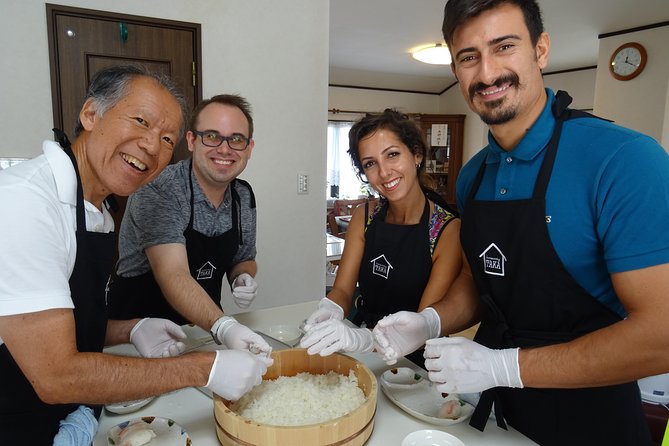
The most special part of this four-hour Tokyo experience is simple: you enter the home of Taka and Keiko, not a classroom built for tourists. You make food with them, eat around their table, practice Japanese customs, and leave with your name written in calligraphy.
I like the hands-on cooking, especially making udon from raw ingredients and preparing sushi and gyoza yourself. I also like the personal touch: Taka meets you at JR Omori Station, and Keiko writes your name on colored paper as a keepsake.
The main consideration is the pace. Origami, noodles, several dishes, tea, calligraphy, and a long meal fill four hours, so this suits you if you enjoy conversation and participation more than a quick, tightly timed cooking lesson.
Key points to know before booking
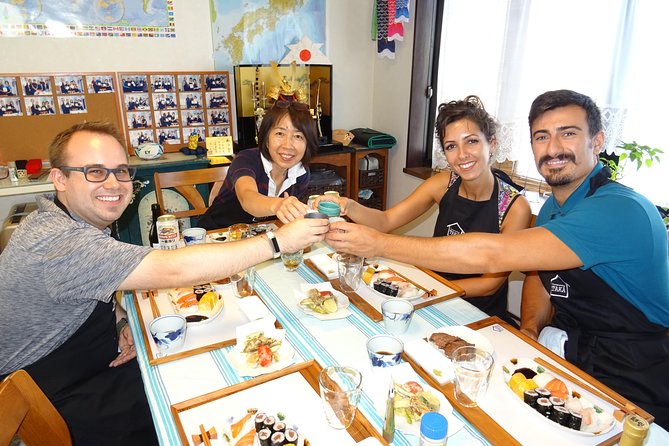
- A real home setting: Walk from JR Omori Station through a quiet neighborhood and past a shrine before arriving at Taka and Keiko’s house.
- Several activities in one visit: Fold an origami crane, make udon, prepare sushi and gyoza, cook tempura, whisk matcha, and practice calligraphy.
- Lunch and drinks included: Sake, beer, shochu, and soft drinks are provided along with the meal.
- Private for your group: Only your party takes part, which makes the home setting more relaxed and personal.
- Good for families: Children have plenty to do, especially during the udon-making and origami portions.
- Vegetarian and vegan friendly: Different ingredients can be used so you can enjoy the dishes without meat or animal products.
A Tokyo food class that feels like a visit to friends
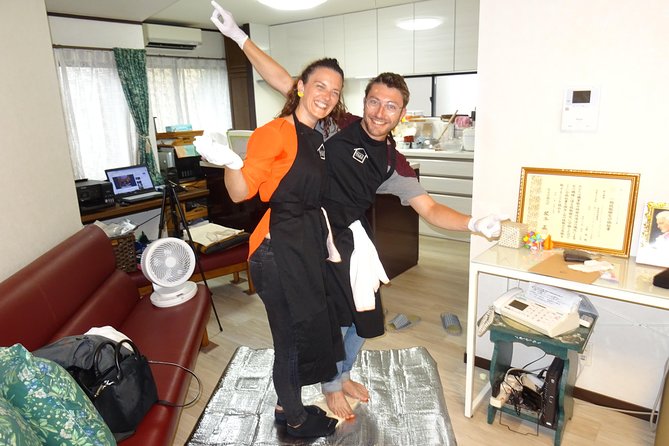
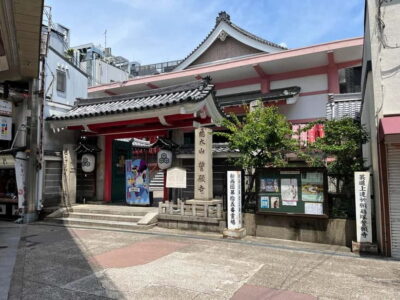
Many Tokyo food classes take place in a studio kitchen, which can be useful but somewhat formal. This one begins at JR Omori Station and leads you into a residential part of Ota City. That short walk matters. You pass a shrine and quiet streets before arriving at the hosts’ home, giving you a small glimpse of everyday Tokyo away from the major sightseeing districts.
Taka and Keiko run the experience together. Taka handles the welcome, explanations, and much of the cooking guidance, while Keiko prepares extra small dishes and writes your name in Japanese calligraphy. The tone is warm and social, with plenty of time for conversation.
I would choose this experience for the human contact as much as the food. You are not just shown how a dish is made. You work beside the hosts, ask questions, share lunch, and talk about life in Japan and at home. That makes the class especially appealing if you want an introduction to Japanese customs that feels personal rather than staged.
The activity is private, so only your own group participates. That is a major plus for families or couples who prefer not to cook in front of strangers. It also means the experience can feel intimate. If you prefer a fast, highly structured demonstration with little conversation, this may feel slow.
More Calligraphy Classes in Tokyo
- Tokyo: Calligraphy on Kanji Fan & Scroll with Drink
★ 5.0 · 210 reviews - Let’s experience calligraphy in YANAKA, Taito-ku, TOKYO !!
★ 5.0 · 127 reviews - Tokyo: Calligraphy Workshop & Original T-Shirt Creation
★ 4.9 · 105 reviews
Meeting Taka at JR Omori Station
The meeting time is 10:30 am at the central exit of JR Omori Station. Look for someone carrying a bag marked with the homecoming TAKA logo. From the station, it is about an eight-minute walk to the house.
The walk gives the morning a gentle start. You do not simply arrive at a cooking studio, put on an apron, and begin chopping. You pass a shrine and move through a calm residential area, which helps set the scene for the home-based format.
You should allow enough time to reach the central exit and find the meeting point. Transfer to and from the station is not included, so you make your own way to Omori. At the end, the activity returns to the same meeting point, and Taka and Keiko send you back toward the station.
This location is near public transportation, but it is not in the center of the usual sightseeing circuit. That can be a drawback if your Tokyo schedule is packed around Asakusa, Shibuya, or Shinjuku. On the other hand, the setting is part of the appeal, and Omori gives you a look at a less commercial side of the city.
Folding an origami crane before lunch
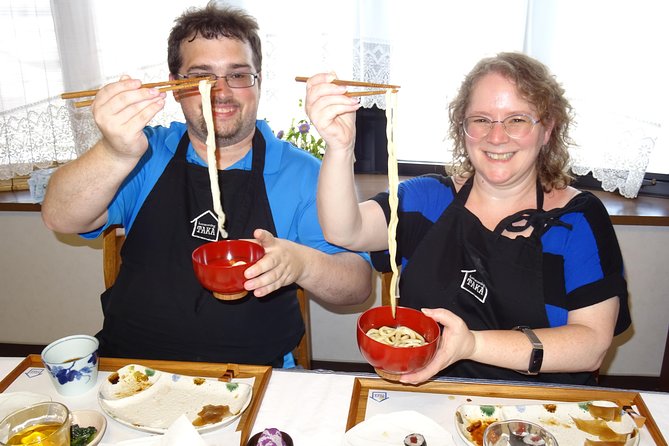
The first activity is origami, with a paper crane as the project. This is a smart opening exercise because it is quiet, accessible, and gives everyone time to settle in.
You do not need to be artistic. Folding paper is a gentle way to learn by watching and copying, and children can take part without handling hot pans or sharp knives. Adults who have never tried origami will also find it satisfying to see a flat sheet become a recognizable figure.
The crane has a clear place in Japanese culture, but the experience does not present it as a museum lecture. You learn through doing. I like that approach. It gives you something to take home while also creating a shared activity before the cooking begins.
Making udon from ingredients to noodles
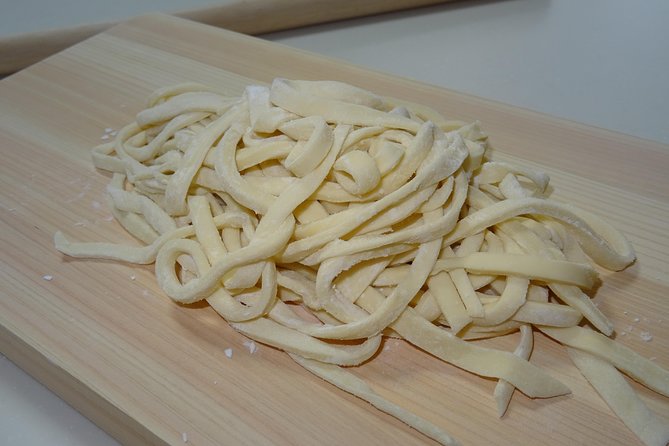
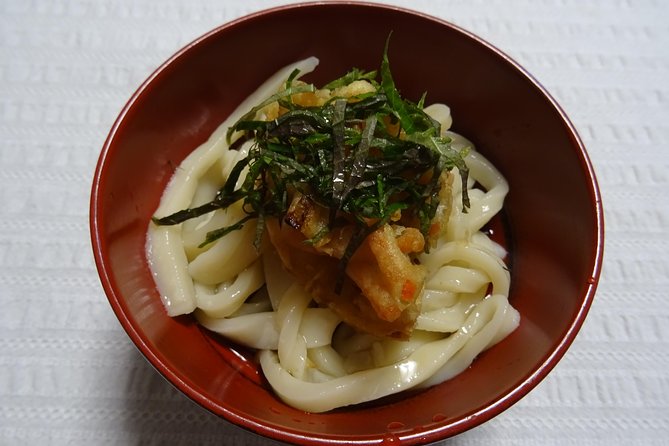
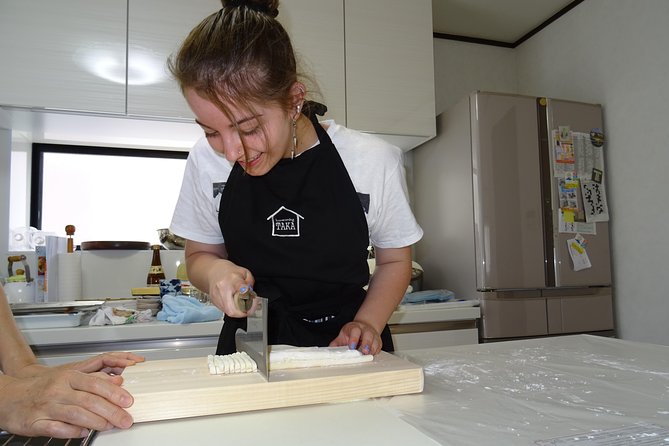
Next comes one of the most memorable parts: making udon noodles from scratch. You work through the process from the ingredients to the finished noodles, including stepping on the dough.
That physical step is likely to be a hit with children, and it makes the lesson more than a standard mixing demonstration. You feel how the dough changes as it is worked, then see the result become part of the meal.
The udon portion also gives you a useful skill to repeat at home. Several people who completed the class said they wanted to make the recipes again, and one family later prepared sushi at home and sent photos to Taka and Keiko. You should not expect a full recipe book or a professional chef’s syllabus, but you will leave with practical ideas and a memory tied to the process.
Udon making can be messy and hands-on. An apron is included, which helps, but you should come ready to participate rather than watch from the side.
More Craft Workshops in Tokyo
- Tokyo Sumo Experience: Chanko & Mochi with a Former Pro
★ 4.8 · 567 reviews - Kintsugi Experience: Art of Golden Joinery in Tokyo
★ 5.0 · 467 reviews - Tokyo Chopstick Making Workshop with Artisan
★ 5.0 · 466 reviews - Tokyo: Matcha Making Experience with Mochi Sweets in Asakusa
★ 4.9 · 388 reviews
Preparing sushi, gyoza, and tempura
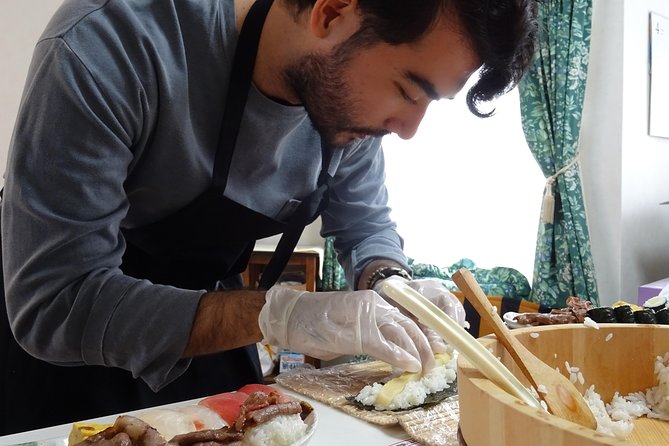
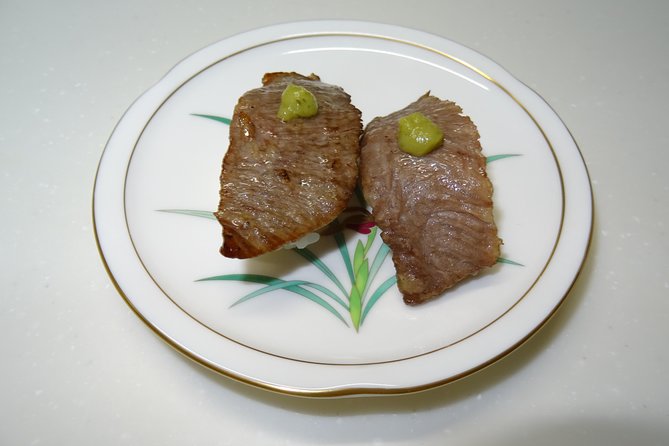
The main meal includes making sushi and gyoza together, with tempura also part of the cooking experience. The exact balance of dishes can vary within the four-hour program, but the aim is broad exposure to familiar Japanese foods rather than a single recipe.
Sushi gives you a chance to work with rice and fillings. Gyoza adds a different skill, shaping and sealing dumplings before cooking. Tempura brings heat and timing into the lesson. Together, these dishes show several sides of Japanese home cooking: careful preparation, small portions, shared effort, and attention to texture.
Keiko also serves Japanese small plates alongside the food you make. These additions are important because they turn lunch into more than a cooking exercise. You get to taste items prepared by the hosts while also eating what you helped create.
All ingredients are Japanese, and drinks are included. You can have beer, sake, shochu, or soft drinks at no extra charge. That is generous for a four-hour private experience, though alcohol may not suit every group. Families and non-drinkers can simply choose soft drinks.
The food is a strong part of the value. At $92.50 per person, the price covers lunch, drinks, an apron, all listed activities, and the calligraphy souvenir. A restaurant meal alone would not provide the same amount of personal instruction or time with local hosts. Still, you should book this for the full package, not only for the cost of lunch.
A long, social Japanese lunch
After the cooking, you sit down and eat at a relaxed pace. This is where the class shifts from instruction to hospitality.
I like this part because food becomes a reason to talk. You can ask about Japanese customs, daily life, the local area, and the dishes in front of you. The hosts also encourage an exchange of cultures, so the conversation is not one-sided.
The meal may be especially enjoyable for families. Parents can participate with children rather than splitting up for separate activities, and the cooking creates easy conversation. Children as young as seven and eight have taken part according to the supplied details, with udon making a particular favorite. Teenagers can also enjoy the food preparation without being treated as passive observers.
Solo visitors can book as well. The private format means you have direct time with Taka and Keiko, although the experience is built around conversation, so it works best if you are comfortable meeting people and sharing a meal.
Matcha and Japanese sweets after lunch
After the meal, you make matcha and taste it with local Japanese sweets. This gives the program a quieter second half after the activity and food preparation.
You take part in preparing the tea rather than simply receiving a cup. That small distinction is useful. It lets you notice the care involved in the process and gives you a simple ritual to remember after the more energetic cooking.
The matcha segment is not advertised as a formal tea ceremony, so you should not expect a detailed ceremonial performance. Think of it as a practical introduction to matcha and sweets in a home setting.
The timing also works well. After eating, a calm tea activity gives everyone a chance to sit, talk, and absorb the morning before the final souvenir.
Keiko’s calligraphy souvenir
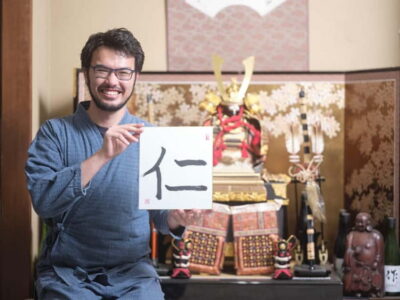
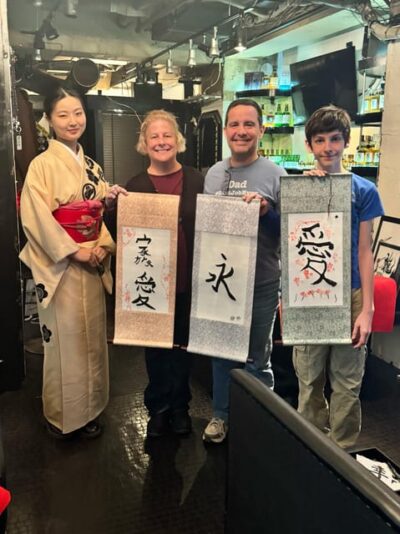
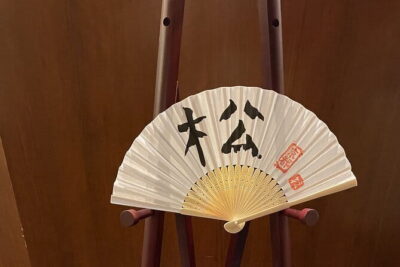
The last planned activity is calligraphy. Keiko writes your name on colored paper, which you take home.
This is more personal than a generic souvenir because it is made for you during the visit. If you are traveling with children, the paper gives them something tangible from the day. For adults, it is a small reminder of the hosts and the setting rather than another mass-produced Tokyo item.
You may also find the calligraphy portion especially meaningful if you are curious about how your name is represented in Japanese writing. The information provided does not specify that you write the name yourself, so expect Keiko to create the finished piece for you.
The farewell is part of the experience’s emotional tone. Taka and Keiko walk you back toward JR Omori Station, hoping to see you again on a future visit. That closing gesture reinforces the idea that the activity is meant to feel like a personal welcome, not just a paid appointment.
Who gets the most from this four-hour experience
I would recommend this to you if you want:
- A home-based activity rather than a commercial studio
- A broad introduction to Japanese food and customs in one morning
- A family activity with hands-on tasks for children
- A private experience with your own group
- Food preparation followed by a proper shared lunch
- Time to talk with Japanese hosts
- A souvenir with your name written in calligraphy
- Vegetarian or vegan options using different ingredients
It is also a good pick for a first visit to Tokyo because it gives you food, craft, tea, and neighborhood context in a single booking.
I would think twice if you want one specialized subject taught in depth. This is not only a sushi class or only a tea ceremony. You cover many activities, so each section is part of a larger cultural morning.
You should also be ready for a social experience. The warm welcome is central to the program, and the hosts clearly aim to form lasting connections. That will feel wonderful if you like conversation. It may feel less comfortable if you want to keep to yourself or move quickly from one activity to the next.
Practical value at $92.50 per person
The price is reasonable for what is included. You receive approximately four hours of hosted time, lunch, alcoholic and nonalcoholic drinks, an apron, origami, all food activities, matcha and sweets, and calligraphy.
The private format improves the value for couples and families. You are not paying simply to watch a demonstration in a large group. You get direct participation and a meal in a private home.
The price is less compelling if you care mainly about eating as much as possible. A less expensive restaurant meal can feed you, but it will not include noodle making, origami, tea preparation, and calligraphy. This is best understood as a cultural activity with lunch included.
The experience is also frequently booked well ahead, averaging 107 days in advance. That suggests you should reserve early if your Tokyo dates are fixed, especially if you need a particular morning. Free cancellation is available up to 24 hours before the start time, with the cutoff based on local Tokyo time.
A few details to plan around
The activity starts at 10:30 am and lasts about four hours. It ends back at the meeting point near JR Omori Station.
Mobile tickets are available, and confirmation is provided at booking. The activity is near public transportation, but transportation itself is not included.
Vegetarians and vegans can enjoy the meal with different ingredients. It is still wise to state your dietary needs when booking so the hosts can prepare properly.
The activity takes place in a private home. That is central to its charm, but it also means you should approach it with the manners you would use when visiting someone’s house. Follow the hosts’ instructions, take part in the activities, and expect a friendly, informal atmosphere rather than a polished venue.
Should you book homecoming TAKA?
Book it if you want to meet Taka and Keiko, cook several Japanese dishes, share a leisurely meal, and experience hospitality in a real Tokyo home. The strongest reasons to go are the warm personal welcome, the range of activities, and the chance to leave with both practical food skills and a calligraphy souvenir.
Families, couples, solo visitors, and vegetarian or vegan diners can all fit the format. I would place it high on your list if you have already seen Tokyo’s major sights and now want something more personal.
Skip it if you want a short demonstration, a central Tokyo location, or a narrowly focused lesson. For everyone else, the combination of udon, sushi, gyoza, tempura, matcha, origami, and conversation offers good value for four hours. The food is the draw, but the memory is likely to be the welcome.
FAQ
Where does the experience begin?
You meet at the central exit of JR Omori Station at 10:30 am. Look for someone carrying a bag with the homecoming TAKA logo.
How long does the activity last?
The experience lasts approximately four hours.
Where does the activity end?
The activity ends back at the meeting point near JR Omori Station.
What food do you make?
You make udon noodles, sushi, and gyoza, with tempura also included as part of the Japanese cooking experience. Japanese small plates are served with the meal.
Are drinks included?
Yes. Sake, beer, shochu, and soft drinks are included.
Can vegetarians and vegans participate?
Yes. Vegetarians and vegans can enjoy the dishes with different ingredients.
Is this a private activity?
Yes. Only your group participates in the activity.
What souvenir do you receive?
Keiko writes your name in calligraphy on colored paper for you to take home.
More Ramen Tours in Tokyo
- Eat and Drink Like a Local: Tokyo Ueno Food Tour-Taverns&Ramen
★ 5.0 · 957 reviews - Ramen & Gyoza Cooking Class in Tokyo with Local Supermarket Visit
★ 5.0 · 823 reviews - Tokyo: Ramen Tasting Tour with 6 Mini Bowls of Ramen
★ 4.9 · 432 reviews - Tokyo: Easy Ramen Cooking Experience in Kabukicho, Shinjuku
★ 4.6 · 321 reviews
More Food Tours in Tokyo
- Tokyo: Shinjuku Food Tour (13 Dishes at 4 Local Eateries)
★ 5.0 · 6,603 reviews - Tokyo Tsukiji Fish Market Food and Culture Walking Tour
★ 5.0 · 3,184 reviews - Tokyo: Shinjuku Food Tour (15 Dishes and 4 Eateries)
★ 4.9 · 2,033 reviews - Best of Shinjuku: Izakaya Food Tour (4 Stops, 14+ Tastings)
★ 5.0 · 1,863 reviews
Just added around Tokyo
- Kawagoe Japanese Food Tour : Unagi Kaiseki and Sake near Tokyo★ 5.0 · 30 reviews
- Kawagoe 4hr Private Tour with Licensed Guide (Kawagoe Dep)★ 5.0 · 13 reviews
- Little EDO Sushi Making workshop in Kawagoe★ 5.0 · 18 reviews
- 【R34】Tokyo:Private Daikoku tour in Modified R34★ 4.9 · 92 reviews
- :Tokyo,Shibuya/ Pro Photography in Kimono / English-Friendly★ 5.0 · 26 reviews
- Tokyo:Celebrate Unique Japanese New Year Tradition Festivity★ 3.9 · 20 reviews
- Tokyo: Allstar Food Tour★ 4.7 · 29 reviews
- Tokyo: West-Side Cycling and Food Tour with Guide★ 5.0 · 37 reviews
Calligraphy Classes, compared.
Calligraphy class at Buddhist temple in city center
Our verdict →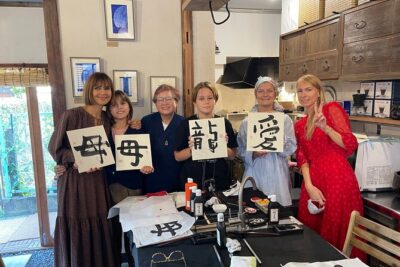
Let’s experience calligraphy in YANAKA, Taito-ku, TOKYO !!
Our verdict →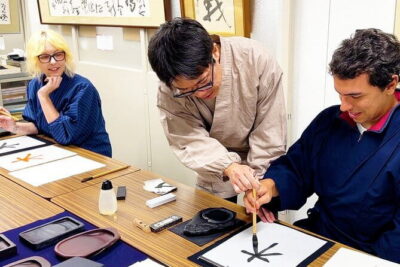
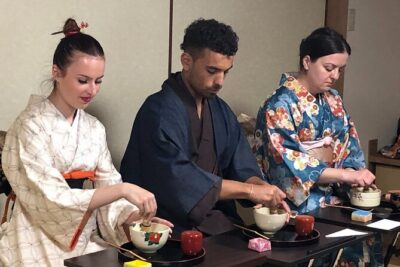
An Amazing set of Cultural experience: Kimono, Tea Ceremony and Calligraphy
Our verdict →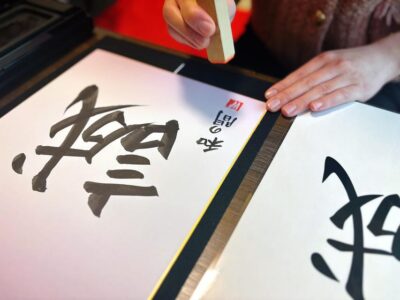
Japanese Calligraphy – Shodo – Lesson (near Kyoto Station)
Our verdict →