
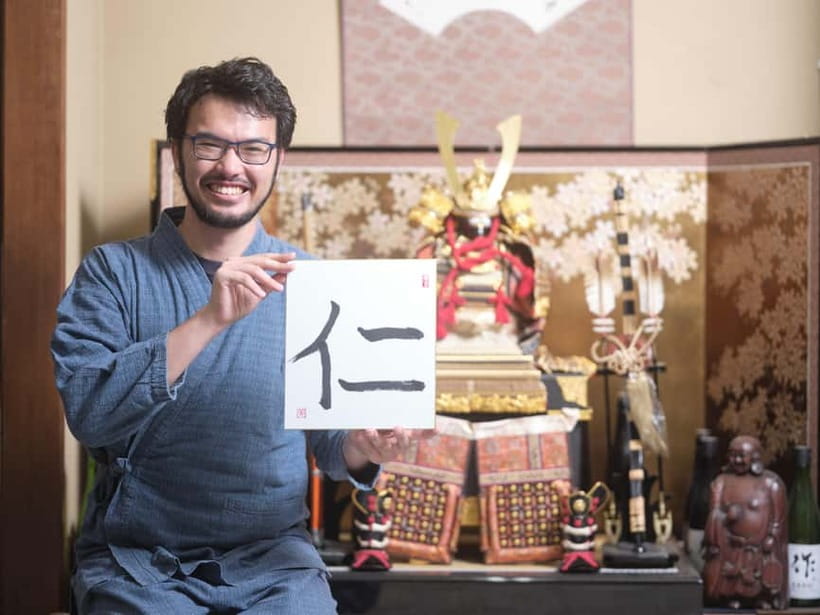
Reviewed · KIMONO & YUKATA EXPERIENCES
Tokyo: Calligraphy Experience with yukata or Samue
Japanese calligraphy is more than neat handwriting. In this Tokyo class, you learn how brush pressure, movement, and silence shape each character. You also hear about the spiritual meaning and history behind the kanji, then create a piece of your own.
I like the patient, step-by-step teaching and the chance to wear a yukata or samue before picking up the brush. I also like that the instructor can write your name for you, giving you a personal souvenir alongside your own work. The main consideration is the 90-minute limit: enough for a rewarding introduction, but not enough for advanced calligraphy.
Key points to know before booking
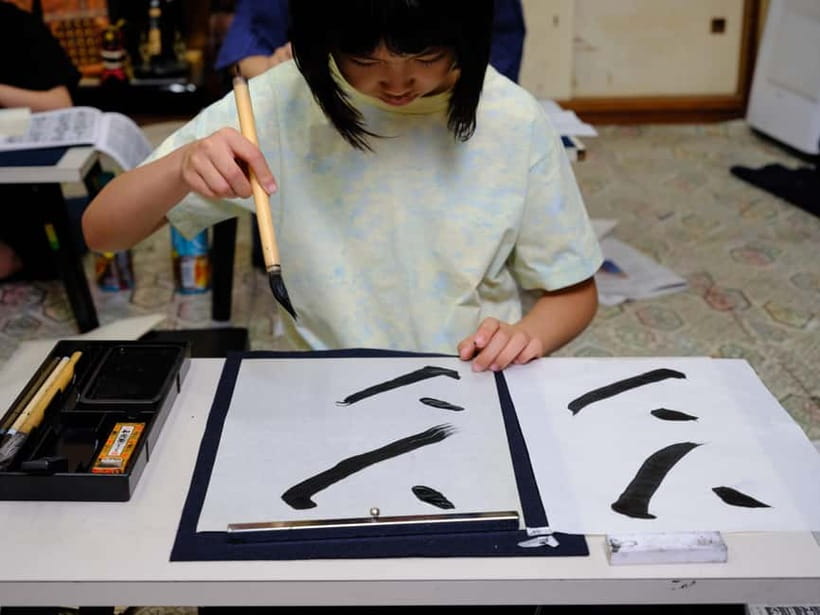
- Small groups of up to 10: You get a more personal lesson than in a large cultural demonstration.
- Professional instruction: Practice basic lines, brush handling, and a kanji before creating a final artwork.
- Traditional clothing available: Reviews describe yukata or kimono dressing, while the activity also lists samue.
- English and French support: Instructors and guides are available in both languages.
- Tea, snacks, and a finished artwork: The session includes a calm break and something tangible to take home.
- Clothes may get dirty: Ink is part of the fun, but dress with care.
A quiet Tokyo lesson with a brush in hand
Tokyo can fill your day with speed, crowds, and bright signs. This calligraphy experience offers a slower hour and a half. You sit down with ink, paper, and a traditional brush, then focus on one stroke at a time.
That change of pace is the real appeal. You are not simply watching a demonstration or taking a quick photograph in traditional clothing. You practice the movements yourself, make mistakes, try again, and eventually produce a finished piece.
The class is led by professional calligraphers. Instructor names vary, but the people associated with the experience include Hana, Koushi, and Tomo. French-speaking instruction is available, and the experience also offers English support. That matters because calligraphy depends on small physical details. A clear explanation of how to hold the brush or begin a line can make the difference between feeling lost and making real progress.
The group is limited to 10 participants. That is small enough for individual help, though the exact amount of one-to-one attention will depend on the group size and the pace of the lesson.
More Calligraphy Classes in Tokyo
- Tokyo: Calligraphy on Kanji Fan & Scroll with Drink
★ 5.0 · 210 reviews - Let’s experience calligraphy in YANAKA, Taito-ku, TOKYO !!
★ 5.0 · 127 reviews - Tokyo: Calligraphy Workshop & Original T-Shirt Creation
★ 4.9 · 105 reviews
Arriving beside the nursery and temple
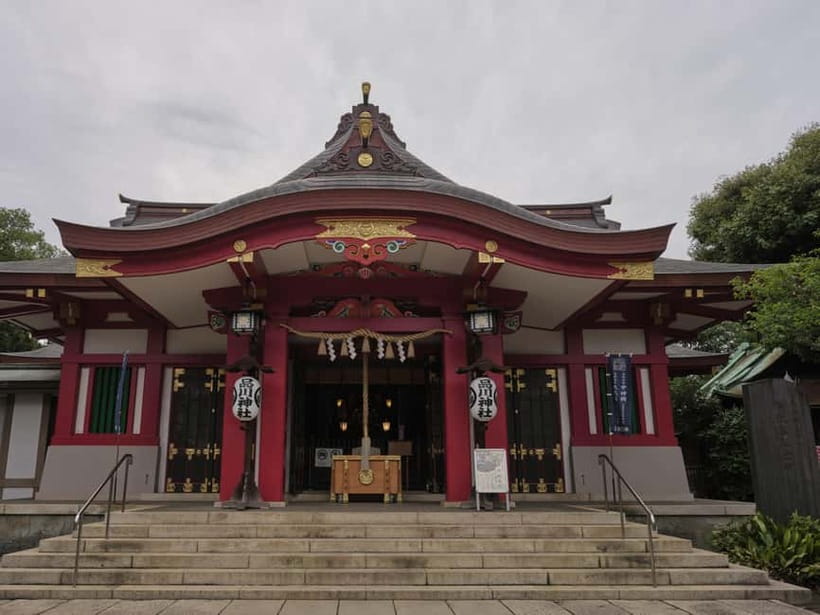
The meeting point is described as next to a nursery, with Kaideiji Temple beside it. The directions are short, so check the exact meeting instructions carefully before leaving for the class. A vague arrival can turn a peaceful cultural activity into a rushed search through unfamiliar streets.
Private transportation is not included. You are responsible for getting to the meeting point, and the experience does not include an individual transfer. Build in extra time, especially if this is your first visit to the area.
Once you arrive, expect a welcoming start with Japanese tea and, according to the experience details, snacks or biscuits. This small gesture helps set the tone. You are not pushed straight into a table and told to copy a character. The class begins as a cultural visit, with time to settle in.
The nearby religious setting also fits the subject. Japanese calligraphy has long been linked with discipline, meditation, and the careful use of space. You do not need prior knowledge of Buddhism or Japanese culture to enjoy the class, but the location and explanations give the activity more meaning than a basic craft workshop.
Changing into yukata or samue
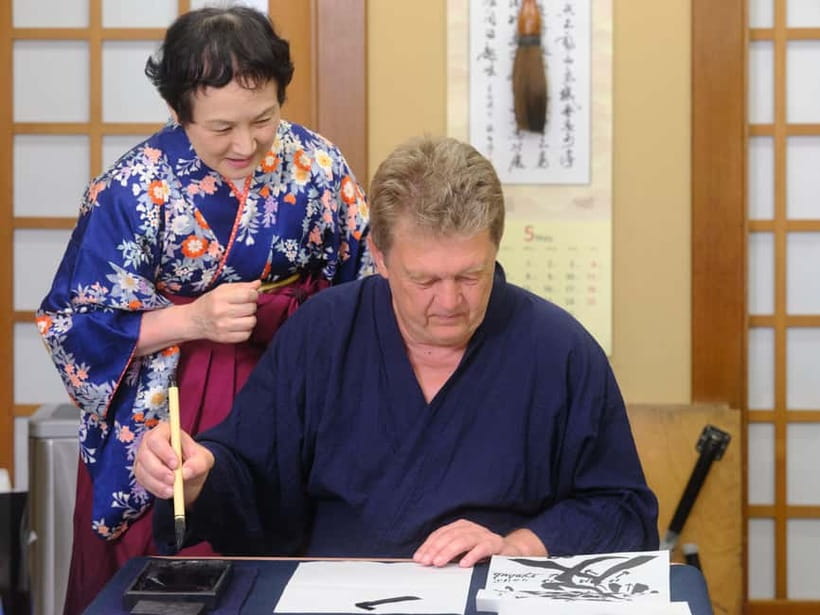
One of the most memorable parts is the traditional clothing. The activity is presented with a choice of yukata or samue, while some descriptions and personal accounts refer to kimono. Ask your host what is available when you arrive, since the exact clothing choice may depend on the session.
The yukata is a light, informal Japanese garment often associated with summer and relaxed occasions. Samue is practical workwear traditionally linked with Buddhist monks and craft workers. Either choice changes the mood of the class. You are not just learning a technique at a table. You are taking part in a setting shaped by Japanese dress and custom.
Allow a little time for changing before the brush lesson begins. If you have children in your group, remember that the activity is not suitable for children under four. It is also not suitable for people over 70, according to the stated restrictions. That age limit may surprise some readers, so check it carefully before booking for a multigenerational group.
Wear clothes that can get dirty. Ink may stain fabric, and careful artists are still not immune to one stray brush or drop. Traditional clothing may cover much of what you are wearing, but it is sensible to avoid your best outfit underneath.
Learning the brush one line at a time
The lesson begins with the basics of Japanese classical calligraphy. You learn how to hold and use the brush, how to control the pressure, and how to draw the fundamental lines. These simple marks are not filler. They teach you the movements that later make up a kanji character.
This is where professional guidance pays off. A beginner may think the task is simply to copy a shape, but the brush produces different results depending on speed, angle, and pressure. Your teacher can correct your hand position and show you how to let the brush move rather than forcing it across the paper.
You get time to practice before making the final piece. That is important. A single attempt would make the activity feel like a test, while practice lets you understand the process. You can see why a line looks too thin, why a turn loses its strength, or why a character feels unbalanced.
The instruction is designed for newcomers. You do not need to read Japanese or know how to write kanji. The teacher explains the character and its meaning, then guides you through the physical steps.
More Kimono Experiences in Tokyo
- Let’s make kimono !(Kimono is a gift for you
★ 5.0 · 252 reviews - Tokyo: Matcha and Kimono Experience
★ 4.7 · 219 reviews - Tokyo: Asakusa Kimono Dressing and Matcha Experience
★ 4.9 · 173 reviews - Asakusa: Kimono Tea Ceremony with Matcha and Sweet
★ 4.9 · 153 reviews
Choosing a kanji with meaning
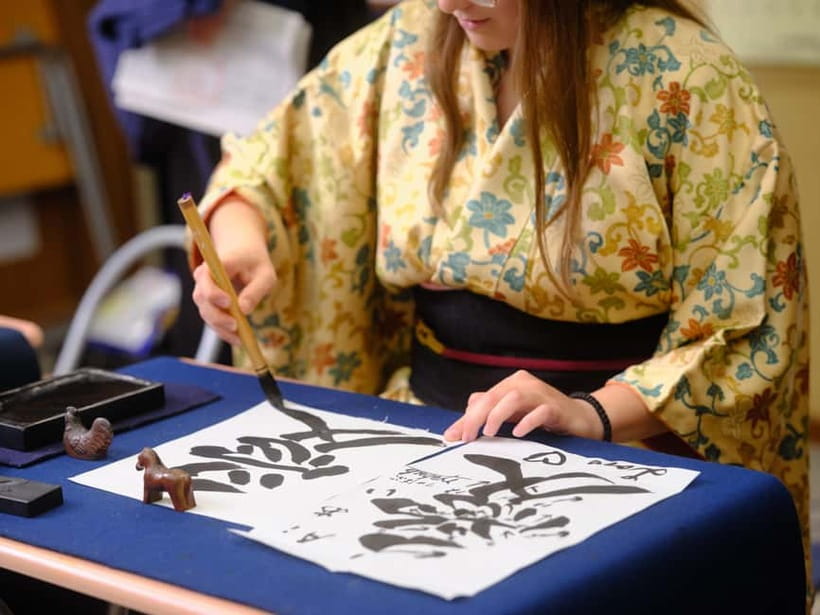
The class is not only about making an attractive design. You also learn about the spirituality, history, and meaning connected with the characters. This helps you choose or understand what you are writing instead of treating the kanji as a decorative symbol.
The exact character choices are not specified, so do not book expecting a particular word. Your teacher will guide the process, and the character may reflect the lesson or your own choice. The experience also allows the instructor to write your name, which adds a personal touch to the finished collection of souvenirs.
I especially like this part of the activity because it gives your artwork a story. A brush painting with a character you understand is far more useful as a memory than a random design copied without context. You can explain what it means when you show it to friends at home.
The teacher may also demonstrate the character before you try it. Watch the order of the strokes closely. In Japanese calligraphy, stroke order is part of the structure, not a minor technical rule.
Creating your final artwork
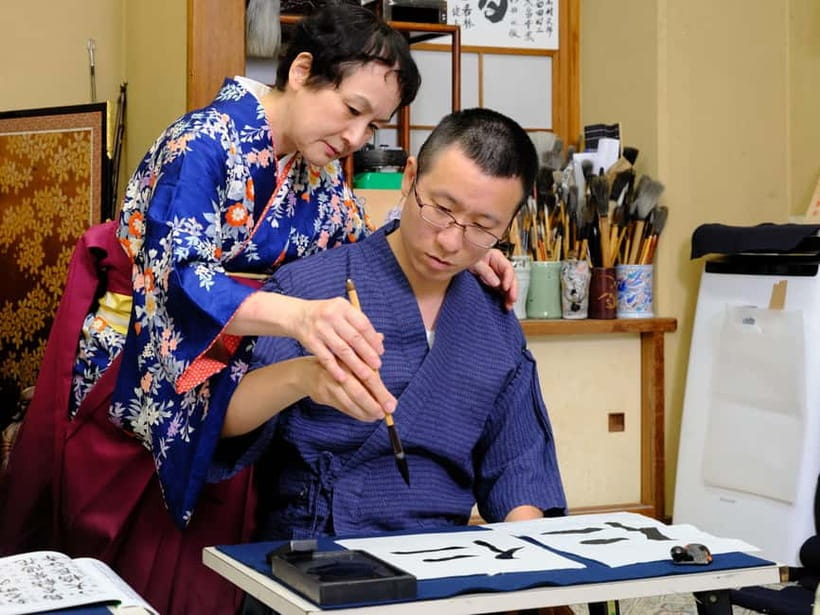
After practice, you make a final work on a board or card to take home. The process gives the session a clear shape: introduction, clothing, demonstration, practice, and final creation.
Do not expect your first finished piece to look like a professional calligrapher’s work. That is not the point. Your final artwork records the movement you learned and the character you formed yourself. The uneven parts are part of its value.
If your teacher helps with presentation, the result can become a surprisingly good souvenir. Some participants also receive a name written by the instructor. That gives you two kinds of keepsake: your own work, showing what you learned, and a more polished example from a skilled artist.
Protect the artwork carefully after class. The experience includes the finished piece, but no special packing details are provided. If you are continuing around Tokyo, bring a folder or another flat place to carry it.
Tea gives the class a welcome pause
Tea is included, and the welcoming break may also include snacks or biscuits. It is a small feature, but it works well in a 90-minute class. Calligraphy requires concentration, and a short pause keeps the session from feeling like a continuous technical lesson.
The tea also gives you time to ask questions. You might want to know more about the character you wrote, the clothing, the brush, or the role of calligraphy in Japanese culture. Since the group is small, this can be a useful moment to speak directly with the instructor.
Do not expect a full meal or a tea ceremony. The information only promises Japanese tea and, in the experience descriptions, snacks. Think of it as a calm refreshment break rather than a separate formal activity.
What the strongest praise tells you
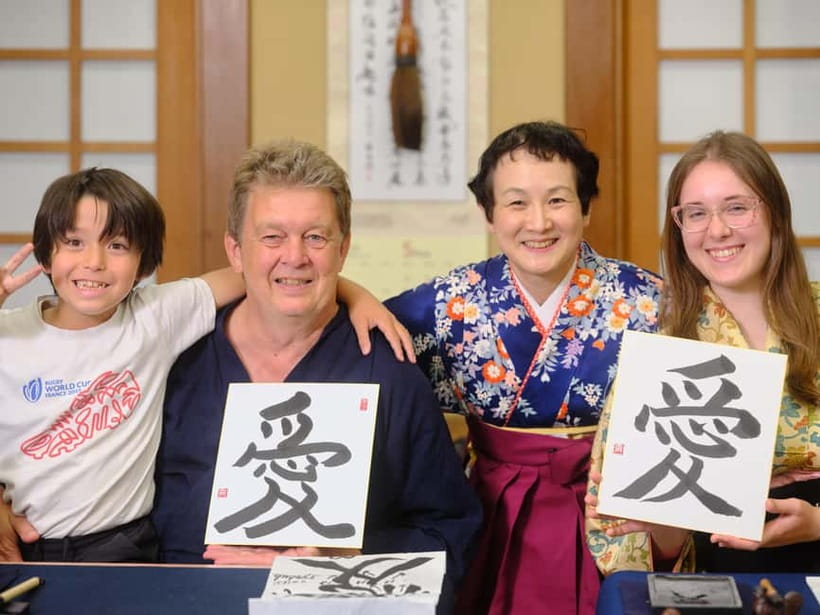
The most consistent strengths are the instructors, the warm welcome, and the chance to take part rather than simply watch. Specific teachers named in the experience include Hana, Koushi, and Tomo. Their teaching styles are described as kind, patient, artistic, and clear.
French-speaking visitors have found the explanations especially useful, and English instruction is also available. This is important for a subject where translation can otherwise flatten the meaning of a character into one quick definition.
Families can enjoy the class, especially older children who can sit still and follow directions. One family booked it for a daughter’s birthday and found the combination of clothing, instruction, and personal help memorable. Another family appreciated assistance with arranging a taxi and buying a calligraphy set, though those extra services should not be treated as guaranteed inclusions.
The handmade result is another major strength. You leave with your own calligraphy, not just a photograph of someone else’s work. Some participants also received additional personal souvenirs, but the guaranteed item is your finished calligraphy piece.
Price, timing, and overall value
At $64 per person, the experience is not the cheapest cultural activity in Tokyo. The value comes from what is bundled into the 90 minutes: professional instruction, all calligraphy tools, traditional clothing access, tea, an English or French guide, and a finished artwork to take home.
You are also paying for a small group rather than a large classroom. If the group reaches the limit of 10, it should still remain manageable, but it will not feel like a private lesson. The instructor fee and materials are included, so you do not need to buy brushes, ink, or paper before arriving.
The price makes the most sense if you want an activity with lasting value. A short photo stop may cost less, but it will not teach you a skill or give you something you made yourself. On the other hand, serious calligraphy students may find the session too brief for technical study.
The 90-minute format fits neatly into a Tokyo itinerary. You can place it between sightseeing plans without giving up half a day. Allow extra time for arrival, changing, and carrying your artwork afterward.
Free cancellation is available up to 24 hours before the start time, with a full refund. You can also reserve now and pay later, which helps if your Tokyo plans are still shifting.
Who should book this calligraphy class
I would choose this for you if you want a cultural activity that is calm, hands-on, and easy to understand without Japanese language skills. It works well for couples, families with children over four, and solo visitors who want a guided introduction to an art form they might otherwise find difficult to approach.
It is also a good choice if you want a break from Tokyo’s crowded attractions. The class asks for concentration, but it is not physically demanding in the usual sightseeing sense. You sit, listen, practice, and create.
French-speaking visitors have a clear reason to consider it, since French instruction is offered. English-speaking visitors are also supported. If precise language assistance matters to you, confirm the guide language at booking.
I would skip it if you are looking for a long workshop, advanced training, or a formal tea ceremony. The class is an introduction, not a professional course. You should also reconsider if you are uncomfortable wearing provided clothing, worried about ink on your clothes, or unable to meet the stated age requirements.
Should you book it?
Book this class if you want a personal Tokyo souvenir and a genuine chance to practice a traditional Japanese art. The strongest reasons are the patient instruction, the explanation of meaning behind the characters, and the final artwork you create yourself.
Go in with realistic expectations. You will learn the basics, not master calligraphy in one session. Dress for possible ink stains, check the meeting point carefully, and leave room in your luggage for a flat piece of art.
For $64, this is a fair choice for a small-group cultural activity that combines clothing, teaching, tea, and a personal keepsake. If you prefer active participation to simply looking at sights, it is one of the more useful ways to spend 90 minutes in Tokyo.
FAQ
How long does the calligraphy experience last?
The activity lasts 90 minutes. Check availability for the specific starting times offered on your chosen date.
What languages are available?
Instruction and guiding are available in English and French.
Is the activity suitable for children?
Children under four are not permitted. The experience may suit older children who can follow the lesson and concentrate, and family groups are welcome within the stated age limits.
Can I wear traditional Japanese clothing?
Yes. The experience includes the opportunity to wear a yukata or samue. Some descriptions of the session also refer to kimono, so ask the host about the exact clothing available for your booking.
What will I take home?
You will take home your finished calligraphy work. In some sessions, the instructor may also write your name, but the guaranteed souvenir is your own completed artwork.
Are calligraphy supplies included?
Yes. The necessary calligraphy tools and the instructor fee are included in the price.
Can I cancel the booking?
You can cancel up to 24 hours in advance for a full refund. The activity also offers a reserve-now, pay-later option.
Just added around Tokyo
- Kawagoe Japanese Food Tour : Unagi Kaiseki and Sake near Tokyo★ 5.0 · 30 reviews
- Kawagoe 4hr Private Tour with Licensed Guide (Kawagoe Dep)★ 5.0 · 13 reviews
- Little EDO Sushi Making workshop in Kawagoe★ 5.0 · 18 reviews
- 【R34】Tokyo:Private Daikoku tour in Modified R34★ 4.9 · 92 reviews
- :Tokyo,Shibuya/ Pro Photography in Kimono / English-Friendly★ 5.0 · 26 reviews
- Tokyo:Celebrate Unique Japanese New Year Tradition Festivity★ 3.9 · 20 reviews
- Tokyo: Allstar Food Tour★ 4.7 · 29 reviews
- Tokyo: West-Side Cycling and Food Tour with Guide★ 5.0 · 37 reviews
Kimono & Yukata Experiences, compared.

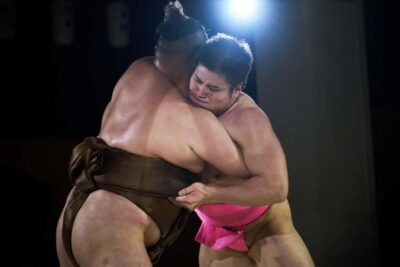
Sumo Show & Experience w/ Optional Kimono & Hot Pot
Our verdict →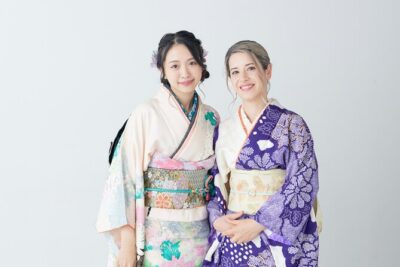
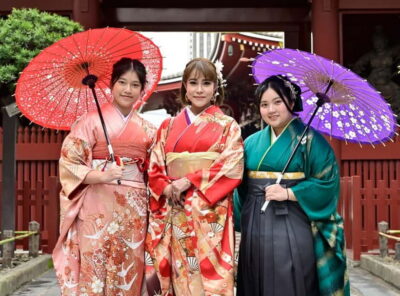
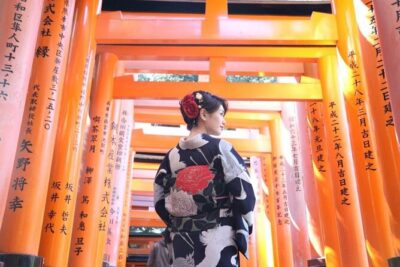
Family-Friendly Kimono & Yukata Experience at WARGO
Our verdict →
Browse the lists this tour appears in