
Reviewed · CALLIGRAPHY CLASSES
Tokyo: Calligraphy Workshop & Original T-Shirt Creation
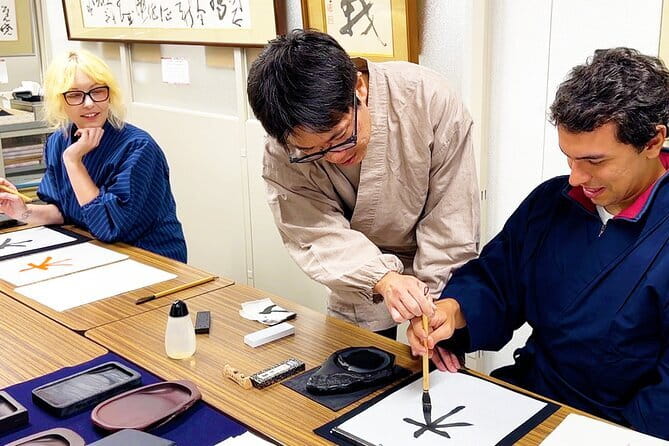
Japanese calligraphy here begins with a solid inkstick, water, and patience. You grind the ink yourself, practice brush control with a professional teacher, then turn your name into kanji and create a keepsake in Shinjuku. The process feels calm and hands-on, not like a quick souvenir stop.
I especially like two things: the authentic tools and ink-making give you a real connection to the craft, and the small groups, limited to 10, leave room for personal correction. Guides such as Hiromi, Nono, Aki, and Naoto have helped English-speaking participants follow the lesson clearly.
The main catch is cost control. The $30 class includes materials and artwork, but the original T-shirt costs extra, and one participant found it pricey. Your final brushwork may also look charmingly imperfect, which is part of the point.
Key things to know before you book
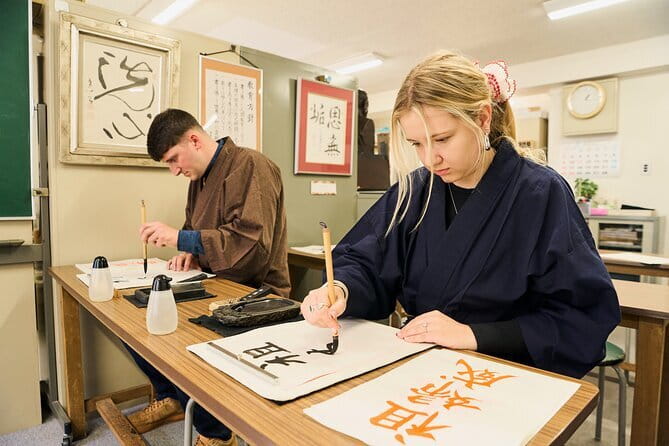
- You grind real ink from a solid inkstick, adding a quiet, mindful start to the class.
- Your name becomes kanji, with the teacher explaining character meaning, stroke order, and arrangement.
- A professional calligrapher leads the lesson, while an English-speaking host translates and helps you practice.
- You change into traditional Japanese workwear, making the activity feel more like a studio lesson than a craft table.
- The T-shirt is optional and not included, while your paper artwork is included to take home.
- The class lasts two hours in Shinjuku, with a maximum group size of 10 and free cancellation up to 24 hours ahead.
Why this Shinjuku workshop feels different
Tokyo offers plenty of polished cultural activities. This one is appealing because it slows you down. Instead of simply watching a demonstration, you handle the brush, prepare the ink, learn how characters are built, and make a piece with your own hand.
That first step, grinding the inkstick, is more important than it may sound. It takes time and a steady motion. You are not rushing to produce a souvenir, and the quiet preparation gives the class a calm rhythm. Several participants described the session as relaxing or meditative, a welcome change after Tokyo streets, stations, and packed sightseeing days.
I also like the balance between tradition and personal choice. The teacher explains the art and technique, but you are not limited to copying one fixed word. You can work with your name and choose kanji connected to its meaning. That makes the finished paper piece more personal than a standard souvenir bought in a shop.
Do keep your expectations sensible. Japanese calligraphy is difficult for beginners. Brush pressure, stroke order, spacing, and balance all matter. Your T-shirt may look funny rather than gallery-ready, but that does not make it a poor souvenir. It shows that you made it yourself.
More Calligraphy Classes in Tokyo
- Tokyo: Calligraphy on Kanji Fan & Scroll with Drink
★ 5.0 · 210 reviews - Let’s experience calligraphy in YANAKA, Taito-ku, TOKYO !!
★ 5.0 · 127 reviews - Experience all of Japanese culture and Japanese food experience classes “origami, udon, Japanese food, green tea, calligraphy” in 4 hours
★ 5.0 · 105 reviews
Meeting at Okubo Station
The activity begins at FamilyMart Okubo Station South Exit Store, at 1-23-21 Hyakunincho, Shinjuku-ku, Tokyo. The meeting point is near Okubo Station, not a major sightseeing landmark, so allow enough time to find the correct exit and store.
Look for a guide holding a sign marked Local Guide Stars. This detail matters in a busy Tokyo neighborhood, where several convenience stores and station exits can make a simple meeting feel less simple. Save the supplied map link before leaving your hotel, especially if you are relying on phone data.
From the meeting point, you continue to the workshop in Shinjuku. The class itself lasts two hours. Starting times vary, so check the available slot when you reserve.
This is a good activity to place between larger sightseeing plans, but avoid scheduling it too tightly. The fixed class time matters, and you will get more from the lesson if you arrive calm rather than hurrying in from another part of Tokyo.
Changing into workwear and preparing the ink
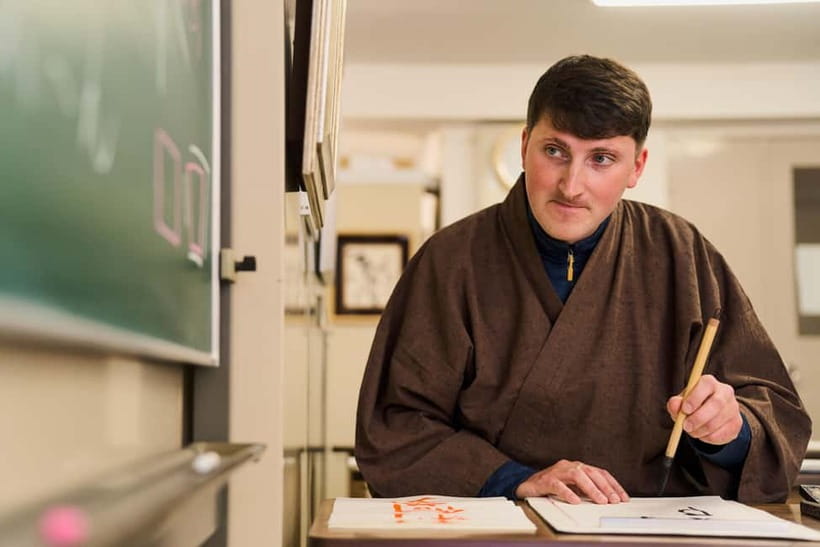
One of the first details that gives the workshop character is changing into traditional Japanese workwear. It is a small touch, but it helps separate this from a casual brush-painting activity.
You then grind a solid inkstick to make usable ink. This is an authentic part of the process, not a decorative demonstration. The repeated motion creates a natural pause before the more demanding brush practice begins.
I would treat this stage as part of the lesson rather than something to hurry through. The ink-making process helps you understand that calligraphy is built around preparation and control. It also offers a quiet reset after the noise of central Tokyo.
The teacher may explain the background of Japanese writing and how characters changed over time. Past instruction has included the different Japanese alphabets, the evolution of characters, and the meaning behind names. That context makes the later brushwork easier to understand.
Learning brush technique from a professional teacher
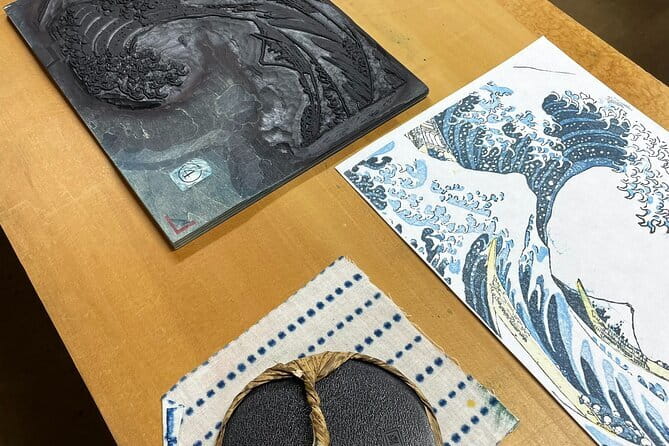
Once the ink is ready, you practice basic brush techniques. The teacher demonstrates how to hold and position the brush, how to control the pressure, and how to form individual strokes.
Stroke order receives particular attention. This is useful even if you cannot read Japanese, because it shows that calligraphy is not simply drawing attractive shapes. The direction and order of each mark affect the character, its balance, and the way it sits beside the next one.
The class has received strong praise for patient instruction. Teachers have included Sousen, Sosen, Nori, Horino, and other instructors named in participant feedback, while English-speaking helpers have included Hiromi, Nono, Aki, Naoto, Frankie, and Erico. Names and staffing may vary by session, but the format is consistent: a calligraphy teacher leads the craft lesson and an English guide helps explain it.
Small group size is a real advantage. With no more than 10 participants, the instructor has a better chance to correct your grip and brush movement. Some sessions have been even smaller, including one-person classes, which allowed the teacher to spend extensive time with an individual student.
That level of attention is useful, but it can also make you feel exposed if you are the only person in the room. Calligraphy takes practice, and the teacher is there to help, not judge. Still, people who dislike hands-on correction or making art in front of others may prefer a larger, less personal activity.
Same trip, a completely different kind of day:
- 1-Day Tokyo Bus Tour
★ 5.0 · 14,250 reviews - Tokyo: TOKYO SKYTREE® Admission ticket
★ 4.5 · 11,192 reviews - Tokyo: teamLab Planets TOKYO Digital Art Museum Entry Ticket
★ 4.6 · 9,779 reviews - Tokyo: Sumo Show Experience with Chicken Hot Pot and a Photo
★ 4.8 · 6,678 reviews
Turning your name into meaningful kanji

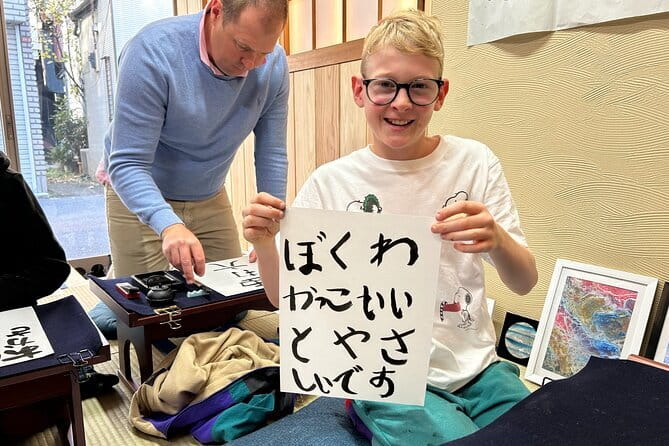
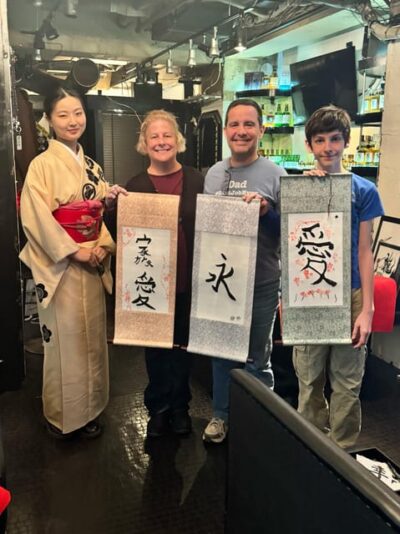
The central creative step is transforming your name into kanji. This is more than finding characters that sound similar. The teacher can help connect your name with suitable characters and explain their meanings.
That makes the experience especially interesting for couples, families, and anyone curious about Japanese names. You are learning how meaning, sound, and visual form can come together in Japanese writing.
You then practice the selected characters on paper. The instructor explains how to place them next to one another and how to keep the composition balanced. Beginners often focus on one character at a time, but the final result depends on how the whole group of characters works together.
I recommend treating the paper practice as the main achievement, not just rehearsal for the T-shirt. Some participants chose not to pay extra for a shirt and still received a neat version of their name on paper to take home. The included artwork is a worthwhile souvenir by itself.
The optional T-shirt: fun, personal, and extra
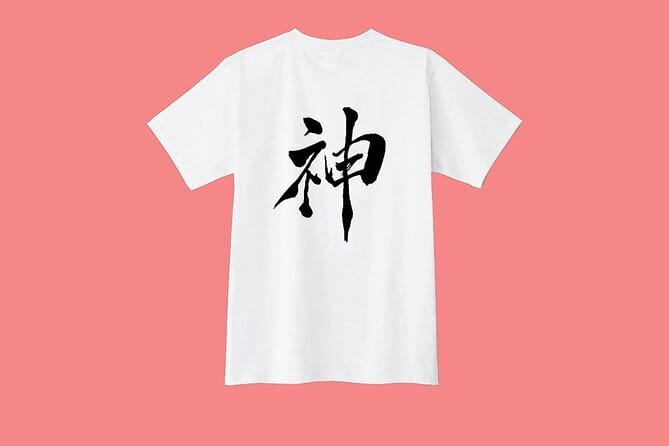
If you choose the T-shirt option, you write your kanji directly onto the fabric and create an original wearable piece. It is the most playful part of the class, and it gives you a souvenir nobody else can duplicate.
The shirt is not included in the $30 price. One participant specifically noted that the extra cost felt high, so check the current price before you commit. The basic booking includes the English guide, calligraphy supplies used during class, and your artwork, but not the original T-shirt.
You should also expect an authentic beginner result rather than a perfect retail design. Brushwork is hard to control, and fabric can make the challenge different from writing on paper. That is part of the charm, but it is worth knowing before you pay extra.
If you want a more traditional display piece, the information provided for this activity does not list a scroll as an alternative. One participant wished for that option, so choose the T-shirt only if you like the idea of a casual, wearable souvenir.
English guidance and the human side of the class
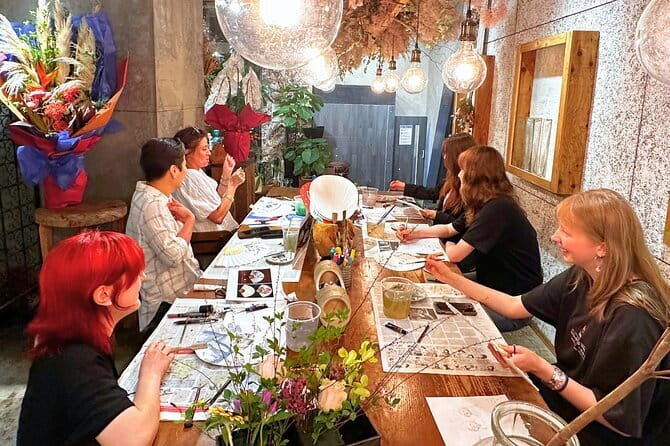
The workshop is conducted with an English-speaking guide. The teacher may speak Japanese, while the guide translates the explanations and helps you communicate questions and choices.
This arrangement can work very well when the guide does more than translate word for word. Hiromi, Nono, Aki, and Naoto have been praised for being kind, patient, and helpful, while guides such as Frankie and Erico have also assisted with explanations. Participants have valued the extra cultural information as much as the language support.
The guide can also help keep the room calm and make the lesson less intimidating. That is useful for children and first-time painters, who may need encouragement before putting brush to paper.
The activity is designed to be enjoyable for children, and a toddler has been accommodated patiently. Still, young children need to be comfortable with a quiet, careful activity involving ink and waiting. This is not a high-energy attraction. It suits a child who likes making things and can follow step-by-step guidance.
Value at $30 per person
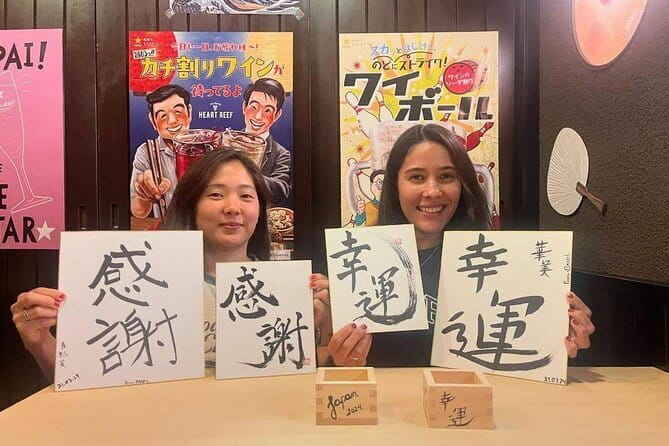
At $30 per person, I consider the workshop a good value if you want instruction rather than just a photo opportunity. The price covers two hours, a professional-led lesson, English assistance, supplies, the use of traditional tools, and artwork to take home.
You are also paying for access to a process that would be difficult to arrange independently. Grinding ink, selecting kanji, learning stroke order, and getting corrections from a calligrapher give the experience substance.
The value is weaker if your only goal is a cheap Tokyo souvenir. The T-shirt costs extra, and the final result depends on your own skill. You may leave with an uneven design, especially if you have never held a calligraphy brush.
For me, the strongest value lies in the lesson itself. The paper artwork is a bonus, and the T-shirt is an optional upgrade. Book it for the cultural experience and the chance to make something personal, not because you expect a flawless garment.
Who will enjoy this most
I would recommend this to:
- First-time visitors who want a cultural activity in central Tokyo
- Art lovers and people curious about Japanese writing
- Families with children who enjoy quiet creative projects
- Couples looking for matching or complementary name artwork
- Solo visitors who appreciate focused instruction
- Anyone needing a calm two-hour break from sightseeing
It is less suitable for someone who wants a fast, polished craft souvenir or a broad tour of several Tokyo sights. This is a focused class. You spend most of the time on preparation, practice, and your own artwork.
It also suits people who enjoy learning through their hands. The cultural explanation is useful, but the heart of the activity is physical: grind, load the brush, control the stroke, correct the spacing, and try again.
Practical details that affect your choice
The group is limited to 10 participants, and the live guide speaks English. Supplies used during the class are included. Your completed artwork is yours to take home.
Wear something you do not mind changing out of before the lesson. The activity includes traditional workwear, but ink and brush practice are still hands-on. The supplied details do not specify a laundry or clothing policy, so keeping valuable or delicate clothing protected is sensible.
You can cancel up to 24 hours in advance for a full refund. A reserve-now, pay-later option is also available, which helps if your Tokyo schedule is still shifting.
The experience is in Shinjuku, with the meeting point at the FamilyMart by Okubo Station South Exit. Confirm the starting time and meeting instructions before setting out. The host will be holding the Local Guide Stars sign.
Should you book this calligraphy class?
Book it if you want to slow down, learn how Japanese calligraphy works, and take home something made by your own hand. The inkstick preparation, kanji name work, patient teaching, and small groups give this activity more substance than a standard tourist craft session.
I would choose the basic class even if you are unsure about the shirt. You receive artwork on paper, and you can decide during the activity if the extra T-shirt cost feels worthwhile. If you are happy with an imperfect, personal result, the shirt can be a fun addition.
Skip it if you need a guaranteed polished product, dislike quiet concentration, or have no interest in writing practice. For everyone else, especially families, couples, and curious first-time visitors, two hours here offer a thoughtful change of pace in Tokyo.
FAQ
How long does the calligraphy workshop last?
The workshop lasts two hours.
Where do I meet the guide?
Meet at FamilyMart Okubo Station South Exit Store, 1-23-21 Hyakunincho, Shinjuku-ku, Tokyo, Japan. The guide will hold a sign saying Local Guide Stars.
Is the workshop conducted in English?
Yes. The activity includes a live English-speaking guide who helps translate and explain the lesson.
Is the T-shirt included in the price?
No. The original T-shirt is not included and costs extra.
What is included in the $30 price?
The price includes the English guide, calligraphy supplies used during class, and your own artwork to take home.
Can children join the activity?
Yes. The workshop is designed to be enjoyable for children, and the calligraphy lesson can be adapted with patient guidance.
Can I cancel for a full refund?
Yes. You can cancel up to 24 hours in advance for a full refund.
Just added around Tokyo
- Kawagoe Japanese Food Tour : Unagi Kaiseki and Sake near Tokyo★ 5.0 · 30 reviews
- Kawagoe 4hr Private Tour with Licensed Guide (Kawagoe Dep)★ 5.0 · 13 reviews
- Little EDO Sushi Making workshop in Kawagoe★ 5.0 · 18 reviews
- 【R34】Tokyo:Private Daikoku tour in Modified R34★ 4.9 · 92 reviews
- :Tokyo,Shibuya/ Pro Photography in Kimono / English-Friendly★ 5.0 · 26 reviews
- Tokyo:Celebrate Unique Japanese New Year Tradition Festivity★ 3.9 · 20 reviews
- Tokyo: Allstar Food Tour★ 4.7 · 29 reviews
- Tokyo: West-Side Cycling and Food Tour with Guide★ 5.0 · 37 reviews
Calligraphy Classes, compared.
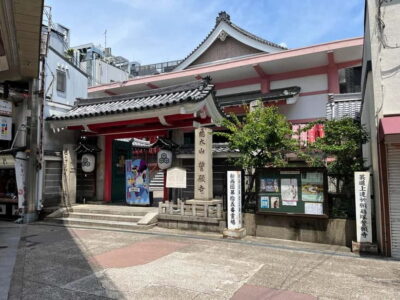
Calligraphy class at Buddhist temple in city center
Our verdict →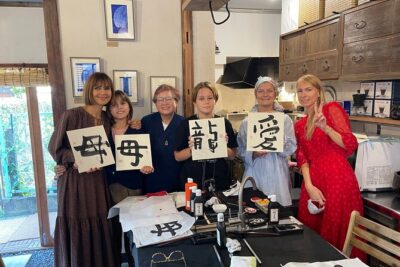
Let’s experience calligraphy in YANAKA, Taito-ku, TOKYO !!
Our verdict →
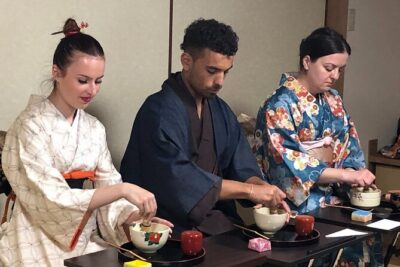
An Amazing set of Cultural experience: Kimono, Tea Ceremony and Calligraphy
Our verdict →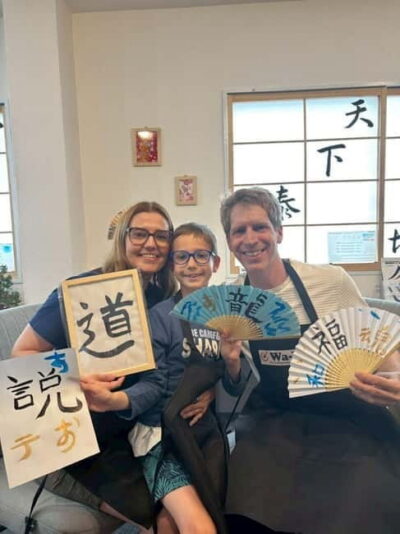
Calligraphy &Make your original folding fan in Asakusa
Our verdict →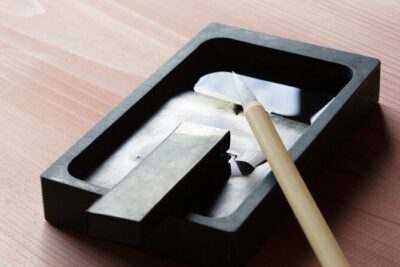
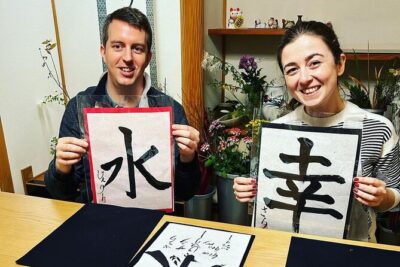
Private Japanese Calligraphy in Kyoto – Learn Shodō with a Master
Our verdict →Browse the lists this tour appears in