
Reviewed · CALLIGRAPHY CLASSES
Osaka: Private Japanese Calligraphy Experience
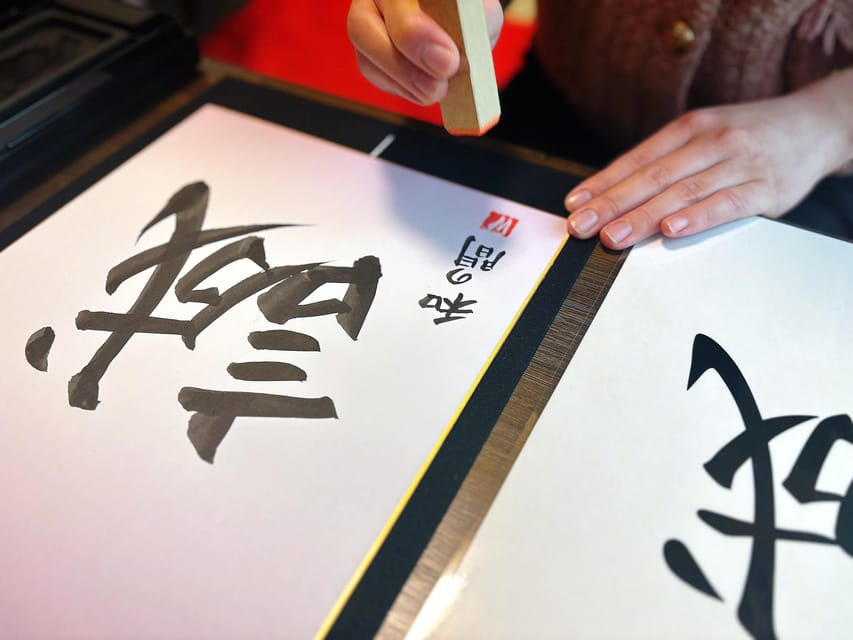
The most appealing part of this Osaka activity is that your finished artwork is personal. You do not simply copy a standard character. You choose a theme, discuss words that matter to you, and receive help selecting kanji that suits your personality. I like the private format and the chance to create a souvenir with a real story behind it.
I also like the calm pace and patient teaching. The instructor gives hands-on help with brush movements, explains the meaning behind the strokes, and can adjust the session for children or for guests who want plenty of photos. The main consideration is that calligraphy takes control and patience. Your hand may shake, and the final piece may look less polished than the instructor’s example.
Key points at a glance
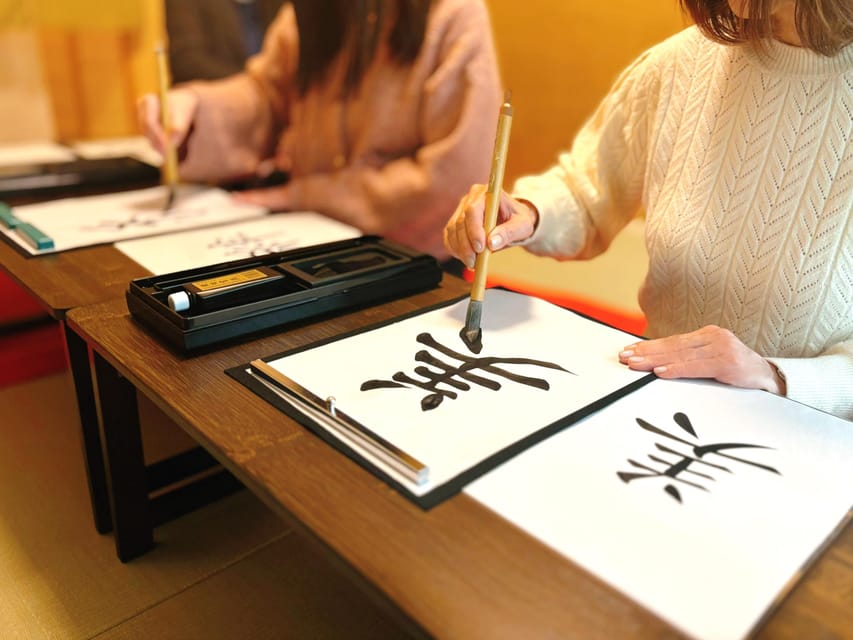
- Personal kanji artwork: Choose a theme and create characters connected to your name, personality, or interests.
- Private 90-minute lesson: Your group receives close attention, with room to slow down, ask questions, or pause for photos.
- English and Japanese instruction: The instructor explains brush technique, language, and cultural background in English or Japanese.
- Central Namba location: The studio is about a 30-second walk west from the entrance of New Osaka Hotel Shinsaibashi, near Shinsaibashi-suji.
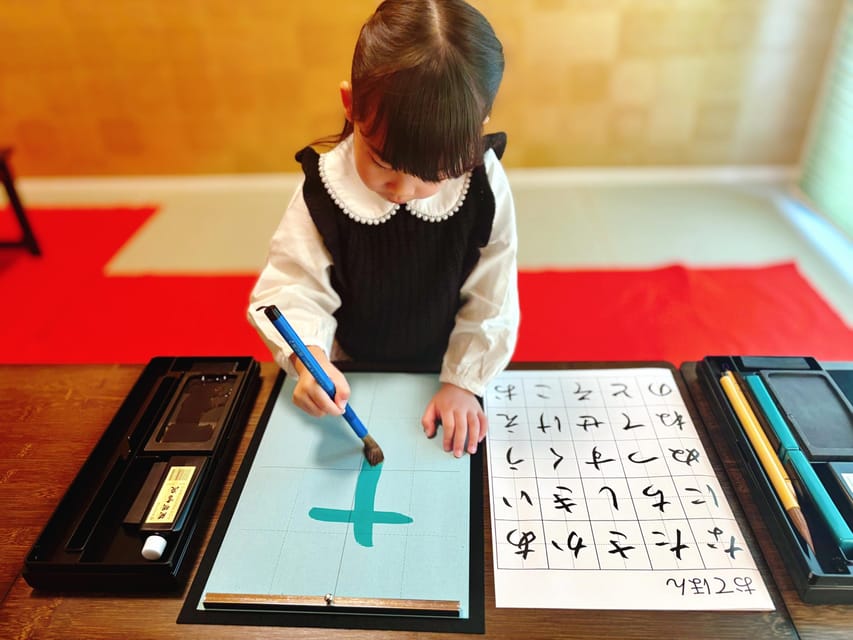
- Family-friendly options: Children can request water calligraphy, which helps keep hands and clothes clean.
- A useful Osaka souvenir: You leave with your own colored-paper artwork, complete with your name and stamped initials.
Why this private Osaka calligraphy class works so well
Japanese calligraphy is easy to admire and harder to perform. A finished character can look simple, but the pressure of the brush, the angle of the tip, and the speed of each stroke all affect the result. This class gives you time to notice those details without competing with a large group.
The private setup matters most. You are not sharing the instructor’s attention with a roomful of strangers. If you want extra help, you can ask for it. If your child needs a slower pace, the session can be adjusted. If you want photos while you work, the instructor can take them without disrupting another group.
That flexibility makes the class feel less like a quick demonstration and more like a personal cultural lesson. You still have a clear 90-minute structure, but the instructor can shape the session around your group.
The setting also suits a busy Osaka itinerary. Namba and Shinsaibashi are packed with shopping, food, and neon, so a quiet brush-and-ink session offers a welcome change of rhythm. You can schedule it between city activities without giving up an entire day.
More Calligraphy Classes in Osaka
- Calligraphy Workshop in Namba, Dotonbori
★ 5.0 · 57 reviews - Learning Zen of Japanese Calligraphy in kimono near Osaka Castle
★ 4.5 · 53 reviews - Osaka: Private Tea Ceremony and Calligraphy Experience
★ 5.0 · 50 reviews
Finding the studio near Shinsaibashi
The meeting point is outside the main entrance of New Osaka Hotel Shinsaibashi. Walk west for about 30 seconds, and look for a blue vending machine near the entrance.
The instructor waits outside five minutes before your scheduled start time and wears a kimono, making the meeting fairly easy. The location is also described as about a five-minute walk from the main Shinsaibashi shopping street and station area, depending on exactly where you begin.
I would still allow a few extra minutes. Namba and Shinsaibashi have many busy streets, hotel entrances, and signs competing for attention. Arriving early keeps you from starting the lesson flustered. Bring socks, since they are specifically required.
The activity takes place in a central part of Osaka rather than in a distant cultural district. That is convenient, but it also means you should not expect a large traditional temple setting or an old rural workshop. The value here is the instruction and personal attention, not an elaborate sightseeing backdrop.
Choosing a theme that means something to you
The session begins with a simple but important decision: what do you want to write?
You can bring a favorite word or idea, or explain a theme that interests you. The instructor can suggest kanji that express the feeling or concept you want. You may also work with a Japanese version of your name, shaped around your personality.
This is more interesting than copying a random character because it gives the artwork a connection to your trip. A word linked to happiness, connection, family, courage, or another personal idea becomes a small reminder of your time in Osaka.
The process also gives you a beginner-friendly introduction to how written Japanese works. The class begins with an explanation of the different symbol systems before moving into calligraphy. You do not need to arrive knowing the difference between kanji and other Japanese scripts.
The instructor explains the meaning behind the selected characters and the reason a particular combination may suit you. That language element adds substance to the craft. You are not just making decorative marks. You are learning why the characters say what they say.
If you are booking for two people, you can choose related themes or completely different ones. Families can let each child select a character or idea that feels personal. The private format makes this choice feel unhurried.
Learning the brush strokes before the final piece
After choosing your theme, you receive instruction in the basic practices of Japanese calligraphy. The lesson focuses on the movements needed to make the characters, rather than expecting you to produce a perfect result immediately.
Expect to practice first. This is the right approach for beginners because the brush behaves differently from a pen or pencil. The pressure changes the width of the line, and a short movement can alter the entire character. You may find that a stroke that looks easy on paper takes several attempts.
The instructor provides feedback as you work. Guests have especially valued the patient, hands-on guidance when a particular stroke feels difficult. The lesson is encouraging without pretending that calligraphy is effortless.
One useful tip: relax your hand and accept that your first attempts may wobble. A little shaking is normal for beginners. Trying to force perfect control can make the brush stiffer and the result less natural.
You also have a chance to ask questions about calligraphy and Japanese culture. The instructor can discuss the background of the art and explain why each stroke is made in a particular way. The session therefore works for people who want more than a craft activity.
Same trip, a completely different kind of day:
- Osaka Go Karting Tour with Funny Costume
★ 5.0 · 2,658 reviews - Osaka Castle: Museum and Tower Entry Ticket
★ 4.5 · 2,380 reviews - Osaka: Shinsekai Food Tour with 13-15 Dishes at 5 Eateries
★ 4.8 · 2,204 reviews - Osaka Food Tour: 13 Dishes at 5 Local Eateries
★ 5.0 · 2,149 reviews
Creating the colored-paper artwork
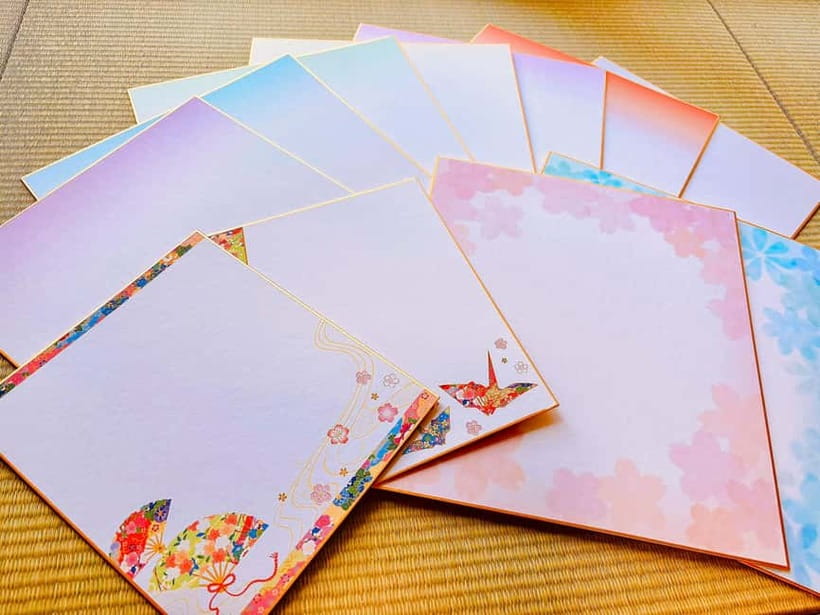
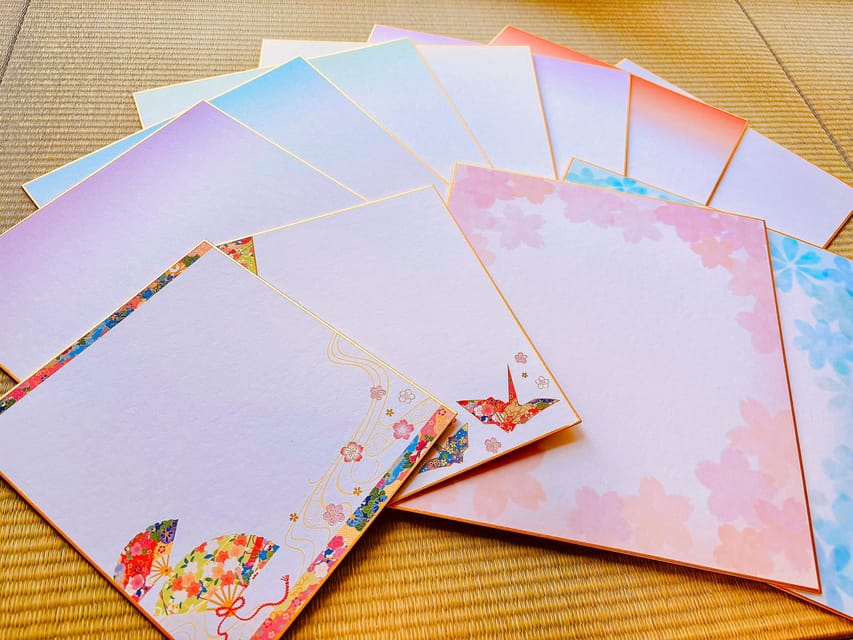
Once you have practiced, you choose a favorite piece of colored paper from the available selection. This small choice affects the look of the finished work and gives you another way to make it your own.
You then write the selected kanji on the paper. The instructor remains nearby to help with placement, movement, and technique. You can take photos during this stage, and the private format means you do not have to rush through your final attempt.
The pressure rises slightly when you move from practice paper to the piece you will take home. That is part of the fun. You have learned the basic movement, but the final brush mark still depends on your concentration.
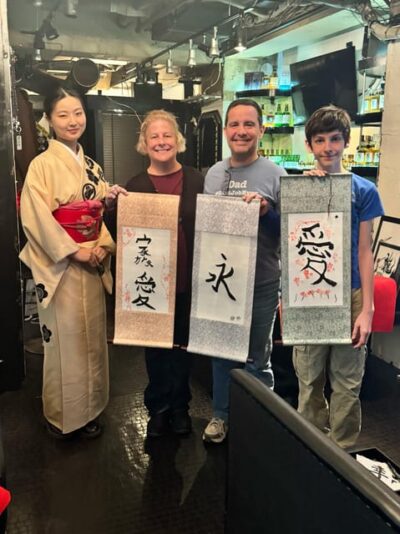
After the main character is complete, you write your name in Japanese characters and stamp your initials. Those finishing details turn the page into a personal work rather than a generic souvenir.
The result will not necessarily look like professional calligraphy. That is not a flaw. The point is that you made it, learned the meaning of the characters, and can explain the process when you display it at home.
The artwork is also easy to value as a travel keepsake. It is lightweight, personal, and connected to a specific afternoon in Osaka. Unlike a mass-produced souvenir, it carries your choice of theme and your own brushwork.
What makes the instructor important
The instructor is the heart of this activity. The class is taught in English and Japanese, and the teaching style is described as friendly, clear, patient, and encouraging.
The provider is Japanese Culture Experience WA NO MA. Reviews identify the instructor as Wa No Ma, while one response uses the spelling Womema. The supplied information does not present a separate list of rotating teachers, so you should confirm the exact instructor name if that matters to you at booking.
The strongest praise focuses on the instructor’s personal attention. She answers questions, explains the strokes, shares cultural context, and offers direct help when a participant struggles. Several families also found the approach kind and effective with children.
That combination is useful for beginners. A strict art lesson could make a first attempt feel intimidating, while a casual activity with little guidance might leave you unsure what you are doing. Here, the goal is to give you enough instruction to create something satisfying while keeping the mood relaxed.
English ability is another practical advantage. You can ask about the meaning of your name, the cultural background of a character, or the reason for a particular brush movement without relying only on gestures.
Bringing children to the lesson
Families are a good match for this class, especially when children enjoy making things with their hands. Children aged 7 and 10 have been specifically described as enjoying the activity, and a 13-year-old called it a favorite part of a Japan trip.
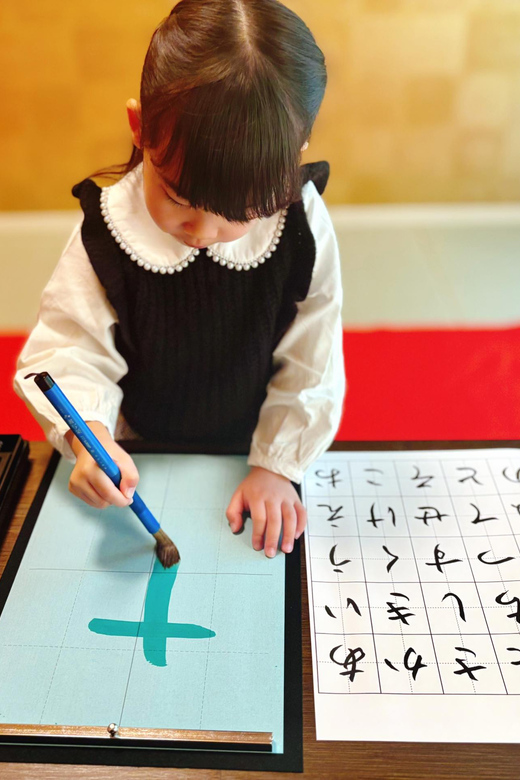
The private format helps because children do not have to keep up with an unfamiliar group. The instructor can slow down and adjust the session to suit their pace.
For younger children, water calligraphy is available. This option reduces the chance of ink getting onto hands and clothing, which makes the activity easier for parents. You should request it in advance or discuss it with the instructor at the start.
There is still a practical limit. Calligraphy requires sitting, listening, and repeating movements, so a child who wants constant action may lose interest. The activity is best for children who enjoy drawing, writing, crafts, or learning a new skill.
Remember the socks requirement. Smoking is not allowed, and the activity is not suitable for wheelchair users according to the supplied accessibility information.
Is $51 a good value for 90 minutes?
At $51 per person, this is not the cheapest hands-on activity in Osaka. The value depends on what you want from your souvenir and how much personal attention matters to you.
For a private group, the price includes the instructor, colored paper, and all fees and taxes. You are paying for a guided lesson rather than simply buying a calligraphy item or watching a short demonstration.
I see the strongest value for couples and small families. Two people receive close instruction, create separate artworks, and have time to ask questions. A public workshop might cost less, but it may offer less flexibility and fewer chances for individual correction.
The price also covers more than brush practice. You learn about Japanese writing, choose kanji connected to your personality, and finish with a piece you can take home. If you enjoy meaningful souvenirs, that makes the cost easier to justify.
It is less suitable for someone who only wants a quick photo or a guaranteed perfect piece. Your work will show that you are a beginner, and the lesson asks you to participate rather than sit back.
Timing, cancellation, and practical details
The activity lasts 90 minutes, with starting times available according to the booking calendar. That is long enough to include an introduction, practice, final artwork, and questions without taking over your whole day.
You can cancel up to 24 hours in advance for a full refund. A reserve-now, pay-later option is also available, which helps if your Osaka schedule is still changing.
The class is private, and the instructor can take photos during the experience if you request them. You can also ask to proceed slowly, which is useful for children or anyone who wants more time with the brush.
The meeting point is outdoors in front of the hotel entrance, not at a clearly described indoor reception desk. Arrive five minutes early, look for the kimono-clad instructor, and keep the blue vending machine landmark in mind.
Who should book this Osaka experience?
I would choose this class if you want a cultural activity that produces something personal. It suits couples, families with school-age children, solo visitors booking a private session, and anyone who likes learning through making.
It is particularly good for a rainy day or for a break from Osaka’s shopping streets. The quiet concentration of the brush work gives you a different view of Japanese culture than a food tour or a sightseeing stop.
You should think twice if you dislike crafts, have limited sitting tolerance, or want a fully polished artwork made by an expert. You will practice, make mistakes, and need to control the brush yourself.
The activity is also not suitable for wheelchair users, so accessibility should be checked before booking. Bring socks, avoid smoking during the experience, and tell the provider if you want the water-calligraphy option for children.
Should you book the private calligraphy class?
Book it if you want a relaxed, personal introduction to Japanese calligraphy and a souvenir that reflects your own name or chosen theme. The central location, English-language instruction, private format, and patient coaching make it easy to fit into an Osaka itinerary.
I especially like the way the class connects language with craft. You leave knowing what your characters mean, why they were selected, and how much care goes into each stroke.
Skip it if you only want a quick activity with no room for practice, or if a handmade beginner piece does not appeal to you. For most couples and families seeking a thoughtful 90-minute experience, $51 buys much more than a sheet of paper. It buys a small lesson in Japanese writing and something you can display long after the trip.
FAQ
How long does the Japanese calligraphy experience last?
The activity lasts 90 minutes.
Where is the meeting point?
Meet outside the main entrance of New Osaka Hotel Shinsaibashi. Walk west for about 30 seconds and look for a blue vending machine near the entrance.
How will I recognize the instructor?
The instructor waits outside the building five minutes before the scheduled start time and wears a kimono.
Is the experience private?
Yes. The activity is arranged as a private group experience, with close attention for all participants.
Is the class taught in English?
The instructor can teach in English and Japanese.
Can I create calligraphy based on my name?
Yes. You can write your name in Japanese characters, and the instructor can help suggest kanji based on your personality.
Can children participate?
Yes. Children can take part, and water calligraphy is available for young children to help prevent ink from getting on their hands and clothes.
What do I take home?
You take home your own calligraphy artwork on colored paper, including your chosen kanji, your name in Japanese characters, and your stamped initials.
What should I bring, and is the activity wheelchair accessible?
You should bring socks. Smoking is not allowed, and the activity is not suitable for wheelchair users.
Just added around Osaka
- Exclusive Sushi Making Experience with a Master Chef – Osaka Area★ 5.0 · 25 reviews
- Private Home-Style Cooking Class in Osaka with Local Mom Yoshiko★ 5.0 · 46 reviews
- Hidden Osaka – Yukaku Red Light Tour & Culinary Adventure★ 4.8 · 96 reviews
- Osaka: Walking Tour and Top Highlights★ 4.8 · 104 reviews
- Osaka: Private Ceramic Painting Workshop★ 5.0 · 13 reviews
- Pickleball in Osaka, Kobe & Kyoto with Locals!★ 4.7 · 80 reviews
- Eat Like a Local in Osaka – Private Custom Street Food Tour★ 4.3 · 33 reviews
- Osaka:SUMO BEATS SHOWCASE: Taiko Drum and Wagyu burger!★ 4.2 · 37 reviews
Calligraphy Classes, compared.
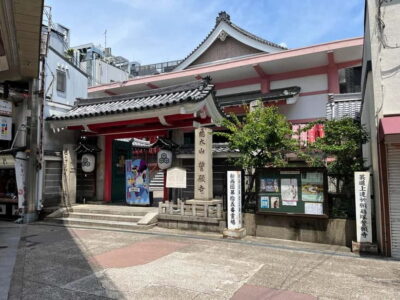
Calligraphy class at Buddhist temple in city center
Our verdict →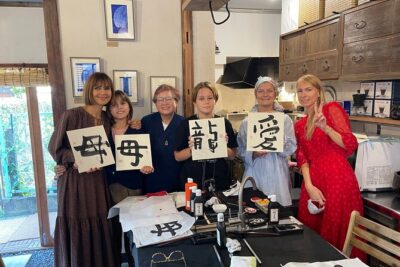
Let’s experience calligraphy in YANAKA, Taito-ku, TOKYO !!
Our verdict →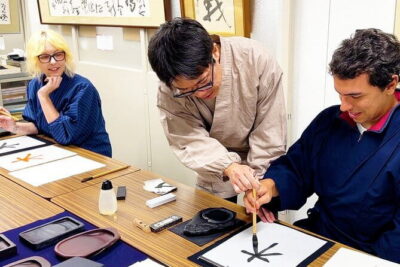
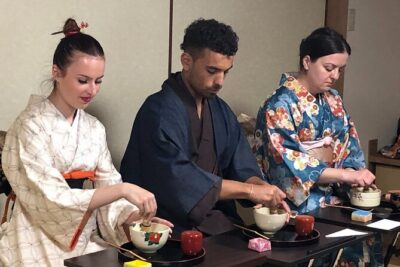
An Amazing set of Cultural experience: Kimono, Tea Ceremony and Calligraphy
Our verdict →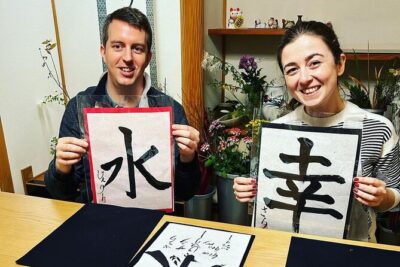
Private Japanese Calligraphy in Kyoto – Learn Shodō with a Master
Our verdict →
Browse the lists this tour appears in