
Reviewed · CALLIGRAPHY CLASSES
Let’s experience calligraphy in YANAKA, Taito-ku, TOKYO !!
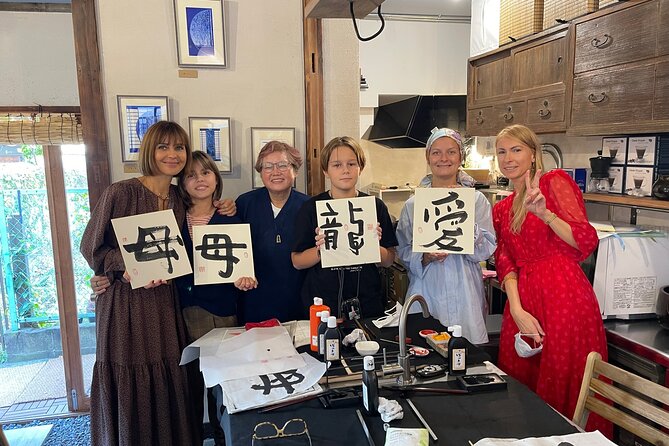
Japanese calligraphy here is less about producing perfect characters and more about learning how each brush stroke works. You begin with simple practice, choose a word or character, and finish with artwork on a shikishi board. I love the hands-on format and the fact that your souvenir is something you make yourself, not something pulled from a shop shelf.
I also like the setting: an old Yanaka townhouse near Yanaka Ginza, where the class fits neatly into a stroll through one of Tokyo’s most appealing downtown neighborhoods. Chie and Saori are patient, friendly instructors who give careful guidance, and they take photos during the session. The main consideration is the price, $75.98 per person for about one hour, so this makes the most sense if you value personal instruction and a lasting keepsake.
Key points at a glance
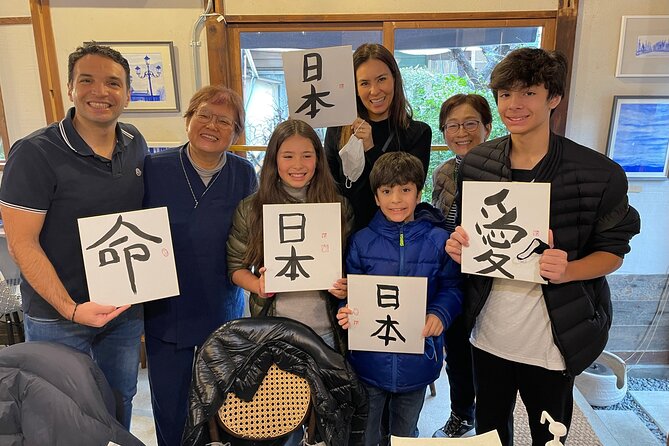
- Practice before the final piece: You learn basic brush strokes before choosing a character or word.
- A personal souvenir: Your finished work goes onto shikishi paper, with a T-shirt option also available.
- Chie and Saori teach the class: Both are praised for patient, friendly, step-by-step instruction.
- A compact Yanaka location: The studio is about 100 meters, or 30 seconds, from Yanaka Ginza Shopping Street.
- Private participation: Only your own group takes part, making it easier to receive individual help.
- Good for families: Children and adults can participate, and service animals are allowed.
Why this one-hour class works so well in Yanaka
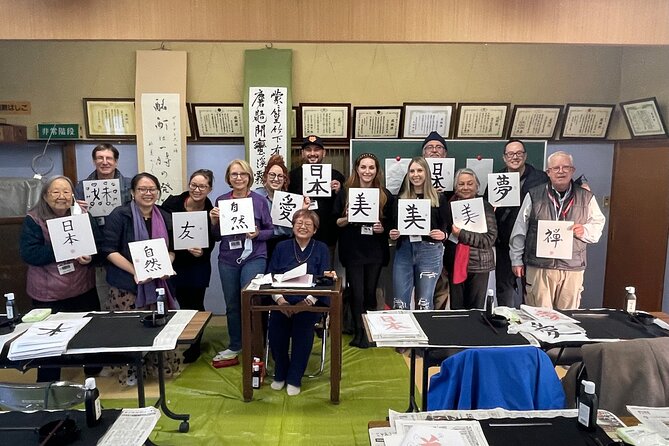
Yanaka gives you a calmer view of Tokyo than the city’s major shopping and entertainment districts. The calligraphy studio sits in an old townhouse converted for lessons, so the setting feels tied to everyday downtown Tokyo rather than built as a large tourist attraction.
That matters because calligraphy can feel intimidating at first. You may recognize Japanese characters, but writing them with a brush involves pressure, balance, timing, and a steady hand. In this class, you are not expected to arrive with artistic skill. The lesson starts at the beginning, with basic strokes and practice.
I like the one-hour length. It is long enough to learn the basic method and create a finished piece, but short enough to fit into a morning or afternoon in Yanaka. If you are traveling with children, the limited duration can also help keep the activity focused.
The experience is listed at $75.98 per person. That is not a bargain activity if you are only looking for a quick souvenir, but the price includes the lesson, all fees and taxes, and a parting gift of shikishi paper. You are paying for direct instruction, materials, a private session for your group, and the chance to produce something personal.
More Calligraphy Classes in Tokyo
- Tokyo: Calligraphy on Kanji Fan & Scroll with Drink
★ 5.0 · 210 reviews - Tokyo: Calligraphy Workshop & Original T-Shirt Creation
★ 4.9 · 105 reviews - Experience all of Japanese culture and Japanese food experience classes “origami, udon, Japanese food, green tea, calligraphy” in 4 hours
★ 5.0 · 105 reviews
Meeting the sensei and getting started
You meet at the YANESEN Tourist Information & Culture Center at 3-chōme-13-7 Yanaka, Taito City. The class ends back at the same meeting point, and private transportation is not included.
The teaching style is practical. Chie and Saori guide you through the process rather than simply demonstrating a finished character. You first learn how to handle the brush and practice the basic strokes. That first stage is important, since it lets you become familiar with the brush before you commit to your final design.
Chie is described as patient and enthusiastic, with a careful way of correcting mistakes. Saori is also praised for her friendly manner, good English, and patient explanations. You should expect help tailored to your level rather than a formal lecture about calligraphy.
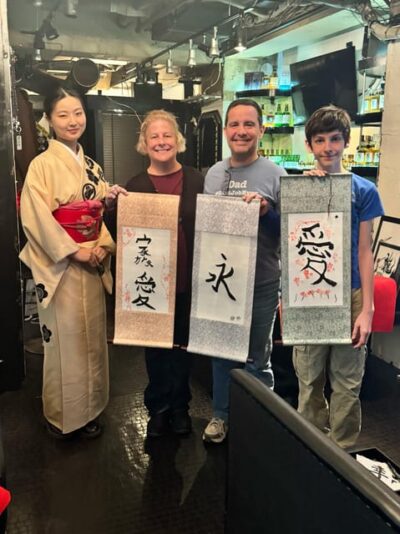
The instructors can also help with personal choices. Some participants have selected favorite words or names, including names written in kanji. This is one of the best reasons to take the class instead of simply buying a premade calligraphy print. Your finished piece can carry a meaning connected to your trip, your family, or your own name.
The brush practice that makes the art approachable
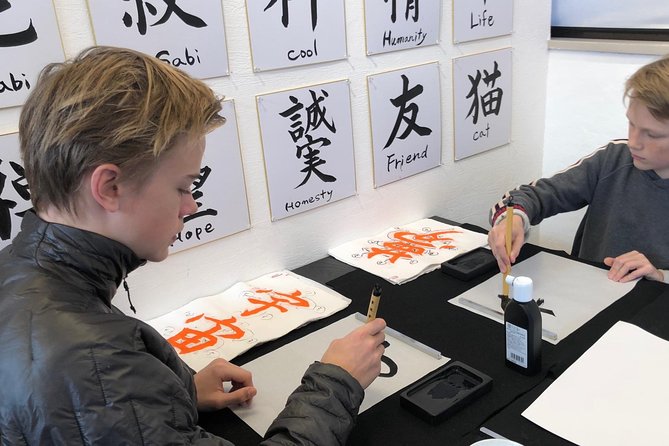
The class begins with basic calligraphy strokes. You practice making lines and shapes while learning how the brush responds to pressure. The goal is not to master every part of Japanese calligraphy in an hour. Instead, you get a clear introduction to the movements needed for one finished character or word.
This practice stage also takes some pressure off the final artwork. Your first attempt does not need to go on the shikishi board. You can try again, notice where a line went wrong, and adjust your brush movement with help from the sensei.
That repeated practice is a strong part of the experience. Calligraphy may look simple when you see a finished character, but the small changes in brush angle and pressure matter. A patient teacher can show you where your stroke needs more control, and you get the chance to try again immediately.
The class works well for complete beginners. The information specifically welcomes children and adults, and the personal instruction means you do not need to know Japanese or have previous calligraphy experience. You only need to choose a word or character you would like to practice.
Choosing a favorite word or kanji
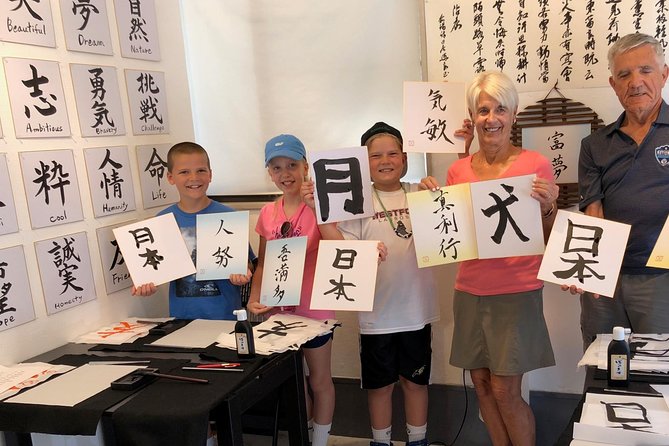
After the basic exercises, you choose what to write. You can select a favorite word or character, and the instructors help you work toward the final version. If you have a particular name in mind, the teachers have helped participants create names in kanji as a personal memory of Japan.
This is the point where the class becomes more than a handwriting exercise. A single kanji can represent an idea, a name, or a feeling you want to associate with your trip. You can ask for guidance as you decide what to create, then practice the design several times before moving to the final paper.
I recommend thinking about your choice before you arrive if you already know you want a specific name or word. The available information does not promise that every requested word can be translated in a particular way, so it is sensible to confirm your choice with the instructor during the class.
The final piece is made on shikishi paper, a traditional square art board often used for calligraphy and other artwork. You take it home as the included parting gift. It is light, easy to pack, and more personal than a mass-produced print.
Same trip, a completely different kind of day:
- 1-Day Tokyo Bus Tour
★ 5.0 · 14,250 reviews - Tokyo: TOKYO SKYTREE® Admission ticket
★ 4.5 · 11,192 reviews - Tokyo: teamLab Planets TOKYO Digital Art Museum Entry Ticket
★ 4.6 · 9,779 reviews - Tokyo: Sumo Show Experience with Chicken Hot Pot and a Photo
★ 4.8 · 6,678 reviews
Creating the shikishi keepsake
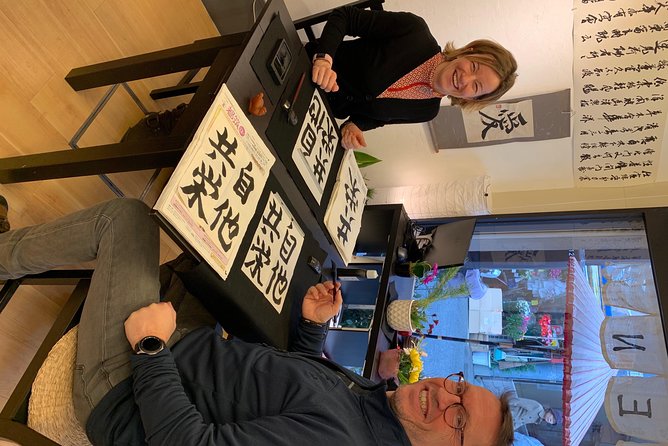
The final shikishi piece is the heart of the lesson. Once you have practiced and received corrections, you use the brush to create your chosen character or word on the board.
Do not expect museum-quality calligraphy after one hour. The value is in seeing your own progress, from uncertain practice strokes to a finished piece that you can display at home. The teachers help you understand where a stroke went wrong, then guide you toward a result you feel comfortable taking home.
The finished work can decorate your living room or serve as a reminder of your time in Yanaka. Several participants have described their artwork as something they planned to display at home. That is a useful test of value: if you want a souvenir with a personal story, the shikishi board gives you one.
The class also offers the possibility of making a T-shirt with your name in kanji. The supplied details do not explain the extra cost, available sizes, or production process, so ask the instructor about those points before choosing that option. The shikishi board is the clearly included keepsake.
Yanaka Ginza and the old townhouse setting
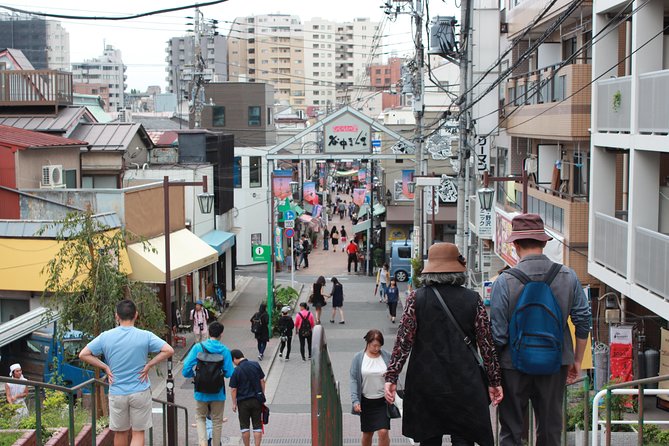
The listed itinerary points to Yanaka Ginza Shopping Street, while the lesson meets at the nearby YANESEN center. Yanaka Ginza is only about 100 meters, or a 30-second walk, from the studio. This makes the class easy to combine with a Yanaka walk.
The location is one of the strongest practical features. You do not need to devote half a day to reaching a distant workshop. You can take the lesson, then continue along the shopping street, or explore the neighborhood before your appointment.
The studio itself occupies an old townhouse. You get a sense of a smaller-scale Tokyo setting rather than a purpose-built classroom. That does not mean the space will suit every preference. An old townhouse may feel less polished or spacious than a modern studio, but its character is part of the appeal.
A Tokyo roasted coffee shop called ki_hi_ko_jo is next door. You can use that detail to plan a simple stop before or after the lesson, although the coffee is not included in the experience.
How private participation changes the class
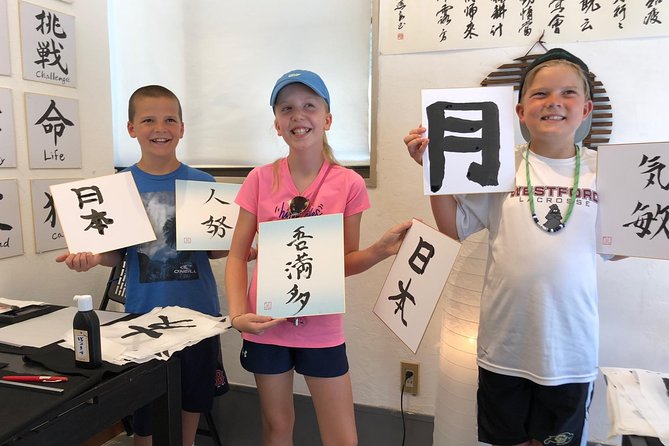
This is a private activity, so only your own group participates. That arrangement is useful if you are traveling with family or friends and want to choose words that have meaning for your group.
Private participation also gives the sensei more room to correct your strokes and answer questions. A child who needs extra help can receive it without holding up a large class, while an adult beginner can practice without feeling self-conscious.
The listing also notes group discounts. The exact discount is not provided, so check the price for your group before booking. Since the advertised rate is per person, a discount could matter if several members of your party want to take part.
The private format does not turn this into an all-day workshop. The experience lasts about one hour, so you get a focused introduction rather than a full study of calligraphy. That is a benefit for most sightseeing plans, but serious art students may want a longer or repeated lesson.
Photos, language, and family suitability
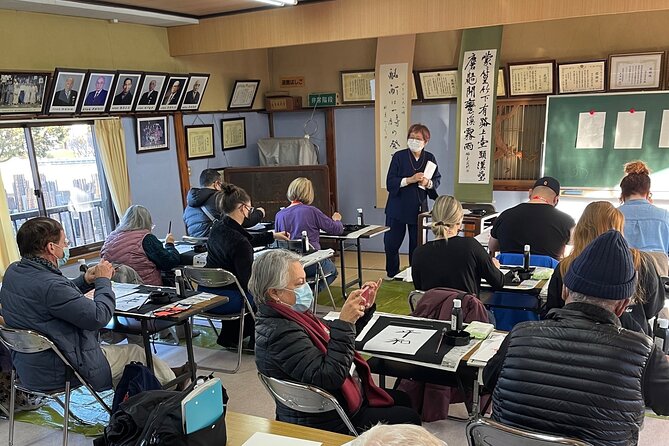
The instructors take lots of pictures during the activity. This is a welcome detail if you want photos of the process, not only the completed board. It also means you can concentrate on the brushwork instead of asking a companion to document every step.
Chie and Saori have been praised for communicating clearly in English. The class is designed for people with no previous calligraphy experience, and the instruction proceeds step by step.
Families are a good match for this activity. Children can choose their own words and see a finished result within a reasonable time. Adults who want a quieter cultural activity can take part alongside them. Italian children, in particular, were able to write favorite words in Japanese, which shows how accessible the format can be across language barriers.
Service animals are allowed, and the activity is near public transportation. Most people can participate, according to the supplied booking details. The information does not provide specific wheelchair access details, so you should confirm those needs directly before booking.
Timing, advance planning, and cancellation
This experience is often booked 68 days in advance. That suggests you should plan ahead, especially if your dates are fixed or you need a particular time for a private group.
You receive confirmation when you book, and a mobile ticket is available. The activity requires a minimum number of participants, even though the booked session is private for your group. If that minimum is not met, the provider offers another date or experience, or a full refund.
The cancellation policy is generous if your plans change early. You can cancel at least 24 hours before the start time for a full refund. Cancellations or changes made less than 24 hours before the start time are not accepted for a refund.
The experience also requires good weather. If poor weather causes cancellation, you are offered another date or a full refund. The policy is worth noting when arranging a tightly timed Tokyo itinerary.
Who gets the best value from the $75.98 price
I would recommend this class most strongly to you if you want a personal souvenir, enjoy trying a traditional craft, or are already planning to visit Yanaka Ginza. The location adds value because the lesson does not require a separate cross-city trip.
It is also a strong choice for families. The activity is short, participatory, and open to children and adults. The included shikishi board gives everyone a clear result to take home.
The value is less obvious if you only want a cheap cultural stop or if you dislike guided activities. At $75.98 per person, the cost is high for a one-hour session compared with simply browsing Yanaka Ginza. You are paying for the instruction and private format, not just the paper and ink.
For a couple or small group, the personal attention may justify the price. For a larger group, check the available group discount. If your main goal is to learn serious calligraphy technique, treat this as an introduction rather than a complete course.
Should you book this Yanaka calligraphy lesson?
Book it if you want to make something meaningful during your Tokyo visit and like the idea of pairing a short lesson with a Yanaka stroll. Chie and Saori provide the patient, step-by-step help beginners need, and the shikishi board gives you a useful keepsake at the end.
Skip it if you want a low-cost activity, a long workshop, or a broad tour of Yanaka. This is a focused one-hour lesson with a clear purpose: practice basic brushwork, create one personal design, and take it home.
For families, first-time visitors curious about Japanese culture, and anyone who values a handmade souvenir, the experience is an easy choice. Plan ahead, confirm any T-shirt details or accessibility needs, and leave room before or after class for Yanaka Ginza.
FAQ
How long does the calligraphy experience last?
The lesson lasts approximately one hour.
Where does the activity begin and end?
It begins and ends at the YANESEN Tourist Information & Culture Center, 3-chōme-13-7 Yanaka, Taito City, Tokyo 110-0001, Japan.
What is included in the price?
The experience fee, all fees and taxes, and a shikishi board as a parting gift are included.
Can children take part?
Yes. Children and adults can participate.
Do I need previous calligraphy experience?
No previous experience is required. The instructor teaches basic strokes and guides you through the process step by step.
Is this a private activity?
Yes. Only your own group participates in the activity.
Can I cancel for a full refund?
Yes, if you cancel at least 24 hours before the start time. Cancellations made less than 24 hours before the start time are not refunded.
Just added around Tokyo
- Kawagoe Japanese Food Tour : Unagi Kaiseki and Sake near Tokyo★ 5.0 · 30 reviews
- Kawagoe 4hr Private Tour with Licensed Guide (Kawagoe Dep)★ 5.0 · 13 reviews
- Little EDO Sushi Making workshop in Kawagoe★ 5.0 · 18 reviews
- 【R34】Tokyo:Private Daikoku tour in Modified R34★ 4.9 · 92 reviews
- :Tokyo,Shibuya/ Pro Photography in Kimono / English-Friendly★ 5.0 · 26 reviews
- Tokyo:Celebrate Unique Japanese New Year Tradition Festivity★ 3.9 · 20 reviews
- Tokyo: Allstar Food Tour★ 4.7 · 29 reviews
- Tokyo: West-Side Cycling and Food Tour with Guide★ 5.0 · 37 reviews
Calligraphy Classes, compared.
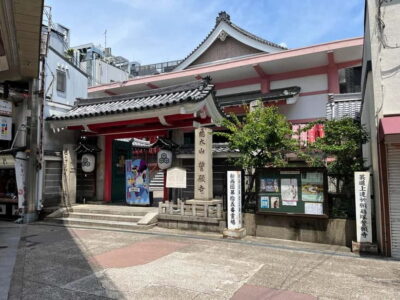
Calligraphy class at Buddhist temple in city center
Our verdict →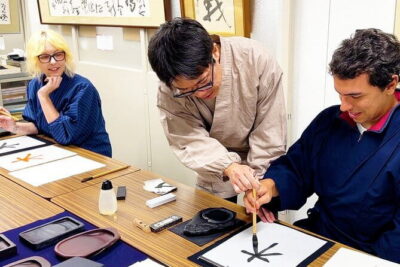
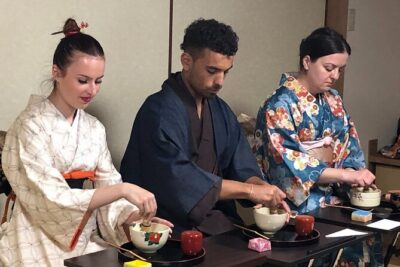
An Amazing set of Cultural experience: Kimono, Tea Ceremony and Calligraphy
Our verdict →
Private Japanese Calligraphy in Kyoto – Learn Shodō with a Master
Our verdict →
Browse the lists this tour appears in