
Reviewed · GEISHA & MAIKO EXPERIENCES
Gion Walking Tour, Geisha Show and Japanese Game in Kyoto
The most memorable part of this Kyoto experience comes after the walking tour, when you sit close to a maiko, watch her perform a traditional dance, and join her for a playful Japanese fan game. This is not simply a photo stop. You have time to ask about her life, learn about her training, and enjoy tea and a snack in a small setting.
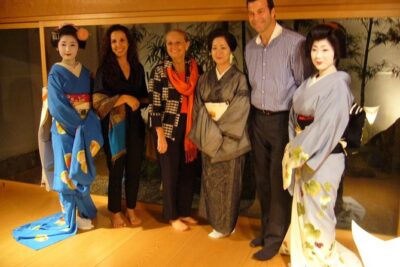
I like the six-person group limit, which gives the hour with the maiko a personal feel. I also like the way the walk goes beyond Gion’s famous main street, with guides such as Ai, Soichiro, Rin, and Yoshino explaining quieter lanes, local customs, and photo etiquette. The main consideration is price: at $108 per person for two hours, it is a special-interest experience rather than a low-cost sightseeing walk. One past booking also disliked the stops at designated shops.
Key points at a glance
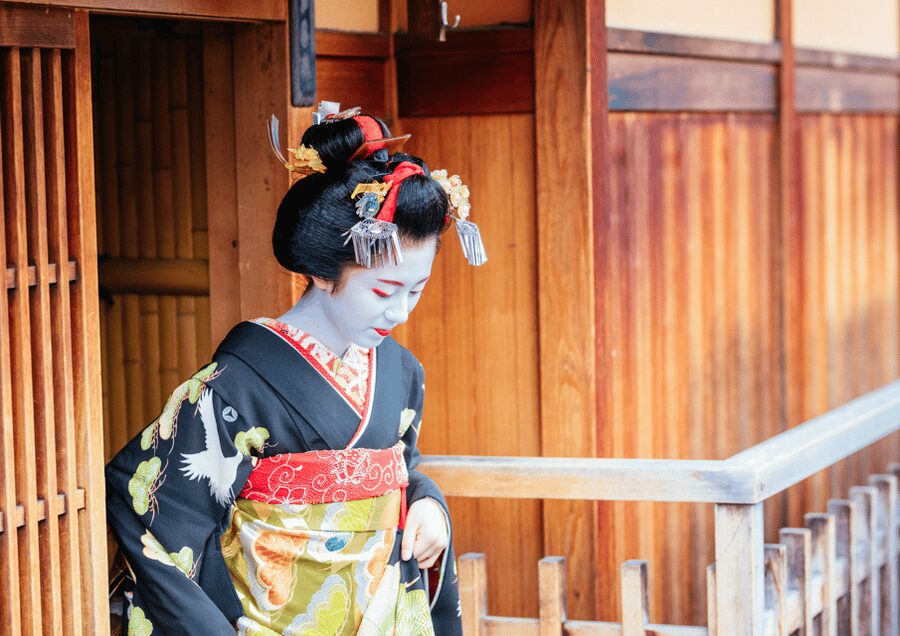
- A maiko performs a traditional dance and answers your questions through an English-speaking guide.
- The fan game is hands-on, giving you a chance to join the maiko instead of only watching.
- Groups are limited to six people, so the conversation can stay personal.
- The first hour explores Gion, including quieter streets, alleyways, local shops, and historical points.
- Tea, a Japanese snack, and photos are included, with guides helping explain suitable etiquette.
- The tour costs $108 and lasts two hours, making it best for people with a real interest in Kyoto culture.
Walking into Gion with a local guide
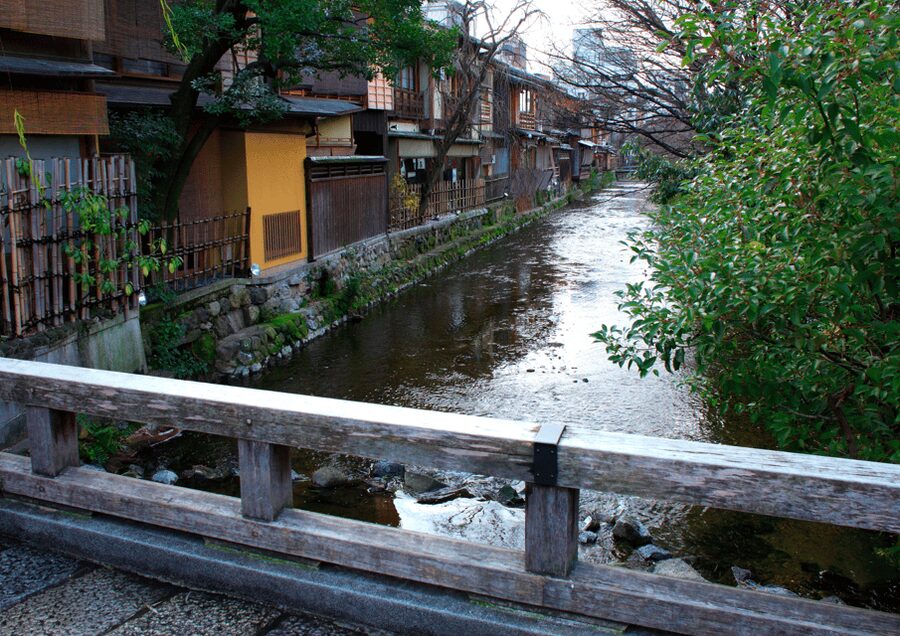
The tour begins at the statue of Izumo-no-Okuni, directly above Gion Shijo Station. Look for a guide holding a white board marked GuideMe Japan. This is a useful meeting point because Gion Shijo Station is easy to reach, but the statue can be missed if you are hurrying through the area.
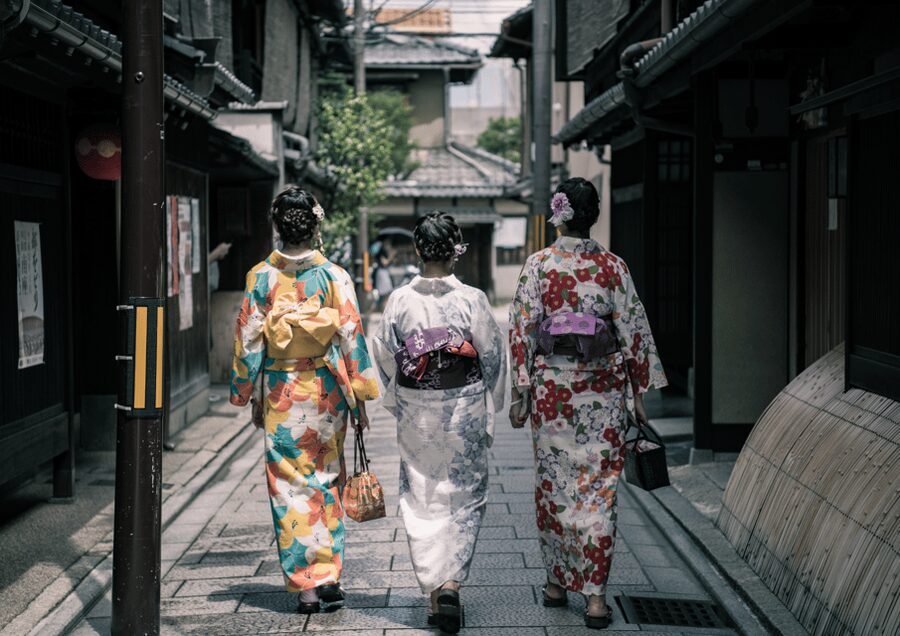
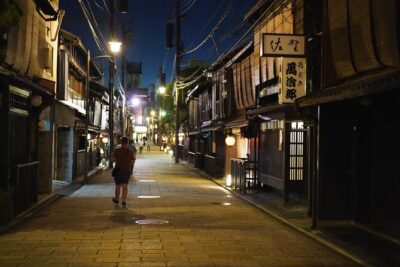
The first hour is a guided walk through Gion. You will see the better-known streets, but the walk also reaches less crowded lanes and smaller points of interest. Ai, one of the guides praised for her warm manner and local insight, has shown visitors places they did not find during their own research. Soichiro has also been singled out for explaining the area and the culture of geiko and maiko in clear detail.
That local explanation matters in Gion. Without a guide, you may see wooden buildings, narrow lanes, tea houses, and shops without understanding what belongs to everyday life and what is mainly aimed at visitors. The guides help sort out those details. One walk included a chopstick shop where names could be engraved and a candy shop with meaning for local families, not only for people buying souvenirs.
You may also visit a temple and quieter parts of the district. The exact path can vary, but the aim is clear: give you a sense of Gion as a neighborhood with customs and working traditions, not just a backdrop for photographs.
More Walking Tours in Kyoto
- Kyoto Geisha Walking Tour: Gion District & Hidden Gems
★ 4.7 · 3,273 reviews - Kyoto: Gion Magical Night Walking Tour with Geisha Trivia
★ 4.9 · 2,393 reviews - Kyoto: Gion Geisha District Walking Tour – Stories of Geisha
★ 4.7 · 2,187 reviews
Why the walking hour is worth your time
Gion is easy to photograph and harder to understand. A short walk can show you the buildings, but it may not explain the difference between a maiko and a geiko, how the entertainment districts developed, or why certain streets call for more careful behavior.
This is where the guides add real value. Ai has helped visitors know when photography is suitable and when it is better to put the camera away. That advice is important in Gion, where working performers and private businesses share the same narrow streets.
I also like that the walk is not presented as a race through famous photo spots. Several guides have taken groups through quieter alleys, giving the first hour a calmer pace. The walk is still only one hour, so do not expect a full historical tour of Kyoto. Think of it as an introduction that prepares you to understand the performance that follows.
The walking portion should suit you if you want context before meeting the maiko. If you already know Gion well, you may find some stops familiar, though the local stories and side streets can still add something. The tour is less suitable if you want a long architectural walk or a broad survey of Kyoto’s temples.
Tea, snacks, and a close look at maiko culture
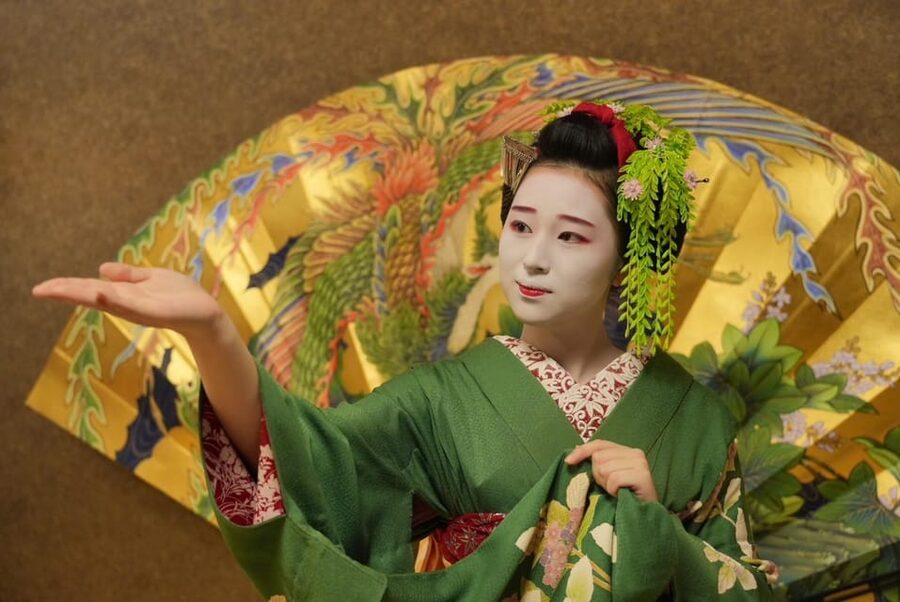
After the walk, you move to a separate room inside a fan shop for the maiko program. The seating is on pillows, and tea and a Japanese snack are included. This setting feels more personal than watching a stage performance with a large audience.
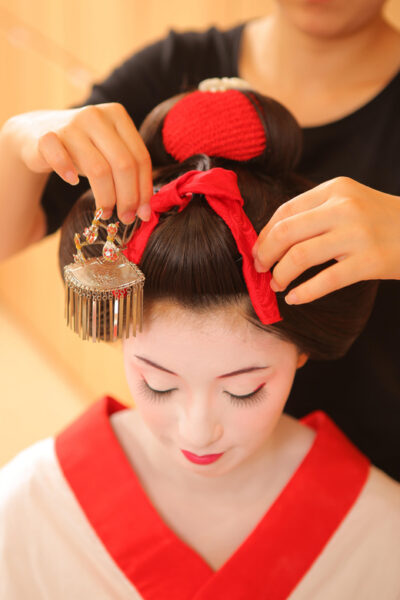
The central event is a traditional dance performed by the maiko. The dance is formal, careful, and elegant, with gestures that reward close attention. You are not simply watching a costume presentation. The performance is part of a working artistic tradition, and the small room lets you see the details more clearly.
The hour also includes a question-and-answer session. Your English-speaking guide translates and helps the conversation move along. This makes a major difference because the value of the session depends on your ability to ask about daily life, training, customs, and the relationship between maiko and geiko.
Guides including Rin, Yoshino, Ai, and Hikaru Kuroki have been praised for interpreting politely and keeping the discussion comfortable. Fumi has also been named alongside Rin as part of a friendly, helpful team. Translation is not just a practical service here. It gives you a chance to hear the maiko explain her own experience rather than relying on a short scripted introduction.
The maiko may also pose for photographs after the performance. Your guide can help with the appropriate timing and etiquette. Bring your camera, but keep the setting in mind. This is a cultural meeting, not a fast photo line.
The traditional fan game
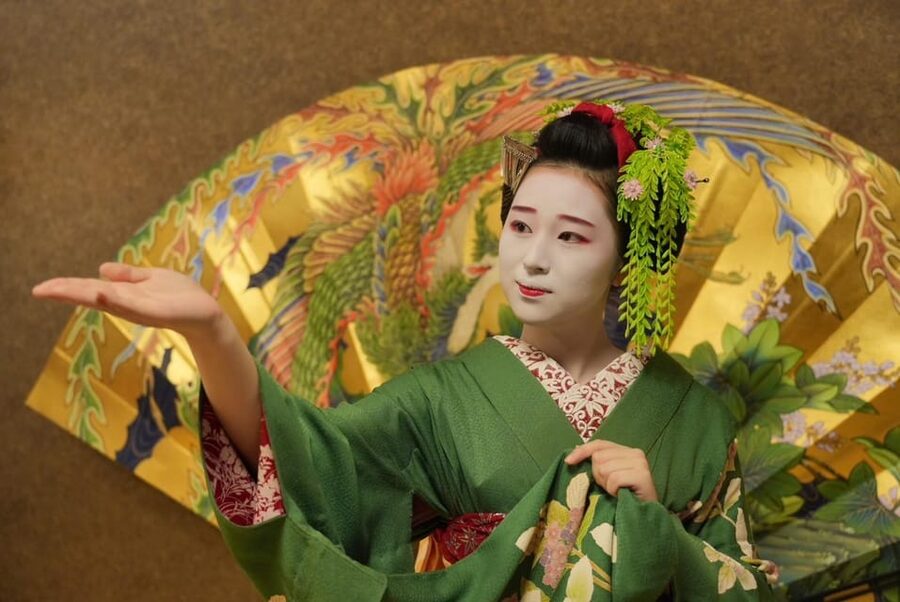
The fan game is the tour’s most unusual feature. You play with the maiko rather than sitting back for the entire hour. The game uses a traditional Japanese fan and is simple enough for families and first-time visitors to enjoy.
Do not worry about being competitive. One participant admitted to scoring zero points and still having a good time. That tells you what the game is really for: it creates a relaxed moment after the formal dance and gives everyone a reason to interact.
The game can be especially effective for families. A family with both a tween and a teen enjoyed the mix of cultural information, performance, and play. Younger children may also appreciate the friendly mood, though the provided information does not specify a minimum age.
Some bookings have included a signed fan as a souvenir. Because the tour information formally promises the fan game, tea, snack, dance, and conversation, you should not assume a signed fan is always included unless it is confirmed at booking. Still, it can become a meaningful reminder of the experience.
More Geisha Experiences in Kyoto:
- Best of Kyoto: Gion, Geisha, Pagodas & Cobblestones
★ 4.9 · 2,058 reviews - Night Walk in Gion: Kyoto’s Geisha District
★ 4.5 · 2,003 reviews - Kyoto Gion Geisha District Walking Tour – The Stories of Geisha
★ 5.0 · 1,441 reviews - Kyoto Gion: 2-Hour Geisha Culture & History Walking Tour
★ 5.0 · 1,186 reviews
What makes the small group important
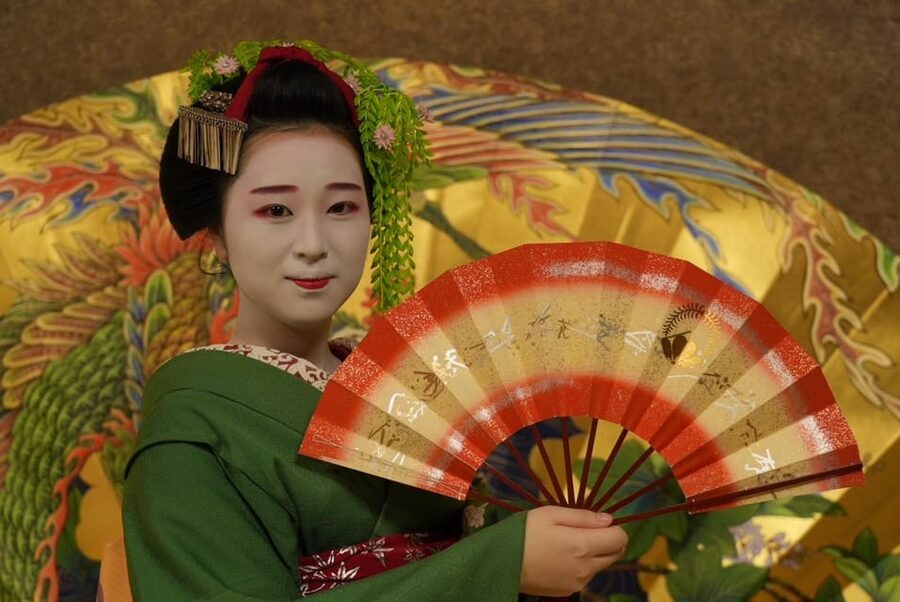
The maximum group size is six people. That number changes the feel of the program. You can ask a question without waiting through a long line, hear the translation clearly, and take part in the game without feeling lost in a crowd.
Small size also helps the guide respond to the group. If you are traveling with family, you can ask questions at a pace that works for everyone. If you are visiting on a honeymoon or celebrating a special trip, the setting feels more personal than a large cultural show.
The tradeoff is availability. A six-person tour has fewer places per departure than a large group walk, so you should check starting times early. The experience lasts two hours, and the schedule is divided roughly evenly between walking and the maiko program.
Private bookings are also possible. One couple booked a private tour focused on Gion and the maiko experience. The guide provided background during the walk, translated the conversation, and helped the group feel comfortable during the questions and game. If you value privacy, ask about the private option before paying, since the standard description promises a small group but does not say that every booking is private.
The $108 price and what you receive
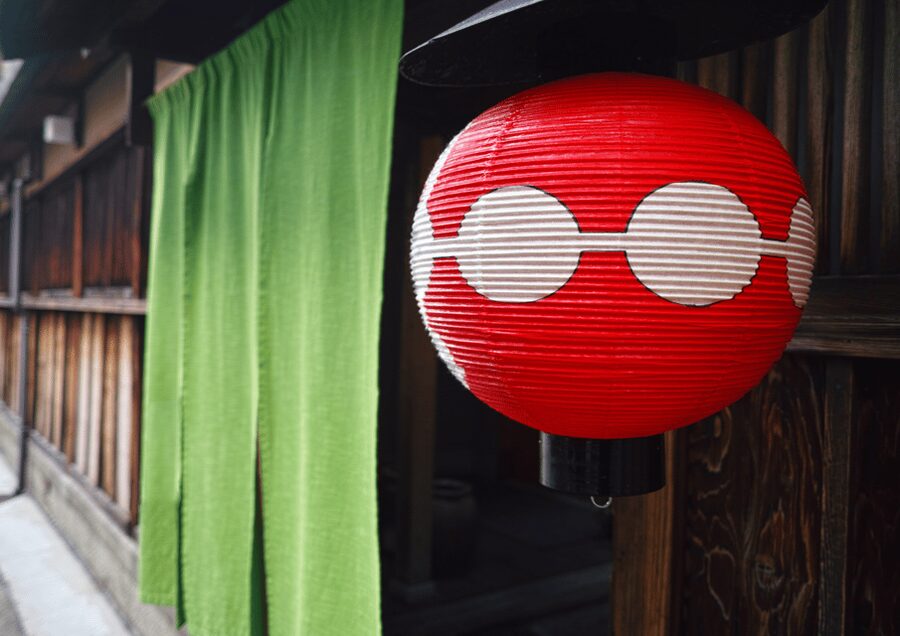
At $108 per person, this tour costs more than a basic Gion walking tour. You are paying for several elements together: an English-speaking guide, one hour of local touring, a one-hour maiko program, tea, a Japanese snack, translation, and the fan game.
The price makes better sense if you are specifically interested in Kyoto’s performing arts. A general visitor may enjoy the dance but feel the cost is high for a two-hour activity. Someone who wants a direct cultural encounter, a chance to ask questions, and a small group setting may find the combination worthwhile.
I would compare it with the cost of separate activities. A standard walk may give you more time outdoors but no access to the maiko performance. A larger cultural show may offer music and dance but less conversation. Here, the value comes from the personal contact and the chance to participate.
Food beyond the provided snack is not included. You should also know that one booking found the designated shop stops unnecessary. If you prefer a walk with no shopping-related pauses, tell your guide early or ask how the current route is organized.
Guides who shape the experience
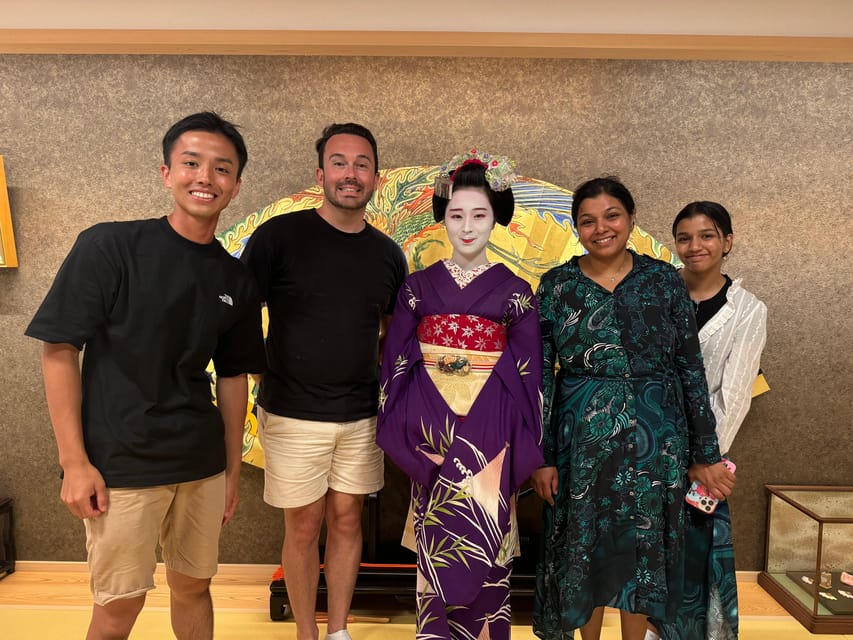
The experience depends heavily on the guide. The published guide team has included Ai Iwata, Rin, Yoshino, Soichiro, Tang, Hikaru Kuroki, and Tommy. Their roles go beyond leading the route. They explain local customs, translate questions, manage photo etiquette, and help the maiko and group communicate comfortably.
Ai has been praised for knowing small points of interest and for taking people through alleyways away from the busiest streets. Soichiro has explained the culture and history of geiko and maiko with care. Yoshino has been especially kind with children, including giving Japanese candy to one young participant.
Rin has guided both the Gion walk and the maiko session, while Tang and Hikaru have also been described as polite and helpful. The quality of the experience will partly depend on which guide leads your departure, but the repeated strength of the guide role is clear: good translation and context make the show much more meaningful.
Who should book this Gion experience
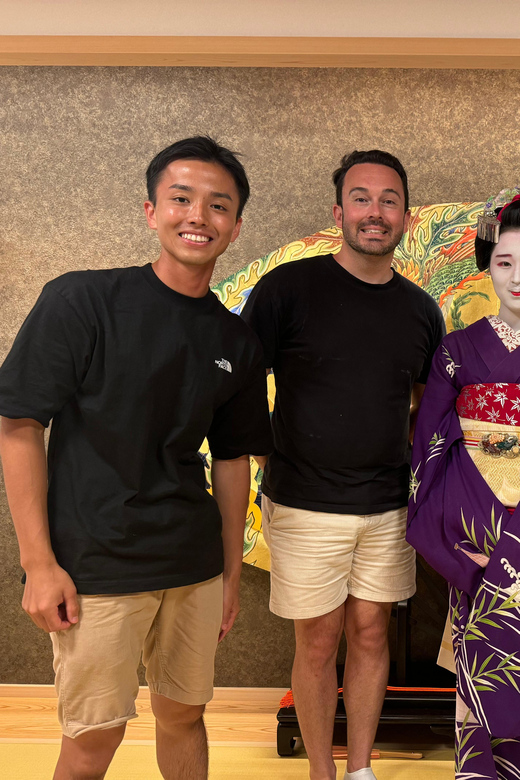
I would recommend this tour to you if you have a genuine interest in Japanese arts, Kyoto customs, and the world of maiko and geiko. It also suits couples looking for a distinctive evening activity and families with older children who can enjoy both the explanation and the game.
It is a strong choice if you prefer small groups and direct conversation. The limited size gives you more room to ask questions and take part. It is also useful for first-time visitors who want a guide to explain how to behave around performers and working streets.
You may want to skip it if you are mainly looking for a cheap orientation walk, a long sightseeing route, or a large stage show with many performers. The tour focuses on one maiko, one dance, conversation, and one traditional game. Its appeal is intimacy, not scale.
Wear comfortable shoes for the walking hour, and arrive at the Izumo-no-Okuni Statue with enough time to find the guide. Since the walk includes lanes and a possible temple stop, you will get more from it if you are ready to walk rather than treat the first hour as a short transfer.
Cancellation is free up to 24 hours before the start time, and you can reserve now and pay later. These options help if your Kyoto schedule is still changing, but the small group size means you should still check times before leaving this decision until the last minute.
Should you book it?
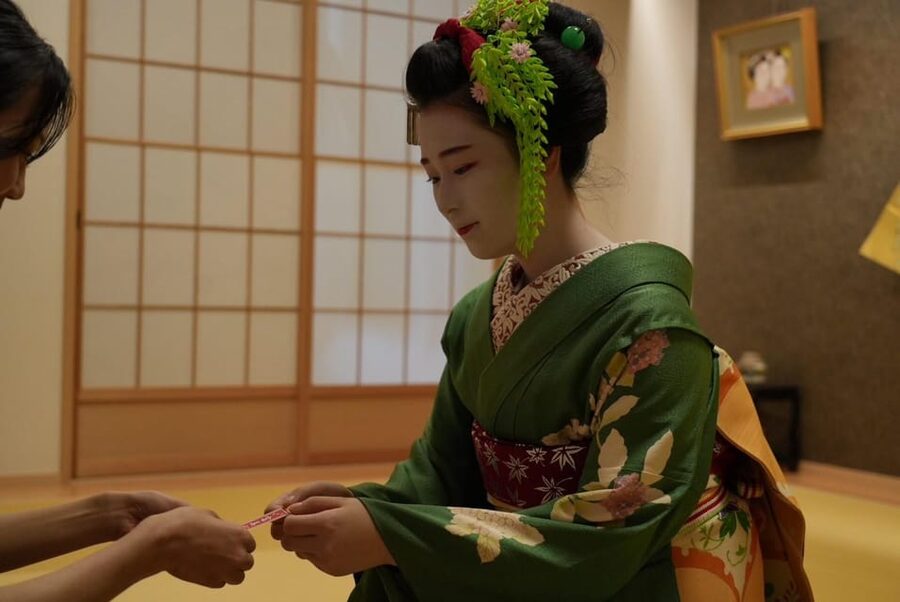
Book this tour if meeting a maiko in a small setting sounds more appealing than simply photographing Gion. The dance, translated questions, tea, snack, and fan game form a well-shaped two-hour experience, and the strongest part is the chance to move from watching to taking part.
At $108, it is not a casual add-on for every Kyoto itinerary. But if this is one of the cultural experiences you most want from Japan, the combination of a quieter Gion walk and a personal maiko meeting makes the price easier to justify. I would especially choose it for a first Kyoto visit, a honeymoon, or a family trip where you want one shared memory that is both polished and interactive.
FAQ
Where does the Gion tour begin?
It begins at the Statue of Izumo-no-Okuni, directly above Gion Shijo Station. The guide holds a white board that says GuideMe Japan.
How long does the experience last?
The experience lasts two hours. The first hour is a guided walk around Gion, followed by one hour with a maiko.
What language is the tour offered in?
The live tour guide speaks English, and English translation is provided during the maiko question-and-answer session.
How large is the group?
The group is limited to six participants.
What happens during the walking portion?
You walk through Gion while learning about its history, the geiko and maiko tradition, local culture, quieter streets, and points of interest such as shops and a temple.
What happens during the maiko session?
You watch a traditional dance, ask questions about the maiko’s life, play a traditional Japanese fan game, and have an opportunity for photographs.
Are tea and snacks included?
Yes. Tea and a Japanese snack are included.
Is food beyond the snack included?
No. Additional food expenses are not included.
Does the tour include a signed fan?
A signed fan has been provided on some bookings, but the stated inclusions guarantee the traditional fan game, not a signed souvenir. Confirm this detail when booking if it matters to you.
Can I cancel the booking?
You can cancel up to 24 hours in advance for a full refund. The reserve-now, pay-later option is also available.
More Shows & Performances in Kyoto
- Kyoto Gion Cultural Walk & Geisha Show with Dining Options
★ 5.0 · 518 reviews - Kyoto Gion Cultural Walk & Geisha Show with Dining Options
★ 5.0 · 483 reviews - 1 Hour Geisha Show in Kyoto
★ 5.0 · 452 reviews - Kyoto: Samurai Kenbu Traditional Sword Dancing Show
★ 4.5 · 426 reviews
Just added around Kyoto
- Sekka Cotton Furoshiki Class★ 5.0 · 19 reviews
- Secret Eastern Kyoto Biking Adventure★ 5.0 · 44 reviews
- Kyoto Sword Experience – includes Museum Ticket/Ninja Experience★ 4.5 · 149 reviews
- Scenic Green Tea Fields of Hidden Kyoto & Local Tea Exp (Private)★ 5.0 · 32 reviews
- Private Sake Tasting in Central Kyoto with Sake Sommelier★ 5.0 · 32 reviews
- Samurai School in Kyoto: Samurai for a Day★ 5.0 · 202 reviews
- SHIRAKAWA Japanese Culture Experiences with private English staff★ 5.0 · 16 reviews
- A Privately Guided Photoshoot in Beautiful Kyoto by a Pro★ 5.0 · 18 reviews
Geisha & Maiko Experiences, compared.

Kyoto Geisha Walking Tour: Gion District & Hidden Gems
Our verdict →
Dinner with Maiko in a Traditional Kyoto Style Restaurant Tour
Our verdict →
Browse the lists this tour appears in