
Reviewed · SAMURAI EXPERIENCES
Skip the lines Basic Ticket at SAMURAI NINJA MUSEUM KYOTO
Kyoto’s Samurai Ninja Museum is less a grand museum and more a lively, hands-on introduction to Japan’s warrior past. You’ll hear about samurai and ninja life, see swords and armor, then get a chance to dress up, handle replica weapons, and throw ninja stars.
I like the friendly guides, who bring the basic history to life with humor and energy. I also like the hands-on finish, especially the armor photos and shuriken throwing, which give children and first-time visitors something to do rather than simply look at displays.
The main caution is scale. The museum is small, and the tour can feel rushed or crowded at busy times. If you want a large collection of rare objects and quiet time for study, this may feel more like an entertaining hour than a full museum visit.
Key points to know before you book
- Expect a one-hour introduction: The tour covers samurai and ninja history at a brisk, accessible pace.
- Try the practical activities: You can wear samurai costume pieces, pose with a replica katana, and throw ninja stars.
- Guides make the difference: Guides including Naromi, Raito, Saku, and Nobu have been praised for warmth, humor, and clear explanations.
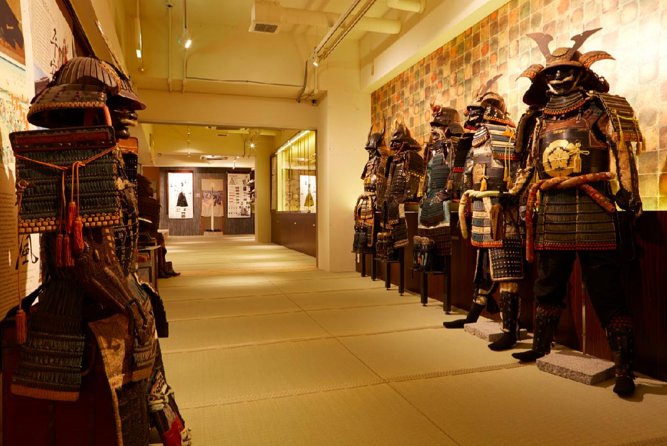
- The museum is compact: It occupies a small space over two levels, so do not expect a castle-sized collection.
- Good for families: Children can take part in the costume activity and shuriken competition, with an adult required to accompany them.
- Check the group size: The supplied details give both 15 and 30 as maximum group sizes, so crowding may vary by departure.
A hands-on hour in Kyoto’s warrior world
This experience begins when you make your own way to the Samurai Ninja Museum in central Kyoto. Transportation is not included, and the entrance can be hard to spot within a shopping arcade, so allow time to find the door rather than arriving at the last minute.
Inside, you meet your guide and join a short introduction to samurai and ninja culture. The emphasis is on broad context: Japan’s feudal system, the social role of the samurai, and the stories connected with ninja life. This is designed for a general audience, so you do not need prior knowledge to follow along.
I would approach it as a lively orientation rather than a scholarly lecture. The information gives you a useful framework for understanding swords, armor, and warrior customs, but the hour does not leave much room for detailed research or long examination of each object.
The guides are central to the experience. Naromi has been praised for filling the visit with useful facts, while Raito has been singled out for combining clear explanations with a spirited shuriken activity. Saku and Nobu have also been praised for their friendly, energetic delivery.
That variation matters. The same displays can feel quite different depending on the guide and the size of the group. A good guide keeps the pace moving and makes sure the history does not become a list of dates and names.
More Museum Tours in Kyoto
- Kyoto: Tea Museum Tickets and Matcha Grinding Experience
★ 4.9 · 739 reviews - Kyoto : Geiko Maiko Dance of Kyoto & Visits of Gion Museum
★ 4.6 · 415 reviews - Kyoto Sword Experience – includes Museum Ticket/Ninja Experience
★ 4.5 · 149 reviews
What you see inside the small museum
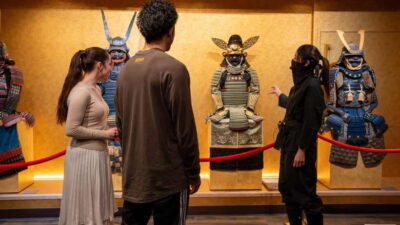
The collection includes preserved swords, armor, and other weapons, along with a recreation of a samurai house. The displays help you picture the material side of warrior life, particularly the weight and appearance of the equipment.
Do not expect room after room of artifacts. The museum is described as quite small, with displays arranged over two levels. One particularly useful way to judge it is to think of the visit as a guided cultural attraction with museum elements, not as a major historical institution.
That distinction will help you set the right expectations. If you want an easy introduction before visiting castles, temples, or larger historical collections in Japan, the format works well. If you already know a great deal about samurai history, you may find the displays too limited and the explanations too brief.
The small setting also has practical effects. When the museum is busy, it can be difficult for everyone to see the objects clearly, and the presentation may feel rushed. Some visitors have found the space crowded enough that not everyone could fit comfortably into a room.
At quieter times, the compact layout is less of a problem. You can focus on the guide, take photographs, and enjoy the theatrical side of the setting. The experience is built to be social and participatory, not silent and formal.
The samurai armor and katana photo session
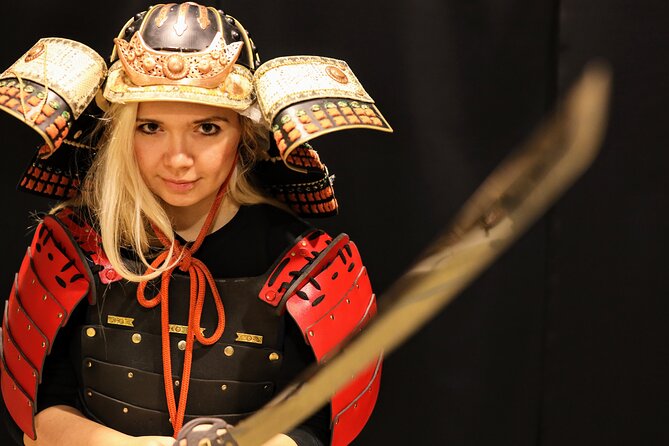
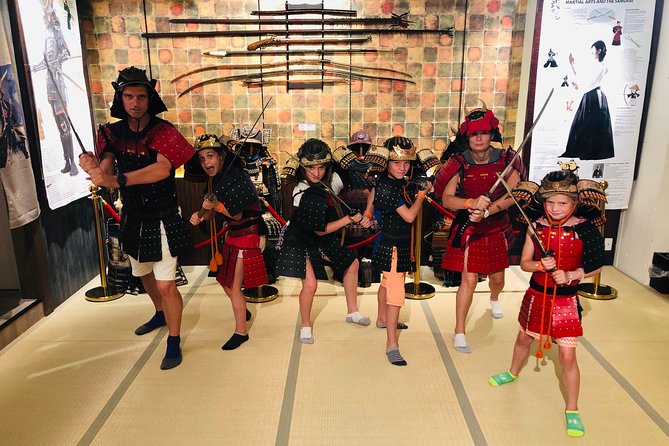
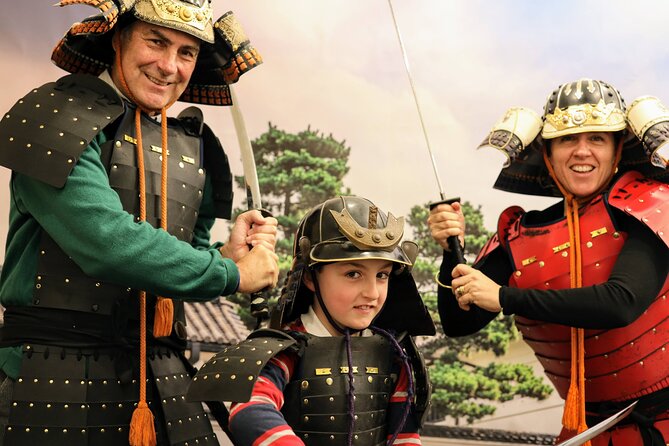
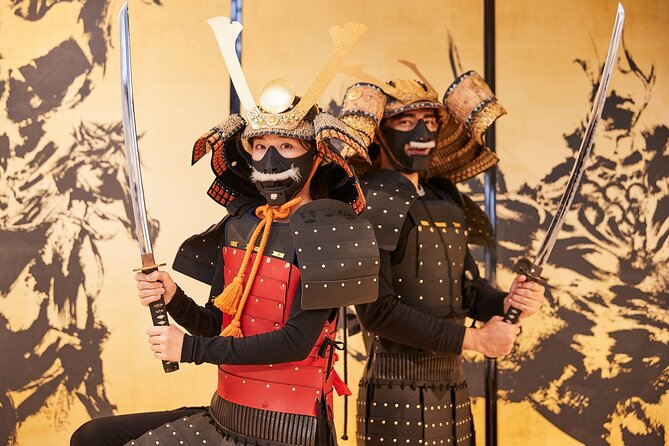
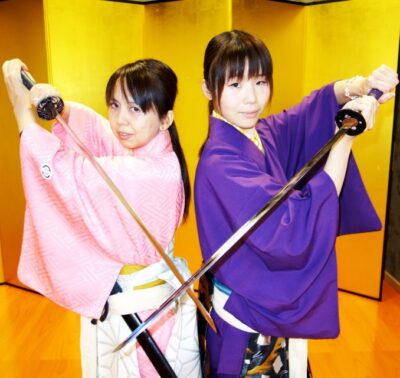
The costume activity is one of the clearest reasons to choose this ticket. You can try on samurai costume pieces, including armor and a helmet, and pose with a replica katana. It gives you a visual souvenir that a standard museum visit cannot provide.
The sword is a replica, so this is a photo opportunity rather than a weapons demonstration. The activity is suitable for children and adults, although the available costume choices may be limited when several people are taking part.
I would plan to enjoy the moment rather than expect a full dressing ceremony. Some accounts describe only a couple of outfits being available, and the condition of individual costume pieces and replica swords may vary. During busy periods, you may have only a short turn.
Still, this part works well for families. A six-year-old can take part in the costume experience and then move on to the star-throwing game. Adults who are less interested in the history often find the photo session gives the visit a clear purpose.
The activity also makes the idea of samurai armor more concrete. A display case can show you a helmet, but wearing one, even briefly, gives you a better sense of how much equipment shaped the warrior’s appearance and movement.
The ninja star challenge
The ninja star activity is usually the most playful part of the visit. You throw replica shuriken at a target and may take part in a friendly competition. The objects are replicas, and the attraction presents this as a supervised game rather than a serious weapons lesson.
This is a smart addition to a short museum visit. The history section gives you context, while the throwing activity gives you a physical memory of the experience. It also helps keep children engaged after the explanations.
The game is not a reason to book this on its own. You should think of it as a five-minute highlight within a guided tour, not a long training session. The exact timing and format can change, and activities may be adjusted because of operating conditions.
The guides’ style matters here too. Raito and Nobu have been praised for making the game lively, while other guides have been described as friendly and energetic. If your guide keeps the competition moving, the activity adds a welcome burst of fun without taking over the entire visit.
More Ninja Experiences in Kyoto
- Ninja 1-hour Hands-on Lesson by Japanese master in Kyoto -Entry
★ 5.0 · 489 reviews - Kyoto: Ninja Weapon Forging Experience
★ 4.8 · 478 reviews - Ninja 2-hour Hands-on Lesson by Japanese master in Kyoto -Medium
★ 5.0 · 218 reviews - Kyoto: Samurai Ninja Museum guided tour
★ 4.8 · 145 reviews
How much history do you actually learn?
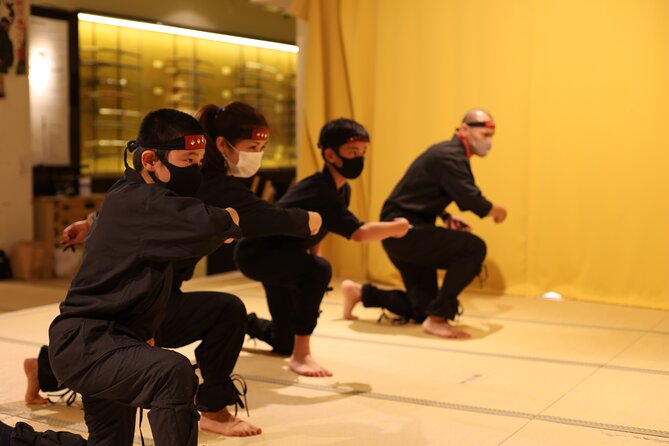
You receive an overview of samurai and ninja life, including the feudal setting in which they operated. The displays also address the historical, social, and political sides of the subject, rather than presenting warriors only as movie-style action figures.
That broad approach is valuable for first-time visitors. You can learn the basic difference between popular images of samurai and ninja and the more complicated reality behind them. The guide’s commentary helps connect the equipment to the people and society that used it.
The limits are just as clear. The tour lasts about an hour, and the presentation is not an academic seminar. You will not receive an exhaustive account of military campaigns, regional variations, or the full development of Japanese weaponry.
I would recommend it to someone who wants a clear starting point. You can then build on that introduction at Kyoto’s castles, palaces, temples, and larger cultural sites. For a dedicated samurai enthusiast, the attraction may serve mainly as a light, interactive stop.
One useful feature is that you are not necessarily required to leave as soon as the guided explanation ends. The museum has clarified that visitors may explore at their own pace, although the practical amount of time available can depend on crowd levels and the schedule.
Is the skip-the-line claim worth paying for?

The ticket is priced at about $28.52 per person and includes admission, a professional guide, the samurai costume activity, and the ninja star competition. For a one-hour attraction, that is not cheap if you measure value by the amount of exhibition space alone.
The price makes more sense if you value participation. You are paying for a guided introduction, an organized activity, staff supervision, and family-friendly photographs. A basic museum entrance without the costume and star throwing would offer less of what makes this visit memorable.
I would be cautious about taking the phrase skip the lines too literally. One account describes a regular ticket where the group entered together rather than bypassing a separate queue. The supplied information also gives two different maximum group sizes, 15 and 30 people, so the experience may feel very different on a quiet day and a packed one.
If your schedule is tight, book a time that fits your day and arrive with enough time to locate the entrance. Multiple time slots are available, which is useful when you are fitting this between Kyoto’s temples and evening plans.
Crowds, comfort, and practical limits
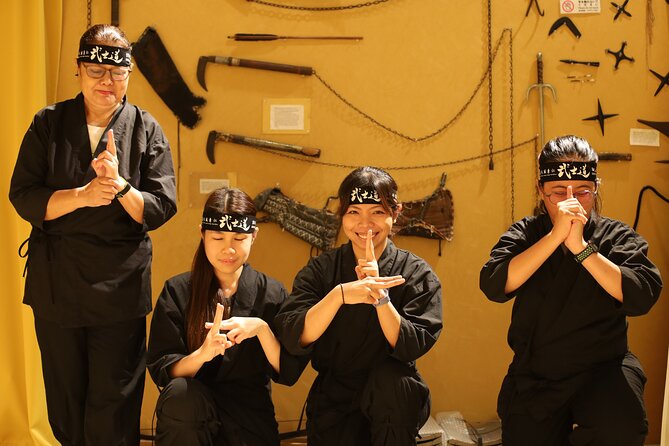
The museum is near public transportation, but you must arrange your own transport to and from the attraction. Since the entrance can be difficult to find in the shopping arcade, I would use the directions supplied with your booking and avoid assuming the museum will be obvious from the street.
Most people can take part, and service animals are allowed. Children must be accompanied by an adult. The experience is not described as requiring a special level of fitness, but the two-level layout is worth noting.
An elevator out-of-service period is listed for January 24, 2026 through February 19, 2026. If you are visiting during those dates and elevator access matters to you, check the current arrangements before booking.
Weather policy also deserves a quick look. The activity requires good weather according to the cancellation terms, and poor conditions can lead to a different date or a full refund. That may seem unusual for an indoor museum, so confirm the policy if your Kyoto plans are built around a tight schedule.
You can cancel for a full refund up to 24 hours before the start time. Changes or cancellations made inside that period are not accepted for a refund.
Who will enjoy this Kyoto experience most?
I would choose this for families, first-time visitors to Japan, and anyone who wants a short cultural activity with photographs and simple explanations. It is especially useful on a day when you want something structured but do not have time for a half-day historical site.
Children get several clear points of interest: armor, costumes, swords, and ninja stars. Adults can enjoy the cultural background, though the amount of detail may not satisfy a serious student of Japanese history.
It also suits friends who want a light group activity. The star-throwing contest gives the visit a playful edge, and the guide-led format means you do not have to work out how to interpret every display yourself.
I would think twice if your main goal is a large artifact collection, long quiet viewing time, or a highly detailed account of medieval Japan. The small rooms, limited costume selection, occasional crowding, and quick pace can disappoint if you arrive expecting a major museum.
My verdict on the one-hour format
The short length is both a strength and a weakness. You can fit the visit into a busy Kyoto itinerary, and the pace keeps the presentation from becoming tiring. At the same time, the hour leaves little space for slow examination or deeper discussion.
I like the balance of explanation and activity. You learn enough to understand what you are seeing, then take part in the armor and shuriken activities. That combination is more memorable than a display-only visit, especially for younger children.
The strongest part of the experience is the human touch. Guides such as Naromi, Raito, Saku, and Nobu have been praised for making the material friendly and entertaining. The weakest part is the attraction’s physical scale, particularly when several groups arrive at once.
Should you book the Samurai Ninja Museum?
Book it if you want a fun, guided introduction with costume photographs and a ninja star game. At $28.52, the value is reasonable when you treat it as an interactive cultural activity rather than a full museum visit.
Skip it if you expect extensive collections, pristine costumes, or a quiet academic setting. For most families and first-time visitors, I think the one-hour format is a useful Kyoto add-on, provided you arrive with realistic expectations about the small space and possible crowds.
FAQ
How long does the Samurai Ninja Museum experience last?
The experience lasts approximately one hour, although the amount of time you spend looking around can vary with the schedule and crowd levels.
What activities are included?
The experience includes a guided museum visit, a samurai costume activity, an optional samurai armor and katana photo opportunity, and a ninja star throwing competition.
Is admission included in the price?
Yes. Admission is included, along with a professional guide, the samurai costume activity, and the ninja star competition.
Does the ticket include transportation?
No. You must make your own way to the Samurai Ninja Museum and arrange your own return transportation.
Is this experience suitable for children?
Yes. Most people can participate, and children can take part in the costume activity and ninja star throwing. Children must be accompanied by an adult.
How large is the tour group?
The supplied details list both 15 and 30 as maximum group sizes. Because these figures differ, check the current booking information if group size is important to you.
Can I cancel for a refund?
You can cancel up to 24 hours before the experience start time for a full refund. Cancellations or changes made less than 24 hours in advance are not accepted for a refund.
What happens if bad weather affects the activity?
The experience requires good weather under its cancellation policy. If it is canceled because of poor weather, you will be offered another date or a full refund.
More Samurai Experiences in Kyoto
- Kyoto Samurai Experience
★ 5.0 · 1,294 reviews - Kyoto: Kendo and Samurai Experience with Uniform and Gear
★ 4.9 · 815 reviews - Kyoto: Samurai Sword Class by Experts in Traditional Arts
★ 4.9 · 657 reviews - Kyoto: Samurai Kenbu Traditional Sword Dancing Show
★ 4.5 · 426 reviews
Just added around Kyoto
- Sekka Cotton Furoshiki Class★ 5.0 · 19 reviews
- Kyoto Sword Experience – includes Museum Ticket/Ninja Experience★ 4.5 · 149 reviews
- Scenic Green Tea Fields of Hidden Kyoto & Local Tea Exp (Private)★ 5.0 · 32 reviews
- Secret Eastern Kyoto Biking Adventure★ 5.0 · 44 reviews
- Private Sake Tasting in Central Kyoto with Sake Sommelier★ 5.0 · 32 reviews
- Samurai School in Kyoto: Samurai for a Day★ 5.0 · 202 reviews
- Samurai Performance and Casual Experience: Kyoto Ticket★ 4.5 · 115 reviews
- SHIRAKAWA Japanese Culture Experiences with private English staff★ 5.0 · 16 reviews
Samurai Experiences, compared.


Browse the lists this tour appears in