
Reviewed · FOOD TOURS
Kyoto: Gion Food Tour 13 Dishes at 4 Eateries
Kyoto’s best food experiences often happen in small rooms behind unmarked doors, not in grand restaurants. This three-hour evening walk takes you through Pontocho and Gion, where lanterns glow over narrow lanes and teahouses still serve the geisha world, then feeds you across four eateries.
I like the wide range of food, from obanzai and yuba to takoyaki, sushi, drinks, and custard-filled taiyaki. I also like the small group size, with no more than 10 people, which makes it easier to ask questions and share dishes. The main drawback is that the walking route may feel lighter than the description suggests, and some people report spending more time on one Pontocho street than touring all of Gion.
Key points to know before booking
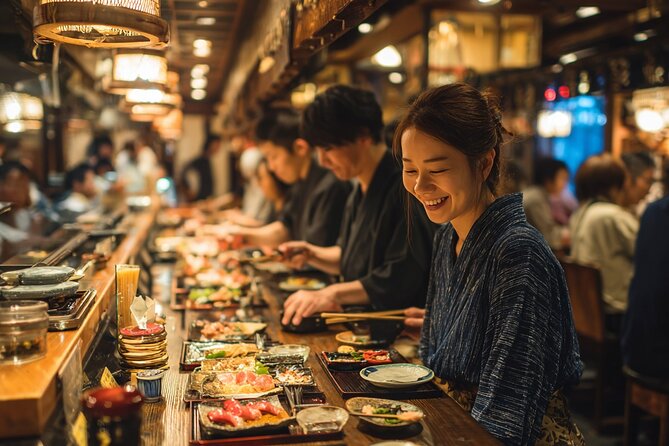
- Four eateries and 13 dishes: You get a broad taste of Kyoto rather than one long meal in one restaurant.
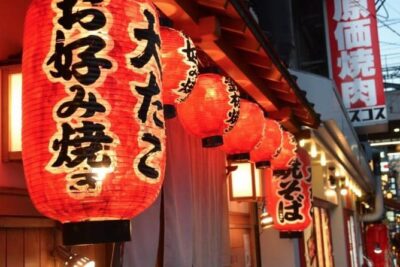
- Pontocho after dark: Lantern-lit lanes and traditional facades provide much of the evening’s atmosphere.
- Guides vary: Guides have included Yuvia, Alessio, Amy, Pedro, Mehrab, Maggie, Gui, Liz, and Gian.
- Two included drinks: One alcoholic or non-alcoholic drink is included at two eateries.
- Small but active group: The maximum is 10 people, but you should expect plenty of walking between stops.
- Strict dietary limits: The tour cannot cater for vegans, gluten-free diets, celiac disease, or FODMAP requirements.
Why this Kyoto food walk works
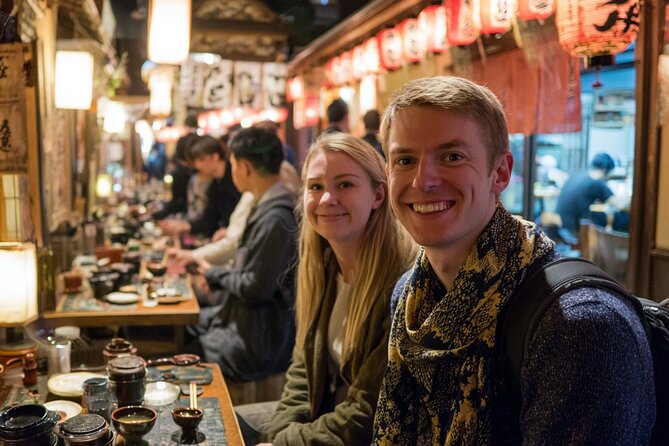
The clever idea here is variety. Instead of asking you to commit to a full dinner at one unfamiliar restaurant, the tour moves through four places and serves a total of 13 dishes. That lets you sample several sides of Kyoto dining in one evening.
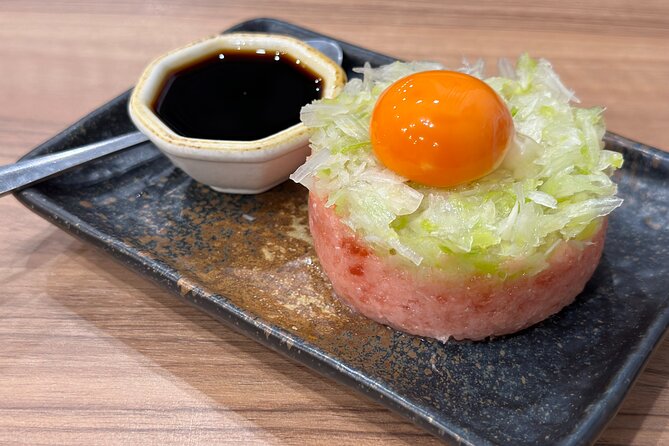
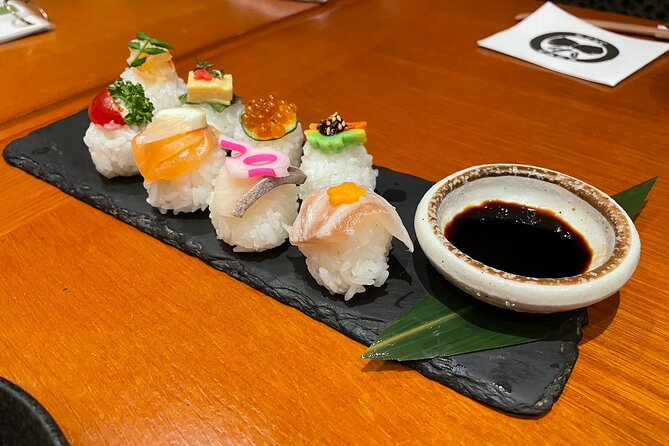
You may taste traditional Kyoto foods such as obanzai, a style of home-style seasonal cooking, and fresh yuba, the delicate skin that forms on simmering soy milk. Other dishes mentioned by people who took the tour include sushi, tempura, potato salad, takoyaki, wagyu sushi, and sweet taiyaki filled with custard or sweet potato.
That mix matters. Kyoto cuisine can be subtle, seasonal, and unfamiliar to first-time visitors. A guide can explain what you are eating, how it relates to local food customs, and why Kyoto’s cooking differs from food in Osaka or Tokyo. You still may not love every dish, but you will get a better sense of the city’s everyday food culture than you would from ordering one safe meal.
The tour also pairs food with a night walk. Pontocho’s narrow lane is one of Kyoto’s most atmospheric places after sunset. Gion adds old wooden buildings, lanterns, teahouses, and streets linked to geisha culture. The scenery is not a separate sightseeing stop. It forms the setting between meals.
More Food Tours in Kyoto
- Kyoto Night Foodie Tour in Gion (9+ dishes + 6 Sake tastings)
★ 5.0 · 1,762 reviews - Kyoto Nishiki Market Food and Culture Walking Tour
★ 5.0 · 412 reviews - Kyoto Foodie Night Tour
★ 5.0 · 376 reviews
Starting at Sanjo-ohashi and entering Pontocho
The meeting point is the Starbucks Coffee near Kyoto’s Sanjo-ohashi Bridge, at 113 Nakajimacho in Nakagyo Ward. From there, the group heads toward Pontocho District.
Pontocho is famous for its narrow preserved alley, where lanterns hang above traditional facades. It is especially striking in the evening, when the modern city falls away and the lane takes on a quieter, more theatrical feel. Your guide discusses the district and the role of geisha in Japanese culture while leading you through the area.
Keep your expectations sensible. This is not a long historical walking tour, and the main purpose is food. The Pontocho stroll lasts about an hour within the overall itinerary, but the exact amount of walking and storytelling can vary with the group and restaurant timing.
This first section is valuable because Pontocho can be confusing to explore on your own. Its narrow entrances and small restaurants are easy to miss, and many places are not aimed at casual first-time diners. A guide gives you a reason to enter and helps explain the customs behind the setting.
You should also be ready for a few practical quirks. Some eateries require you to remove your shoes. Wear socks you are comfortable showing, and choose shoes that are easy to slip on and off.
Four eateries, 13 dishes, and a changing menu
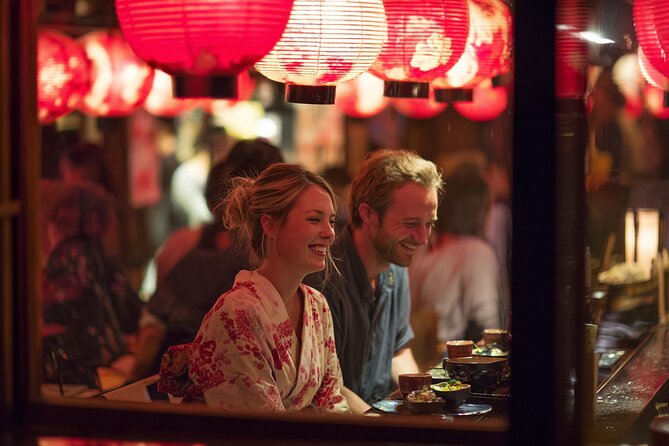
The food is served across four different eateries rather than at one fixed restaurant. That gives the evening a progressive shape. You have a small taste, walk through Kyoto, arrive somewhere new, and start again.
The exact menu can vary, but the food described for the experience includes several categories:
- Kyoto-style small dishes: Obanzai introduces you to vegetable dishes and home-style preparations tied to seasonal cooking.
- Yuba: Fresh tofu skin is one of Kyoto’s signature ingredients. Its soft texture and mild flavor may be new to you.
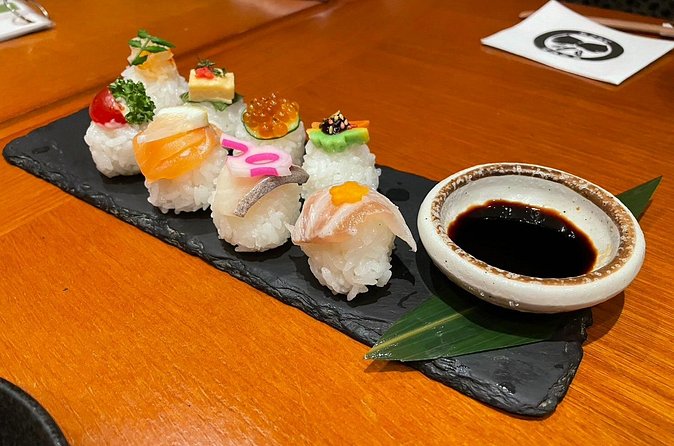
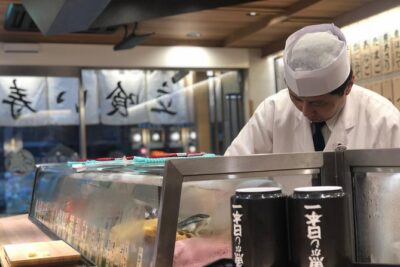
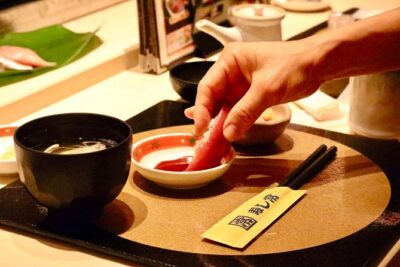
- Sushi and wagyu sushi: These provide more familiar reference points, though the preparation and presentation may differ from what you know.
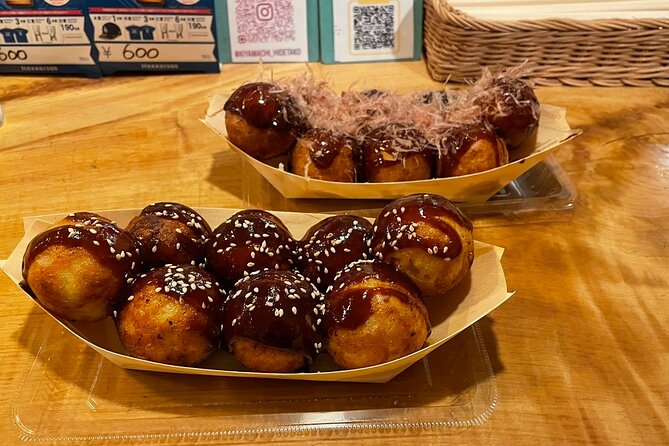
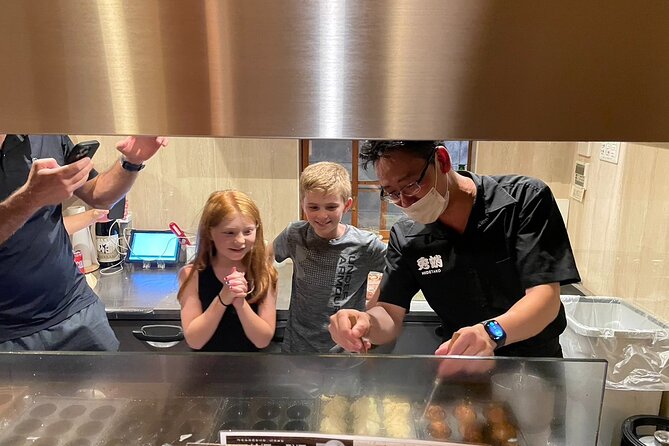
- Takoyaki: The octopus-filled snack brings a stronger contrast, with savory sauce and a style that can be compared with Osaka versions.
- Tempura and other small plates: These add crisp textures and help keep the meal from feeling too delicate or restrained.
- Dessert: Taiyaki, a fish-shaped cake, may come filled with custard or sweet potato.
- Drinks: Two of the eateries include one complimentary drink each, alcoholic or non-alcoholic.
The variety is the tour’s strongest food feature. You might begin with gentle Kyoto flavors and end with a richer snack or sweet. One stop may feel refined, while another may feel casual and theatrical, especially where takoyaki is prepared in front of you.
Still, do not book this expecting a parade of rare delicacies. Some dishes may feel basic to experienced Japan visitors. A person who has already spent several weeks eating across Japan may find the selection familiar rather than surprising. The tour suits you best if you want guidance, context, and a sampler of local food, not a once-in-a-lifetime tasting menu.
The included portions are intended to build a full evening meal. Several people finish with a full stomach, but appetite varies, and the tour does not promise a specific menu for every departure.
Moving from Pontocho toward Gion
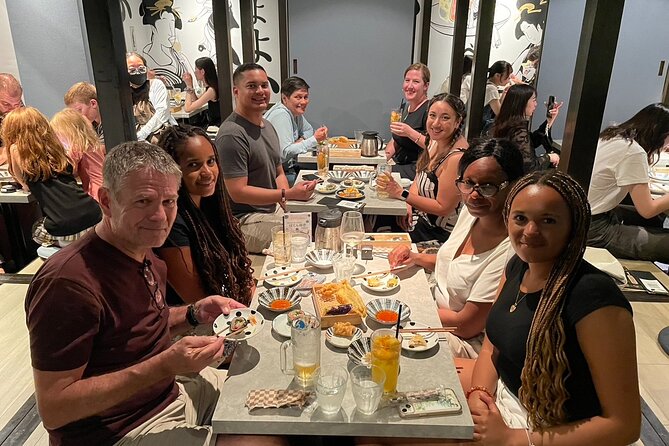
The middle part of the evening involves walking through Kyoto and between the food stops. The schedule divides the experience into roughly three one-hour sections, though restaurant service and group pace will shape the actual timing.
This walking is part of the value. You are not simply being driven from restaurant to restaurant. You get to see how Kyoto changes from one lane to the next, and the pauses give you time to talk with the guide and the other people in the group.
It is also the part that may test you. One direct account describes quite a bit of walking between eateries, though the stops made it worthwhile. If you want a seated dinner with minimal movement, this is the wrong format. Comfortable shoes are a basic requirement.
The tour is not suitable for someone with a mobility impairment, and you should take that warning seriously. The route includes narrow streets and restaurant access that may not be easy for everyone. Public transportation is nearby, but the experience itself is on foot.
Same trip, a completely different kind of day:
- PERFECT KYOTO 1-Day Bus Tour
★ 5.0 · 13,518 reviews - Kyoto: Fushimi Inari, Kinkakuji, Bamboo Grove 1 Day Bus Tour
★ 4.8 · 4,316 reviews - Kyoto: Tea Ceremony in a Traditional Tea House in Kiyomizu
★ 4.9 · 3,519 reviews - Kyoto Geisha Walking Tour: Gion District & Hidden Gems
★ 4.7 · 3,273 reviews
Gion at night and the geisha connection
The final section brings you into Gion, where the tour presents lantern-lit streets, teahouses, and the traditions connected with geisha culture. The guide explains the role of geisha and points out details that are easy to overlook when you wander alone.
Gion is not a theme park. It is a working neighborhood, so respectful behavior matters. Keep your voice down, do not block entrances, and follow the guide’s instructions around private businesses and people going about their evening.
The setting can be the most memorable part of the experience. Traditional buildings, narrow lanes, and soft light create a strong contrast with Kyoto’s busy main roads. Some of the most appealing comments about the tour focus as much on the lantern walk and the atmosphere as on the food.
However, be aware that the actual Gion portion may be modest. One complaint says the group walked up only one street and did not really tour Gion. If seeing a large section of the district is your top priority, choose a dedicated Gion walking tour instead. Here, Gion is the backdrop for dinner, not the main attraction.
The tour ends at Gion-Shijo Station, at 1 Chome Miyagawasuji in Higashiyama Ward. That is useful if you plan to continue sightseeing or head back by train after the meal.
The guides make a real difference
The experience depends heavily on the guide. Names associated with different departures include Yuvia, Alessio, Amy, Pedro, Mehrab, Maggie, Gui, Liz, and Gian. Because the guide can change, you should expect variation in style and delivery.
The best guides add more than directions. They explain the dishes, point out local details, connect the food to Kyoto customs, and keep the group involved while moving between restaurants. Pedro has been praised for his insight into the area and Japanese food culture. Alessio has been described as good at explaining dishes and local history. Amy has led lively evenings with strong food stops, while Yuvia has been noted for an engaging manner.
A less effective guide can make the same route feel routine. Some people have found the commentary repetitive or too closely tied to a script. Others have had trouble understanding a guide’s English. That is not a reason to dismiss the tour, but it is a fair reminder that the personality of the guide affects the evening.
The small maximum of 10 helps. You can ask about ingredients, request clarification, and get more attention than you would on a large bus-style food tour. The group size also gives the meal a social side, since you share tables and dishes with people from different countries.
Price, drinks, and overall value
At $72.96 per person, the tour is not cheap by casual Kyoto dinner standards. You could eat inexpensive Japanese food for less, especially if you are happy ordering from counters or convenience stores.
The value comes from what is bundled together: 13 dishes, four eateries, an English-speaking guide, an evening walk through Pontocho and Gion, and two included drinks. If you would otherwise feel unsure about entering small Japanese restaurants, the guide and introductions can justify the added cost.
I consider the price fair for a first night in Kyoto, particularly if you want an organized introduction without spending time translating menus or choosing restaurants. It is less compelling for an experienced Japan food fan who already knows where to eat and wants unusual, high-end dishes.
The included drinks also help. At two eateries, you receive one alcoholic or non-alcoholic drink. Alcohol is offered only to people of legal drinking age. If you do not drink, the non-alcoholic option keeps the arrangement useful.
Tips are optional. Bring a little flexibility for the evening, since the format is social and the tour includes several stops, but there is no required gratuity listed in the cost.
Dietary and practical limits
This tour has firm food restrictions. It cannot cater for vegan or gluten-free diets, and it is not suitable for people with celiac disease or FODMAP requirements. Do not book it hoping to negotiate substitutions after arrival.
Vegetarians should also ask before booking, since the provided information does not promise a vegetarian menu. The same applies if you have allergies or need careful ingredient control. Four eateries mean several kitchens and many opportunities for cross-contact.
Confirmation arrives when you book, and the ticket is mobile, which keeps the meeting process simple. You should arrive at the Starbucks near Sanjo-ohashi Bridge with enough time to find the correct location. The experience lasts about three hours and finishes at Gion-Shijo Station, not back at the starting point.
Free cancellation is available up to 24 hours before the start time. Changes or cancellations made within 24 hours are not accepted for a refund.
Who should book this evening
I would choose this tour for a first or second night in Kyoto, especially if you want an easy introduction to Japanese food and prefer company over a solo restaurant search. It works well for couples, friends, and solo visitors who like walking, small plates, and a little local explanation with dinner.
You will get the most from it if you:
- Enjoy trying several dishes instead of ordering one main course.
- Like traditional neighborhoods after dark.
- Want a guide to explain unfamiliar food and customs.
- Can walk comfortably for three hours.
- Eat meat, seafood, dairy, or standard Japanese dishes without strict dietary limits.
I would skip it if you need a vegan, gluten-free, celiac-safe, or FODMAP menu. I would also look elsewhere if your main goal is a long, detailed Gion tour or an advanced food itinerary built around rare regional specialties.
Should you book the Gion food tour?
Book it if you want a friendly, well-organized evening that combines Kyoto scenery, local stories, and a broad meal at four stops. The strongest reasons are the small group, the number of dishes, and the chance to sample foods such as yuba, obanzai, takoyaki, sushi, and taiyaki without having to plan each restaurant yourself.
Go in knowing that the exact guide, dishes, and walking route can vary. The food may feel ordinary to seasoned Japan visitors, and the Gion walk may be shorter than you expect. For most first-time Kyoto visitors who meet the dietary and mobility requirements, the combination of lantern-lit lanes and a generous tasting meal makes the $72.96 price reasonable.
FAQ
How long does the Kyoto Gion food tour last?
The experience lasts approximately three hours.
How many dishes are included?
The tour includes 13 dishes served across four eateries.
How many people can join the tour?
The maximum group size is 10 travelers.
Are drinks included?
One complimentary alcoholic or non-alcoholic drink is included at two eateries. Alcohol is available only to people of legal drinking age.
Can the tour accommodate vegan or gluten-free diets?
No. The tour cannot cater for vegan or gluten-free diets and is not suitable for people with celiac disease or FODMAP requirements.
Where does the tour start and finish?
It starts at the Starbucks Coffee near Kyoto’s Sanjo-ohashi Bridge and ends at Gion-Shijo Station.
Can I cancel for a refund?
You can cancel up to 24 hours before the experience starts for a full refund. Cancellations or changes made less than 24 hours before the start time are not accepted for a refund.
More Food & Drink in Kyoto
- 3-Hour Kyoto Insider Sake Brewery Tour with Tastings & Pairings
★ 5.0 · 917 reviews - Arashiyama Bamboo, Temple, Monkeys, or Secret Sake Brewery
★ 4.8 · 886 reviews - Kyoto: Insider Sake Brewery Tour with Sake and Food Pairing
★ 5.0 · 704 reviews - Kyoto Sake Brewery & Tasting Walking Tour
★ 5.0 · 623 reviews
Just added around Kyoto
- Sekka Cotton Furoshiki Class★ 5.0 · 19 reviews
- Kyoto Sword Experience – includes Museum Ticket/Ninja Experience★ 4.5 · 149 reviews
- Scenic Green Tea Fields of Hidden Kyoto & Local Tea Exp (Private)★ 5.0 · 32 reviews
- Secret Eastern Kyoto Biking Adventure★ 5.0 · 44 reviews
- Private Sake Tasting in Central Kyoto with Sake Sommelier★ 5.0 · 32 reviews
- Samurai School in Kyoto: Samurai for a Day★ 5.0 · 202 reviews
- SHIRAKAWA Japanese Culture Experiences with private English staff★ 5.0 · 16 reviews
- A Privately Guided Photoshoot in Beautiful Kyoto by a Pro★ 5.0 · 18 reviews
Food Tours, compared.
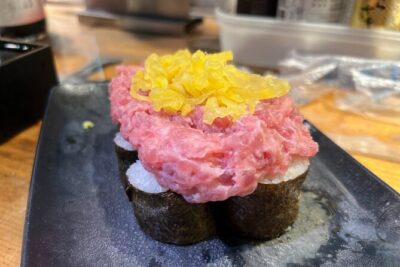
Shinjuku Food Tour (13 Dishes at 4 Local Eateries)
Our verdict →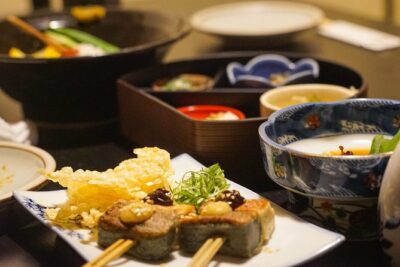
Kyoto Night Foodie Tour in Gion (9+ dishes + 6 Sake tastings)
Our verdict →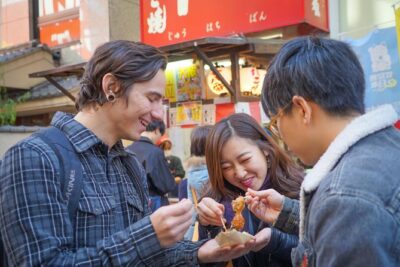
Osaka Local Foodie Walking Tour in Dotonbori and Shinsekai
Our verdict →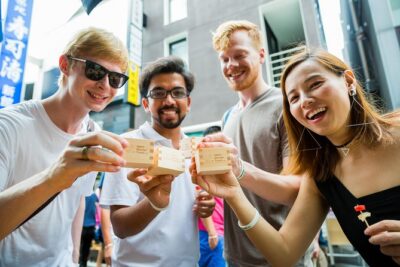
Food Tour in Ueno with 10+ Tastings of Japanese Classics
Our verdict →
Browse the lists this tour appears in