
Reviewed · FOOD TOURS
Osaka Local Foodie Walking Tour in Dotonbori and Shinsekai
Osaka’s food culture is best understood one bite at a time, and this tour gives you the classic starter set: kushikatsu, okonomiyaki, and takoyaki. You’ll also walk through Shinsekai’s old merchant lanes, pause at Hozen-ji Temple, and finish near the famous Glico sign in Dotonbori.
I like the small group, capped at seven, and the way the route links two very different Osaka districts. I also like the practical mix of food and orientation, especially when guides such as Aika, Yuma, Michiko, or Justin add restaurant tips, cultural background, and help with the subway afterward.
The catch is value. At $111.42 per person, this is not a bargain meal crawl. Some people found the food stops limited, with too much fried food and not enough small tastings. Come for a guided introduction to Osaka, not a grand tour of the city’s best restaurants.
Key points to know before you book
- Three Osaka classics included: Six kushikatsu skewers, one serving of okonomiyaki, one box of takoyaki, and three drinks are part of the package.
- A small group matters: The maximum is seven people, and a booking for six may effectively become a private tour.
- Shinsekai gives the route its character: You’ll pass Jan-Jan Yokocho, Tsutenkaku Tower, the Billiken statue, and old-style streets.
- The walk ends in Dotonbori: Hozen-ji Temple, Ukiyo Alley, Doguyasuji, and the Glico sign fill out the final part.
- Dietary limits are serious: Gluten-free and vegan diets cannot be accommodated. Vegetarian requests must be made by the day before.
- Guide quality shapes the day: The best experience comes when your guide explains the food and neighborhoods instead of simply leading you from restaurant to restaurant.
What this Osaka food walk is really offering
This is part food tour, part neighborhood walk, and part first-night orientation. The advertised duration is about three hours, with the route running from a FamilyMart near Shin-Imamiya through Shinsekai and onward to Dotonbori.
That mix is useful because Osaka’s famous food districts can feel confusing at first. Neon signs, crowded streets, narrow lanes, and restaurants competing for attention make it hard to know where to begin. A local guide gives you a starting point and takes care of the basic decisions.
You receive six deep-fried skewers, an okonomiyaki serving, a box of takoyaki, and three drinks. Alcohol and non-alcoholic drinks are available. This is enough food for most people to regard the tour as an early dinner or a substantial snack period, but it is not an unlimited tasting route.
That distinction matters. If you have taken food tours in other cities with many tiny portions at a long list of stalls, this one may feel restrained. The format leans toward a few proper food stops rather than constant grazing.
More Food Tours in Osaka
- Osaka: Shinsekai Food Tour with 13-15 Dishes at 5 Eateries
★ 4.8 · 2,204 reviews - Osaka Food Tour: 13 Dishes at 5 Local Eateries
★ 5.0 · 2,149 reviews - Hungry Osaka Street Food Tour:15 Tastings & 3 Drinks with a Local
★ 5.0 · 1,727 reviews
Shinsekai begins under Tsutenkaku Tower
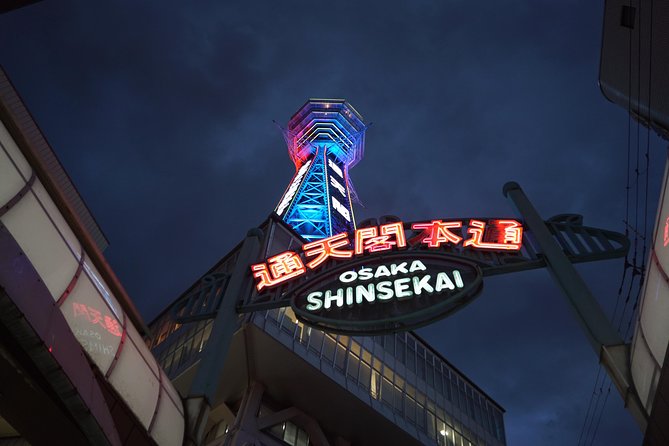
The tour starts in Shinsekai, one of Osaka’s most recognizable old entertainment districts. Tsutenkaku Tower watches over the area, giving the opening walk an unmistakable Osaka setting.
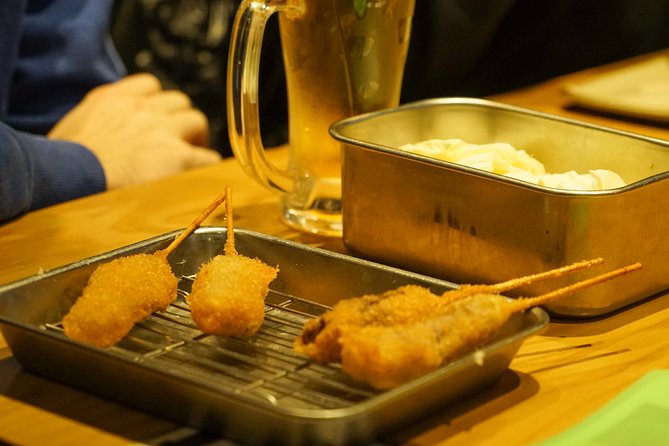
The route includes Jan-Jan Yokocho, a narrow alley lined with old-style shops and food places. You’ll have kushikatsu here, the local specialty of skewered meat and vegetables coated and fried until crisp. Six pieces are included, so this is more than a token taste.
Kushikatsu is simple food, but it carries plenty of local character. The skewers can include different ingredients, and the cooking style reflects Shinsekai’s casual, working-class dining culture. Your guide should explain how the dish fits into Osaka eating habits and help you understand what is on the plate.
This is one of the strongest parts of the tour when the guide is active and conversational. Aika, Yuma, and Michiko were especially praised for explaining local customs, food preparation, and the surrounding streets. The stop feels less like a restaurant reservation and more like an introduction to the neighborhood.
There is one practical warning. Shinsekai can be busy, and some guides walk quickly between stops. If you need a slower pace, say so at the beginning. One person found it difficult to keep up, while another found the route slower than expected, so the pace may depend heavily on your guide and group.
Old Osaka in Jan-Jan Yokocho and the Tsutenkaku area
The Shinsekai section also includes the market, Tsutenkaku Tower, and the Billiken statue. These sights help explain why the neighborhood feels different from the polished shopping districts around Namba.
The old lanes are presented as a kind of living museum of Osaka from more than 80 years ago. That does not mean every building is preserved or every turn is quiet. It means you get a look at a district shaped by older shops, local restaurants, colorful signs, and long-running Osaka traditions.
You may also pass temples and shrines along the way. Several guides used these pauses to explain everyday Japanese customs, not just dates and architectural facts. That can be valuable, especially if this is your first evening in Japan and you want context for the small rituals you see around town.
The quality of this section depends on how much your guide volunteers. One unhappy account described a guide who answered questions but offered little narration while walking. Another praised a guide for explaining the city throughout the route. Ask questions as you go, but also expect the experience to vary from guide to guide.
Dotonbori brings the neon and photo stops
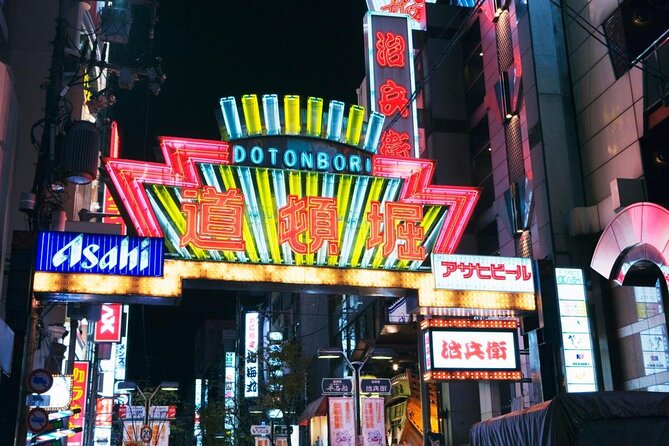
The route then moves toward Dotonbori, Osaka’s most famous food and entertainment district. This is the loud, bright side of the tour, with large signs, dense pedestrian traffic, and plenty of places selling the foods you have just learned about.
The walk includes Dōgu-ya-suji, also called Doguyasuji, a shopping street known for kitchen tools and restaurant supplies. In the daytime version, you may have time for souvenir shopping and a look inside Hōchō-ya, a knife shop. At night, the guide gives an explanation near Namba Grand Kagetsu and focuses more on nearby shopping.
This is a useful stop if you like practical souvenirs. Japanese knives can be tempting, but you should treat the visit as an introduction rather than a pressure-filled sales stop. The tour information does not promise a knife purchase, and you can simply browse.
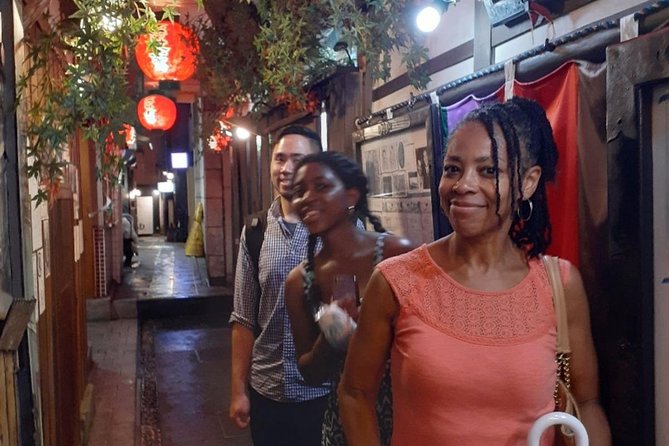
Hozen-ji Temple provides a quieter pause. Its small setting and moss-covered Fudo statue offer a sharp contrast with Dotonbori’s bright signs. From there, you walk through Ukiyo-koji, a narrow lane with an older atmosphere.
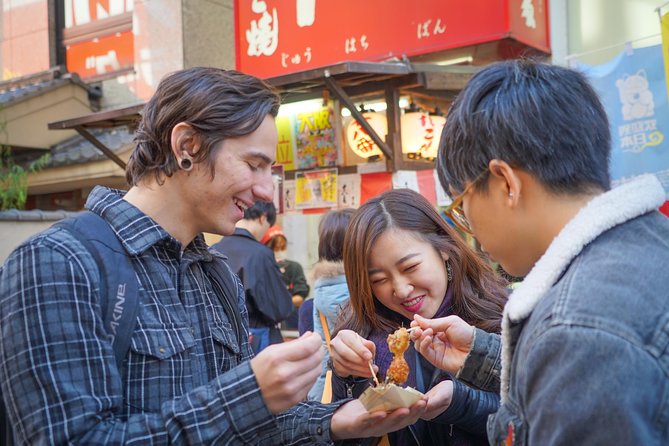
The tour may include sweets and extra snacks here, with approximately ¥500 set aside for these items. Takoyaki is part of the included food package, though the exact timing can vary. One account noted that the takoyaki came late, after the person was already full, while another said the dish was a highlight.
Finally, you stop at the Glico sign for photos. It is an obvious tourist picture, but that is not a reason to skip it. The sign is one of Osaka’s standard visual markers, and finishing there gives you an easy reference point for returning to Dotonbori later.
More Walking Tours in Osaka
- Osaka: Hotspots & Hidden Gems Walking Tour Private or Group
★ 4.9 · 1,300 reviews - Osaka Bar Hopping Night Walking Tour in Namba (3 bars, 6 tastes)
★ 5.0 · 958 reviews - Osaka: Deep Backstreets Walking Tour with Dinner Option
★ 4.9 · 902 reviews - Ultimate Osaka Walking Tour: Castle, Dotonbori & Hidden Gems
★ 5.0 · 862 reviews
What you actually eat, and how much
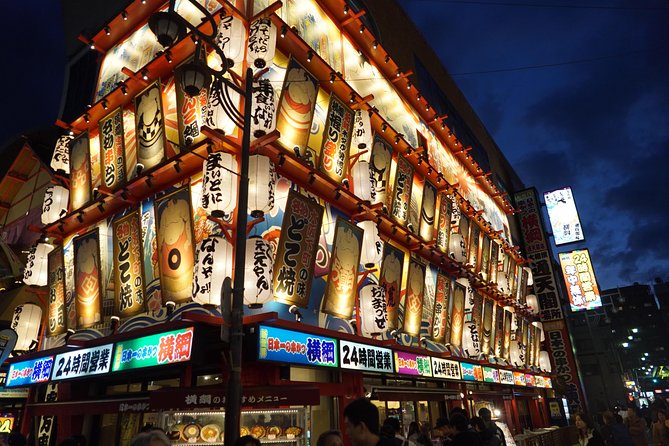
The food lineup is easy to understand:
- Six kushikatsu skewers
- One portion of Osaka-style okonomiyaki
- One box of takoyaki
- Three drinks
- Possible extra sweets or snacks costing about ¥500
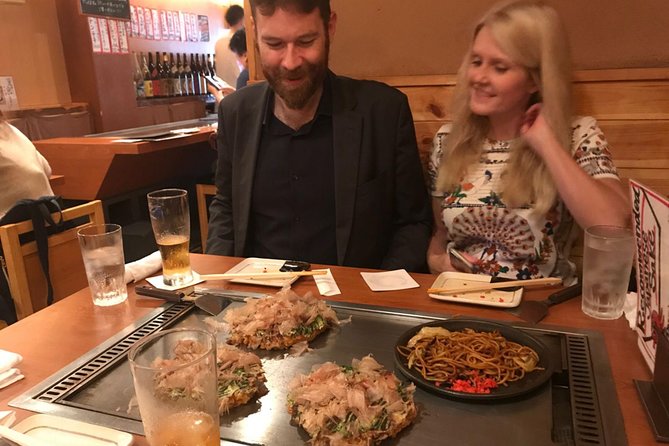
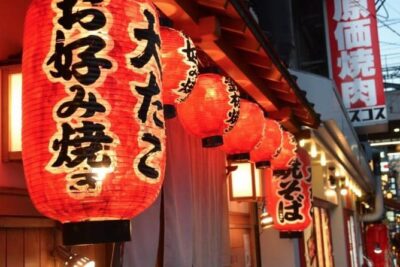
Okonomiyaki is often described as a savory pancake, though that label undersells it. The name combines the ideas of cooking something as you like and grilling it. It usually brings together batter, cabbage, and toppings, with the precise ingredients varying by restaurant.
At some stops, you may grill the okonomiyaki yourself. That small hands-on element was an unexpected favorite for some people, since it turns the meal into an activity rather than a plate simply placed in front of you.
The included drinks can be alcoholic or non-alcoholic. Three drinks add value if your group uses them, but they do not help much if you are not drinking. One useful criticism of the tour was that a price reduction might make more sense than including multiple drinks for everyone.
Food variety is the larger issue. You get three famous Osaka foods, but two are fried or cooked on a hot surface, and the route can feel heavy. Some people wanted more stops with smaller portions, while others found the food plentiful and delicious.
I would eat lightly before the tour, but not arrive exhausted and starving. One person found the walking before the first substantial meal difficult. The route includes sightseeing between food stops, so this is not a continuous sit-down meal.
Guides make the difference
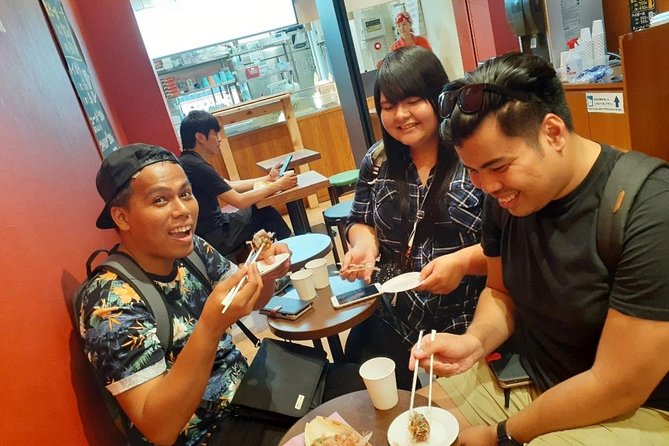
The best reports center on guides who connect food with daily life. Aika was praised for local insight, restaurant advice, souvenir tips, and taking photographs. Yuma received strong marks for friendly English, explanations of the dishes, and stopping at shrines and temples. Michiko was appreciated for pairing food with history and choosing good restaurants.
Justin even helped with subway directions at the end, which can be a real kindness on a first night in Osaka. That sort of practical help is not the main product, but it can make the tour more useful than a meal alone.
The small group is a real advantage. With a maximum of seven people, you can ask questions without competing with a busload of strangers. If your party fills most of the places, the outing may feel almost private.
Still, the guide is not always the same, and the experience can be uneven. A newer guide may be friendly but less polished. Another guide may know the route well but speak only when asked. If you want detailed food talk, ask questions about ingredients, local customs, and why each restaurant was chosen.
Do not assume the guide will cover every historical detail without prompting. This is a casual walking experience, not a formal lecture.
Price, pace, and practical details
The price is $111.42 per person. You are paying for the guide, the organization of several stops, the included food and drinks, and the ease of moving between Shinsekai and Dotonbori.
That can be fair if you value local company and do not want to plan your first Osaka food evening. It is less convincing if your main goal is maximum food quantity. You could spend less by choosing kushikatsu, okonomiyaki, and takoyaki on your own, though you would lose the explanations and neighborhood orientation.
The tour runs for about three hours, but some people felt it ended sooner. Delays, restaurant timing, crowd levels, and the guide’s pace can affect the actual rhythm. Allow extra time around the stated duration if you have a later reservation.
Transportation is not included. The stated transportation cost is ¥190, so bring a little cash or have a payment method ready. The meeting point is the FamilyMart at 1-chōme-17, Sannō, in Nishinari Ward. It is near public transportation, but the location may feel less central than the Dotonbori finish, so check the map carefully and arrive early.
The tour starts on time. If you miss the group, you cannot join later, reschedule, or receive a refund. Summer temperatures can reach 40°C, while winter temperatures may fall to -5°C. Wear shoes you can walk in, and prepare for the season rather than relying on indoor comfort.
Smoking may be allowed at some venues. The operator may not be able to change restaurants if smoke affects you.
Dietary restrictions need advance planning
Gluten-free and vegan diets cannot be accommodated. Vegetarian food is possible only if you select the vegetarian option when booking or request it by the day before.
There is an important catch for vegetarians: the kushikatsu restaurant still uses pork broth in its dashi, even for vegetarian skewers. If you cannot have dashi, tell the operator in advance so other vegetarian dishes can be prepared.
Allergies also need to be reported at least one day ahead. The food is prepared in kitchens the tour company does not control, so allergy-free meals and substitutions cannot be guaranteed.
For anyone with strict dietary needs, this is not the easiest Osaka food tour. The operator is clear about the limits, so take those warnings seriously.
Who should book this walk?
I would recommend it to a first-time Osaka visitor who wants a guided introduction to two famous districts and prefers a planned food route. It also suits couples, families, and small groups who want a social evening without arranging several restaurants themselves.
It can work well near the start of a Japan trip. You get a sense of Osaka’s food vocabulary, learn where Dotonbori and Shinsekai sit, and leave with ideas for later meals. Repeat visitors may also enjoy it if they want local company rather than another self-guided night.
I would be cautious if you consider yourself a serious food enthusiast. The fixed lineup is short, the food leans toward familiar Osaka staples, and some dining stops may feel ordinary rather than special. If you want many small portions, unusual dishes, or independent food stalls, another tour may suit you better.
The experience is also a poor fit for anyone who dislikes crowded streets, cannot walk at a brisk pace, or needs a carefully controlled diet.
Should you book the Shinsekai and Dotonbori food tour?
Book it if you want a friendly, compact introduction to Osaka food and neighborhoods, especially with a guide such as Aika, Yuma, Michiko, or Justin. The small group, included drinks, three signature dishes, photo stops, and temple visit make it easy and sociable.
Skip it if $111.42 feels high for three main tastings, or if you want a serious food crawl with many restaurants. The strongest value here is the combination of food, local explanation, and getting your bearings. The food alone does not always justify the price.
Free cancellation is available up to 24 hours before the start time. That gives you some room to adjust plans, but last-minute changes are not accepted.
FAQ
How long does the Osaka food tour last?
The tour lasts approximately three hours. The pace and exact end time can vary, so avoid booking another activity immediately afterward.
What food is included?
You receive six kushikatsu skewers, one portion of okonomiyaki, one box of takoyaki, and three drinks. Alcoholic and non-alcoholic drinks are available.
How large is the group?
The maximum group size is seven people. A large family booking may effectively create a private-feeling outing.
Can vegetarians join the tour?
Vegetarians can join if they select the vegetarian option or request it by the day before. The kushikatsu venue still uses pork broth in its dashi, so mention this in advance if you cannot consume dashi.
Can people with gluten-free or vegan diets participate?
No. Gluten-free and vegan diets cannot be accommodated on this tour. Allergy requests must be made at least one day ahead, and allergy-free meals cannot be guaranteed.
Where does the tour end?
The tour ends near the Glico sign in Dotonbori, at 1-chōme-10-3 Dōtonbori. The starting point is a FamilyMart in Sannō, Nishinari Ward.
Just added around Osaka
- Exclusive Sushi Making Experience with a Master Chef – Osaka Area★ 5.0 · 25 reviews
- Private Home-Style Cooking Class in Osaka with Local Mom Yoshiko★ 5.0 · 46 reviews
- Hidden Osaka – Yukaku Red Light Tour & Culinary Adventure★ 4.8 · 96 reviews
- Osaka: Walking Tour and Top Highlights★ 4.8 · 104 reviews
- Osaka: Private Ceramic Painting Workshop★ 5.0 · 13 reviews
- Pickleball in Osaka, Kobe & Kyoto with Locals!★ 4.7 · 80 reviews
- Eat Like a Local in Osaka – Private Custom Street Food Tour★ 4.3 · 33 reviews
- Osaka:SUMO BEATS SHOWCASE: Taiko Drum and Wagyu burger!★ 4.2 · 37 reviews
Food Tours, compared.
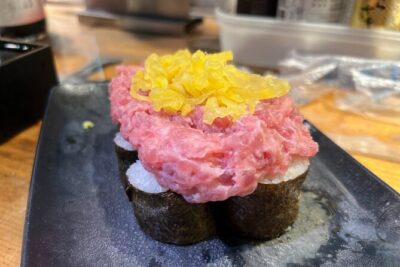
Shinjuku Food Tour (13 Dishes at 4 Local Eateries)
Our verdict →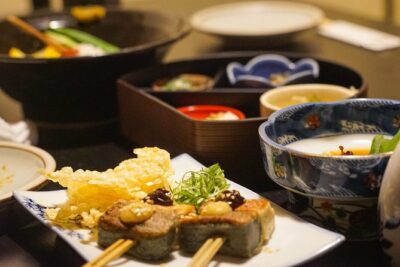
Kyoto Night Foodie Tour in Gion (9+ dishes + 6 Sake tastings)
Our verdict →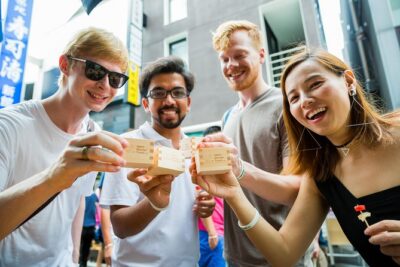
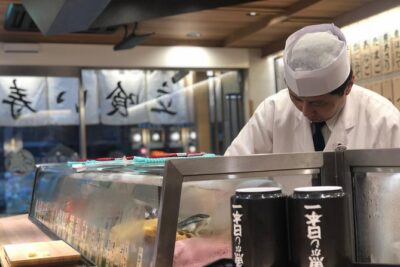
Food Tour in Ueno with 10+ Tastings of Japanese Classics
Our verdict →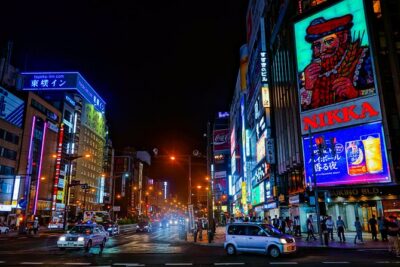
Browse the lists this tour appears in