
Reviewed · FOOD TOURS
Tokyo: Food Tour in Ueno with 10+ Tastings of Japanese Classics
Ueno is a fine place to start eating in Tokyo because food, trains, temples, parks, and old shopping streets all crowd into one compact district. This tour takes you through a local market and the area beneath the train tracks, then adds sushi, gyoza, yakitori, fruit, tea, beer, matcha ice cream, and a surprise dish.
I like the wide mix of Japanese classics and the way the route connects food with Ueno’s culture. I also like the help from an English-speaking guide, especially when menus and ordering customs are unfamiliar. The main drawback is the $142 price, which is a lot in a city where you can eat very well on your own for much less.
The quick facts that matter most
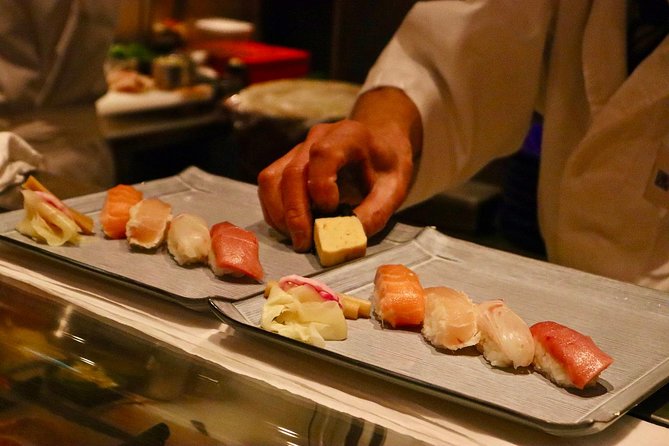
- Ten or more tastings can include sushi, gyoza, yakitori, croquettes, sukiyaki, seasonal fruit, matcha ice cream, and a secret dish.
- Ueno supplies the setting: a market, shops beneath the train tracks, Ueno Park, a Shinto shrine, and a Buddhist worship site.
- The tour lasts about 3 hours and 30 minutes, with a fair amount of walking between stops.
- Guides may include Yumi, Natsumi, Harumi, or Mari, depending on the date and assignment.
- The group can reach 15 people, so ask about the format if you expect a fully private experience.
- The food is substantial. Skipping breakfast is sensible, not just a cute suggestion.
Why Ueno works so well for a food tour
Ueno gives you more than a line of restaurants. It gives you a quick lesson in how the district works. The market supplies everyday shopping and street food. The train-track arcade shows the practical, crowded side of Tokyo. Then the park and religious sites offer a quieter look at the same neighborhood.
That mix matters. A food tour in a modern shopping district can feel like a series of unrelated meals. Here, the stops help explain why Ueno has such a strong local identity. You are eating in an area shaped by commerce, rail travel, religion, and public space.
The route is also useful if you have limited time in Tokyo. In three and a half hours, you sample several familiar Japanese foods and get a basic orientation to Ueno. You will not become an expert on Japanese cuisine, but you can leave with a list of dishes and areas worth exploring on your own.
More Food Tours in Tokyo
- Tokyo: Shinjuku Food Tour (13 Dishes at 4 Local Eateries)
★ 5.0 · 6,603 reviews - Tokyo Tsukiji Fish Market Food and Culture Walking Tour
★ 5.0 · 3,184 reviews - Tokyo: Shinjuku Food Tour (15 Dishes and 4 Eateries)
★ 4.9 · 2,033 reviews
Starting at the market near Ueno Station
The meeting point is Ueno Station at 7 Chome-1 Ueno, Taito City. The station area is well connected to public transportation, but allow extra time to find the exact meeting place. Large Tokyo stations can be confusing, and a late arrival could be hard to solve once the group has started walking.
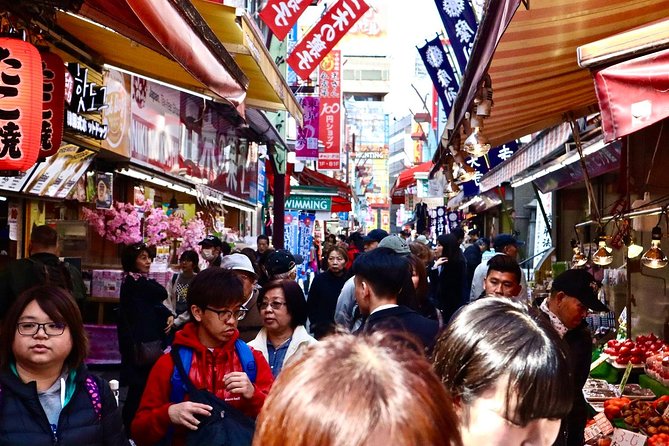
The first major stop is a popular indoor-outdoor market with shops selling food, gifts, clothing, and other everyday goods. This is a good place to get your bearings. You see how a working market differs from a polished department-store food hall, and your guide can help you handle unfamiliar displays and ordering customs.
This part of the tour is valuable even if you already know Japanese food. You may recognize some ingredients and snacks, but the guide can point out what fits the season, what is commonly eaten, and how different foods fit into daily life. The itinerary and menu can change with weather, availability, and other local conditions, so the exact market stops are not fixed.
Eating under the train tracks
The route also visits the area beneath the raised train tracks. The Japanese term refers to the space under the girders, and these trackside corridors often have a distinctive mix of small businesses, food counters, and casual places to eat.
This is one of the more interesting settings for the tour because the surroundings feel practical rather than ceremonial. You are not just being led to a restaurant chosen for a foreign audience. You are seeing how Tokyo uses every available strip of space, including the area below a railway line.
The tradeoff is comfort. The route includes a fair amount of walking, and the market and trackside areas can be crowded. Wear comfortable shoes. Keep your expectations flexible if a particular shop is unavailable or the weather affects the route.
The food lineup: small portions, big appetite
The tour includes more than 10 tastings, though the exact menu may change. The listed foods give you a broad sample of Japanese eating rather than one narrow specialty.
Same trip, a completely different kind of day:
- 1-Day Tokyo Bus Tour
★ 5.0 · 14,250 reviews - Tokyo: TOKYO SKYTREE® Admission ticket
★ 4.5 · 11,192 reviews - Tokyo: teamLab Planets TOKYO Digital Art Museum Entry Ticket
★ 4.6 · 9,779 reviews - Tokyo: Sumo Show Experience with Chicken Hot Pot and a Photo
★ 4.8 · 6,678 reviews
Sushi and gyoza
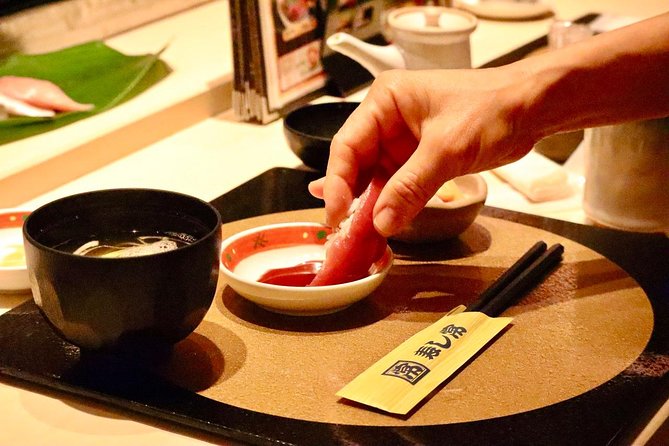
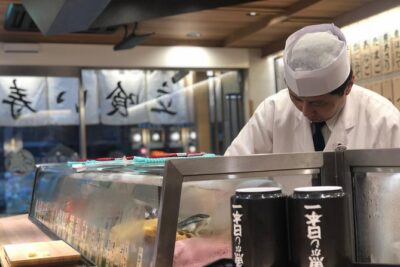
Fresh sushi provides the obvious introduction to Japanese food, but the value here is having a guide explain what you are eating and how to approach it. You can ask questions as you go, instead of trying to decode a menu while holding up a queue.
Gyoza adds a very different texture and flavor. These crisp, savory dumplings are familiar to many visitors, but a local stop can still show you how they fit into casual Japanese dining. Together, sushi and gyoza give you a useful contrast between delicate seafood and hot, filling comfort food.
Yakitori and other savory stops
Yakitori, grilled chicken on skewers, is another strong choice for a walking food tour. It is easy to eat, filling without being too formal, and representative of the casual food culture around stations and entertainment districts.
The menu may also include a croquette or another small savory dish. One detailed account described a sequence that included sushi, gyoza, croquette, yakitori, and sukiyaki by the surprise stop. Do not treat that exact order as guaranteed, but it shows how much variety can fit into the outing.
Tea, fruit, beer, and dessert
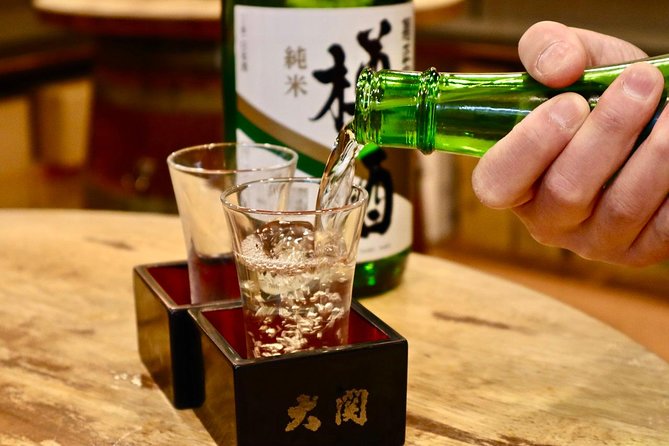
You receive two different types of tea, water, and one draft beer. The beer makes the tour feel less like a tasting class and more like a relaxed introduction to local eating. If you do not drink alcohol, the other included drinks still give you something to enjoy, but the available substitute is not specified.
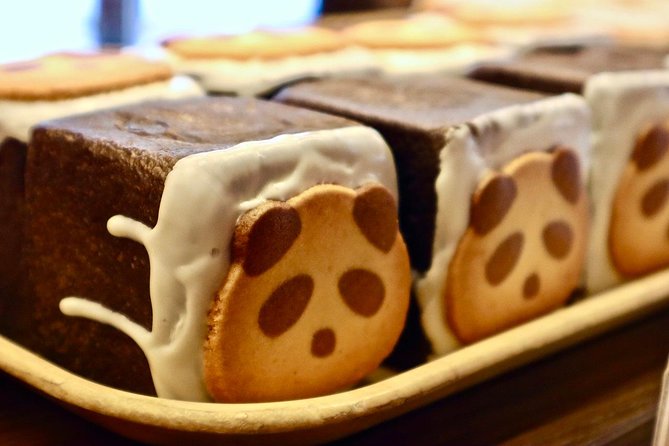
Seasonal fresh fruit brings a lighter break between savory dishes. Matcha ice cream finishes the route with a creamy, slightly bitter dessert. That was a favorite for several people, and it makes sense: after several salty foods, the matcha flavor provides a clean change of pace.
There is also a secret dish. Its identity is not given in advance, and that is part of the fun. A surprise stop described on the route was sukiyaki, but the dish can vary. Arrive hungry, since the amount of food is closer to a full meal than a few token samples.
Ueno Park adds breathing room
Ueno Park is a spacious public park in the Taito district. It is famous for cherry blossoms in spring and for hanami, the Japanese custom of enjoying flowers with food and friends.
The park changes the pace of the tour. After market lanes and food counters, you get open space and a chance to walk off some of the meal. The tour does not promise peak blossoms or a special seasonal event, so do not book it solely for cherry flowers. The park is useful in any season as a cultural and visual break.
This is also where the route feels less like a checklist of dishes. You begin to see Ueno as a district with several layers, not simply a convenient place to eat. If you are visiting Tokyo for the first time, that wider context is one of the better reasons to choose this neighborhood.
A Shinto shrine with Tokugawa connections
One stop is a Shinto shrine built in 1627 and dedicated to the memory of Tokugawa Ieyasu, founder of the Tokugawa Shogunate. The site gives the guide a natural opening to explain Shinto customs, the role of shrines, and the political era connected with the Tokugawa family.
Keep your expectations practical. This is not a dedicated shrine tour, and the amount of explanation depends on the guide and the group’s questions. Still, placing the shrine between food stops makes the visit easier to understand. You can ask about customs while the details are still connected to the place in front of you.
If you have never visited a Shinto shrine, your guide can help you avoid common mistakes and understand the difference between a shrine and a Buddhist temple. That kind of help is especially useful when you are moving quickly and want more than a photograph.
A Buddhist site and quieter surroundings
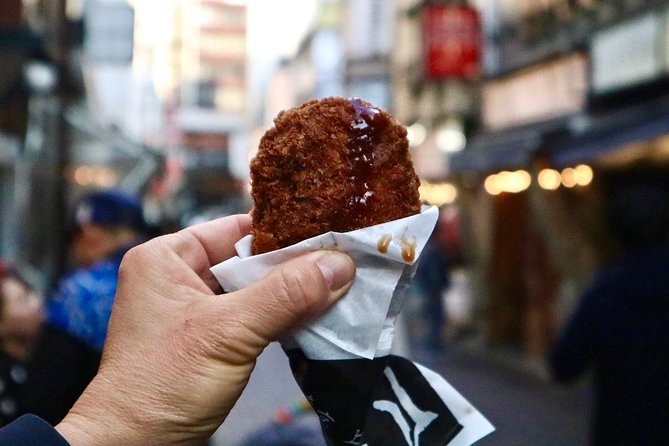
The itinerary also includes a storied Buddhist worship center with tranquil landscaping. This supplies a second religious setting and lets you compare Buddhist and Shinto traditions within the same neighborhood.
The contrast is worthwhile. The shrine connects to a specific historical figure and Shinto practice, while the Buddhist site emphasizes worship and prayer in a calmer setting. You will not get an academic lecture, but the pairing offers a useful introduction to two major parts of Japanese religious life.
As with the shrine, the visit is part of a broader food-and-culture route. If religious buildings are your main interest, you may want a separate temple and shrine tour with more time at each site. Here, the food remains the main event.
The guide can make or break the experience
The guide’s role is central because the tour crosses language, food, and cultural boundaries. The guides associated with this experience include Harumi, Natsumi, Yumi, and Mari, though you should not assume a particular person will lead your date.
Yumi has been described as upbeat and generous with tips for other places to visit and restaurants to try. Natsumi has led the tour in a friendly, engaging way, while Harumi has been praised for making the food stops fun and informative. Mari has combined food explanations with local history. These details point to the feature I would value most: a guide who treats the route as a conversation, not just a delivery service for dishes.
Guide quality can vary, of course. One poor experience raised concerns about limited food and cultural explanation and felt too expensive for the service provided. That criticism is worth taking seriously because $142 creates high expectations. You are paying not just for ingredients, but for access, coordination, translation, and interpretation.
Is $142 a fair price?
At $142 per person, this is not a bargain food crawl. You can eat sushi, dumplings, grilled chicken, dessert, and other Japanese dishes for far less if you choose restaurants yourself.
The price makes more sense if you value convenience and guidance. Your guide handles the route, helps with language barriers, chooses stops, explains unfamiliar foods, and combines the meal with Ueno sightseeing. You also get drinks and a sizable number of tastings in one sitting.
I would view it as an orientation tour rather than the best food deal in Tokyo. It is most useful near the start of your visit, when you want a local introduction and a list of places and dishes to pursue later. If you already know Ueno well or are comfortable ordering anywhere, the price may feel hard to justify.
The tour can include up to 15 people, and the material also describes it as a private experience. Because those details suggest different formats, confirm whether your booking is private or shared before paying. A small group can make the guide’s explanations more personal, while a full group may feel less flexible.
Who should book it?
I would recommend this tour to a first-time Tokyo visitor who wants food and neighborhood context in one outing. It also suits families, since children aged 8, 9, and 10 have enjoyed the food-focused format. The steady tasting schedule gives younger visitors plenty to anticipate, though the walking and unfamiliar flavors will not suit every child.
It is a good choice for anyone nervous about menus, ordering, or eating in small local places. The English-speaking guide gives you a safety net, and the short duration fits neatly into a packed Tokyo schedule.
I would be more cautious if you have strict dietary requirements. You are asked to contact the provider in advance so the team can accommodate you as well as possible, but the menu changes and no guaranteed substitutions are listed. People with serious allergies should get clear confirmation before booking.
Wear walking shoes, eat little or no breakfast, and keep the rest of the day flexible enough to enjoy the food. Free cancellation is available up to 24 hours before the start time. Cancellations or changes inside that window are not refunded, and poor weather or failure to reach the minimum number of participants can lead to a new date or a full refund.
Should you book the Ueno food tour?
Book it if you want a guided first taste of Ueno and prefer structure to restaurant guesswork. The strongest reasons are the range of dishes, the English-language help, and the clever route through markets, train-track arcades, a park, a shrine, and a Buddhist site.
Skip it if your main goal is the lowest possible food cost, or if you prefer to choose every restaurant yourself. At $142, the guide and local access need to matter to you. For a first or second day in Tokyo, I think that orientation can be worth paying for, especially if you arrive hungry and treat the tour as both lunch and a neighborhood introduction.
FAQ
How long does the Ueno food tour last?
The tour lasts approximately 3 hours and 30 minutes.
Where does the tour begin?
It begins at Ueno Station, at 7 Chome-1 Ueno, Taito City, Tokyo 110-0005, Japan.
Where does the tour end?
The activity ends back at the meeting point.
How many food tastings are included?
The tour includes 10 or more tastings. The menu can change according to location availability, weather, and other circumstances.
What foods and drinks are included?
Included items can include sushi, gyoza, yakitori, seasonal fruit, matcha ice cream, a secret dish, one draft beer, two types of tea, and water.
How large is the group?
The activity has a maximum of 15 participants.
Is hotel pickup included?
No. Hotel pickup and drop-off are not included.
Can dietary requirements be accommodated?
You should contact the provider in advance with any dietary requirements so they can assess how best to accommodate them.
Can I cancel for a refund?
You can cancel at least 24 hours before the start time for a full refund. Cancellations or changes made less than 24 hours before the start time are not refunded.
More Food & Drink in Tokyo
- Best of Shinjuku: Izakaya Food Tour (4 Stops, 14+ Tastings)
★ 5.0 · 1,863 reviews - Tokyo: Tsukiji Fish Market Food and Walking tour
★ 5.0 · 1,724 reviews - Eat and Drink Like a Local: Tokyo Ueno Food Tour-Taverns&Ramen
★ 5.0 · 957 reviews - Tokyo: Shibuya Food Tour (13 dishes and 4 Eateries)
★ 5.0 · 770 reviews
Just added around Tokyo
- Kawagoe Japanese Food Tour : Unagi Kaiseki and Sake near Tokyo★ 5.0 · 30 reviews
- Kawagoe 4hr Private Tour with Licensed Guide (Kawagoe Dep)★ 5.0 · 13 reviews
- Little EDO Sushi Making workshop in Kawagoe★ 5.0 · 18 reviews
- 【R34】Tokyo:Private Daikoku tour in Modified R34★ 4.9 · 92 reviews
- :Tokyo,Shibuya/ Pro Photography in Kimono / English-Friendly★ 5.0 · 26 reviews
- Tokyo:Celebrate Unique Japanese New Year Tradition Festivity★ 3.9 · 20 reviews
- Tokyo: Allstar Food Tour★ 4.7 · 29 reviews
- Tokyo: West-Side Cycling and Food Tour with Guide★ 5.0 · 37 reviews
Food Tours, compared.
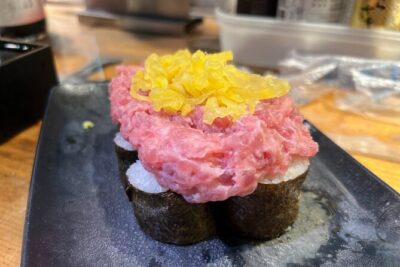
Shinjuku Food Tour (13 Dishes at 4 Local Eateries)
Our verdict →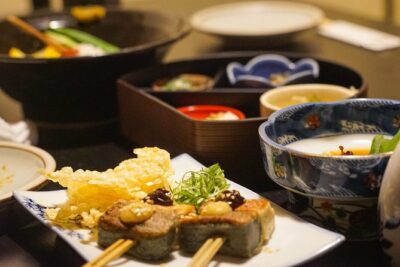
Kyoto Night Foodie Tour in Gion (9+ dishes + 6 Sake tastings)
Our verdict →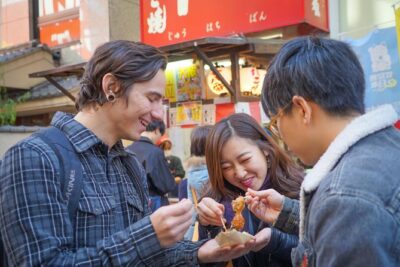
Osaka Local Foodie Walking Tour in Dotonbori and Shinsekai
Our verdict →

Browse the lists this tour appears in