
Reviewed · FOOD TOURS
Kyoto Casual Evening Pontocho Food Tour
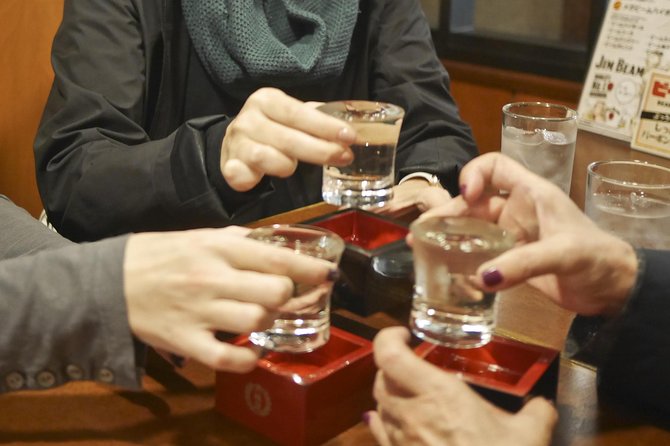
Kyoto’s old entertainment quarters are best understood after sunset, when lantern-lit lanes lead you between small restaurants, tea houses, shrines, and waterways. This three-hour Pontocho and Gion Shirakawa food walk combines four food stops with two drinks, so you get both a meal and a sense of place.
I like the small group, capped at 10 people, and the way the evening moves between several venues instead of parking you at one restaurant. I also like the local focus: guides such as Noboru and Cole explain the culture and history while you walk, rather than treating Kyoto as a string of photo stops. The main drawback is the price, $221 per person, and the food limits for vegan and gluten-free diners.
Key points to know before booking
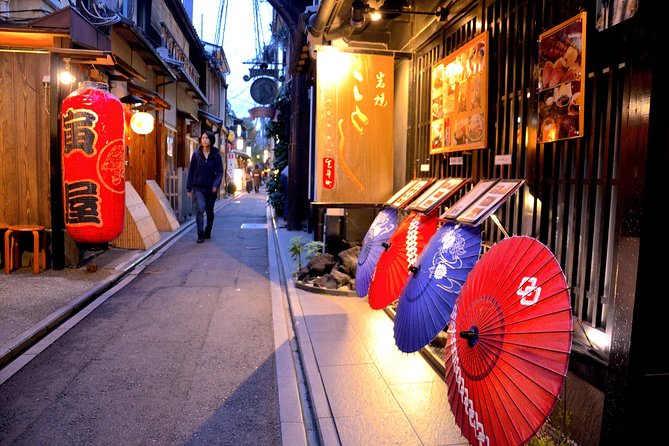
- Four food stops and two drinks: You sample across several venues rather than receiving one fixed meal.
- Pontocho after dark: The tour begins around 4:30 pm, a useful time for seeing Kyoto’s narrow lanes shift into evening.
- A maximum of 10 people: The small group gives you a better chance to ask questions and keep up with the guide.
- Gion Shirakawa and historic lanes: Tatsumi Bridge and Tatsumi Daimyojin Shrine add cultural context between food stops.
- Vegetarian-friendly, but not vegan or gluten-free friendly: Ask about the menu before paying if these restrictions matter.
- A walking tour, not a food-only outing: You need moderate physical fitness and should expect transportation costs to be your responsibility.
Why Pontocho makes a good evening food tour
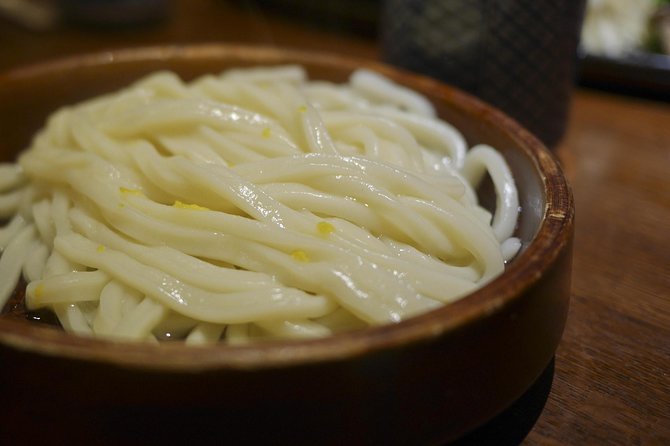
Pontocho is one of Kyoto’s best areas for a short evening walk. It is known for its narrow traditional streets, restaurants, and tea houses, and the route also reaches Gion Shirakawa. These districts give the tour a setting that feels very different from a modern shopping street or a large indoor food hall.
The timing matters. Starting at 4:30 pm lets you see the area before full darkness and then watch the lanterns and restaurant fronts take on their evening character. You are not simply eating in a private room. You are moving through old streets, crossing near waterways, and stopping to hear how the district fits into Kyoto’s culture.
I also like the format of several small tastings. Four food stops can give you a wider introduction to local dishes than a single restaurant meal. Two drinks are included, but extra food and drinks cost more, so think of the tour as a guided tasting route rather than an all-you-can-eat dinner.
The group limit is important here. Pontocho’s lanes are narrow, and a group of 10 is easier to manage than a large coach-style party. A small group also makes it more practical to ask about ingredients, customs, or the buildings you pass.
More Food Tours in Kyoto
- Kyoto Night Foodie Tour in Gion (9+ dishes + 6 Sake tastings)
★ 5.0 · 1,762 reviews - Kyoto Nishiki Market Food and Culture Walking Tour
★ 5.0 · 412 reviews - Kyoto: Gion Food Tour 13 Dishes at 4 Eateries
★ 5.0 · 408 reviews
Meeting the guide near Izumo no Okuni
The meeting point is at the Statue of Izumo no Okuni in Kawabatacho, in Kyoto’s Higashiyama Ward. The statue is a clear landmark for the start, but you should still arrive with enough time to find the exact spot and check your mobile ticket.
The walk begins with a short look at the statue, which represents Izumo no Okuni, a figure associated with the origins of kabuki. The supplied schedule gives this first stop about five minutes and lists admission as free. It is a brief introduction, not a long museum visit.
The guide is a local English speaker. Noboru and Cole are two guides connected with this experience, though you should not assume that either will lead your particular departure. The important point is the guide’s role: you receive explanations while walking between venues, so the history is tied to the streets in front of you.
For solo visitors, the operator asks you to email in advance. That is worth doing before booking, especially if you need help joining the group or have questions about the evening arrangement.
Tatsumi Bridge and Gion Shirakawa
Tatsumi Bridge is one of the route’s most appealing sightseeing points. It brings you into the Gion Shirakawa area, where traditional buildings, water, and old lanes create a strong sense of Kyoto’s past. The bridge itself is a short stop, but it helps you understand the shape of the neighborhood before you sit down to eat.
You should expect walking rather than a long formal presentation. The guide may point out details that are easy to miss when you are exploring alone, such as the relationship between the street, the canal, and the nearby traditional establishments. Exact stops can change because restaurants have their own schedules, and public holidays or weather can affect the route.
This is also where the tour’s local perspective has real value. Pontocho and Gion Shirakawa are easy to photograph, but a photo does not explain how the areas function or why their lanes matter. The guide supplies that missing context while keeping the pace social and practical.
Do not expect every street to feel open or spacious. The old lanes can be tight, and you need to stay with the group. Comfortable shoes are a sensible choice, since the experience combines sightseeing with movement between venues.
Tatsumi Daimyojin Shrine and the meaning of small stops
Tatsumi Daimyojin Shrine adds a quieter pause to the route. It is not presented as a major admission attraction. Instead, it is part of the street-level sightseeing that gives the food tour more depth.
Small shrines such as this help break up the meal stops. You can see how religious sites sit within everyday neighborhoods, often close to restaurants and entertainment districts. That contrast is one of the pleasures of walking Kyoto: a shrine, a bridge, and a dining lane may all be only a few minutes apart.
The tour is not built around long visits at each listed sight. The food remains the main event, and the historic stops support the guide’s explanations. If you want a detailed shrine tour or extended time for photography, you may find the schedule too brisk.
Still, I prefer this balance to a food outing that ignores its surroundings. You get enough sightseeing to understand where you are, then return to the practical pleasure of eating.
Same trip, a completely different kind of day:
- PERFECT KYOTO 1-Day Bus Tour
★ 5.0 · 13,518 reviews - Kyoto: Fushimi Inari, Kinkakuji, Bamboo Grove 1 Day Bus Tour
★ 4.8 · 4,316 reviews - Kyoto: Tea Ceremony in a Traditional Tea House in Kiyomizu
★ 4.9 · 3,519 reviews - Kyoto Geisha Walking Tour: Gion District & Hidden Gems
★ 4.7 · 3,273 reviews
Four food stops and two drinks
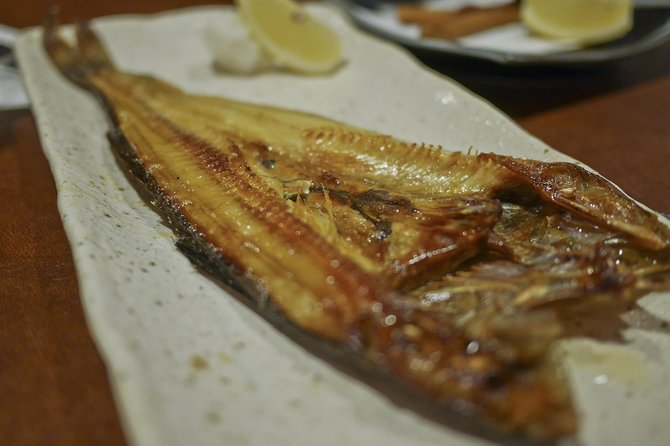
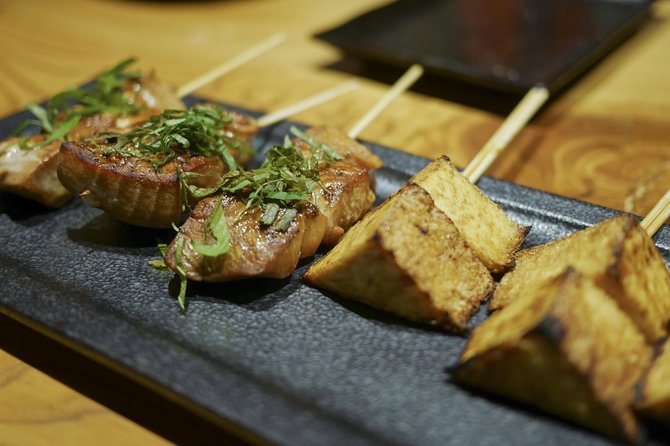
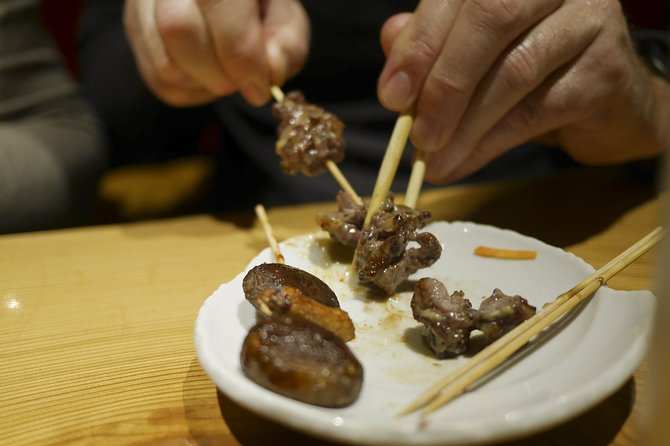
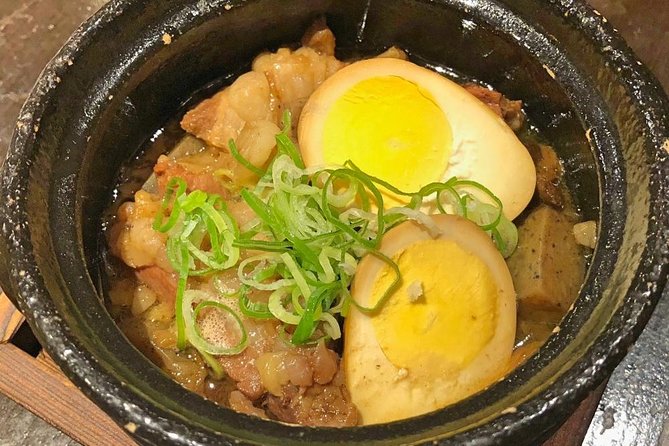
The included package covers four food stops and two drinks. The supplied details do not name each dish or restaurant, so you should not book expecting a fixed menu of specific specialties. The food may change when a venue is unavailable, and substitutions can be made because of restaurant schedules, holidays, weather, or other unexpected conditions.
That flexibility is both a strength and a limitation. It helps the operator keep the route running, but it means the exact meal is not fully predictable. If one particular dish is the reason you want to book, contact the provider before paying rather than assuming it will appear.
I like the tasting structure because it spreads your evening across several places. You can compare the feel of different venues, learn how a local meal fits into the neighborhood, and avoid spending the entire tour in one dining room. The two included drinks also make the experience feel more like an evening out than a daytime market sample.
Extra drinks and food are not included, though you can purchase them at your own expense. That matters when judging the $221 price. If you have a large appetite, the included portions may not replace a full dinner, and you should budget for anything additional.
Vegetarians can take part, but vegans and people who need gluten-free food are advised not to book. Vegetarian-friendly does not mean that every dish will suit every dietary need, so tell the operator about your requirements before the tour.
Izumo-no-Okuni, Gion Corner, and Nishiki sights
The sightseeing schedule also names the Statue of Izumo-no-Okuni, Gion Corner, Nishiki Tenmangu Shrine, and Nishiki Market. These references suggest that the experience connects Kyoto’s traditional entertainment, shrine culture, and food life.
Gion Corner is associated with traditional arts and performance, making it a useful cultural reference even if the tour does not include a performance ticket. You should read the stop as sightseeing and explanation, not as admission to a show.
Nishiki Tenmangu Shrine and Nishiki Market bring another side of Kyoto into the picture. Nishiki Market is closely tied to food, while the shrine offers a religious counterpoint. The listed route can be adjusted, so these places may not all receive the same amount of time on every departure.
The end point is Izumoya in the Pontocho area, at 173-2 Kashiwayacho. Since the tour ends in Pontocho rather than returning you to your hotel, you can continue your evening nearby, but you are responsible for your own onward transportation. The walking route and final stop make it sensible to avoid scheduling a distant reservation immediately afterward.
Is $221 a fair price?
At $221 per person, this is not a budget food walk. The value depends on what you want from the evening.
The fee includes a local English-speaking guide, four food stops, two drinks, and historic-area sightseeing. You are paying not only for food but also for a guided route through some of Kyoto’s most atmospheric neighborhoods. The maximum of 10 helps justify the price because the experience is designed to feel personal rather than mass-market.
The price is harder to justify if you mainly want the largest possible dinner. Extra food and drinks cost more, and exact dishes are not guaranteed. A person who enjoys finding inexpensive bites independently may prefer to explore Nishiki Market or Pontocho without a guide.
For a first visit to Kyoto, I see more value in the combination of food and orientation. You get an introduction to two famous districts, help with cultural context, and a ready-made evening plan. The 4.9 rating from 29 reviews and 97 percent recommendation rate also suggest a strong record, though the sample is small enough that you should still match the tour to your needs.
Who will enjoy this Kyoto evening
This tour suits you best if you want a guided introduction to Kyoto’s traditional central neighborhoods and prefer several modest tastings to one formal dinner. It is also a good fit if you like asking questions as you walk and want a local English-speaking guide to connect food with history.
It works well for couples, families with older children, and solo visitors who arrange participation in advance. Children must be accompanied by an adult, and a copy of passport information is required for children aged 10 and above. The minimum drinking age is 21, so families should confirm how the included drinks will be handled for younger participants.
You need moderate physical fitness. The experience lasts about three hours and involves walking between points, standing at stops, and navigating older streets. Hotel pickup is not included, though it can be arranged for an additional charge.
You should reconsider if you are vegan, require gluten-free food, dislike walking, or want full control over every dish. This is also not the best choice if you need a guaranteed restaurant list, since venues and stops can change.
Practical details that affect your evening
The tour uses a mobile ticket, and confirmation is provided when you book. Start time is 4:30 pm, so allow enough time to reach the Statue of Izumo no Okuni before then. Public transportation is nearby, but transportation costs are not included.
Free cancellation is available if you cancel at least 24 hours before the local start time. Changes made inside that 24-hour window are not accepted, and the payment is not refunded for a late cancellation.
The experience requires good weather and a minimum number of participants. If poor weather or low participation cancels the tour, you will be offered another date or experience, or a full refund. Restaurant schedules and public holidays can also lead to substitutions, so treat the route as a well-planned framework rather than an unchangeable promise.
Should you book the Pontocho food tour?
I would book this if you want a polished first evening in Kyoto, especially if food, local stories, and old streets matter equally to you. The best features are the small group, the four-stop tasting format, and the chance to explore Pontocho and Gion Shirakawa with context from a local guide.
I would skip it if $221 feels high for a meal, if you need vegan or gluten-free food, or if you want a fully specified menu. Before booking, confirm your dietary needs and keep your schedule flexible for route changes.
For the right person, this is less about finding the cheapest dinner and more about getting your bearings in Kyoto while enjoying a social evening of food and walking.
FAQ
How long does the Kyoto Casual Evening Pontocho Food Tour last?
The tour lasts approximately three hours.
What time does the tour start?
The tour starts at 4:30 pm.
Where does the tour begin?
The meeting point is at the Statue of Izumo no Okuni in Kawabatacho, Higashiyama Ward, Kyoto.
Where does the tour end?
The tour ends at Izumoya in the Pontocho area, at 173-2 Kashiwayacho, Nakagyo Ward, Kyoto.
How many people can join the tour?
The group has a maximum of 10 participants.
What food and drinks are included?
The tour includes four food stops and two drinks. Additional food and drinks are available to purchase at your own expense.
Is the tour suitable for vegetarians, vegans, and people avoiding gluten?
The tour is vegetarian-friendly. It is not recommended for vegans or people who require gluten-free food.
Is hotel pickup included?
Hotel pickup is not included. It may be arranged for an additional charge, and transportation costs are otherwise your responsibility.
What is the cancellation policy?
You can cancel for a full refund up to 24 hours before the local start time. Cancellations or changes made less than 24 hours before the tour are not accepted for a refund.
More Sunset Experiences in Kyoto
- Kyoto: Gion Sunset Walking Tour with Local Guide
★ 4.7 · 351 reviews - Kyoto Evening Gion Food Tour Including Kaiseki Dinner
★ 5.0 · 62 reviews - Kyoto: Gion Evening Walk with Hidden Gems, Geisha & Sake
★ 5.0 · 41 reviews - Kyoto Evening Gion Food Tour
★ 4.9 · 35 reviews
More Food & Drink in Kyoto
- 3-Hour Kyoto Insider Sake Brewery Tour with Tastings & Pairings
★ 5.0 · 917 reviews - Arashiyama Bamboo, Temple, Monkeys, or Secret Sake Brewery
★ 4.8 · 886 reviews - Kyoto: Insider Sake Brewery Tour with Sake and Food Pairing
★ 5.0 · 704 reviews - Kyoto Sake Brewery & Tasting Walking Tour
★ 5.0 · 623 reviews
Just added around Kyoto
- Sekka Cotton Furoshiki Class★ 5.0 · 19 reviews
- Kyoto Sword Experience – includes Museum Ticket/Ninja Experience★ 4.5 · 149 reviews
- Scenic Green Tea Fields of Hidden Kyoto & Local Tea Exp (Private)★ 5.0 · 32 reviews
- Secret Eastern Kyoto Biking Adventure★ 5.0 · 44 reviews
- Private Sake Tasting in Central Kyoto with Sake Sommelier★ 5.0 · 32 reviews
- Samurai School in Kyoto: Samurai for a Day★ 5.0 · 202 reviews
- SHIRAKAWA Japanese Culture Experiences with private English staff★ 5.0 · 16 reviews
- A Privately Guided Photoshoot in Beautiful Kyoto by a Pro★ 5.0 · 18 reviews
Food Tours, compared.
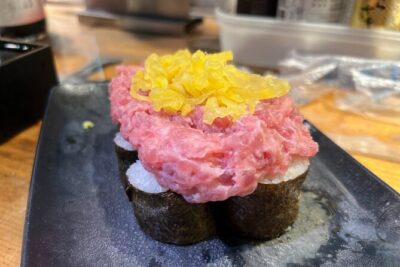
Shinjuku Food Tour (13 Dishes at 4 Local Eateries)
Our verdict →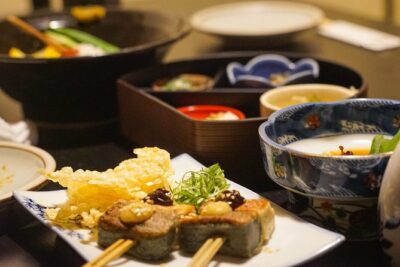
Kyoto Night Foodie Tour in Gion (9+ dishes + 6 Sake tastings)
Our verdict →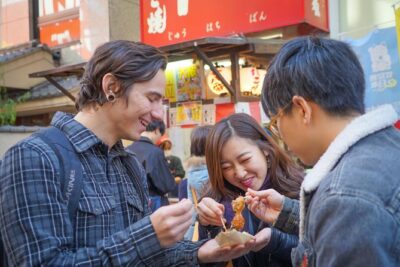
Osaka Local Foodie Walking Tour in Dotonbori and Shinsekai
Our verdict →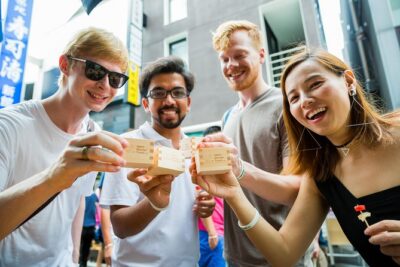
Food Tour in Ueno with 10+ Tastings of Japanese Classics
Our verdict →
Browse the lists this tour appears in