
Reviewed · GEISHA & MAIKO EXPERIENCES
Kyoto Gion Cultural Walk & Geisha Show with Dining Options
The special part of this Kyoto evening is the chance to meet a maiko, an apprentice geisha, after walking through the streets where geiko culture still has a working place. You do not just watch a staged dance from a distance. You hear explanations, ask questions, and see how Kabuki, Shinto, Zen, and Gion customs connect.
I like the small group, limited to nine people, and the way the walk builds context before the performance. I also like the guides’ personal touch. Ken, Kenta, and Akari are repeatedly praised for clear explanations, translation, help with photos, and making solo participants feel included.
The main caution is the dining option. Some people describe the meal as excellent, while one paid a high price and left hungry because the portions felt small. The walking route also includes several hours on foot, so it is not a good match if you have leg problems.
Key points at a glance
- A maiko meeting, not just a street walk: The 45-minute finale includes conversation, questions, and one or two dances by an apprentice geisha.
- Small groups help: With no more than nine people, it is easier to hear the guide and take part in the discussion.
- Gion comes with context: You visit Kabuki landmarks, Gion Shirakawa, Tatsumi-jinja Shrine, Hanamikoji Street, Kennin-ji, and Zenkyoan.
- Guides make the difference: Ken, Kenta, and Akari are known for strong cultural explanations and careful translation.
- Dining needs a close look: Meal packages are available, but the value depends on the exact option and your appetite.
- Plan for walking: The tour lasts about three hours and is not recommended for people with leg problems.
Why this Gion experience feels different
Many Gion visits amount to a quick walk down Hanamikoji Street, camera ready, hoping to spot a geiko or maiko. This experience gives you something more useful: background before the meeting. You learn why the district looks and behaves as it does, then meet an apprentice geisha in a setting where questions and conversation are part of the evening.
The walk lasts about 1.5 to 2 hours. The final geisha meeting and show lasts 45 minutes. That balance matters. You get enough time to see several parts of Gion without spending the entire evening in a lecture, and the performance has meaning because you have already heard about the traditions behind it.
I also appreciate the small maximum group of nine. A small party makes a real difference during the question period. You are less likely to sit silently at the back, and the guide can help with translation and individual questions.
The guides are a major part of the experience. Ken is described as witty, respectful, and well informed about geiko culture. Kenta is praised for his careful explanations and his ability to interpret during the maiko meeting. Akari is noted for warmth, energy, and making a solo participant feel included. The exact guide depends on the departure, but the experience clearly relies on a personal host rather than an audio recording or a large bus tour.
More Dinner Experiences in Kyoto
- Kyoto Gion Cultural Walk & Geisha Show with Dining Options
★ 5.0 · 518 reviews - Dinner with Maiko in a Traditional Kyoto Style Restaurant Tour
★ 5.0 · 175 reviews - Kyoto: Geisha Dinner & Gion Cultural Walk
★ 5.0 · 73 reviews
Starting with Kabuki at Izumo-no-Okuni
The meeting point is by the Statue of Izumo-no-Okuni in Kawabatacho, near the center of Kyoto’s Gion area. The first stop takes about 15 minutes and introduces Kabuki through the figure traditionally linked with its beginnings.
The useful surprise here is that Kabuki began with women, even though modern Kabuki is performed by men. That detail gives you a better frame for understanding the connections between theater, dance, costume, and the female performers associated with Gion.
This is a short outdoor introduction, not a full theater visit. Admission is free, and you do not enter a performance. Still, it is a smart opening because it shows that the story of Japanese stage entertainment is less simple than the familiar image of all-male Kabuki suggests.
Minamiza Theater and old performance traditions
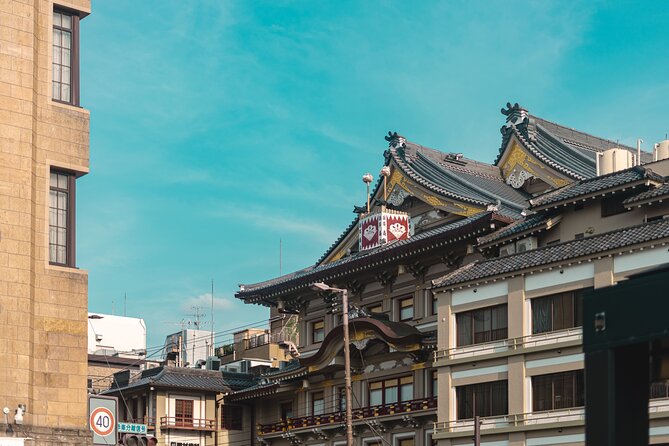
The next stop is Minamiza Theater, one of Kyoto’s best-known Kabuki buildings. You spend about 10 minutes looking at its architecture and hearing how traditional Kabuki has been linked with newer technology, including virtual reality.
The value here is visual. You see an actual theater rather than hearing about Kabuki in the abstract. The exterior helps you understand how performance has long been part of this part of Kyoto.
Again, this is an outside stop with free admission. If you are hoping to sit inside the theater or attend a show, this tour does not promise that. Think of Minamiza as a cultural landmark along the route, not a theater ticket.
Gion Shirakawa and the working geiko district
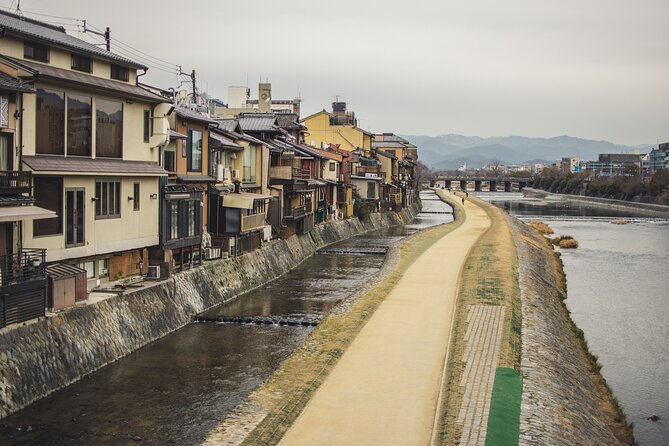
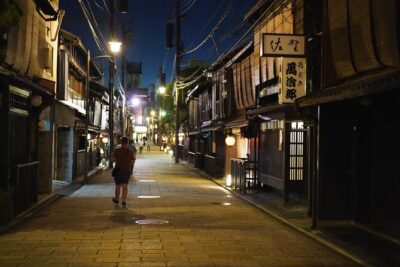
Gion Shirakawa is one of the prettiest sections of the walk. The route follows old-fashioned streets and traditional buildings beside the river, with theaters and entertainment houses nearby. The stop lasts about 15 minutes.
This is where the district’s atmosphere becomes clear. Gion is not simply a collection of photogenic lanes. It is an area shaped by performance, hospitality, training, and rules of conduct that can be difficult to understand from a casual walk.
Your guide explains geiko and maiko life while helping you read the setting respectfully. That matters because the district is still used by people who work there. You may see a geiko or maiko moving between appointments, but there is no guarantee, and the point of the tour is not to chase people with cameras.
The group format helps here. A guide can explain when to pause, where to walk, and how to behave around working performers and businesses. That guidance is more valuable than simply being given a map.
More Walking Tours in Kyoto
- Kyoto Geisha Walking Tour: Gion District & Hidden Gems
★ 4.7 · 3,273 reviews - Kyoto: Gion Magical Night Walking Tour with Geisha Trivia
★ 4.9 · 2,393 reviews - Kyoto: Gion Geisha District Walking Tour – Stories of Geisha
★ 4.7 · 2,187 reviews - Night Walk in Gion: Kyoto’s Geisha District
★ 4.5 · 2,003 reviews
Tatsumi-jinja and the role of Shinto
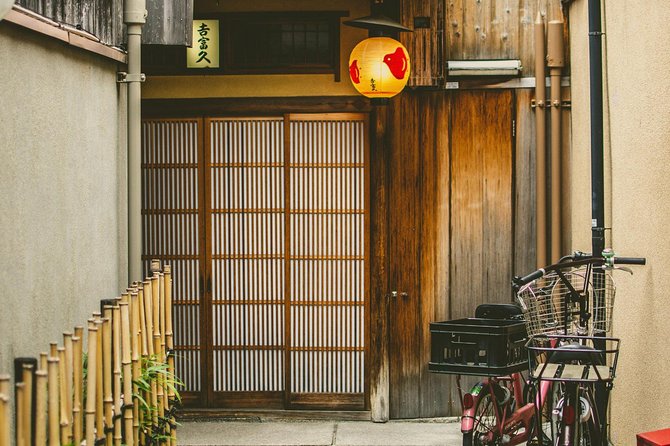
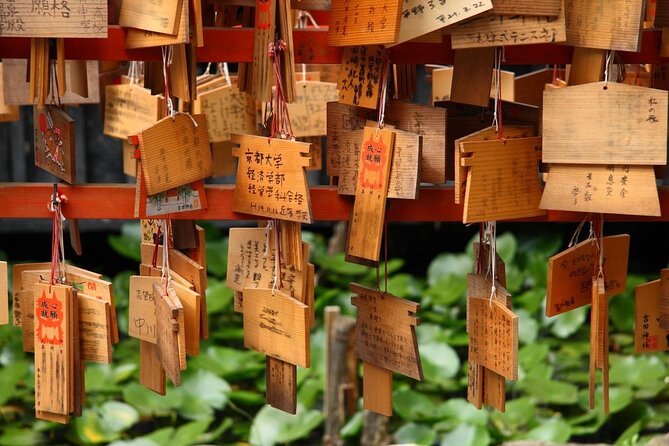
At Tatsumi-jinja, the tour shifts from entertainment to religion. You spend about 15 minutes learning about Shinto, Japan’s native religious tradition, including the idea that there are eight million gods.
The stop is small, but it adds welcome balance. Gion’s traditions did not grow in isolation from Japan’s wider cultural life. A shrine visit gives you a simple way to understand how religious places fit into the old neighborhoods.
Admission is free. The guide’s explanation is the main reason to stop, so listen for the connection between the shrine, local customs, and the daily life of the district. This is not a long religious tour, but it keeps the evening from becoming a narrow look at geisha entertainment.
Hanamikoji Street, with realistic expectations
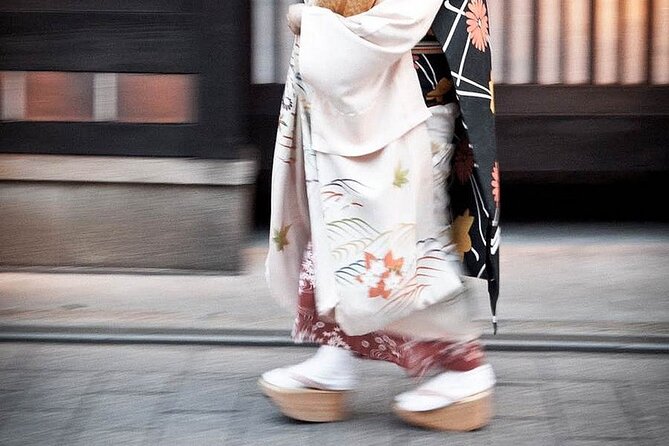
Hanamikoji Street is the main street of Gion and one of the places where you might see geiko or maiko walking between engagements. The stop takes about 10 minutes.
This is the most famous stretch of the route, and it can be the busiest part. The guide helps you see beyond the postcard view, pointing out the district’s traditional buildings and explaining the customs surrounding geiko culture.
I would keep your expectations sensible. The tour does not promise a sighting, and spotting a maiko on the street is not the same as meeting one. If you do see someone, treat the moment as part of the neighborhood’s working life, not as a photo opportunity arranged for you.
The later meeting is the reliable highlight. It gives you time to ask questions and learn directly, instead of relying on a lucky encounter in the street.
Kennin-ji, Kyoto’s Zen setting
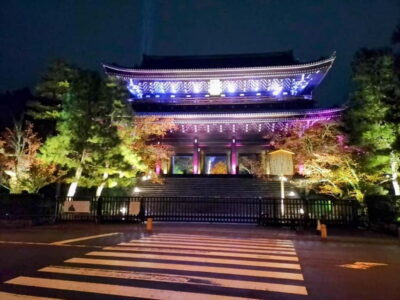
Kennin-ji is a Zen Buddhist temple founded in 1202. The route allows about 15 minutes here, though admission is not included.
The temple adds another layer to the walk. After Kabuki, Shinto, and Gion entertainment culture, you hear about Zen Buddhism and see one of Kyoto’s important religious sites. That combination makes the tour feel broader than a geisha-themed outing.
Because the visit is short, do not expect a full temple tour. The stop works best as an introduction to Zen and a chance to view the setting. If you want to explore Kennin-ji at length, you may need a separate visit and admission fee.
The walking surface and the amount of time on your feet are worth noting. The tour is not recommended for people with leg problems, and the temple section may include uneven or traditional surfaces.
Zenkyoan and the boar guardians
The final listed stop is Zenkyoan, also called Marishitendo, a subtemple connected with Kennin-ji. The stop takes about 15 minutes. It is known for boar guardians and associations with luck and safety.
This is a distinctive detail that many first-time visitors would miss. The boar imagery gives the walk a small surprise and shows how varied Kyoto’s religious sites can be. You are not seeing only the city’s grandest temples. You are also visiting a smaller place with its own symbols and local character.
Admission is not included here either. The tour information does not state the exact amount, so keep a little room in your budget if an entry fee is collected.
The 45-minute maiko meeting and show
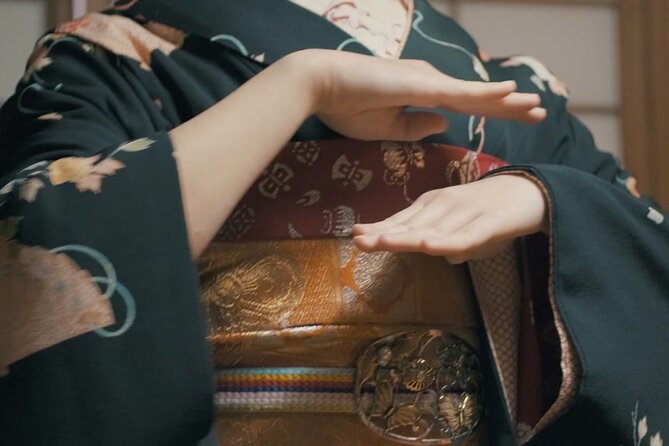
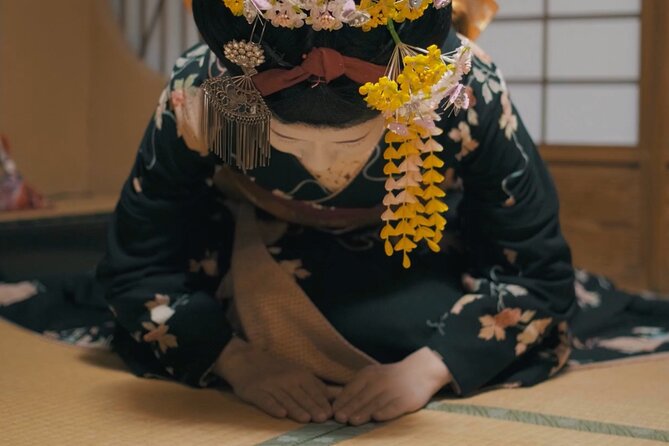
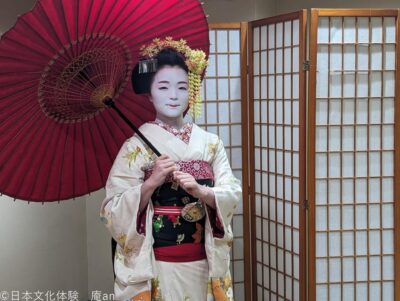
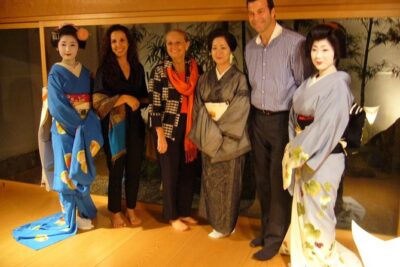
The final section is the heart of the evening. An apprentice geisha, known as a maiko, joins the group for about 45 minutes. You can expect a dance performance with one or two songs, followed by time for questions.
The guide serves an important role here. English explanations and translation help you follow the conversation, and the guide can keep the exchange moving so everyone has a chance to participate. Kenta is specifically praised for interpreting, while Akari is described as helping with questions, photos, and practical details during the meal.
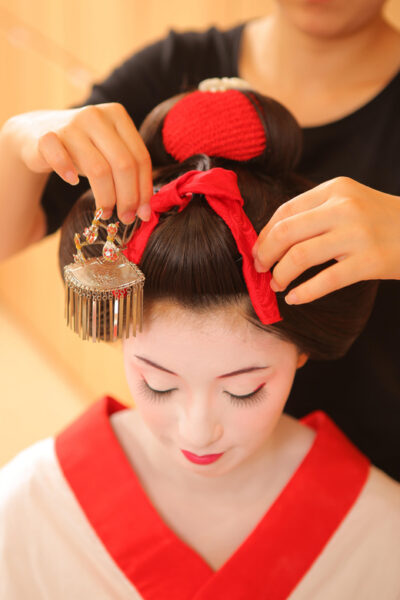
The performance itself is short, elegant, and focused. You are not attending a full theater production. You are seeing a small cultural presentation paired with personal conversation, which is far more useful if your goal is to understand the person behind the costume and makeup.
One of the strongest parts is the question period. You can ask about training, traditions, performance, and daily life, though the exact discussion will depend on the group. The setting gives you a chance to replace familiar tourist assumptions with a more careful picture of geiko and maiko culture.
Photography rules deserve attention. At least one participant noted that photos from the meeting could not be shared on social media. Ask your guide about the current rules before posting anything, and do not assume that a photo opportunity means unrestricted use.
Tea is also associated with the meeting, and several accounts describe tea and performance together. The included details specifically promise the meeting, show, and questions, so check your selected package for the exact food and drink arrangements.
Dining options and the question of value
The advertised price is about $121.37 per person, with dining options available. That is not a bargain if you are judging it as a simple three-hour walk. The value comes from the small group, guide interpretation, access to an apprentice geisha, and the chance to ask questions in person.
If you choose a meal package, read what is included before paying. The experience has produced two very different impressions of the food. Some describe a delicious, high-quality meal with family-style service and attention to dietary restrictions. Another person paid considerably more for the dinner option and felt the portions were too small, leaving hungry.
That tells me to separate the cultural value from the meal value. Book the dining option if sharing a meal in the setting sounds important to you, or if you value the convenience of keeping the evening together. If you mainly want a satisfying dinner, compare the price and menu details carefully. You may prefer to eat separately before or after the activity if portion size is a concern.
The tour data does not clearly state that every booking includes dinner. Treat dining as package-specific, not automatic. Ask what food, drinks, and seating arrangement are covered by your chosen option.
Practical planning for a smooth evening
The activity uses a mobile ticket and begins at the Statue of Izumo-no-Okuni. It ends at a different location, so check the final meeting details rather than assuming you will return to the starting point. The route is near public transportation, which makes getting to and from the tour fairly straightforward.
Allow about three hours from start to finish. Wear comfortable shoes, since the route moves through several Gion streets and temple areas. If hot weather is possible, bring water and dress lightly. One guide has been praised for carrying cold cloths, icy drinks, umbrellas, and rain ponchos during changing weather, but you should still prepare for the conditions.
The activity requires good weather and can be canceled if conditions are poor. It also requires a minimum number of participants. If that happens, you are offered another date or experience, or a full refund.
Tips for the maiko are not included. Bring cash if you want to offer one, and ask the guide how the tip is handled. A guide tip is also not listed as included, so budget separately if you normally tip for good service.
You can cancel up to 24 hours before the start time for a full refund. Changes or cancellations inside that window are not accepted, except when the operator cancels for weather or insufficient numbers.
Who should book this Gion tour
I would recommend it most strongly to first-time Kyoto visitors who want cultural context, not just photographs. It also suits anyone curious about geiko and maiko traditions but unsure how to approach the subject respectfully.
It works well for solo participants because the small group and attentive guides help prevent you from feeling stranded. Families with older children may also appreciate the mix of walking, stories, architecture, a performance, and conversation.
I would hesitate if you have limited mobility, dislike walking, or want a long temple visit. I would also think twice about the meal package unless you confirm the menu and portion expectations. The performance and meeting are the reliable reason to book. Dinner is an optional value decision.
Should you book it?
Yes, if meeting a maiko and asking real questions is high on your Kyoto list. The walk gives you the background needed to understand what you see, and guides such as Ken, Kenta, and Akari add warmth, translation, and practical help.
Book with two cautions in mind: expect a walking tour rather than a leisurely seated evening, and check the exact dining package before paying. For a respectful introduction to Gion culture with a small-group performance and conversation, this is a strong choice.
FAQ
How long does the Kyoto Gion cultural walk last?
The experience lasts approximately three hours. The guided walk takes about 1.5 to 2 hours, followed by a 45-minute maiko meeting and show.
What happens during the maiko meeting?
An apprentice geisha, or maiko, performs one or two dances with songs and answers questions from the group. The guide helps explain and translate the conversation.
Is dinner included in the tour?
Dining options are available, but the exact meal arrangement depends on the package you select. Check the booking details carefully before paying for a dining option.
How many people can join the tour?
The maximum group size is nine people. This keeps the walking group small and makes it easier to hear explanations and ask questions.
Where does the tour begin?
The meeting point is at the Statue of Izumo-no-Okuni in Kawabatacho, Higashiyama Ward, Kyoto.
Does the tour finish at the starting point?
No. The activity ends at a different location, so check the final end point when planning transportation afterward.
Are entrance fees included?
The stops at the Statue of Izumo-no-Okuni, Minamiza Theater, Gion Shirakawa, Tatsumi-jinja Shrine, and Hanamikoji Street are listed without admission charges. Kennin-ji and Zenkyoan admission are not included.
Is the tour suitable for someone with leg problems?
It is not recommended for people with leg problems. The activity includes extended walking through Gion and visits to temple areas.
What happens if the weather is poor?
The experience may be canceled because it requires good weather. You will be offered another date or a full refund.
Can I cancel for a full refund?
Yes. You can cancel at least 24 hours before the start time for a full refund. Cancellations or changes made less than 24 hours before the start time are not accepted.
More Shows & Performances in Kyoto
- 1 Hour Geisha Show in Kyoto
★ 5.0 · 452 reviews - Kyoto: Samurai Kenbu Traditional Sword Dancing Show
★ 4.5 · 426 reviews - Kyoto: Meet-and-Greet, Maiko Show and Experience
★ 4.8 · 286 reviews - Kyoto: Non-Verbal Theatre Show Tickets at GEAR
★ 4.9 · 198 reviews
More Geisha Experiences in Kyoto
- Best of Kyoto: Gion, Geisha, Pagodas & Cobblestones
★ 4.9 · 2,058 reviews - Kyoto Gion Geisha District Walking Tour – The Stories of Geisha
★ 5.0 · 1,441 reviews - Kyoto Gion: 2-Hour Geisha Culture & History Walking Tour
★ 5.0 · 1,186 reviews - Kyoto Gion Night Walk & Geisha District Guided Tour
★ 5.0 · 786 reviews
Just added around Kyoto
- Sekka Cotton Furoshiki Class★ 5.0 · 19 reviews
- Kyoto Sword Experience – includes Museum Ticket/Ninja Experience★ 4.5 · 149 reviews
- Scenic Green Tea Fields of Hidden Kyoto & Local Tea Exp (Private)★ 5.0 · 32 reviews
- Secret Eastern Kyoto Biking Adventure★ 5.0 · 44 reviews
- Private Sake Tasting in Central Kyoto with Sake Sommelier★ 5.0 · 32 reviews
- Samurai School in Kyoto: Samurai for a Day★ 5.0 · 202 reviews
- A Privately Guided Photoshoot in Beautiful Kyoto by a Pro★ 5.0 · 18 reviews
- Samurai Performance and Casual Experience: Kyoto Ticket★ 4.5 · 115 reviews
Geisha & Maiko Experiences, compared.
Kyoto Geisha Walking Tour: Gion District & Hidden Gems
Our verdict →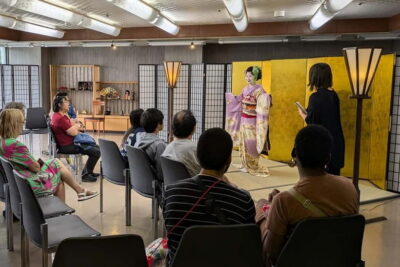
Dinner with Maiko in a Traditional Kyoto Style Restaurant Tour
Our verdict →
Browse the lists this tour appears in