
Reviewed · TRADITIONAL CRAFTS
From Osaka: Sakai Knife Maker or Blacksmith Walking Tour
Sakai’s knife trade comes alive in small workshops, not polished showrooms. This tour takes you from an old sweet shop to the Sakai City Craft Museum, then behind the scenes at Yamawaki Hamono or into the forge of Eric Chevallier, where you may help hammer glowing steel. I like the mix of local culture and practical craft, and I like that you can learn traditional sharpening rather than simply buy a knife. The main drawback is that the key workshop depends on the day, and the blacksmith option is offered less often.
I also like the human scale. Guides such as Remy, Scott, Jean-Yves, and Jean-Yves’s fellow bilingual team members bring local history into the walk, while the small-group format leaves room for questions and shopping help. You should know that this is a walking tour with several stops, not a broad sightseeing tour of Osaka, and the museum can close for inventory on the third Tuesday of the month.
Key points at a glance
- Choose your craft focus by day: Tuesdays and Thursdays are normally for Yamawaki Hamono, while Wednesdays are for the De Sakai blacksmith visit.
- See Sakai’s knife work up close: Watch blades move through sharpening and finishing at a company with more than 100 years of history.
- Try traditional sharpening: The lesson gives you a useful skill, not just a demonstration.
- Taste local Sakai sweets: One sweet at Yao Gen Raikodo is included, with mochi varieties such as poppyseed and cinnamon.
- Order a custom knife: You can select a knife and arrange customization, then watch part of the work being done.
- Plan for about 3.5 hours on foot: The route begins and ends near Nankai Sakai Station and includes several short walks.
Why Sakai is the right place for a knife tour
Sakai lies south of central Osaka and is known for its long connection with metalwork and kitchen knives. The appeal here is not simply seeing a Japanese knife behind glass. You get a look at the chain of work that turns a raw blade into a finished cooking tool.
The tour also gives you a reason to visit Sakai instead of staying around Osaka’s better-known downtown districts. The route passes through ordinary streets and working neighborhoods, with local shops and craft sites rather than a string of major attractions. That makes the experience feel grounded, though it also means you should arrive ready for a purposeful walk.
The tour lasts 210 minutes, or three and a half hours. At $64 per person, the price is fair if you care about Japanese knives, local production, or hands-on learning. You are paying for a bilingual guide, access to a normally private work setting, the sweet tasting, museum visit, and sharpening lesson. It is less compelling if you only want to browse souvenirs or buy a mass-produced kitchen knife.
More Craft Workshops in Osaka
- Osaka: Traditional Mochi Pounding Experience with Tasting
★ 4.9 · 306 reviews - Kamigata Ukiyoe Museum:Ukiyo-e Woodblock Printing Experience
★ 4.9 · 79 reviews - 1.5〜2 Hours Traditional Kintsugi Work Shop in Namba Osaka
★ 5.0 · 75 reviews
Starting at Nankai Sakai Station
You meet your guide at Nankai Sakai Station. The exact meeting point can vary with the option you book, so check your confirmation carefully rather than assuming any station exit will do.
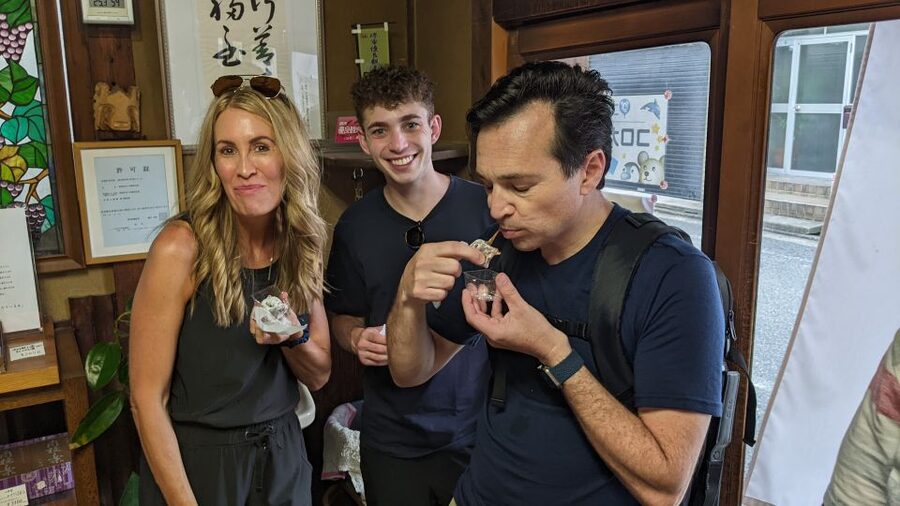
The early part of the route is easy to settle into. A roughly 15-minute walk leads to Yao Gen Raikodo, an old-style sweet shop. This stop is not filler. It gives you a taste of Sakai’s food culture before the tour shifts to metal and fire.
One sweet is included, while extra food and drinks are not. The shop is known for traditional mochi, and past visits have included poppyseed and cinnamon varieties. If you have a sweet tooth, this may be one of the most memorable stops, especially because the owner and shop setting connect the food to local custom.
Your guide may also add stories about Sakai and its links with wider Japanese and international history. Guides including Remy and Scott have been praised for making these details easy to follow without turning the walk into a lecture. Ask questions early. The walk is a good time to clarify the difference between a knife-maker visit and a blacksmith visit.
Yao Gen Raikodo and Sakai’s traditional sweets
The sweet shop is a short visit, about 20 minutes, including tasting and browsing. That is enough time to understand what makes the shop special without losing the day’s main focus.
I like this stop because it breaks up the technical subject matter. A knife tour can become a long lesson in steel types and grinding angles. Starting with mochi gives you a softer entry into Sakai, and it shows that local craft is not limited to tools.
You should not expect a full meal here. One sweet is included, and additional food or drinks cost extra. If you need breakfast or lunch, arrange that separately. The tour ends near the station, and guides have offered restaurant suggestions for afterward, but no meal is part of the booking.
The Sakai City Craft Museum in 30 minutes
After about five minutes on foot, you reach the Sakai Traditional Crafts Museum and Knife Shop. The visit lasts roughly 30 minutes and is partly self-guided, with your guide helping explain what you are seeing.
This is the place to get the wider picture. You can learn why Sakai became associated with knives, see examples of local craft, and compare different styles before you reach the workshop. That context matters because a finished knife can look simple until you understand how many separate skills go into its production.
The museum is not always guaranteed to open. On the third Tuesday of each month, it may close for inventory without notice. If that happens, the guide takes you directly to the knife company and covers the cutlery story during the walk and at the office.
That is a practical limitation, but it does not remove the main value of the tour. The museum adds useful background, yet the workshop is the stronger part for most people. If the museum is closed, you lose a display space rather than the core craft visit.
More Walking Tours in Osaka
- Osaka: Hotspots & Hidden Gems Walking Tour Private or Group
★ 4.9 · 1,300 reviews - Osaka Local Foodie Walking Tour in Dotonbori and Shinsekai
★ 5.0 · 985 reviews - Osaka Bar Hopping Night Walking Tour in Namba (3 bars, 6 tastes)
★ 5.0 · 958 reviews - Osaka: Deep Backstreets Walking Tour with Dinner Option
★ 4.9 · 902 reviews
Yamawaki Hamono: the knife-maker option
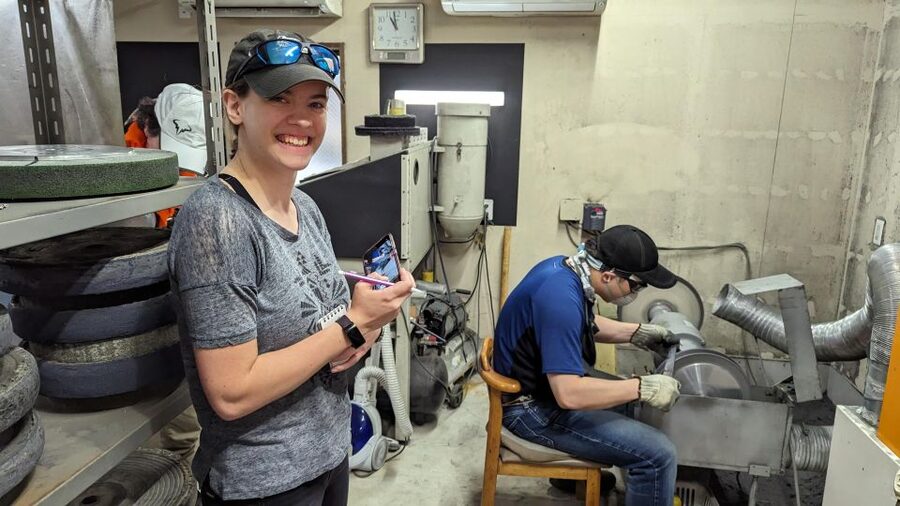
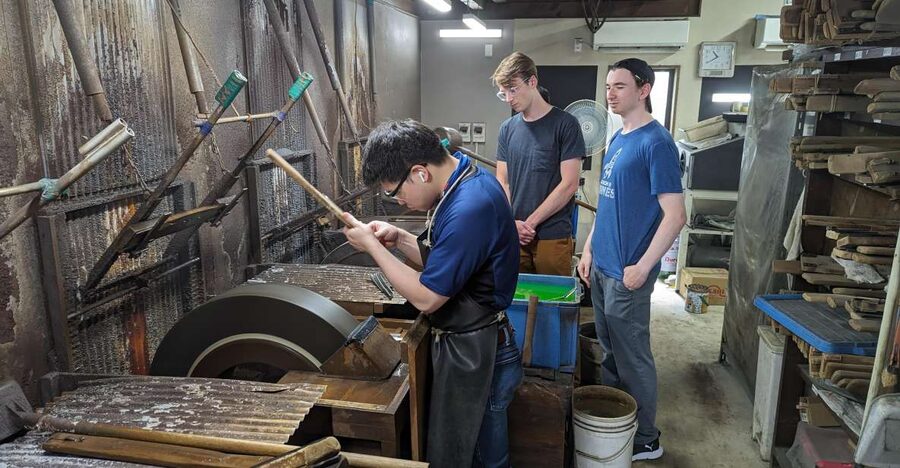
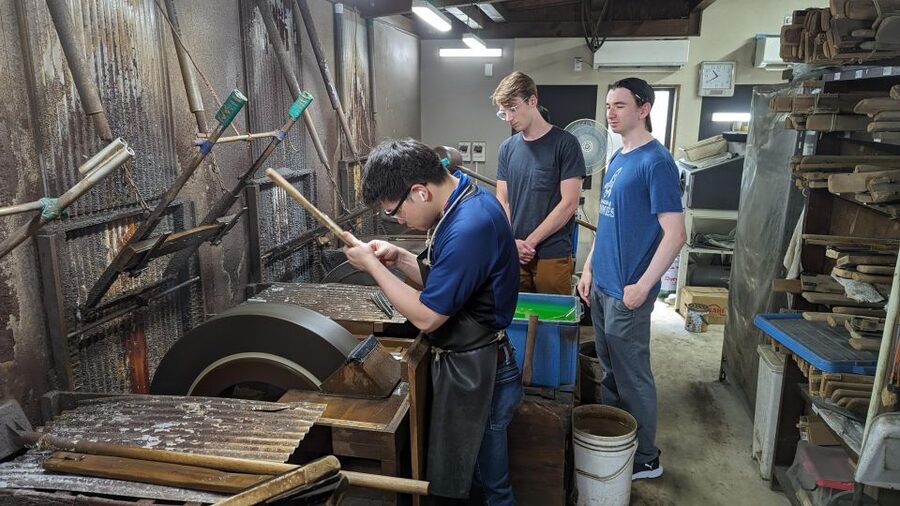
On Tuesdays and Thursdays, the tour normally visits Yamawaki Hamono. This company has more than 100 years of history and receives raw blades directly from blacksmiths. At the workshop, you see the next stages, including sharpening and the work needed to turn a blade into a finished cooking knife.
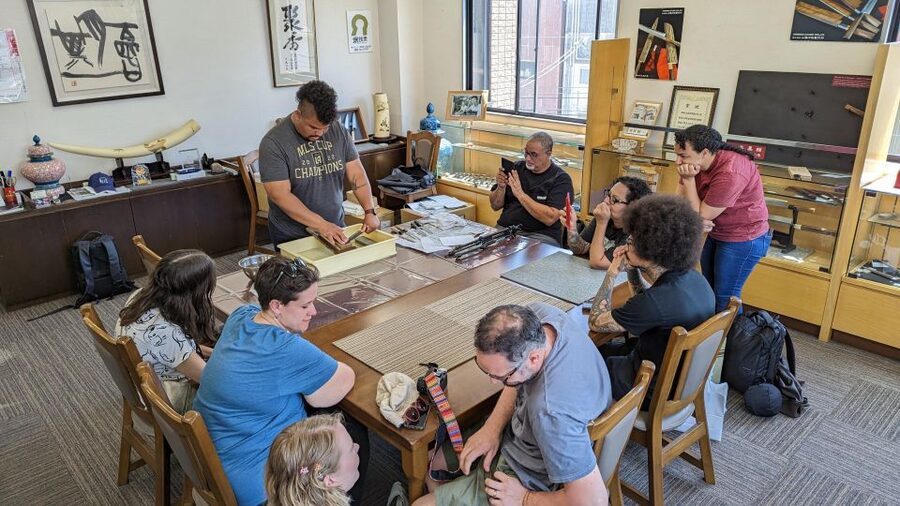
This option suits you best if you want to understand how a kitchen knife is made and perhaps take one home. You may see the sharpening station, the main office, and other working areas. The access is special because this is an operating knife-making company, not simply a retail counter.
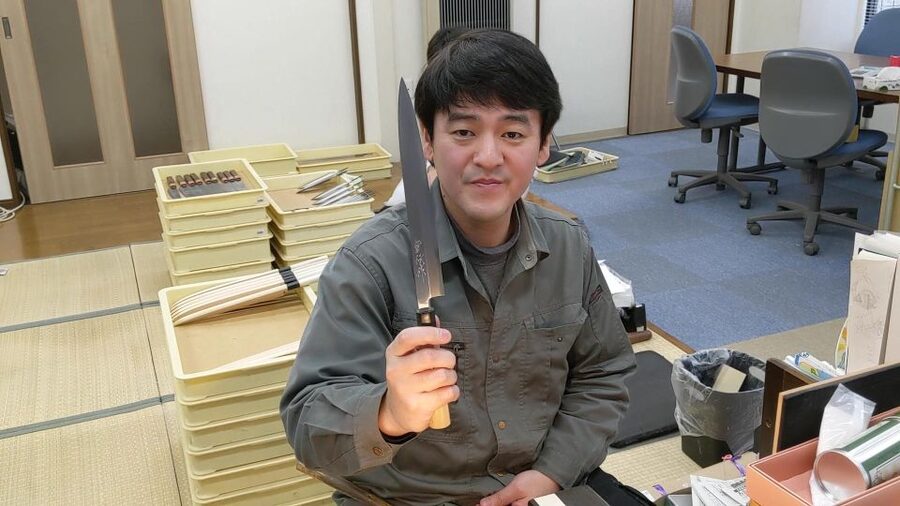
A guide helps explain the stages in English, and French may be available if arranged in advance. The experience is practical: you watch the work, ask questions, and can order a customizable knife. If you choose to buy, your guide can help with the conversation and selection.
The customization option is useful for serious cooks. You can choose a knife and discuss details such as personalization, though the supplied tour information does not promise a fixed menu of blade shapes, handles, engraving, or prices. Treat it as an opportunity to arrange a knife rather than a guaranteed build-your-own session with every choice available on the spot.
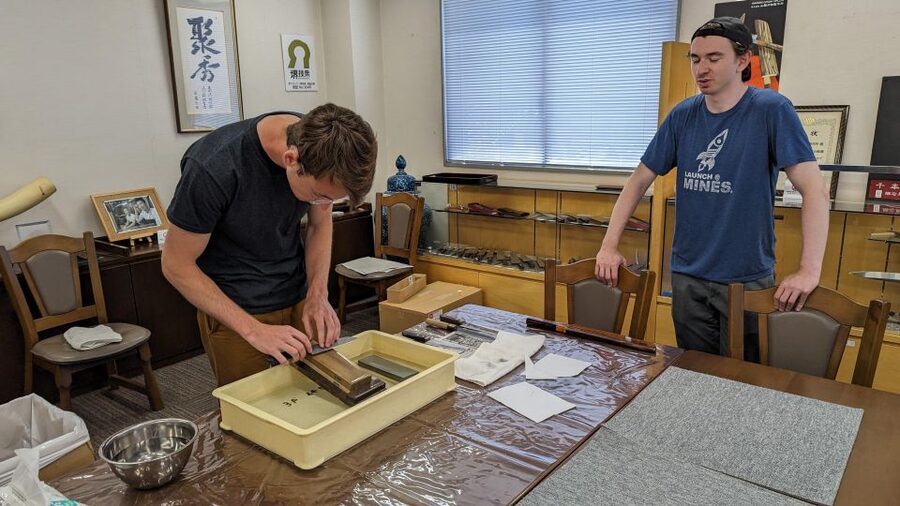
The tour also includes a traditional knife-sharpening lesson. This is one of the strongest reasons to choose the knife-maker route. You do not just hear that Japanese knives need careful care. You learn a traditional technique under guidance, which can help you maintain a knife at home.
Do keep expectations realistic. The tour is focused on Japanese kitchen knives, not hunting knives, pocket knives, or every kind of blade. If you are shopping for a cooking knife, the match is excellent. If you are a general knife collector, check the focus before booking.
De Sakai forge: the blacksmith option
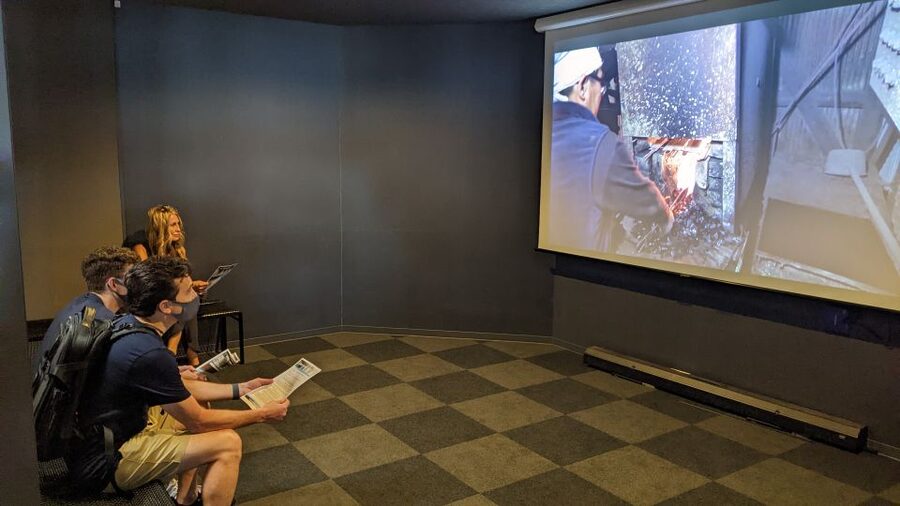
Wednesdays normally bring the group to the De Sakai blacksmith forge. This is a different experience from Yamawaki Hamono. Instead of focusing mainly on finishing and sharpening, you see the hot-work stage and learn how the blade begins.
The blacksmith workshop is small and traditional. Eric Chevallier explains the forging process and techniques directly, with instruction available in English and French according to the tour information. One of the most memorable parts is the chance to try hammering glowing steel under supervision.
That hands-on moment gives the blacksmith day a clear edge for anyone who wants to do more than observe. You can see how heat, force, timing, and judgment shape the material. The work is not presented as a casual craft activity with a finished knife produced during the tour. It is an introduction to a demanding trade, with the artisan controlling the process.
The blacksmith visit is usually the pricier of the two choices when compared with the regular knife-maker route. I can see why: access to a private forge and direct time with the artisan offer something that a standard factory visit cannot. If blacksmithing is your main reason for coming to Sakai, the extra cost can make sense.
There is an important schedule warning. From March 6 through April 6, 2026, the blacksmith option is the only available workshop. Tuesdays and Wednesdays during that period are offered at the knife-maker rate, which creates a useful discount. Check the calendar carefully, since the normal weekday pattern does not apply during those dates.
What the walking and timing feel like
The route includes several short walks: about 15 minutes from the station to the sweet shop, five minutes to the museum, five minutes to the knife-related site, and about 15 minutes back toward the station. The total duration is listed as 210 minutes.
That is not a punishing route, but it is still a walking tour. Wear comfortable shoes, especially if you plan to spend the rest of the day exploring Osaka. The route is wheelchair accessible, though workshop layouts can vary, so ask the operator about the specific date and option if you need detailed access information.
The tour returns to Sakai Station, with two listed drop-off location options both identified as Sakai Station. You finish close to transport and can continue sightseeing or stop for lunch.
Group size matters here. Private and small-group options are available, which is helpful inside a compact workshop. A smaller group also makes it easier to see the work and ask about sharpening, forging, or knife care.
Solo booking is allowed, but the tour needs at least two participants to operate. If only one person books, the session may be canceled, with rescheduling or a full refund offered. That rule is worth noting if you are traveling alone and have a tight schedule.
English, French, and the guides
All guides can speak English. French-speaking guides may be available, but French is not guaranteed on a shared tour. Contact the operator before booking if French instruction is essential.
Several guides have received strong praise for their style. Remy has led guests through Sakai’s history and the knife process with energy, while Scott has been noted for keeping a mixed group involved and helping with local food and shopping. Jean-Yves has also been praised for explaining the craft with enthusiasm.
The blacksmith visit may include detailed instruction from Eric Chevallier himself. That direct contact is a major part of the appeal. You are not simply watching a translated presentation from a distance.
Bring a passport or other identification. It is listed as required, even though the tour itself stays within Sakai and does not cross a border.
Who should book this Sakai experience?
I would book this tour if you cook regularly, collect Japanese knives, enjoy traditional trades, or want a smaller Osaka-area experience with real local contact. It also works well for families with older children and teenagers who can manage the walking and follow workshop safety instructions.
The blacksmith day is best for someone drawn to fire, tools, and physical craft. The Yamawaki Hamono day is better for a cook who wants to compare knives, learn sharpening, and possibly order a finished blade.
I would skip it if you want a broad tour of Osaka’s famous sights, a food-focused outing, or a short shopping stop. The route is built around one subject, and the visit makes the most sense when you care about how knives are produced.
Book with the weekday schedule in mind. Choose Tuesday or Thursday for Yamawaki Hamono in normal weeks, Wednesday for the blacksmith, and check the special March 6 to April 6, 2026 schedule before paying. If you want French, confirm it in advance. Also remember the two-person operating rule.
For the right visitor, the $64 price buys more than a souvenir hunt. You get a local walk, a sweet, museum context, access to working craftspeople, and a skill you can use after returning home. I would choose the blacksmith day for the rare hands-on forging moment, or the knife-maker day if buying and caring for a Japanese kitchen knife is your priority.
FAQ
Where does the tour begin?
The tour begins at Nankai Sakai Station south of Osaka. The precise meeting point may vary according to the option you book.
How long does the experience last?
The tour lasts 210 minutes, or about three and a half hours.
Which workshop is visited on Tuesdays and Thursdays?
On normal weeks, Tuesdays and Thursdays are for the Yamawaki Hamono knife-maker visit.
Which workshop is visited on Wednesdays?
On normal weeks, Wednesdays are for the De Sakai blacksmith forge.
What happens from March 6 through April 6, 2026?
During that period, only the blacksmith option is available. Tuesdays and Wednesdays are offered at the knife-maker rate.
Is a knife included in the price?
No. You can order a customizable knife as an optional purchase. Shopping and souvenirs are not included in the tour price.
Is knife sharpening included?
Yes. The tour includes a lesson in traditional Japanese knife-sharpening technique.
Can I take the tour in French?
All guides speak English, and some also speak French. French is not guaranteed on a shared tour, so contact the operator before booking if you need a French-speaking guide.
Just added around Osaka
- Exclusive Sushi Making Experience with a Master Chef – Osaka Area★ 5.0 · 25 reviews
- Private Home-Style Cooking Class in Osaka with Local Mom Yoshiko★ 5.0 · 46 reviews
- Hidden Osaka – Yukaku Red Light Tour & Culinary Adventure★ 4.8 · 96 reviews
- Osaka: Walking Tour and Top Highlights★ 4.8 · 104 reviews
- Osaka: Private Ceramic Painting Workshop★ 5.0 · 13 reviews
- Pickleball in Osaka, Kobe & Kyoto with Locals!★ 4.7 · 80 reviews
- Eat Like a Local in Osaka – Private Custom Street Food Tour★ 4.3 · 33 reviews
- Osaka:SUMO BEATS SHOWCASE: Taiko Drum and Wagyu burger!★ 4.2 · 37 reviews
Traditional Crafts, compared.
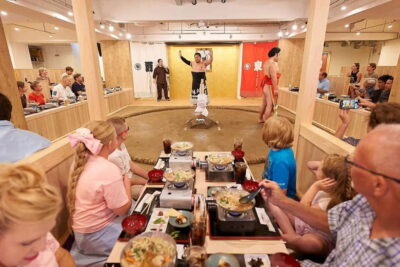
Tokyo Sumo Experience: Chanko & Mochi with a Former Pro
Our verdict →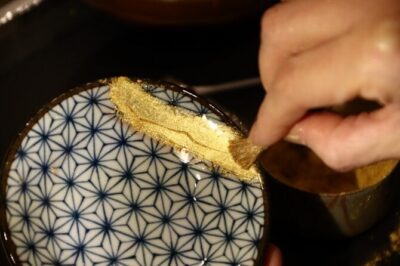
Kintsugi Experience: Art of Golden Joinery in Tokyo
Our verdict →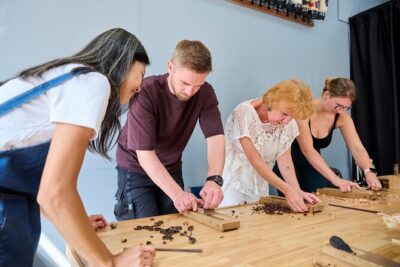

Matcha Making Experience with Mochi Sweets in Asakusa
Our verdict →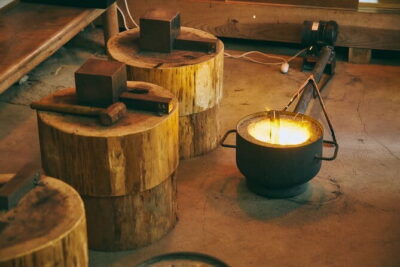
Authentic knife making experience at a blacksmith in Kyoto
Our verdict →
Roketsu dyeing experience: M course Roketsu Dyeing Experience
Our verdict →Browse the lists this tour appears in