
Reviewed · TRADITIONAL CRAFTS
Roketsu dyeing experience: M course Roketsu Dyeing Experience
The most appealing part of this Kyoto craft class is that you make the design and do the dyeing yourself. This is not a quick paint-on souvenir stop. You practice first, apply melted wax to fabric, and watch a traditional dye process turn your work into something you can wear or hang at home.
I like the choice of finished items, from T-shirts and tote bags to banners and wall hangings. I also like the patient help from the owner and his mother, Yoko, who guide beginners without taking over. The main consideration is communication: English is limited, so the hands-on demonstrations do much of the explaining.
Key points to know before booking
- Traditional wax-resist work: You draw with melted wax before the fabric is dyed, creating the pattern that remains visible.
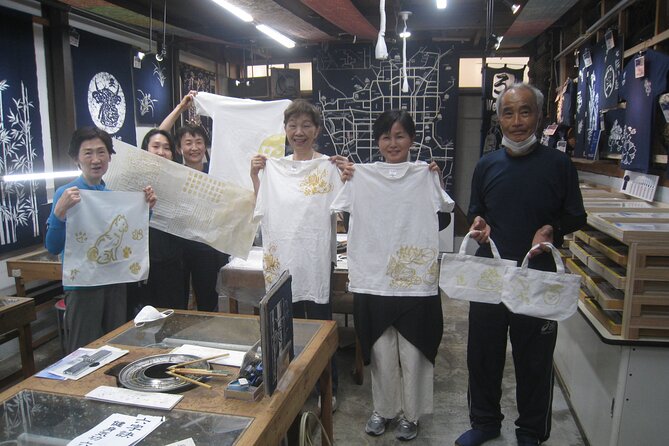
- Choose your own project: T-shirts, tote bags, hanging pieces, banners, and other fabric options are available.
- Hundreds of design choices: Use the studio’s stencils, combine motifs, or bring your own sketch.
- Same-day souvenir: Your finished item is ready to take home at the end of the session.
- Plan extra time for detail: The listed visit takes about 90 to 120 minutes, but intricate designs have taken some people around three hours.
- A small family-run studio: The owner and his mother, Yoko, offer close, personal help in a relaxed setting.
Why this craft class makes a smart Kyoto break
Kyoto sightseeing can become a steady march between temples, shrines, stations, and shopping streets. This activity gives you a reason to sit down and use your hands for a while. You still experience a traditional Japanese art, but you are not simply watching someone else perform it.
The appeal is practical as well as cultural. You leave with a personal souvenir rather than another mass-produced item from a shop shelf. A shirt shows the memory every time you wear it. A banner or hanging can become a small piece of Kyoto on your wall.
At about $25.77 per person, the price is strong for a two-hour activity that includes instruction and a finished piece. The final value depends on the item you select and how much time you spend on the design, but the cost compares well with many short craft classes that provide only the lesson and no useful object to take home.
This is also a good change of pace for a family. One family group used the time to make shirts and a banner, and even teenagers stayed off their phones while working. The quiet, shared task gives everyone something to discuss, without requiring artistic confidence.
More Craft Workshops in Kyoto
- Authentic knife making experience at a blacksmith in Kyoto
★ 4.8 · 350 reviews - Kyoto Michelin Ramen Workshop or Painting Ramen Essentials
★ 4.9 · 100 reviews - Kyoto: Ramen Bowl Painting and Michelin Cooking Class
★ 4.9 · 96 reviews
Arriving at Roketsu73 in western Kyoto
The meeting point is Roketsu73 at Nishikyogoku Umazukacho in Kyoto’s Ukyo Ward. It is outside the main sightseeing areas, which matters when you plan your day. You will not be able to add this casually between two central Kyoto attractions without allowing for transportation time.
The setting is part of the experience. This is a working dye studio rather than a large attraction built for crowds. The shop has a personal, family-run feel, and the space itself gives you a look at the tools and working methods behind the craft.
The activity begins and ends at the same location. It is near public transportation, and the experience can accept service animals. The maximum group size is 30, though the family-style guidance is most useful when you take your time and ask for help at your worktable.
Book ahead if you have a fixed Kyoto schedule. Confirmation is sent within 48 hours, subject to availability, and the activity had been booked more than 10 times in the previous week. That does not guarantee a full class, but it is a useful sign that advance planning is sensible.
Choosing a T-shirt, tote, banner, or hanging
You begin by choosing what you want to dye. The options described include T-shirts, tote bags, decorative banners, hangings, and wall pieces. This choice changes the character of the finished souvenir.
A T-shirt is the most practical pick. It becomes a wearable reminder of Kyoto, though you will want to think about how large and bold your design should be. A tote bag offers a smaller working area and makes an easy gift or daily-use item.
A banner or hanging gives you more room for an elaborate composition. It also lets you focus on the artwork instead of worrying about clothing size or fit. If your goal is a decorative piece for your home, this is likely the better choice.
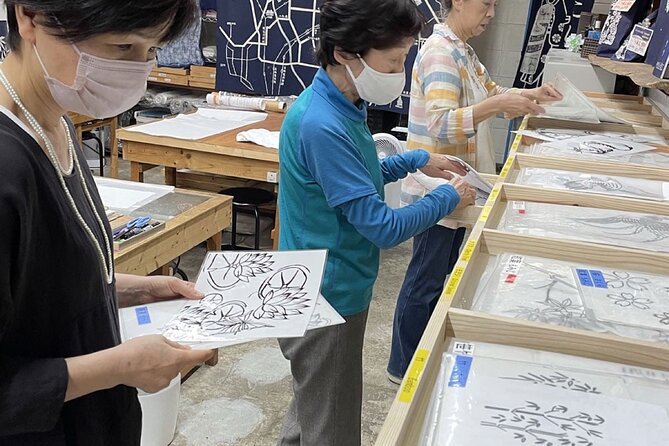
The studio has a large selection of stencil designs. You can select one pattern or combine several motifs into your own arrangement. You can also draw freehand, and you may bring an original sketch if you already have a design in mind.
I would not wait until the class starts to decide whether you want a simple or intricate piece. A detailed pattern may look tempting, but every extra element adds drawing and wax work. The stated duration is 90 to 120 minutes, while more complicated projects have taken closer to three hours.
Drawing the design before the dyeing begins
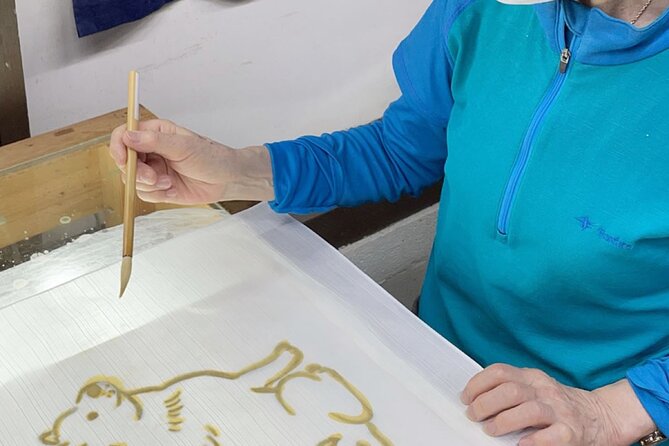
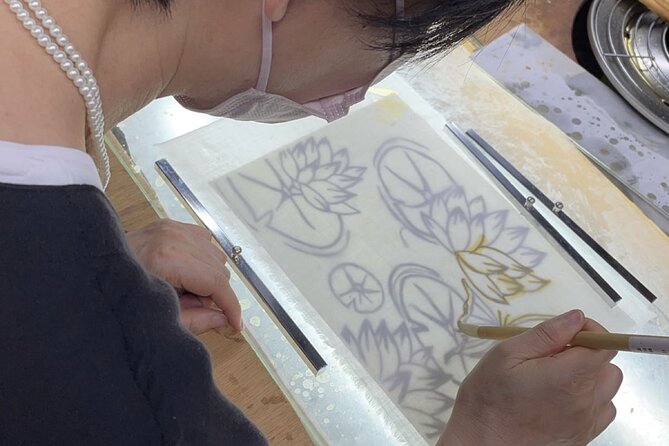
The first creative decision is your pattern. You can use the prepared stencils, combine designs, or create something from your own sketch. This gives you far more control than a class where everyone follows one printed template.
The studio provides a small practice step before you begin on the final fabric. That is valuable because the wax technique has its own feel. You get a chance to understand the movement and pressure before committing to your shirt, bag, or hanging.
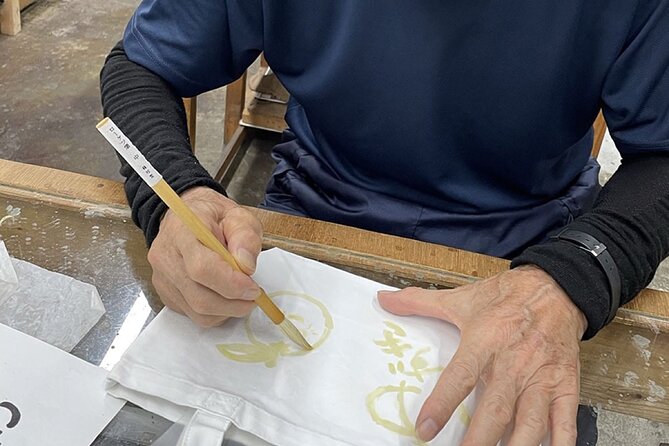
You then apply melted wax to the fabric. The wax acts as a resist, keeping dye away from the covered areas. When the cloth is dyed, the pattern appears through the contrast between the protected sections and the colored fabric.
This is where the class becomes genuinely hands-on. The instructors handle the parts that need their experience, but you are involved in the key creative stages. The owner and Yoko guide you through the process and help correct problems when needed.
You do not need strong drawing skills. The stencil collection gives beginners a safe starting point, and the staff can help you produce a pleasing result. At the same time, experienced makers can work freehand or combine motifs for something less standard.
One practical point: the limited English may make verbal explanations difficult. You should expect short instructions, visual demonstrations, and plenty of showing rather than long technical explanations. The process is still accessible because each stage is demonstrated directly, but it helps to watch closely and ask for a repeat if you are unsure.
Same trip, a completely different kind of day:
- PERFECT KYOTO 1-Day Bus Tour
★ 5.0 · 13,518 reviews - Kyoto: Fushimi Inari, Kinkakuji, Bamboo Grove 1 Day Bus Tour
★ 4.8 · 4,316 reviews - Kyoto: Tea Ceremony in a Traditional Tea House in Kiyomizu
★ 4.9 · 3,519 reviews - Kyoto Geisha Walking Tour: Gion District & Hidden Gems
★ 4.7 · 3,273 reviews
Watching the traditional bucket dyeing process
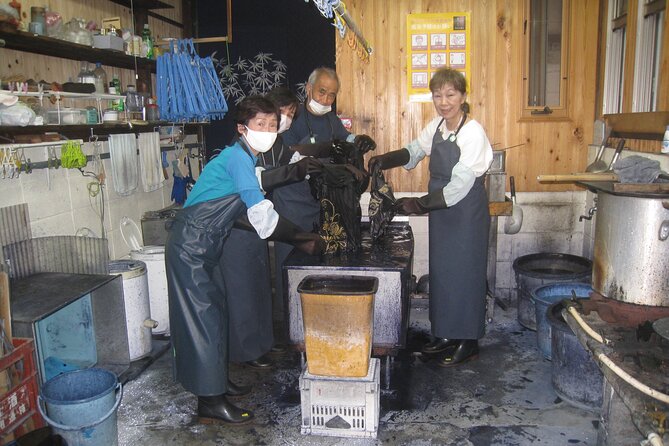
The workshop is built around full bucket dyeing, not just surface decoration. Once the wax design is in place, the fabric is dyed as part of the traditional process. The result depends on how the wax and dye interact, so the final pattern can have small differences from your original plan.
That uncertainty is part of the charm, but it is also worth understanding before you start. You are making a real textile, not filling in a perfect digital template. The same rough sketch can produce different results under different conditions.
The studio team helps turn the design into a finished object, while you take part wherever possible. This balance works well for beginners. You get the satisfaction of making the work yourself without being left alone with a technique you have never tried.
The finished colors and pattern are revealed only after the dyeing stages are complete. That reveal gives the class a satisfying payoff. You may begin with a plain piece of fabric and a set of wax lines, then finish with an object that looks far more polished than your first attempt suggested.
The process is also calmer than many scheduled Kyoto activities. You are not moving from one stop to the next or trying to hear a guide over a crowd. The studio allows time for careful work, which is especially helpful if you want to draw freehand.
Allowing 90 minutes, or closer to three hours
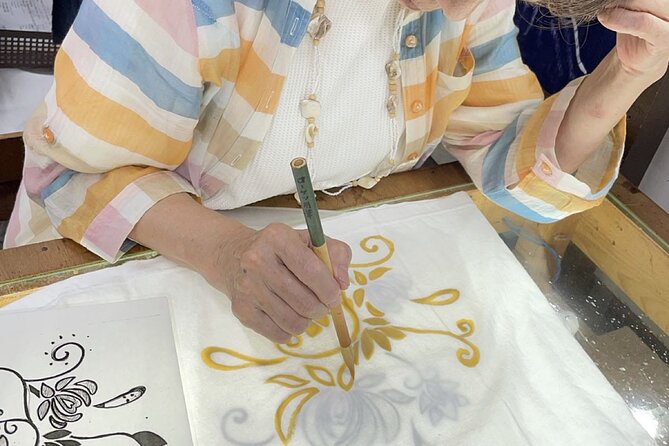
The standard visit takes about 90 to 120 minutes. That should suit a straightforward stencil design and a traveler who wants a finished souvenir without making the class the main event of the day.
You should add more time if you want to combine several motifs, draw a complex image, or work slowly. Some detailed projects have taken around three hours, and the instructors did not rush the work. People finishing simpler pieces may leave earlier, while those with ambitious designs can continue longer.
This makes the experience flexible, but it creates a planning issue. Do not place it in a narrow gap before a train, meal reservation, or timed attraction. A two-hour booking can stretch when your family chooses complicated designs or when you need extra help.
The longer session can be a benefit. A quiet three-hour craft period may be exactly what you need after several days of fast-paced sightseeing. If you want only a quick activity, choose a simple stencil and a smaller item.
The family-run guidance from the owner and Yoko
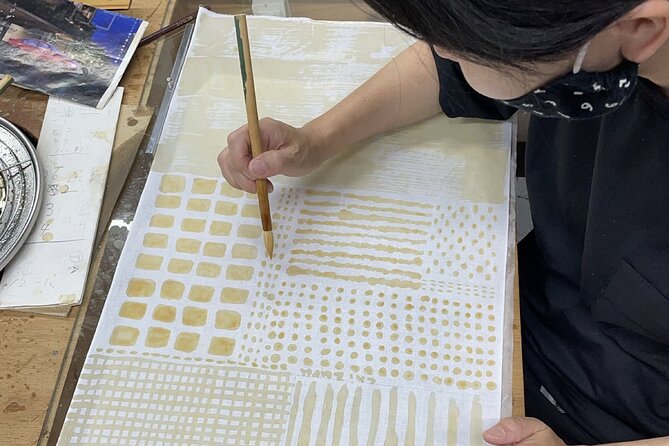
The strongest part of the instruction is the personal attention. The owner and his mother, Yoko, help with the stages of drawing, wax application, and dyeing. Their approach is patient rather than hurried, which suits people who are nervous about making a mistake.
Yoko is described as an artist who comes in to support the work, and the owner guides participants through the technique. You get help when you need it, but you retain creative control over the design.
The limited English is the one clear weakness. Explanations may sometimes feel incomplete, and the language difference can make the first steps confusing. Still, the class is built around action, and the instructors show you what to do. Basic craft ability is not required.
If you want a formal, English-heavy lesson on Japanese textile history, this may not be the best fit. If you are comfortable learning through demonstration and doing, the language issue is much less serious.
Who will enjoy this Kyoto activity most
I would recommend Roketsu73 to:
- Families looking for a shared activity away from temples and shopping
- Solo visitors who want a calm, structured craft session
- Couples seeking a personal souvenir made together
- Anyone interested in Japanese textile arts
- Beginners who like creative work but do not consider themselves artistic
- Visitors who want a useful object rather than a standard souvenir
It also suits people who need a rest from walking. You sit for much of the creative work, though the process still requires focus and patience.
You may want to skip it if you dislike hands-on activities, need a guaranteed short finish, or want detailed spoken instruction in English. The class rewards curiosity and a willingness to follow visual demonstrations.
Price, timing, and cancellation details
At $25.77 per person, the class offers good value because you receive an activity, instruction, and a finished fabric item. The experience is not simply a demonstration, and your own design gives the souvenir added meaning.
Mobile tickets make arrival simple. Confirmation is sent within 48 hours, subject to availability. The class ends back at the meeting point, with no separate return transfer to arrange.
Free cancellation is available up to 24 hours before the local start time for a full refund. Cancellations or changes made less than 24 hours before the start are not refunded or accepted. The activity requires suitable weather, and if poor weather causes a cancellation, you are offered another date or a full refund.
Should you book Roketsu73?
Book this experience if you want a slower Kyoto activity with a strong personal payoff. The best reason to go is not just that you learn about Roketsu dyeing. It is that you create something with your own hands, guided by a small family team, and take it home the same day.
Choose a simple stencil if your schedule is tight. Pick a banner or freehand design if you have several hours and want the project itself to be a main part of your day. The limited English calls for patience, but the demonstrations and practical guidance make the workshop approachable.
For the price, the family setting, and the chance to make a one-of-a-kind Kyoto souvenir, I would book it, especially for families, solo visitors, and anyone ready to trade another sightseeing stop for an hour or two of quiet craft.
FAQ
Where does the Roketsu dyeing experience take place?
It takes place at Roketsu73, Nishikyogoku Umazukacho, Ukyo Ward, Kyoto, Japan. The activity ends at the same meeting point.
How long does the workshop take?
The usual duration is about 90 to 120 minutes. Detailed designs can take around three hours.
What can I dye?
Available options include T-shirts, tote bags, decorative banners, hangings, and wall pieces.
Can I choose my own design?
Yes. You can select from many stencil designs, combine motifs, draw freehand, or bring your own sketch.
Do I need artistic experience?
No. The instructors guide you through each stage, and the studio provides stencil options and a practice step. The activity is suitable for beginners.
Can I take my finished item home the same day?
Yes. The finished work can be taken home on the day of the activity.
Is the workshop conducted in English?
English is limited, so some explanations may be difficult to follow verbally. The instructors demonstrate the steps directly and provide hands-on guidance.
What is the cancellation policy?
You can cancel up to 24 hours before the local start time for a full refund. Cancellations or changes made less than 24 hours before the start are not accepted or refunded. If poor weather causes the activity to be canceled, you can choose another date or receive a full refund.
Just added around Kyoto
- Sekka Cotton Furoshiki Class★ 5.0 · 19 reviews
- Secret Eastern Kyoto Biking Adventure★ 5.0 · 44 reviews
- Kyoto Sword Experience – includes Museum Ticket/Ninja Experience★ 4.5 · 149 reviews
- Scenic Green Tea Fields of Hidden Kyoto & Local Tea Exp (Private)★ 5.0 · 32 reviews
- Private Sake Tasting in Central Kyoto with Sake Sommelier★ 5.0 · 32 reviews
- Samurai School in Kyoto: Samurai for a Day★ 5.0 · 202 reviews
- SHIRAKAWA Japanese Culture Experiences with private English staff★ 5.0 · 16 reviews
- A Privately Guided Photoshoot in Beautiful Kyoto by a Pro★ 5.0 · 18 reviews
Traditional Crafts, compared.
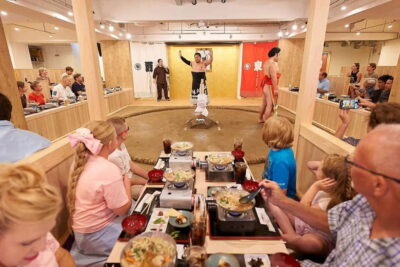
Tokyo Sumo Experience: Chanko & Mochi with a Former Pro
Our verdict →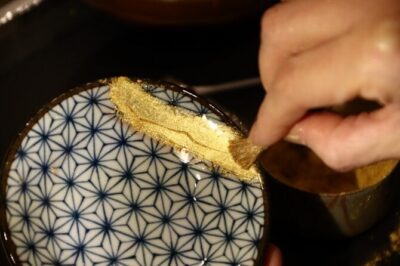
Kintsugi Experience: Art of Golden Joinery in Tokyo
Our verdict →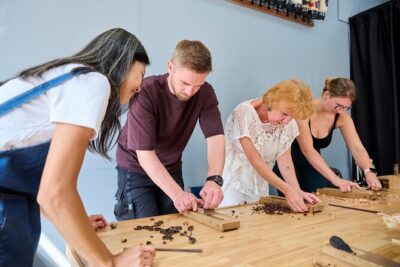

Matcha Making Experience with Mochi Sweets in Asakusa
Our verdict →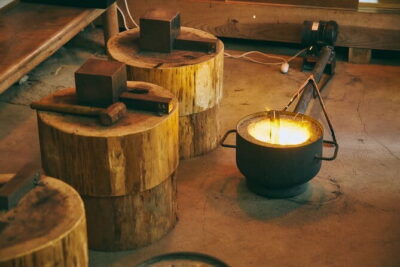
Authentic knife making experience at a blacksmith in Kyoto
Our verdict →

Browse the lists this tour appears in