
Reviewed · CASTLE TOURS
Tokyo: Edo Castle Ruins & Imperial Palace East Garden Tour
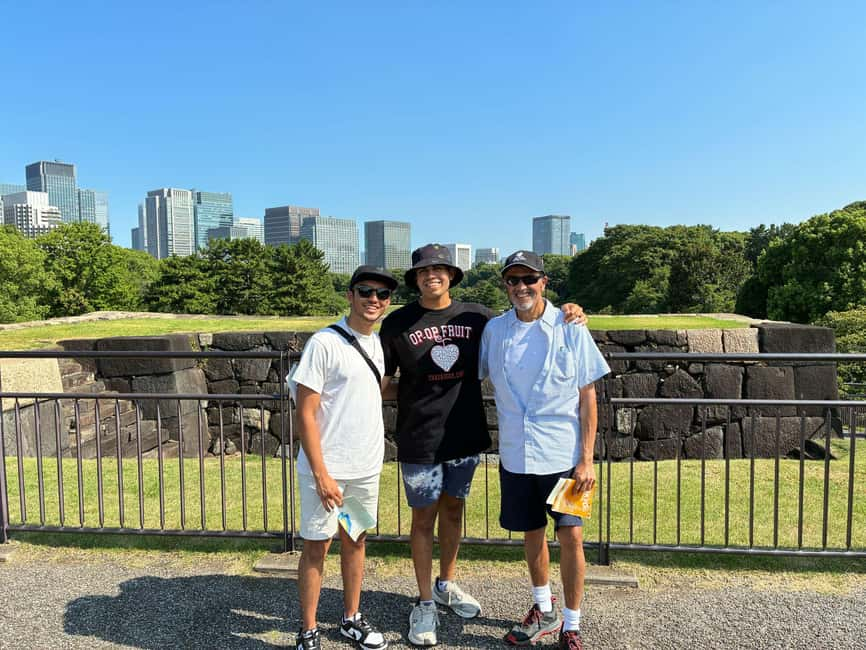
Tokyo’s Imperial Palace East Garden is not just a pleasant green space. Beneath the clipped trees and stone walls sit the remains of Edo Castle, once the center of shogun power. I like that this two-hour walking tour connects the gardens to Japan’s political history, rather than treating the palace grounds as a photo stop. I also like the route’s mix of big sights, including Otemon Gate and the Tenshu-dai, with quieter places such as Ninomaru Garden and its koi pond.
The main catch is simple: you do not enter the Imperial Palace buildings or inner grounds. This is a tour of the East Gardens and former castle site. The quality also depends heavily on your guide. Mari and Isao have been singled out for warm, patient explanations, while one guest found the commentary too thin for the price.
Key points at a glance
- Otemon Gate gives the tour a grand beginning: You enter through the former castle’s main gate and learn how access was controlled.
- The route follows samurai security points: Ote San-no-mon, Doshin Bansho, and Hyakunin Bansho reveal how guards protected the castle.
- The Tenshu-dai offers the best historic viewpoint: You stand where Edo Castle’s great keep once dominated the compound.
- Ninomaru Garden slows the pace: Expect a calm finish among pond, trees, and koi fish.
- The guide makes the difference: English-speaking guides such as Mari and Isao have been praised for answering questions and adding historical detail.
- The $37 price is fair when the guiding is strong: It is less compelling if you want only a walk through the park.
Why Edo Castle matters in modern Tokyo
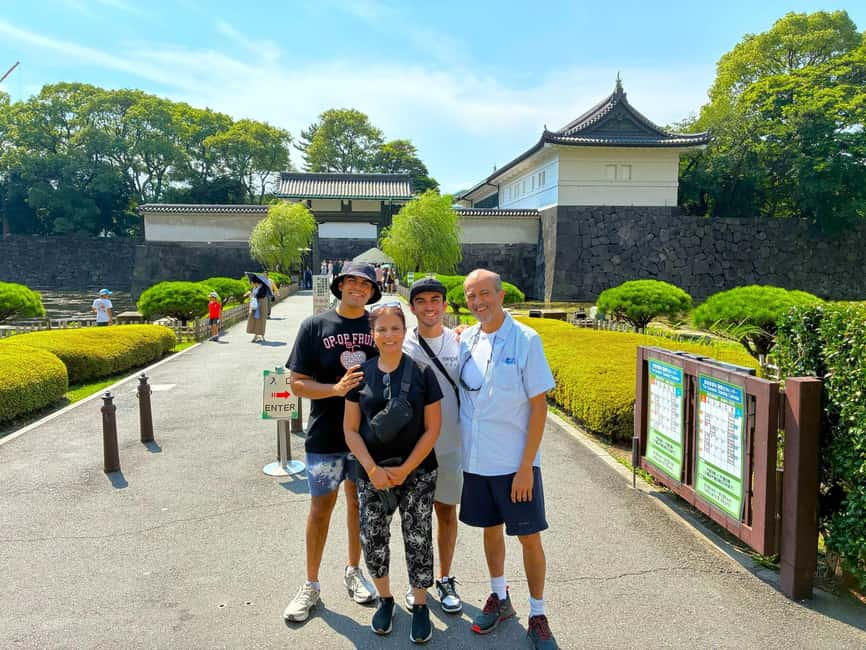
The Imperial Palace can feel mysterious because so much of it is closed. That is also what makes the East Gardens useful. They give you a public view of the former Edo Castle grounds, where the Tokugawa shoguns ruled Japan for centuries before the imperial court moved into the center of Tokyo.
I like this setting for a first look at Japan’s transition from shogun rule to the modern imperial state. You are not simply walking through a garden. You are tracing the old power center of Edo, the city that became Tokyo.
The tour focuses on visible remains, open gardens, moats, gates, guardhouses, and castle foundations. Your guide fills in what no longer survives. That matters here because a castle that has mostly disappeared can otherwise be hard to picture.
The route is designed for about two hours and returns to the Wadakura Free Rest Area. It is a compact introduction, not a full study of Japanese history. You should expect a clear overview and time for questions rather than a long lecture at every stop.
More Castle Tours in Tokyo
- Tokyo Castle & Imperial PalaceーShogun Walking Tour
★ 4.7 · 1,068 reviews - Tokyo Castle & Imperial PalaceーShogun Walking Tour
★ 5.0 · 724 reviews - Imperial Palace East Garden and Edo Castle Walking Tour in Tokyo
★ 5.0 · 510 reviews
Meeting at Wadakura Fountain
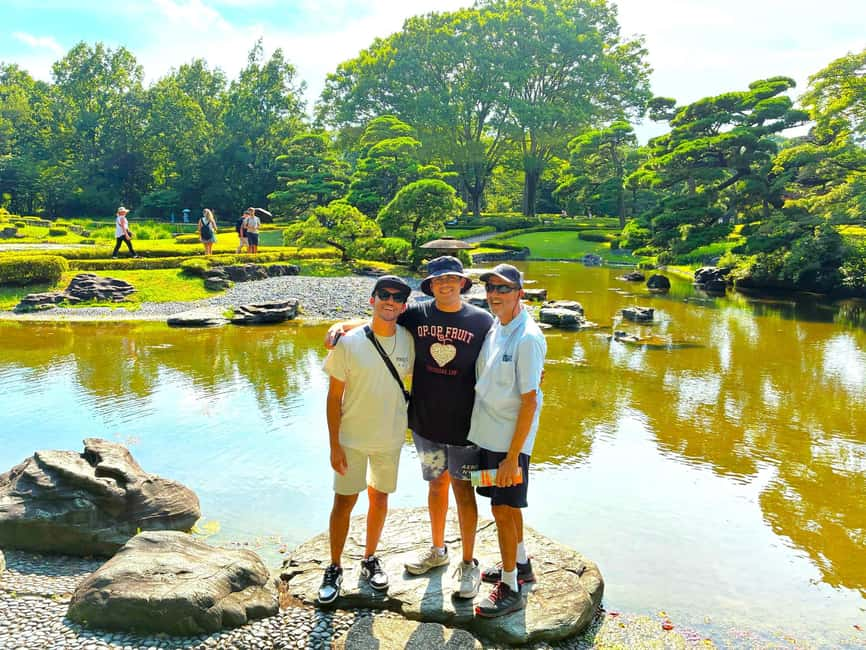
The meeting point is outside the Wadakura Free Rest Area, in front of the entrance. Look for the guide holding a yellow sign. This is worth noting because the tour does not include hotel pickup, and arriving at the wrong side of the palace area could cost you valuable time.
The first stop is Wadakura Fountain National Park. The guide explains the fountain’s connection to a royal wedding, giving you a modern imperial detail before the route turns toward the older castle grounds. It is a useful opening because it links the present-day palace area with the imperial family while keeping the focus on public space.
You will also spend a few minutes at the Wadakura Moat. The moat helps you see the castle as a fortified compound rather than a collection of isolated ruins. Water, gates, walls, and controlled entry were all part of the same defensive system.
The fountain stop is scheduled for about ten minutes, followed by roughly five minutes at the moat. These are short introductions, so I would pay close attention to the guide’s explanation rather than expect time for a long rest or extended photography.
Otemon Gate and the samurai checkpoints
Otemon Gate is one of the strongest visual moments early in the walk. Its scale helps you imagine the importance of entering the shogun’s castle. This was not an ordinary city gate. It marked a controlled passage into a center of political and military authority.
From here, the tour moves to the Ote San-no-mon Gate Ruins. The remains are less dramatic than a complete castle gate, but they reward a guide’s explanation. Ruins often need context, and this is one of the places where a good guide can turn stones and foundations into a story about movement, rank, and defense.
The Doshin Bansho and Hyakunin Bansho guardhouses add more detail. These stops show that castle protection depended on layers of watch points and personnel, not just thick walls. The names may sound technical, but the basic idea is easy to grasp: people approaching the inner castle were observed and controlled at several stages.
You will spend about ten minutes at Otemon Gate, another ten at the Ote San-no-mon ruins, and ten at Hyakunin Bansho. The schedule is brisk. If you enjoy military history, ask questions as you go. The guide can make these smaller stops more meaningful, especially since there are fewer intact structures than at a European castle.
Walking through the Edo Castle ruins
The main Edo Castle ruins section lasts about fifteen minutes. The castle itself is no longer standing in its original form, so you should adjust your expectations. This is not a room-by-room castle visit. It is a walk through the former compound, using surviving stonework, open ground, and the shape of the site to explain what once occupied it.
That absence can be frustrating if you want grand interiors. It can also make the visit more thoughtful. You have to use the guide’s words and the remains on the ground to picture the castle at its height.
The tour then reaches the site of Edo Castle’s Honmaru, the main central area. This was the heart of the castle compound. The guide explains its place in the castle plan and its connection to the shogun’s authority.
A reconstruction model of the Edo Castle keep helps solve the biggest problem with the ruins: scale. The original keep is gone, but a model lets you see how the structure would have dominated the compound. This is one of the most useful stops for anyone who finds castle foundations hard to read.
The model is not the same as entering a rebuilt keep. It is an aid to imagination, not a substitute for a surviving building. Still, paired with the Tenshu-dai, it gives you both a visual reference and the actual historic location.
More Garden Tours in Tokyo
- Tokyo: Imperial Palace East Gardens Walking Tour
★ 4.8 · 353 reviews - Tokyo Castle, Imperial Palace, Shogun & Garden Walking Tour
★ 5.0 · 211 reviews - Tokyo: Edo Castle & East Garden of the Imperial Palace Tour
★ 4.7 · 112 reviews - Tokyo: Tsukiji Market and Hama-rikyu Gardens Guided Tour
★ 4.8 · 73 reviews
The Tenshu-dai and views across the grounds
At the Tenshu-dai, you reach the site of Edo Castle’s main keep. The tour allows about ten minutes here, enough to take in the surrounding area and understand why the keep mattered.
The view is less about a single postcard image and more about orientation. From this high point, you can see how the former castle grounds relate to the modern city around them. The site gives you a sense of the castle’s central position and the amount of space once controlled from here.
Bring a camera, but do not expect the view to tell the whole story without explanation. The guide’s account of the keep and its role is what turns the viewpoint into a historical stop. Flash photography is not allowed, so use normal outdoor photography instead.
The route also includes a stop marked by the prefectural tree display. It is a quieter pause than the main castle points. Treat it as part of the garden experience rather than a major historic monument. The schedule allows about ten minutes, which gives you a chance to look around and reset before the final garden section.
Suwa Tea House and the East Gardens
Suwa Tea House is included as another short stop. The information provided for the tour does not promise an interior visit, so think of it as a place to see along the route and hear about from the guide rather than a formal tea ceremony.
The Imperial Palace East Gardens then receive about fifteen minutes of guided attention. This is where the tour shifts from defenses and power to the calmer public face of the palace grounds.
The gardens are valuable because they preserve the setting of the former castle while giving you room to slow down. You will see carefully maintained plantings, open paths, historic remnants, and spaces connected to the palace area. The tour does not claim access to the palace buildings, and the imperial family still lives there, so the East Gardens are the proper focus of this experience.
I would book this tour if you want context while walking. If you prefer to move at your own speed and stop whenever you like, the same grounds can be explored independently. The guide’s value lies in explaining what the walls, gates, and garden spaces mean.
Ninomaru Garden and the koi pond
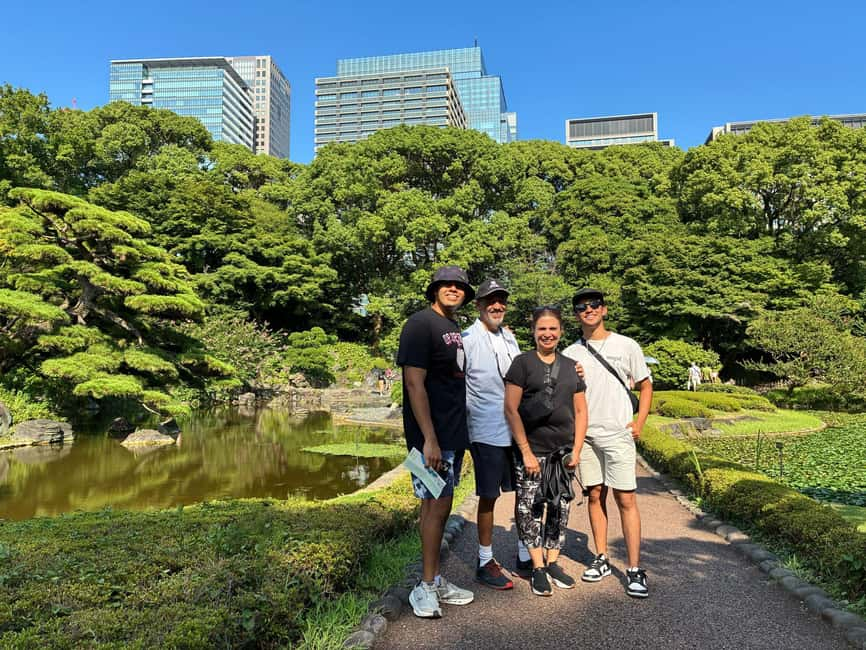
Ninomaru Garden is the gentlest part of the route. The tour allows about fifteen minutes here, giving you more time than at several of the gate and guardhouse stops.
The pond and koi fish provide a welcome change after the castle defenses. You can pause, take photos, and enjoy the garden without needing to treat every moment as a history lesson. This is also a good place to ask final questions, especially if the earlier explanations have raised your interest in shogun or imperial history.
The garden will appeal to you if you like a balance of culture and quiet scenery. It may feel less satisfying if your main goal is to see grand architecture, since the tour ends in a landscaped public garden rather than inside a palace or reconstructed castle.
After Ninomaru Garden, you return to the Wadakura Free Rest Area. The listed stop times add up to a fairly full two hours, so expect a steady walk with limited idle time. Wear comfortable shoes and carry water.
Is $37 a fair price?
At $37 per person, the tour sits in a reasonable range for a two-hour guided walk in central Tokyo. Admission to Edo Castle and the Imperial Palace grounds is included, along with a live English-speaking guide and a commemorative photo opportunity.
The value depends on how much history you want. If you already know the castle layout and can read Japanese or English information panels comfortably, you may find it easy to explore on your own. One person felt exactly that, describing the experience as a simple park walk that could be done independently.
I see the price differently when the guide is engaged. Mari has been praised for teaching a great deal, and Isao for being friendly, patient, and willing to answer questions. Another guide was praised for taking extra time to explain the palace and Japanese history. Those details matter because the ruins need interpretation.
The tour is available as a private or small-group experience. A smaller group should make it easier to ask questions and hear the guide, though the exact group size is not specified. If you are comparing this with a self-guided visit, the extra cost is mainly paying for orientation, historical explanation, and a set route.
The cancellation policy is flexible: you can cancel up to 24 hours in advance for a full refund, and you can reserve now and pay later. That is useful when your Tokyo schedule is still changing.
Who should book this walk?
I would recommend it to first-time visitors who want a concise introduction to Edo Castle and the Imperial Palace East Gardens. It also suits anyone who enjoys history but does not want to spend half a day in a museum.
You are likely to get the most from it if you:
- Want English explanations while walking
- Care about shogun history, castle defenses, and the shift toward imperial rule
- Prefer a planned route through a large historic area
- Enjoy combining stone walls and gates with gardens and koi ponds
- Are comfortable walking for two hours
This is not a good choice for anyone expecting to enter the Imperial Palace buildings. It is also not suitable for children under six, people with mobility impairments, or wheelchair users. Smoking and flash photography are not allowed.
The walk works best with comfortable shoes, water, and a camera. Since food and drinks are not included, plan those separately before or after the tour.
Should you book the Edo Castle tour?
Book it if you want the East Gardens to make sense, not just look pretty. Otemon Gate, the guardhouses, Honmaru, the keep model, Tenshu-dai, and Ninomaru Garden form a useful sequence from power and defense to gardens and public space.
Skip it if you mainly want independent wandering or palace interiors. At $37, the tour earns its price when your guide offers the kind of patient, detailed explanation associated with Mari, Isao, and the strongest guide experiences. If the commentary is brief, the route can feel like a pleasant park walk with a few ruins.
For most history-minded visitors, I would choose the guided option, especially on a first visit. Just arrive at the Wadakura Free Rest Area, find the yellow sign, and remember that the real subject is Edo Castle and its surviving grounds, not an inside look at the present Imperial Palace.
FAQ
Where does the tour meet?
Meet outside the Wadakura Free Rest Area, in front of the entrance. The guide will be holding a yellow sign.
How long does the tour last?
The tour lasts two hours and returns to the Wadakura Free Rest Area.
Is the Imperial Palace building open during the tour?
No. The tour does not enter the inner grounds or the Imperial Palace buildings. It focuses on the East Gardens and the historic Edo Castle ruins.
Is admission included?
Yes. Admission to Edo Castle and the Imperial Palace grounds is included. Food, drinks, hotel pickup, hotel drop-off, and personal expenses are not included.
What language is the tour in?
The live tour guide provides the tour in English.
Is the tour suitable for wheelchair users?
No. The activity is not suitable for wheelchair users, people with mobility impairments, or children under six years old.
More Historical Tours in Tokyo
- Tokyo: Imperial Palace and Shogun Historical Walking Tour
★ 5.0 · 2,251 reviews - Tokyo: Imperial Palace Japanese History Walking Tour
★ 4.9 · 987 reviews - Tokyo: Imperial Palace and Shogun Walking Tour
★ 4.9 · 935 reviews - Yanaka Walking Tour: Historic and Traditional District of Tokyo
★ 5.0 · 530 reviews
Just added around Tokyo
- Kawagoe Japanese Food Tour : Unagi Kaiseki and Sake near Tokyo★ 5.0 · 30 reviews
- Kawagoe 4hr Private Tour with Licensed Guide (Kawagoe Dep)★ 5.0 · 13 reviews
- Little EDO Sushi Making workshop in Kawagoe★ 5.0 · 18 reviews
- 【R34】Tokyo:Private Daikoku tour in Modified R34★ 4.9 · 92 reviews
- :Tokyo,Shibuya/ Pro Photography in Kimono / English-Friendly★ 5.0 · 26 reviews
- Tokyo:Celebrate Unique Japanese New Year Tradition Festivity★ 3.9 · 20 reviews
- Tokyo: Allstar Food Tour★ 4.7 · 29 reviews
- Tokyo: West-Side Cycling and Food Tour with Guide★ 5.0 · 37 reviews
Castle Tours, compared.
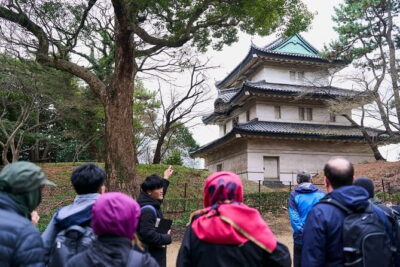
Tokyo Castle & Imperial PalaceーShogun Walking Tour
Our verdict →
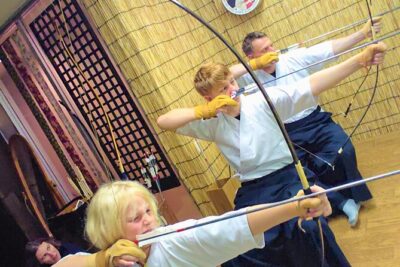
Japanesel Archery Experience HIROSHIMA CASTLE SHARAKU
Our verdict →
Browse the lists this tour appears in