
Reviewed · HISTORICAL TOURS
From Kyoto: Nara History Guided Half Day Bus Tour with Lunch
Nara’s friendly deer and huge Great Buddha make this six-hour outing one of the easiest ways to add Japan’s old capital to a Kyoto stay. You’ll visit Kasuga Taisha, Todaiji Temple, and Nara Park, then sit down to a Japanese-style lunch before returning to Kyoto. I especially like the clear route, which covers Nara’s essential sights without asking you to plan local transport.
I also like the guides’ personal touch. Yuko, Tammy, Emiko, Aki, Sachi, Kato, Mana, and Yoko are among the guides praised for patient explanations and strong knowledge of shrine customs and Japanese history. The main drawback is the pace: there is a lot of walking, and six hours leaves little room for wandering beyond the planned stops.
Key points to know before booking
- The Great Buddha is the tour’s major indoor sight, with Todaiji admission included.
- Nara Park gives you close contact with deer, though you should follow the guide’s instructions around them.
- Kasuga Taisha includes general worship, but the museum, botanical garden, and special sanctuary access cost extra or are not part of the visit.
- Transport may vary, using a bus, train, or a combination, with the Kyoto to Nara journey taking about 75 minutes.
- Lunch is included, but drinks are not, and menu changes cannot be made on the day.
- Small groups can feel personal, although the tour remains a shared group experience rather than a private outing.
Why Nara works well as a half-day trip from Kyoto
Kyoto and Nara are close enough to combine, but Nara feels distinctly different. Kyoto gives you temple districts and traditional streets. Nara gives you wide parkland, ancient religious sites, and deer moving freely around the paths.
This tour is designed for people who want the main Nara experience without spending a full day arranging trains, walking routes, temple tickets, and lunch. The total duration is about six hours, including transport from Kyoto and back. That makes it a practical choice if you have limited time or want to keep the rest of your day open.
The tour begins at Kyoto Station’s Hachijo Exit Tourist Bus Parking Area, in front of Kyoto Avanti. The meeting area can be confusing, so give yourself time to find the Hachijo side of the station. The activity provider confirms the meeting place by email seven days before the date.
From Kyoto, the journey to Nara takes about 75 minutes. Depending on the day, you may travel by coach, train, or a mix of both. Recent tours have included a train from Kyoto to Kintetsu-Nara followed by a smaller local bus, while other departures have used an air-conditioned coach. The exact vehicle can change, but the transport is included and the return to Kyoto is part of the plan.
More Bus Tours in Nara
- Kyoto/Osaka: Nara, Fushimi Inari Taisha, Arashiyama Bus Tour
★ 4.7 · 1,275 reviews - Kyoto: Nara & Traditional Matcha Experience Bus Tour
★ 4.9 · 185 reviews - From Osaka or Kyoto: Kyoto and Nara 1-Day Bus Tour
★ 3.5 · 141 reviews
Kasuga Taisha and the quiet start to Nara
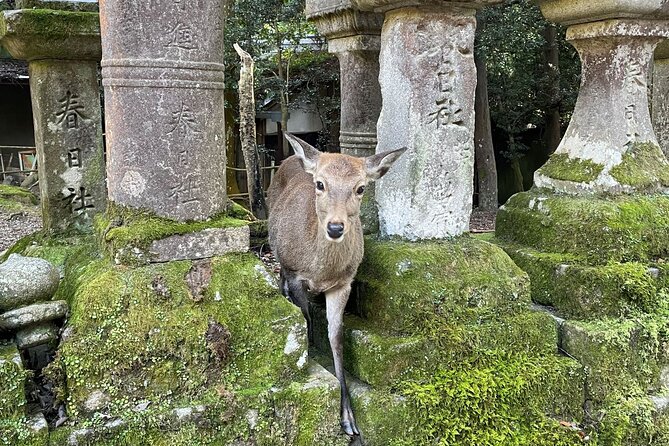
The first main stop is Kasuga Taisha, one of Nara’s best-known Shinto shrines. You’ll have about 45 minutes with the guide, enough time for general worship at the main sanctuary and an introduction to the shrine’s role in old Nara.
Kasuga Taisha is known for its long approach through wooded surroundings and its many stone and bronze lanterns. The setting helps you understand the difference between a Shinto shrine and a Buddhist temple before you reach Todaiji. Your guide can also explain basic shrine customs, which is useful if you are unsure about bowing, purification, or how to approach the sanctuary.
The included visit is limited to general worship. Special worship of the main sanctuary is not included, and neither are the Kasugataisha Museum or Botanical Garden. This is worth knowing because you will not have time to add every part of the complex during the scheduled stop.
The 45-minute visit is efficient rather than leisurely. You’ll see the important areas with the group, but you should not expect a long private exploration of the shrine grounds. Guides such as Tammy and Sachi have been praised for explaining customs and historical details clearly, which adds value to a stop that could otherwise feel like a quick photo visit.
Walking from Kasuga Taisha to Todaiji Temple
After the shrine, you walk for about 15 minutes to Todaiji. This short connection is part of the appeal of the route, since the major Nara sights are close enough to link on foot.
You should wear comfortable shoes. The full tour includes walking at Kasuga Taisha, Todaiji, and Nara Park, with paths and temple grounds taking more effort than the simple time estimates suggest. The activity is not wheelchair accessible, and it is not suitable for anyone who has trouble walking.
The walk also helps the day feel less like a series of bus stops. You move through Nara’s traditional area with the guide rather than being dropped at isolated attractions. Keep your belongings light, since large luggage is not allowed during the tour.
Todaiji Temple and the Great Buddha
Todaiji is the major historical stop, and the admission fee is included. You’ll have about 45 minutes for the guided visit.
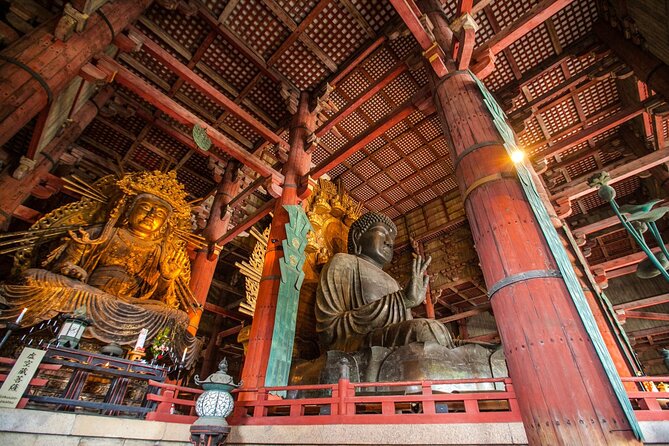
The temple is famous for its Great Buddha, a bronze figure about 15 meters high. The scale is difficult to grasp from pictures. Inside the enormous wooden hall, the statue gives the visit its main emotional force, while the building itself helps explain why Todaiji is one of Nara’s defining sights.
Todaiji is also known for being one of the world’s largest wooden structures. Your guide can put the temple, Buddha, and religious traditions into context, making the visit more useful than simply entering, taking a photograph, and leaving.
The schedule gives you enough time to see the Buddha and hear the main explanation, but it is not designed for a slow architectural study. If you like to read every sign or spend a long time examining details, you may want more time than the group schedule allows.
Construction can affect what you see. Some buildings or Buddha statues may look different, or sections may be unavailable, depending on work taking place at the time. That is a normal consideration at major historic sites, and it is worth checking your expectations before booking.
Same trip, a completely different kind of day:
- World Heritage Kyoto & Nara Uji Authentic Matcha Experience
★ 5.0 · 1,573 reviews - Nara Half Day Trip Walking Tour (Private Option Available)
★ 5.0 · 937 reviews - Osaka/Kyoto: Arashiyama, Nara & Fushimi Inari Shrine w/Lunch
★ 4.4 · 754 reviews - Nara Early Morning Tour (Kyoto or Osaka Departure Available)
★ 5.0 · 676 reviews
Nara Park and the deer
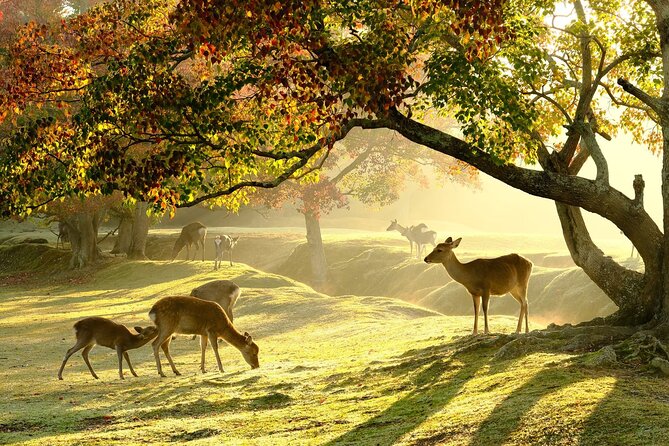
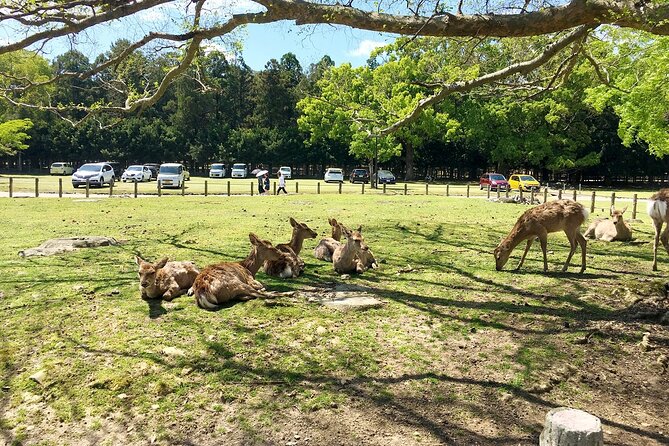
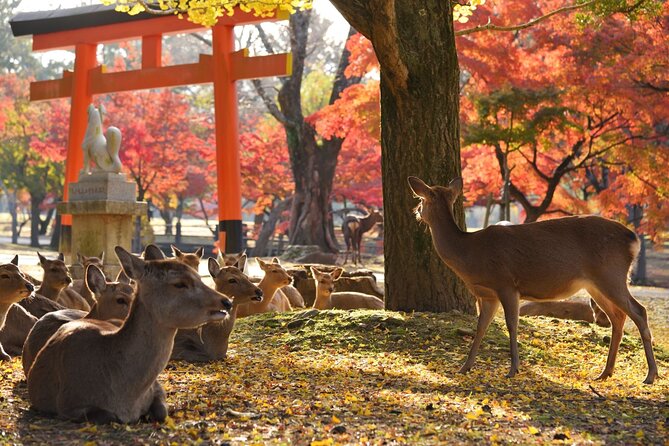
Nara Park follows Todaiji, with about 30 minutes for a guided visit. This is the most playful part of the day, especially for families and anyone who wants a memorable encounter with the deer.
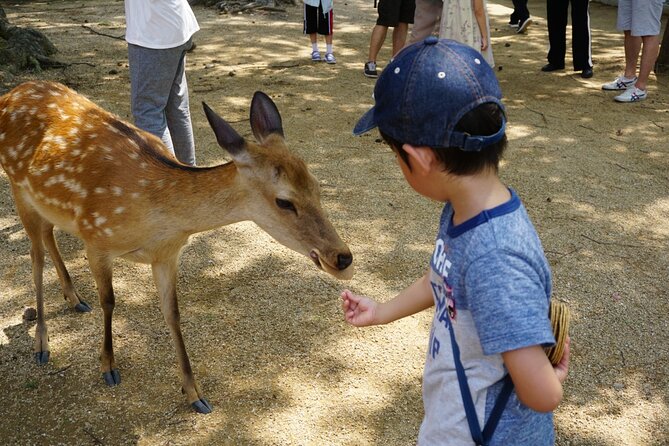
The deer are accustomed to people and often come close. You may feed them, and the experience can be charming, but they are still animals. Keep food under control, follow your guide’s advice, and pay attention when several deer gather around you.
The park is also a useful contrast to the formal shrine and temple visits. Instead of focusing on architecture, you get open space and a chance to watch daily life unfold around Nara’s historic sites. Many people remember the deer most vividly, but the park works best when you treat it as part of the larger setting rather than as a separate animal attraction.
Thirty minutes is enough for a close look and photographs, but it is not a long free period. You will need to stay with the group and keep an eye on the meeting time. The early schedule may help avoid the heaviest crowds, although conditions vary by season, weather, and departure date.
Japanese lunch and time for souvenirs
After the Nara sightseeing, the group travels by bus for about 30 minutes to lunch. The meal is Japanese-style and lasts around 50 minutes.
Lunch matters here because it removes one more planning task from your day. You do not have to search for a restaurant while trying to stay on schedule, and the meal gives you a proper break after the temple and park walks. Drinks are not included, so plan to pay separately for beverages.
Dietary needs and allergies should be reported when you book. Menu changes cannot be arranged on the day. One useful detail for families is that a child’s meal may be changed to chicken instead of sashimi if requested during booking, not at the last minute.
The restaurant also has a shop selling local souvenirs. This is convenient if you want a small reminder of Nara without using extra sightseeing time. It is also a limitation if you prefer independent shopping in town, since the schedule does not leave much time for browsing elsewhere.
How the guides shape the experience
The English-speaking guide is one of the strongest reasons to choose this tour rather than traveling independently. Nara’s temples and shrines can look impressive without explanation, but a good guide helps connect the buildings to Japanese religious practice and the city’s past.
Several guides have received especially warm praise. Yuko has been described as patient and careful with group organization. Tammy has explained Japanese customs and historical facts at each stop. Emiko has answered questions and kept the day interesting even in bad weather. Aki has been praised for clear explanations, clean transport, and good timing.
Other named guides include Sachi, Kato, Mana, and Yoko. Kato led a particularly small departure during stormy weather, while Mana, a retired history teacher, offered especially detailed historical context. These individual guides are not guaranteed, but the repeated pattern is useful: the quality of the day depends heavily on who leads your departure.
Group size can vary. One departure had only five people, and another was so small it felt almost private. That is a pleasant possibility, not a promise. This remains a shared tour, and you cannot add stops or change the route for personal requests.
Is $77 good value?
At $77 per person, the price is reasonable if you want convenience. It includes transport from Kyoto and back, an English guide, admission to Todaiji, and lunch. Buying those pieces separately could take more time and may not save much once you add local fares, temple admission, and a meal.
The value is strongest for first-time visitors to Nara. You get the three major sights in one organized outing, with someone explaining what you are seeing. It also works well for families, since the deer and Great Buddha provide two very different highlights, and lunch is already arranged.
Independent visitors may prefer a slower day. You could spend longer at Kasuga Taisha, explore more of Nara Park, visit the Kasugataisha Museum, or choose your own restaurant. This tour trades that freedom for a simple route and reliable transport.
The 91 percent perfect score for transport is a useful sign for anyone concerned about the long connection from Kyoto. Air conditioning is especially welcome on hot days, and one departure was praised for keeping the vehicle comfortable during difficult weather. Still, transport may be a coach, train, or combination, so do not book expecting one specific vehicle.
Practical details that can affect your day
The activity lasts six hours, but the schedule is full. You should arrive ready to walk, keep your luggage small, and stay close to the group at each stop.
Free cancellation is available up to 24 hours before departure for a full refund. You can also reserve now and pay later, which helps if your Kyoto plans are still changing.
The tour needs at least four participants. If that number is not reached 14 days before the date, the departure may be canceled. Pets are not allowed.
Wheelchair users should not book this experience because it is not wheelchair accessible. The walking requirement also makes it a poor choice if you need frequent rests or cannot manage temple paths and park routes.
Buildings and statues may be affected by construction. This is particularly important if Todaiji or Kasuga Taisha is the main reason you are booking. The tour still gives you the key sites, but the exact view can change.
Who should book this Nara tour?
I would choose this tour if you are staying in Kyoto, want to see Nara’s main sights in one morning and afternoon, and prefer an English-speaking guide to explain the customs and history. It is also a good match for families, first-time visitors, and anyone who values included transport and lunch over free time.
I would skip it if you want an unhurried temple day, plan to visit several museums, or dislike group schedules. You should also choose another option if walking is difficult, you need wheelchair access, or you are carrying large luggage.
For most visitors with one available day or half-day for Nara, this is a well-priced, sensible introduction. Book it for the Great Buddha, the deer, and the ease of having the route handled. Just bring comfortable shoes, keep your expectations realistic about the pace, and submit any food requests when you reserve.
FAQ
Where does the tour meet in Kyoto?
The meeting point is the Kyoto Station Hachijo Exit Tourist Bus Parking Area, in front of Kyoto Avanti. The exact meeting information is sent by email seven days before the activity date.
How long does the tour last?
The tour lasts about six hours, including travel from Kyoto to Nara and the return journey.
What language is the tour conducted in?
The live guide speaks English.
Is lunch included?
Yes. A Japanese-style lunch is included. Beverages are not included.
Can I request a different lunch menu?
You must report allergies or dietary restrictions when booking. Menu changes cannot be made on the day. For children, chicken instead of sashimi can be requested during booking.
Is the Todaiji entrance fee included?
Yes. Admission to Todaiji Temple is included.
Are the Kasuga Taisha Museum and Botanical Garden included?
No. The special worship area of the main sanctuary, Kasugataisha Museum, and Botanical Garden are not included.
Will the tour use a bus?
The transport may use a bus, a train, or a combination of both. The Kyoto to Nara journey is listed as about 75 minutes, and the return journey is about one hour.
Is the tour suitable for wheelchair users?
No. The tour is not wheelchair accessible and involves considerable walking.
Can I bring large luggage or a pet?
Large luggage is not allowed, and pets are not permitted.
Can I cancel the booking?
You can cancel up to 24 hours in advance for a full refund. Reserve-now, pay-later booking is also available.
Could the tour be canceled before departure?
If at least four participants have not booked 14 days before the scheduled date, the tour may be canceled.
More Historical Tours in Nara
- Nara: Bike Tour in Ancient Capital UNESCO World Heritage
★ 5.0 · 43 reviews - From Kyoto: Nara History Guided Half Day Bus Tour with lunch
★ 5.0 · 23 reviews - Osaka: Kyoto & Nara & Uji Historical and Scenic One-Day Tour
★ 4.7 · 21 reviews - World Heritage Shirakawa-go and Experience Tours from Kanazawa
★ 5.0 · 4,049 reviews
Just added around Nara
- Private Kyoto Tour by Car with Optional Nara or Osaka Add-Ons★ 5.0 · 36 reviews
- Kyoto, Osaka, Nara Private Tour by Car English Driver Guide★ 4.0 · 63 reviews
- Nara Todaiji Kasuga Taisha Private Full Day Tour From Kyoto★ 5.0 · 13 reviews
- From Kyoto: Nara History Guided Half Day Bus Tour with lunch★ 5.0 · 23 reviews
- Nara 8hr Private Tour – Kyoto DEP. with Licensed Guide★ 5.0 · 115 reviews
- Arashiyama & Nara Highlights: One-Day Private Tour Adventure★ 5.0 · 16 reviews
- Kyoto Private Car Tour – Full Day with Local Guide & Nara Option★ 5.0 · 169 reviews
- Kyoto & Nara Private Tour from Osaka Kyoto Hotel Pick-up★ 4.5 · 32 reviews
Historical Tours, compared.
Imperial Palace and Shogun Historical Walking Tour
Our verdict →
World Heritage Kyoto & Nara Uji Authentic Matcha Experience
Our verdict →
Kyoto Gion: 2-Hour Geisha Culture & History Walking Tour
Our verdict →
Hiroshima Historical Walking Tour – Why A-Bomb was Dropped
Our verdict →
Yanaka Walking Tour: Historic and Traditional District of Tokyo
Our verdict →
Shinjuku Historical Walking Tour & Secret Backstreets
Our verdict →
Mt. Fuji Heritage Tour: Traditional Villages, Lakes & Shrine
Our verdict →Browse the lists this tour appears in